

Nut trees · Orchard buyer guide
Chestnut Trees for Sale: Orchard Buyer Guide and Costs
Grafted, blight-resistant Chinese and hybrid chestnut trees are the main orchard choice in the US. Here is what to buy, what it costs, what nuts sell for, and when an orchard pays back, with sources from university extension services.
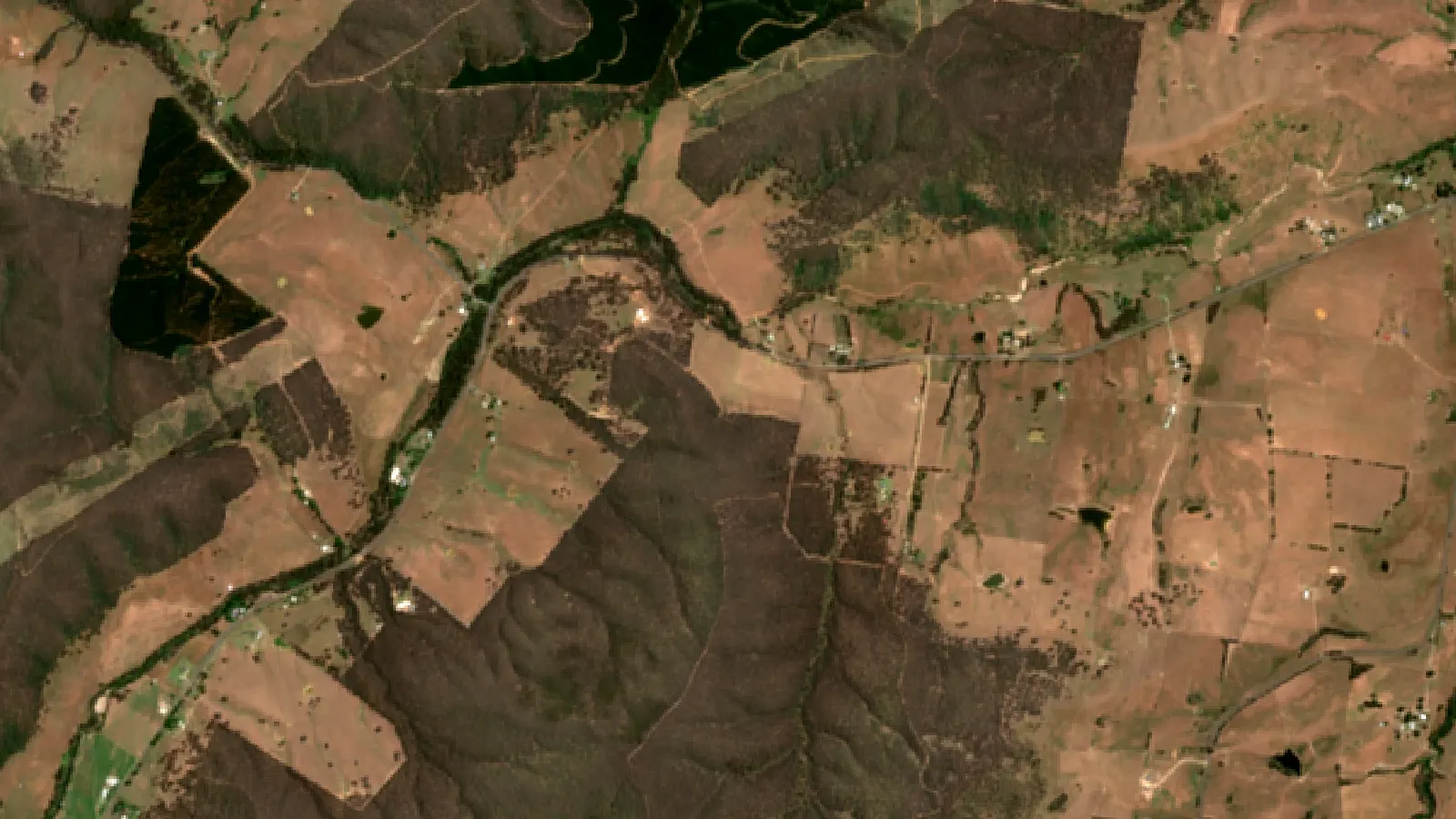
Key takeaways
- Grafted container trees cost $17 to $40 each and bare-root seedlings $4 to $8 (Virginia Tech, ANR-279).
- Yields can reach about 2,000 pounds per acre by year 12 to 15 (Virginia Tech); UF/IFAS gives 1,000 to 1,500 pounds or more at maturity.
- Michigan State’s 2025 study puts total economic cost at about $3,064 per acre with machine harvest and $5,387 with hand harvest.
- Published prices range from $0.75 to $2.50 per pound wholesale to $2 to $7 per pound for restaurant sales.
- China grew 73.3% of the world’s 2.13 million tonnes of chestnuts in 2022 (FAOSTAT via Helgi Library); the US grows less than 1%.
In this article
- Chestnut trees for sale: the short buyer checklist
- Types of chestnut trees and which to buy
- Compare chestnut trees for an orchard
- How we chose and checked the numbers
- Where chestnuts are grown
- What a chestnut orchard costs to plant
- How many nuts per acre, and when
- What chestnuts sell for
- Is chestnut farming profitable?
- Break-even calculator for a chestnut orchard
- Planting and care: step by step
- Chestnut products beyond fresh nuts
- Environmental benefits of chestnut orchards
- Using satellite monitoring in a chestnut orchard
The best chestnut trees for an orchard in the US, Canada, the UK, Europe and Australia are grafted, blight-resistant cultivars, mostly Chinese chestnut (Castanea mollissima) or Chinese-hybrid types, planted on well-drained, slightly acid soil. Virginia Tech puts grafted container trees at $17 to $40 each and says a well-run orchard can reach about 2,000 pounds of nuts per acre by year 12 to 15, according to its chestnut production guide (ANR-279). This guide shows how to choose chestnut trees for sale, what an orchard costs, what the nuts sell for, and gives a break-even calculator you can fill in with your own numbers.
We rewrote this page in October 2026. Every price and yield below carries its source and date. Prices are guide figures from extension services, not quotes from a nursery, so check current prices with your supplier before you order.
Chestnut trees for sale: the short buyer checklist
Before you look at any nursery list, decide five things. They narrow the choice faster than any variety name.
- Purpose. Nuts to sell, nuts for the family, timber, wildlife food or forest restoration. Each points to a different tree.
- Blight risk. Chestnut blight is a fungus (Cryphonectria parasitica). In the United States it killed almost every American chestnut in less than 40 years after it was brought in around 1904, says the University of Florida (UF/IFAS) chestnut guide. Commercial growers plant resistant Chinese or hybrid trees.
- Grafted or seedling. Grafted trees copy a known cultivar, so nut size and harvest date are predictable. Seedlings are cheaper but vary from tree to tree.
- Pollination. Chestnuts need a second, different tree nearby to set a good crop. Plan at least two compatible cultivars.
- Site. Virginia Tech asks for sandy-loam soil with a pH of 5.5 to 6.5, full sun, and a slope or ridge with good drainage and less frost risk.
If your site has heavy clay, standing water in spring or a pH above 7, fix that first or choose another field. A tree from the best nursery will still fail on wet ground.
Types of chestnut trees and which to buy
Here are the main kinds of chestnut trees you will see offered for sale, ordered from the most common orchard choice to the least. Each line says what it is best for.
1. Grafted Chinese chestnut cultivars
Best for: commercial nut orchards in the eastern and central US, southern Ontario and similar climates.
Chinese chestnut is the blight-resistant species behind most new US orchards. The University of Kentucky Center for Crop Diversification calls blight-resistant Chinese chestnut and its hybrids viable alternatives for commercial production. Virginia Tech lists cultivars such as ‘Gideon’, a spreading, cold-hardy tree with easy-to-peel nuts at about 28 to 39 nuts per pound.
Pros: good blight resistance, sweet nuts, known harvest timing. Cons: higher price per tree; nut size varies by cultivar.
2. Chinese x American or Chinese x European hybrids
Best for: growers who want larger nuts or a more upright tree.
The UF/IFAS guide says new American x Chinese hybrid cultivars that resist blight and give large, sweet nuts have helped the domestic industry grow, including in Florida. Some hybrids with European parents give very large nuts, but resistance and hardiness vary, so read each cultivar’s notes.
Pros: big nuts that sell well fresh. Cons: some lines are less hardy; check blight notes for your area.
3. European sweet chestnut (Castanea sativa)
Best for: the UK, southern Europe, and the cool hill regions of Australia and New Zealand.
Sweet chestnut is the traditional nut and coppice tree of Europe. The UK’s Forest Research notes that sweet chestnut covers about 2% of England’s wood cover and that blight has spread through much of Europe, with regionally significant losses. In Australia, Chestnuts Australia reports that over 1,100 tonnes of fresh chestnuts were harvested in 2020 from about 300 orchards in high-altitude regions.
Pros: large nuts, long history, timber value. Cons: blight and other cankers; follow plant-health rules when moving trees.
4. Japanese chestnut and Japanese hybrids
Best for: mild, humid sites where large nuts matter more than flavour.
Japanese types give very large nuts and some blight resistance. Flavour and ease of peeling vary, so test the market before you plant many.
5. American chestnut (Castanea dentata)
Best for: restoration plantings and research partners, not commercial nut orchards today.
The American chestnut was once a main tree of eastern US forests. The American Chestnut Foundation (TACF) breeds blight-resistant, mostly-American trees. TACF reports that USDA APHIS ended its plant-pest review of the Darling 54 American chestnut, and stresses that this is not the end of the full federal review. Pure American seedlings for sale will still be hit by blight in most of the native range.
Not a nut tree: horse chestnut
Horse chestnut (Aesculus hippocastanum) is a shade tree in another plant family. Its seeds look like chestnuts but are not edible. Never plant it for food, and make sure a nursery listing is for Castanea, not Aesculus.
Compare chestnut trees for an orchard
The table sums up the main choices. “Blight resistance” is a broad guide; it differs by cultivar and by region.
| Type | Best for | Blight resistance | Key note |
|---|---|---|---|
| Chinese grafted | Commercial nut orchards | Good | Most common US orchard choice |
| Chinese hybrids | Larger fresh-market nuts | Good to fair | Check hardiness by cultivar |
| European sweet | UK, Europe, Australia/NZ | Low to fair | Follow plant-health rules |
| Japanese types | Mild, humid sites | Fair | Large nuts, test flavour |
| American | Restoration | Low (pure trees) | Use TACF lines |
| Horse chestnut | Shade only | Not relevant | Nuts not edible |
How we chose and checked the numbers
We ranked tree types by how well they suit a nut orchard in our readers’ markets: blight resistance, nut quality, and how often extension services recommend them. We took costs and yields from university extension guides (Virginia Tech, Kentucky, Florida, Michigan State and Missouri), world production from FAOSTAT data, and Australian figures from the national growers’ body. We did not take prices from nursery adverts. Where sources disagree, we show the range and name each source.
Where chestnuts are grown
World chestnut production reached 2,131,241 tonnes in 2022, according to FAOSTAT data summarised by Helgi Library. China alone grew 1,562,686 tonnes, or 73.3% of the total. Spain and Bolivia came next, and the top three held 85.4% of world output.
The US is a small player. The Agricultural Marketing Resource Center at Iowa State reports 1,587 US farms producing chestnuts on more than 4,200 acres in the 2017 Census, and 3,200 metric tons of imports in 2017. The UF/IFAS guide says US output is less than 1% of world production and that imports are worth more than $20 million a year. For a new grower, that gap is the opening: buyers already import nuts that could be grown locally.
Chart
World chestnut production, 2022
Thousand tonnes
What a chestnut orchard costs to plant
Costs depend on spacing, irrigation, fencing and whether you pay for your own labour. Here are the main published figures.
- Trees: $17 to $40 per grafted container tree; $4 to $8 per 1- to 2-year-old bare-root seedling (Virginia Tech, ANR-279).
- Spacing: 20 to 30 feet by 20 to 30 feet at first, often thinned later; some growers plant at 40 by 40 feet (Virginia Tech).
- Establishment, Kentucky: $4,500 to $8,000 per acre over the first five years, with returns of $1,000 to $1,450 per acre over the same period (University of Kentucky).
- Establishment, Michigan: about $21,257 per acre in a 2025 economic cost study, spread over 32 production years as about $664 per acre per year (Michigan State University, Michigan chestnut cost of production 2025).
The Michigan figure is much higher because it is a full economic cost, not just a cash outlay. Use it as the cautious case. The Kentucky range is closer to a cash outlay for a small farm.
Yearly running costs
The Michigan State study puts ongoing production costs at about $1,541 per acre per year before harvest. Harvest adds about $3,182 per acre by hand or $859 per acre by machine. Adding the $664 yearly establishment share, total economic cost comes to about $5,387 per acre (about $2.15 per pound) for hand harvest and $3,064 per acre (about $1.23 per pound) for machine harvest.
How many nuts per acre, and when
Chestnut is a slow start, then a long life. Sources agree on the shape of the curve but not the exact numbers.
- Virginia Tech: production starts two to three years after planting grafted trees and can rise to about 2,000 pounds per acre by year 12 to 15.
- UF/IFAS: trees bear after three to five years; improved cultivars can give 1,000 to 1,500 pounds or more per acre each year at maturity.
- University of Kentucky: three to six years before any nuts, and about 10 years before yields are significant.
Feeding matters. A University of Missouri trial on young ‘Peach’ Chinese chestnut trees tested nitrogen from 50 to 150 pounds per acre a year. By 2015, cumulative yield rose from 11.3 pounds per tree at the lowest rate to 16.5 pounds at the highest. The authors found that 125 pounds of nitrogen per acre gave a substantial yield response. They also suggest a leaf test between July 15 and 31 to check tree nutrition.
Fertilizer and pesticide advice changes with soil, product and place. Always test your soil, read the product label, follow local rules, and ask your extension office before you apply.
Chart
Nitrogen rate and chestnut yield
Cumulative pounds of nuts per tree by 2015, by nitrogen applied (lb N per acre per year)
What chestnuts sell for
There is no public daily market price for chestnuts in the US. These are published price ranges, not live quotes.
- UF/IFAS: about $0.75 to $2.50 per pound wholesale, depending on nut size, and $2 to $5 per pound retail.
- Virginia Tech, citing University of Missouri research: restaurants paid $2 to $7 per pound, health food stores $2 to $6, online buyers $1.85 to $6, on-farm buyers $1.50 to $6, and farmers markets $0.75 to $6.
The spread is wide. Selling direct can pay several times the wholesale price, but it takes time, packaging and customers. Chestnuts are a holiday food, so the University of Kentucky suggests timing sales for that season. It also warns that many shoppers do not know how to cook chestnuts, so growers may need to teach them.
Chart
Chestnut price ranges by sales channel
US dollars per pound, published price ranges (not live quotes)
Is chestnut farming profitable?
It can be, but only after a long wait. The Michigan State 2025 study found chestnut production profitable for both hand and machine harvest at the prices and costs it used. The Kentucky profile shows that in the first five years, costs are well above returns. The years before full yield are the real risk.
Three things drive the answer: yield per acre, your price per pound, and your cost per acre. A machine-harvested orchard selling wholesale needs high yields. A small hand-harvested orchard needs direct sales at higher prices. Use the calculator below with your own numbers.
Break-even calculator for a chestnut orchard
Enter your expected mature yield, sale price and costs. The calculator shows profit per acre and the price you need to break even. The default values are examples only, set close to break-even.
Try the numbers for your own farm below.
Calculator
Does a chestnut orchard break even at your numbers?
Enter mature yield, price and costs per acre.
- Sales per acre: $4,500
- Total cost per acre: $4,364
- Break-even price: 2.91 $/lb
- Break-even yield: 1,455 lb/acre
Example values only, not a forecast or benchmark; set close to break-even. Every number is your input. For reference, Michigan State’s 2025 study gives about $664 per acre per year for establishment spread over 32 years and $3,064 per acre total economic cost with machine harvest (that total already includes the $664, so do not add it twice). Results are for a mature orchard and ignore the early years before full yield. This is not financial advice; get professional advice before you invest.
Planting and care: step by step
These steps follow the Virginia Tech and Missouri guides. Adjust them for your climate and local advice.
- Test the soil a season ahead. Aim for pH 5.5 to 6.5 and fix phosphorus and potassium before planting, because they move slowly into the root zone (University of Missouri).
- Clear weeds and grass in the planting rows. The University of Kentucky says removing unwanted plants before planting is essential.
- Order trees early. Popular grafted cultivars sell out. Order at least two compatible cultivars for pollination.
- Plant in spring at your chosen spacing, with tree guards against deer and rodents. Kentucky notes that young trees are very prone to animal damage.
- Feed young trees lightly. Missouri suggests about 0.1 pound of actual nitrogen per tree in the first year, 0.2 in the second and 0.3 in the third, applied in a ring around the tree.
- Water through dry spells in the first three years, when roots are small.
- Scout for pests. Kentucky says weevil control is needed every year, and Japanese beetle control as needed. Check labels and local rules for every product.
- Plan harvest. Nuts fall in autumn. Pick them up often, cool them fast and store them cold, because fresh chestnuts spoil quickly.
Harvest options by orchard size
Virginia Tech reports that one person can hand-pick up to about 30 pounds an hour, and that hand harvest of a mature orchard costs on average about $753 per acre. Small hand tools such as a rolling nut gatherer cost about $65. For orchards of about 25 acres and more, harvest machines cost $65,000 to $80,000 and can pick about 8,000 pounds a day. Size your harvest plan before you plant, because it shapes your spacing and your cost per pound.
Chestnut products beyond fresh nuts
A chestnut orchard can earn from more than the fresh nut. Common value-added products include:
- Peeled, roasted or frozen nuts for chefs and stores.
- Chestnut flour, naturally gluten-free, for bakers.
- Chestnut honey from bees placed near the orchard during flowering. It is dark and strong, and sells as a speciality.
- Timber and coppice poles from sweet chestnut in Europe, where it has long been grown for fencing and building.
- U-pick and farm visits, which the Agricultural Marketing Resource Center lists as a growing market, with farmers markets, specialty grocers and restaurants.
Each product needs its own food-safety and labelling checks. Ask your local food authority before you sell processed items.
▶ Ten small farm business ideas, from bees to mushrooms, that can add income alongside a tree crop. · 6:03
Environmental benefits of chestnut orchards
Chestnut is a long-lived tree crop. An orchard keeps soil covered for decades, which helps protect it from erosion. The University of Kentucky notes that chestnuts can grow on land considered unsuitable for other crops. Trees also store carbon in wood and roots as they grow. If you want to measure an orchard’s emissions and carbon, see carbon footprinting for farms.
Chestnuts also fit agroforestry: grass or grazing between rows, or a mixed planting with other nut and fruit trees. For larger plantings, our crop, plantation and forest advisory page explains how tree crops can be tracked over time.
Using satellite monitoring in a chestnut orchard
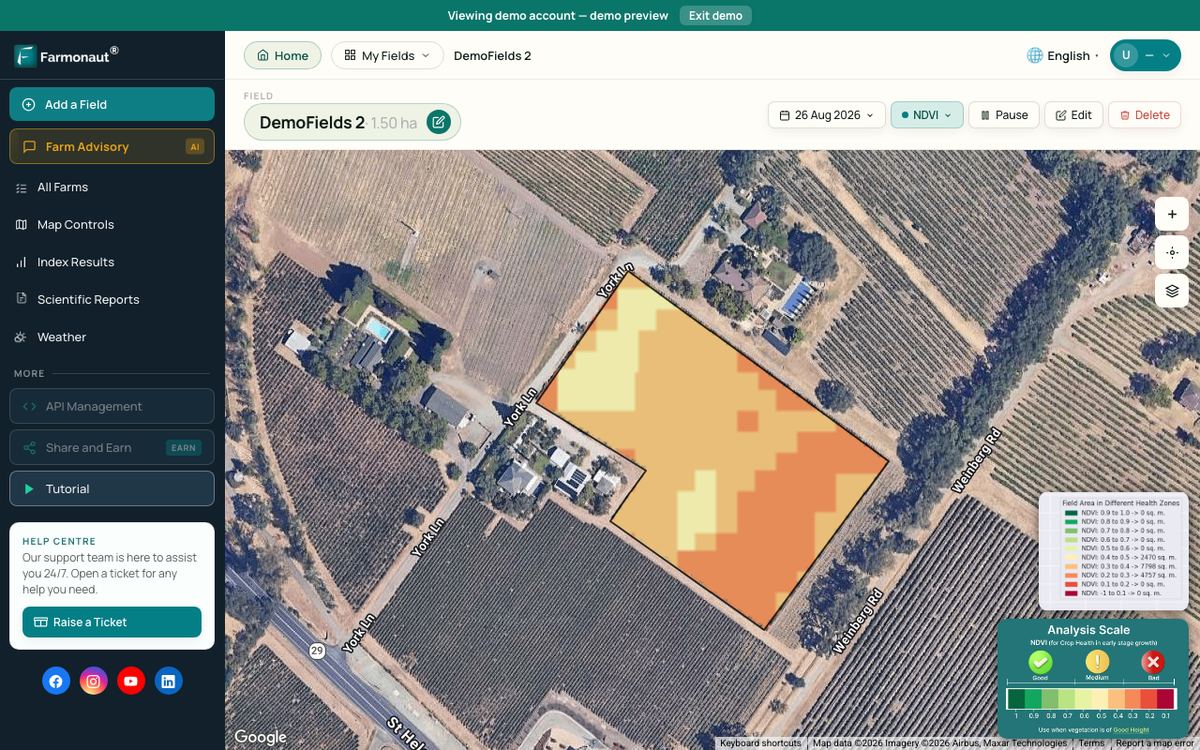
Orchards are large and trees are slow, so problems can go unseen for months. The Farmonaut Satellite + AI Farm Monitoring System shows vegetation and moisture maps of each block through the season, which can help you spot weak rows, water stress or uneven growth and decide where to walk first. It does not replace a soil test, a leaf test or scouting for weevils.
Growers who sell under their own brand may also want to record where and how nuts were grown. Our product traceability tools cover that, and managers of many blocks can use the large-scale farm management dashboard. Developers can work with satellite and weather data through our satellite and weather API and its developer docs. You can get the apps through the app page.

▶ Six plain steps to start precision farming, from field maps to satellite monitoring. · 4:18
Common mistakes when buying chestnut trees
- Buying one cultivar only. Poor pollination means empty burs.
- Buying horse chestnut by mistake. Check the Latin name.
- Planting on wet ground. Chestnut roots do not tolerate poor drainage.
- Skipping tree guards. Deer and rodents can kill young trees in one winter.
- Forgetting the sales plan. Many shoppers do not know chestnuts. Line up buyers before your first big crop.
- Ignoring plant-health rules. In the UK, Europe and Australia, moving chestnut trees can be regulated because of blight and other pests. Check with your plant-health authority.
FAQ
What are the best chestnut trees for an orchard?
Grafted, blight-resistant Chinese chestnut cultivars or Chinese hybrids are the main choice in the US, according to the University of Kentucky and Virginia Tech. In the UK, Europe and Australia, European sweet chestnut and its hybrids are common. Plant at least two compatible cultivars.
How much do chestnut trees cost?
Virginia Tech gives $17 to $40 per grafted container tree and $4 to $8 per young bare-root seedling. These are guide prices from its extension publication; check current nursery prices before you order.
How long until a chestnut tree produces nuts?
Grafted trees can start in two to three years (Virginia Tech). The University of Kentucky says about 10 years before yields are significant, and Virginia Tech says yields can reach about 2,000 pounds per acre by year 12 to 15.
How much can a chestnut orchard earn per acre?
It depends on yield, price and cost. As an example, 1,500 pounds per acre sold at $3 per pound is $4,500 per acre of sales before costs. Michigan State puts total economic cost at about $3,064 per acre for machine harvest and $5,387 for hand harvest. Use the calculator and get professional financial advice before you invest.
Can I grow American chestnut trees for nuts?
Pure American chestnuts are still hit by blight in most of their native range. The American Chestnut Foundation breeds resistant lines for restoration. For a nut business today, Chinese or hybrid cultivars are the usual choice.
Are horse chestnuts edible?
No. Horse chestnut is a different tree, and its seeds are not food. Edible chestnuts come from Castanea trees.
The bottom line
Buy grafted, blight-resistant trees of at least two cultivars, plant them on well-drained, slightly acid soil, and plan for a long wait before full yield. Check the numbers with the calculator, line up buyers early, and ask your local extension office for advice on varieties for your area.
Farmonaut orchard monitoring
Watch every orchard block from space
Draw your orchard blocks once and Farmonaut shows satellite vegetation and moisture maps for them through the season, on web, Android or iOS.



Sources
- Virginia Tech / Virginia Cooperative Extension, Chestnut production guide ANR-279: accomack.ext.vt.edu
- University of Florida IFAS, The Chestnut (HS1155): edis.ifas.ufl.edu
- University of Kentucky Center for Crop Diversification, Chinese Chestnut crop profile: ccd.uky.edu
- Michigan State University Extension, Michigan chestnut cost of production 2025: canr.msu.edu
- Michigan State University, Commercial chestnut cost of production bulletin E3538: canr.msu.edu
- University of Missouri IPM, Nitrogen Rate Enhances Chestnut Yield and Tree Growth (2015): ipm.missouri.edu
- Agricultural Marketing Resource Center (Iowa State), Chestnuts (revised January 2024): agmrc.org
- Helgi Library, Chestnut production by country 2022 (FAOSTAT data): helgilibrary.com
- FAO, FAOSTAT crops and livestock products database: fao.org
- Forest Research (UK), Sweet chestnut blight (Cryphonectria parasitica): forestresearch.gov.uk
- Chestnuts Australia, Australian chestnut industry: chestnutsaustralia.com.au
- The American Chestnut Foundation: tacf.org
Discussion
Questions, corrections or field experience? Share them below. First-time comments are reviewed before they appear, and your email is never published.
No comments yet. Be the first to add a question or your experience.

 ITC
ITC Dirks Bros Farms
 Red August Group
 Farm Inc
 WeMe Global
 Agrotoken
 Blue BearX
 Insignito
 Croptimum
 DnCubed
 Field Capacity
 Indosistim Teknologi
 Liquify Digital
 CU Foods
 BeyondTech Global
 Rouge VC
 AgroGreen Dynamics
