

Difference Between Multiple Cropping and Modern Farming: A Deep Dive into Practices, Productivity & Sustainability
In today’s rapidly evolving farming landscape, understanding the difference between multiple cropping and modern farming method is critical for practitioners seeking to optimize efficiency, boost productivity, and ensure sustainability for future generations. As agricultural practices shift to adapt to global market demands, resource limitations, ecological challenges, and technological innovations, insight into these systems helps us (and you) make informed decisions.
This comprehensive guide will explain the differences between traditional and modern farming methods and dive deeply into definitions, examples, impacts on soil health, resource management, and long-term sustainability. We’ll also consider the role of integrated technologies and AI-powered solutions like those provided by Farmonaut in supporting both multiple cropping systems and modern farming techniques across multiple sectors.
What is Multiple Cropping?
Multiple cropping is an agricultural system where two or more crop species or varieties are grown on the same piece of land within a single cropping year. This arrangement seeks to maximize land-use efficiency, exploit different nutrients and resources within the soil, and often spread risk across various crops and outputs. Rather than focusing solely on one crop at a time (as in monoculture), multiple cropping leverages ecological and temporal niches, offering a flexible response to local conditions and market demands.
Forms of Multiple Cropping
- Intercropping: Growing two or more crops together in the same field, often benefiting from complementary growth patterns, differing root structures, or natural pest suppression.
- Relay Cropping: Sowing a second crop before the first is harvested, ensuring overlapping periods and optimal use of residual nutrients and moisture.
- Sequential Cropping: Planting different crops in quick succession, one after the other, within the same piece of land during a year, utilizing the previous harvest’s leftover nutrient and moisture reserves.
Benefits of Multiple Cropping
- ✔ Increased Productivity per Unit Area: Maximizes outputs per piece of land through dense scheduling.
- ✔ Improved Soil Structure: A diversified root system can enhance soil health and reduce erosion.
- ✔ Biodiversity Enhancement: Different plant species and varieties create ecological diversity, which can reduce pest and disease risks naturally.
- ✔ Income Diversification: Growing a portfolio of crops enables farmers to capitalize on market fluctuations for specific outputs.
- ✔ Resource Use Efficiency: Different crops absorb nutrients and moisture at varying times or depths, reducing waste and optimizing resource utilization.
Potential Limitations
- ⚠ Greater Management Complexity: Requires careful planning, timing, and crop selection.
- ⚠ Competition Between Crops: Different crops may compete for light, water, or nutrients.
- ⚠ Pest/Disease Pressures: If not managed, pest/disease cycles may become more complex or pronounced.
- ⚠ Market Access: Sometimes, the local market infrastructure may not readily support diversified outputs.


What Are Modern Farming Methods?
Modern farming methods comprise a diverse set of technologies, tools, and practices designed to increase productivity, precision, and resource efficiency. They are often applied at larger scales but can also be leveraged by smallholders to maintain competitiveness in today’s dynamic agricultural marketplace.
Key Components of Modern Farming Techniques
- 📡 Precision Agriculture: Utilizes sensors, GPS, drones, and satellite imagery to apply inputs (water, fertilizers, and pesticides) precisely where and when needed, minimizing waste and maximizing production.
- 🌱 High-Yield Varieties: Adoption of crop varieties bred for higher productivity and resistance to local pests and conditions.
- 🚜 Mechanization: Use of tractors, harvesters, and automated equipment to reduce labor and increase efficiency.
- 🔋 Resource Efficiency: Including water-saving irrigation techniques (drip/sprinkler), energy-efficient operations, and environmental impact monitoring.
- 🦠 Integrated Pest Management (IPM): Combining biological controls, cultural practices, and targeted applications of pesticides to minimize environmental harm.
- 🌾 Advanced Soil Management: Conservation tillage, cover crops, crop rotation, and the use of organic matter to boost soil health and fertility.
These techniques strive for predictable, larger-scale outputs and are often reinforced with external inputs (e.g., synthetic nutrients, machinery, or proprietary seeds). However, when carefully integrated, they can reduce environmental impacts and support long-term sustainability.


Core Difference Between Multiple Cropping and Modern Farming Method
The difference between multiple cropping and modern farming method centers on scope, approach, and underlying philosophy:
- 📖 Definition and Approach: Multiple cropping is a production system concerned specifically with crop arrangement, timing, and land-use patterns. Modern farming methods describe a broader collection of advanced practices and technologies to optimize productivity and resource use; they may (or may not) include multiple cropping strategies.
- ⚡ Resource Dynamics: Multiple cropping leverages ecological complementarity and temporal niches—using plant biology and seasonality. Modern farming uses data, sensors, and external inputs to control outputs, often independent of crop diversity.
- 🌍 Risk and Complexity: Multiple cropping can diversify risk through varied outputs (economic resilience). However, it may introduce ecological complexities and require nuanced management. Modern farming mitigates some risks via precision tools but may introduce new financial or external dependency risks.
- 🪴 Innovation and Knowledge: Modern farming is centered on integrating novel technologies and practices; multiple cropping systems can also be modernized through these tools.
- 🧑🌾 Labor and Management Demands: Multiple cropping emphasizes in-field, season-based decisions and intimate crop knowledge. Modern farming requires digital literacy, infrastructure, and continuous monitoring of data-driven systems.
“Multiple cropping and modern farming methods represent two ends of a continuum in agricultural practice, but can be strategically combined to enhance both productivity and sustainability for local, regional, and global needs.”

Impact on Soil, Biodiversity, Productivity, and Sustainability
Understanding the difference between multiple cropping and modern farming requires examining their impacts on soil health, biodiversity, productivity, and sustainable resource use within real-world agricultural, forestry, and even mining-adjacent landscapes.
Soil Health
- 🌱 Multiple Cropping can improve soil structure by alternating root systems and increasing organic matter, reducing erosion risk and boosting water holding capacity.
- 🌾 Modern Farming can either degrade or enhance soil health—no-till with cover crops builds soil, but excessive reliance on synthetic inputs or single-crop cycles may harm it.
Biodiversity
- 🦋 Multiple Cropping inherently supports higher on-farm biodiversity, fostering ecosystem services like pollination, pest control, and natural resilience.
- 💡 Modern Farming often focusses on monoculture, reducing biodiversity, unless deliberate practices (like integrated pest management and crop rotations) are adopted.
Productivity
- 📈 Modern Farming Methods can increase productivity by up to 200% over traditional systems (depending on context and scale), with estimated yield increases of 20–40% versus 10–20% in multiple cropping alone.
- 🛡️ Multiple Cropping can stabilize yields by spreading risk, but total yield per crop may be lower—in contrast to modern single-crop systems.
Environmental and Resource Sustainability
- ♻️ Multiple Cropping reduces reliance on external inputs (less chemical fertilizer and pesticide use thanks to biological interactions), lowers environmental pollution rates, and supports resilient agroecosystems.
- 🛠️ Modern Farming, when done well (e.g., precision irrigation, AI-driven farm management), can reduce resource waste and enable long-term sustainability—but only with careful management.
Over-reliance on a single method—either only adopting traditional multiple cropping or only implementing modern technology—can limit both productivity and ecosystem health. A balanced, integrated approach can yield the best results.
Comparative Feature Table: Multiple Cropping vs. Modern Farming
| Parameter | Multiple Cropping | Modern Farming Methods |
|---|---|---|
| Definition | Growing two or more crops sequentially or together on same land within one year | Advanced technologies, inputs, and practices to optimize farm productivity, often with data-driven methods |
| Soil Impact | Improves organic matter, diversified root systems, reduces erosion | Can be positive (conservation tillage, cover crops) or negative (excessive chemical inputs) |
| Biodiversity Effects | Boosts on-farm biodiversity by 30%+ | Often reduces biodiversity (monocultures), though can improve with integrated pest management and rotation |
| Productivity (Yield Increase) | 10–20% yield increase per unit area (vs. monoculture) | 20–40% (even up to 200% vs. traditional) depending on technique and context |
| Sustainability | Supports long-term ecological balance, resilience, and resource conservation | Sustainability varies—technology may reduce water, input or emissions, but risks monoculture drawbacks if not managed |
| Required Technology Level | Low to Moderate—focused on seeding, timing, basic management | High—sensors, GPS, AI, drones, automated equipment |
| Resource Use Efficiency | High (biological complementarity) | High due to precision, but depends on system and management |
| Input Costs (Estimated Range) | Low to Moderate (manual labor, diverse seeds) | Moderate to High (technology investment, advanced inputs) |
| Innovation Adoption Rate | Traditionally slow, but increasing as digital tools become accessible | Rapid in developed markets and large farms; growing with mobile/web-based farm management tools |
Use AI-driven satellite data platforms like Farmonaut to monitor soil health and crop growth—whether implementing multiple cropping or modern farming methods, remote insights help optimize yields and resource use.
Explain the Differences Between Traditional and Modern Farming Methods
The transition from traditional farming methods to modern farming represents a paradigm shift in knowledge, input use, scale, and approach to risk and sustainability.
- 👨🌾 Knowledge Base: Traditional systems rely on inherited, empirical knowledge and time-tested practices. Modern systems are underpinned by scientific research, remote sensing, and data-driven decisions.
- 🔄 Input Reliance: Tradition values local, indigenous seeds and manure; modernity advocates for synthetic fertilizers, high-yield, and controlled inputs.
- 🛡️ Risk Management: Traditional emphasizes diversity and mixed cropping for resilience; modern systems use technology, modeling, and alerts.
- 🌱 Environmental Footprint: Traditional practices are often more conservation-minded with minimal external impact, while modern approaches can either optimize resource use or concentrate risks (monoculture, chemicals).
- 🧑🔧 Labor and Scale: Traditional tends to be labor-intensive and small-scale. Modern relies on advanced mechanization and scales up, though accessible AI tools are bridging this gap for smallholders.

📊 Key Features of Multiple Cropping
- Crop diversification: resilience to unexpected weather or market conditions.
- Temporal efficiency: year-round land productivity.
- Synergistic root interactions: improved soil health.
- Reduced input needs: biological pest suppression.
- Low technology barrier: accessible to small-scale farmers.
📡 Key Features of Modern Farming
- Precision data: minimized waste, maximized output.
- Automated equipment: higher labor efficiency.
- Resource conservation: drip irrigation, AI-advisory systems.
- Climate adaptation: use of high-yield or drought-resistant varieties.
- Scalability: effective for both small and large enterprises.



Explore Farmonaut’s API or API Developer Docs for satellite and weather data integration in your agricultural analytics or agri-businesses!
For end-to-end traceability and compliance across agri-supply chains, don’t miss our Blockchain-based Traceability Solutions page.

Farming in the Modern Ecosystem: The Role of Data and Technology
Modern agricultural systems—whether practicing multiple cropping or not—are increasingly shaped by intelligent data platforms, remote sensing, and precision management tools.
- 🛰️ Satellite monitoring enables real-time insights into vegetation health (NDVI), soil moisture, and crop stress.
- 🤖 AI and Machine Learning power crop advisory systems, predicting pest outbreaks or nutrient needs with precision, reducing risk and waste.
- ✍️ Blockchain underpins transparency in traceability, fostering trust and accountability for local and global markets.
- 🚚 Fleet & Resource Management platforms cut operational costs and streamline logistics across large-scale farms, forestry, and mining-adjacent agricultural landscapes.
“The integration of data-driven technologies enables both traditional and modern agricultural systems to achieve higher yields, minimized inputs, and improved environmental health—regardless of cropping arrangement.”

Integrating Multiple Cropping and Modern Farming Methods
As farming advances, many practitioners see value in blending the best elements of multiple cropping and modern farming methods to maximize benefits. This integration enables systems that are productive, resilient, and sustainable, especially when empowered by tools like satellite-based monitoring and AI-driven advisory systems (see Carbon Footprinting for tracking emissions and Crop Loan & Insurance for financial verification).
- ✔️ Use satellite insights to schedule sequential or relay crops and inform nutrient management.
- ✔️ Combine cover crops (from modern sustainable methods) with intercropping for year-round soil coverage and ecosystem support.
- ✔️ Apply blockchain traceability for complex multiple-cropping outputs, adding market value and transparency.
- ✔️ Leverage AI-based advisory systems for proactive risk management and input optimization.
- ✔️ Adapt practices for local soils, climates, and market demands to maximize long-term sustainability.
Farmonaut: Platform and Advanced Tools for Next-Gen Agriculture
At Farmonaut, our mission is to democratize satellite-driven insights for every farmer, agribusiness, and government with affordable, AI-powered data. Whether optimizing field-level soil management for multiple cropping or equipping large enterprises with real-time monitoring, our solutions support all scales of modern farming practices.
- 🌍 Satellite Monitoring: Receive NDVI and multispectral imagery for vegetation and soil analysis.
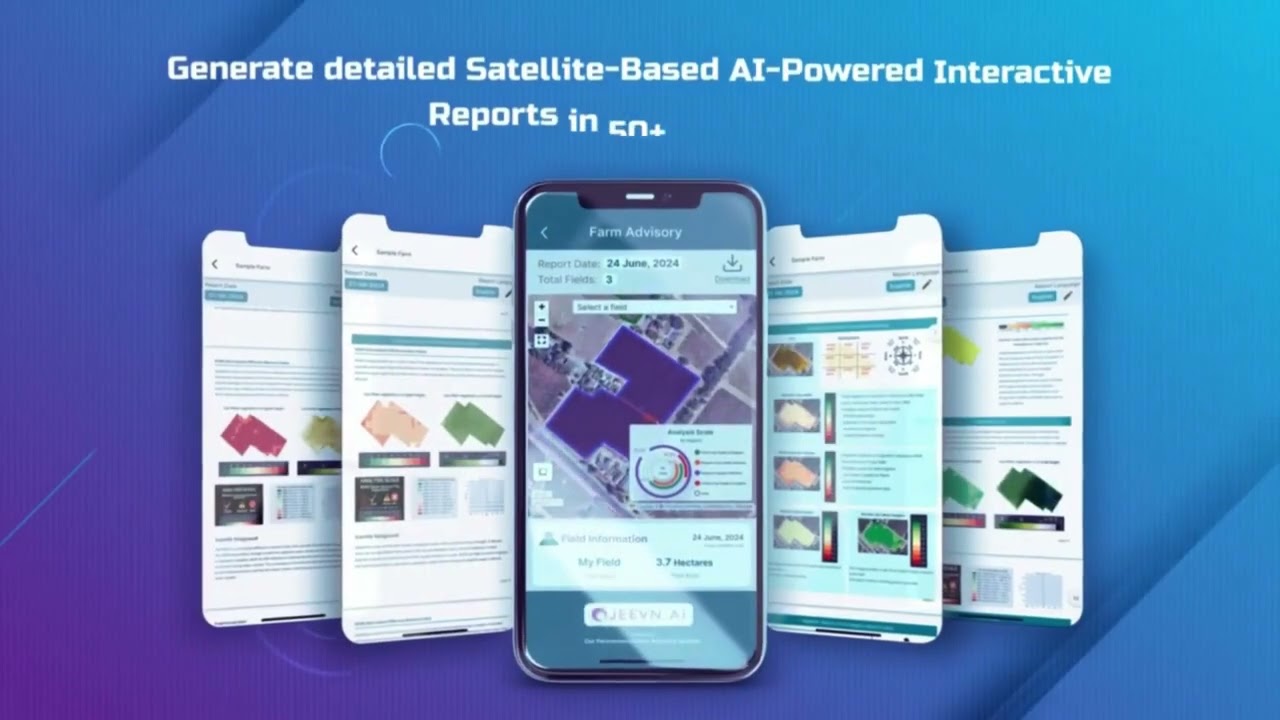
- 🤖 Jeevn AI Advisory System: Personalized, data-driven strategies for resource management and boosting yields.
- 🔗 Blockchain-based Traceability: Transparent supply chains and product authenticity for agriculture and adjacent sectors.
- 🚚 Fleet & Resource Management: Optimize equipment, reduce costs, and enhance logistics, vital for mining, forestry, and infrastructure links.
- ♻️ Environmental Impact Tracking: Carbon footprint monitoring for sustainable practice verification (see Carbon Footprinting).
Access our platform via:
Frequently Asked Questions
-
Q: What is the main difference between multiple cropping and modern farming method?
A: Multiple cropping is about how crops are arranged across time and space to maximize land use; modern farming uses advanced technology, precision inputs, and data analytics for optimizing yields and resources, and may or may not include multiple cropping arrangements. -
Q: Can multiple cropping be considered a modern farming method?
A: Yes, when combined with smart management, remote sensing tools, and AI advisory, multiple cropping can be an essential part of modern, sustainable agriculture. -
Q: Which system is better for smallholder farmers?
A: Smallholders often benefit most from multiple cropping due to minimal capital requirements, but integrating mobile/web-based tools from platforms like Farmonaut can elevate productivity and resource efficiency. -
Q: How do modern farming methods impact environmental sustainability?
A: If implemented responsibly (using precision irrigation, integrated pest management, careful input control), modern methods can reduce environmental damage. However, excessive use or mismanagement can heighten ecological risks. -
Q: What types of crops are ideal for intercropping?
A: Crops that have complementary root structures, nutrient demands, and growth periods (e.g., legumes with cereals) are best for maximizing benefits in multiple cropping systems.
Conclusion: Making the Right Choice for Your Fields and Goals
Both multiple cropping and modern farming methods present exciting opportunities for boosting productivity, improving soil health, and progressing toward sustainable agriculture. While multiple cropping is a crop-based strategy anchored in ecological principles and risk distribution, modern farming is a holistic framework incorporating technology, resource optimization, and dynamic management.
As practitioners in agriculture, forestry, and mining-adjacent landscapes, it’s crucial to choose methods that fit local ecosystems, market demands, and long-term sustainability goals. Consider starting with a context-driven multiple cropping plan and gradually layering in data-driven tools and precision agriculture features to maximize your field’s potential.
With platforms like Farmonaut, access to real-time data, AI-based advisory, and blockchain-driven supply chain transparency is now affordable and scalable—empowering everyone, from smallholders to large enterprises, to thrive in a data-driven, sustainable food and resource future.

 Godrej Agrovet
 Hayleys Agriculture
 Linx Agritech
 Adinet
 Save Your Soils
 GalaxEye Space
 Grandstream Algérie
 XOS Realty
 Geospatial Lab Africa
 Agro La Gándara
 HIPSAC
 ZOL Zimbabwe
 Juligerm
 AdBio
AdBio MISE Maroc
 NWNS
NWNS Red August Group
 Farm Inc
 WeMe Global
 Agrotoken
 Blue BearX
 Insignito
 DnCubed
 Indosistim Teknologi
 Liquify Digital
 CU Foods
 BeyondTech Global
 Rouge VC
 AgroRisk
 Oath Inc
 Esri North East Africa
 MDCV UK
 Etech Consulting Madagascar
 Vestlandsforsking
 WB Dev
 Sama Premium
 Tres Valles
 Blickwinkel
 Agricultural Credit Policy Council
 eKGIS
eKGIS Mostas Tech
 Andex
Andex Deluxe Conseil
 WICO
WICO Chimera Innovation
 SkyHarvest
 Teledarbas
 Exurbia Geospatial
 FieldZero
