

Disadvantages of Smart Agriculture Using IoT: Key Pros & Cons
“Over 60% of rural farms face IoT connectivity issues, limiting smart agriculture’s effectiveness in remote areas.”
“Initial IoT setup costs in agriculture can exceed $10,000 per hectare, challenging adoption for small-scale farmers.”
- Introduction: Weighing the Pros and Cons of IoT-Driven Smart Agriculture
- Smart Agriculture Using IoT: Overview & Key Concepts
- Advantages of Smart Agriculture Using IoT
- Disadvantages of Smart Agriculture Using IoT
- Pros and Cons Comparison Table with Estimated Impact
- Implementation Considerations for Best Outcomes
- Farmonaut: Data-Driven Solutions for Smarter Agriculture & Land Management
- FAQ: Disadvantages & Advantages of Smart Agriculture Using IoT
- Conclusion: Making Smart Decisions for Agriculture’s Future
Introduction: Weighing the Pros and Cons of IoT-Driven Smart Agriculture in Forest, Farm, and Resource Sectors
The modern landscape of agriculture, forestry, and environmental management is being transformed at an unprecedented pace. Smart agriculture using IoT (Internet of Things) brings together sensors, connected devices, advanced data analytics, and digital management systems to optimize the use of resources, increase operational efficiency, and reduce adverse environmental impact. Yet, beneath these promises, the rapid integration of IoT into farming, forestry nurseries, mine reclamation, and restoration projects introduces a set of disadvantages and complex challenges.
While the advantages of smart agriculture using IoT are clear—higher yields, improved margins, optimized inputs—there are disadvantages of smart agriculture using IoT that may offset the benefits if not carefully managed. In this in-depth analysis, we’ll walk through both sides, equipping stakeholders across the farm, forest, and resource management domains to scrutinize adoption risk and reward.
The hardest barriers to smart agriculture using IoT aren’t just technology costs—they’re about reliable connectivity, robust data standards, operational resilience, and skill-building for all growers.
Smart Agriculture Using IoT: Overview & Key Concepts
Before diving into the disadvantages and advantages of smart agriculture using IoT, let’s establish what this technology encompasses. The Internet of Things (IoT) refers to a network of physical devices—like soil moisture sensors, climate stations, asset trackers, and satellite devices—that connect over wireless or wired networks to share real-time data. In agriculture, these IoT-powered systems enable end-to-end monitoring, automated controls for irrigation, smart fertilization, precision pesticide application, as well as advanced analytics for yield prediction and risk management planning.
- ✔ Smart sensors measure soil, crop, and environmental conditions.
- ✔ Connected devices automate physical operations (e.g., pumps, weather stations).
- ✔ Data analytics platforms deliver actionable insights for strategy and planning.
- ✔ Asset trackers provide field-level traceability for equipment and inputs.
- ✔ Remote dashboards enable centralized management across multiple sites.
The promise: IoT-powered agriculture—with its focus on resource optimization, real-time monitoring, and operational resilience—is poised to tackle the world’s food security, environmental, and productivity challenges across landscapes.

Advantages of Smart Agriculture Using IoT
Many sectors—from crop farms and forestry nurseries to mining-related reclamation—are turning to IoT-driven systems for their demonstrated advantages. Let’s summarize the most impactful benefits:
1. Resource Efficiency and Cost Reduction
The advantages of smart agriculture using IoT are spearheaded by resource efficiency. IoT sensor networks monitor soil moisture, nutrient levels, weather, and crop health in real time, enabling precise irrigation, targeted fertilization, and pest control. This targeted approach:
- ✔ Reduces water waste by detecting precise irrigation needs
- ✔ Lowers chemical inputs (fertilizer, pesticide) for healthier soil and lower costs
- ✔ Cuts energy consumption through automation and efficient pumping
- ✔ Results in lower operating costs and improved profit margins for farming and forestry operations
- ✔ Boosts yield and conserves resources in restoration and mine reclamation areas
Invest in modular IoT systems with open standards to ensure future integration—reducing replacement costs as technology evolves.
2. Increased Yield and Quality Consistency
Through continuous data streams from sensors and predictive analytics, smart agriculture helps growers apply inputs exactly when and where they’re needed. This:
- 📊 Mitigates drought stress and nutrient deficiencies—improving crop health and uniformity
- 📊 In forestry and plantation management, IoT promotes more uniform seedling development and effective grafting practices
- 📊 Enhances predictability of yields and quality consistency across seasons
- 📊 Strengthens planning for high-value crops, timber, and mine rehabilitation projects
3. Operational Visibility and Traceability
Another advantage of smart agriculture using IoT is in operational visibility and traceability. By connecting sensor networks, geofenced equipment, and asset trackers, users get real-time situational awareness across fields, forests, and even restoration sites:
- 👁️ Facilitates rapid response to pest or disease outbreaks
- 👁️ Improves equipment maintenance and asset management
- 👁️ Streamlines certification and verification for sustainable forestry or mining reclamation projects
- 👁️ Enables quick audits and traceability throughout supply chains
For advanced blockchain-based traceability solutions in agriculture, forestry, or mining sectors, IoT-backed systems can add another layer of transparency and security, verifying every step from field to final product.
4. Risk Management and Resilience
Uncertainty is an ever-present factor in farming, forestry, and environmental operations. Weather sensors, flood/fire alerts, and soil-salinity telemetry empower proactive risk planning:
- ⚠ Early warnings minimize catastrophe in drought, heat, or pest infestations
- ⚠ High-value crops, seedling nurseries, or restoration projects receive tailored contingency support
- ⚠ Increases resilience of supply chains and ecosystems by supporting real-time response
- ⚠ Improves planning for environmental compliance and stewardship
Smart agriculture with IoT drives value across long-term asset preservation and regulatory compliance—two focus areas for investors in land-based sectors.

5. Data-Driven Decision Making & Environmental Stewardship
Central dashboards aggregate agronomic and environmental data, supporting better decisions about site selection, input timing, crop rotations, and even ecosystem restoration strategies. Smart IoT networks:
- 📊 Enable precision strategies for crop and species selection
- 📊 Accelerate mine rehabilitation and habitat restoration through continuous monitoring
- 📊 Support carbon footprint tracking and other regulatory sustainability requirements
- 📊 Align resource use with environmental stewardship goals
For organizations focused on carbon management in agriculture and mining, explore our carbon footprinting solutions for robust quantification and reporting tools.
Many implement IoT without clear data governance protocols—which can overwhelm managers, increase security risks, and dilute actionable insights.
Disadvantages of Smart Agriculture Using IoT
Despite the many advantages, smart agriculture and forestry projects using IoT are not without disadvantages. Let’s explore the often-overlooked risks, hidden costs, and challenges in achieving the seamless digital farm, forest, or restoration site.
- • Sensor and device purchase
- • Network gateways, analytics platforms
- • Repeated maintenance, batteries
- • Subscription & data service fees
- • Poor infrastructure in rural or forest areas
- • Signal drops affect real-time operations
- • Requires supplemental solutions—adds expense
- • Overwhelming data volumes from sensors
- • Vulnerability to cyber threats
- • Incompatibility between vendors and platforms
- • Need for continuous operator training
- • Risk of error from poor system setup
- • May marginalize smallholders lacking resources
- • System redundancy can boost e-waste
- • Favours large-scale over smallholder operations
- • Automation risks loss of traditional knowledge
Top 5 Disadvantages of Smart Agriculture Using IoT
- 💸 High Costs: Prohibitive upfront costs and ongoing maintenance challenge smallholders, remote sites, or dispersed forestry operations.
- 📡 Connectivity Limitations: Lack of reliable infrastructure in rural, mining, or forest landscapes may limit real-time decision support.
- 🔐 Data Privacy, Standards & Interoperability: Divergent vendor standards and data management challenges affect system efficacy and longevity.
- 👨🔧 Technology and Skill Gaps: Drawbacks when technical knowledge is lacking—poor installation or misinterpretation can harm crops, undermine project outcomes.
- ⛈️ Reliability and Environmental Exposure: Hardware subject to harsh climate, animal interference, weather events—boosting downtime and risk.
- ⚠ Maintenance cycles are frequent in exposed outdoor environments
- ⚠ Fragmented data creates analysis gaps
- ⚠ Connectivity outages can halt automation—risking yield and quality loss
- ⚠ Potential for smallholder marginalization in tech-intensive supply chains
- ⚠ Regulatory requirements for privacy and stewardship are evolving
Adoption of IoT in agriculture must factor in the Total Cost of Ownership (TCO): devices, connectivity, software, training, and ongoing upgrades.
“Over 60% of rural farms face IoT connectivity issues, limiting smart agriculture’s effectiveness in remote areas.”
Pros and Cons Comparison Table with Estimated Impact
| Aspect | Pros/Advantages Estimated Impact |
Cons/Disadvantages Estimated Impact |
|---|---|---|
| Yield Increase | Higher and more consistent yields through precision inputs; real-time stress mitigation Impact: High (+15–40%) |
Risk of system failure or mis-application if sensors malfunction or connectivity drops Impact: Medium (Yield loss risk 5–20%) |
| Cost | Reduces input and energy costs over time; optimizes resource use Impact: High (Savings up to 25%) |
High initial and recurring costs unattractive for smallholders, remote sites Impact: High ($5,000-15,000/ha upfront) |
| Connectivity | Boosts real-time monitoring in networked areas Impact: Medium-High (Continuous oversight) |
Limited or unreliable in forests, remote rural areas, and mine sites Impact: High (Over 60% of farms affected) |
| Data Management | Enables actionable analytics and traceability Impact: Medium-High (Better planning) |
Data overload, privacy issues, lack of standards, vulnerability to breaches Impact: Medium-High (Compliance, security risk) |
| Environmental Impact | Reduces chemical and water waste; lowers carbon footprint Impact: High (up to 40% less input waste) |
Device e-waste; intensive systems may favor large-scale farms, risking marginalization of smallholders Impact: Medium |
| Operational Resilience | Early warnings support robust risk plans Impact: Medium-High |
Environmental exposure increases equipment breakdowns and downtime Impact: Medium |
| Skill & Training Needs | Upskills workforce with digital management tools Impact: Medium |
High training burden; technology missteps can hurt crops/project Impact: Medium-High |
If evaluating IoT for farm, forest, or mining restoration, run side-by-side pilots versus traditional methods—quantifying input savings, risk reduction, and compliance outcomes before full scale-up.
Implementation Considerations for Best Outcomes
Adopting smart agriculture using IoT carries both pros and cons. How can stakeholders ensure they maximize advantages while minimizing disadvantages and risk? Here are proven strategies:
- ✔ Start small with pilot projects—test performance and refine data workflows before wider roll-out across fields, forests, or mine sites.
- ✔ Prioritize interoperable, modular IoT systems—open standards ensure better flexibility and future integration with GIS, ERP, or blockchain tools.
- ✔ Implement robust data governance and privacy controls—protect data, comply with regulations, and prepare for audits.
- ✔ Provide on-site, ongoing operator training—build a skill pipeline to avoid technology dependence or mistakes.
- ✔ Factor in Total Cost of Ownership (TCO)—consider hardware, network, maintenance, training, and subscription services in budgeting.
- ✔ Align IoT deployments with regulatory and sustainability goals—ensure measurable reductions in water, chemical, and energy waste.
- ✔ Encourage inclusion of traditional/local knowledge—particularly in forestry and restoration sector projects.
- • Launch pilots with controlled metrics
- • Gather baseline & outcome data
- • Adapt based on findings
- • Encrypt and segment networks
- • Institute data backup/recovery
- • Regularly audit for compliance
- • Establish on-site training & support networks
- • Develop multi-lingual guides
- • Enable remote troubleshooting
Many roll out IoT across entire farm or forestry landscapes without local infrastructure assessment, resulting in unusable data and major cost overruns.
Mining and infrastructure reclamation projects benefit from satellite and IoT synergy—offering enhanced compliance tracking, fleet management, and environmental impact verification.
Farmonaut: Data-Driven Solutions for Smarter Agriculture & Land Management
Farmonaut stands at the forefront of affordable, scalable satellite- and AI-powered insights for agriculture, forestry, mining, and resource management sectors. Our cloud platforms provide real-time monitoring, blockchain-based traceability, and AI-driven advisory systems for users and governments worldwide.
- ✔ Farmonaut’s satellite-based monitoring delivers robust, unbiased data on vegetation health (NDVI), soil moisture, and even structural integrity for infrastructure projects.
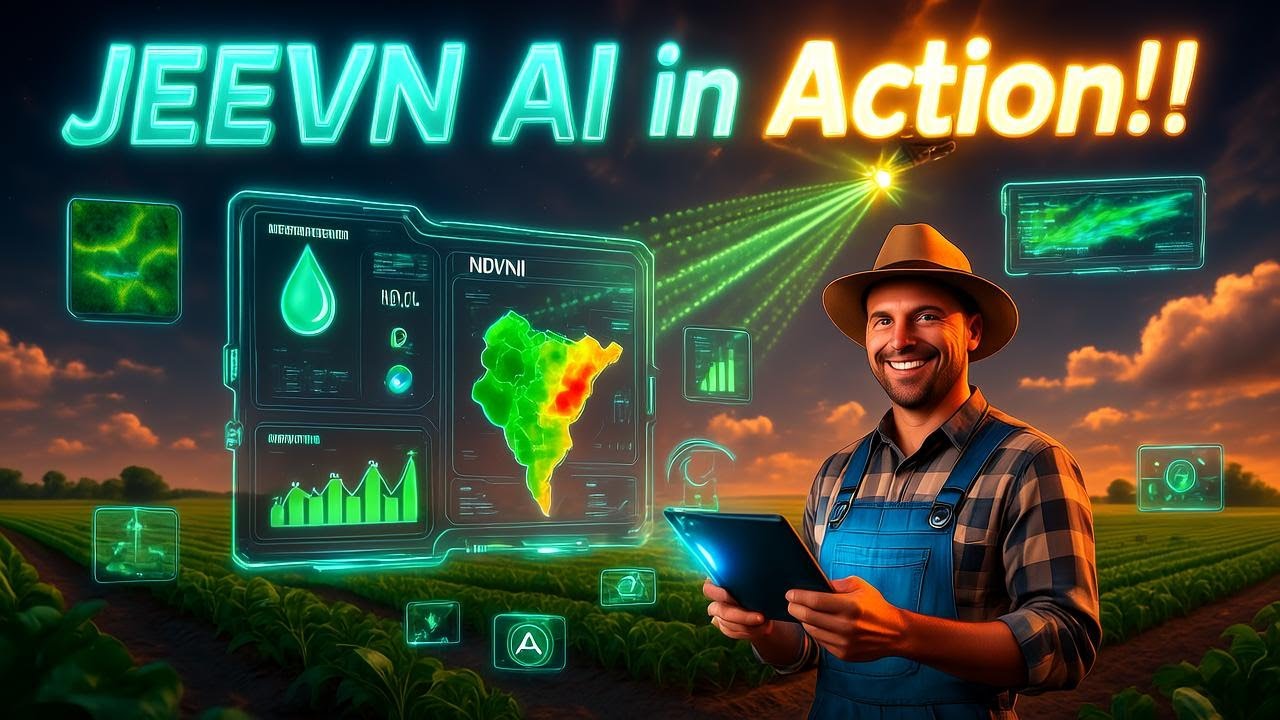
- ✔ JEEVN AI Advisory brings actionable guidance using real-time weather, yield analytics, and geospatial insights.
- ✔ Blockchain traceability assures secure, transparent supply chains in agriculture and restoration.
- ✔ Fleet and resource management tools help optimize equipment and reduce logistics and operational costs.
- ✔ Environmental monitoring supports compliance and sustainability reporting, including carbon footprinting for regulatory and voluntary programs.
Get started instantly: Monitor fields, forests, or restoration sites using the Farmonaut web, Android, or iOS apps—or integrate advanced satellite insights via the Farmonaut API and developer documentation.



Scale operations with Farmonaut Large-Scale Farm Management—designed for agribusiness, forestry nurseries, and reclamation projects, it enables integrated oversight and robust data workflows.
For mining, infrastructure or large operational fleets, our Fleet Management suite optimizes machinery usage and site logistics—reducing fuel waste and maximizing asset safety.
Satellite-driven technology like Farmonaut’s eliminates much of the infrastructure burden—making affordable, actionable data accessible even in many remote fields, forests, and reclamation sites.
FAQ: Disadvantages & Advantages of Smart Agriculture Using IoT
What is smart agriculture using IoT, and how does it differ from traditional farming?
Smart agriculture using IoT leverages a network of connected sensors, devices, and data analytics to monitor and automate resource management (e.g., soil, water, pest control). Unlike traditional methods, it relies on real-time data to optimize outcomes, reduce waste, and boost yields.
What are the main advantages of smart agriculture using IoT?
Advantages include: resource efficiency, lower inputs and costs, higher and steadier yields, improved quality, enhanced traceability, faster operational response, and better risk management. Analytics platforms also drive more informed decision-making for sustainability and profitability.
What are the key disadvantages of smart agriculture using IoT?
Main disadvantages: High upfront and ongoing costs (hardware, subscriptions, maintenance); limited connectivity in rural/remote sites; fragmented data standards and privacy/security issues; technical skill gaps; and risk of over-reliance on automated systems. These factors must be weighed before large-scale adoption.
How can smallholders or resource-limited operators benefit from IoT?
Starting with pilot projects, choosing modular systems, joining cooperatives, and leveraging affordable satellite data (such as through Farmonaut) can help lower cost and skill barriers—maximizing benefits even in small or marginal farms, forestry plots, or restoration teams.
Is IoT in agriculture environmentally sustainable?
When applied thoughtfully, IoT can significantly reduce water and chemical waste, lower energy use, and enhance environmental compliance. However, device e-waste and inequities in access can create new sustainability challenges, so a balanced approach is needed.
Conclusion: Making Smart Decisions for Agriculture’s Future
The advantages of smart agriculture using IoT—precision, efficiency, and resilience—stand as a beacon for the future of sustainable food, timber, and environmental resource management. Yet, the disadvantages of smart agriculture using IoT remind us that any revolutionary technology will inevitably introduce new challenges, from high costs and connectivity gaps, to issues in data management, skill development, and long-term stewardship.
Our collective task is not to blindly adopt or reject IoT for farming, forestry, or reclamation projects—but to scrutinize each decision, weighing the pros and cons, quantifying both risks and returns, and implementing best-practice strategies. With thoughtful rollout, robust training, data governance, and an inclusive approach, IoT can be a transformative force—one that amplifies both productivity and environmental care across landscapes.
To experience the next generation of IoT-enabled agriculture, forestry, and resource management, explore Farmonaut’s platform and app solutions for your operation.
Learn more about crop plantation & forest advisory—complementing your IoT strategy with data-driven, affordable, and remote-monitoring expertise.
Ready to weigh the benefits and risks for your next farm, forest, or resource project? Harness the power of real-time data with Farmonaut’s affordable, scalable technology—moving smart agriculture from vision to reality, sustainably.
Discussion
Questions, corrections or field experience? Share them below. First-time comments are reviewed before they appear, and your email is never published.
No comments yet. Be the first to add a question or your experience.

 Saraswati Agro
 Geno
Geno Hayleys Agriculture
 Linx Agritech
 Adinet
 Save Your Soils
 Grandstream Algérie
 XOS Realty
 Geospatial Lab Africa
 Agro La Gándara
 HIPSAC
 ZOL Zimbabwe
 Juligerm
 AdBio
AdBio MISE Maroc
 NWNS
NWNS
 Licence holder · Niger · Gold










