

Reviewed September 2026 against USDA NASS and peer-reviewed irrigation science.
Try it: Run your own numbers →
A dripper is a small calibrated device that releases water slowly at a fixed rate — typically 0.5 to 4 gallons per hour — directly onto the soil above a plant’s root zone, so almost none of it is lost to evaporation or runoff. That precision is why drip irrigation reaches 85–90% water application efficiency, compared to 60–70% for flood irrigation, according to a 2023–2025 peer-reviewed comparison published in Applied Water Science. If you searched for “advanced drip irrigation system,” “how does a dripper work,” or “drip irrigation system repair,” this page covers all of it: the mechanics, the smart-automation layer, what goes wrong and how to fix it, and a calculator to size your own system.
- How Does a Dripper Work? The Mechanics Explained
- Drip Irrigation Adoption: The US Numbers
- Finding a Drip Irrigation System or Installer Near You
- Drip Irrigation Automation: What “Smart” Actually Means
- Calculator: Estimate Your Drip System’s Water Use
- 7 Water-Efficient Drip Irrigation Strategies
- Comparison Table: Water-Saving Strategies Ranked
- Drip Irrigation System Repair: Diagnosing Common Failures
- Are There Mining-Specific Drippers?
- Farmonaut and Smart Drip System Management
- Educational Videos on Dripper Systems & Irrigation Technology
- FAQs
- Farmonaut Subscription Plans
- Conclusion & Next Steps
- Try it: Run your own numbers
How Does a Dripper Work? The Mechanics Explained
A dripper (also called an emitter) sits on or inline with a length of polyethylene tubing that runs at low pressure — usually 8 to 30 psi — from a pressurized water source. Inside the dripper, water passes through a long, narrow, often turbulent-flow path that dissipates pressure before it exits as individual drops or a slow trickle. That internal flow path is the entire mechanism: it’s what lets a dripper hold a fixed output regardless of small pressure swings elsewhere in the line.
- Drippers (point-source emitters): Attached at intervals to solid tubing, each one waters a single plant or tree.
- Inline drippers: Built into the tubing wall at fixed spacing (commonly 12–24 inches), delivering continuous, uniform output along a row — the standard choice for row crops and closely spaced orchard trees.
- Pressure-compensating drippers: Use a flexible diaphragm that adjusts the flow path as pressure rises, holding output nearly constant even on sloped ground.
- Drip sprinkler (micro-spray) hybrids: Combine a small emitter with a fanned spray head, used where a wider wetted area is wanted than a single drip point provides.
A properly filtered, pressure-regulated drip system delivers 85–90% of applied water to the root zone (Applied Water Science, 2023–2025), against 60–70% for flood or furrow irrigation. That 15–30 point gap is the entire economic case for converting a field — not a vague “efficiency,” a measured difference in how much of what you pump actually reaches the crop.
The yield case is separate from the water case, and it’s just as concrete: field trials led by USDA-ARS and university researchers found a 12.7% increase in maize grain yield under drip irrigation compared to flood irrigation, published in 2023. That’s not a theoretical ceiling — it’s what happened in real plots, driven by steadier root-zone moisture rather than the boom-and-bust cycle of periodic flooding.
Drip Irrigation Adoption: The US Numbers
As of the 2023 USDA NASS Irrigation and Water Management Survey, 6.4 million acres of US farmland were under drip, trickle, or micro-irrigation — 12% of the country’s 53.1 million total irrigated acres. That share is concentrated: drip dominates in California tree fruit, nut orchards, and vineyards, and in vegetable production across the Southeast and Southwest, while row-crop corn and soybean acreage across the Midwest still runs overwhelmingly on center-pivot and gravity systems. The same survey counted 60,160 US farms operating a drip irrigation system in 2023.
Those figures come from the USDA NASS Irrigation and Water Management Survey highlights, with the farm-count detail in the NASS October 2024 newsroom release. NASS runs this survey on a five-year cycle tied to the Census of Agriculture; the next full census round lands in 2028. For anything more current than that, check the ongoing updates at nass.usda.gov/Newsroom and search “irrigation survey” — NASS does post interim figures between census years.
Finding a Drip Irrigation System or Installer Near You
If you’re searching for a drip irrigation system or installer near your own operation, the fastest reliable channel in the US is your state’s Cooperative Extension office — university extension services (UC Davis, Kansas State, Penn State, and their counterparts in every state) maintain lists of certified irrigation designers and publish regionally specific pricing that updates annually, because trenching costs, labor rates, and permitting requirements vary by county. National big-box suppliers and irrigation-specific retailers (Toro, Netafim, Rain Bird dealer networks) also list authorized installers by ZIP code on their own sites. There isn’t a single national installer directory or verified nationwide price list published anywhere in the research available for this piece — treat any site claiming a fixed national installation price per acre with skepticism, and get two or three local quotes instead, since materials plus labor for a bare-bones system and a sensor-integrated one can differ by several multiples of cost.
Drip Irrigation Automation: What “Smart” Actually Means
“Smart irrigation system” and “drip irrigation automation system” both describe the same layer added on top of the physical dripper network: a controller that opens and closes zone valves based on a schedule, a sensor reading, or both, instead of a person turning a tap. The components are consistent across vendors:
- Soil moisture sensors: Buried probes reporting volumetric water content, triggering irrigation only when moisture drops below a set threshold rather than on a fixed clock.
- Weather-linked controllers: Adjust scheduled run-times using evapotranspiration data or forecast rainfall, skipping cycles after a storm.
- Zone valve automation: Solenoid valves controlled remotely, letting one controller manage different water budgets for different blocks of the same field.
- Satellite-linked scheduling: Uses vegetation and moisture indices from satellite imagery (NDVI, NDWI) to flag zones under water stress before visible wilting occurs.
What the research available for this article does not contain is a verified US-market adoption rate or cost premium for automated versus manual drip systems — that figure isn’t published in a form reliable enough to cite here. The honest way to get it for your own operation is to request itemized quotes for both a manual (hand-valve) and an automated (controller-plus-sensor) build-out from the same installer, so the premium reflects your actual site conditions rather than a national average that may not apply to your acreage, crop, or terrain.
Automation adoption in US drip irrigation tracks two things: the falling cost of soil-moisture sensors and controllers, and state-level water-restriction rules that make automated shutoff a compliance requirement rather than a convenience. Watch your state’s water resources agency and USDA NASS’s next interim irrigation update for a shift in either direction.
Calculator: Estimate Your Drip System’s Water Use
Enter your own field size, emitter spacing, and flow rate below to estimate gallons applied per irrigation cycle and compare it against the water your system would use at flood-irrigation efficiency instead.
Run your own numbers
Assumptions: drip efficiency fixed at 87.5% (midpoint of the 85–90% range cited above) and flood efficiency at 65% (midpoint of the 60–70% range from the same source). Excludes evapotranspiration, soil type, slope, pressure loss over long tubing runs, and seasonal variation — use it to compare relative water volumes, not as an irrigation design specification.
7 Water-Efficient Drip Irrigation Strategies
These seven strategies compound: each one addresses a different point of water loss, so combining several typically outperforms any single change.
-
Use Pressure Regulation and Consistent Flow Control
Pressure-compensating drippers and inline regulators hold flow uniform across sloped or long-run fields, so plants at the far end of a line receive the same volume as those near the source. This directly reduces the uneven soil-moisture distribution that causes both underwatered and overwatered zones on the same field. -
Adopt Inline Dripper Technology for Uniformity
Inline drippers embedded in the tubing at fixed spacing cut installation labor versus attaching individual point-source emitters, while keeping delivery consistent along every row — the standard approach for orchard rows and closely spaced row crops. -
Integrate Soil Moisture Sensors for Scheduling
Buried sensors report actual root-zone moisture, letting a controller skip a cycle the flood-irrigation calendar would have run anyway. This is the mechanism behind most of the water savings claimed for "smart irrigation" — the saving comes from not running unnecessary cycles, not from a faster dripper. -
Apply Mulch to Reduce Soil Evaporation
A mulch layer over the wetted zone blocks direct sun and wind from the soil surface, reducing evaporative loss and keeping the top few inches of root zone cooler — most valuable in the first two seasons after planting, before a tree canopy provides its own shade. -
Split and Target Irrigation Zones
Mature trees, young transplants, and cover-cropped alleys need different volumes on different schedules. A drip irrigation system with modular valve control lets each zone run its own program instead of averaging one schedule across mismatched needs. -
Use Hybrid Drip Sprinkler Systems Where Wider Coverage Is Needed
A drip sprinkler (micro-spray) hybrid combines a wider wetted pattern with lower flow than a full overhead sprinkler — useful for frost protection or establishing seedlings before switching to point-source drip once roots are established. -
Monitor and Maintain on a Fixed Schedule
Clogged emitters and split tubing are the single largest cause of underperforming drip systems, and they're invisible from a distance — a plant that looks stressed today was likely under-watered for days before it showed it. A fixed inspection interval, not a reactive one, is what catches this early. See the repair section below for how to diagnose specific failure modes.
Pair inline dripper systems with satellite-based carbon footprinting tools from Farmonaut to document reductions in water use and emissions against a verifiable baseline, rather than an estimated one.
Comparison Table: Water-Saving Strategies Ranked
| Strategy | Where It Applies Best | What It Actually Fixes | Maintenance Burden |
|---|---|---|---|
| Pressure Regulation & Flow Control | Sloped fields, long tubing runs, orchards | Uneven delivery across a single line | Low — check regulators annually |
| Inline Dripper Systems | Orchard rows, dense row crops | Installation labor, row-to-row uniformity | Moderate — flush lines each season |
| Soil Moisture Sensors | Any field with a fixed watering calendar | Watering on schedule instead of on actual need | Moderate — sensor calibration and battery checks |
| Mulch Integration | Young orchards, reforestation, row crops | Bare-soil evaporation | Low — reapply as it breaks down |
| Zone-Based Irrigation | Mixed-age plantations, orchards with interplanting | One schedule averaged across mismatched needs | Moderate — valve and controller upkeep |
| Hybrid Drip Sprinkler Systems | Seedling establishment, frost protection | Coverage gaps drip alone can't reach | Higher — two emitter types to maintain |
| Routine Monitoring & Maintenance | All drip systems, without exception | Clogging and leaks before yield loss appears | Ongoing — this is the maintenance |
Treating drip irrigation as a "set it and forget it" system. A network that isn't inspected on a fixed schedule accumulates clogged emitters and small leaks that go unnoticed until a crop shows visible stress — by which point the water loss has already been happening for days or weeks.
Drip Irrigation System Repair: Diagnosing Common Failures
Most drip irrigation repair calls trace back to one of four causes. Working through them in this order catches the majority of failures without unnecessary digging or replacement:
- Emitter clogging: Mineral deposits from hard water, algae, or fine sediment block the internal flow path. Symptom: one or several emitters producing a trickle or nothing while neighboring ones run normally. Fix: flush the line, then inspect and clean or replace the filter — clogging that recurs quickly usually means the filter mesh is too coarse or overdue for cleaning, not that the emitters themselves are faulty.
- Line breaks and rodent damage: A sudden pressure drop across an entire zone, or a wet patch appearing away from any plant, points to a split or gnawed section of tubing. Fix: locate the wet spot, cut out the damaged section, and splice with a compression coupling rated for the tubing diameter.
- Root intrusion: Tree and shrub roots can grow into emitter openings seeking moisture, eventually blocking flow entirely. Fix: reposition the emitter slightly away from the trunk, or switch to a root-resistant emitter design in that zone.
- Pressure regulator or valve failure: An entire zone running too fast, too slow, or not shutting off after its cycle points to the regulator or solenoid valve rather than the tubing. Fix: test pressure at the zone's inlet against the regulator's rated output; replace the regulator or valve if the reading doesn't match.
The research available for this article does not include a verified national or regional labor rate for drip line repair, since contractor pricing varies by state and by whether the job is a simple splice or a full zone valve replacement. To get an accurate number for your own situation, request a callout quote from two irrigation contractors listed through your state's Cooperative Extension irrigation program, and ask them to itemize materials versus labor so you can compare quotes on equal terms.
Are There Mining-Specific Drippers?
There is no dripper hardware manufactured specifically for mining applications as a distinct product category — the emitters, tubing, and regulators used in mine-site revegetation and dust suppression are the same agricultural-grade components covered above, selected for durability and clog resistance in the harsher conditions a mine site presents (compacted or low-organic-matter soils, exposed tubing runs, wider temperature swings). Where mining operations do need something agriculture doesn't: water-use verification for regulatory reporting and reclamation compliance, since a mine's water withdrawal and revegetation irrigation are typically subject to separate permitting from a farm's. That's a monitoring and reporting requirement layered on top of standard drip equipment, not a different dripper.
Farmonaut and Smart Drip System Management
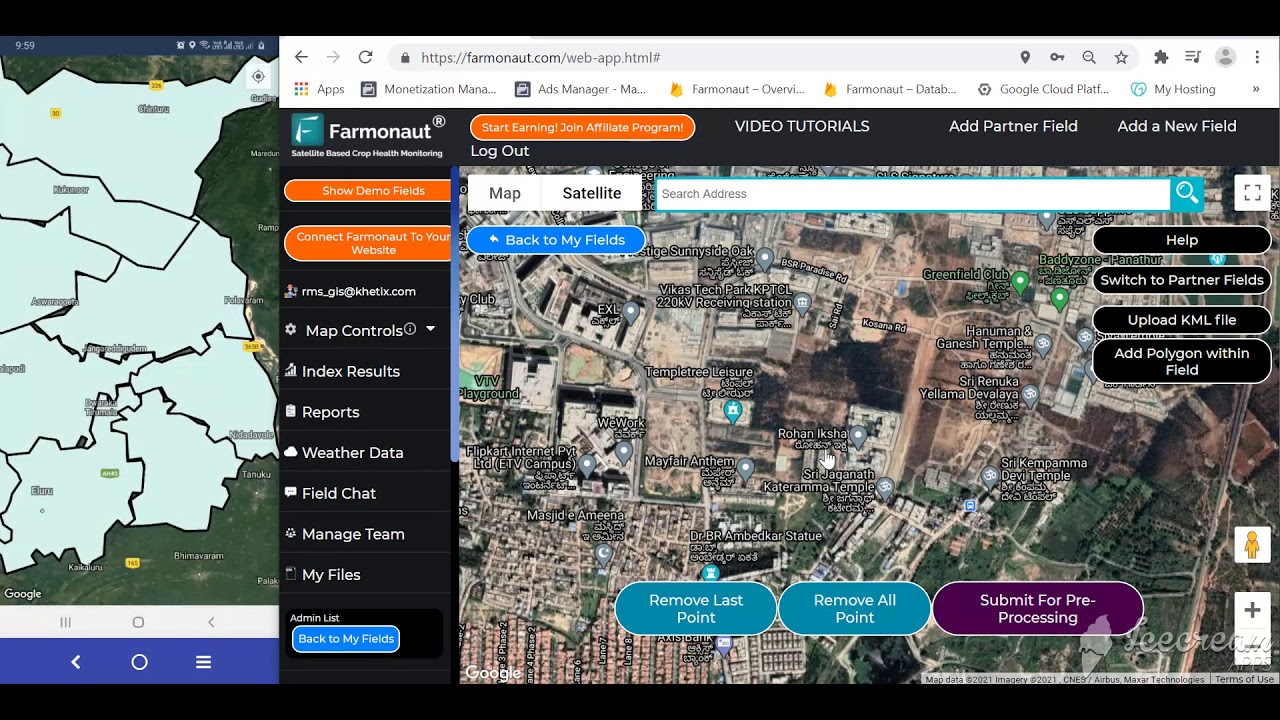
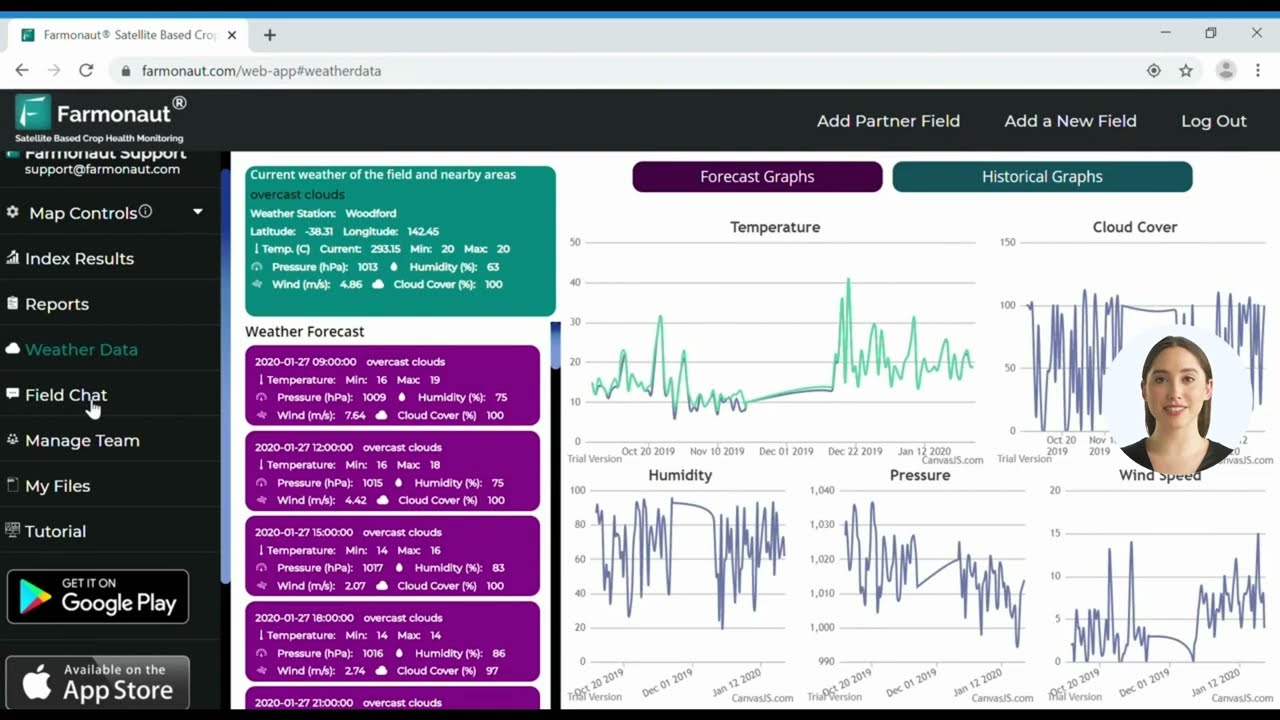
Farmonaut delivers satellite-based monitoring and AI-driven advisory that plugs into the automation layer described above — the same soil-moisture and vegetation-index data behind smart irrigation scheduling, made accessible without site-installed hardware.
- Large-Scale Farm Management: Track water usage and crop health across multiple plantations or orchards from one dashboard.
- Product Traceability: Document sustainable water practices and source authenticity for export and compliance requirements.
- Fleet Management: Coordinate maintenance crews for faster response when a drip line needs repair.
- Carbon Footprinting: Quantify emissions reduction tied to converting from flood to drip irrigation.
- Crop Loan & Insurance: Satellite-verified irrigation and crop health can support financial product applications.
The platform is accessible via web and mobile app, and the API service lets businesses integrate satellite insights directly into their own irrigation control systems.



View Farmonaut's API Developer Docs to connect satellite-powered water monitoring with drip system automation in agriculture, forestry, or mining.
Pair Farmonaut's Jeevn AI Advisory System with a drip system for trees to schedule irrigation from soil and plant-health signals read directly from satellite imagery, rather than a fixed calendar.
Data Points Worth Knowing
- US farms running drip irrigation in 2023: 60,160, per USDA NASS.
- Drip/trickle/micro-irrigation share of total US irrigated acreage in 2023: 12% (6.4 million of 53.1 million acres).
- Maize yield gain under drip versus flood irrigation: 12.7%, from 2023 USDA-ARS and university field trials.
- Water application efficiency gap between drip and flood irrigation: roughly 20–25 percentage points (85–90% versus 60–70%).
⚠ Risks & Limitations of Dripper Systems
- Clogging: Hard water and fine sediment block small emitter openings — filtration quality determines how often this happens.
- Root Intrusion: Poor emitter placement near mature trees invites root growth into the opening.
- Power Dependency: Automated valve and sensor systems need backup power on off-grid sites, or they revert to manual operation during outages.
- Upfront Cost: Materials and labor for a sensor-integrated system run higher than a basic manual layout — get itemized local quotes rather than relying on a national average.
- Overscheduling: Running a fixed calendar without moisture feedback can waste water even on a well-built drip system — the hardware alone doesn't guarantee efficient use.
Educational Videos on Dripper Systems & Drip Irrigation Technology





Frequently Asked Questions: Dripper System, Drip Irrigation & Repair
How does a dripper work?
Water enters the dripper under low pressure and passes through a narrow internal flow path that dissipates most of that pressure, so it exits as a slow, steady trickle rather than a jet. Pressure-compensating models use a flexible diaphragm to hold that output constant even as line pressure varies with slope or distance from the source.
What is a drip irrigation automation system?
It's a controller layer added to standard drip hardware — soil moisture sensors, weather data, or satellite indices feed a valve controller that opens and closes irrigation zones automatically, replacing a manually operated schedule.
How much water can I save with drip irrigation?
Drip irrigation reaches 85–90% water application efficiency versus 60–70% for flood irrigation (Applied Water Science, 2023–2025) — a 15–30 percentage point gap in how much applied water actually reaches the root zone rather than being lost to evaporation or runoff.
My drip irrigation system needs repair — where do I start?
Check emitters near the fault first for clogging (the most common cause), then look for a sudden pressure drop across a zone (line break), a wet patch away from any plant (rodent damage or split tubing), or a zone that won't shut off or runs at the wrong rate (regulator or valve failure). See the repair section above for fix steps on each.
Are inline dripper systems suitable for mixed-crop plantations?
Yes — inline drippers can be run at different spacing and flow rates in different zones of the same field, so a mixed-age orchard or plantation can give young transplants and mature trees separate watering profiles on the same tubing network.
Can I monitor and control my irrigation system remotely?
Yes — platforms like Farmonaut combine satellite imagery with mobile access, so a grower can review soil moisture and vegetation health and adjust irrigation zones without visiting the field in person.
Explore Farmonaut Subscription Options
Get more from your drip irrigation setup with Farmonaut's satellite-driven resource management tools for agriculture, forestry, and mining.
Conclusion & Next Steps
Drip irrigation's case rests on two verified numbers: 85–90% water application efficiency against flood irrigation's 60–70%, and a 12.7% maize yield gain in controlled US field trials. Adoption is still a minority position nationally — 12% of irrigated acreage and 60,160 farms as of the 2023 USDA NASS survey — concentrated in orchards, vineyards, and vegetable production rather than broadacre row crops, which tells you where the economics clear most easily today.
The durable part of this article isn't the 2023 figures — it's the diagnostic method: check filtration and emitter clogging first, verify pressure and zone uniformity second, and confirm actual root-zone moisture with a sensor or satellite index before assuming a schedule is correct. That checklist holds regardless of what NASS's next survey round shows. For the freshest adoption numbers, check NASS's newsroom updates directly rather than this page's 2023 snapshot.
Ready to start? Access Farmonaut's platform to explore real-time satellite monitoring and AI-powered water management for your dripper systems, or integrate the API into your ERP or irrigation hardware today.

 Godrej Agrovet
 Hayleys Agriculture
 Linx Agritech
 Adinet
 Save Your Soils
 GalaxEye Space
 Grandstream Algérie
 XOS Realty
 Geospatial Lab Africa
 Agro La Gándara
 HIPSAC
 ZOL Zimbabwe
 Juligerm
 AdBio
AdBio MISE Maroc
 NWNS
NWNS Red August Group
 Farm Inc
 WeMe Global
