

Livestock Tracking Software: Compare 6 Farm Systems
Reviewed August 2026 against USDA NASS/ERS Census of Agriculture and Farm Labor data, Texas A&M AgriLife Extension’s traceability analysis, and Precedence Research market sizing.
Try it: Farm Time-Tracking Labor Cost Calculator →
Livestock tracking software, farm time tracking software, and farm vehicle tracking software solve three different problems: animal identity and health records, human labor hours, and equipment location. Most farms searching for one end up needing pieces of all three, and the right combination depends on herd size, whether you cross state lines, and how many people you pay by the hour. Below is a feature-by-feature comparison of the leading livestock platforms, the current USDA data on herd size and labor cost, and a calculator to size the payback for your own operation.
What’s in This Guide
- Livestock Tracking vs. Farm Time Tracking vs. Vehicle Tracking
- Why Herd Size Determines Which Tool Fits
- Livestock Tracking & Management Software: Feature Comparison
- Livestock Traceability, Eartags, and the EID Rule
- Livestock Transport Management: Compliance on the Move
- Farm Time Tracking Software: Turning Labor Hours Into Records
- Tracking Software for Farm Vehicles & Equipment
- “Farmer Software”: Choosing an All-in-One Platform
- How Farmonaut Extends These Tools With Satellite Data
- Farmonaut Subscription Plans
- Buying Checklist Before You Commit
- Frequently Asked Questions
- Conclusion
Livestock Tracking vs. Farm Time Tracking vs. Vehicle Tracking
These three phrases get used interchangeably in search results, but they name different software categories with different vendors:
- Livestock tracking / management software records animal identity, health events, breeding, weights, and transactions per head or per lot. This is what Cattlytics, Herdwatch, and AgriWebb do.
- Farm time tracking software logs hours worked, task assignments, and pay basis for hired labor — the record set the US Department of Labor’s Wage and Hour Division requires under the Fair Labor Standards Act, regardless of whether overtime rules apply to a given worker class.
- Farm vehicle / fleet tracking software uses GPS telematics to log location, fuel use, and hours of operation for tractors, ATVs, and trucks — closer to commercial fleet management than to animal records.
A “livestock management system” or “livestock data management solution” is usually the first category under a different name; a “livestock transport management system” is a subset focused on the movement leg — loading, hauling, and the paperwork a state line or a processor demands. Buying the wrong category is the single most common reason these projects stall, so pick a section below by what you’re actually trying to solve, not by which term you typed into a search box.

Why Herd Size Determines Which Tool Fits
The 2022 Census of Agriculture counted 622,000 US farms with beef cows, holding 29.2 million beef cows on December 31, 2022 — an average of 47 head per operation, per the USDA Economic Research Service. That average hides an extreme split: 55% of farms with beef cows ran fewer than 20 head, together holding just 9% of the national inventory, while farms with 1,000 or more head made up under 1% of operations but held 10% of the herd. The remaining roughly 44% of farms, in the 20–999 head range, controlled the other 81% of inventory. The next Census of Agriculture is due in 2027; check USDA ERS then for the updated split.
That split matters because a 15-cow operation and a 1,500-head feedlot are not shopping for the same software. A small herd needs simple per-animal records a family member can update from a phone; a large or multi-site operation needs role-based access, batch health protocols, and export formats a veterinarian or auditor can consume directly.
Livestock Tracking & Management Software: Feature Comparison
We compared the six third-party platforms most often shortlisted alongside Farmonaut, plus folio3’s livestock management software guide as a deeper vendor-by-vendor reference if you want more than a summary table:
| Platform | Species Focus | Health & Breeding Tracking | Transport / Compliance Records | Best-Fit Herd Size |
|---|---|---|---|---|
| Cattlytics | Beef & dairy cattle | Full health, breeding, performance modules | Movement and treatment history exports | Mid to large (100+ head) |
| FarmKeep | Multi-species | Health, breeding, and performance reporting | Basic record export | Small to mid |
| Herdwatch | Cattle, sheep, multi-species | Herd records, compliance-focused | Regulatory and inspection-ready records | Small to mid |
| Farmbrite | Multi-species, mixed farms | Livestock, task, and financial management combined | Custom fields for compliance docs | Small to mid, diversified |
| Farmrexx | Multi-species | Animal tracking plus equipment records | Task and equipment logs, not transport-specific | Small to mid |
| AgriWebb | Beef, sheep, ranch operations | Performance analytics, team collaboration | Mob movement and paddock records | Mid to large ranch operations |
None of these six list public per-head pricing on their marketing pages as of this review; request a quote and a trial account before committing, and confirm export formats match what your veterinarian, processor, or state auditor actually accepts.
Market Growth: Why Adoption Is Accelerating
Precedence Research put the US livestock monitoring software and hardware market at $1.98 billion in 2025, forecasting growth to $8.27 billion by 2035 at a 15.37% compound annual growth rate for 2026–2035. North America held over 33% of the $8.56 billion global 2025 market in the same report. Other research firms publish global 2026 estimates ranging from roughly $660 million to $10 billion depending on how they define “livestock monitoring,” so treat any single figure as directional rather than exact, and pull the report methodology before quoting it in a business case.
Livestock Traceability, Eartags, and the EID Rule
“Livestock management system” searches increasingly overlap with a specific regulatory question: does my herd need electronic identification? USDA’s Animal and Plant Health Inspection Service finalized a rule effective November 5, 2024 requiring eartags to be both visually and electronically readable to count as official identification for interstate movement of covered cattle and bison. Per the Texas A&M AgriLife Extension analysis of the rule, coverage is limited to sexually intact cattle and bison 18 months or older, all dairy cattle regardless of age, and cattle or bison used in rodeo, recreational, show, or exhibition events when they cross state lines — an estimated 11% of the US cattle herd. Cattle moving directly to slaughter are excluded, and visual-only tags applied before November 5, 2024 remain valid for the animal’s life. Tags themselves are distributed free through state veterinarian offices under a $15 million congressional appropriation cited in the same analysis. Because this is a live rulemaking with pending legal challenges, confirm current status with your state veterinarian’s office or the AgriLife Extension page above before tagging a shipment.
If your herd falls in that 11%, your livestock tracking software needs an EID/RFID read field and an export format your state veterinarian’s traceability database accepts — check this before signing a contract, not after your first interstate shipment gets held up.
Livestock Transport Management: Compliance on the Move
A livestock transport management system covers the leg between the farm’s records and the buyer’s dock: load manifests, health certificates, brand or EID reads at loading, and chain-of-custody documentation a processor or auction barn will ask for. This is the piece a general livestock management platform often treats as an afterthought, so if transport compliance is your main pain point, filter vendors on that column in the comparison table above before anything else.
Farmonaut’s own strength here is on the traceability side rather than dispatch: our blockchain-based product traceability platform lets you prove a product’s chain of custody from farm to buyer, which pairs with a transport system’s load records rather than replacing them. If sustainability reporting is part of your buyer’s requirements on top of traceability, our carbon footprint tracking tool covers the emissions side of the same compliance packet.
Farm Time Tracking Software: Turning Labor Hours Into Records
Farm time tracking software exists because of a compliance gap, not a convenience: agricultural workers are exempt from the Fair Labor Standards Act’s overtime provisions under 29 CFR Part 780 (with narrower exemptions for very small operations, family labor, and range livestock workers), but they are not exempt from minimum wage, and employers must still keep accurate hours-worked and pay-basis records under the Act’s recordkeeping rules. The law does not mandate a specific timekeeping method — a paper time card, a supervisor’s log, and a digital app are all acceptable as long as the record is complete and accurate. What changes with software is how fast you can produce that record when an inspector, insurer, or payroll auditor asks for it.
On the cost side, USDA’s Economic Research Service Farm Labor data for 2024 put the average hourly wage for nonsupervisory crop and livestock workers at $18.13, farm supervisors at $26.83, and agricultural managers at $30.70. Agricultural wage-and-salary employment reached 1.18 million jobs in 2024, up 10% from 1.07 million in 2010, and the farm wage has climbed to roughly 60% of the average nonfarm wage, up from about 50% in 1990 — a gap worth knowing before you budget for hired labor. NASS republishes updated Farm Labor wage figures each quarter, so pull the current release before setting a payroll budget.
Use the calculator below to see what manual time tracking is actually costing your operation before you shop for a fix — every input is yours to set, including the wage and the percentage of time you think a digital system would recover.
Farm Time-Tracking Labor Cost Calculator
Tracking Software for Farm Vehicles & Equipment
Tracking software for farm vehicles is GPS fleet telematics applied to agriculture: location, engine hours, fuel use, and maintenance schedules for tractors, sprayers, trucks, and ATVs. It is a distinct category from livestock or labor tracking, and buying a livestock platform expecting vehicle telematics — or the reverse — is the most common mismatch we see in this search category. If fleet and equipment tracking is the actual need behind a "farm tracking software" search, Farmonaut's fleet management solution covers vehicle and equipment location, utilization, and resource allocation across multiple sites, separate from the animal-record tools above.
Before buying, confirm three things with any vehicle-tracking vendor: reporting interval (real-time vs. end-of-day), coverage in areas with weak cellular signal, and whether the platform exports engine-hour data in a format your maintenance software or dealer can read.
"Farmer Software": Choosing an All-in-One Platform
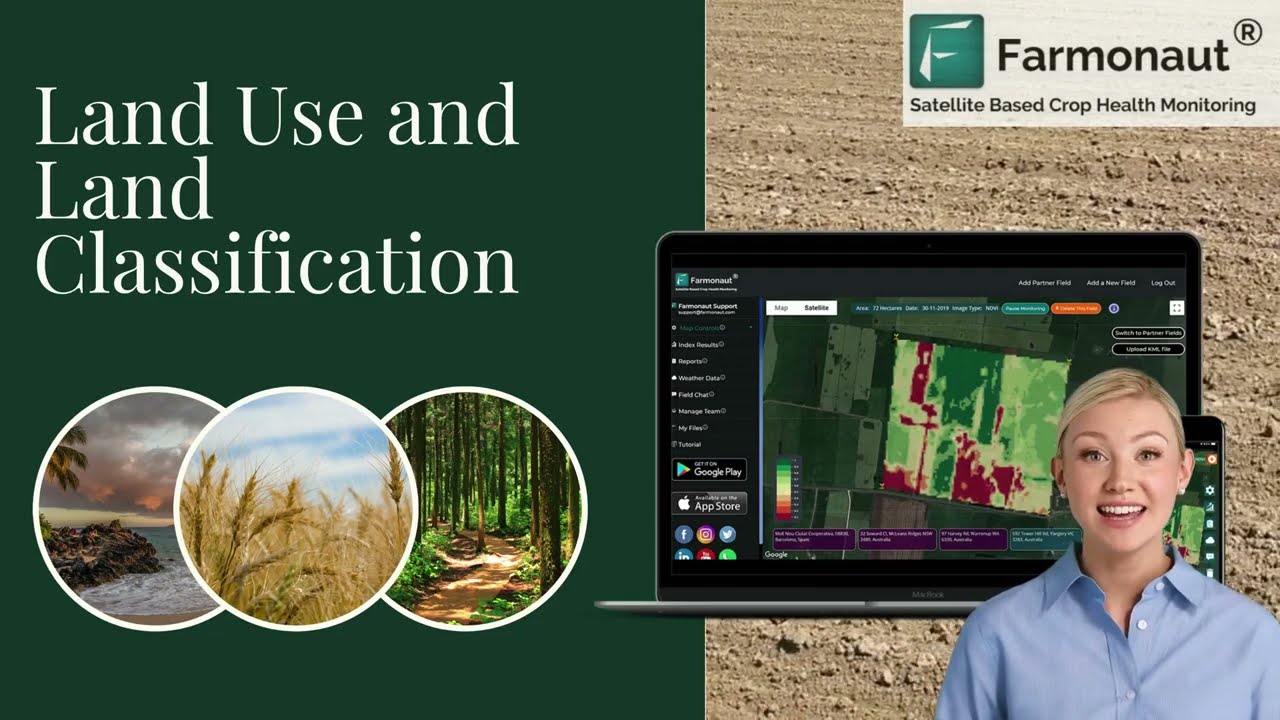
"Farmer software" is the broadest of the target searches, and it is usually someone looking for one platform to run crops, livestock, labor, and finances together rather than three separate subscriptions. For that use case, look at a large-scale farm management platform over a single-purpose tool: Farmonaut's agro-admin app is built for exactly this — crop and pasture monitoring, task assignment, and resource tracking in one system for operations managing multiple farms or blocks rather than a single herd.
The trade-off is real: an all-in-one platform rarely matches a specialist livestock tool feature-for-feature on breeding records, and it rarely matches a specialist fleet tool on telematics depth. Decide which gap you can tolerate before you commit budget to either approach.
How Farmonaut Extends These Tools With Satellite Data
Farmonaut's core is satellite-based crop and pasture monitoring, not per-animal health records, but it fills gaps the platforms above do not cover:
- Satellite pasture monitoring: evaluate pasture quality and field boundaries so grazing decisions are based on current vegetation data rather than a windshield survey.
- Jeevn AI advisory: real-time guidance on feeding schedules and pasture irrigation timing to reduce resource waste.
- Blockchain traceability: the product traceability platform proves a livestock product's chain of custody from farm to buyer.
- Carbon footprinting: the carbon footprint tool quantifies environmental impact for buyers who require it in a supply contract.
- API access: developers can pull satellite and weather data directly through the Farmonaut API and developer documentation to feed an existing livestock or farm management system rather than replacing it.
- Financing verification: the satellite-based farm verification page explains how digital field records can support loan or insurance applications.
The platform runs on Android, iOS, and Web, so a satellite-monitoring layer can sit alongside whichever livestock, time-tracking, or fleet tool you choose from the sections above.




Farmonaut Subscription Plans
Farmonaut offers subscription tiers for individual farmers, agribusinesses, cooperatives, and government institutions, priced for scale from a single herd to a multi-site operation.
Buying Checklist Before You Commit
Run any shortlisted platform, Farmonaut or otherwise, through this checklist before signing:
- Category match: confirm it actually covers the category you need — animal records, labor hours, or vehicle telematics — not an adjacent one that sounds similar.
- EID/traceability field: if any part of your herd falls in the 18-months-and-up, dairy, or show/rodeo classes crossing state lines, confirm the platform has an EID read field and an export your state veterinarian's office accepts.
- Recordkeeping completeness: for time tracking, confirm the export includes hours worked per day, wage basis, and pay rate — the minimum the FLSA recordkeeping rule requires.
- Integration: check whether it syncs with your existing accounting software, scale heads, or GPS receivers rather than requiring double entry.
- Support and trial: test a free trial or demo with your own data before paying, and confirm what support hours are actually staffed.
- Herd-size fit: weigh the platform's stated best-fit size (see the comparison table above) against your own operation before assuming a feature list applies at your scale.
Frequently Asked Questions
What's the difference between "livestock management software" and a "livestock management system"?
In practice they describe the same category — animal identity, health, and breeding records in a digital platform. "System" sometimes implies a broader operational setup (software plus hardware like RFID readers or scale heads), while "software" refers to the application itself.
Does farm time tracking software satisfy FLSA recordkeeping requirements on its own?
It can, provided the export includes hours worked each day and week, the wage basis, the pay rate, and standard employee identifying information — the elements the Department of Labor's recordkeeping rule requires. The law accepts any timekeeping method as long as the record is complete and accurate; software makes producing that record faster, not more legally required than a paper log.
Do I need electronic ID (EID) tags if I only sell cattle within my own state?
The federal EID rule that took effect November 5, 2024 applies to interstate movement of specific classes — intact cattle and bison 18 months or older, dairy cattle, and rodeo/show animals. Purely intrastate sales are not covered by the federal rule, though your state may impose its own identification requirements; check with your state veterinarian's office.
Can one platform track livestock, vehicles, and labor hours together?
A few broad "farmer software" platforms attempt all three, but the six livestock-specific vendors compared above and typical vehicle-telematics tools remain separate products built by different companies. Most operations end up running an animal-records platform alongside a payroll/time system and, where needed, a fleet-tracking tool, connected through export/import rather than a single login.
Is Farmonaut a livestock management platform?
No — Farmonaut's core product is satellite-based crop, pasture, and resource monitoring, plus blockchain traceability and carbon footprinting. It complements a dedicated livestock management platform rather than replacing one; the six vendors in the comparison table above are the specialist tools for per-animal records.
How current is the herd-size and wage data in this article?
The herd distribution comes from the 2022 Census of Agriculture (next Census due 2027). The wage figures are USDA ERS's 2024 annual averages, republished quarterly in the NASS Farm Labor report. Pull the current release from USDA ERS before budgeting off either figure.
Further reading:
Conclusion
Livestock tracking, farm time tracking, and farm vehicle tracking are three separate purchases dressed up in overlapping search terms. Match the category to the actual problem first — animal records, labor-hour compliance, or equipment telematics — then filter the comparison table above by herd size and, if any part of your herd crosses state lines, by EID support. The USDA Census and Farm Labor data above give you the scale and cost baseline to judge any vendor's claims against; the calculator gives you your own operation's numbers instead of an industry average.
Start with the Farmonaut satellite layer at the Web App, or install it on Android or iOS, then layer in whichever livestock, time-tracking, or fleet platform from this guide matches your actual gap.
Discussion
Questions, corrections or field experience? Share them below. First-time comments are reviewed before they appear, and your email is never published.
No comments yet. Be the first to add a question or your experience.

 XOS Realty
 Geospatial Lab Africa
 KhetiBuddy
 Agro La Gándara
 Global Agrifood
 HIPSAC
 ZOL Zimbabwe
 Juligerm
 AdBio
AdBio MISE Maroc
 NWNS
NWNS Red August Group
 Farm Inc
 WeMe Global
 Agrotoken
 Blue BearX
 Insignito
 Croptimum
 DnCubed
 Field Capacity
 Indosistim Teknologi
 Licence holder · Niger · Gold
 Licence holder · Nigeria · Gold + lithium










