

Farmland Funds 2025: Top Agriculture Venture Funds for Sustainable Growth & Investment
Introduction: Farmland Funds and the Rise of Agricultural Investment in 2025
In recent years, the intersection of finance and agriculture has gained considerable traction, driven by growing global demand for sustainable food production, climate change resilience, and rural development. By 2025, farmland funds—specialized investment vehicles targeting agricultural land and related assets—have emerged as a prominent financial instrument reshaping the agriculture sector’s financial landscape.
These funds, including agriculture venture funds, agricultural land funds, and farmland mutual funds, offer innovative pathways for investors to capitalize on the rising value and importance of farmland while providing critical capital to farmers and agribusinesses. As part of a diversified investment portfolio, these vehicles harness the inherent stability of the agricultural sector alongside its potential for growth.
Understanding Farmland Funds in 2025
Farmland funds are pooled investment vehicles designed to acquire agricultural land or invest in agriculture-related businesses, innovations, and supporting infrastructure. Unlike traditional equity or bond funds, these funds target the sector’s inherent stability, focusing on both operational efficiencies and sustainable practices to enhance asset value and generate returns.
Key drivers for this class of investment vehicles are:
- Stable income and appreciation: Rental income from land leases and long-term appreciation of farmland value often outpace inflation, offering resilience in turbulent markets.
- Food security and rural development: By injecting capital into the agriculture sector, these funds support sustainable food systems and rural communities.
- ESG alignment: A focus on sustainability, environmental impact, and social governance resonates with institutional investors and aligns with global climate goals.
- Access to innovation: Some funds directly support startups and agricultural technology adoption.
Farmland Funds & Regenerative Agriculture 2025

Types of Farmland Funds in 2025: Asset Classes & Strategies
Today’s investors can pursue several pathways to invest in farmland and agriculture. Here are the main types of funds:
-
Agricultural Land Fund:
- Primarily invests in owning farmland, typically leasing the land to farmers or farming enterprises.
- Income: Derives from land leases as well as appreciation in underlying asset value—a strong shield against inflation.
- Given farmland’s finite supply and increasing demand from population growth and changing dietary preferences, such funds appeal to those seeking stable, inflation-resistant returns.
-
Farmland Mutual Fund:
- These collective investment schemes offer diversified exposure to agriculture-related assets, including farmland, commodities, and agribusiness stocks.
- By pooling resources, retail investors gain access to agriculture markets and growth potential without needing to directly buy or manage land.
-
Agriculture Venture Funds:
- Focus more on innovation than land ownership, targeting startups and technologies driving change—like precision agriculture, agri-biotech, sustainable fertilizers, and supply chain solutions.
- These funds bridge capital gaps in the market, empowering new businesses and modernizing farming practices.
Quick Reference: How Do Farmland Funds Work in Practice?
Farmland funds commonly acquire plots on behalf of a pooled group of investors, lease out farmland for a fixed income stream, or invest in a diversified basket of agricultural assets and equity in leading agribusinesses. This varied approach offers unique risk and return profiles, optimal for those wanting access to an essential—but traditionally illiquid—asset class like farmland.
Real ways to invest in farmland funds
People searching for a farmland mutual fund usually find that few open-ended funds own farmland directly. The main listed and pooled options are:
- Farmland REITs. Gladstone Land (Nasdaq: LAND) owned 144 farms totalling 98,688 acres in 14 US states at 31 December 2025 (Gladstone Land 10-K). Farmland Partners owned or managed about 71,600 acres in 11 states at the same date (Farmland Partners). Both trade daily like shares.
- Agribusiness ETFs and mutual funds. These hold company shares, not land. The VanEck Agribusiness ETF (MOO), for example, tracks companies that earn at least 50% of revenue from agribusiness, such as fertilizer, seed, equipment and crop-trading firms (VanEck).
- Private agricultural land funds. Closed-end funds and online platforms buy farms and lease them to operators. They usually require accredited investors, have high minimums and lock money up for years.
For a benchmark, the NCREIF Farmland Index, which tracks institutionally owned US farmland, returned 0.20% in 2025: 3.05% income offset by a 2.80% fall in values (AgIS Capital, citing NCREIF). Returns swing between years and between annual and permanent cropland, so check any fund’s track record against the index for the same period.
This is general information, not investment advice. Read each fund’s offering documents or prospectus and speak to a licensed adviser before investing.
Why Farmland Funds Are Gaining Traction in 2025
The ascent of funds for agriculture and agriculture venture funds is propelled by a unique set of global trends and economic realities:
- Stable Returns & Inflation Hedge: Farmland’s income from leases, combined with its historical appreciation, often shields investors from inflation and economic volatility.
- Growing Demand & Population Pressures: World population was 8.2 billion in 2024 and the UN projects it to peak around 10.3 billion in the mid-2080s, which keeps long-term demand for farm output rising.
- Sustainability and ESG Integration: Many modern funds now center on ESG metrics—soil health, water and resource management, carbon footprint—appealing to the socially conscious investor.
- Technological Advancements: Adoption of precision farming, IoT sensors, and AI-based platforms have made investing in farmland less risky and more predictable.
- Diversification: In a world where traditional asset classes (equity, bond, real estate) may face increased volatility, farmland mutual funds offer a way to diversify portfolios.
The Role of Environmental & Social Governance (ESG)
Investors in 2025 are not just focused on financial returns—they require that their capital supports environmental sustainability and rural development. Many leading farmland funds now require that targeted land management aligns with regenerative farming, soil health initiatives, and measurable improvements in climate resilience.
Video: The Policy Debate — Land Use, Housing Crisis, and Farmland Protection

How to Compare Farmland and Agriculture Funds
Selecting the optimal fund depends on your investment horizon, risk appetite, and sustainability goals. Compare real funds on the points below, using each fund’s own offering documents and reported returns.
What Makes a Top Fund Stand Out in 2025?
- Strong, stable returns plus resilience in fluctuating markets
- Defined sustainability initiatives and ESG reporting
- Commitment to technology adoption: e.g., blockchain, real-time monitoring, AI-driven analytics
- Diversified exposure (by land type, region, or innovations funded)
- Transparency regarding ownership, management, and community engagement
Video: AI Drones & Game-Changing AgriTech in 2025

Challenges and Considerations for Investing in Farmland Funds
Despite the growth and potential of funds for agriculture and related vehicles, there are inherent challenges and considerations for investors in 2025:
- Regulatory & Ownership Restrictions: Many nations impose limits on foreign ownership of agricultural land and may treat farmland funds differently for tax purposes. Review local legal frameworks before investing.
- Illiquidity: Farmland investments are less liquid than stocks and bonds; selling ownership in the fund or land may take time.
- Ethical & Social Concerns: Particularly in emerging markets, “land grabbing” by large-scale or foreign investors can disrupt local communities and farmers.
- Market and Climate Risks: Volatility in agriculture commodity prices, extreme weather events, and climate change impact fund performance. However, diversified funds with robust risk management strategies help mitigate these challenges.
- Management Expertise: Success in farmland fund management requires specialized operational knowledge, working closely with farm managers, local authorities, and agronomists.
- Transparency: Not all funds provide adequate reporting on portfolio holdings, land management practices, or ESG initiatives.
It is crucial for any investor or fund manager to thoroughly assess the fund’s documentation, risk mitigation strategy, and track record.
Farmonaut’s Real-Time Monitoring for Land Risk Assessment
By leveraging Farmonaut’s satellite-based monitoring platform, investors, farmers, and fund managers can track vegetation health, drought, soil quality, and climate risk in real time—critical for ensuring capital is invested in resilient land. Farmonaut data solutions are available through Farmonaut’s App Suite (web, Android, iOS) and via direct API access for seamless portfolio management integration.



Future Outlook: The Evolution of Farmland Funds
Looking to the future, we expect farmland funds and agriculture venture funds to play an ever-more critical role in meeting global food and climate targets:
- Sustainable Returns: Funds increasingly tie financial returns to measurable ESG impact: reduced emissions, improved soil health, and positive contributions to communities.
- Pathways to Innovation: Next-gen agriculture venture funds invest exclusively in startups and disruptive technologies like blockchain-based traceability and real-time AI advisory systems.
- Resilience to Market Volatility: The agricultural sector remains a cornerstone of asset allocation for institutional investors, offering inflation protection and value appreciation even when markets are turbulent.
- Impact for Rural Communities: Well-structured funds act as a bridge for capital to reach underserved farmers, improving food system resilience and supporting rural development initiatives.
Institutional and retail investors can further expect greater transparency as digital technology, satellite monitoring, and blockchain advance the reporting capabilities of fund managers.
Video: The Future of Farming—Satellites, AI, and Geotagging

Innovative Technology, ESG, and Sustainable Growth in Agricultural Finance
The Power of Real-Time Data & Precision Technologies
The adoption of precision agriculture technologies—such as multispectral satellite imagery, real-time AI forecasting, and blockchain traceability—offers funds and farmers new ways to optimize resource use, reduce environmental impact, and boost yields. Farmonaut’s robust solutions enable carbon footprint monitoring for farmland, supporting funds’ ESG and compliance goals.
- Satellite-Based Monitoring: Determines vegetation health, soil moisture, and field boundaries for risk management.
- AI & Machine Learning: Forecasts yield, diagnoses crop diseases, and provides real-time advisory to optimize farming operations.
- Blockchain-Based Traceability: Provides full transparency across agriculture supply chains, ensuring authenticity and building consumer trust.
- Fleet Management Tools: Reduce operational costs, improve logistics, and boost farmland efficiency. Farmonaut Fleet Management allows investment managers to track vehicles and assets over large agricultural areas.
Funds integrating these innovative solutions can better ensure sustainability, maximize returns, and minimize environmental risk.
Video: Farmonaut’s Impact—Transforming Farming in 40+ Countries

Access to Financing: Insurance & Crop Loans Enhanced by Satellite Verification
Accurate, verifiable data is essential when deploying capital across a geographically diverse portfolio. Farmonaut provides satellite-based verification for crop loans and insurance, reducing fraud and improving access to finance for both fund managers and farmers alike.
Sustainability & Environmental Impact Tracking
Complying with regulatory demands and ESG criteria is now integral for any agriculture-focused investment vehicle. Farmonaut’s Carbon Footprinting tools assist funds in tracking and reducing emissions directly tied to their assets.
Supply Chain Transparency with Blockchain
Funds and their agribusiness partners benefit from blockchain-based traceability platforms. Read how Farmonaut’s traceability platform assures authenticity and ESG compliance for global agricultural supply chains.
Video: Farmonaut Farm Mapping Tutorial – Mobile App
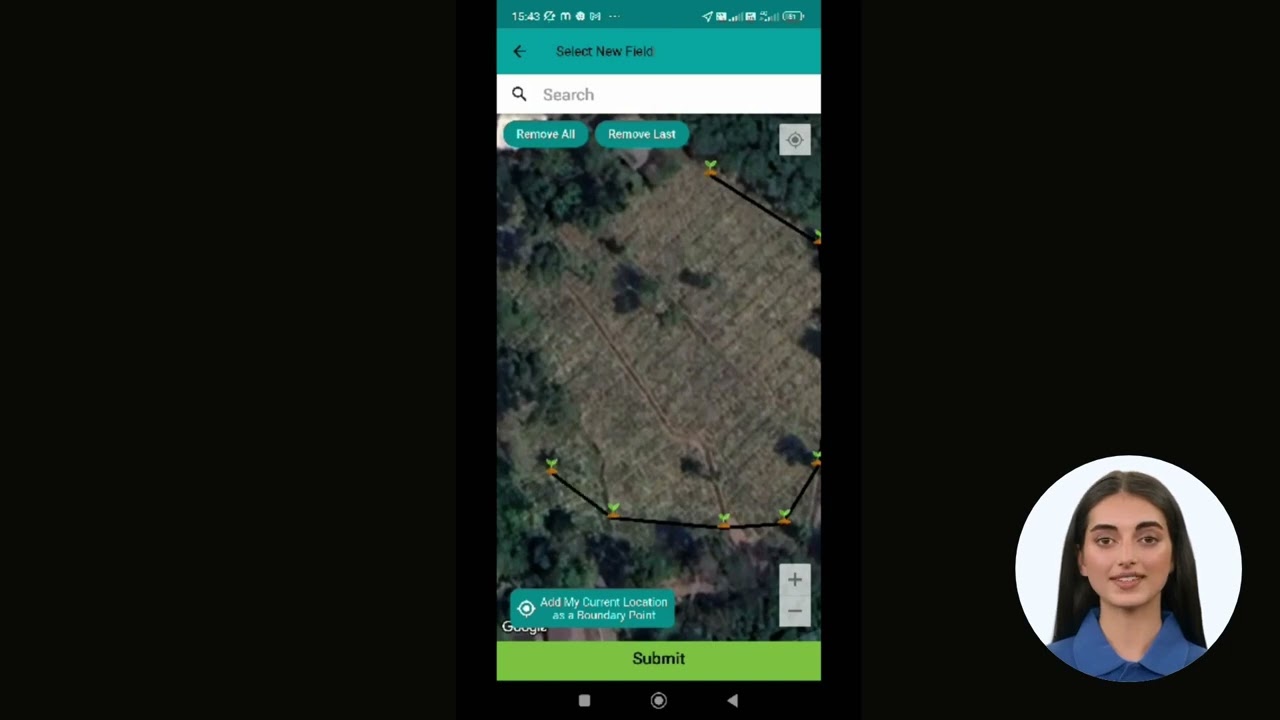
How Farmonaut’s Satellite Solutions Empower Farmland Funds
As a satellite technology leader, we at Farmonaut provide the advanced, affordable tools that are revolutionizing how funds, investors, and farmers manage agricultural assets worldwide:
- Comprehensive Monitoring: Our real-time updates on vegetation indices (NDVI), soil health, and environmental impact ensure informed investment decisions.
- Accessible Apps & API Integration: Our solutions work seamlessly via web and mobile apps and API, enabling investors and managers to remotely analyze, compare, and optimize multiple farmland holdings from anywhere.
- AI-Based Advisory: Our Jeevn AI Advisory System offers predictive analytics, weather intelligence, and customized operational recommendations for farming enterprises and fund managers.
- Blockchain Traceability: Our platform ensures transparency across agricultural supply chains, strengthening investor confidence and compliance.
- Resource and Fleet Management: We empower agricultural funds and large-scale farm management operations with cost-effective tracking and logistics optimization.
For those managing agriculture venture funds or directly investing in farmland, Farmonaut reduces information asymmetry, mitigates risk, and maximizes both financial and sustainable returns.
Video: Farmonaut® Music Anthem (Roots)

FAQs: Farmland Funds 2025 & Agriculture Venture Funds
What are farmland funds and how do they operate?
Farmland funds are pooled investment vehicles that acquire agricultural land or invest in agriculture-focused businesses and innovations. They generate returns through land rental income, appreciation, and, in some cases, equity stakes in agri-tech startups or agribusinesses.
What types of farmland funds are available in 2025?
The main types include agricultural land funds, farmland mutual funds, and agriculture venture funds, each offering different exposures—from direct land ownership and leasing to diversified agricultural assets and investments in agriculture-related technology startups.
Why are farmland funds resilient in volatile markets?
Because the supply of farmland is finite and demand for food is stable or rising, these investments provide steady income and usually track or exceed inflation. ESG-driven management further increases long-term resilience.
What are the key risks when investing in farmland funds?
Regulatory barriers, illiquidity, market risk, climate-related events, and social/ethical concerns around land rights are all important factors to consider. Due diligence and use of advanced monitoring tools are essential.
How has technology enhanced farmland fund management?
Innovations like real-time satellite monitoring, precision agriculture, blockchain-based traceability, and AI analytics enable better decision-making, risk mitigation, ESG tracking, and overall fund transparency.
How can retail investors participate in farmland and agriculture venture funds?
Many farmland mutual funds and select agriculture venture funds have relatively low minimum investments, allowing retail investors access to diversified agri-assets without direct land management responsibilities.
Listed alternatives to these funds exist as well, and the guide to farmland REITs and their yields compares them.
How does Farmonaut support funds for agriculture and fund managers?
Farmonaut delivers affordable, advanced satellite-based monitoring, AI advisories, and blockchain traceability; these technologies facilitate real-time risk assessment, productivity optimization, ESG compliance, and transparent reporting for agricultural investment funds.
Final Thoughts: Investing in Farmland, Agriculture, and the Foundations of Human Well-being
As global food security concerns mount and climate risks intensify, the role of farmland funds—including agriculture venture funds, agricultural land funds, and farmland mutual funds—is only set to rise in 2025 and beyond. For investors seeking stable returns, capital appreciation, and measurable impact for our planet and rural communities, this asset class offers a unique, resilient avenue for diversified, future-proof investment.
Empowered by cutting-edge technologies like those offered by Farmonaut, funds and their managers are now able to align financial returns with sustainable development—bridging gaps between capital markets and the heart of the world’s agriculture sector.

 Jontra
 Yaduka Agrotech
 Kalustyan
 Tucor
Tucor Geno
Geno Hayleys Agriculture
 Linx Agritech
 Adinet
 Save Your Soils
 Grandstream Algérie
 XOS Realty
 Geospatial Lab Africa
 Agro La Gándara
 HIPSAC
 ZOL Zimbabwe
 Juligerm
 MISE Maroc
