

Feasibility Plan Sample: Project Feasibility Plan Guide for Agricultural Success in 2025
Comprehensive Guide to Developing a Feasibility Plan in Agriculture for 2025
Table of Contents
- Introduction: The Essential Role of Feasibility Plans in Modern Agriculture
- Understanding Feasibility Plans in Agriculture
- Significance of a Robust Feasibility Plan in 2025
- Key Components of an Agricultural Project Feasibility Plan
- Agricultural Project Feasibility Components Table
- Step-by-Step Guide: Crafting an Effective Feasibility Plan
- Feasibility Plan Sample: Sustainable Rice Project (2026)
- Farmonaut Technologies Supporting Feasibility Planning
- Digital Tools and Solutions for Feasibility Plan Implementation
- Educational Videos: Feasibility Planning and Satellite Technologies
- FAQ: Feasibility Planning in Agriculture
- Conclusion: Driving Sustainable Success in Modern Agriculture
“Over 70% of successful agricultural projects in 2025 began with a detailed market analysis in their feasibility plan.”
Introduction: The Essential Role of Feasibility Plans in Modern Agriculture
In the rapidly evolving agricultural sector of 2025 and beyond, strategic planning has shifted from a luxury to a necessity. The foundation of this strategic transformation is the feasibility plan, a vital blueprint that ensures every project—from introducing new crop varieties to scaling up agribusiness—commences with a clear understanding of risks, market demand, operational requirements, and sustainable practices.
This comprehensive guide explores how to develop an effective project feasibility plan tailored to modern agriculture, covering all essential components, the practical step-by-step approach, and leveraging satellite and digital technologies. Whether you’re an individual farmer, an agribusiness investor, or a policy maker, a robust feasibility plan sample is the first step towards project success in the dynamic world of farming.
Understanding Feasibility Plans in Agriculture
A well-structured feasibility plan in agriculture evaluates whether an agricultural project is practically achievable, economically viable, and environmentally sustainable. It serves as a detailed blueprint to assess the viability, benefits, risks, and operational aspects—crucial before any substantial investment or project implementation.
- Unlike a simple proposal, a feasibility plan rigorously analyzes every dimension of the initiative, including market analysis, technical feasibility, regulatory compliance, and financial projections.
- It helps in identifying drivers of cost and revenue, determining allocation of land, labor, and water, and planning for risks like weather variability, pest outbreaks, and price fluctuations.
- For farmers and agribusiness investors, a feasibility plan sample not only aids in decision making but also in showcasing project credibility to banks, government agencies, and private investors.
“Project feasibility guides in agriculture reduce investment risks by up to 50% according to recent industry research.”
Significance of a Robust Feasibility Plan in 2025
The importance of a solid feasibility plan sample is more pronounced than ever in the face of climate change, technological advancements, and rapidly fluctuating market dynamics that are reshaping the agricultural sector:
- Minimizes financial risk by identifying cost drivers, revenue streams, and sensitivity to price and weather.
- Maximizes resource utilization by ensuring efficient allocation of land, labor, water, and machinery.
- Ensures legal and environmental compliance with regulatory frameworks.
- Facilitates access to funding from banks, agencies, and private investors through evidence-based projections.
- Showcases credibility and facilitates contingency planning for pests, supply chain disruptions, and unpredictable weather.
- Supports strategic foresight and sustainable development—key for long-term success and environmental stewardship.
Key Components of an Agricultural Project Feasibility Plan
Every robust project feasibility plan should encompass these essential components to cover all aspects of project viability and sustainability:
- Executive Summary: A concise overview of objectives, scope, and expected outcomes.
- Market Analysis: Evaluation of market demand, competition, potential buyers, and sales channels (local, regional, and global).
- Technical Feasibility: Assessment of technology, expertise, soil quality, irrigation and inputs.
- Environmental Impact Assessment: Analysis of ecosystem effects, soil and water health, and sustainability practices.
- Operational Plan: Farm layout, management of labor, machinery, supply chain, schedules, and logistics.
- Financial Analysis: Detailed investment requirements, costs, revenue projections, ROI, and break-even.
- Legal and Regulatory Review: Ensuring compliance with laws, policies, and frameworks.
- Risk Assessment and Management: Identification and mitigation plans for climatic, market, and financial risks.
- Conclusion & Recommendations: Summarizes findings and advises on whether to proceed, modify, or abandon the project.
Agricultural Project Feasibility Components Table
| Feasibility Plan Component | Description / Main Activities | Estimated or Sample Data (2026+) |
|---|---|---|
| Market Analysis | Research demand, analyze competitors, identify buyers and distribution channels | Estimated market size: $7M (regional rice demand, 2026); 3 main export competitors |
| Cost Estimation | Detail capital, operational, and recurring costs | CapEx: $500,000; OpEx (yearly): $110,000 |
| Technical Feasibility | Assess technology, inputs, soil, irrigation, labor capacity | Precision irrigation installed; drip efficiency: 92% |
| Environmental Impact Assessment | Analyze effects on water, soil, biodiversity; plan mitigation measures | Impact Score: 8.5/10 (high sustainability); water recycling implemented |
| Operational Plan | Develop flowcharts for crop cycles, labor, logistics, and supply chain | 100 hectares, 25 workers, 16 tractor shifts/month |
| Financial Analysis | Project revenues, profit margins, ROI, break-even point, sensitivity analysis | ROI: 18-25% over 5 years; break-even in 2.5 years |
| Risk Assessment | List key risks (weather, pest, price shocks) and mitigation actions | Weather risk: high (30%), mitigated by resilient varieties & insurance |
| Legal / Regulatory | Review policies, subsidies, permits, and compliance | Subsidy available: 12%; permits: secured (local agencies) |
| Conclusion & Recommendation | Synthesize findings; provide actionable guidance (proceed, modify, abandon) | Recommended to proceed; pilot plots advised |
Step-by-Step Guide: Crafting an Effective Project Feasibility Plan (2026 Edition)
This section offers a practical approach for developing a project feasibility plan in modern agriculture. Follow these steps for robust planning and execution:
1. Define the Project Scope and Objectives
- Clearly outline goals (e.g., introducing new rice varieties, adopting precision farming technology, scaling sustainable production).
- Set specific, measurable, achievable, relevant, and time-bound (SMART) objectives.
2. Conduct a Comprehensive Market Analysis
- Assess market demand for your crop or agricultural products locally, regionally, and globally.
- Identify potential buyers (food processors, retailers, exporters) and analyze competitors.
- Evaluate current price trends, supply chains, consumer preferences, and certifications required.

10 Low-Investment, High-Profit Agri Business Ideas in 2025
3. Assess Technical Feasibility
- Evaluate land, soil, and water resources (with soil and water tests, possibly using real-time satellite data from Farmonaut for ongoing monitoring).
- Identify technological requirements (irrigation, seeds, farm machinery, digital management platforms).
- Ensure access to skilled labor or plan for training needs.

Farmonaut Web System Tutorial: Monitor Crops via Satellite & AI
4. Conduct an Environmental Impact Assessment
- Map environmental footprint: soil health, water use, biodiversity concerns.
- Evaluate carbon footprint and assess potential sustainability certifications.
- Plan for mitigation strategies—integrated pest management, regenerative agriculture, water recycling.
- For advanced, satellite-based carbon footprinting, use Farmonaut’s Carbon Footprinting tools for precise environmental impact monitoring and compliance in 2026.

Regenerative Agriculture 2025 🌱 Carbon Farming, Soil Health & Climate-Smart Solutions | Farmonaut
5. Develop an Operational Plan
- Draft a farm layout plan, define work schedules, determine machinery and infrastructure needs.
- Plan supply chain logistics—warehousing, transportation, inventory and fleet management.
- To streamline large-scale farm management, consider Farmonaut’s Large Scale Farm Management Platform for end-to-end operational control and satellite-driven monitoring.
- If your project involves logistics and fleet movement (tractors, trucks), explore Farmonaut’s Fleet Management solutions for real-time vehicle tracking and optimization.
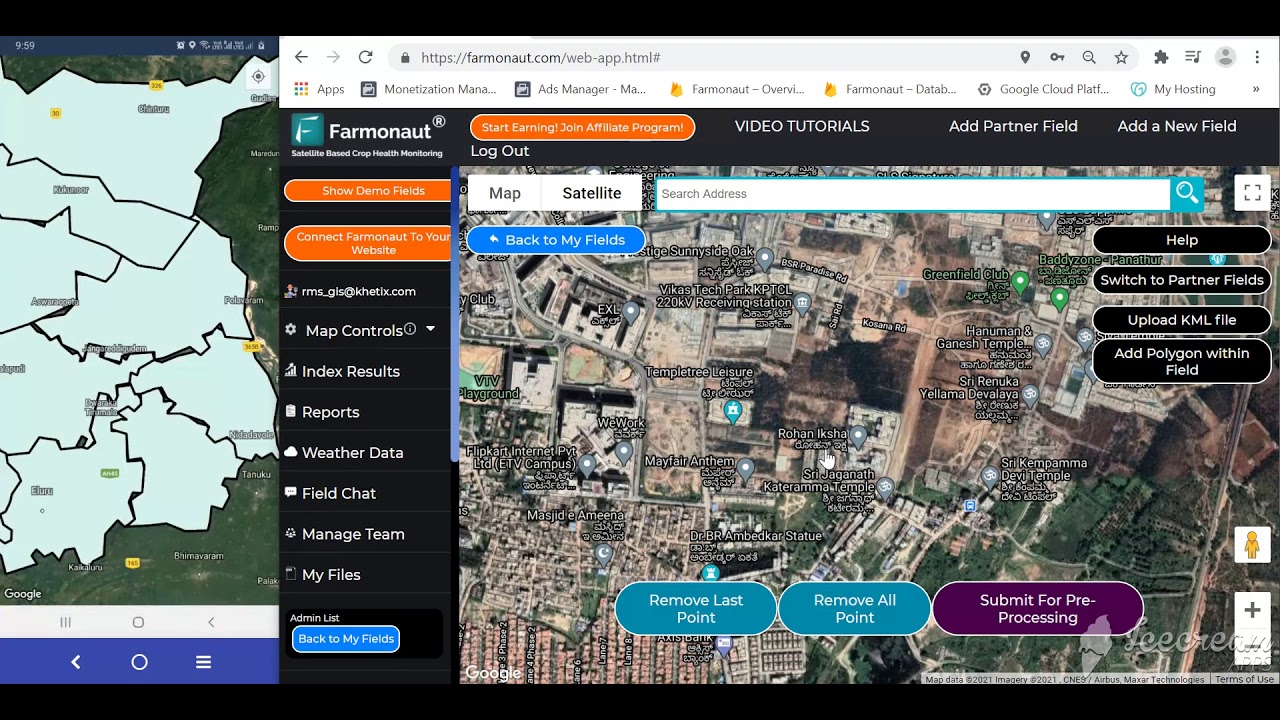
Farmonaut Large Scale Field Mapping & Satellite Based Farm Monitoring | How To Get Started
6. Prepare a Detailed Financial Analysis
- Estimate investment requirements—capital and operational costs covering land, labor, equipment, seeds, and agrochemicals.
- Project revenues, profitability, and calculate ROI; perform break-even analysis.
- Run sensitivity analyses for price, weather, and input cost fluctuations to test resilience.
- Looking for satellite-based crop data to secure bank loans or insurance? Farmonaut provides Crop Loan & Insurance verification using real remote sensing insights to support your financial documentation and minimize fraud.
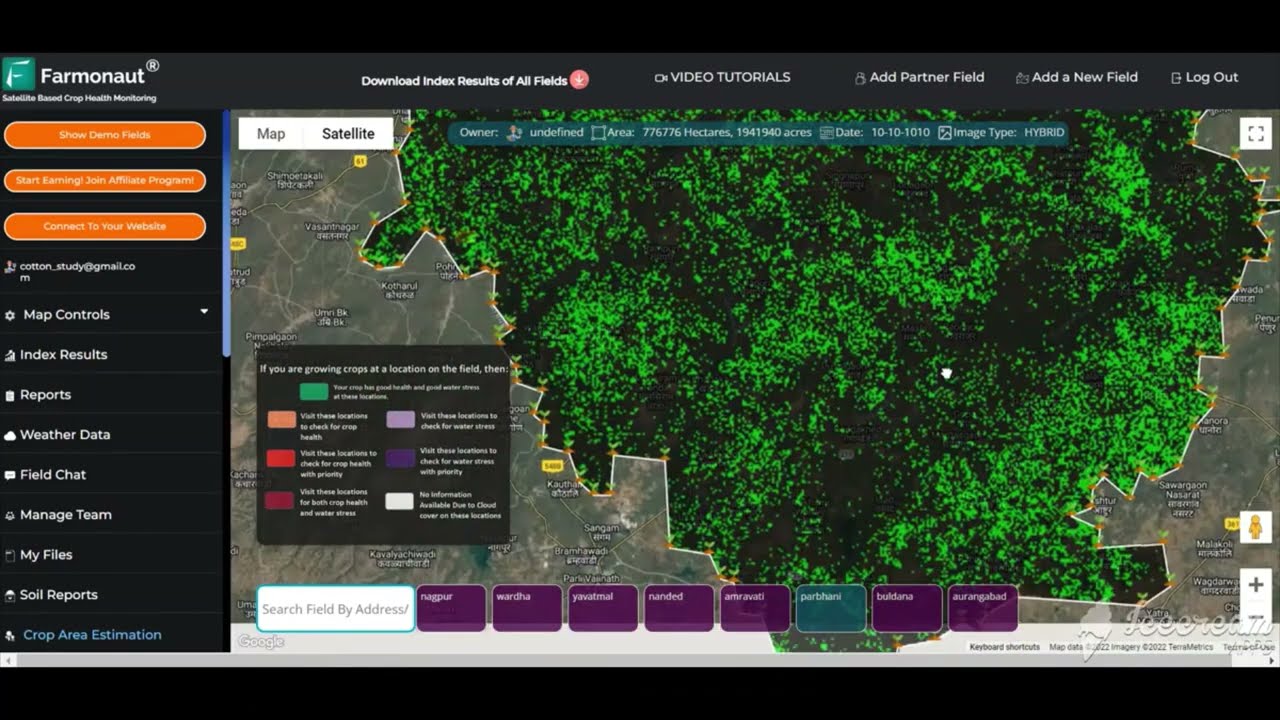
Farmonaut For Crop Area Estimation
7. Legal and Regulatory Review
- Check compliance with land use regulations, subsidies eligibility, environmental norms, and labor laws.
- Secure all requisite licenses and permits from local authorities and relevant agencies.
8. Integrated Risk Assessment and Management Planning
- Identify all major risks—climatic, pest, market, financial, operational.
- Plan robust mitigation strategies and establish contingency plans (insurance, diversified cropping, buffer stock).
- Adopt satellite and AI-based pest risk prediction and weather alerts (for example, accessible via Farmonaut’s Jeevn AI Advisory system).

JEEVN AI: Smart Farming with Satellite & AI Insights
9. Final Conclusions and Practical Recommendations
- Summarize findings from all components to answer if the project is feasible, should be modified, or abandoned.
- Create an actionable roadmap with clear milestones for phased implementation.
Feasibility Plan Sample: Sustainable Rice Project (2026)
Summary (Key Focus on Feasibility)
- Project: Introducing climate-resilient rice varieties on 100 hectares in a flood-affected region, Southeast Asia.
- Market Analysis: High local and regional demand for rice due to food staples; access to 2 stable export markets.
- Technical Feasibility: Verified access to precision irrigation technologies and drought-tolerant seed varieties.
- Environmental Impact: Sustainable practices implemented, improving drainage and deploying bio-pesticides; carbon footprint reduced using satellite tracking.
- Operational Plan: 20 seasonal laborers employed; supply chain managed with satellite-based scheduling.
- Financial Analysis: $500,000 investment, expected annual return after year two; sensitivity checks show high robustness.
- Legal/Regulatory: Project aligns with government land use and receives 15% subsidy from local agencies.
- Risk Management: Major risks—weather (25%), pest (14%), mitigated by crop insurance, weather monitoring, and integrated pest management.
- Conclusion: Proceed with phased implementation, starting with pilot plots, supported by government subsidies and digital monitoring.

How Farmonaut’s Satellite Technology is Revolutionizing Land Use in Agriculture
Farmonaut Technologies Supporting Feasibility Planning
When it comes to integrating technology in your feasibility plan, leveraging Farmonaut’s advanced satellite-based solutions can play a critical role in precise data collection and monitoring for farming projects in 2026 and beyond.
Our suite of services supports the development and implementation of a feasibility plan through:
- Satellite-Based Crop & Soil Monitoring: Ensure accurate assessment of soil health, vegetation index, and water use for technical evaluation and compliance. Explore our APIs for seamless integration with your farm management tools.
- Real-Time Advisory: Our Jeevn AI system delivers customized, satellite-driven insights and weather forecasts to inform your risk strategy and operational planning.
- Blockchain-Based Traceability: Enhance supply chain trust with blockchain traceability, ensuring transparency for buyers and regulatory compliance. Learn more about Farmonaut Product Traceability solutions.
- Resource & Fleet Management: Optimize logistics and reduce operational costs with our fleet and resource management tools.
- Environmental Impact Monitoring: Use satellite imagery to monitor carbon footprint and sustainability scores directly through actionable dashboards.
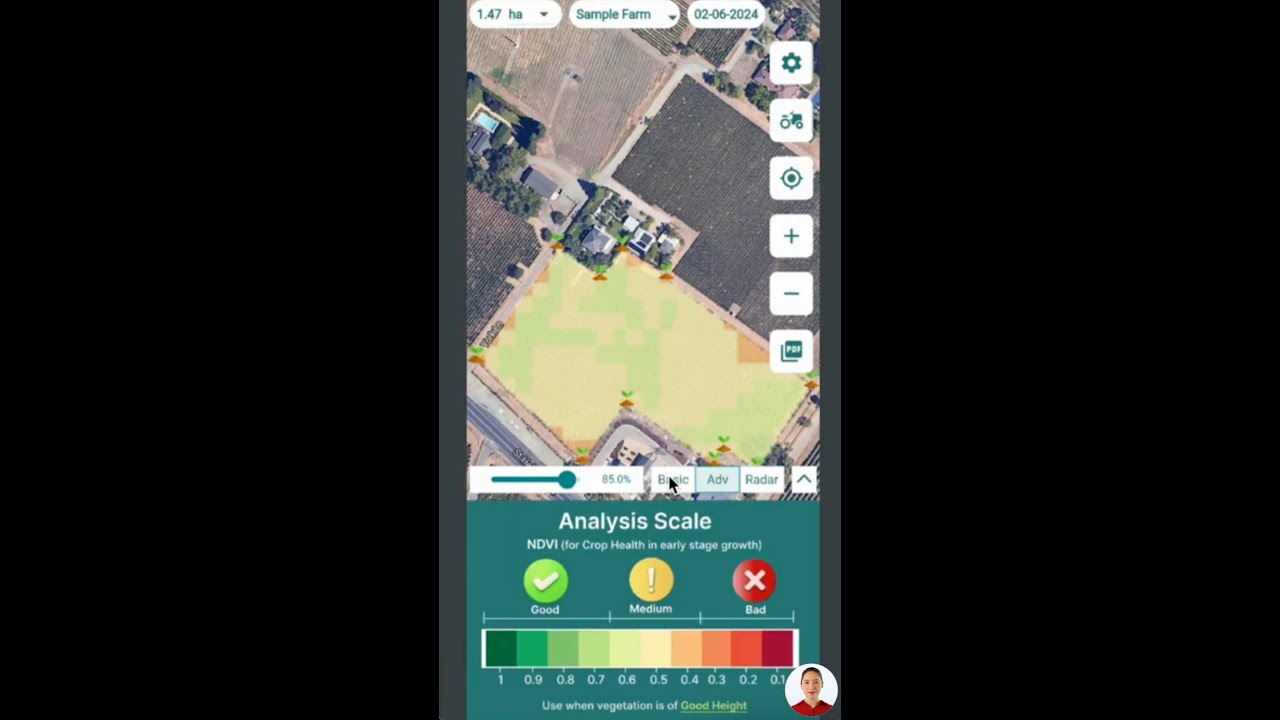
How to Interpret Satellite Data for Agriculture | Tutorial | Farmonaut Mobile Apps
Digital Tools and Solutions for Feasibility Plan Implementation
- Accessibility: Access Farmonaut across platforms:



- Developers & Integrators: Integrate satellite data and remote sensing insights with your own platforms via our Farmonaut API (API Developer Documentation).
- Crop Plantation & Advisory: For forestation projects, farm block advisories, and plantation mapping, explore Farmonaut’s Crop Plantation and Forest Advisory.
Educational Videos: Feasibility Planning and Satellite Technologies
Learn more about agricultural project feasibility plan building, technology, and methodologies through these video tutorials and guides:
- 10 Low-Investment, High-Profit Agri Business Ideas in 2025
- Regenerative Agriculture 2025: Carbon Farming, Soil Health & Climate-Smart Solutions | Farmonaut
- Farmonaut Web System Tutorial: Monitor Crops via Satellite & AI
- JEEVN AI: Smart Farming with Satellite & AI Insights
- Farmonaut Large Scale Field Mapping & Satellite Based Farm Monitoring | How To Get Started
- Farmonaut For Crop Area Estimation
- How Farmonaut’s Satellite Technology is Revolutionizing Land Use in Agriculture
- How to Interpret Satellite Data for Agriculture | Tutorial | Farmonaut Mobile Apps
Frequently Asked Questions: Agricultural Project Feasibility Plan Guide
What is a project feasibility plan in agriculture?
A project feasibility plan in agriculture is a comprehensive document that assesses the practicality, viability, risks, and sustainability of implementing an agricultural project. It covers market, technical, environmental, operational, and financial aspects to guide decision-making before investing resources in the project.
Why is a feasibility plan important for modern farming projects in 2026 and beyond?
With climate change, market fluctuations, and rapid technological advancements, a feasibility plan reduces risks, optimizes resource use, ensures compliance, and helps attract funding. It is indispensable for ensuring the project’s long-term profitability and sustainability in the competitive sector of modern agriculture.
What are the essential components of a standard feasibility plan sample?
The main components are: executive summary, market analysis, technical feasibility, environmental impact assessment, operational plan, financial analysis, legal and regulatory review, risk assessment and management, and conclusion/recommendations.
How can technology improve the feasibility assessment process?
Technologies like satellite monitoring, artificial intelligence, and blockchain traceability provide real-time, granular data for market trends, soil health, weather patterns, supply chains, and risk forecasting—significantly enhancing decision quality and confidence in feasibility assessments.
Where can I access tools for digital feasibility planning and farm monitoring?
Tools like Farmonaut’s satellite monitoring, AI-based advisory, and resource management features provide powerful benefits for feasibility planning. These tools are available as web and mobile apps and APIs for integration into your own systems.
Farmonaut Subscription Pricing
Access our advanced satellite monitoring, real-time advisory, blockchain traceability, and management tools with transparent subscription models for individuals, businesses, and government users worldwide:
Conclusion: Driving Sustainable Success in Modern Agriculture
In 2026 and beyond, a detailed and robust feasibility plan is no longer optional, but an essential document for agricultural project success. By including rigorous market analysis, technical and environmental assessments, operational and financial planning, risk mitigation, and leveraging the power of satellite-driven digital tools, stakeholders can confidently proceed with sustainable, innovative farming initiatives.
Whether you are establishing a new crop variety, implementing advanced resource management solutions, or seeking to secure funding through satellite-based crop verification, following the guidance in a project feasibility plan sample as described above will position your project for maximum return and sustainability.
For the most accurate, evidence-based monitoring and data-driven insights, our Farmonaut solutions are accessible, affordable, scalable, and tailored for every type of agricultural venture in the modern era.

 AgroRangers
 FCF India
 Unifrutti Gulf
 Deluxe Conseil
 TVS Electronics
 BW Pipelines
 WICO
WICO Gen Chayat
 Chimera Innovation
 SkyHarvest
 Polaris Digitech
 Teledarbas
 Wild Oak Farm
 SFX
SFX
