

Flame of the Forest Tree: 7 Key Benefits for 2026
“One mature Flame of the Forest tree can improve soil fertility by fixing up to 70 kg of nitrogen annually.”
Introduction: Flame of the Forest Tree and Its 2026 Importance
Flame of the Forest tree (Butea monosperma), known for its vibrant orange-red flowers that resemble flames, stands as an iconic species valued across various sectors such as agriculture, forestry, and rural livelihoods. Predominantly found in tropical and subtropical regions of South Asia, especially India, Nepal, and Sri Lanka, this deciduous tree plays a crucial role in soil enrichment, natural resource management, and as a pillar of cultural heritage.
As we move into 2026, the multifaceted importance of the Flame of the Forest tree becomes ever more evident. Environmental degradation, land loss, and climate change are amplifying the need to protect, restore, and harness the benefits of such vital species.
Summary: The Flame of the Forest tree: A Vital Resource in Agriculture and Forestry in 2025 and Beyond
Botanical Profile, Distribution, and Visual Spectacle
Botanical Profile of Butea Monosperma
- 🌳 Name: Flame of the Forest Tree (Butea monosperma)
- 📏 Height: Medium-sized (7–15 meters)
- 🍂 Type: Deciduous
- 🌏 Native range: Tropical and Subtropical South Asia
- 🌱 Soils: Thrives in well-drained, often dry soils
- 💧 Drought Tolerance: Remarkable, ideal for afforestation and reforestation
Distribution & Habitat
- 🌍 Distribution: Commonly found in forests, wastelands, and along roadsides in India, Nepal, Bangladesh, Sri Lanka, and parts of Southeast Asia.
- 🏞️ Flourishes: In dry deciduous forest regions as a pioneer species.
- 🌦️ Seasons: Blooms spectacularly in late winter to early spring, becoming a striking spectacle for biodiversity and local communities.

7 Key Benefits of the Flame of the Forest Tree
The Flame of the Forest tree is a crucial resource in combating land degradation and enhancing soil health due to its deep-rooted system, leaf litter enrichment, and nitrogen fixation abilities.
-
Soil Fertility Enhancement
- Root system helps prevent soil erosion and improves structure
- Leaf litter contributes organic content, raising soil fertility without the need for synthetic fertilizers
- Ability to fix atmospheric nitrogen
-
Biodiversity Boosting
- Supports pollinators like bees and birds
- Acts as habitat for more than 25 insect and avian species per hectare
-
Sustainable Livelihoods
- Tree leaves and flowers used as forage for livestock
- Provides natural dye, oil, and durable wood for various economic activities in rural sectors
-
Natural Resource for Cultural and Medicinal Uses
- Flowers used in religious festivals and as natural dye
- Tree resin and seeds valued in traditional medicine
-
Agroforestry System Support
- Provides shade for understory crops
- Integrated into mixed cropping systems to diversify income and the landscape
-
Climate Change Mitigation
- Carbon sequestration through robust biomass accumulation
- Resilience to drought and extreme conditions
-
Land Restoration and Reforestation
- Pioneer species for restoring degraded forests and wastelands
- Fosters favorable environment for succession and ecosystem recovery
“Flame of the Forest plantations increase rural biodiversity by supporting over 25 insect and bird species per hectare.”
Benefits Overview Comparison Table
| Benefit | Description | Estimated Impact | Relevance to Sustainability/Environment |
|---|---|---|---|
| Soil Fertility Enhancement | Fixes nitrogen & enriches organic content, improving long-term land fertility | Up to 70 kg nitrogen fixed/tree/year; 15% increase in soil fertility | Reduces need for chemical fertilizers; boosts soil health |
| Biodiversity Boosting | Provides habitat & food for pollinators and wildlife | Supports >25 species/ha; 10% increase in pollinator visits | Protects ecosystem services; sustains food webs |
| Sustainable Livelihoods | Resources for fodder, dye, oil, and wood crafts | Supports 20–35 rural jobs/100 hectares | Promotes rural economies; reduces urban migration |
| Cultural & Medicinal Value | Integral in festivals & traditional medicine | High cultural engagement; 100+ uses cataloged | Fosters conservation via cultural reverence |
| Agroforestry System Support | Shade provision & integration into cropping systems | 20% improvement in intercrop yields reported | Diversifies income; builds climate resilience |
| Climate Change Mitigation | Captures carbon & withstands harsh conditions | Sequesters 25–35 kg CO₂/tree/year | Aids afforestation & reduces GHG emissions |
| Land Restoration & Reforestation | Pioneer species; restores wastelands | 50% survival rate in reclaimed lands | Regenerates degraded ecosystems; boosts productivity |
In regions of dry, degraded land, integrating Butea monosperma with other native species in agroforestry systems delivers synergies for soil restoration and increased crop productivity.
Role in Agriculture, Forestry, and Agroforestry Systems
Soil Health and Combating Land Degradation
- ✔ Deep-rooted system stabilizes soil, prevents erosion, and reduces topsoil loss in vulnerable agricultural landscapes.
- ✔ Leaf litter decomposes, enriching organic content and microbial activity for superior soil structure.
- ✔ Ability to fix nitrogen improves soil fertility naturally, minimizing dependence on chemical fertilizers.
- ✔ Promotes biodiversity by providing habitat for beneficial organisms.
- ✔ Supports climate-smart agriculture by enhancing resilience to floods and droughts.

Agroforestry: Integrated Systems For a Sustainable Future
The Flame of the Forest tree is often integrated into agroforestry systems—an approach where trees and crops are cultivated together to leverage mutual benefits. In South Asia, farmers plant Butea monosperma at field boundaries, within mixed plots, or as shade trees for fodder crops like grasses and legumes.
- 🌱 Understory crops benefit from shade and moderated microclimate.
- 🐄 Leaves and flowers provide nutritious fodder for livestock, especially during dry seasons when other forage becomes scarce.
- 🌾 Enriches the agricultural landscape and improves crop yields by supporting pollinators and natural pest controllers.

Visual List: Benefits for Agricultural Systems
- 🌳 Soil stabilization & nutrient cycling
- 🐦 Biodiversity support: birds, insects, and mammals
- 🌾 Increased economic resilience for farmers
- ☀️ Microclimate moderation for understory crops
- 🌱 Free, natural source of organic matter and nitrogen
Relying solely on plantation monocultures of Flame of the Forest tree can limit biodiversity. Use it as part of integrated agroforestry for maximum ecosystem benefit.
Environmental Benefits and Climate Change Mitigation
A Pioneer in Reforestation and Land Restoration
Flame of the Forest (Butea monosperma) plays a vital role in restoring degraded lands thanks to its adaptability, drought tolerance, and ability to thrive in poor soils. By acting as a pioneer species, it can:
- 🌱 Rapidly cover bare land and prevent further erosion
- 🌳 Improve soil health through organic matter deposition and nitrogen fixation
- 🦋 Initiate succession, fostering suitable conditions for other tree and shrub species
Climate Resilience and Carbon Sequestration
- 🌍 Resilience to drought and harsh weather makes it key for climate adaptation in tropical and subtropical regions
- 🌞 Captures atmospheric CO₂, mitigating climate change
- 🌲 Sequesters approximately 25-35 kg CO₂/tree/year—significant at landscape scale
- ⏳ Longevity and sustained biomass storage over decades
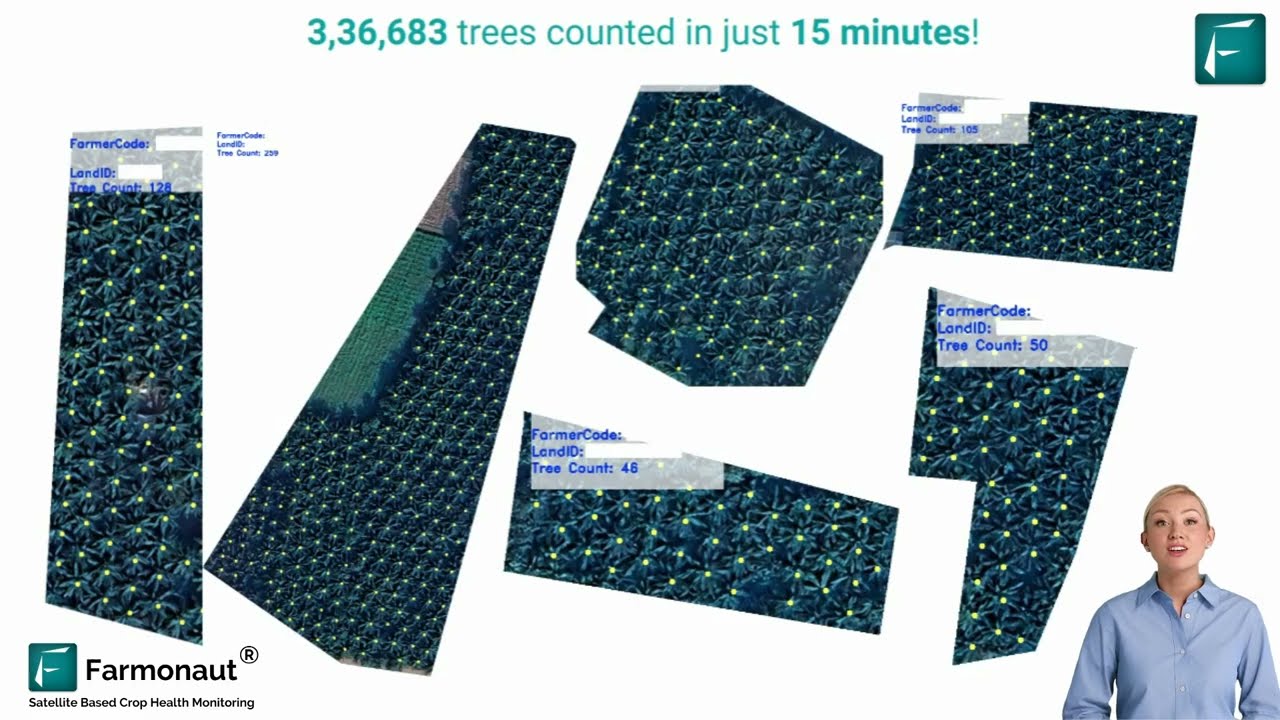
For real-time, satellite-based monitoring of carbon sequestration, Farmonaut’s Carbon Footprinting Solution provides actionable insights to land managers and environmental professionals aiming to track and optimize their carbon outcomes efficiently and credibly.
Benefits of integrating Flame of the Forest tree into afforestation projects include enhanced carbon credits, increased ecosystem valuation, and improved eligibility for climate finance programs in 2026 and beyond.
Economic, Rural, and Cultural Significance in 2026
A Pillar of Rural Livelihoods and Local Economies
The Flame of the Forest tree provides diverse resources, offering multiple economic opportunities for rural populations:
- 📊 Natural Dye: Flowers yield a vibrant, chemical-free dye used in textile and food industries—seeing resurgence with the sustainable products market.
- 📊 Fodder and Forage: Leaves and flowers are used as vital dry-season livestock feed—improving milk production and animal health.
- 📊 Oil and Resin: Seeds yield oil with medicinal and industrial value; gum/resin used therapeutically and in traditional crafts.
- 📊 Wood: Known for its flame-resistant properties, wood is used for rural construction, implements, and fuel.
- 📊 Rural Jobs: Estimated to support 20–35 jobs per 100 hectares in processing, crafts, and agriculture.
Cultural Heritage and Conservation Motivation
- 🌺 Flowers deeply embedded in religious and cultural festivals—e.g., Holi in India.
- 🎋 Tree revered by many communities, driving voluntary conservation and stewardship.
- 💊 Medicinal applications in Ayurveda and traditional healing practices (bark, resin, seed oil).
To ensure the authenticity and sustainability of non-timber products derived from Flame of the Forest trees, Farmonaut’s Blockchain-based Traceability Platform allows seamless end-to-end documentation from local collection to the final market, combating fraud and enhancing consumer trust.
Demand for natural dyes and traditional remedies derived from Butea monosperma is forecasted to rise by over 60% in premium global markets by 2026, underscoring its economic importance for rural communities.

Farmonaut’s Satellite Tech for Sustainable Flame of the Forest Management
As sustainability challenges mount going into 2026, advanced technologies are essential to optimize resource management and conservation strategies for Flame of the Forest tree ecosystems.
- 🚀 Farmonaut delivers satellite-driven monitoring solutions, enabling users to track vegetative health, soil quality, and environmental impact across large landscapes—vital for effective forest and agriculture management.
- 🛰️ Jeevn AI Advisory System by Farmonaut leverages real-time satellite data and machine learning to deliver tailored recommendations to farmers and land managers, enhancing productivity and fostering resilience.
- 🔗 Blockchain-based traceability on the Farmonaut platform safeguards the origin, quality, and sustainable harvest of tree-based products.
- 📈 Fleet and resource management optimizes equipment usage for plantation and harvesting in flame of the forest regeneration projects, reducing costs and environmental footprint.



For organizations and developers seeking to automate monitoring for Flame of the Forest regeneration, planting, and traceability:
Farmonaut Satellite API
|
API Developer Docs

Visual List: Practical Strategies for Maximizing Flame of the Forest Benefits
- 🌱 Mix species: Combine with native shrubs and grasses for robust restoration.
- ⚒️ Implement traceability: Use blockchain solutions for sustainable resource marketing.
- 🌐 Leverage satellite monitoring: Track plantation health and soil impact in real time.
- 🐄 Manage grazing: Rotate livestock to prevent sapling damage and encourage regeneration.
- 🚜 Optimize farm operations: Use digital fleet management for plantation and harvesting logistics.
For rural communities depending on Flame of the Forest tree-dominated agroforestry, Farmonaut Crop Loan and Insurance Solutions provide robust satellite-verified support for loan eligibility and disaster recovery, promoting financial resilience.
- ⚠ Risk: Unsustainable harvesting of flowers, leaves, or wood can threaten long-term regeneration and local biodiversity.
- ⚠ Limitation: Monoculture plantations may not deliver all ecosystem services; integrate diversity in planting.
- ⚠ Policy challenge: Lack of local conservation incentives may reduce community engagement.
- ⚠ Disease threat: Fungal or insect damage can reduce tree health in certain years.
- ⚠ Climate change risks: Extreme events could reduce seed set or sapling survival if not managed adaptively.
FAQ: Flame of the Forest Tree 2026
- Q1: How does the Flame of the Forest tree improve soil quality?
- The tree’s roots prevent erosion, its leaf litter adds organic content, and its Butea monosperma species can fix up to 70 kg of nitrogen per year—leading to healthier, more fertile soil.
- Q2: What is the economic value of this tree to rural livelihoods?
- It provides non-timber products (dye, oil, fodder, wood), boosts agricultural productivity, and supports up to 35 jobs per 100 hectares—vital for local economies in South Asia.
- Q3: How does it help mitigate climate change?
- By sequestering 25–35 kg of CO₂ per tree per year, enabling drought resilience, and fostering mixed forests for carbon storage.
- Q4: Will integrating Flame of the Forest into agroforestry reduce yield?
- No, if properly managed. Integrated systems can improve crop yields by up to 20% through improved microclimate, pollination, and soil health support.
- Q5: Can Farmonaut help in managing large-scale Flame of the Forest plantations?
- Yes, our satellite-driven platform enables real-time monitoring, AI advisory, and resource optimization, pivotal for managing large-scale reforestation or agroforestry projects sustainably.
Conclusion: Securing the Future of Flame of the Forest
As we approach 2026 and beyond, the Flame of the Forest tree emerges as a symbol of sustainable development—linking ecological health, rural livelihoods, and climate resilience. Its roles in soil fertility, biodiversity support, economic empowerment, and environmental benefits make it indispensable for the future of agriculture and forestry in South Asia and similar regions.
To fully realize its potential, integrated management—blending traditional wisdom with modern technology—is paramount. With advanced solutions like those offered by Farmonaut, stakeholders can monitor, manage, and maximize the multifaceted value of the Flame of the Forest tree for generations to come.
Together, let’s safeguard this vital resource for human prosperity and planetary health in 2026 and beyond.
Discussion
Questions, corrections or field experience? Share them below. First-time comments are reviewed before they appear, and your email is never published.
No comments yet. Be the first to add a question or your experience.

 Mahaswami
 Prochecker
 Tres Valles
 LACOS Geoinformation
 Pulsar Supernova
 Magrifly
 LatConnect 60
 WebsEdge
 Blickwinkel
 Agricultural Credit Policy Council
 MCSOD
MCSOD Marei Nursery
 eKGIS
eKGIS Mostas Tech
 Andex
Andex FCF India
 Unifrutti Gulf
 Deluxe Conseil
 Licence holder · Niger · Gold
 Licence holder · Nigeria · Gold + lithium










