

Land clearing · Methods and costs
Forestry Mulching Benefits vs Traditional Land Clearing
Forestry mulching grinds brush and small trees in place in one pass and leaves the chips as soil cover. A Forest Service trial in Idaho, treating logging slash, averaged $530 per acre in 2005 dollars. It skips burn piles, but brush resprouts and chip beds can smolder in a fire.
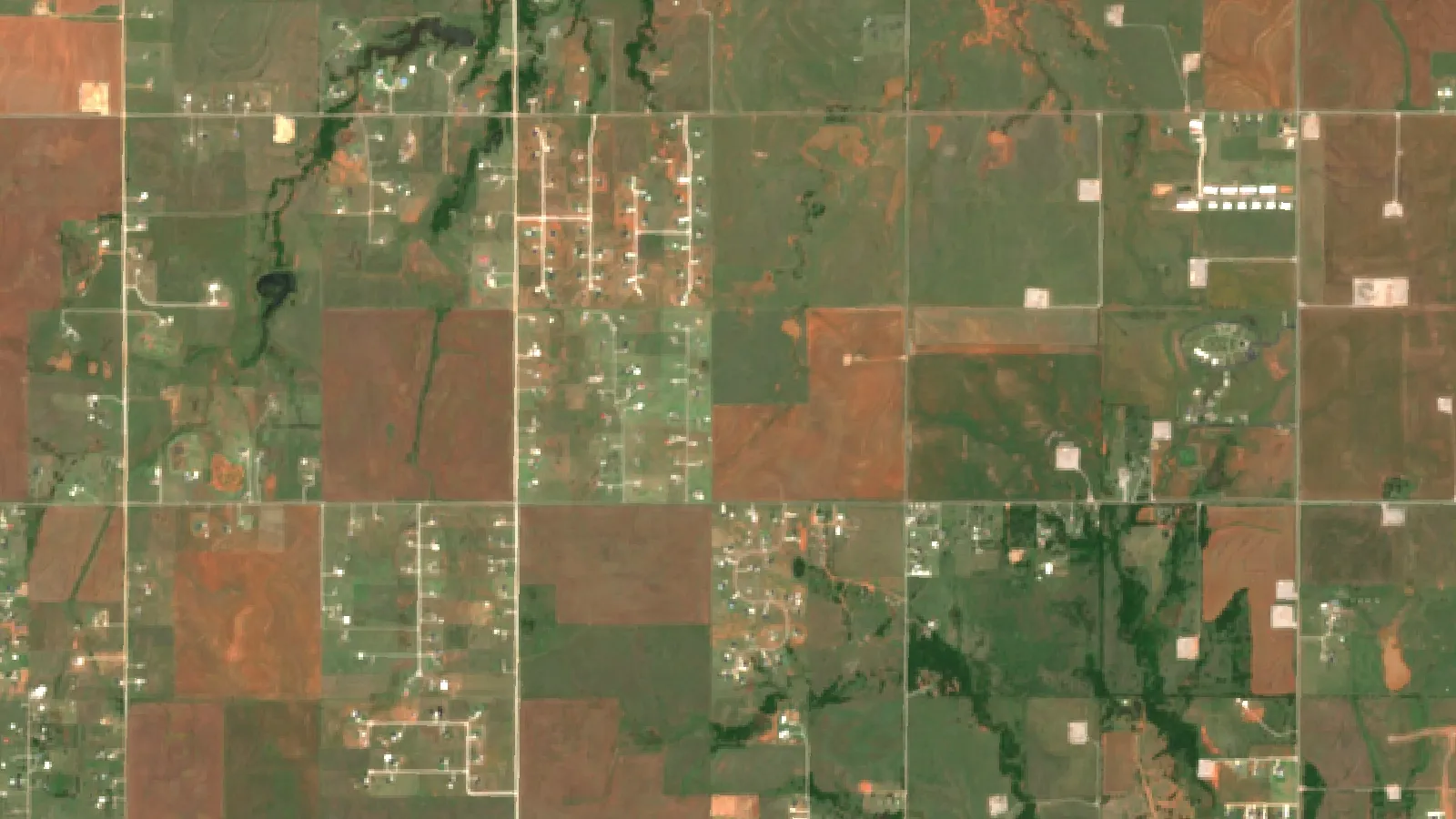
Key takeaways
- Mastication of logging slash in a Forest Service trial in northern Idaho cost $530 per acre on average (range $335 to $1,395, 2005 dollars) and treated 0.57 acres per hour; brush or cedar pasture work can price differently.
- Slopes above 35% cut machine efficiency the most; the steepest unit (50% slope) cost $1,396 per acre.
- In pinyon-juniper woodland, slash pile burning left more exotic plants and lower soil stability and moisture than mastication six months after treatment (Neal, 2007).
- Chip beds burn with low flames but smoldered for 6 to 22 hours in Idaho prescribed burns (NRFSN, 2018).
- Oklahoma State University Extension calls bulldozers the most expensive cedar control tool, with severe soil disturbance.
In this article
- What forestry mulching is and how it works
- Forestry mulching vs traditional land clearing
- Seven forestry mulching benefits, with the evidence
- How land clearing affects soil health
- Fire risk after mulching: what the research shows
- Forestry mulching cost per acre
- Calculator: mulching vs traditional clearing cost
- Where forestry mulching fits on a farm or ranch
- Limits and risks of forestry mulching
- How to plan a forestry mulching job
- How we checked the numbers
- FAQ
Forestry mulching benefits come from doing the job in one pass: a machine grinds brush and small trees where they stand and leaves the chips on the ground as cover, so there is no piling, burning or hauling. A US Forest Service study in northern Idaho, where a masticator treated logging slash in harvest units, put the cost at an average of $530 per acre, with a range of $335 to $1,395 in 2005 dollars; unit size and slopes above 35% had the biggest effect on time and cost (Halbrook et al., Forest Service, 2006). The trade-offs are real too: the chip layer can smolder for hours in a fire, and brush grows back unless you follow up.
This guide compares forestry mulching with traditional land clearing by bulldozer, piles and burning. It covers soil, erosion, fire risk, wildlife, cost per acre and when each method fits. It also gives a calculator so you can compare the two methods with your own contractor quotes, plus three charts built from public research and payment data.
What forestry mulching is and how it works
Forestry mulching is the farm and landowner name for what foresters call mastication. A rotating drum or disc fitted with steel teeth or knives chops standing brush, small trees and down wood into chips. The chips stay on the site as a mulch layer. The Forest Service describes mastication as a treatment where trees and understory plants are chopped, ground or chipped and the material is left on the soil surface (Forest Service Research Note RMRS-RN-20-1, 2004).
The same note gives a useful rule of thumb. Turning 20 tons per acre of understory biomass into small pieces makes an even layer about 1 inch deep across the stand. The total fuel on the ground does not drop at once. What changes is its height and size: tall, ladder-like fuel becomes a low, flat layer of small pieces.
The machines
Mulching heads come on several kinds of base machine. Each has its own strengths:
- Skid steers and compact track loaders. Small, quick to move between jobs, good for fence lines, trails and small lots. They need high-flow hydraulics to run a mulching head.
- Purpose-built tracked mulchers. Larger engines and wider heads for big acreage and thicker stems.
- Excavators with a boom-mounted head. They reach into stands and up slopes, so the machine itself disturbs less ground.
- Tractor-mounted (PTO) mulchers. Suited to farms that already own a large tractor and want to clear pasture edges.
The Forest Service note splits cutter heads into two types. Vertical-shaft cutters work like giant lawnmowers. They cost less to run but handle smaller stems and leave coarser chunks. Horizontal-shaft drums make smaller chips and take larger stems, but cost more per hour. The note also says the base machine is a key factor in soil disturbance, slope limits and operating cost. Wheeled machines are generally faster and cheaper to run, while low-ground-pressure tracked machines suit soft soils.
What happens on the ground
In a typical pass, the operator drives into the brush and lowers the spinning head onto each stem or clump. The head grinds the plant from the top down. Stumps are usually ground to near ground level, and the roots stay in the soil. What is left is a carpet of chips with grass and soil showing through in places. There is no burn pile, no hauling truck and usually no grading.
The key point for landowners: mulching clears what is above ground. It does not pull roots or level the ground. That is why it suits pasture recovery, fire breaks and woodland thinning better than sites that need a smooth, root-free surface.
Forestry mulching vs traditional land clearing
Traditional land clearing usually means a bulldozer or excavator pushes over trees, roots and all. The debris is piled and burned, or loaded and hauled away. The ground is often graded afterward. This gives a clean, open surface fast, which builders and some crop farmers need. It also leaves bare soil.
Oklahoma State University Extension sums up the main drawback in its guide to cedar control tools: bulldozers can remove any size of eastern redcedar, but they are the most expensive tool and they cause severe soil disturbance and damage native grasses (Oklahoma State University Extension, fact sheet L-319). The table below compares the two methods on the points landowners ask about most.
| Factor | Forestry mulching | Dozer, pile and burn |
|---|---|---|
| Passes needed | Usually one | Push, pile, burn or haul, then grade |
| Roots and stumps | Left in the soil, ground near the surface | Pulled out |
| Ground cover after | Chip layer over soil | Mostly bare soil until seeded |
| Native grass | Often kept in place | Often damaged (OSU Extension) |
| Regrowth | Sprouting species come back; follow-up needed | Less resprouting where roots are removed |
| Burn permits and smoke | Not needed for disposal | Needed where piles are burned |
| Best for | Pasture, woodland, fire breaks, trails | Building pads, roads, row-crop fields |
Neither method wins everywhere. If you need to build a house pad, run a driveway or plant a row crop with a planter, you will usually need roots out and the ground smooth. If you want grass back under fewer trees, a cleaner fence line or a fuel break, mulching keeps the soil covered and skips the burn pile.
Seven forestry mulching benefits, with the evidence
The benefits below are the ones the cited research and extension sources support. Each comes with the limit that goes with it.
1. One pass instead of four steps
Mulching folds cutting, chipping and spreading into one operation. In the Idaho trial, one rotary-head masticator treated 37 acres of slash and standing fuel at an average of 0.57 acres per hour (Halbrook et al., full paper). The same machine also cut fire lines and fuel breaks. Best for: owners who want the site finished when the machine leaves.
2. Soil stays covered
Because the chips stay on the surface, the soil is not left bare the way it is after pushing and grading. The Forest Service note on mastication says the resulting material is left on the soil surface. Best for: slopes and erodible soils where bare ground would wash.
3. Less damage below ground than pile burning
A Northern Arizona University study, published through the Forest Service, compared mastication with slash pile burning in pinyon-juniper woodland. Six months after treatment, the pile-burn sites had the most exotic plant species, higher soil temperature and pH, and lower plant cover, soil stability and soil moisture. The author concluded that mastication had fewer impacts on soil fungi and plants than pile burning, while warning that the study was short term (Neal, Northern Arizona University thesis, 2007). Best for: sites where you want native grass and forbs to return.
4. No burn piles
Burning piles of cut brush can need a permit, and always needs the right weather and someone to watch the fire. Burning piles can also throw embers and start spot fires if conditions change. Mulching leaves nothing to burn. Best for: areas near homes, roads or places with burn bans.
5. Lower, flatter fuel for fire control
Mastication moves fuel from the brush and lower branches down to the ground. A research brief from the Northern Rockies Fire Science Network says fires in these compact fuel beds often burn with lower intensity and shorter flames than in untreated forest (NRFSN Research Brief 4, 2018). The limit is covered below: the chip layer can smolder for a long time. Best for: fuel breaks and defensible space around buildings.
6. Works where machines must tread lightly
Boom-mounted heads can reach from a trail, and low-ground-pressure tracked carriers spread their weight. The Forest Service note says these options can reduce the area disturbed and let the machine work on soft soils or between leave trees. Best for: thinning woodland while keeping the trees you want.
7. Targets brush that crowds out grass
Brush and woody encroachment reduce forage under the canopy; a University of Nebraska–Lincoln Extension guide on redcedar notes that forage production falls as canopy cover rises, and that acting early costs less than acting late. Mulching removes the woody plants and leaves the grass sod. Oklahoma State University Extension calls prescribed fire both a maintenance and a restoration tool, and the best option economically and ecologically, once the larger trees are dealt with (Oklahoma State University Extension, fact sheet L-319). Mulching fits the first step. Best for: ranchers taking back pasture from cedar, mesquite or similar brush.
How land clearing affects soil health
Soil is the part of the site that takes longest to fix. The way you clear decides how much of the topsoil, roots and soil life you keep.
What mulching does to the soil
- Roots stay in the ground and keep holding soil while they decay.
- Chips shade the surface, which can slow drying and soften the hit of heavy rain.
- As chips break down, they add organic matter at the surface.
- Soil fungi and understory plants were less affected than after pile burning in the Arizona comparison above.
Watch the depth. A thick, even layer can hold back grass seedlings until it breaks down. The Forest Service rule of thumb (20 tons per acre of brush makes about an inch of chips) helps you guess how deep your layer will be before the job starts.
What dozer clearing does to the soil
- Pushing out trees tears up roots and the top layer of soil.
- Heavy, repeated passes can pack the soil and cut how fast water soaks in.
- Burn piles heat the soil under them; the Arizona study found higher soil temperature and pH and lower soil stability on pile-burn sites.
- Bare ground needs seeding or cover soon, or it can wash or blow.
Organic matter is the link between these points. The video below explains why it matters for water, nutrients and soil structure.

▶ Why soil organic matter matters for water, nutrients and soil structure. · 7:33
Fire risk after mulching: what the research shows
Many landowners mulch to cut wildfire risk. The research is more mixed than sales pages suggest. In the Idaho ponderosa pine trials behind the NRFSN brief, flame lengths stayed under 1.5 m and spread rates were low in both lab and prescribed-fire tests. But during the low-intensity prescribed burns, neither thinned nor masticated stands burned with less fire behavior than the untreated controls.
Smoldering is the main trade-off. In the prescribed burns, smoldering in mixed chip and duff beds lasted 6 to 22 hours. A Washington State University science brief on the same study notes that fires in compact chip beds can smolder longer and heat the soil more (WSU Fire and Earth brief 12). It also found coarse mastication was 15% more cost-effective than fine mastication on cost, time and fire behavior combined.
How much chip depth burned also depended on chip size and moisture, as the chart shows. Finely chipped wet fuel lost more depth than coarse wet fuel, while coarse dry fuel lost more than fine dry fuel or the controls.
What this means in practice: mulching is a good first step for fuel breaks, but keep the chip layer thin near buildings, mulch well before fire season so chips settle and rot, and ask your local fire service or forestry agency before relying on it as your only fire treatment.
Chart
How much of the chip bed burned
Fuel bed depth consumed in lab burns, cm (range), by chip size and moisture
Forestry mulching cost per acre
Costs swing widely with slope, stem size, brush density, access and how fine you want the finish. A Forest Service research note says actual mastication costs have ranged from hundreds to thousands of dollars per acre, and steep slopes can be expensive to treat. Get several per-acre quotes for your own site, and treat them as asking prices, not final invoices.
Chart
Mastication cost per acre vs slope
Selected treatment units, Priest River Experimental Forest, Idaho, fall 2005 (2005 dollars)
The Idaho trial shows why slope matters. In the study’s table of 19 units, the cost ran from $378 to $1,396 per acre (2005 dollars; the abstract gives $335 to $1,395). The steepest unit, at 50% slope, was the most costly, and the authors found slopes above 35% tended to cut machine efficiency the most, after the size of the area treated.
What public programs pay
The USDA Natural Resources Conservation Service (NRCS) pays farmers part of the cost of brush work through EQIP. Its published payment rates are not contractor prices, but they show how much the agency expects different jobs to cost relative to each other. The chart uses Pennsylvania’s list for fiscal year 2026 contracts, dated 11 March 2026 (NRCS Pennsylvania Bulletin PA 440-26-06). Removal and disposal of brush and trees is paid at far higher rates than mechanical brush control, which is in line with the extra steps of pushing, piling and hauling.
Payment rates differ by state and change each year. Check your local NRCS office for the rates and rules that apply to you.
How to compare quotes
- Ask each contractor to quote per finished acre, not per hour, so slow ground is their risk, not yours.
- Ask the largest stem size included and what happens to bigger trees.
- For clearing quotes, ask whether disposal (burning or hauling) and grading are included.
- Add the cost of seeding and erosion control for any bare ground.
- Ask about follow-up for sprouting brush in the next one or two years.
Chart
NRCS payment rates for brush and clearing work
US$ per acre, Pennsylvania EQIP payment schedule for FY2026 contracts (payment rates, not contractor prices)
Calculator: mulching vs traditional clearing cost
Use the calculator below with your own quotes. It adds the separate steps of traditional clearing (pushing, disposal, seeding bare soil) and compares the total with a mulching quote plus any follow-up treatment.
Try the numbers for your own farm below.
Calculator
Is mulching or dozer clearing cheaper for your land?
Enter your own acres and contractor quotes per acre.
- Mulching total: $18,000
- Traditional clearing total: $18,000
- Mulching per acre: $900
- Traditional per acre: $900
Example values only, not benchmarks or forecasts; every number is your input and the defaults are set near break-even. Get per-acre quotes for your own site. Traditional clearing here means pushing, then disposal (burning or hauling), then seeding the bare ground. Cost-share, permits and resale of timber are not included.
Where forestry mulching fits on a farm or ranch
Pasture recovery
Cedar, mesquite, juniper, and mixed brush shade out grass. Mulching removes the woody plants and leaves the sod. Plan a follow-up: OSU Extension describes periodic prescribed fire as the way to keep redcedar and other woody plants in check, and some sprouting species need spot treatment. If you use herbicide, follow the product label and local rules.
Fence lines, trails and access roads
Narrow strips are where skid-steer mulchers shine. They clear a fence row or field road in one pass and leave no pile to burn. The Forest Service note suggests avoiding treatment areas narrower than about 66 feet (one chain) to keep costs down, so match machine size to the strip.
Fuel breaks and defensible space
The Idaho machine built fuel breaks about 18 feet wide with a 4-foot strip scraped to mineral soil down the middle. Mulching is useful here, but the smoldering findings above mean you should keep chips thin close to buildings.
Invasive brush
Mulching can knock back invasive shrubs, but it does not kill roots. Species that resprout from roots or stumps will come back. Pair mulching with a planned follow-up and check your state’s invasive plant guidance.
Woodland thinning and restoration
Boom-mounted heads can thin dense young stands and leave the trees you want. This suits wildlife habitat work and woodland grazing. Watch the chip depth so the forest floor is not smothered.

▶ Seven simple practices that protect soil and water, from cover crops to reduced tillage. · 4:34
Limits and risks of forestry mulching
- Regrowth. Roots stay alive in many species. Budget for follow-up mowing, grazing, fire or spot spraying.
- Slope. Costs rise and output falls on steep ground; the Idaho data show a clear effect above 35% slope.
- Large trees. Very large stems are slow and costly to grind. Fell and sell or remove them first.
- Not a building site. Roots and chips left in the soil are a problem for foundations, driveways and some crop planters.
- Chip depth. Deep chips can hold back grass and smolder for hours in a fire.
- Rules. Clearing near streams, wetlands or protected habitat may need permits. Check local rules and get professional advice before large clearing jobs.
How to plan a forestry mulching job
- Set the goal. Pasture, fuel break, trail or building site? This decides whether mulching or full clearing fits.
- Map the area. Measure acres, slope and the largest stems. Mark trees to keep, streams and buried lines.
- Check rules. Ask about permits near water, wetlands or protected species, and about cost-share through your local NRCS office.
- Get per-acre quotes. Compare like with like using the checklist above.
- Time it. Dry ground cuts rutting. Mulching well before fire season lets chips settle.
- Plan follow-up. Seed bare patches, and plan grazing, fire or spot treatment for regrowth.
- Watch the recovery. Compare plant cover in the next growing seasons against untreated ground.
For the last step, satellite vegetation maps can help on large or remote blocks. Farmonaut shows vegetation index maps for fields and pasture you draw on the map, so you can see where cover is coming back after clearing and where brush regrowth may need a visit. The tutorial below shows how to read those maps.
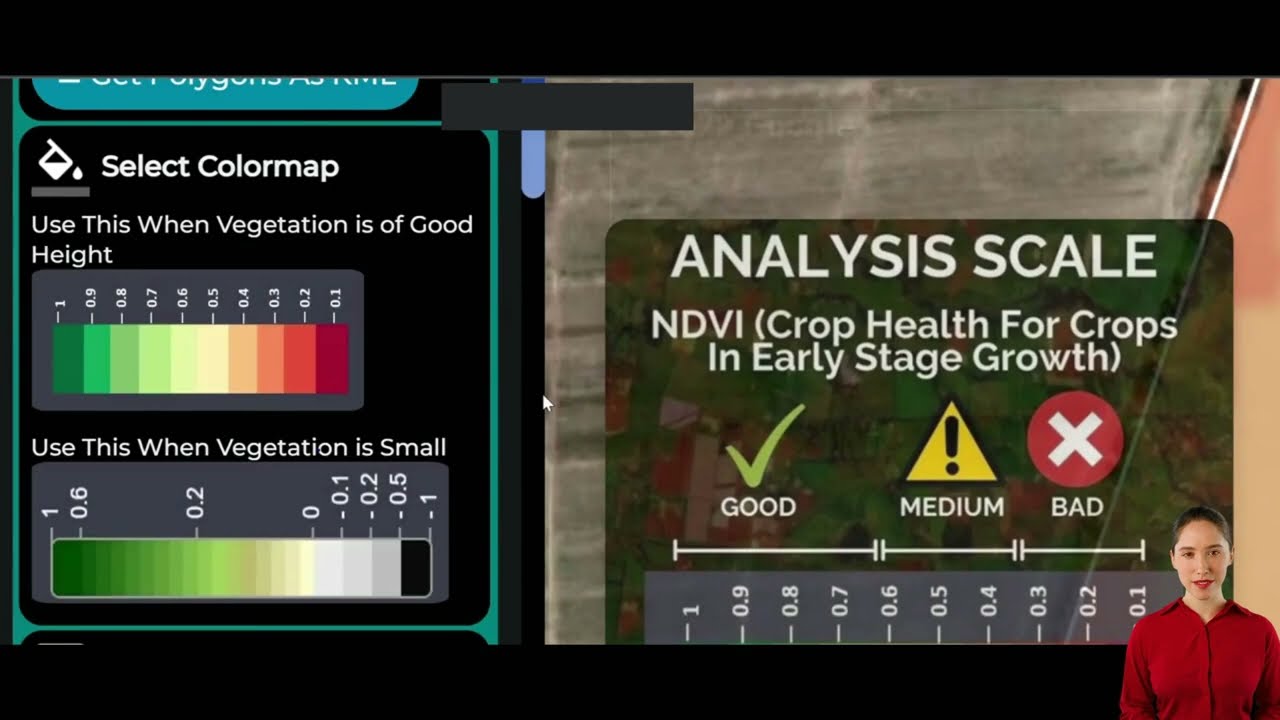
▶ How to read satellite vegetation maps in the Farmonaut web app. · 10:16
How we checked the numbers
We used the Forest Service mastication cost study from Priest River Experimental Forest, Idaho (2006), the Forest Service fuels planning note on mastication (2004), the NRFSN and WSU research briefs on burning masticated fuels, a Northern Arizona University study comparing mastication and pile burning, Oklahoma State University Extension guides on cedar control, and the NRCS Pennsylvania EQIP payment schedule for fiscal year 2026. Costs from 2005 are not adjusted for inflation. The trial treated logging slash in harvest units, so pasture brush or cedar work can cost more or less.
FAQ
Is forestry mulching better than bulldozing?
It depends on the goal. Mulching keeps the soil covered and native grass in place and skips burn piles. Bulldozing removes roots and leaves a clean surface, which building pads and some crop fields need. OSU Extension calls the bulldozer the most expensive cedar control tool and notes it causes severe soil disturbance.
How much does forestry mulching cost per acre?
A Forest Service study in Idaho, which treated logging slash in harvest units rather than pasture brush, averaged $530 per acre (range $335 to $1,395) in 2005 dollars. Slope, stem size and brush density drive the price, so get per-acre quotes for your site.
Does mulched brush grow back?
Many species resprout from roots or stumps, since mulching leaves roots in the soil. Plan follow-up such as grazing, mowing, prescribed fire or spot spraying, following the product label and local rules.
Does forestry mulching reduce wildfire risk?
It lowers the fuel bed and removes ladder fuels, and fires in chip beds often burn with shorter flames. In Idaho trials, though, low-intensity burns in masticated stands were not milder than in controls, and chip beds smoldered for 6 to 22 hours.
How deep is the mulch layer?
The Forest Service estimates that 20 tons per acre of brush turned into small pieces makes a layer about 1 inch deep. Heavier brush makes a deeper layer, which can slow grass regrowth until it breaks down.
Can I get cost-share for brush clearing?
In the US, NRCS EQIP pays part of the cost of practices such as brush management and fuel breaks. Rates differ by state and year; Pennsylvania’s FY2026 list, for example, pays $81.45 per acre for mechanical control of small shrubs at medium density.
Related pages on our site: soil erosion and weed control, soil preparation, soil health practices, forestry mulching equipment types, regenerative practices, corn yield estimating, irrigation system installation, carbon footprinting, fleet management, product traceability, satellite and weather API docs, agro admin app, mulching vs land clearing.
Farmonaut crop monitoring
Watch cleared land recover from space
Draw your pasture or fields once and Farmonaut shows satellite vegetation maps for them through the season, on web, Android or iOS.




Sources
- Halbrook, Han, Graham, Jain and Denner, Mastication: a fuel reduction and site preparation alternative (US Forest Service RMRS, 2006), abstract page: research.fs.usda.gov
- Halbrook et al., Mastication: a fuel reduction and site preparation alternative, full paper (2006): research.fs.usda.gov
- US Forest Service, Mastication treatments and costs, Research Note RMRS-RN-20-1 (2004): frames.gov
- Neal, Tree thinning treatments alter soil properties, arbuscular mycorrhizal fungi and understory plant communities (Northern Arizona University thesis, 2007): research.fs.usda.gov
- Oklahoma State University Extension, fact sheet L-319 on eastern redcedar control tools: pods.okstate.edu
- Northern Rockies Fire Science Network, Research Brief 4: Burning masticated forest fuels (April 2018): d10.nrfirescience.org
- Washington State University, Fire and Earth science brief 12: Effects of masticating forest fuels on fire behavior: wpcdn.web.wsu.edu
- USDA NRCS Pennsylvania, Bulletin PA 440-26-06, cost list and payment caps for FY2026 EQIP and CSP (11 March 2026): nrcs-prod.azureedge.us
- University of Nebraska–Lincoln Extension, EC1784 Act Now or Pay Later: reactive versus proactive eastern redcedar management (2015): extensionpublications.unl.edu
- Neal, Tree thinning treatments alter soil properties, arbuscular mycorrhizal fungi and understory plant communities (Northern Arizona University thesis, 2007), Forest Service Treesearch abstract page: research.fs.usda.gov
Discussion
Questions, corrections or field experience? Share them below. First-time comments are reviewed before they appear, and your email is never published.
No comments yet. Be the first to add a question or your experience.

 Adgrid
 eKGIS
 Mostas Tech
 Native Seeds
 Andex
 FCF India
 Unifrutti Gulf
 Deluxe Conseil
 TVS Electronics
 BW Pipelines
 WICO
 Chimera Innovation
 SkyHarvest
 Polaris Digitech
 Teledarbas

 Licence holder · Niger · Gold










