

Reviewed August 2026 against USDA’s National Agricultural Statistics Service (NASS), USDA’s Economic Research Service (ERS), and Pew Research Center.
Try it: Direct-to-Consumer Revenue Estimator →
Benefits of Social Media for Farmers: What the Data Shows
“85% of U.S. farms had internet access by 2023, turning platforms built for photos into a channel for real-time agricultural updates and peer knowledge-sharing.”
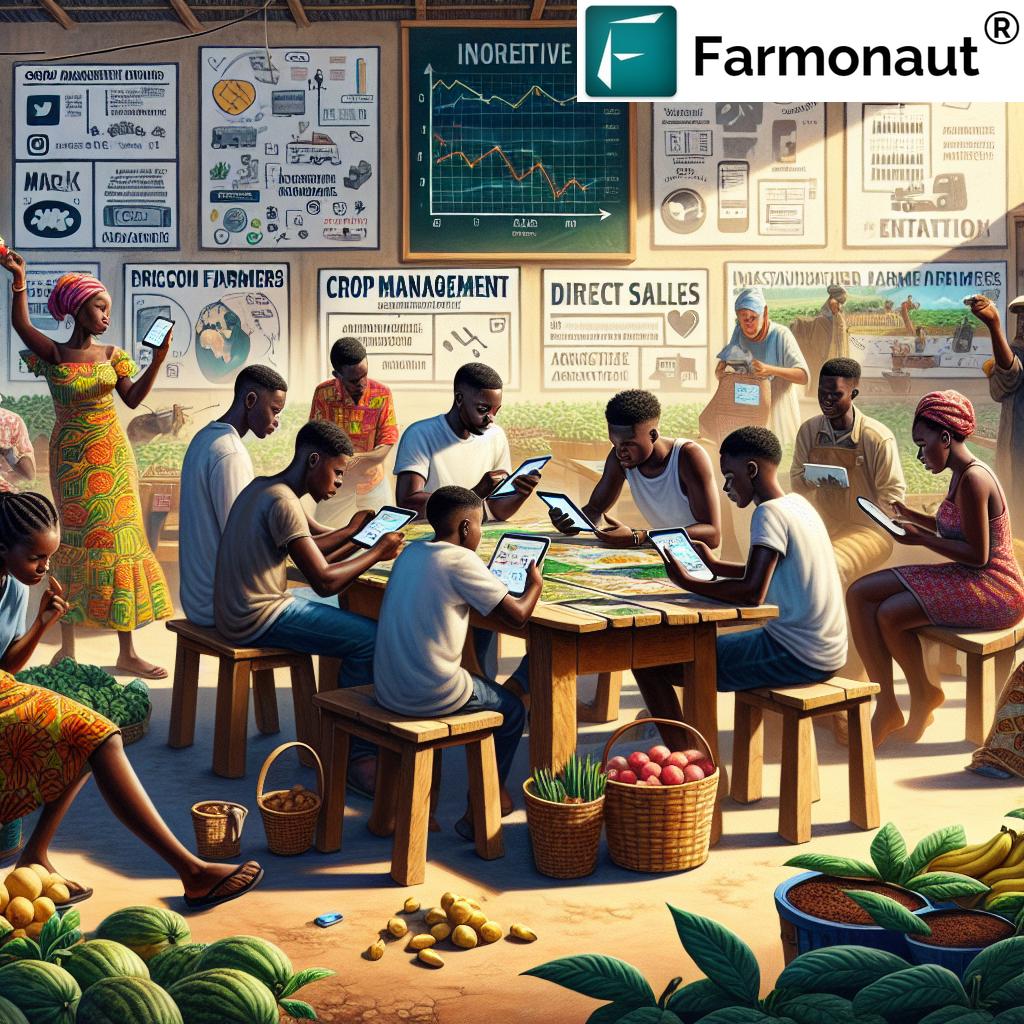



Table of Contents
The Short Answer: How Social Media Affects Agriculture
Social media affects agriculture in three measurable ways: it speeds up how farmers get and share technical information, it lets farms sell directly to consumers without a distributor taking a cut, and it gives agribusinesses a cheap channel to build trust with buyers who never set foot on a farm. None of that is hypothetical — USDA’s National Agricultural Statistics Service (NASS) found 85% of U.S. farms had internet access in 2023, and its Economic Research Service (ERS) tracked $3.3 billion in direct-to-consumer farm sales across 116,617 operations in the 2022 Census of Agriculture. The gap between “farmers are online” and “farmers are converting that reach into sales” is where most of the value — and most of the mistakes — actually sit.
The rest of this page breaks that gap down: how many farmers use which platforms, what direct sales actually look like in dollars, where agribusiness marketing differs from an individual farm’s page, and the specific mistakes that quietly cap a farm’s reach.
How Many U.S. Farmers Actually Use Social Media?
NASS’s Farm Computer Usage and Ownership report — the closest thing to an official read on farm technology adoption — put internet access at 85% of U.S. farms in 2023, with 82% owning a smartphone and 69% owning a desktop or laptop. Among the farms with internet access, 51% connected via broadband and 75% used a cellular data plan. Those numbers describe access, not activity: 23% of farms reported using the internet to market agricultural products or services, and 32% used it to purchase agricultural inputs — both figures up from 2021 (21% and 29% respectively), a gain of two and three percentage points in two years.
Social Media in Agriculture: Knowledge Sharing and Peer Support
The oldest and least controversial benefit of social media in agriculture is speed of information. A pest alert, a weather warning, or a market-price shift posted to a regional Facebook group or an agronomy-focused account on X reaches a network of growers in minutes instead of waiting for the next extension bulletin or field day. That dynamic isn’t unique to the U.S. — a peer-reviewed 2024 study of 374 cocoa farmers in Ghana’s Offinso district found 57.65% used social media to access agricultural information, and 89.38% of those users reported a positive effect on their farming practices (study). The same mechanic — peer networks filling the gap between infrequent extension contact and daily decisions — shows up in U.S. commodity groups, county Extension Facebook pages, and farmer-run forums.
- Peer-to-peer learning: Regional Facebook groups, commodity-specific hashtags on X, and farmer forums carry ongoing exchanges on irrigation timing, pest pressure, input prices, and new equipment or software.
- Extension amplification: Land-grant Extension offices increasingly mirror bulletins and field-day recaps to social accounts, extending reach to growers who wouldn’t otherwise see a printed newsletter.
- Crowdsourced troubleshooting: A photo of leaf damage or an unfamiliar insect posted to a farming group often gets an identification and a treatment suggestion faster than a scheduled agronomist visit.
- Try it: Direct-to-Consumer Revenue Estimator
The largest constraint on this benefit, according to the same Ghana study, was the cost of mobile data — not the platforms themselves. U.S. connectivity gaps are different in shape (covered below) but similar in effect: the knowledge-sharing benefit only reaches farms that can afford to be online consistently.
Market Access: Direct-to-Consumer Sales and the Revenue Calculator
This is where social media’s effect on agriculture is easiest to price. USDA’s 2022 Census of Agriculture recorded 116,617 U.S. farms selling directly to consumers, generating $3.3 billion in sales — an operation count 10.3% lower than 2017, but with average gross direct sales per farm at $27,981, up 8% from 2017 after adjusting for inflation. Zoom out to the broader direct-marketing category — farmers markets, on-farm stores, u-pick, CSA subscriptions, and online marketplaces combined — and producers sold $14.2 billion through those channels in 2022, up 33.2% from 2017 in inflation-adjusted terms, with the number of operations selling through them more than doubling to 60,332 (USDA ERS). Direct food sales remain heavily concentrated on the West Coast and in the Northeast, with California alone accounting for 37.7% of direct sales value.
Social platforms are the connective tissue behind that shift: an Instagram photo series, a Facebook Marketplace listing, or a CSA sign-up link posted to a farm’s page replaces the cold-call or the farmers-market table as the first point of contact with a buyer.
- Direct-to-consumer listings: Instagram and Facebook Marketplace posts let a farm list available product — eggs, produce boxes, cuts of meat — to a local audience without a separate e-commerce build.
- Digital branding: Photo series and short-form video let a farm build a recognizable identity ahead of any single transaction, so a buyer arrives already familiar with the operation.
- Fewer intermediaries: Every direct sale keeps the margin a wholesaler or distributor would otherwise take, which is the arithmetic behind the $27,981 average cited above.
Direct-to-Consumer Revenue Estimator
Selling direct also raises the transparency bar buyers expect. Farmonaut's Blockchain-based Product Traceability gives farms a way to back up what they post — a verifiable record from farm to fork rather than just a claim in a caption.
Social Media Marketing for Agribusiness vs. Farm-to-Consumer
"Social media for farmers" and "social media marketing for agribusiness" are related but not identical problems, and treating them the same is a common source of wasted effort. An individual farm selling direct to households is optimizing for a local, visual, trust-building feed — Instagram and Facebook carry that weight well. An agribusiness — an input supplier, equipment dealer, co-op, or processor selling to other businesses — is optimizing for a longer sales cycle, technical credibility, and a smaller, more specific audience.
| Dimension | Farm-to-consumer marketing | Agribusiness (B2B) marketing |
|---|---|---|
| Primary platforms | Instagram, Facebook, TikTok | LinkedIn, X, YouTube (technical demos) |
| Typical content | Photo diaries, harvest video, product listings | Case studies, equipment demos, agronomy data |
| Sales cycle | Single post to purchase, often days | Weeks to a full growing season |
| Success metric | Direct orders, repeat customers | Qualified leads, dealer/distributor inquiries |
Agribusinesses that manage fleets, staff, and multiple fields at scale also have a story that consumer-facing farms don't: operational efficiency. Farmonaut's Fleet Management tools and Agro Admin App for large scale farm management give a genuine, verifiable "behind the operation" content angle — dashboards and utilization numbers, not just field photos — for the LinkedIn or trade-press side of a marketing calendar.
Consumer Trust, Transparency, and Demand
As consumers gain access to farmer stories and behind-the-scenes operations, transparency shifts from a nice-to-have to an expectation. Coverage of the shift frames social platforms as informal price-discovery and trend-spotting tools for buyers who used to rely entirely on retail shelf placement to judge what's in demand.
- Sustainable practices as a market signal: Farms that document responsible land management and resource conservation reach buyers actively searching for that story.
- Traceable supply chains: Tools like Farmonaut Traceability turn a sustainability claim into a record a buyer can check, rather than trusting the caption.
- Visibility as a two-way channel: Comments and reviews function as a live feedback loop — a farm can see immediately what wording resonates or provokes a legitimate question, and adjust before a small issue becomes a public one.
Western Growers Magazine profiled an early example of this: a photo-diary style farm page that grew an engaged following simply by documenting ordinary daily work rather than running paid promotion — evidence that consistency and authenticity outperform polish for this specific audience.
Want to back sustainability claims with real numbers instead of a caption? Farmonaut's Carbon Footprinting tracks farm-level emissions for compliance and for content that holds up to scrutiny.

Youth Engagement: Recruiting the Next Generation
A 2022 research review on youth and digital communication in farming found that personal social media accounts and blogs functioned as genuine sources of career inspiration — mushroom-grower accounts, greenhouse-farmer profiles, and ecological-farming groups shaped how young people pictured agriculture as a career path, not just a family obligation (NCBI review). A case study cited in the same review, on Australian women in farming, found social media let participants "imagine alternative worlds and career opportunities in sustainable farming" and helped them see farming as a viable long-term career rather than a fallback.
- Visible career paths: Short-form video normalizes roles like drone operator, agronomist, or sustainability lead as parts of a modern farm, not niche exceptions.
- Mentor access: Direct messages and comment threads connect a young grower to an experienced one without needing a formal introduction.
- Global comparison: Watching how other regions solve the same agronomic problem exposes younger farmers to techniques they'd otherwise wait years to encounter.
The review is explicit about a limit worth repeating here: empirical research on how these tools actually change youth career decisions "is still very limited" — the anecdotal pattern is strong, the rigorous evidence base is thin. Treat the recruitment benefit as real but not yet precisely quantified.
Common Farmer Social Media Mistakes (and Fixes)
"Farmer social media mistakes" is a specific enough search that the mistakes are worth naming directly, because most of them are avoidable and none require a large marketing budget to fix.
- Posting only sales pitches. A feed that is entirely "buy now" content underperforms because it gives a follower no reason to check back between purchases. Fix: alternate promotional posts with process content — what a normal week actually looks like — the approach the Western Growers profile above credits for its organic growth.
- No disclosure on sponsored content or free products. If a farm accepts free inputs, equipment, or payment in exchange for a post, that relationship needs to be stated plainly in the post itself, not buried in a bio link — this is a standing FTC expectation for any endorsement, not just influencer accounts.
- Publishing exact field locations or livestock schedules. Geotagged posts showing precise field locations, gate codes, or predictable feeding/milking times create a real biosecurity and theft-risk exposure. Fix: post after the fact, or use approximate location tags.
- Treating every platform the same. A long-form Facebook caption pasted into TikTok, or vice versa, reads as an afterthought on the platform it wasn't written for. Match format to platform: short vertical video for TikTok/Reels, longer narrative for Facebook, technical detail for LinkedIn.
- No plan for a viral false claim. Misinformation about pesticides, animal welfare, or GMOs spreads fastest when a farm has no pre-drafted response. Fix: keep two or three short, factual explainer posts ready on the most likely flashpoints for your operation before you need them.
- Single point of account access. One phone holding the login for the only business page is a single point of failure if that phone is lost, stolen, or the employee leaves. Fix: shared password manager access with at least one backup admin.
The Digital Divide: Connectivity Gaps That Limit Reach
Every benefit above assumes a farm can get online reliably, and that assumption doesn't hold evenly across the country. Pew Research Center's 2025 data put home broadband subscription at 71% for rural U.S. adults, compared with 75% for urban and 84% for suburban adults — rural households still trail both (Pew Research Center). That gap sits alongside NASS's farm-specific finding that even where 85% of farms have some internet access, only 51% of those connected farms have broadband rather than a slower alternative.
Farmonaut's response to this gap is architectural rather than promotional: apps built for low-bandwidth conditions and satellite-sourced data that doesn't require a farm to stream video to get value from it (try it here).
Benchmark Table: Adoption, Sales, and Connectivity
An AI summary can tell you social media "helps" farmers. It can't hand you the sourced numbers below, each tied to its own reference period so you can track whether your own operation is ahead of or behind the national figure.
| Metric | Reference period | Value | Source |
|---|---|---|---|
| Internet access among U.S. farms | 2023 | 85% | USDA NASS |
| Smartphone ownership among U.S. farms | 2023 | 82% | USDA NASS |
| Farms marketing products/services online | 2021 → 2023 | 21% → 23% | USDA NASS |
| Farms purchasing inputs online | 2021 → 2023 | 29% → 32% | USDA NASS |
| Direct-to-consumer farm sales (total) | 2022 Census | $3.3 billion / 116,617 farms | USDA ERS |
| Average direct-to-consumer sales per farm | 2022 vs. 2017 | $27,981 (+8% inflation-adjusted) | USDA ERS |
| Rural home broadband subscription | 2025 | 71% (vs. 75% urban, 84% suburban) | Pew Research Center |
Farmonaut's Role in Digital Farm Management
Social media builds the audience; the operation behind it still has to deliver. Farmonaut provides the satellite-based decision support that lets a farm back up what it posts with real data.
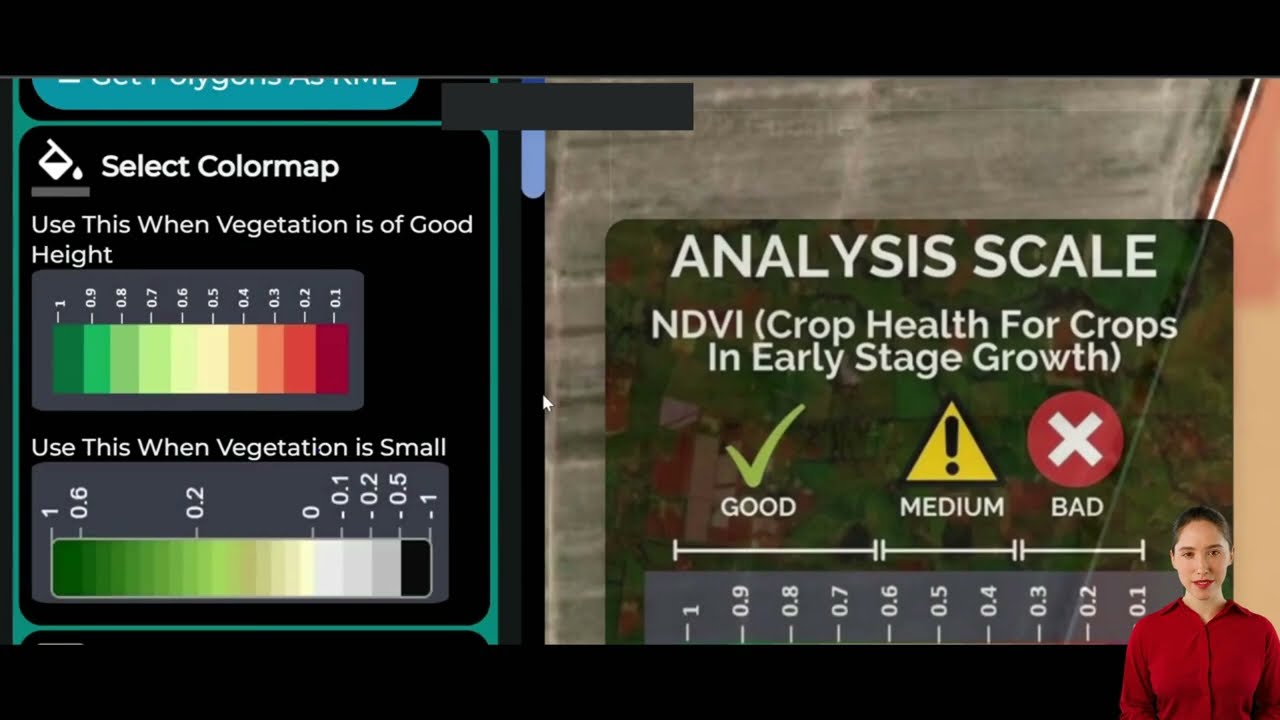
- Satellite-Based Crop Health Monitoring: Real-time vegetation health (NDVI), soil moisture, and irrigation guidance through Farmonaut's Android, iOS, and web apps.
- AI-Based Advisory (Jeevn): Weather- and threat-aware recommendations that support the "we manage this carefully" story a farm tells online.
- Blockchain Traceability: A tamper-evident record behind sustainability claims — see Farmonaut Traceability.
- Fleet and resource management: Digital tracking of vehicles, machinery, and staff time — Farmonaut Fleet Management.
- Carbon Footprinting: Emissions tracking for compliance and for content that survives scrutiny — Farmonaut Carbon Footprinting.
- APIs for integration: Developers and agribusinesses can pull satellite and weather data directly into their own systems (API, Developer Docs).
Managing multiple fields, crews, or locations? Farmonaut's Agro Admin App is built for large-scale operational oversight across a portfolio of fields rather than a single plot.
Complementary Digital Tools & Resources
Social media reach only converts reliably when the operation behind it is verifiable and bankable. Two Farmonaut tools address that directly:
- Crop Loan and Insurance Verification: Satellite-based farm validation improves accuracy for lenders and insurers. See Crop Loan and Insurance for reducing fraud and broadening access to financing.
- Crop Plantation and Forest Advisory: Plantation managers and rural development authorities can access AI-powered field insights through the Crop Plantation & Forest Advisory tool.
For broader context on where digital farming techniques are heading, see this innovation roundup.
Frequently Asked Questions
What are the real benefits of social media for farmers?
Faster access to peer knowledge and pest/weather alerts, a direct sales channel that bypasses distributor margins (USDA recorded $27,981 average gross direct-to-consumer sales per farm in 2022), and a low-cost way to build consumer trust through transparency. The constraint is connectivity and consistency, not the platforms themselves.
How does social media affect agriculture beyond individual farms?
It shifts demand signals faster — buyers see sustainability practices, behind-the-scenes operations, and price/availability information in near real time, which shapes purchasing decisions before a shopper ever reaches a store shelf.
How can I use social media to promote agriculture or my agribusiness specifically?
Match content to platform and audience: photo- and video-first storytelling on Instagram/Facebook/TikTok for consumer-facing farms, and case studies or technical demonstrations on LinkedIn or YouTube for B2B agribusiness marketing. Post process content between sales posts, and keep a factual response ready for the misinformation topics most likely to hit your specific commodity.
What are the most common farmer social media mistakes?
An all-promotional feed with no process content, undisclosed sponsored posts, geotagged field or livestock locations that create security risk, one-size-fits-all content across every platform, and no pre-drafted response for viral misinformation. Each has a specific, low-cost fix listed above.
Does social media actually increase direct-to-consumer farm sales?
USDA's 2022 Census of Agriculture shows the broader direct-marketing category (farmers markets, CSA, on-farm stores, u-pick, online marketplaces) grew 33.2% in inflation-adjusted value between 2017 and 2022, with participating farms more than doubling to 60,332 — social platforms are the primary channel driving discovery for many of those sales, though the Census doesn't isolate social media's share specifically.
How does Farmonaut support farms that are active on social media?
Farmonaut's satellite monitoring, AI advisory, and blockchain traceability give a farm verifiable data to back up sustainability and quality claims made in social posts, and the mobile-first, low-bandwidth design works even where broadband access is limited.

Further reading:
Conclusion: What Changes This Picture Next
The benefits of social media for farmers and agribusinesses are no longer speculative: NASS's Farm Computer Usage report and ERS's Census of Agriculture both quantify them, and both are refiled on a recurring schedule — NASS's technology survey roughly every two years, the Census of Agriculture every five. That means the exact figures cited here (85% internet access, $27,981 average direct sales, 71% rural broadband) have a shelf life. Check USDA ERS and Pew Research Center's broadband tracker directly for whatever the current figures are when you're reading this.
What won't change is the underlying method: match platform to audience, back promotional content with process content, keep account access secured against a single point of failure, and have a factual response ready before a misinformation spike hits. That checklist holds regardless of which year's percentages you're working from.
Ready to pair your social media reach with verifiable farm data? Join the Farmonaut platform today for satellite-based monitoring, traceability, and advisory tools that back up what you post.
For direct system integration, see the Farmonaut API and Developer Docs.

 Teledarbas
 Dreamz Tech
 Wild Oak Farm
 SFX
SFX BACF Africa
 Doodlakine
 Exurbia Geospatial
 FieldZero
 Indico Company
 Kubota
 FFBS
FFBS Jontra
 Tucor
Tucor
