

Identify Plant Disease by Picture: Top AI Apps 2026
Summary: In recent years, the integration of Artificial Intelligence (AI) in agriculture has transformed traditional farming practices. By 2026, AI-driven plant disease identification through image recognition is a cornerstone technology, enhancing global crop health management and boosting productivity. Farmers, agronomists, and forestry managers globally access powerful tools that rapidly and accurately identify diseases by simply capturing a picture, enabling timely intervention and sustainable management.
“Over 90% accuracy: AI plant identification apps in 2026 recognize diseases by analyzing leaf photos using deep learning.”
The Rise of AI-Based Plant Disease Identification
Plant diseases pose one of the most significant threats to global food security, resulting in devastating crop losses annually. According to the Food and Agriculture Organization, diseases account for up to 20-40% of lost crop yield every year globally. This is particularly critical in developing countries where the presence of expert agronomists is scarce, making timely and accurate diagnosis challenging.
The transformative power of AI plant identification apps is bridging this gap. Leveraging AI-driven image recognition and deep learning, these tools empower farmers, extension workers, and even hobbyist growers to identify plant disease by picture—simply by snapping an image with a smartphone.
- ✔ Rapid detection minimizes yield losses and enables early intervention
- 📊 Data-driven management supports predictive analytics and outbreak prevention
- ⚠ Bridges expertise gaps for non-experts and regions with limited access to pathology professionals
- ✔ Custom treatment recommendations improve outcomes and promote sustainable methods
- 🛰 Accessible on mobile and web platforms globally, breaking technological barriers
This democratization of plant pathology expertise signals a paradigm shift—by 2026, advanced deep learning models and vast plant pathology databases are enabling farmers worldwide to manage diseases more efficiently, prevent crises, and boost both quality and productivity.

How Do AI Plant Identification Apps Work in 2026?
The core mechanism of modern AI plant identification apps relies on sophisticated image recognition powered by deep learning, specifically Convolutional Neural Networks (CNNs). These AI technologies enable the apps to analyze leaf images, recognize patterns, and accurately diagnose even subtle plant diseases.
Several of these tools are reviewed individually in apps that check plant health from a single photo.
- Extensive labeled datasets: Trained on millions of plant images covering hundreds of diseases and numerous crops across geographies
- Multi-modal input: Utilizing standard smartphone cameras, hyperspectral/multispectral imaging, and even drone-captured imagery
- Instantaneous analysis: AI models instantly process and compare new images against a vast pathology database, outputting an accurate diagnosis and recommended actions
- Cloud and on-device AI: Both online and offline functionality to accommodate diverse connectivity environments
- Continuous learning: Regular updates with new plant diseases, pest infestations, and evolving pathogens
💡 Key Insight
AI disease identification apps go beyond surface diagnosis—incorporating spectral patterns invisible to the human eye for more precise and early detection.
For instance, platforms like Farmonaut employ satellite-based multispectral imaging combined with AI to identify crop stress, disease outbreaks, and nutrient deficiencies over large agricultural areas—all accessible from a smartphone or web app. This ensures that actionable diagnostics reach every stakeholder, regardless of location or resources.

🚀 Pro Tip
For optimal accuracy when using an AI plant identification app, ensure images are well-lit, focused, and capture the affected area clearly. This maximizes correct disease detection by the deep learning model.
❌ Common Mistake
A blurry or incomplete picture can lower diagnostic precision. Always include both healthy and symptomatic areas for the most effective disease identification.
AI Plant Identification App Comparison Table 2026
Here’s a comprehensive comparison table of leading AI-powered plant disease identification apps for 2026, focusing on versatile image recognition accuracy, AI technology, and platform availability. Use this to compare the best AI plant identification app for your needs.
Estimated figures as per 2026 market performance; User ratings are aggregated from cross-platform reviews.




Benefits of Using AI Apps for Plant Disease Detection in Agriculture
- ✔ Early Disease Detection: Timely alerts are critical for effective management, reducing crop losses globally.
- ✔ Cost Efficiency: AI plant identification apps are far more accessible than hiring scarce experts, especially in developing regions.
- ✔ Data-Driven Farm Management: Tracking outbreaks geographically using image-based databases supports large scale farm management and predictive planning.
- ✔ Precise Treatment Protocols: Receive customized, actionable recommendations—reducing unnecessary chemical use and boosting sustainability.
- ✔ Scalability: Equally effective for smallholder farmers and large agribusinesses via integration with web and API solutions.
Try Farmonaut API for seamless platform integration.

💹 Investor Note
Venture capital in AI-based agriculture tools is booming, with investments in plant disease identification apps and real-time platform integration expected to triple by 2027.
Visual List: Key Benefits of AI Disease Identification Apps
- ✔ Boosting Productivity — Reduce crop losses by enabling proactive disease management.
- ✔ Reliable & Accurate — Deep learning models consistently outperform non-AI diagnostics.
- ✔ Affordable & Accessible — Lowers barriers for developing country growers.
- ✔ Data Integration — Seamlessly links field findings with digital farm management systems.
- ✔ Sustainable Practices — Reduces unnecessary pesticide application and supports eco-friendly agriculture.

“Farmonaut’s database scans over 50,000 plant images daily to rapidly detect diseases with advanced AI algorithms.”
🏆 Best Practice
Integrating AI app diagnosis with blockchain traceability strengthens transparency from field to plate—safeguarding both growers and consumers.
AI Tools Beyond Crops: Horticulture & Forestry Strategies
The integration of AI plant identification tools is not limited to row crops or staples. Forestry and horticulture also benefit significantly:
- 🌳 Forestry: Early detection of diseases like sudden oak death and pine wilt is critical to protecting entire ecosystems and biodiversity.
- 🍇 Horticulture: Rapid plant identification and targeted management minimizes losses in fruits, flowers, and ornamentals—where even small outbreaks can significantly affect quality.
- 🌍 Global Security: AI-enabled interventions ensure healthy forests, contributing to carbon sequestration initiatives and resilience against climate change.
With real-time alerts and geo-tagging features, AI-powered apps provide forestry departments and orchard managers with instant, actionable intelligence to safeguard crops and natural habitats.

🌍 Expansion Insight
Cross-sector adoption (mining, forestry, horticulture) multiplies the positive impact of plant disease AI apps beyond just farming.
Visual List: AI Plant & Disease Detection—Who Benefits?
- 🌾 Farmers & Agribusinesses
- 🌳 Foresters & Conservationists
- 🍎 Orchard & Horticulture Managers
- 🏭 Supply Chain & Quality Assurance Officers
- 🧑🔬 Researchers & Extension Workers
Our Approach at Farmonaut: Satellite + AI for Smarter Agriculture Management
At Farmonaut, we have pioneered the integration of artificial intelligence & satellite technology to offer a robust platform for identifying plant disease by picture and improving farm management. Our cross-platform apps (Android, iOS, Web, and API) deliver:
- 🛰 Satellite-Based Monitoring: Track crop health (NDVI), soil moisture, and stress indexes using high-resolution satellite data, empowering accurate and remote disease monitoring that complements image-based recognition.
- 📱 AI-Driven Disease Diagnostics: Instantly analyze plant images with our advanced deep learning and CNN models, enabling precise diagnosis and prescription of treatment protocols.
- 🔗 Blockchain-Backed Traceability: Our platform ensures full transparency, from disease detection to harvest, using secure blockchain technology.
Explore full traceability: Farmonaut Product Traceability - 🗃 API & Integration: Seamlessly connect farm or enterprise systems via Farmonaut Satellite API and API Developer Documentation.
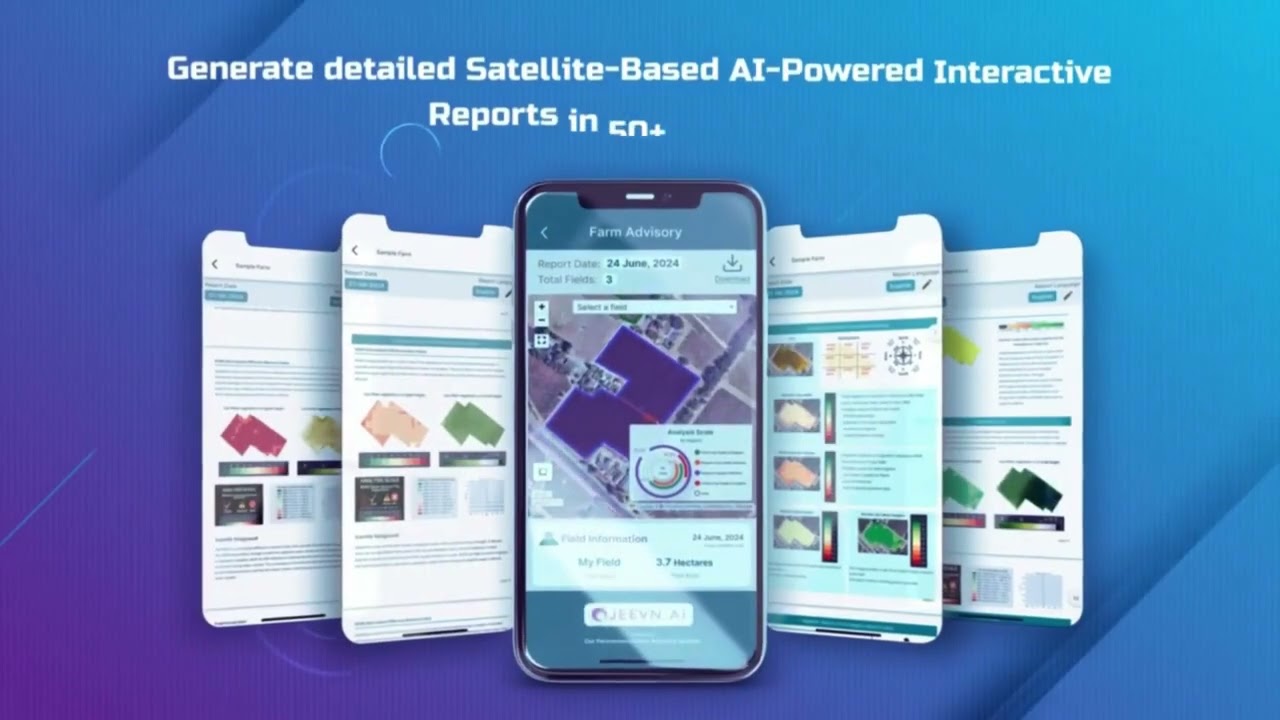
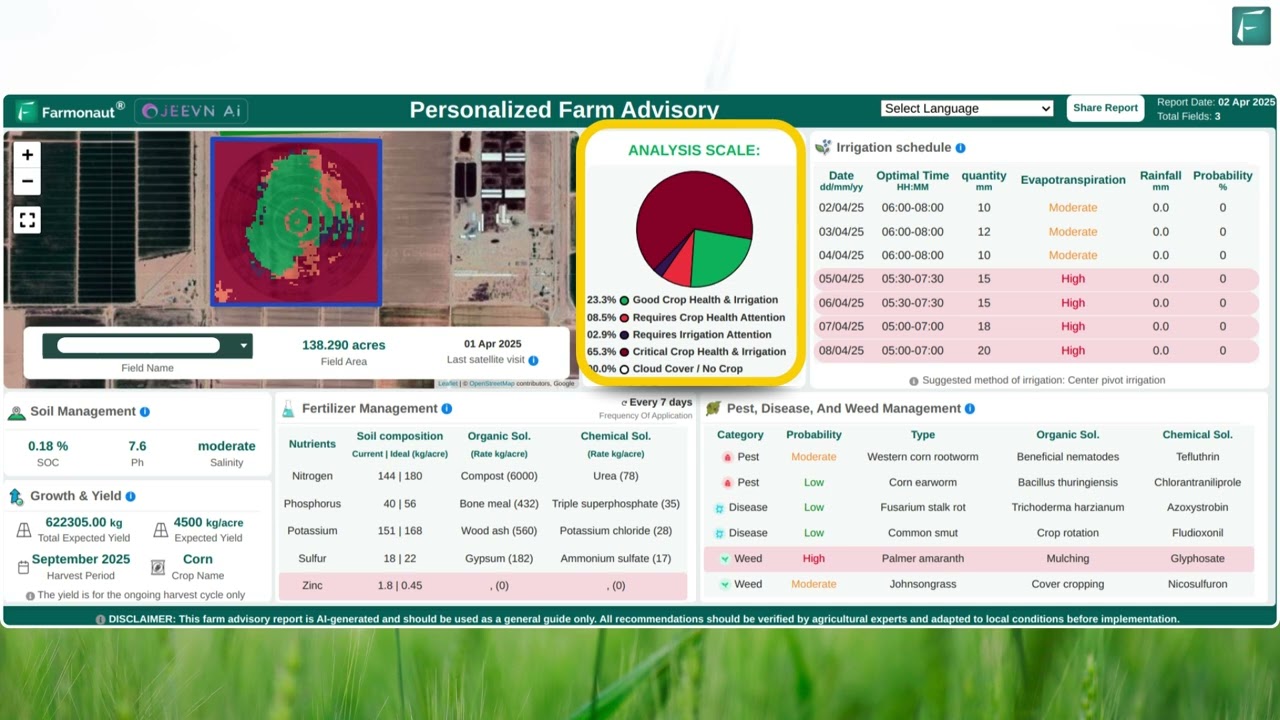
- 🌱 Jeevn AI Advisory System: Receive tailored recommendations and weather-linked alerts.
Try Jeevn AI for Farm Health Management
Affordable Satellite & AI-Based Subscriptions for Farms of All Sizes:
Choose from individual, business, or government packages. Scale as your operations grow.
Key Insights & Highlights for 2026
AI Plant Diagnosis: 2026 at a Glance
- Over 90% image recognition accuracy for most apps
- Wider spectrum of crops & regional diseases covered
- Instant diagnosis possible via smartphone anywhere on the planet
Prognosis & Predictive Analytics
- AI now predicts potential outbreaks based on weather and crop data
- Helps build proactive disease management strategies for entire regions
Smartphone + Satellite Synergy
- Combining smartphone diagnostics with remote satellite imaging gives a comprehensive crop health view
- Supporting highly targeted, cost-effective field intervention
Integration Beyond Crops
- Horticulture, forestry, and mining now utilize plant pathology AI infrastructure
- Boosts ecosystem health and environmental compliance
Accessibility & Scalability
- AI plant identification apps are affordable, multilingual, and platform-agnostic
- APIs enable integration into any farm or enterprise system
Unlock improved crop loan/insurance processing with AI-based verification
Future Trends and Challenges for AI Plant Disease Identification
While adoption is accelerating, next-generation AI plant identification app development faces dynamic challenges and exciting opportunities:
- ⚠ Data Quality: User-submitted images vary widely in clarity, angle, and context—necessitating robust pre-processing and augmentation techniques
- 🔄 Continuous Learning: Emerging diseases and evolving pests require ongoing dataset expansion and model retraining
- 🔐 Data Privacy: Geotagged images present privacy issues—trusted platforms (like Farmonaut) implement strong data ownership protocols and blockchain-backed traceability.
- 🌐 Offline Functionality: Essential for remote, low-connectivity locations—on-device AI models are now greatly improved, offering basic diagnostics without internet access
- 🤖 integration with IoT, Robotics, & AR: By 2026, expect seamless IoT sensors, automated drones, and AR overlays for field education and rapid, geo-tagged disease detection
The next frontiers include predictive disease modeling under changing climate scenarios—enabling growers to shift from reactive fixes to proactive, risk-based strategies.
Frequently Asked Questions (FAQ)
Q1. How does an AI plant identification app identify disease?
AI plant identification apps use deep learning (CNNs) trained on a vast database of plant disease images. When you upload or capture an image, the app compares it with its database, instantly diagnosing the disease and suggesting management steps.
Q2. What is the average accuracy of AI plant disease detection in 2026?
Leading apps achieve over 90% accuracy for the most common crop diseases, with performance continuing to improve as models are updated with more data and advanced deep learning algorithms.
Q3. Can AI apps detect unknown or new plant diseases?
AI apps excel at recognizing known diseases but need continuous dataset expansion and retraining to address brand new pathogens. They can, however, flag suspicious anomalies for further expert analysis.
Q4. How secure are my farm’s images and data?
Choose platforms that employ blockchain-backed traceability and user-centric privacy policies (like Farmonaut), ensuring that your images and geolocation data remain protected.
Q5. How are AI apps for plant disease identification priced?
Most platforms follow subscription pricing with plans for individuals, businesses, and large-scale government use.
See Farmonaut plans & benefits here.
Q6. Where can I access Farmonaut’s API and developer documentation?
Farmonaut offers full-featured API platform and up-to-date developer docs for integration into any digital solution or custom application.
Conclusion
By 2026, identifying plant disease by picture using AI technology is no longer futuristic—it’s foundational. Through image recognition apps powered by deep learning and advanced satellite solutions, farmers and agronomists globally can diagnose and manage diseases quickly, accurately, and affordably. As these tools continue to expand in capability and coverage, they are rapidly becoming the cornerstone of sustainable farming and food security for the future.
At Farmonaut, our mission is to make satellite- and AI-driven insights affordable and accessible to every farm, business, and government worldwide. From AI-powered disease recognition and blockchain traceability to resource management and real-time monitoring, we drive the digital transformation of agriculture and beyond—paving the way for smarter, more productive, and more sustainable practices.
Ready to transform your farm, agribusiness, or ecosystem management? Explore Farmonaut’s AI and satellite-powered solutions for 2026 and beyond.

 Hiteshi Infotech
 Clubhouse OS
 Progenseed
 SkyHarvest
 Polaris Digitech
 Teledarbas
 Wild Oak Farm
 SFX
SFX BACF Africa
 Doodlakine
 Exurbia Geospatial
 FieldZero
 Indico Company
