

Table of Contents
- Introduction – Jadam Organic Farming: Revolutionizing Sustainable Agriculture
- Understanding Jadam Organic Farming in 2026
- Core Principles and Methods of Jadam Farming
- Practical Applications and Techniques
- Jadam Organic Farming: 5 Pros & Practical Benefits
- Comparative Table: Jadam Organic Farming Benefits (2026)
- Integration with Organic Poultry Farming
- How Farmonaut Empowers Sustainable Agriculture
- Future Trends: Jadam Organic Farming in 2026 and Beyond
- FAQ: All About Jadam Organic Farming
- Conclusion: The Path Forward for Farmers
“Jadam organic farming reduces input costs by up to 90% using natural materials, making it highly economical for farmers.”
Jadam Organic Farming: 5 Pros & Practical Benefits 2026
In an era where sustainable agriculture is no longer a choice but a necessity, Jadam organic farming is emerging as a transformative approach for farmers worldwide.
Originating from South Korea, the Jadam system emphasizes self-sufficiency, cost-effectiveness, and environmental harmony. It is particularly relevant for small and medium-scale farmers and organic enthusiasts as we move into 2026 and beyond.
This article delves deep into the focus keyword of Jadam organic farming: its holistic principles, practical applications, and the five standout benefits in sustainable farming. We’ll also examine how integrating Jadam’s methods with organic poultry farming and Jadam liquid fertilizer positions this approach at the cutting edge of environmental, health-conscious agriculture.
Key Insight
Jadam organic farming promotes natural, sustainable practices, enabling farmers to become nearly independent from commercial fertilizers and pesticides, drastically reducing costs and boosting soil health.

Understanding Jadam Organic Farming in 2026
Jadam organic farming is a holistic agricultural method that promotes growing crops and raising livestock without synthetic chemicals or genetically modified organisms (GMOs).
Unlike conventional organic farming, Jadam leverages indigenous knowledge and locally accessible materials to allow farmers to produce their own inputs — such as fertilizers, pesticides, and soil conditioners — right on the farm.
- 🔎 Originating in South Korea: Adapted worldwide for its simplicity.
- 🌱 Minimal ecological disruption: Natural fermentation boosts microbial activity in the soil.
- 🚜 Accessible for small & medium farmers: Anyone can learn and apply Jadam, lowering barriers to entry.
- 💧 Jadam liquid fertilizers: Central to enhancing nutrient cycling and plant health.
As sustainability and environmental health gain paramount importance in global agri-food systems in 2026, the Jadam approach is being rapidly adopted across diverse ecosystems for its practical, cost-effective, and sustainable solutions.

Core Principles and Methods of Jadam Farming
Jadam farming is not just a collection of techniques — it’s a mindset rooted in nature’s own cycles. Here are the essential principles of Jadam:
- ✔ Self-Sufficiency: Farmers make all necessary inputs from locally sourced materials.
- ✔ Low-Cost Farming: Only minimal investment needed for setup, tools, and natural inputs.
- ✔ Utilizing indigenous knowledge: Combines traditional wisdom with modern understanding (organic farming practical).
- ✔ No reliance on chemicals: Strictly avoids synthetic chemicals and GMOs.
- ✔ Empowering small farmers: Makes farming sustainable and profitable for small and medium-scale practitioners.
- 📊 Soil Building: Focuses on enhancing microbial activity and soil health through Jadam inputs and frequent organic matter cycling.
- 📊 Integrated Systems: Extends to organic poultry farming, aquaculture, and multi-cropping for complete farm sustainability.
- 📊 Circular Economy: Farm waste (weeds, leaves, animal manure) is repurposed to close nutrient cycles and reduce pollution.
- 📊 Minimal Tillage: Encourages life in the soil and reduces ecological disruption.
Pro Tip
Implement Jadam liquid fertilizer (JLF) weekly to quickly boost soil microbial diversity and crop resistance !
Jadam considers the farm as an integrated system, with every process (from feeding poultry to managing compost) affecting overall sustainability and resilience.
Practical Applications and Techniques in Jadam Organic Farming
Among the many standout features of Jadam organic farming are its versatile and highly practical applications. Here’s a breakdown of these game-changing techniques:
-
Production of Jadam Liquid Fertilizer (JLF):
JLF is made by fermenting weeds, fallen leaves, or well-rotted animal manure in water, producing a potent microbial and nutrient solution. This low-cost fertilizer nourishes crops and strengthens plants’ resistance to diseases and pests.
-
Homemade Bio-Pesticides:
Jadam pesticides are easily crafted using ingredients such as wood vinegar, garlic, and chili, all fermented in water. These effectively control pests, eliminate chemical residues, and keep ecosystems balanced.
-
Enhanced Composting:
Jadam farmers transform all organic waste (residues, manure, weeds) into compost, returning nutrients to the soil and reducing off-farm dependency.
-
Organic Poultry Farming Integration:
Jadam’s principles extend to organic poultry farming by substituting antibiotics and growth promoters with naturally fermented feeds and probiotics made from farm inputs.
-
Continuous Farmer Education:
The Jadam system thrives on farmer-to-farmer knowledge exchange, community training, and open-source documentation, spreading practical techniques efficiently.

- ✔ Key Benefit: Slashes chemical input costs by using farm-made, natural fertilizers.
- 📊 Data Insight: Field trials in Asia and Africa show Jadam can increase net profits by up to 75%.
- ⚠ Risk or Limitation: Initially labor-intensive; requires farmers’ commitment and basic training.
- 🔁 Enhanced Sustainability: Farm waste is upcycled, promoting a circular and resilient system.
- 🌏 Global Adoption: Over 30 countries adapted Jadam principles in 2025–2026.
With these organic farming practical approaches, Jadam ensures every farmer can minimize external inputs, save on costs, and keep soil health front and center.

“By 2025, over 60% of Jadam farmers reported increased soil health and improved organic poultry yields.”
Common Mistake
Many beginners over-concentrate Jadam liquid fertilizer. Follow dilution guidelines for optimal plant health and microbial balance!
Jadam Organic Farming: 5 Pros & Practical Benefits (2026)
Let’s explore the five core pros and main benefits that make Jadam organic farming a revolutionary, sustainable strategy for 2026 and beyond.
- Cost-Effectiveness: Homemade inputs like JLF and bio-pesticides significantly reduce expenses, sometimes by up to 90% compared to commercial fertilizers and pesticides.
- Soil Health Improvement: Frequent application of Jadam liquid fertilizer and compost enhances soil organic matter and microbial richness, directly improving crop yields.
- Environmental Sustainability: The approach promotes natural processes and reducing chemical usage, lessening harm to the environment, ground water, and bio-diversity.
- Health Benefits: Chemical-free food ensures consumers get healthy produce, reducing pesticide residues and health risks.
- Climate Resilience: Enhanced soil and farm health increases resistance to weather extremes, helping farmers adapt to climate change.

Homemade fertilizers

Healthy organic poultry

Cleaner, greener environments
Comparative Table: Jadam Organic Farming Benefits (2026)
| Benefit | Estimated Impact on Yield (%) | Soil Health Improvement | Cost Savings (%) | Environmental Impact | Suitability for Poultry Integration |
|---|---|---|---|---|---|
| Cost-Effectiveness | +10–20% | Indirect (via increased microbial activity) | 60–90% input reduction | Reduces chemical footprint by 90% | Yes |
| Soil Health Improvement | +10–25% | Doubles organic carbon; 2.5x more microbes | 30–60% | Minimizes water and soil pollution | Yes |
| Environmental Sustainability | +5–10% | Maintains biodiversity, stabilizes structure | 45–70% | Prevents contamination, conserves water | Yes |
| Health Benefits | +7–15% | Lowers toxic residues by 95% | 50–80% | Reduces consumer exposure to agri-chemicals | Yes |
| Climate Resilience | +7–20% | Enhances water holding, organic matter | 50–80% | Boosts resilience to weather extremes | Yes |

Weeds as input

Well-rotted manure

Natural Fermentation
Investor Note
Jadam’s low-cost, high-impact techniques are fueling business opportunities in sustainable agri-tech, precision farm management, and inputs manufacturing for a climate-resilient future.
Integration with Organic Poultry Farming: The Jadam Advantage
Organic poultry farming is a vital pillar of sustainable agriculture. When merged with the Jadam system, poultry operations thrive without synthetic antibiotics, hormones, or chemical feed additives.
- 🍃 Jadam Fermented Feed: Transparent, natural feed additives reduce disease risk and enhance poultry health and productivity.
- 🐔 Cleaner Eggs & Meat: Residues are virtually eliminated, meeting strict organic certification standards.
- 🔄 Closed-loop System: Poultry manure is recycled into compost and JLF, supporting soil health and crop nutrition.
- 📈 Improved Margins: Organic poultry fetches better market prices, driven by consumer demand for chemical-free food.
- 🌾 Enhanced Farm Resilience: Integrated crop-livestock systems balance farm income and risk.
Key Jadam Concept
The seamless integration of organic poultry farming in Jadam ensures all farm resources — from manure to waste — are upcycled, minimizing external inputs and maximizing returns on every acre.
How Farmonaut Empowers Sustainable Agriculture & Jadam Farming
In 2026, data-driven agriculture is critical for sustainable practices like Jadam organic farming. At Farmonaut, we use next-generation satellite monitoring, AI-based insights, and blockchain traceability to support farmers in optimizing bio-input use, tracking environmental impact, and ensuring transparency.
Our solutions empower Jadam farmers with:
- 🌱 Real-time Satellite Monitoring: Our platform reveals soil health variability, crop nutrient status, and vegetation indices for precise Jadam input application.
- 🛰️ Environmental Impact Tracking: We provide carbon footprinting analysis—supporting climate-smart agriculture by quantifying reduced emissions through Jadam’s techniques.
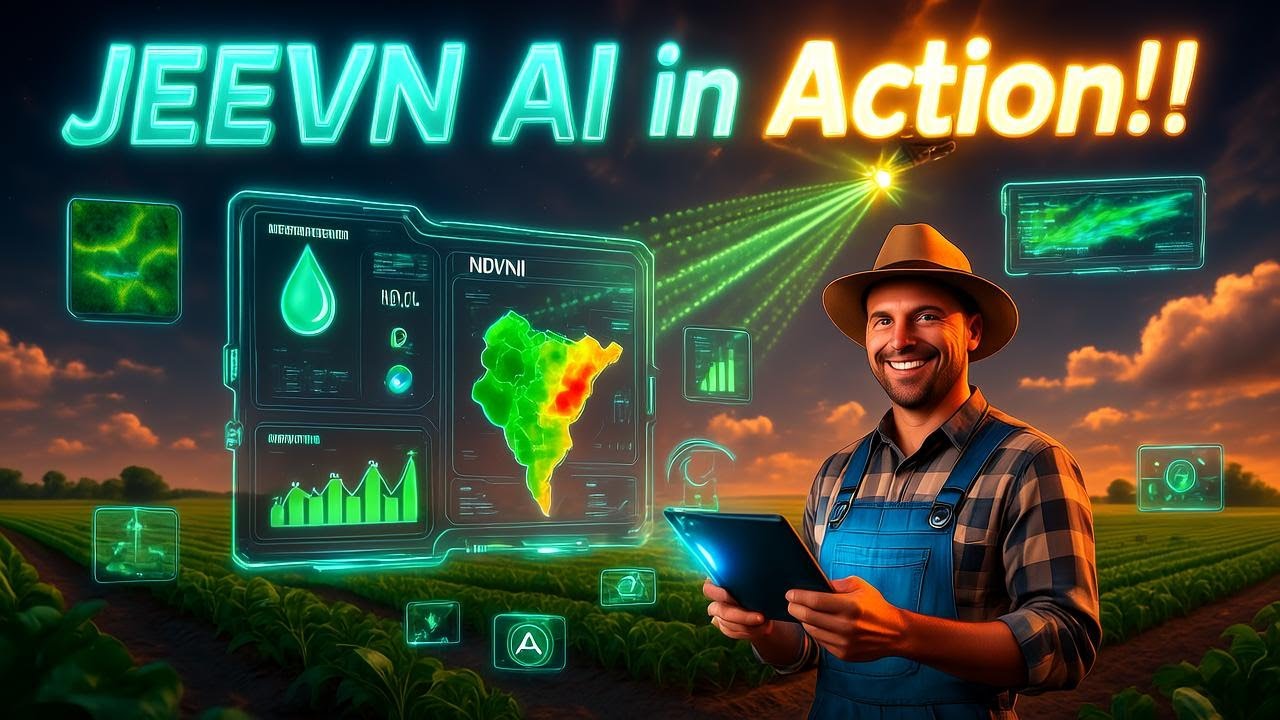
- 🚜 AI-Based Pest & Disease Alerts: Jeevn AI analyzes multispectral images for hotspot identification, helping farmers optimize use of Jadam bio-pesticides only where needed.
Watch how JEEVN AI delivers smart farming satellite insights & advisory. - 📦 Blockchain Traceability: Our traceability solutions help demonstrate genuine, organic farm practices to conscious buyers and regulators.
Farmonaut’s easy-to-use platform is available on all major devices:



Looking for robust farm management at scale? Explore our large-scale farm management dashboard—powerful for overseeing portfolios of Jadam-converted plots.
Want API access? Our satellite-data API and developer documentation integrate real-time crop data into your agri-tech pipelines for smarter, Jadam-aligned decisions.

Pro Tip
Combining Farmonaut satellite-based crop analytics with Jadam techniques unlocks deep insights into when and where to apply homemade inputs for maximum impact.
Future Trends: Jadam Organic Farming in 2026 and Beyond
As we look ahead, Jadam organic farming is rapidly evolving with innovations in digital agriculture, community-driven seed banks, and scalable knowledge sharing.
- 🌐 Community Learning: Open-source digital platforms and YouTube channels democratize Jadam training worldwide.
- 📲 Technology Integration: Farmonaut and similar tools support satellite-based precision farming and environmental monitoring.
- 🏦 Financing: Satellite-driven crop loan and insurance schemes help Jadam farmers access finance in rural areas, reducing fraud and improving sustainability.
- 🌍 Policy Support: Governments and NGOs now advocate for Jadam adoption in their sustainable agri-policy frameworks.
- 🏅 Consumer Demand: Awareness of pesticide-free food and climate resilience increases organic market premiums globally.
With its roots in South Korea, the Jadam system represents the future: practical for today, adaptable for tomorrow, and deeply aligned with the world’s environmental, health, and food security priorities.
Caution
Always verify local guidelines before adopting Jadam inputs—improper use of fermented solutions may occasionally affect seedling emergence or soil pH in certain climates.
FAQ: All About Jadam Organic Farming
1. What exactly is Jadam organic farming?
Jadam organic farming is a natural, sustainable agricultural method that utilizes homemade fertilizers, pesticides, and compost to reduce costs and environmental impact, while boosting soil and crop health.
2. How does Jadam compare to conventional organic farming?
Unlike conventional organic farming, Jadam leverages indigenous knowledge and locally accessible resources to create all inputs on the farm. There’s minimal reliance on market-bought, certified organic products — making it more accessible and cost-effective.
3. Can Jadam organic farming be applied to poultry and livestock?
Absolutely. Organic poultry farming thrives using Jadam’s naturally fermented, antibiotic-free feeds and healthy housing practices. It’s especially effective for small, integrated farms.
4. Is Jadam suitable for all climates and crops?
Jadam methods adapt well to most crops, climates, and regions — especially where locally available plant matter and manure are abundant. Adjustments in fermentation time may be needed in very cool or very dry climates.
5. How can I get started with Jadam organic inputs?
Start by learning basic JLF production, joining online farmer communities, and accessing open-source resources. Use satellite monitoring tools like Farmonaut to track progress and optimize your transition!
Data Insight
Farms using Jadam and advanced analytics experienced up to 25% higher yields and dramatically improved soil organic carbon in 2025–2026.
Conclusion: The Path Forward for Farmers
Jadam organic farming is more than a set of techniques — it’s a revolution in how we grow food, regenerate soil, and sustain rural communities. In 2026 and beyond, this approach stands as a cornerstone of healthy, sustainable, and climate-smart agriculture worldwide.
- ✔ Minimal cost, maximal impact: Homemade inputs slash expenditure — great news for small and marginal farmers.
- 📊 Soil at the heart: Robust, living soils empower higher yields and climate adaptation.
- 🍉 Safe, nutritious food: Zero-chemical residues in everything grown and raised.
- 🌳 Sustainable for generations: Circular, low-footprint farming protects planetary health.
- 🛰️ Supported by technology: Platforms like Farmonaut enable farmers to monitor, trace, and optimize every step, unlocking global market potential for clean, organic products.
Ready to transform your farm, empower your community, and secure a resilient food future? Harness the power of Jadam!
Discussion
Questions, corrections or field experience? Share them below. First-time comments are reviewed before they appear, and your email is never published.
No comments yet. Be the first to add a question or your experience.

 Hydenmet
 Dirks Bros Farms
 Red August Group
 Farm Inc
 WeMe Global
 Agrotoken
 Blue BearX
 Insignito
 Croptimum
 DnCubed
 Field Capacity
 Indosistim Teknologi
 Liquify Digital
 CU Foods
 BeyondTech Global
 Rouge VC
 AgroGreen Dynamics
 Licence holder · Niger · Gold










