

Reviewed September 2026 against USDA Farm Service Agency, USDA National Agricultural Statistics Service, and USDA Economic Research Service data.
Try it: Run your own numbers →
Summary:
An ag land loan is financing secured by farmland itself, used to purchase cropland, pasture, or timber ground. In the United States, the two main paths are a USDA Farm Service Agency (FSA) direct or guaranteed farm ownership loan, or a conventional/commercial loan from a bank, Farm Credit System lender, or private ag lender. As of August 2026, FSA direct farm ownership loans carry a 6.00% interest rate, while the joint-financing option (FSA plus a participating lender) runs 4.00%, and the down-payment loan program for beginning farmers is 2.00%, per the USDA Farm Service Agency’s August 2026 lending rate announcement. This article walks through those numbers, what land actually costs per acre right now, and the seven qualification steps that determine whether you get approved.
US farm real estate debt is forecast at $399.0 billion for 2026, and total farm sector debt at $605.1 billion—up 4.6% year-over-year—per USDA Economic Research Service data.
Current Ag Land Loan Numbers You Need First
Before comparing lenders, know what you’re financing and at what rate. These are the load-bearing figures for any loan for agricultural land purchase decision made in the second half of 2026:
- 💰 US average farm real estate value: $4,500 per acre across all land types (2026), up 3.4% from 2025, per USDA NASS.
- 🌾 US average cropland value: $6,020 per acre (2026), per USDA NASS.
- 🐄 US average pasture value: $2,000 per acre (2026), per USDA NASS.
- 🏦 FSA direct farm ownership loan rate: 6.00% (August 2026).
- 🤝 FSA joint-financing farm ownership loan rate: 4.00% (August 2026) — FSA lends alongside a commercial or Farm Credit lender.
- 🌱 FSA down payment farm ownership loan rate: 2.00% (August 2026) — for beginning and underserved farmers, requires a 5% cash down payment from the borrower.
- 🚜 FSA direct farm operating loan rate: 5.25% (August 2026) — for equipment, inputs, and working capital, not land purchase itself.
These averages mask wide regional variation—the NASS report breaks values down by state, but that state-level detail is not machine-readable from the summary PDF cited here. If you need a number for a specific state, pull it directly from the USDA NASS land values report or the interactive charts at nass.usda.gov’s Charts and Maps tool, which is updated annually each July or August.
Why Take Out a Loan to Buy Farm Land?
A loan to buy farm land gives producers access to capital they don’t have to raise from operating income alone, which matters when land trades at $4,500–$6,020 an acre on average nationally. Whether you’re a beginning farmer buying your first parcel, an established operator expanding acreage, or transitioning a family operation, financing lets you act on land availability without waiting years to self-fund.
- ✔ Flexible credit structures: FSA and commercial lenders offer terms from short operating loans to 40-year farm ownership loans.
- 💡 Scale productive capacity: Add acreage for row crops, forage, or timber without depleting working capital reserves.
- 📊 Improve farm efficiency: Fund irrigation, drainage, and infrastructure improvements on newly acquired ground.
- ⚠ Spread risk: Diversify holdings across soil types, crop mixes, or geography.
- 🏦 Build long-term equity: Land purchased with a fixed-rate loan locks in your basis while land values have risen 3.4% year-over-year nationally (USDA NASS, 2026).

7 Steps to Qualify for an Agricultural Land Loan
Whether you’re searching for an ag land loan, a regional option like an NC land loan, or comparing loans for farm land purchase across lenders, the underwriting process follows the same seven-step logic. Work through these in order before you submit an application.
-
1. Evaluate Land Quality, Location, and Market Access
Lenders and borrowers both need to assess the intrinsic value of the parcel before talking financing:
- ✔ Soil fertility, composition, and prior cropping history.
- 🌦️ Climate and rainfall patterns for the region.
- 🏞️ Drainage and topography—affecting irrigation needs and flood risk.
- 🏭 Proximity to irrigation infrastructure, grain elevators, processors, and roads.
- 📑 Clear title and a current land survey, including any easements or mineral rights carve-outs.
Tip: Cropland at the national average of $6,020/acre (USDA NASS, 2026) still varies enormously by soil class and water access—two parcels a mile apart can differ by thousands of dollars per acre. Get a written appraisal before you anchor on a price.
-
2. Understand Loan Structures and Repayment Options
Ag land loan structures vary by lender type and program:
- Fixed rate vs. adjustable rate term loans
- Loan tenures aligned with crop rotation or timber growth cycles
- Seasonal, step-up, or balloon repayment plans matched to harvest cash flow
- Hybrid programs pairing long-term land financing with a short-term operating loan—FSA’s direct operating loan rate sits at 5.25% (August 2026) for this purpose
Pro Tip: Match repayment dates to when your farm actually receives revenue—after harvest or livestock sale—not to generic monthly or quarterly billing cycles.

-
3. Prepare a Comprehensive Business and Production Plan
FSA and commercial lenders alike require documented evidence of your operating plan. Key elements:
- 📊 Projected yield or timber revenue for the parcel
- 👤 Borrower experience and farming/forestry background
- 💸 Cash reserves and available collateral
- 🧑🌾 Labor and input costs—seed, fertilizer, irrigation maintenance
- 🌾 Crop diversification and water management strategy
- 📈 Multi-year capital budget for improvements
 KEY INSIGHT:
Your business plan is the core of your loan file. FSA loan officers and commercial underwriters both weight demonstrated cash-flow discipline more heavily than collateral value alone.

-
4. Know Your Lender’s Requirements and Selection Criteria
Not every lender weighs risk the same way. Qualification commonly requires:
- 🔍 Clear title and environmental compliance documentation
- 🔢 Minimum credit score and positive financial statements
- 💼 Existing or prospective farm assets pledged as collateral
- 📝 Soil and land surveys, water rights documentation
- 📚 A farm succession plan for continuity, especially on multi-decade FSA terms
Investor Note: FSA farm ownership loans go up to $600,000 direct or $2,343,000 guaranteed, with terms up to 40 years, per the USDA FSA farm ownership loan program page—this is the single most important eligibility ceiling to check before you shop for a parcel above that price range.

 COMMON MISTAKE:
Skipping regulatory compliance checks or environmental assessments before applying often causes delayed processing or outright denial—resolve these before, not during, underwriting. -
5. Consider Down Payment & Equity Requirements
Down payment and equity expectations vary sharply by program:
- 💵 Conventional and commercial ag lenders commonly expect 10–30% of purchase price from the borrower’s own funds.
- 🏛️ FSA’s down payment farm ownership loan program requires only 5% cash down from the borrower and finances the balance at 2.00% (August 2026)—specifically for beginning farmers and underserved applicants.
- 📉 Larger equity requirements at commercial banks reflect the illiquid, long-horizon nature of farmland as collateral.
This is also the point at which readers searching for loan on agricultural land interest rate or loan for agricultural land purchase interest rate comparisons should note: the rate you’re quoted depends heavily on which of these three FSA tracks (direct, joint-financing, or down-payment) you qualify for, or whether you’re financing through a commercial lender instead. Commercial ag loan rates are not published by USDA and vary by bank, credit union, and Farm Credit System association—ask each lender for their current posted rate and APR, since national averages for private-lender ag mortgages are not centrally tracked the way FSA’s rates are.
-
6. Build a Robust Risk Management and Sustainability Plan
Agricultural land purchases carry weather, price, water, and regulatory risk. To strengthen both approval odds and long-term security:
- ✔ Diversify cropping and forestry activities—spread exposure across crops, rotations, and livestock or timber.
- 💧 Prioritize water management—confirm water rights, use efficient irrigation, monitor drought exposure.
- 🌱 Soil management—apply conservation practices and track soil health with NDVI or organic-matter testing.
- 📊 Build contingency margins into every budget for unforeseen costs.
- 🗂️ Keep accurate production records and financial statements for lender review.
 PRO TIP:
Satellite-driven tools like Farmonaut’s carbon footprint monitoring and fleet management help document resource use and sustainability practices that lenders increasingly ask about during underwriting. -
7. Choose the Right Financial Product and Lender
Compare across lender types before committing to any ag land loan or loan on agriculture land:
- 🏦 FSA direct or guaranteed loans vs. Farm Credit System associations vs. mainstream commercial banks
- 👩🌾 State and regional programs—many states, including North Carolina, run their own beginning-farmer or agricultural finance programs alongside FSA options, so check your state department of agriculture for a program that stacks with federal financing
- 🔄 Flexible repayment plans matched to your business cycle
- ✓ Interest rate, processing time, maximum loan amount, tenure, and prepayment penalties
- 🌾 Specialized products for forestry, timber investment, or sustainable farming
Total US farm sector debt is forecast to reach $605.1 billion in 2026, split between $399.0 billion in real estate debt and $206.1 billion in operating debt (USDA ERS).

Comparative Loan Options Table: Agricultural Land Financing at a Glance
| Loan Type | Interest Rate | Maximum Loan Amount | Repayment Term | Down Payment | Best For |
|---|---|---|---|---|---|
| FSA Direct Farm Ownership Loan | 6.00% (Aug 2026) | $600,000 | Up to 40 years | Lender-specific; no fixed FSA minimum | ✔ Full USDA financing, fixed rate ⚠ Longer processing than commercial banks |
| FSA Joint-Financing Farm Ownership Loan | 4.00% (Aug 2026) | Combined with participating lender’s share | Up to 40 years | Varies by co-lender | ✔ Lower blended rate ⚠ Requires a participating commercial or Farm Credit lender |
| FSA Down Payment Farm Ownership Loan | 2.00% (Aug 2026) | Up to 45% of purchase price | Up to 20 years | 5% cash from borrower | ✔ Lowest rate; built for beginning farmers ⚠ Eligibility limited to qualifying beginning/underserved applicants |
| FSA Guaranteed Farm Ownership Loan | Set by the guaranteeing lender | $2,343,000 | Up to 40 years | Lender-specific | ✔ Higher loan ceiling than direct ⚠ Underwritten by a commercial lender, not FSA directly |
| Commercial/Farm Credit System Loan | Not USDA-published; ask lender for current rate | Set by lender | Typically 15–30 years | 10–30% commonly requested | ✔ Fastest closing; no federal eligibility limits ⚠ Rate and terms vary by institution |
Land Loan Affordability Calculator
Estimate your monthly payment and required down payment for a farmland purchase using the FSA rates and NASS land values cited above—then adjust every field to your own numbers.
Run your own numbers
Watch & Learn: Top Video Insights
-
Unlocking Farm Potential:
A Comprehensive Guide to Land Cover Classification and Farm Land Types -
Regenerative Agriculture, Carbon Farming & Soil Health:
How Satellite and AI Tools Enable Sustainability -
Water Management in Precision Agriculture:
NDWI & Farmonaut’s Geospatial Revolution -
Land Classification Explained:
Why Land Categories Matter More Than You Think!
How Farmonaut Supports Land Investment Decisions
Alongside financing, lenders and buyers increasingly ask for documented land condition and resource-use data. Farmonaut’s satellite platform helps compile that record before and after a purchase closes:
- ✔ Real-time Satellite Monitoring: Evaluate soil health, drainage, and crop vigor (NDVI) before applying for a loan or signing a purchase agreement.
- 📊 AI-Powered Advisory: The Jeevn AI System provides strategies for irrigated vs. rainfed operations, helping forecast yields and manage input costs.
- 🌍 Blockchain Traceability: Traceability solutions support compliance documentation lenders may request.
- 🚜 Fleet and Resource Management: Match machinery and labor deployment to your expanded acreage with fleet management tools.
- 💡 Environmental Impact Monitoring: Document sustainable practices with carbon footprinting technology.
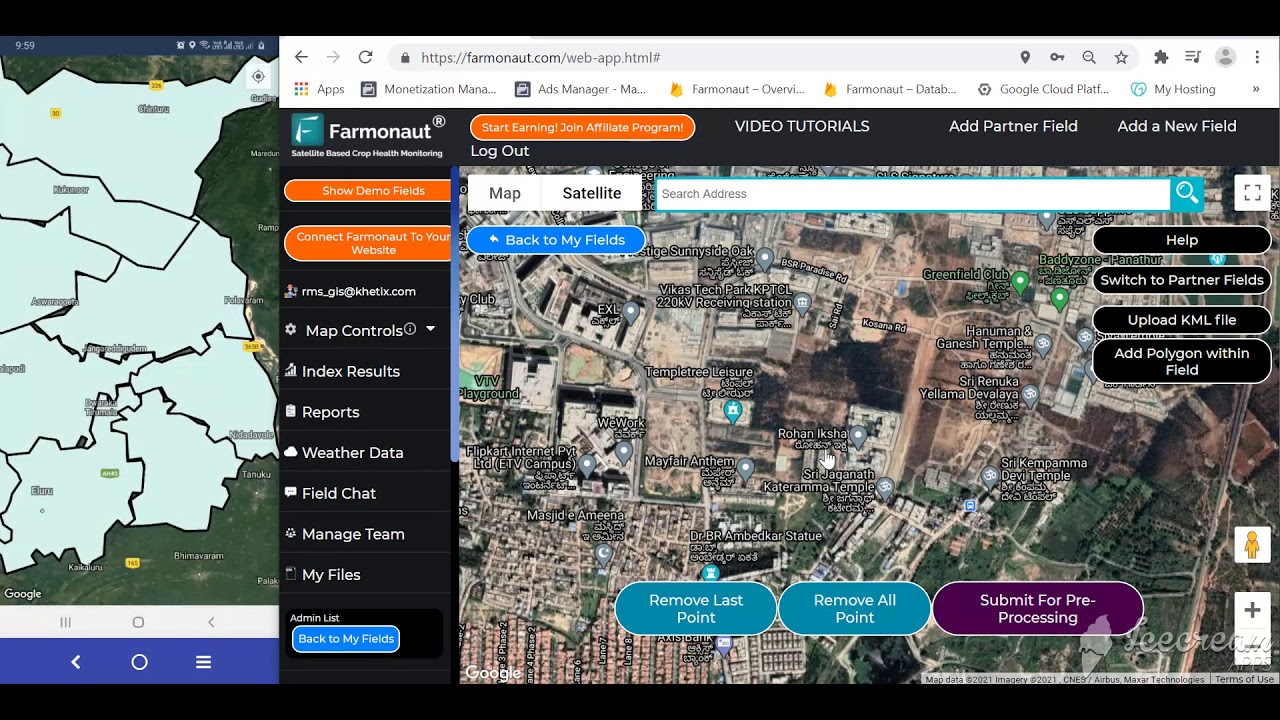
Access these tools via web, Android, or iOS for land survey support, resource tracking, and geospatial analysis relevant to a purchase decision.
Developers and larger agribusinesses can integrate directly via API access and the developer documentation, feeding satellite data into internal loan assessment or farm management systems.
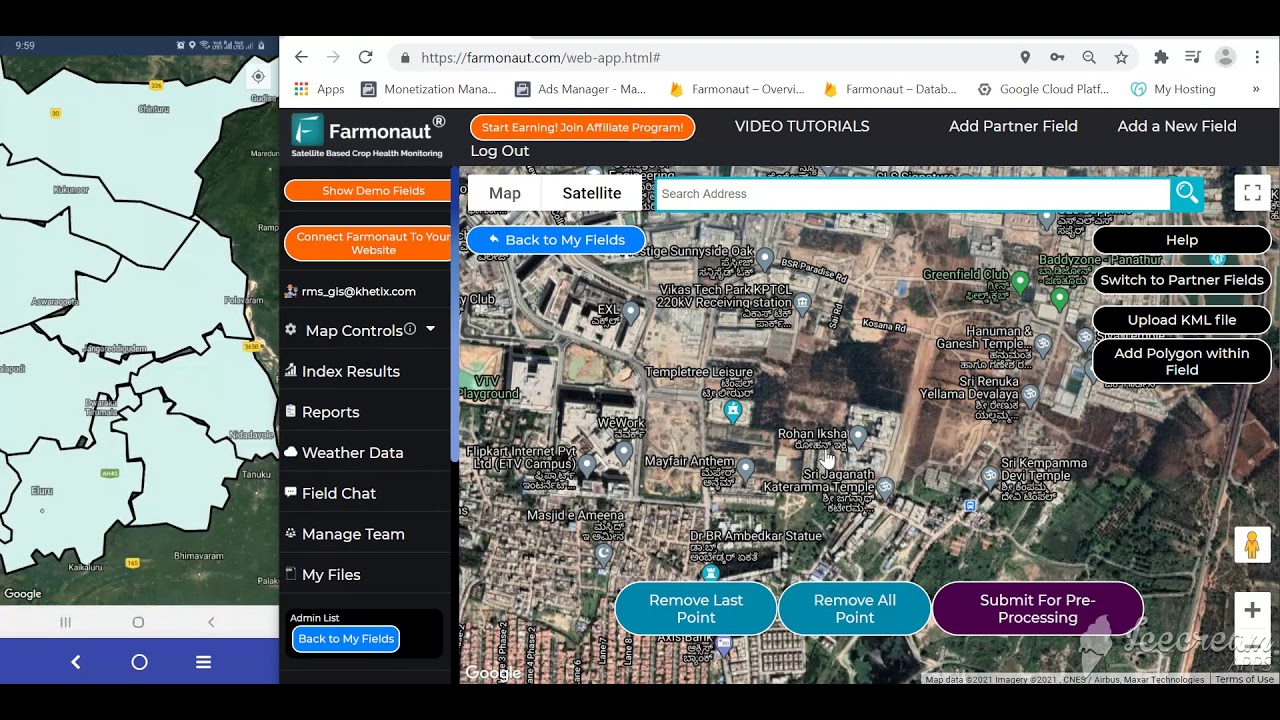
Visual List: How Satellite Data Strengthens an Ag Land Loan Application
-
 Satellite Insights
Independent land evaluation and monitoring pre- and post-loan. -
 AI-Driven Advisory
Yield projections, risk alerts, and efficiency guidance. -
Blockchain Traceability
Verifiable records to support compliance and lender trust. -
 Resource Management
Track operating costs and seasonal inputs against your budget.
Bonus: Risk and Repayment Management Strategies
- ✔ Maintain Updated Cash Flow Projections: Revise capital and production budgets as input costs and yield estimates change through the season.
- ✅ Choose Seasonal Payment Structures: Match repayments to harvest or livestock sale timing rather than flat monthly billing.
- 📊 Use Monitoring Tools for Early Warning: Satellite-based weather, soil, and growth-stage monitoring helps flag problems before they show up in cash flow.
- 🌱 Diversify Revenue Streams: Adding forestry, livestock, or rotational crops reduces exposure to any single commodity price swing.
- ⚠ Document Everything: Keep organized, current business and compliance records—lenders require these for refinancing or restructuring requests.



Quick Callouts: Key Insights & More
Forestry and timber operators should include anticipated harvest cycles and standing timber appraisal in loan applications, matching loan periods and payments to actual timber revenue timing.
FSA’s three farm ownership tracks—direct (6.00%), joint-financing (4.00%), and down payment (2.00%)—as of August 2026 are reannounced monthly, so the rate you lock depends on when you close.
Compare total cost of borrowing, not just the headline rate—origination fees, appraisal costs, and prepayment penalties differ between FSA and commercial products.
Leaving out a farm succession or expansion plan can limit your refinancing or resale options on a 40-year FSA term.
Zoning, water rights, and land classification can restrict what crops, livestock, or timber operations are permitted—verify with county and state authorities before signing a purchase agreement.
Quick Checklist: What to Include in Your Agricultural Land Loan Application
- 📑 Land title, soil survey & clearance reports
- 💧 Proof of irrigation infrastructure & water rights
- 📋 3- to 5-year business plan & cropping schedule
- 🧾 Cash flow projections, input/output budget
- 🔒 Evidence of collateral or equity contribution
- 🌱 Environmental impact assessment (especially for forestry/timber)
Frequently Asked Questions – Loan to Buy Agricultural Land
1. What is the current interest rate on a loan to buy agricultural land?
For USDA FSA programs as of August 2026: direct farm ownership loans are 6.00%, joint-financing farm ownership loans are 4.00%, and down payment farm ownership loans for beginning farmers are 2.00% (USDA Farm Service Agency). Commercial and Farm Credit System lenders set their own rates, which are not centrally published—ask each lender for their current quote, since FSA rates are reannounced on the 1st of every month.
2. How much does farm land cost per acre in the United States?
The US average across all land types is $4,500 per acre for 2026, with cropland averaging $6,020 per acre and pasture averaging $2,000 per acre—all up 3.4% year-over-year for the all-land average (USDA NASS). State-level values differ substantially; check the NASS land values report for your state’s figure.
3. Who can apply for an agricultural land loan?
Any eligible farmer, forester, or agribusiness buying land for cropping, timber, or grazing can apply. FSA’s down payment and joint-financing programs specifically prioritize beginning, underserved, or consolidating farmers.
4. What documents are needed for a loan to buy agricultural land?
Typically: land title and survey, soil reports, a detailed business plan, financial and cash flow statements, proof of equity contribution, environmental compliance documentation, and water rights records.
5. Are there state-specific programs, such as an NC land loan?
Several states run their own beginning-farmer or agricultural finance programs that can stack with federal FSA financing. Check your state department of agriculture’s website for current eligibility and rates, since these programs and their terms change independently of USDA’s schedule.
6. Can Farmonaut help during the agricultural land buying process?
Farmonaut provides satellite-driven tools for land assessment, resource monitoring, and compliance documentation—supporting the environmental and financial due diligence many lenders now request during underwriting.




Conclusion: Financing Your Path to Farm Land Ownership
An ag land loan is the mechanism that turns land availability into land ownership without requiring you to self-fund the full purchase price. As of August 2026, USDA FSA rates range from 2.00% for qualifying beginning-farmer down payment loans to 6.00% for standard direct farm ownership financing, against a national average land value of $4,500 per acre. Success depends on matching the right program to your eligibility—FSA direct, joint-financing, guaranteed, or a commercial lender—preparing a documented business plan, and structuring repayment around your actual harvest or sale cycle rather than a generic calendar. Recheck FSA’s rate announcement and NASS’s land value report before you commit, since both update on a fixed schedule and the numbers in this article will not stay current indefinitely.
For detailed integration, automation, or custom solutions, see our API and Developer Docs. Explore our tools for large-scale farm management, carbon footprinting, crop loan & insurance, and crop & forest advisory—supporting your agricultural journey from loan approval through sustainable land management.

 Godrej Agrovet
 Hayleys Agriculture
 Linx Agritech
 Adinet
 Save Your Soils
 GalaxEye Space
 Grandstream Algérie
 XOS Realty
 Geospatial Lab Africa
 Agro La Gándara
 HIPSAC
 ZOL Zimbabwe
 Juligerm
 AdBio
AdBio MISE Maroc
 NWNS
NWNS Red August Group
 Farm Inc
 WeMe Global
 Agrotoken
 Blue BearX
 Insignito
 DnCubed
 Indosistim Teknologi
 Liquify Digital
 CU Foods
 BeyondTech Global
 Rouge VC
 AgroRisk
 Oath Inc
 Esri North East Africa
 MDCV UK
 Etech Consulting Madagascar
 Vestlandsforsking
 WB Dev
 Sama Premium
 Tres Valles
 Blickwinkel
 Agricultural Credit Policy Council
 eKGIS
eKGIS Mostas Tech
 Andex
Andex Deluxe Conseil
 WICO
WICO Chimera Innovation
 SkyHarvest
 Teledarbas
 Exurbia Geospatial
 FieldZero
