

Agricultural Land Financing 2025: Unlock 100% Loan Power
“In 2025, 100% financing land loans are projected to boost rural agricultural investments by over 30%.”
- Introduction: 2025—The New Era for Agricultural Land Financing
- Agricultural Land Financing: An Overview
- 100 Percent Financing Land Loans: Unlocking Powerful Growth
- Agriculture Real Estate Financing Trends (2025 & Beyond)
- Comparative Table: Agricultural Land Financing Options for 2025
- Impact of Agricultural Land Financing on Rural Economies
- Challenges & Risk Factors in Modern Agricultural Land Financing
- Satellite Technology, Financing, and Farmonaut’s Role
- Growth Strategies & Opportunities for Sustainable Ag Financing
- Agricultural Land Financing: Frequently Asked Questions (FAQ)
- Conclusion: Future Outlook for Agricultural Land Financing in 2025
Introduction: 2025—The New Era for Agricultural Land Financing
The year 2025 marks a turning point for agricultural land financing globally. With demand for food security intensifying alongside climate change challenges, access to adequate and affordable financing options is now a critical driver for scaling and modernizing rural agriculture. As we collectively push toward more resilient and sustainable practices, new trends like 100 percent financing land loans and integrated agriculture real estate financing are fast becoming game-changers for farmers, agribusinesses, and rural developers.
This in-depth article explores the evolving landscape of agriculture land financing, highlights key growth strategies, discusses challenges, and unlocks fresh opportunities for agricultural expansion, sustainable development, and rural prosperity—all while integrating the transformative power of satellite-based technology. Whether you’re a farmer seeking to purchase land, an investor interested in agri real estate, a financial institution providing loans, or a policymaker focused on development goals, understanding the intricacies of ag land financing in 2025 is more important than ever.

Agricultural Land Financing: An Overview
Defining Agriculture Land Financing in 2025
Agricultural land financing refers to the provision of loans or credit to aid the purchasing of farmland, expansion of existing operations, and investing in improvements such as irrigation, soil health upgrades, and infrastructure development. For many, this form of financing is the cornerstone that makes expansion, modernization, and transition to sustainable agricultural practices possible.
In practical terms, agriculture real estate financing involves:
- Securing capital to purchase or lease land
- Financing improvements—such as soil and irrigation infrastructure
- Supporting investments in new production technologies
- Extending credit for diversifying crops and scaling farm operations
The Need: Expanding Access & Reducing Barriers
Traditionally, agricultural land financing was fraught with challenges—like high collateral requirements, limited access (especially in underserved regions), and long repayment periods often incompatible with seasonal farm incomes. These barriers limited finance access for smallholders, young agripreneurs, and marginalized groups, impeding growth across the sector.
But 2025 is ushering in a new era. Now, emerging models and digital solutions are reducing entry barriers, lowering costs, and enabling more equitable access to land loans and credit—all crucial to meeting future production and sustainability goals.

Agricultural Land Financing: Key Focus Areas
- Access to 100 percent financing land loans for new and small-scale farmers
- Integrated agriculture real estate financing that supports sustainable practices
- The role of digital and satellite-based verification in better risk management for lenders
- Impact on food security, soil health, and economic development
- Navigating regulatory, collateral, and climate-related challenges



100 Percent Financing Land Loans: Unlocking Powerful Growth
What Are 100 Percent Financing Land Loans?
A 100 percent financing land loan is a loan product that covers the entire acquisition cost of farmland or agricultural property—with no down payment required from the borrower. Unlike conventional loans (which require substantial upfront payments), 100% loans eliminate significant barriers to land ownership and empower small and emerging farmers to enter the market with limited or no capital.
- Eligibility commonly depends on rigorous assessment of creditworthiness, a sound farm business plan, and in many new models, proof of sustainable land use practices.
- Governments and agencies may subsidize interest rates, guarantee loans, or offer moratoriums to reduce risk for lenders—improving access for rural borrowers.
- Digital platforms that use **satellite imagery** and **big data analytics** are increasingly being adopted to assess land value and production risk, enhancing loan processing accuracy.

Why Is 100 Percent Financing Critical in 2025?
Access to 100% financing is crucial for new entrants such as young agripreneurs and women farmers, and is driving rural entrepreneurship globally. With traditional lending requirements (collateral, repayment history, etc.) limiting many rural and smallholder borrowers, full financing products open doors to equitable ownership, business expansion, and sustainable rural growth.
- Institutions and government schemes are increasingly offering 100% loan products with longer tenures, flexible repayment periods, and lower interest rates.
- Farmers can scale production, diversify crops, and transition to more sustainable practices without facing unattainable upfront payments.
- 100 percent financing is a key lever for rural food security—fuelling production, jobs, and economic resilience.
Example Use Case: A smallholder in a high-potential area can now acquire land and invest in irrigation infrastructure by accessing a government-backed 100% land loan, overcoming the traditional entry cost hurdle and catalyzing local agriculture.
Requirements for 100 Percent Land Loan Approval
- Solid farm business plan demonstrating repayment capacity and sustainable land use
- Creditworthy financial profile (based on farm income, liabilities, etc.)
- Proof of investment in improvements—such as irrigation, soil health, or digital monitoring
- Adherence to regulatory conditions and compliance (land records, environmental standards)
“Over 60% of new agricultural entrepreneurs consider full land financing crucial for sustainable business growth.”

Agriculture Real Estate Financing Trends (2025 & Beyond)
How Is Agriculture Real Estate Financing Evolving?
In 2025, agriculture real estate financing is rapidly shifting from simple land acquisition loans to integrated, value-added loan models designed to enhance productivity, resilience, and sustainability.
- Lenders bundle land loans with additional credit lines for precision agriculture tools, high-efficiency irrigation, and renewable energy installations.
- Increasing focus on environmental impact—some loans tied to soil carbon sequestration, biodiversity conservation, and climate adaptation practices.
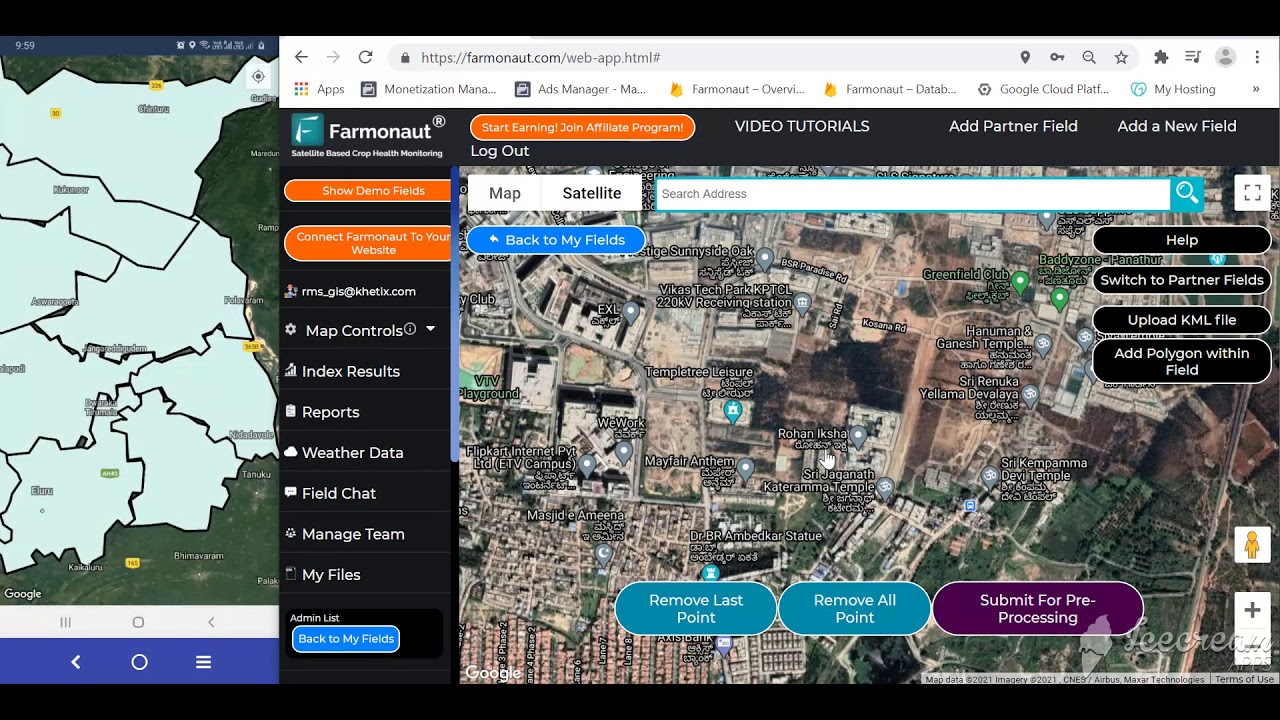
- Satellite monitoring, such as NDVI crop health and soil moisture analysis, is now commonly required to support risk assessment and loan underwriting.
Innovative Financing Models: Lease, Equity & Shared Ownership
- Land lease financing enables farmers to operate and invest in land without instant ownership—reducing financial burden while maintaining production benefits.
- Shared equity models: Farmers partner with investors or institutions, jointly owning land and sharing profits until buyout or maturation.
- These models are growing popular in regions facing land fragmentation and rapidly escalating rural real estate prices.
Digital, API & Blockchain-Driven Verification
Modern lenders now employ digital tools for robust assessment:
- API access to real-time satellite crop monitoring (such as those enabled via Farmonaut’s API)
- Remote soil and land classification (Traceability Solutions)
- Blockchain-based proof of land transactions for transparent loan disbursement—minimizing fraud
Interested developers can integrate these capabilities via our API Developer Documentation, to bring smarter agricultural financing and land management into their platforms.

Precision in Credit Assessment: The Role of Satellite Data
- Remote, real-time vegetation health monitoring prior to and after loan approval
- Soil quality/condition analysis informs credit risk and insurance requirements
- Historical and seasonal production data drive more accurate repayment plans
Sustainability Incentives in 2025
- Climate-smart agriculture adoption is rewarded with lower interest rates and increased loan tenure flexibility
- Loans linked to tangible improvements in soil health, water conservation, and emissions tracking (see Farmonaut’s Carbon Footprinting Solutions for examples of environmental impact monitoring)
Comparative Table: Agricultural Land Financing Options for 2025
| Financing Option | Estimated Interest Rate (2025) | Max Loan-to-Value (%) | Eligibility Criteria | Typical Loan Tenure | Key Challenges |
|---|---|---|---|---|---|
| Commercial Banks | 6.0% – 9.5% | Up to 80% 100% (select cases) |
Strong credit, collateral, clear land title, business plan | 10–20 years | High documentation, strict risk controls |
| Government Schemes | 4.0% – 7.0% | Up to 100% | Targetted groups, viable business plan, proof of sustainable practices | 12–25 years | Capped funding, slow process, policy-dependent |
| Cooperative Banks | 7.5% – 10.0% | 70% – 90% | Local farmer membership, simple collateral, local land | 5–12 years | Limited scale, variable rates |
| Microfinance Institutions | 12% – 18.0% | 50% – 70% | Smallholders, minimal collateral, group guarantee | 2–7 years | High interest, low amounts |

What Do These Options Mean for Farmers?
Choosing the right financing model in 2025 means weighing loan-to-value ratios, interest rates, eligibility requirements, and key challenges—including collateral, policy shifts, and risk controls. For many farmers and agripreneurs, government-backed schemes and 100 percent loan products now present the most accessible pathways for land acquisition and expansion, especially in developing and rural regions.
Impact of Agricultural Land Financing on Rural Economies
How Does Land Financing Drive Rural Development?
Robust agricultural land financing isn’t solely about buying land—it’s about unlocking growth for rural economies. Here’s how:
- Improved access to capital leads to better crop production, infrastructure investment, and food supply chain efficiency.
- Secure land ownership and long-term tenure incentivizes investments in soil health, climate resilience, and biodiversity.
- Women, youth, and marginalized groups gain enhanced opportunities—reducing poverty and driving a wave of rural entrepreneurship.
- Government incentives for sustainable practices encourage responsible land management aligned with the UN Sustainable Development Goals.
Ag land financing and agriculture land financing thus remains the cornerstone of both modernizing agriculture and achieving far-reaching development outcomes globally.
For those seeking enterprise-level monitoring and resource management for large farms, our Large Scale Farm Management Tools help monitor thousands of acres with automated reporting, improving productivity and scalability for both loan applicants and lenders.
If your operation focuses on forestry, plantations, or specialty crops, you can use our Crop & Plantation Advisory Tools to optimize inputs and enhance soil health, making agricultural land financing for climate-smart operations more accessible.

Challenges & Risk Factors in Modern Agricultural Land Financing
What Are the Top Challenges for 100 Percent Financing?
- Land Valuation Complexity: Highly variable ag land values require advanced tools for accurate risk assessment and loan sizing.
- Regulatory Hurdles: Changing land policies, slow legal land registration, and complex titling (especially in emerging economies) remain major bottlenecks.
- Climate Risks: Floods, droughts, and shifting soil health patterns can threaten production, putting loan repayment at risk.
- Financial Literacy: Many smallholder farmers face gaps in navigating credit terms, repayment schedules, and digital documentation.
- Lack of Collateral & Credit History: Especially challenging for new/young farmers and marginalized groups without existing resources or transaction records.
- Delayed Disbursements: Complex verification, especially manual land assessments, can slow down access to time-sensitive funding.
How Are Stakeholders Responding?
- Public-Private Collaboration: Governments and lenders are rallying to launch risk-sharing products and innovative insurance models.
- Digital Solutions: More reliance on mobile apps, APIs, and satellites to automate land verification and loan disbursement (see Farmonaut’s Crop Loan & Insurance Verification for secure, satellite-driven checks).
- Financial Training: Investing in strengthening digital literacy and transparent loan education for rural borrowers.
Satellite Technology, Financing, and Farmonaut’s Role
Farmonaut: Enabling Smarter Land Financing With Satellite Intelligence
As a satellite technology leader, Farmonaut enables smarter and more secure agriculture land financing by providing:
- Real-time satellite monitoring of crops, vegetation, and soil conditions—supporting credit assessment and loan monitoring
- AI-based land classification and productivity analytics—improving risk modeling for lenders
- Blockchain-powered traceability solutions to guarantee transparency in land transactions and ownership records
- Environmental impact and carbon footprint monitoring—helping financial institutions align loans with climate-smart agriculture incentives
- Fleet and Resource Management tools—optimizing logistics, usage, and asset tracking for larger farm enterprises
Farmonaut’s mission is to make these satellite insights accessible via flexible web, Android, iOS, and API solutions—empowering farmers, developers, institutions, and governments to reduce fraud, minimize risk, and enhance access to agricultural land financing globally.
To try these capabilities or integrate them into your financial workflow, start with our Large Scale Farm Management Platform or request API access for verification and monitoring.
Growth Strategies & Opportunities for Sustainable Ag Financing
Key Strategies for 2025 and Beyond
- Leveraging Integrated Financing: Access full-cycle loans that combine land purchase, technology upgrades, and sustainable transition in a single financing package.
- Promoting Digital Literacy: Participate in online training and mobile-based programs focused on loan literacy, digital documentation, and farm business planning.
- Using Satellite & AI Tools: Farmers and lenders should use digital verification for land quality, validate crop productivity, and track climate adaptation practices, improving loan availability and lowering risk.
- Adopting Sustainable Practices: Secure more favorable loan terms by committing to climate-friendly soil management, water conservation, or emissions reductions, as validated by digital monitoring solutions.
- Exploring Alternative Models: Consider lease or shared equity schemes if upfront ownership is financially impractical, especially in high-cost or fragmented markets.
- Building Partnerships with Technology Providers: Integrate satellite and AI-driven data into farm management tools to optimize productivity, improve financial planning, and ease reporting for lenders.
Agricultural Land Financing: Frequently Asked Questions (FAQ)
-
Q1. What is agricultural land financing in 2025?
A: Agricultural land financing in 2025 refers to loans, credit lines, and innovative financial products that enable the purchase, improvement, or expansion of farmland—often integrating digital tools, sustainability incentives, and 100% loan models for greater accessibility. -
Q2. How do 100 percent financing land loans work?
A: 100 percent financing land loans cover the entire value of the land, eliminating down payments. Approval hinges on creditworthiness, business plans, and, increasingly, demonstrated sustainable use. -
Q3. Are there risks associated with 100% agricultural land loans?
A: Yes. The primary risks are valuation errors, crop failure due to climate, repayment uncertainty, and regulatory changes. However, digital monitoring and satellite-based risk assessment significantly reduce uncertainty for lenders and borrowers. -
Q4. How does Farmonaut benefit agricultural land financing?
A: Farmonaut empowers lenders and farmers with affordable, satellite-driven data for land verification, productivity analysis, and compliance. This not only speeds loan processing but also helps secure better terms by documenting sustainable practices. -
Q5. Which app or platform should I use for land monitoring?
A: Farmonaut’s solutions are available for web (Web App), Android, iOS, and via API for developers or institutions. -
Q6. What are the main eligibility requirements for 100% land loans?
A: Generally, a solid farm business plan, modern and sustainable production practices, up-to-date land records, and a proven record (or plan) for crop income and loan repayment are required. -
Q7. Where can I get more details on specific product features?
A: Explore our suite of products:- Carbon Footprinting (for sustainability-linked loans)
- Traceability (for blockchain-backed land and crop documentation)
- Fleet Management (for optimizing equipment and logistics)
- Large Scale Farm Management
- Crop Loan & Insurance Verification
Conclusion: Future Outlook for Agricultural Land Financing in 2025
Agricultural land financing in 2025 is fast becoming more inclusive, dynamic, and sustainability-focused than ever before. The rise of 100 percent financing land loans, digital verification, and integrated real estate financing models presents unprecedented opportunities for both new and established farmers to access, own, and optimize farmland—all while elevating standards in climate adaptation, production, and economic development.
The future of rural agriculture hinges on the synergy between emerging financial models, robust digital ecosystem integration, and transparent, sustainable land management practices. Ongoing innovation, supportive policy frameworks, and a commitment to using the best technology—including satellite intelligence—will be essential in unlocking the full power of agricultural land financing for a food-secure, resilient, and thriving world.
For those ready to modernize their financing strategy or streamline their loan access and compliance cycles—Farmonaut’s affordable, satellite-driven solutions are ready to help, whatever your scale or location.
Stay informed and proactive—transform your rural business or lending workflow to meet the new realities of agriculture in 2025.
Discussion
Questions, corrections or field experience? Share them below. First-time comments are reviewed before they appear, and your email is never published.
No comments yet. Be the first to add a question or your experience.

 Contec Global
 ASQI
ASQI Teledarbas
 Wild Oak Farm
 SFX
SFX BACF Africa
 Doodlakine
 Exurbia Geospatial
 FieldZero
 Indico Company
 Kubota
 FFBS
FFBS Jontra
 Tucor
Tucor
 Licence holder · Niger · Gold










