

Livestock · Buyer guide
Mini Zebu Bull for Sale: US Buyer Guide and Costs
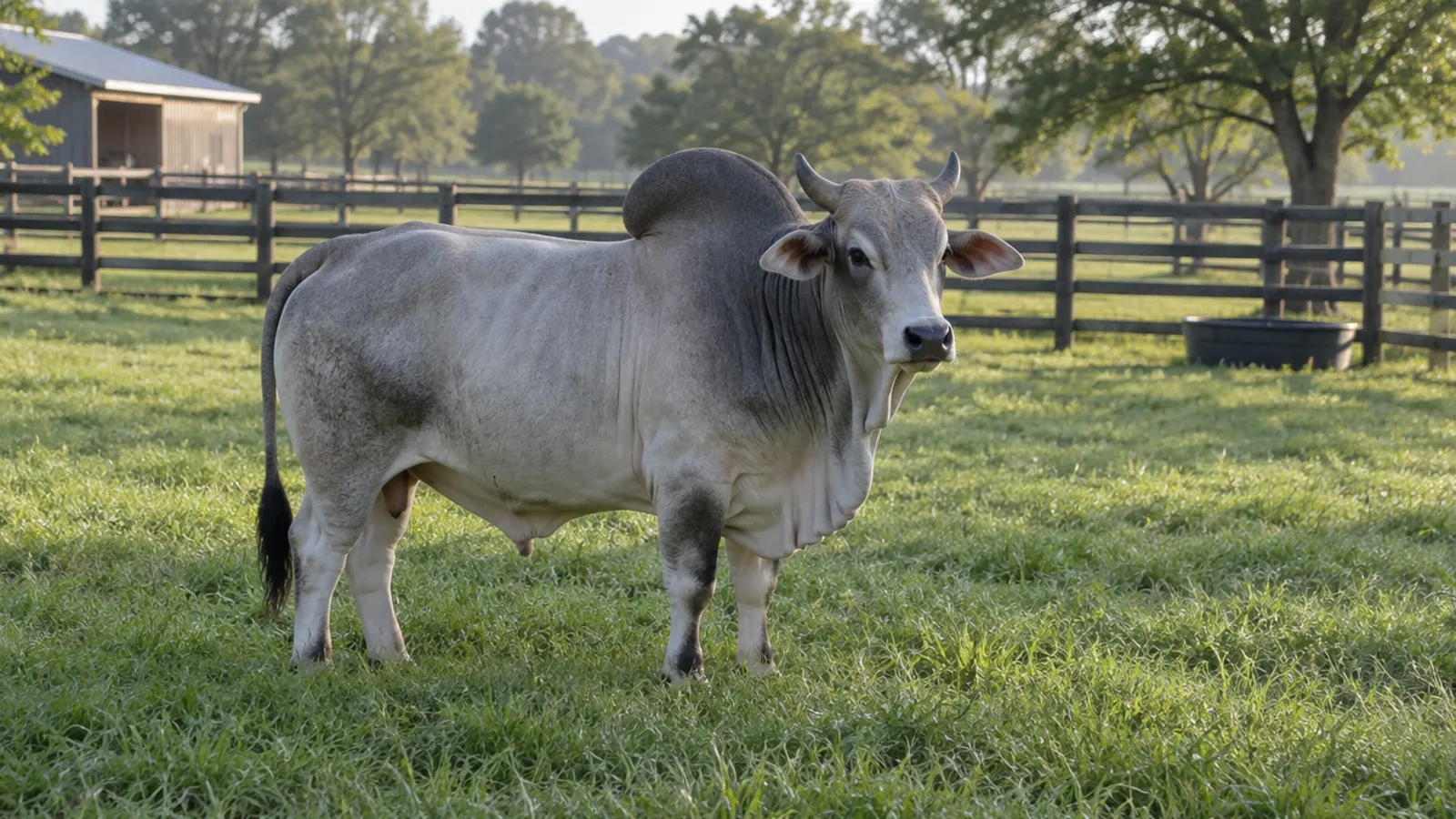
Registered Miniature Zebu stand 42 inches or less, and bulls weigh about 400 to 600 lb. There is no public price index for the breed, so this guide gives the checks to make before you buy and the USDA hay and cattle prices that set your costs.
Key takeaways
- The Miniature Zebu herd-book started in the US in 1991; more than 6,200 animals were registered by 2016.
- Registration limit: 42 inches (107 cm) at the withers; bulls weigh about 400 to 600 lb.
- No official price series exists for the breed; online prices are seller asks.
- USDA NASS put all-hay at $190 per ton in August 2026, up $29 from a year earlier.
- Ask for papers, a breeding soundness exam and health records, and check your state’s rules for moving cattle.
In this article
- What a Miniature Zebu is
- Mini zebu bull for sale: where US buyers look
- How to choose a mini zebu bull: 8 checks before you buy
- What a mini zebu bull costs to buy and keep
- Pasture and space for small cattle
- Heat tolerance and climate fit
- Small cattle on a mixed farm
- Your first month with a new bull
- How we checked the numbers
- Watching your pasture from above
- FAQ
A Miniature Zebu is a small humped breed of cattle registered in the United States. Registered animals stand no more than 42 inches (107 cm) at the withers, and adult bulls weigh about 400 to 600 lb (182 to 272 kg), according to the breed summary based on Mason’s World Encyclopedia of Livestock Breeds. If you are looking at a mini zebu bull for sale, this guide shows where US buyers find one, the checks to make before you pay, and what a bull costs to keep each year.
There is no public price index for this breed. So we give you the official US cattle and hay prices that drive your costs, a step-by-step buyer checklist, and a calculator for your own numbers. Those new to humped cattle can start with the traits of zebu cattle, which covers full-size and small animals.
What a Miniature Zebu is
Zebu cattle (Bos indicus) are humped cattle that came from South Asia. They have a fatty hump over the shoulders, a large dewlap and often drooping ears, as the Zebu article on Wikipedia describes. Full-size zebu breeds such as the Brahman are common in hot regions. The Brahman is the most numerous breed in Australia, where it spread through the tropical north.
The Miniature Zebu is a much newer, American breed. A herd-book was started in 1991 by the International Miniature Zebu Association. At that time small zebu cattle lived in 23 US zoos and with about 50 private owners. The parent stock had come from Brazil, the Dominican Republic and Sweden. By 2016 more than 6,200 animals were registered.
Key facts for a buyer:
- Height: 42 inches (107 cm) at the withers is the maximum for registration.
- Weight: bulls about 400 to 600 lb; cows about 300 to 500 lb (136 to 227 kg).
- Status: the breed is not reported by USDA to the FAO livestock breed database, so there are no official herd counts.
- Use: they are not a commercial beef breed; buyers usually want them for small acreages, shows or as companion animals.
That last point matters for price. A small bull is not sold by the pound at a sale barn like a feeder steer. Its value depends on papers, size, color, temperament and the seller.
Mini zebu bull for sale: where US buyers look
We ranked the usual sale channels by how much you can check before you pay. None of them is a guarantee. Use the checklist in the next section with every seller.
1. Registered breeders
Best for: buyers who want papers, known parents and a measured height.
Breeders who register animals can show a pedigree and a height record. You can often visit the farm, see the dam and sire, and watch how the herd is handled. Ask whether the bull is registered with a breed association and get a copy of the papers before you pay.
2. Breed association member lists
Best for: finding breeders near you so you can visit in person.
Breed associations keep lists of members by state. A nearby seller cuts hauling cost and stress on the animal. It also makes a pre-purchase visit easy.
3. Small-farm and livestock classifieds
Best for: buyers on a budget who can judge cattle well.
Online classifieds have many listings and a wide spread of asking prices. These are dealer or owner asks, not sale prices. Papers, health records and true age are often missing. Never send a deposit for an animal you have not seen in person or on a live video call.
4. Specialty and miniature cattle sales
Best for: comparing several animals on one day.
Some regions hold sales for miniature and exotic cattle. You see many animals side by side and the price is set in the open. Read the sale terms on health papers and returns before you bid.
5. Rehoming from hobby owners
Best for: buyers who want a calm, older animal.
Owners who are moving or downsizing sometimes rehome a bull. An older bull has a known temper and size. Ask why it is being sold and whether it has been used for breeding.

▶ Ten farm business ideas you can start small. · 6:03
How to choose a mini zebu bull: 8 checks before you buy
These checks apply to any breeding bull, large or small. Ask your vet to help with the health steps.
- Measure the height. Ask for a recent withers height on level ground. If you want a registered animal, the 42-inch limit applies.
- See the papers. Get registration papers in the seller’s name and check the transfer process.
- Ask for a breeding soundness exam. A vet checks the feet, legs, eyes, testicles and semen. A bull that fails cannot do his job, however cheap he was.
- Check health records. Ask for vaccination and deworming dates and any test results your state needs for cattle coming in.
- Watch his temper. Small does not mean safe. Any intact bull can hurt a person. Watch him in a pen and in the open, and never turn your back on him.
- Look at feet and body condition. He should walk sound, with good feet, and be neither thin nor fat.
- Know the transport rules. Ask your state veterinarian which identification, tests and papers you need to move cattle across state lines. Rules change, so check before you haul.
- Plan the herd. A bull needs company. Cattle are herd animals, so plan for at least one other bovine and a strong fence.
This guide is not veterinary or legal advice. Check local rules and talk to your vet before you buy or move cattle.
What a mini zebu bull costs to buy and keep
No official body tracks prices for this breed. USDA reports prices for commercial cattle, not hobby breeds. So treat any number you see online as a seller’s ask. Compare several sellers in your area, and compare like with like: registered vs unregistered, proven breeding bull vs young bull calf.
Chart
US prices received for cattle
$ per hundredweight (cwt), national average, August 2026
What USDA does track is the market around you. In the USDA NASS Agricultural Prices report for August 2026, the average price farmers received for all beef cattle was $231 per hundredweight. Calves averaged $455 per hundredweight, cows $172 and steers and heifers $234. These are national averages for animals sold, not prices for small breeds. The all-beef-cattle price was $5 lower than in August 2025 and $15 lower than in July 2026, but it is still high by long-run standards.
The bigger cost over time is feed. The same report put the all-hay price at $190 per ton in August 2026, up $29 from August 2025. Alfalfa hay averaged $206 per ton and other hay $152.
A small bull eats less than a big one, because cattle eat roughly in line with their body weight. That is the real saving with small cattle: less hay, a lighter fence load and easier handling. It does not mean zero cost. Feed, water, minerals, vet care, hoof care, fencing and shelter still add up. Use the calculator below with your own numbers.
Chart
US hay prices received, a year apart
$ per ton, national average, August 2025 vs August 2026
Try the numbers for your own farm below.
Calculator
Do calf sales cover the cost of keeping your small herd?
Enter your own herd, hay price and calf value.
- Hay needed per year: 2.25 tons
- Hay cost per year: $428
- Total cost per animal: $292
- Calf sales: $900
Example values only, chosen near break-even; they are not benchmarks or forecasts. Daily dry matter intake as a percent of body weight is an input: ask your vet or extension office for your animals. The default hay price is the USDA NASS all-hay average for August 2026 ($190 per ton). Hay is treated as dry matter, and pasture is ignored outside the hay-feeding days. ‘Other costs’ covers vet, minerals, hoof care and fencing upkeep.
Pasture and space for small cattle
How much land a bull needs depends on your grass, rain and how you graze. Alabama Cooperative Extension stocking-rate guidance gives 1.5 to 2.5 acres per cow-calf pair for a 1,300-lb cow, depending on the forage. Bermudagrass needs about 1.5 acres per pair in north, central and south Alabama, tall fescue and bahiagrass about 2.0, and dallisgrass about 2.5 in the Black Belt region.
Chart
Acres needed per cow-calf pair by forage
Acres per pair for a 1,300-lb cow with a 350-lb calf, selected Alabama forages and regions
A Miniature Zebu bull weighs less than half of that 1,300-lb cow. Stocking is often planned by pounds of animal per acre, so a small animal needs less grass than a full-size cow. But scale it down with care. Small herds on small lots can still overgraze, and bare ground means mud, weeds and erosion. Rotate pastures, leave grass to regrow and feed hay when growth stops.
If you graze in a dry area, watch rainfall too. The USDA Risk Management Agency explains that its Pasture, Rangeland, Forage insurance pays on a grid’s rainfall index, not on your own ranch’s results. Ask a crop insurance agent whether it fits your place.
Heat tolerance and climate fit
Zebu breeds handle heat better than European breeds. University of Florida IFAS Extension says Bos indicus breeds such as the Brahman regulate body heat better under heat stress than Bos taurus breeds. They have dark skin that shields against UV light, a higher sweating rate, larger sweat glands and better blood flow to the skin. A study of Brahman genetics and skin traits in Frontiers in Genetics looked at how these skin features link to heat tolerance in 319 Angus, Brahman and crossbred heifers.
These studies cover full-size Brahman and Brahman-cross cattle. They suggest why zebu-type animals suit hot, humid places like the US Gulf Coast or northern Australia. They do not measure Miniature Zebu directly. In cold winters, a small humped animal still needs a windbreak, dry bedding and more feed.
The Florida guide also notes trade-offs. Brahman heifers reach puberty later than Bos taurus heifers, and calves that look heavily Brahman have often sold for less in traditional cattle markets. For a hobby herd this matters less, but it is a fair warning if you plan to cross a small zebu bull onto commercial cows.
Small cattle on a mixed farm
Small cattle can fit well on a diversified farm. They graze under orchards and trees, clean up crop residue and add manure to the soil. They suit children’s livestock projects because they are easier to lead than a full-size steer. Keep claims modest, though. We found no published trial that measures feed savings, methane or soil gains for Miniature Zebu as a breed. Read more on sustainable farming benefits in general.
Good pasture habits matter more than breed. Split the field into paddocks. Move cattle before the grass is grazed too short. Keep them out of creeks and wet ground. Test your soil before you spread manure or fertilizer, and follow the label and local rules for any product you use.

▶ Why keeping cows on a mixed farm can soften a bad crop year. · 2:55
Your first month with a new bull
The first weeks set the tone for how a bull settles in. Plan them before the trailer arrives.
- Quarantine pen. Keep him apart from your other cattle for a few weeks, with a fence they cannot touch through. Ask your vet how long and which tests to run.
- Same feed at first. Ask the seller what he ate and bring a few bales. Change feed slowly over a week or two.
- Water and shade. Give clean water every day and shade in summer. Even heat-tolerant cattle drink more when it is hot.
- Handling setup. A small catch pen and a head gate sized for small cattle make vet visits, hoof trims and loading much safer.
- Records. Write down his weight or a body condition score, vaccination dates, deworming and any breeding dates. Good records help when you sell calves or the bull himself.
- Breeding plan. Decide which cows he will run with and for how long. A planned breeding season gives calves of a similar age and makes care easier.
Budget time as well as money. Even a small herd needs a daily check for water, fence damage, lameness and changes in appetite. If you travel, line up a neighbor who can handle cattle. Ask your vet for a local herd health plan and follow the label and local rules for any dewormer or vaccine.
How we checked the numbers
We used the breed summary for size, weight and herd-book history; USDA NASS for cattle and hay prices received in August 2025 and August 2026; Alabama Extension for stocking rates; and University of Florida IFAS for heat tolerance. Earlier versions of this page gave exact figures for feed savings, land use, methane, fertility and water needs for this breed. We could not find a source for any of them, so we removed them. We also removed a price range we could not trace to a dated sale record.
Watching your pasture from above
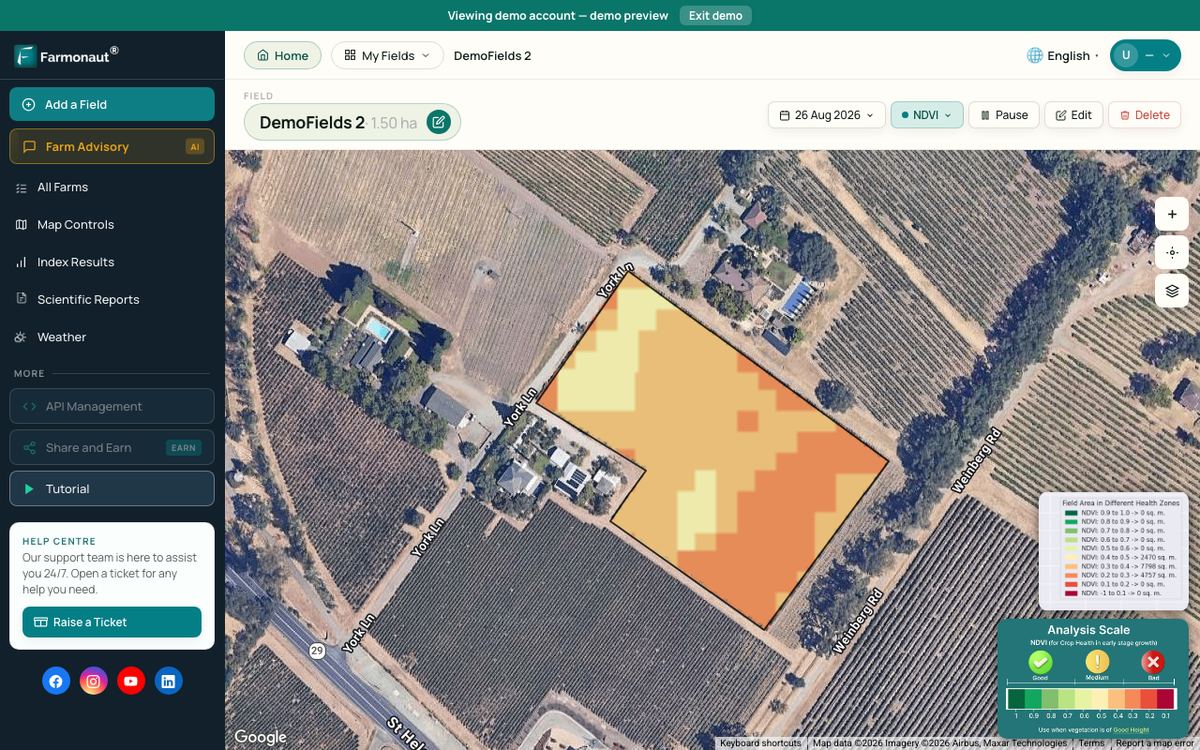
On a few acres, you can walk the field. On a larger place, it helps to see which paddocks are green and which are bare. The Farmonaut Satellite + AI Farm Monitoring System shows satellite vegetation maps for fields you draw, so you can spot thin grass and plan when to move cattle. You can open it in the Farmonaut app on web, Android or iOS. Satellites show plant cover, not your cattle or their health, so keep walking the herd.

▶ A walk-through of the Farmonaut web app for satellite field monitoring. · 8:43
FAQ
How big does a Miniature Zebu bull get?
Registered animals stand 42 inches (107 cm) or less at the withers. Adult bulls weigh about 400 to 600 lb, cows about 300 to 500 lb.
What does a miniature zebu cost?
There is no official price index for the breed. Asking prices vary with papers, age, size, color and breeding record. Compare several local sellers, and budget for feed and vet care each year, which the calculator above helps you estimate.
Is a mini zebu bull safe around people?
Many are calm, but any intact bull can be dangerous. Buy one with a known temper, handle him through a strong pen, and keep children out of his space.
Can a Miniature Zebu live in a cold climate?
Zebu cattle are built for heat. In cold regions such as the northern US, Canada or the UK, give them a windbreak or barn, dry bedding and extra feed in winter, and ask a local vet.
How much land do I need for one small bull?
It depends on your grass and rain. Alabama Extension gives 1.5 to 2.5 acres per full-size cow-calf pair. A small bull needs less, but plan at least two paddocks so grass can regrow, and keep him with at least one other bovine.
Related pages on our site: carbon footprinting, fleet management, product traceability, large-scale farm management, crop loan and insurance and satellite and weather API docs.
Farmonaut pasture monitoring
See your pasture from space
Draw your paddocks once and Farmonaut shows satellite vegetation maps for them through the season, on web, Android or iOS.



Sources
- USDA NASS, Agricultural Prices (September 2026 release, August 2026 data), text version: esmis.nal.usda.gov
- USDA NASS, Agricultural Prices (September 2026 release), PDF: release.nass.usda.gov
- Alabama Cooperative Extension System, Stocking Rates for Cow-Calf Operations in Alabama: aces.edu
- University of Florida IFAS Extension, AN366: Incorporating Brahman Genetics in the Cow Herd to Alleviate Heat Stress: edis.ifas.ufl.edu
- Impact of Brahman genetics on skin histology characteristics with implications for heat tolerance (PMC, 2023): pmc.ncbi.nlm.nih.gov
- Frontiers in Genetics, same study (2023): frontiersin.org
- USDA Risk Management Agency, Pasture, Rangeland, Forage FAQ: rma.usda.gov
- Wikipedia, Miniature Zebu (citing Mason’s World Encyclopedia of Livestock Breeds and Breeding, CABI 2016): en.wikipedia.org
- Wikipedia, Zebu: en.wikipedia.org
- Wikipedia, American Brahman: en.wikipedia.org
- The Conversation, The rise of Australia’s mighty Brahman: theconversation.com
Discussion
Questions, corrections or field experience? Share them below. First-time comments are reviewed before they appear, and your email is never published.
No comments yet. Be the first to add a question or your experience.

 eKGIS
eKGIS Mostas Tech
 AgroStar
 Native Seeds
 Andex
Andex FCF India
 Unifrutti Gulf
 Deluxe Conseil
 TVS Electronics
 BW Pipelines
 WICO
WICO Chimera Innovation
 SkyHarvest
 Polaris Digitech
 Teledarbas
 Licence holder · Niger · Gold










