

Organic Cultivation & Crop Cultivation: 2026 Trends
“By 2026, global organic agriculture land is projected to exceed 90 million hectares, driven by tech-driven sustainability.”
“Hydroponic cultivation is set to grow by 20% annually through 2026, revolutionizing urban agriculture with innovative systems.”
Summary: Advancements and Trends in Agriculture Cultivation for 2026
Agriculture cultivation stands at the threshold of a new era in 2026—transformative advancements over recent years have propelled organic cultivation, crop cultivation, and hydroponic cultivation to the forefront of sustainable food production and environmental conservation. As the global population continues its rising trajectory, and arable land becomes increasingly scarce, modern practices are evolving rapidly. In 2026, our focus sharpens on technologies and management strategies that enhance yield, reduce resource inputs, and protect the planet for future generations.
Why 2026 Is a Landmark Year for Cultivation
In 2026, agriculture faces a convergence of challenges and opportunities:
- The impact of climate change means growing conditions will become even more unpredictable.
- With global demand for organically grown produce rising, sustainable solutions are not just a niche concern—they’re a mainstream imperative.
- The march of automation, data-driven analysis, and remote sensing is revolutionizing both traditional agriculture and newer methods like hydroponics.
Comparative Trends Table: Traditional, Organic & Hydroponic Cultivation (2025-2026)
| Cultivation Method | Estimated Adoption Rate (2026, %) | Key Sustainable Practices | Projected Yield Increase (by 2026, %) | Tech Innovations Used |
|---|---|---|---|---|
| Traditional Cultivation | ~55% |
|
8–15% | GPS-guided machinery, Satellite analytics, Variable-rate inputs |
| Organic Cultivation | ~25% (and rapidly rising) |
|
10–20% | Remote sensing, AI soil analysis, Microbial coats, Blockchain traceability |
| Hydroponic Cultivation | ~8% (urban/peri-urban, accelerating at 20%/year) |
|
Up to 30% | IoT sensors, Automated controls, Data-driven yield optimization |
Organic Cultivation: 2026 Trends & Innovations
Organic cultivation has transitioned from niche to imperative in contemporary agriculture. By 2026, consumers’ awareness of health, sustainability, and environmental well-being is driving unprecedented demand for organically grown produce. The sector not only avoids synthetic pesticides, fertilizers, and GMOs but also acts as a catalyst for soil health and resource conservation.

Integrated Pest & Soil Fertility Management in Organic Cultivation
-
IPM (Integrated Pest Management):
- 2026 witnesses an advanced implementation of IPM, leveraging AI and satellite-backed scouting to reduce pest outbreaks without chemical intervention.
- Bio-control agents and pheromone-based disruption methods become mainstream, minimizing crop losses while maintaining ecological footprints.
-
Biofertilizers & Microbial Seed Coatings:
- Innovations in microbial seed coatings and soil enhancers support soil biodiversity and maintain fertility without relying on chemical inputs.
- Farmers increasingly employ locally adapted microbes and organic nutrient blends for strong plant growth and resilience to disease.
-
Crop Rotation & Polyculture:
- Rotation and multi-cropping boost soil health, disrupt pest lifecycles, and fortify overall resilience.
In addition, large-scale digital tools help with monitoring and analysis. Real-time soil and crop sensors enable precise interventions, minimizing waste and optimizing resource usage.


Why These Tools Matter:
Farmonaut’s Carbon Footprinting and Product Traceability solutions provide actionable insights to reduce emissions, validate crop provenance, and meet consumer/market certification demands.

Certification, Transparency & Premium Markets in Organic Cultivation
-
Streamlined Organic Certification Processes:
- Digitized, blockchain-backed records make certifications transparent and streamlined.
- Premium pricing structures reward adoption of organic practices.
-
AI-Driven Monitoring:
- Remote sensing enables precise analysis of fields and compliance in real-time, aiding in monitoring and rapid interventions to comply with organic regulations.
- Consumers access product data—origin, process, inputs—via smart labels for trust and traceability.
Organic cultivation’s evolution in 2026 is defined by data transparency and tangible market incentives.
Modern Crop Cultivation Techniques for 2026
The world of crop cultivation has witnessed transformative changes in recent years, and 2026 continues this momentum via precision agriculture, data analytics, and advanced farm machinery. With arable land becoming scarce, deployment of technologies that reduce inputs while enhancing yield is paramount to meet the food production demands of the global population.
Precision Agriculture: Satellite Imagery, GPS, & Data Analytics
-
Satellite-Based Monitoring:
- Satellites gather imagery about crop development, soil moisture levels, and plant health at unprecedented granular scales.
- Farmonaut provides affordable access to such satellite technology, empowering farmers to adapt inputs dynamically as crop conditions change.
-
GPS-Enabled Cultivation Tractors:
- Cultivation tractors with autopilot ensure fertilizer/water is applied exactly where needed, optimizing input usage> and enhancing yield.
- Fleet Management Solutions monitor equipment health, field coverage, and reduce waste.
-
Data-Driven Decision Making:
- Real-time dashboards aid in monitoring variability in soil, scales of moisture, and applying inputs exactly where needed.
- Advanced analytics predict disease/pest outbreaks and optimize planting schedules.
Result: Farmers slash input costs, reduce emissions, and see yield increases, even in the face of climate uncertainties.

Rice Cultivation’s Climate-Smart Revolution
Rice cultivation, central for billions—particularly in Asia and rice-growing regions of India, China, Southeast Asia, and Africa—is being rapidly transformed:
-
System of Rice Intensification (SRI):
- *SRI methods* focus on wider spacing, improved soil aeration, and reduced water use—boosting yields by up to 30% while lowering input costs.
-
Drought-/Flood-Resistant Varieties:
- Advanced breeding programs supply high-yield varieties that withstand erratic climate events.
-
Alternate Wetting and Drying (AWD):
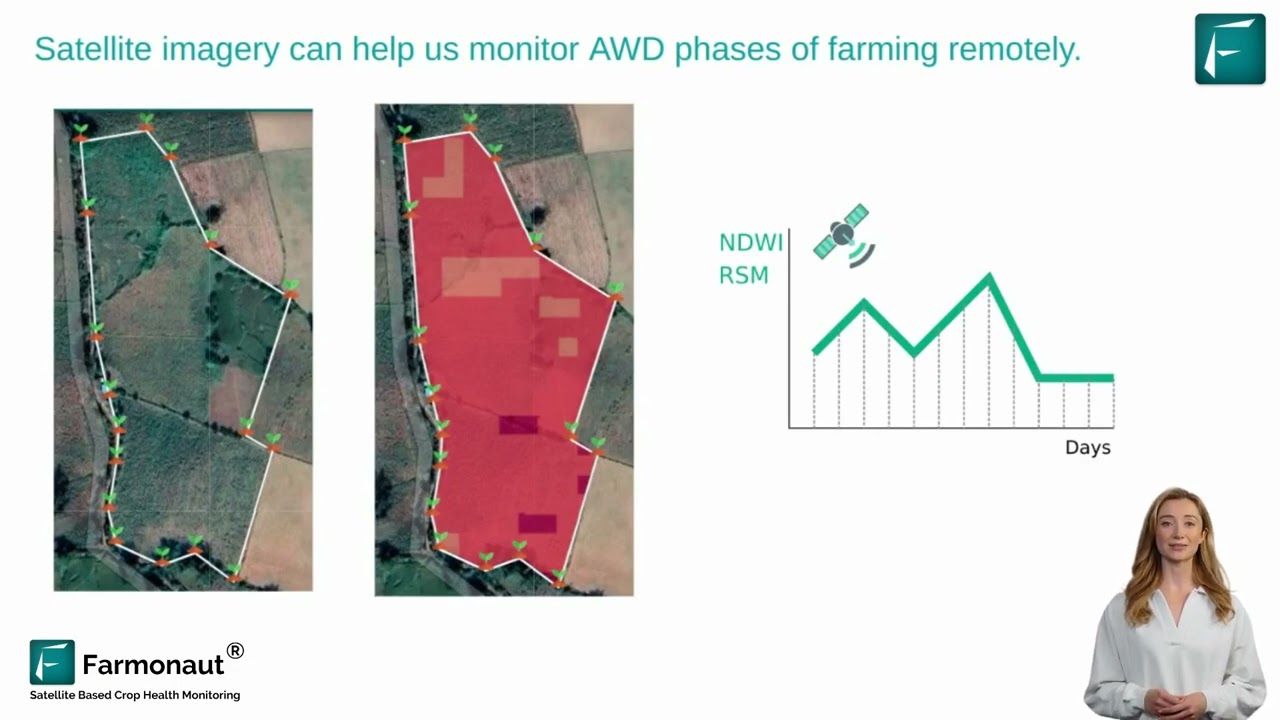
- AWD irrigation techniques allow fields to dry intermittently, reducing water usage by up to 30%, decreasing methane emissions, and maintaining yield resilience despite climate variability.
- Automated remote monitoring, such as via Farmonaut’s satellite imagery tools, makes AWD adoption scalable for smallholders and large operations alike.
Farmers adopting these techniques benefit from support like Farmonaut’s Crop Plantation & Forest Advisory—a suite of tools for seasonal planning, environmental impact assessment, and maximizing sustainable production.
Hydroponic Cultivation: The Future of Controlled Agriculture
Hydroponic cultivation is witnessing exponential growth in 2026, especially in regions with land constraints, urban centers, or degraded soils. Let’s explore why it is a game-changer for future food systems:
-
Water-Efficient, Soil-Free Farming:
- Hydroponic systems use up to 90% less water versus traditional methods—recirculating solutions eliminate runoff and minimize waste.
-
Year-Round, High-Density Production:
- Controlled environments offer stable growing conditions—crops can be produced year-round, close to consumers, reducing supply chain emissions and spoilage.
- Can be stacked vertically, achieving higher yields per square meter.
-
Autonomous IoT Monitoring:
- IoT sensors and automated nutrient delivery systems maintain optimal pH, nutrients, and humidity.
- Real-time alerts help farmers respond to variability and ensure consistent crop health.
-
Minimizing Pesticide/Fertilizer Use:
- Pests and diseases are easier to control, greatly reducing chemical input requirements.
- Aligns hydroponic cultivation with organic and sustainable priorities, making it increasingly attractive for forward-thinking farms and urban entrepreneurs.
Hydroponic cultivation in 2026 enables cities to grow fresh food locally—tackling food security and reducing transportation carbon footprints.

Cultivation Tractors & Mechanization: Next-Gen Efficiency
Mechanization is the backbone for the leap in productivity occurring in 2026. The landscape for cultivation tractors and agricultural machinery is being revolutionized by:
-
AI-Powered Autopilot Systems:
- Next-generation cultivation tractors come with AI, supporting precise adjustments to tillage depth, seeding rates, and variable fertilizer application—configured and monitored via smartphone apps.
- Real-time environmental data from satellite and IoT-based soil sensors ensure every pass is optimized to reduce waste and maximize yields.
-
Electric & Hybrid Models:
- Advanced electric and hybrid tractors reduce emissions dramatically, supporting climate mitigation and sustainable farming mandates.
- Adoption of renewable energy charging (solar, wind) makes machinery operation more cost-effective and environmentally responsible.
-
Affordable Mechanization for All Farm Sizes:
- Small and medium farms increasingly access scalable mechanized solutions—often monitored or scheduled via digital fleet platforms—for improved labor efficiency and reduced operational costs.
- Farmonaut’s Fleet Management is an example of a tool helping farmers track and regulate machine usage.


Large-scale farm management platforms from Farmonaut help agribusinesses and groups coordinate labor, monitor machinery, and aggregate crop health data for strategic planning—all from an intuitive web or mobile dashboard.

How Farmonaut Empowers Modern Cultivation
As a leader in satellite technology, Farmonaut is dedicated to advancing agriculture cultivation through accessible, affordable, and data-rich solutions. Here’s how our technology shapes the future of farming as we move into 2026:
-
Satellite-Based Crop Monitoring:
Our platform utilizes multispectral satellite imagery to monitor crop health, soil conditions (including NDVI), and alert users about variability or stress—enabling timely and precise interventions that reduce yield loss and minimize waste. -
Jeevn AI Advisory System:
Leveraging artificial intelligence, our system provides real-time advisories on weather, soil, and field activities—boosting operational efficiency for farmers and large enterprises alike. -
Blockchain Traceability:
Blockchain-driven records ensure transparency and authenticity in organic cultivation and agri-supply chains, building market trust and streamlining certification for organically grown produce. -
Environmental Impact Monitoring:
Real-time tools track carbon footprints and emissions (learn more here), guiding users to reduce emissions and implement sustainable practices. -
Comprehensive, Scalable Access:
Our subscription-based service and API for developers put powerful analytics in the hands of both smallholders and global agribusinesses—on any device, anywhere.

Try Farmonaut’s Solutions:
Access Farmonaut’s full API Documentation for tailored integrations!
Our technologies reduce the barriers to sustainable agriculture and keep farmers at the forefront of innovation in organic cultivation and crop production.
“By 2026, global organic agriculture land is projected to exceed 90 million hectares, driven by tech-driven sustainability.”
Additional Trends Shaping Agriculture for 2026
-
Climate Adaptation Strategies:
- Growing awareness of extreme weather risks drives uptake of drought- and flood-resilient varietals, real-time climate data feeds, and flexible planting windows (AI-powered).
-
Resource Optimization via Digital Management:
- Precision input management (fertilizers, pesticides, irrigation) via analytics reduces overuse, curbing costs and environmental impact.
- Farmonaut’s Large Scale Farm Management App supports centralized, scalable decision-making for agribusinesses and cooperatives.
-
Access to Financing & Insurance:
- Satellite-backed insurance enrollment and claim verification (Crop Loan & Insurance Solutions) open doors for risk mitigation and financial inclusion.
-
Supply Chain Digitization:
- New blockchain and remote-sensing powered tools track crops “from seed to sale”—improving trust, transparency, and regulatory compliance.
Frequently Asked Questions
-
What are the main differences between organic, traditional, and hydroponic cultivation as of 2026?
- Organic cultivation avoids synthetic inputs, emphasizing soil health, crop rotation, and ecological balance with digital monitoring. Traditional agriculture often relies more on chemicals but is adopting precision technologies for efficiency. Hydroponic cultivation is soil-free, enabling resource-efficient indoor or urban farming with full digital control.
-
How is technology making organic certification more transparent?
- Blockchain, real-time satellite data, and digital records streamline record-keeping and verification, preventing fraud and building consumer trust.
-
Can small farms afford advanced mechanization in 2026?
- Yes—affordable, modular equipment and subscription-based digital management tools lower entry barriers for mechanization and precision input usage.
-
What crops benefit most from hydroponic cultivation?
- Leafy greens, herbs, tomatoes, peppers, strawberries, and microgreens are especially suited, though innovations are expanding feasible crop diversity.
-
How can farmers access Farmonaut’s technology?
- Farmonaut offers easy onboarding via web and mobile apps, as well as API for developers. A range of subscription plans provides options for all operation sizes.
-
Does data-driven agriculture help reduce climate impact?
- Absolutely—optimized input usage, reduced emissions tracking, and resource planning directly support climate-smart agriculture.
Farmonaut Subscriptions: Affordable Access to Satellite & AI-Driven Agri-Tech
Explore Farmonaut’s flexible subscription tiers tailored for everyone—from individual farmers and agripreneurs to agencies and corporates. Choose the best plan and harness data-driven insights for crop monitoring, traceability, yield optimization, and sustainability.
Conclusion: The Path Forward in Crop & Organic Cultivation
The journey toward resilient, sustainable, and productive agriculture cultivation accelerates in 2026. Powered by organic cultivation, advanced crop techniques, hydroponic innovation, and mechanization, the sector integrates century-old wisdom with the latest technology. Climate, resource scarcity, and consumer demands no longer represent barriers—but are catalysts for transformative change.
By optimizing resources, minimizing waste with precision tools, reducing emissions using electric tractors and efficient irrigation, and promoting full-chain transparency with blockchain, agriculture stands at the forefront of environmental and food system transformation.
With accessible tools like those offered by Farmonaut, the next generation of farmers, agripreneurs, and researchers are empowered to embrace evolving practices and build a sustainable agricultural future—preserving our natural resources while feeding a growing population.
Make the move: Evolve your cultivation with data, resilience, and innovation as your guide. The trends of 2026 are just the beginning.
Ready to harness these cultivation trends? Start today:

 Godrej Agrovet
 Hayleys Agriculture
 Linx Agritech
 Adinet
 Save Your Soils
 GalaxEye Space
 Grandstream Algérie
 XOS Realty
 Geospatial Lab Africa
 Agro La Gándara
 HIPSAC
 ZOL Zimbabwe
 Juligerm
 AdBio
AdBio MISE Maroc
 NWNS
NWNS Red August Group
 Farm Inc
 WeMe Global
 Agrotoken
 Blue BearX
 Insignito
 DnCubed
 Indosistim Teknologi
 Liquify Digital
 CU Foods
 BeyondTech Global
 Rouge VC
 AgroRisk
 Oath Inc
 Esri North East Africa
 MDCV UK
 Etech Consulting Madagascar
 Vestlandsforsking
 WB Dev
 Sama Premium
 Tres Valles
 Blickwinkel
 Agricultural Credit Policy Council
 eKGIS
eKGIS Mostas Tech
 Andex
Andex Deluxe Conseil
 WICO
WICO Chimera Innovation
 SkyHarvest
 Teledarbas
 Exurbia Geospatial
 FieldZero
