

Regenerative Organic Alliance: 2026 Farming Techniques — Pioneering the Future of Sustainable Agriculture
Meta Description: Discover how the Regenerative Organic Alliance and pioneering farming techniques are transforming agriculture, soil health, and climate resilience in 2025 and beyond.
Table of Contents
- Quick Trivia Highlights
- The Future of Farming: Challenges and the Call for Change
- What is Regenerative Organic Farming?
- The Regenerative Organic Alliance: Rigorous Standards for 2026
- Regenerative Organic Farming Techniques for 2026
- Comparative Techniques Impact Table
- Farmonaut’s Role in Sustainable Agriculture (2026)
- Emerging Alliances: Strange Horticulture PAlliance and Diversification
- Beyond the Farm: Regenerative Principles in Forestry and Mining
- Benefits, Insights & Pro-Tips
- FAQ: Regenerative Organic Alliance & Techniques
- Further Resources & Farmonaut Tools
Facing Escalating Challenges: The Critical Need for Regenerative Organic Alliance by 2026
In recent years, we’ve seen the very foundation of agriculture—the soil beneath our feet—pressured by unsustainable practices, escalating climate risks, biodiversity loss, and rampant land degradation. Traditional agriculture, dependent on intensive tillage, mono-cropping, and synthetic inputs, while able to feed billions, has left a legacy of depleted soils, water contamination, and weakened ecosystems. These challenges, magnified by worsening weather extremes and global food insecurity fears, demand a transformative approach.
Enter the world of regenerative organic farming—a movement that has emerged as a beacon of hope, advocating for an approach that not only sustains but improves the very systems it draws upon. By 2026, the Regenerative Organic Alliance (ROA) stands at the forefront of this revolution, driving adoption through rigorous standards, measurable impact, and growing global support. This shift is not just about producing food—it’s about restoring soil health, sequestering carbon, enhancing climate resilience, and revitalizing ecosystems for future generations.
By 2025, the Regenerative Organic Alliance advanced the push for “regenerative” practices that—unlike conventional organics—require measurable improvements in soil carbon, biodiversity, and ecosystem functions. This shift is influencing agri-food systems worldwide.
What is Regenerative Organic Farming? – Reshaping Soil, Food, and Farming Systems
Regenerative organic farming is a holistic approach to land management that strives not only to maintain— but actually to restore—the health of soil, water, biodiversity, and the entire agricultural ecosystem. Instead of extracting resources and leaving depleted systems, regenerative agriculture emphasizes methods that mimic natural cycles, building fertility, resilience, and productivity year-on-year.
- ✔ Soil Health: Focus on living soils, boosting organic matter and microbial activity
- 🌱 Biodiversity: Diverse crops, livestock integration, agroforestry, and habitats
- 💧 Water Retention: Reduce runoff, improve infiltration, and support aquifers
- 📊 Carbon Sequestration: Turn fields into “carbon sinks” that help fight climate change
- ⚖️ Sustainable Yields: Consistent productivity without chemical overloads
Regenerative farming techniques are therefore more than a trend; they represent a systemic shift toward resiliency, resource renewal, and forward-looking management. Supported by alliances like the ROA, they are rapidly becoming the benchmark for responsible farming—especially as consumers, corporations, and governments escalate demands for verification, certification, and sustainability.
The Regenerative Organic Alliance (ROA): Setting Rigorous Standards for Agriculture 2026
At the heart of the regenerative movement is the Regenerative Organic Alliance (ROA), a dedicated coalition driving systemic change in agriculture. Since its inception, the ROA has served as a catalyst—promoting rigorous standards that go beyond conventional organics. With strong foundations in research, advocacy, and cross-sectoral partnerships, the ROA leverages real-world data and global collaboration to influence paradigms and reshape entire agri-food systems by 2026.
Core Pillars of the ROA Certification
- Soil Health and Regeneration: Farms must restore organic matter, boost soil carbon, and invigorate topsoil.
- Animal Welfare: High welfare standards for livestock, ensuring natural behaviors and pasture access.
- Social Fairness: Commitment to fairness—safe working conditions, fair pay, rural enrichment, and equity.
- Measurable Improvements: Certification requires evidence—like increased soil carbon, biodiversity scores, climate resilience metrics.
- Continuous Improvement: Practices must be dynamically enhanced, adapting to new methods and research by 2026.
The ROA is thus a key driver in promoting holistic management techniques that support resilient ecosystems, healthy food, and climate-positive farming. With standards that demand restoration rather than just “no harm,” the ROA shapes supply chains from smallholder plots in North Dakota to major food corporations, impacting millions of acres globally.
Regenerative Organic Farming Techniques for 2026 — From Pioneers to Practice
The regenerative organic alliance owes much of its impetus to pioneers like Gabe Brown in North Dakota and Joel Salatin in Virginia, whose innovative systems have become templates for a worldwide movement. Their philosophies—rooted in mimicking natural ecosystem functions, prioritizing soil regeneration, and integrating livestock management—form the backbone of modern regenerative practice in 2026.
Gabe Brown Regenerative Farming: Methods Developed in North Dakota
Gabe Brown is a visionary farmer who revolutionized regenerative farming techniques on his ranch. He emphasizes:
- 🌾 No-till farming: Avoiding soil disturbance to maintain soil structure, boost microbial activity, and increase organic matter
- 🌿 Diverse Cover Cropping: Planting mixes of species to invigorate topsoil, fix nitrogen, and offer continuous living roots
- 🐄 Managed Rotational Grazing: Moving livestock in tight herds that strategically graze and fertilize the land, mimicking wild systems
- 💧 Water Retention and Soil Moisture: Methods that reduce erosion and enhance water retention—critical in drought-prone regions
The result? Healthier crops, livestock, and ecosystems—with measurable improvements in climate resilience, even on landscapes previously considered “worn out.”
Joel Salatin Regenerative Farming: Polyculture and Symbiosis
Joel Salatin of Virginia champions polyculture systems, integrating chickens, pigs, and cattle in harmonious cycles:
- 🐔 Chickens, Pigs, Cattle Integrated: Different species work symbiotically, each delivering unique fertility and pest control benefits
- 🌱 Natural Cultivation: Animals fertilize and cultivate soil as they move, reducing need for external inputs
- 🌳 Polyculture & Habitat Creation: Fields, woodlands, and pastures are utilized for multi-crop and animal rotation, supporting biodiversity
Joel Salatin regenerative farming underscores the principle: “healthy soil breeds healthy food—and, in turn, healthier people and planet.”


Combine cover cropping, no-till methods, and rotational grazing for synergistic soil carbon increases by 2026. Data shows farms stacking these practices see up to 1.5% more organic matter annually!
Showcasing Regenerative Organic Techniques: A Comparative Impact Table
To clarify the benefits, let’s examine the evidence-based impacts of major regenerative organic farming techniques:
| Technique Name | Description | Soil Health Improvement (est.) | Carbon Sequestration Potential (est.) | Yield Change by 2026 (est.) | Climate Resilience Score (est.) |
|---|---|---|---|---|---|
| Cover Cropping | Planting diverse, non-harvested species to protect & feed soil year-round | Up to +35% soil organic matter in 5 yrs | 1.3 – 1.7 tC/ha/yr | +10%-17% (after 2+ years) | 9/10 |
| No-Till Farming | Minimizing soil disturbance to preserve structure & biota | +25% microbial activity; less erosion | 0.7 – 1.3 tC/ha/yr | +5%-12% | 8/10 |
| Crop Rotation | Sequencing different crops in succession to disrupt pest cycles and replenish nutrients | Higher soil fertility, improved structure | 0.8 – 1.1 tC/ha/yr | +8%-15% | 8.5/10 |
| Composting | Returning decomposed organic matter to fields as natural fertilizer | Boosted NPK, up to 2% more SOM yr/yr | 0.9 – 1.0 tC/ha/yr | +4%-10% | 7.5/10 |
| Agroforestry | Integrating trees/shrubs with crops or livestock for multi-strata benefits | Very high: erosion control, shade, organic inputs | 2.0+ tC/ha/yr | +15%-22% | 9.5/10 |
| Managed Rotational Grazing | Moving livestock for optimal forage while regenerating pastures | +30% soil carbon; denser sward | 1.1 – 1.8 tC/ha/yr | +8%-14% | 8.5/10 |


Focusing only on one technique, like no-till, without pairing it with cover cropping or livestock integration, often leads to less than optimal improvement. Systems thinking is key for maximum soil regeneration and climate benefits!
Farmonaut’s Role in Regenerative and Sustainable Agriculture (2026)
As the movement grows in 2026, digital transformation is accelerating the uptake and monitoring of regenerative organic techniques. At Farmonaut, we are dedicated to making satellite-driven insights affordable, actionable, and accessible for farmers, agricultural businesses, and stakeholders worldwide. Our platform leverages satellite imagery, AI-based advisory, blockchain traceability, and impact monitoring to empower users with real-time, field-level data such as:
- 📊 Soil and Vegetation Health (NDVI) Monitoring: Farmonaut provides multispectral maps to monitor every field’s health, supporting data-driven decisions for soil management.
- 🛰️ AI-Based Advisory Systems: Our API and developer docs enable climate-smart, field-specific insights to maximize performance of regenerative methods—adaptable through web, Android, or iOS apps.
- 🔗 Blockchain-based traceability ensures transparent and authentic supply chains in organic food and agricultural products, building consumer trust and supporting ROA certification pathways.
- 🌳 Carbon footprint monitoring lets users track emissions, sequestration, and sustainability metrics to comply with global standards and access eco-labels.
- 🌲 Crop Plantation and Forest Advisory for planning sustainable carbon sink projects, agroforestry, and native species restoration.
These tools are available on our web and mobile apps:



Ready to scale up soil health, track carbon sequestration, and boost supply chain transparency? Explore Fleet Management for better logistics, or Large-Scale Farm Management for holistic control—crucial for sustainable landscape-level transformation.

Regenerative agriculture is opening new premium markets (carbon credits, eco-labels, supply chain verification). Satellite-powered monitoring, like Farmonaut’s, is vital for compliance, certification, and investment in 2026.
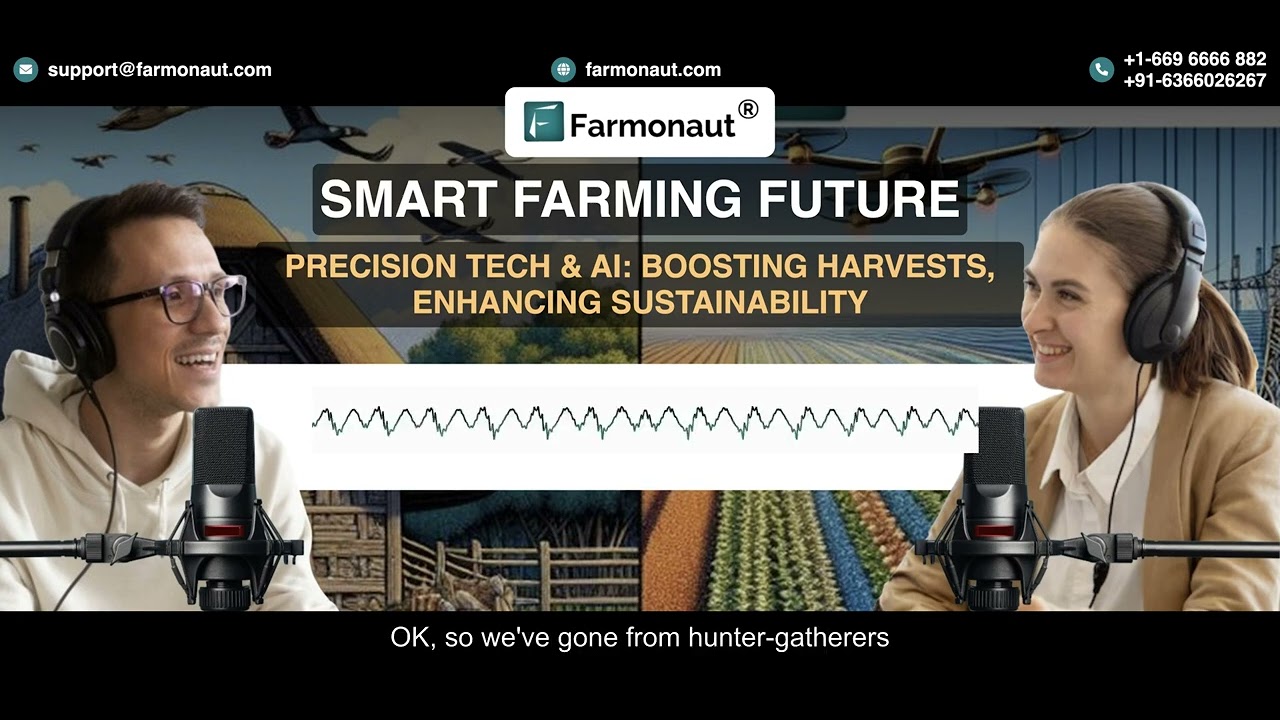
Emerging Alliances: Strange Horticulture PAlliance and Systemic Innovations
As the regenerative movement accelerates, new alliances are enhancing diversity and resilience in regenerative organic agriculture. The Strange Horticulture PAlliance, for instance, is exploring unconventional crops and advanced horticultural systems. Their innovations support:
- 🌱 Wider genetic diversity—new plant varieties that thrive in living soils
- 🌾 Cultivation methods designed for ecosystem restoration & risk mitigation
- 🤝 Integration of modern tech and traditional wisdom—applying data-driven approaches to optimize output, water use, and resilience
These alliances foster a climate-adaptive, risk-mitigating approach essential in 2026 and beyond. Their work underscores the potential for continuous improvement and adaptation that’s central to the ROA framework.
All regenerative practices—from horticultural innovations to livestock rotation—require robust data for adaptation and scale. Farmonaut’s remote sensing and advisory tools streamline this for every type of farm.
Beyond Agriculture: Regenerative Principles in Forestry, Mining, and Ecosystem Restoration
The Regenerative Organic Alliance model isn’t limited to crops—its core standards are also reshaping forestry and mineral management:
- 🌲 Forestry: Restoring native species, managing understory “naturally,” using controlled grazing to reduce fire risks, and improve tree health—consistent with ROA’s restoration focus.
- ⛏️ Mining & Gemstone Extraction: Post-extraction land reclamation using native plantings, active soil restoration, and local ecosystem repair—from “mine to meadow.”
This holistic approach fosters a circular relationship between human activity and the environment, supporting stewardship, sustainability, and climate resilience in sectors far beyond agriculture.
Restored forestry and post-mining landscapes using regenerative standards show up to 30% higher water retention and 15% more local biodiversity within just five years.
Key Advantages & Takeaways: Building Future-Ready Regenerative Farms
- ✔ Enhanced Soil Health: Practices like cover cropping and composting boost microbial activity, reduce degradation, and build robust soils for the long-term.
- 🌎 Measurable Climate Impact: Regenerative systems convert fields from carbon sources to carbon sinks, crucial for climate stabilization.
- 🌻 Biodiversity & Ecosystem Services: Diverse cropping, managed grazing, and agroforestry drive resilience to droughts and pests, support water retention, and restore native habitats.
- ⚡ Economic & Social Upside: Improved soil health reduces costs, boosts yields, and increases fairness and equity along value-chains.
- 🚀 Technological Support: Remote monitoring, blockchain, and AI advisory streamline certification, adaptation, and scaling—especially vital with Farmonaut’s tools in 2026.
🌱 Soil Health
Boosted organic matter, higher yields, and long-term fertility—foundation for regenerative success.
🐄 Livestock Integration
Rotational grazing, managed movement, and natural soil aeration—and higher field productivity.
⏳ Longevity
Practices that ensure farm resilience, less risk from extreme weather, and sustainable food systems.
🌴 Agroforestry Systems
Integrate trees in fields for carbon, shade, and diversified income.
🛰️ Precision Tech
Leverage satellite insights, remote NDVI, and AI with Farmonaut’s ecosystem dashboard.
Begin with soil monitoring and traceability using Farmonaut. Data-driven approaches accelerate certification and ensure measurable soil health, carbon, and resilience improvements.
Farmonaut Subscriptions & API Access: Powering Regenerative Standards
Choose the right plan for your operation—from real-time monitoring and crop advisory, to advanced analytics, carbon tracking, and value-chain transparency:
Frequently Asked Questions: Regenerative Organic Alliance & Farming Techniques
What is the Regenerative Organic Alliance?
The Regenerative Organic Alliance (ROA) is a coalition that sets rigorous standards for soil health, animal welfare, and social fairness in farming. Its certification focuses on measurable improvements in soil carbon, biodiversity, and climate resilience—beyond what “conventional organics” require.
How do regenerative farming techniques improve soil health and resilience?
By emphasizing no-till farming, cover cropping, composting, and managed livestock integration, regenerative practices invigorate the topsoil, boost organic matter, and stimulate microbial activity. The result is a more fertile, resilient, and productive soil ecosystem.
How can I track my farm’s progress toward regenerative goals?
Use Farmonaut’s apps for affordable satellite monitoring, AI-based advisory, and carbon tracking—all vital for rapid adoption and compliance with emerging certification standards.
What role do alliances like Strange Horticulture PAlliance play?
These alliances introduce novel crops, horticultural techniques, and risk-mitigation systems to further diversify farm outputs and enhance ecosystem resilience—helping farmers navigate climate volatility in 2026 and beyond.
Are there benefits for forestry, mining, and mineral extraction?
Yes. Regenerative principles in forestry involve native species restoration and eco-conscious grazing. In mining, restoration and rehabilitation using native plants and soil regeneration mitigate extraction impacts—essential for industry-wide sustainability.
Further Reading, Tools & Resources
- 🌱 Farmonaut Traceability—Blockchain-powered product authentication for supply chains
- 🌳 Farmonaut Carbon Footprinting—Exact carbon measurement for farm, forestry, or mining projects
- 🛰️ Crop Plantation & Forest Advisory—Remote-sensing-based environmental planning and landscape restoration
- 🚜 Farmonaut Large Scale Farm Management—End-to-end, scalable solutions for commercial and agroforestry operations
- ⚙️ Farmonaut API & Developer Docs—Integrate satellite and weather data with farm management systems
Summary: The Regenerative Organic Alliance—A Future of Resilient, Sustainable, and Data-Driven Agriculture
By 2026, the Regenerative Organic Alliance and its championed regenerative farming techniques represent a bold paradigm shift—one where agriculture becomes a primary engine of soil restoration, ecosystem revitalization, and climate resilience. With a rigorous certification approach that emphasizes measurable carbon, biodiversity, and water impacts—not just chemical avoidance—the ROA is redefining what “organic” means on the global stage.
Supported by pioneers like Gabe Brown and Joel Salatin, and enhanced by emerging alliances and digital tools from innovators like Farmonaut, this movement is poised to restore millions of acres, support food security, and inspire a new era of planetary stewardship.
Whether you are a farmer, business, policymaker, or citizen, the regenerative revolution is here—and with the right knowledge, alliances, and digital support, it is within reach for us all.
Discussion
Questions, corrections or field experience? Share them below. First-time comments are reviewed before they appear, and your email is never published.
No comments yet. Be the first to add a question or your experience.

 Aadyah Aerospace
 Kubota
 FFBS
FFBS Jontra
 Kalustyan
 Tucor
Tucor Geno
Geno Hayleys Agriculture
 Linx Agritech
 Adinet
 Save Your Soils
 Grandstream Algérie
 XOS Realty
 Geospatial Lab Africa
 Agro La Gándara
 HIPSAC
 ZOL Zimbabwe
 Licence holder · Niger · Gold










