

Organic crop protection · Buyer's guide
Organic Pesticides for Farming: 7 Eco Solutions and Their Limits
Organic pesticides can work, but results depend on the pest, and “approved for organic use” does not mean harmless. In 153 US field trials, spinosad cut pests by 74% on average and neem by 46% (University of Maryland, 2020). Follow the product label and local rules.
Key takeaways
- Across 153 US field trials, spinosad cut pest numbers by 74% on average, pyrethrin by 49% and neem by 46% (University of Maryland, 2020).
- Results depend on the pest. Neem cut thrips by only 19% but cut Mexican bean beetle larvae by about 82% in the same trials.
- Natural does not mean safe: pyrethrins are highly toxic to honey bees and fish, and oils or heavy kaolin use can harm beneficial insects.
- Re-entry intervals for common organic products on California citrus run from 4 to 24 hours (UC IPM, 2025). Always follow the product label and local rules.
- EU testing found 80% of organic samples had no quantifiable residue, so organic produce has fewer residues but not none (EFSA, 2024 data).
In this article
- Organic Pesticides: A Sustainable Approach
- Understanding Organic Pesticides for Farming
- Benefits of Organic Pesticides for Farming
- Organic Pesticides for Farming: 7 Eco Solutions
- Comparison of 7 Organic Pesticide Solutions
- Trends & Innovations for Organic Farming Pesticides: and Beyond
- How Farmonaut Supports Sustainable Farming & Organic Pesticide Management
- Farmonaut Resources and Useful Links for Organic Farmers
- Frequently Asked Questions About Organic Farming Pesticide Use Edition)
- Conclusion: The Future of Organic Farming and Pesticide Management
Meta Description: Organic pesticides for farming offer crop protection with lower risks, preserve environmental health, and support food safety. Explore benefits and future trends!
Organic Pesticides: A Sustainable Approach
As global concerns about environmental health, food safety, and biodiversity intensify, organic farming continues to gain momentum as a sustainable agricultural practice. At the center of this movement lies the need for a delicate balance: protecting crops from pests, diseases, and weeds while maintaining soil and ecosystem health—without resorting to synthetic chemicals.
Within this context, the use of organic pesticides for farming has emerged as a pivotal tool, marrying crop protection with environmental stewardship. In 2025, organic farming pesticide use continues to matter, with rising consumer demand for safe food, stricter regulatory standards, and urgent global commitments to reducing agricultural footprints.
Organic Pesticide Use in Organic Farming: What Does It Mean?
Organic pesticides are naturally derived substances utilized to manage pests, diseases, and weeds in organic farming systems. Compared with synthetic pesticides, these options can lower risks of soil degradation, water contamination, and harm to beneficial organisms.
Organic farming pesticide use typically centers around:
- Botanical extracts (such as neem oil, pyrethrum)
- Microbial agents (Bacillus thuringiensis)
- Mineral substances (sulfur, copper-based compounds)
- Natural pheromones
These pesticides must comply with strict regulatory standards for organic certification, ensuring that their application does not undermine the foundational principles of organic agriculture.
Understanding Organic Pesticides for Farming
Why Is Pesticide Use in Organic Farming Essential?
The year 2025 marks a critical juncture for organic farming and pesticide management. Global food production faces mounting challenges:
- Expanding demand for organic produce
- Stricter legislative frameworks on chemical pesticide use
- International commitments to sustainability
- Need to preserve biodiversity and ecosystem health
Organic pesticides for farming offer a practical, environmentally responsible alternative to synthetic chemicals, enabling efficient crop protection with minimal negative impact on the environment.
Key Principles: Certification, Compliance & Safety
To be recognized as organic farming pesticides, substances:
- Must comply with strict, internationally-accepted regulatory standards
- Are naturally derived (plant, mineral, microbial, or pheromone based)
- Do not contain or are not derived from synthetic chemicals, with a few listed exceptions (the US National List allows some synthetic substances, such as sulfur and horticultural oils)
- Used in accordance with integrated pest management (IPM) strategies
- Minimize residues in food and soil
This approach supports foundational principles of sustainable agriculture and improves consumer trust in the “organic” label.
Types of Organic Pesticides Used in Agriculture
- Botanical Extracts: Neem oil, pyrethrum, garlic (rotenone is not on this list: US organic crop rules prohibit it)
- Microbial Agents: Bacillus thuringiensis (Bt), Trichoderma, beneficial fungi and bacteria
- Mineral Substances: Sulfur, copper-based compounds, kaolin clay
- Natural Pheromones: Used for mating disruption or pest trapping
- Oils: Horticultural oils, essential oils as insect repellents
All of these organic pesticides are allowed in organic systems and chosen for efficacy and safety, prioritizing lower toxicity levels and rapid degradation to minimize environmental impact. Allowed does not mean harmless: every product has its own risks, so follow the product label and local rules.
Natural does not mean safe. The US EPA says biopesticides are usually less toxic than conventional pesticides, but that users must follow all label directions to use them safely (US EPA, biopesticides page). Pyrethrins are highly toxic to honey bees and to fish (NPIC, Oregon State University). Rotenone is a plant extract, yet US organic crop rules prohibit it (7 CFR 205.602).
The US organic rule treats sprays as a second step. A producer should first use prevention, mechanical and physical methods. A biological or botanical substance is allowed only when those are not enough, and the conditions of use must be written in the organic system plan (7 CFR 205.206).
Safety and label compliance: follow the product label and local rules every time. The label sets the crops, the dose, the re-entry interval, the harvest interval and the protective gear. Ask your organic certifier before you use a new product.
Chart
Hours before workers can re-enter a treated field
Restricted entry interval, California citrus label values
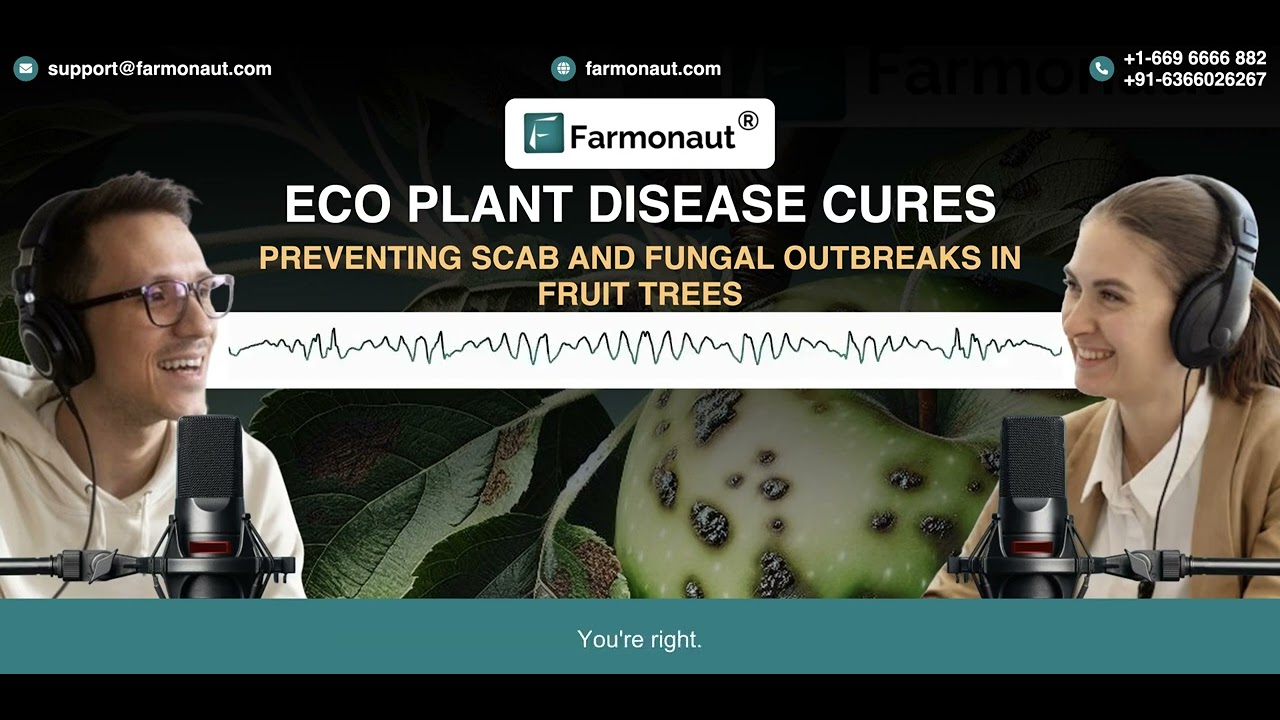
▶ Organic treatments for apple and pear scab, including sulfur, copper and neem oil, and why timing matters. · 10:51
Benefits of Organic Pesticides for Farming
Why Choose Organic Pesticides for Sustainable Agriculture?
The use of organic pesticides in organic farming brings a range of benefits:
- Environmental Health: Can reduce chemical runoff and preserves biodiversity, helping maintain critical balances within local ecosystems and waterways.
- Soil Health: Some organic pesticides may have little effect on soil microbiota, which play pivotal roles in nutrient cycling and soil fertility.
- Consumer Food Safety: Organic produce from organic farming pesticide use usually has lower residue levels than conventional crops, meeting ever-increasing consumer demands for food safety.
- Reduced Pest Resistance: When organic pesticides are integrated with diverse non-chemical controls, they help mitigate the resistance build-up that often follows the overuse of synthetic chemicals.
Beyond these, organic pesticides encourage sustainable farming practices and promote agricultural resilience to climate and pest pressures felt across the globe.
Organic produce does carry fewer residues, but not zero. EFSA’s report on 2024 monitoring in Europe found that 80.4% of 5,939 samples labelled organic had no quantifiable residue, 18.8% had residues at or under the legal limit, and 0.9% were over it. Across all 86,449 national-programme samples, 58.4% had no quantifiable residue and 3.3% were over the limit (EFSA, EU pesticide residues report, 2026). Copper and spinosad, both allowed in organic farming, were among the substances most often found in the organic samples.
Organic Pesticides for Farming: 7 Eco Solutions
Choosing an effective pesticide for organic farming relies on species targeted, farming systems involved, and potential for sustainable crop protection. Below, we examine the top 7 organic pesticide innovations and eco-solutions.
Chart
The same products, different pests
Mean % reduction in pest numbers or fruit damage, standard rates, US field trials
1. Neem Oil (Botanical Extract)
Neem oil, cold-pressed from the seeds of the neem tree (Azadirachta indica), is a widely used organic pesticide. Its key compound, azadirachtin, inhibits pest feeding and disrupts hormonal systems in many species of insect pests. Neem oil also acts as a mild fungicide.
- Crop Compatibility: Used broadly in vegetables, fruits, cereals, and even ornamental crops
- Environmental Impact: Low for birds, mammals and bees, but azadirachtin is moderately toxic to fish and other aquatic animals. Check the label for effects on non-target organisms
- Common Pests: Aphids, mealybugs, scale insects, spider mites, whiteflies, and thrips (with weaker results)
Note: Repeated, well-timed applications are usually required for consistent efficacy.
2. Pyrethrum (Botanical Extract)
Pyrethrum is harvested from the dried flowers of the Chrysanthemum cinerariifolium. Its active compounds, pyrethrins, paralyze and kill a wide spectrum of insect pests on contact. Unlike most synthetic alternatives, pyrethrum degrades quickly when exposed to sunlight.
- Application: Often used on vegetables, orchard crops, and greenhouse plants
- Environmental Impact: Pyrethrins are highly toxic to honey bees and to fish, so do not spray flowering crops or near water
- Best Use: Short pre-harvest intervals; effective as part of integrated management
3. Bacillus thuringiensis (Bt) (Microbial Agent)
Bacillus thuringiensis is a soil-dwelling bacterium, one of the safest and most selective organic farming pesticides. When ingested by specific insect larvae (such as caterpillars), it produces proteins that destroy their digestive tracts.
- Target Pests: Lepidopteran larvae—particularly for cabbages, tomatoes, maize, rice, and other staple crops
- Benefits: Very low to low toxicity to people and other mammals, and each Bt strain targets only a few insect groups
- Environmental Impact: Very low for birds, fish and most beneficial insects, though non-target moths and butterflies can be harmed. Bt breaks down in sunlight on leaves (half-life of 1 to 4 days), but some Bt toxin can stay in soil for months.
4. Sulfur (Mineral Compound)
Elemental sulfur is one of the oldest known pesticides and continues to be used—especially for organic fruit and vegetable production. It controls a broad range of fungal diseases (like powdery mildew) and some insect pests via desiccation and metabolic disruption.
- Applications: Apples, grapes, beans, cucurbits, berries
- Environmental Profile: The label sets the re-entry and harvest limits
Tip: Hot, dry weather raises the risk of leaf and fruit burn. UC reports injury to strawberry plants after sulfur in heat above 80°F (27°C), and many labels set their own limit. Follow the product label.
5. Horticultural Oils (Plant or Mineral Origin)
Horticultural oils (often called “white oils” or dormant oils) are refined from plants or petroleum. These oils suffocate insect pests and their eggs, and may also control certain fungal pathogens by disrupting their spores’ germination.
- Ideal Targets: Scales, mites, aphids, whiteflies
- Benefits: Fast breakdown and low toxicity to mammals, but direct sprays can kill predatory mites and other beneficial insects
- Common Use: Fruit trees, ornamentals, greenhouse crops
6. Kaolin Clay (Mineral Barrier)
Sprayable, processed kaolin clay forms a thin, reflective film that deters insect feeding and egg-laying, disrupts movement, and helps suppress fungal diseases too.
- Applications: Apples, pears, citrus, vegetables, vineyards
- Advantages: Low toxicity (kaolin is a food-grade mineral) and it can double as a sunburn protectant, but heavy use can harm beneficial insects and let mites build up
7. Pheromone-Based Disruptors (Biological Controls)
Pheromone products, usually synthetic copies of insect pheromones, are used in traps or to confuse pests and inhibit mating, crucial in reducing population build-up of persistent pests.
- Target Pests: Codling moth, oriental fruit moth, grapevine moth, pink bollworm
- Environmental Impact: Extremely low (many moth pheromones are exempt from food residue limits in the US)
- Role: Best suited for high-value horticultural crops and those with pest cycles amenable to such interventions
Field trials are a better guide than lab tests. A University of Maryland team summarized 153 of its own US field trials (2002 to 2015) of four organic insecticide products on 12 pest groups. Spinosad, which is not one of the seven below but is allowed in organic farming, averaged the highest reduction in pest numbers. Neem results ranged widely: 19% on thrips and 46% on cucumber beetles, but about 82% on Mexican bean beetle larvae (Dively et al., Insects, 2020).
Organic sprays can also hurt the insects you want to keep. In a lab study by Oregon State University and Washington State University researchers, a direct spray of horticultural oil killed 35 to 80 percent of adult predatory mites and over 80 percent of young ones. Micronized sulfur did not kill them outright, but young mites exposed to it laid fewer eggs as adults (OSU Extension EM 9095, 2014). Kaolin is a food-grade mineral, yet university trials show that heavy use can harm beneficial species and allow mite flare-ups (eXtension, adapted from Cornell). Time sprays to the pest, spray only where you need to, and follow the product label and local rules.
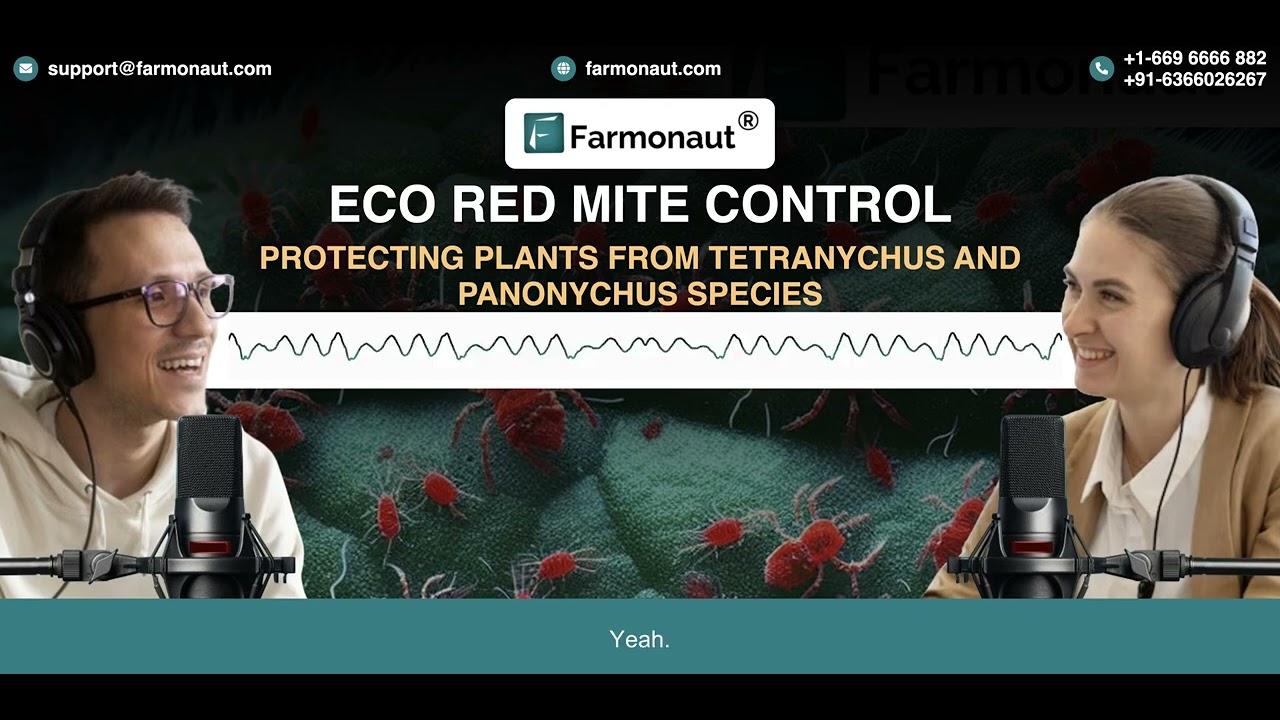
▶ Organic control of red spider mites: identification, cultural and biological controls, and botanical or organic pesticide options. · 11:53
Comparison of 7 Organic Pesticide Solutions
| Pesticide Name | Source Material | Target Pests | Effectiveness (varies by pest; see chart below) | Environmental Impact | Safety for Beneficial Insects | Cost (varies; check local prices) |
|---|---|---|---|---|---|---|
| Neem Oil | Botanical (Neem Seeds) | Aphids, whiteflies, mealybugs, thrips, mites | Varies by pest | Low | Mostly | Varies |
| Pyrethrum | Botanical (Chrysanthemum) | Aphids, moths, beetles, flies | Varies by pest | Medium (minimize use during pollinator activity) | No (apply with caution) | Varies |
| Bacillus thuringiensis (Bt) | Microbial (Bacteria) | Caterpillars, corn borers | Varies by pest | Low | Low risk | Varies |
| Sulfur Dust | Mineral | Fungal diseases, mites | Varies by pest | Low | Mostly | Varies |
| Horticultural Oils | Plant/Mineral | Scales, aphids, mites | Varies by pest | Low | Partly | Varies |
| Kaolin Clay | Mineral (Clay) | Leafhoppers, beetles, sunburn | Varies by pest | Very Low | Mostly | Varies |
| Pheromone Disruptors | Biological (Synthetic pheromones) | Moths, borers | Varies by pest | Very Low | Low risk | Varies |
Chart
Average pest reduction by organic insecticide
Mean % reduction in pest numbers across 153 US field trials on 12 pest groups
The original table listed percent effectiveness and cost per acre without a source, so those columns now say that the values vary. Effect and price depend on the pest, the crop, the product and your country. The chart above gives measured results from field trials. The calculator below turns a label dilution rate into product volume and cost for your own sprayer.
Try the numbers for your own farm below.
Calculator
How much product and water do I need to mix?
Enter the label dilution rate, your spray volume and your own price.
- Product to add per full tank: 5,000 mL
- Tank loads for one spray: 5.0 tanks
- Total product for one spray: 25.0 L
- Water for one spray: 4,975 L
- Product cost per hectare, all sprays: $150
- Product cost, whole area, all sprays: $1,500
Example values only, not a benchmark or a recommendation. Take the dilution rate from the product label, and follow the label and local rules for dose, timing and limits. If your label gives a rate per hectare instead, divide it by your spray volume in litres per hectare to get millilitres per litre. For acres and US gallons, enter the rate and price per gallon and the volume in gallons per acre. Water is estimated as the mix minus the product.
Trends & Innovations for Organic Farming Pesticides: and Beyond
Key Challenges Facing Organic Pesticides
The widespread use of organic farming pesticides is not without its challenges:
- Higher production costs for some natural substances
- Variable efficacy—more dependent on local weather, crop, and pest species
- Limited residual effect—necessitating more frequent application
- Availability—farmers may struggle to access certain registered products locally
Despite these limitations, 2025 will showcase a range of innovations to support organic growers worldwide.
Infographic
From scouting to spraying in 5 steps
- 1Scout and name the pestCount the pest in a few spots of each field before you decide to spray.
- 2Prevent firstUse rotation, sanitation, resistant varieties and habitat for natural enemies. US organic rules ask for these first.
- 3Check the product is allowedConfirm with your organic certifier that it is permitted, and that it is registered where you farm.
- 4Read the labelNote the dose, re-entry interval, harvest interval, bee warnings and weather limits.
- 5Spray, record and re-scoutSpray when the pest is vulnerable, write down what you used, then check results and rotate products.
Innovations Shaping Organic Pesticide Use
- Advanced Biopesticide Formulations: New organic farming pesticide use involves nano-encapsulation for better stability, time-release formulas, and spray adjuvants for improved adhesion and rain-fastness.
- Precision Application: Drones, AI, and satellite imagery enable more accurate and timely pesticide application—reducing usage, improving efficacy, and minimizing risks of environmental contamination.
- Integrated Pest Management (IPM): Combining organic pesticides with crop rotation, mechanical weeding, habitat diversification, and biological controls maximizes overall crop protection.
- Digital Agriculture Tools: Real-time pest monitoring from satellites, weather-driven pest forecasts, and customized action plans for on-field interventions.
Optimize agricultural fleets & monitor vehicles for input delivery, resource management, and efficient application—reducing environmental footprints in organic farming areas.
Track and minimize emissions from pesticide production through to field use—supporting climate-friendly organic farming.
How Farmonaut Supports Sustainable Farming & Organic Pesticide Management
At Farmonaut, we recognize the crucial role of organic farming pesticide use in fostering sustainable, eco-friendly agricultural systems. Our satellite-based agriculture platform integrates multispectral imaging, AI-based crop health assessment, and real-time environmental monitoring so that organic farmers and enterprises can:
- Detect early symptoms of pest or disease outbreaks (assisting timely intervention using organic pesticides)
- Monitor soil health and identify zones with increased pest pressure
- Plan precision pesticide application for reducing input waste and protecting local ecosystems
- Track carbon footprint of pesticide use and adopt climate-smart crop protection strategies
With our API developer resources and user-friendly , users and agricultural businesses can access affordable, real-time insights for better decision-making in organic crop protection.
Transparent Crop Traceability for Organic Produce
Our blockchain-enabled traceability platform secures the supply chain for organic produce—validating pesticide compliance, enhancing food safety, and meeting consumer trust requirements.
Insurance & Credit Access for Organic Farmers
With satellite-based crop loan and insurance verification, organic farmers can document compliant pesticide use and sustainable practices, improving access to responsible financing.
Large-Scale Organic Farm Stewardship
For cooperatives and enterprises overseeing extensive areas, our Large Scale Farm Management tool aids efficient planning, workforce logistics, and monitoring to ensure all sustainable practices and organic certification requirements are consistently met.
Related reading on this site: Ladybug Pest Control & Bug Control Spray: Eco Solutions.
Farmonaut Resources and Useful Links for Organic Farmers
- Farmonaut Organic Crop Monitoring App: Access Now
- Farmonaut API for organic agriculture monitoring: Get API Access
- API Developer Docs: Read the Docs
- Android App Download: Download
- iOS App Download: Download
Frequently Asked Questions About Organic Farming Pesticide Use Edition)
What qualifies as an organic pesticide for farming?
An organic pesticide for farming is any substance naturally derived from plants, minerals, or microbes, approved by certified bodies for controlling pests, diseases, or weeds in organic agriculture. These must adhere to strict standards and are excluded if derived from synthetic chemicals.
Are organic pesticides as effective as synthetic pesticides?
Organic farming pesticides can be effective—but may require more frequent, well-timed applications and integrated approaches. Their mode of action often targets specific pest species, reducing risk but sometimes delivering lower efficacy in extreme infestations.
How does organic pesticide use benefit the environment and health?
Organic pesticides for farming help reduce chemical runoff, preserve soil microbiota, support pollinator biodiversity, and result in lower food residues—benefiting ecosystem health, water quality, and consumer safety.
Can I use these organic pesticides on all crops?
Most organic pesticides are suited for a wide range of crops, but always check certification requirements and local regulations. Some substances (such as sulfur) fit only certain crops due to potential for phytotoxicity.
Is there risk of resistance developing to organic pesticides?
Repeated, exclusive use of any pest-control agent—including organic farming pesticides—can drive resistance in pest populations. Integration with cultural, biological, and mechanical controls is crucial for long-term efficacy.
Where can I monitor pest outbreaks to optimize organic pesticide application?
Tools like Farmonaut’s satellite-based monitoring platform enable real-time crop health assessment, early pest alerting, and precision planning for environmentally responsible organic pesticide application.
How do I ensure pesticide use does not affect my organic certification?
Always use products allowed by relevant organic standards. Document every application, monitor field conditions, and log your records with digital traceability (see Farmonaut Traceability) to remain compliant and transparent for auditors.
Conclusion: The Future of Organic Farming and Pesticide Management
Looking ahead to 2025 and beyond, the use of organic pesticides will remain central to sustainable crop protection, balancing the needs of food safety, environmental health, and agricultural productivity. As consumer expectations intensify and regulatory demands grow, integrating these eco-solutions within well-managed, digitally supported IPM strategies will be crucial.
With platforms like Farmonaut, the global organic community is enabled to monitor and document the benefits of organic pesticide use—helping us collectively nurture a resilient, sustainable agricultural system that can feed the planet while preserving its precious resources.
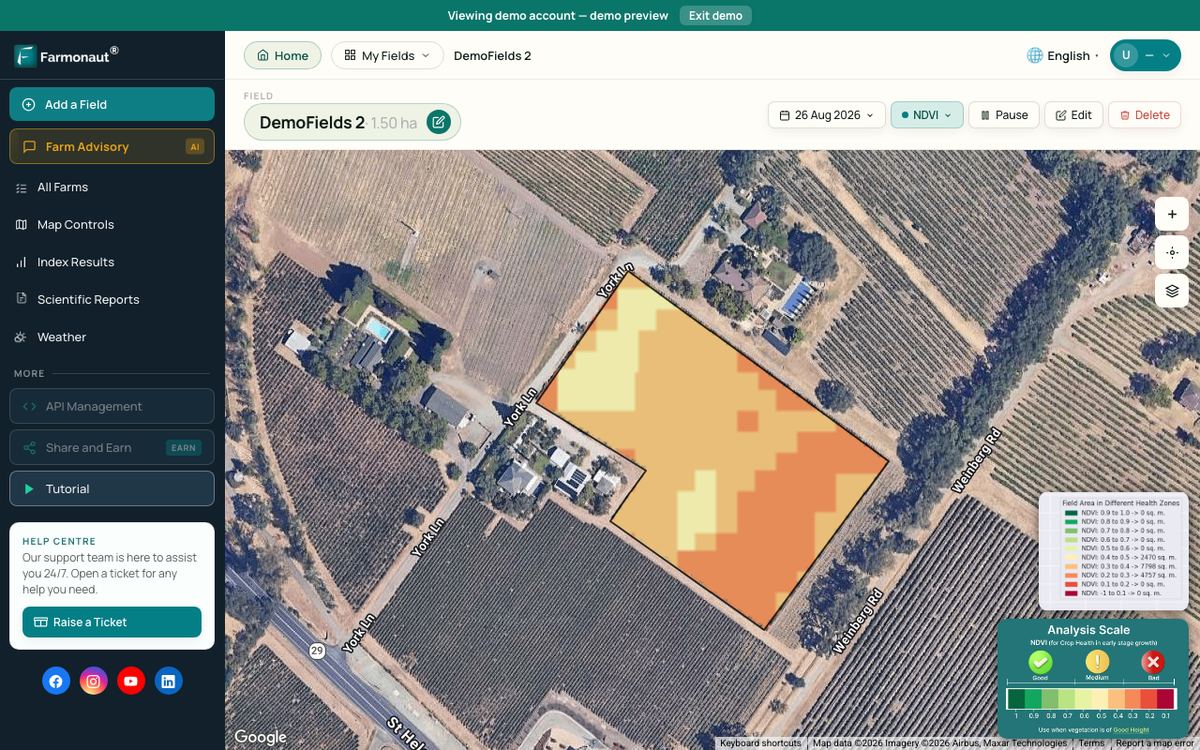
Farmonaut crop monitoring
See crop stress zones from space
Farmonaut Satellite + AI Farm Monitoring System shows crop stress zones from satellite images, so you can scout the right spots before you spray.



Keep reading
Sources
- Dively et al., University of Maryland, Comparative Efficacy of Common Active Ingredients in Organic Insecticides Against Difficult to Control Insect Pests, Insects (2020): pmc.ncbi.nlm.nih.gov
- UC IPM, Citrus Pest Management Guidelines: Mandatory intervals between application, reentry and harvest, and hazards to bees (text updated 2025): ipm.ucanr.edu
- EFSA, The 2024 European Union report on pesticide residues in food, EFSA Journal (2026): pmc.ncbi.nlm.nih.gov
- US EPA, What are biopesticides?: epa.gov
- US EPA, Minimum risk pesticides: epa.gov
- eCFR, 7 CFR 205.206 Crop pest, weed and disease management practice standard (USDA National Organic Program): ecfr.gov
- eCFR, 7 CFR 205.601 Synthetic substances allowed for use in organic crop production: ecfr.gov
- eCFR, 7 CFR 205.602 Nonsynthetic substances prohibited for use in organic crop production: ecfr.gov
- eCFR, 40 CFR 180.1153 Lepidopteran pheromones; exemption from the requirement of a tolerance: ecfr.gov
- NPIC (Oregon State University and US EPA), Pyrethrins general fact sheet: npic.orst.edu
- NPIC (Oregon State University and US EPA), Neem oil general fact sheet: npic.orst.edu
- NPIC (Oregon State University and US EPA), Bacillus thuringiensis general fact sheet: npic.orst.edu
- Oregon State University Extension, Evaluating compatibility of horticultural oils and sulfur with vineyard IPM, EM 9095 (2014): extension.oregonstate.edu
- University of California ANR, Sulfur damage to strawberry plants (Strawberry Disorders: Identification and Management): ucanr.edu
- eXtension (adapted from Cornell University), Can kaolin clay sprays reduce insect damage to apple fruit?: apples.extension.org
Discussion
Questions, corrections or field experience? Share them below. First-time comments are reviewed before they appear, and your email is never published.
No comments yet. Be the first to add a question or your experience.

 Cresol
 Atur Kuliner
 GlobalQuant
 MDCV UK
 Zerella Group
 Etech Consulting Madagascar
 Vestlandsforsking
 Agritein
 Delicio
 WB Dev
 Sama Premium
 Prochecker
 Tres Valles
 LACOS Geoinformation
 Magrifly
 LatConnect 60
 Blickwinkel
 Agricultural Credit Policy Council
 Marei Nursery
 eKGIS
eKGIS Mostas Tech
 Exploration consultancy · South Africa · Gold
 Licence holder · Niger · Gold
 Licence holder · Nigeria · Gold + lithium










