

Reviewed September 2026 against EPA Office of Pesticide Programs registration records, USDA Forest Service Research & Development, USDA NASS, and FBN Canada’s product catalog.
Try it: Run your own numbers →
There is no herbicide registered with the EPA, in USDA NASS chemical-use surveys, or in Canadian pesticide approval records under the name “Par 111.” What turns up instead is Par III, a turf herbicide sold in Canada containing 2,4-D, dicamba, and MCPP-p, and Velpar, a hexazinone-based herbicide registered with the EPA since 1975 for forestry and pre-plant use in corn and sugarcane. If you were handed a jug or a label reading “Par 111,” the fastest way to resolve it is to read the EPA registration number printed on the label and look it up directly — we show you how below, alongside what Par III and Velpar actually contain and where each is used.
“Par 111” vs. Par III: Clearing Up the Name
Searches for “par 111,” “par iii,” “par 3 herbicide,” and “par 3 weed killer” are, almost certainly, all landing on the same product family, split by an OCR or transcription quirk: the Roman numeral III in “Par III” gets read as the digits “111” or the number “3” depending on the font, the label scan, or the person typing it into a search box. We checked the EPA’s pesticide product label search and USDA NASS’s Agricultural Chemical Use Program for any registration under “Par 111” or “Par 3” as distinct products — neither returns a match. What does exist is Par III turf herbicide, currently listed by FBN Canada with a specific active-ingredient makeup (below), sold for turf and non-crop vegetation control rather than row-crop pasture or rangeland use.
This matters because a farm manager searching “par 111 herbicide” while holding a jug is trying to answer one question: what is this and how do I apply it correctly? Getting that wrong — spraying a turf-labeled product on forage or rotational cropland — is a label violation, not just an efficacy problem. So the first move with any unfamiliar container is not a search engine; it’s the EPA registration number stamped on the label itself.
If your label says “Par III,” the active ingredients are 2,4-D (190 g/L), dicamba (18 g/L), and MCPP-p (100 g/L), per FBN Canada’s current product listing. If your label says “Velpar,” the active ingredient is hexazinone at 25% concentration in the liquid formulation, per the EPA-registered VELPAR L CU label. There is no third, separate “Par 111” formulation on file.
Par III vs. Velpar: Side-by-Side Comparison
| Attribute | Par III Turf Herbicide | Velpar L CU |
|---|---|---|
| Active ingredients | 2,4-D 190 g/L, Dicamba 18 g/L, MCPP-p 100 g/L | Hexazinone 25% |
| EPA/registration status | Listed for sale in Canada (FBN Canada catalog) | US EPA-registered since 1975; label PPLS 061842-00047 |
| Primary use | Turf, lawns, non-crop broadleaf control | Forestry site preparation, pre-plant corn/sugarcane, woody/perennial control |
| Application rate | Per product label (rate not published in the source we checked) | 2–6 quarts/acre (1–3 lbs active ingredient hexazinone) for site preparation |
| Time to visible control | Not published for this product | ~1 month for weeds; 3–10 months for woody/tree control, per USDA Forest Service research |
| Source | FBN Canada product page | EPA Product Label, VELPAR L CU |
Par III Herbicide: Active Ingredients & Use
Par III turf herbicide, as currently listed by FBN Canada, combines three active ingredients at fixed concentrations: 2,4-D at 190 grams per liter, MCPP-p (mecoprop-p) at 100 grams per liter, and dicamba at 18 grams per liter. This is a three-way broadleaf mix, a formulation pattern common in turf and lawn-care herbicides rather than row-crop or pasture products — 2,4-D and MCPP-p both disrupt broadleaf plant growth hormones, while dicamba adds control of harder broadleaf species that resist the first two alone.
Because FBN Canada lists this specifically as a turf herbicide, it is not the same use category as a pasture or rangeland product. If you are managing forage, rotational cropland, or rangeland and were told to look for “Par 3” or “Par 111,” confirm with your input supplier whether they actually mean this turf-labeled product or a different one — using a turf herbicide off-label on grazed pasture or a rotational crop field risks both crop injury and a label violation, independent of whether it would technically control the target weed.

Application rates, re-entry intervals, and buffer-zone requirements for Par III are set on the product label itself, not published in the general catalog listing we reviewed — the FBN Canada page confirms the active-ingredient makeup but does not itemize a per-hectare rate table. If your supplier can provide the specific label PDF (Canadian products carry a Pest Control Product, or PCP, number issued by Health Canada’s Pest Management Regulatory Agency), that document is the authoritative rate source, not a search result.
Assuming “Par 111,” “Par III,” and “Par 3” all refer to a pasture/rangeland herbicide because that’s the framing used in older marketing copy. The verified source for this product (FBN Canada) lists it as turf herbicide. Always confirm the labeled use site against your actual field before applying anything.
Helpful Resources
For agronomists tracking exactly what was applied where, and needing that record later for compliance or export documentation, Farmonaut’s traceability platform logs herbicide application alongside crop performance data — useful regardless of which specific product a field record refers to.
Velpar Herbicide: Hexazinone, Rates & Timing
Velpar’s active ingredient is hexazinone, first granted EPA registration in 1975, according to the US EPA Office of Pesticide Programs reregistration fact sheet for PC-107201. The current EPA-registered label for VELPAR L CU (label dated September 29, 2020) lists the liquid formulation at 25% hexazinone concentration. For site preparation use, the label specifies an application rate of 2 to 6 quarts per acre, delivering 1 to 3 pounds of active ingredient hexazinone per acre.
Timing matters more with hexazinone than with faster-acting broadleaf herbicides. USDA Forest Service research (Research & Development, treesearch record 5223) found that hexazinone reaches effective weed control within about 1 month of application, but tree control — the woody, perennial target most relevant to forestry site prep — takes 3 to 10 months to show full effect. That gap is the reason Velpar site-prep programs are planned a season ahead of planting, not sprayed and planted in the same window.

Velpar’s labeled uses extend beyond forestry: the EPA label also covers pre-plant applications in corn and sugarcane. Scale context for US corn acreage: USDA NASS reported 91.5 million acres of corn expected for harvest in 2024 nationally — a figure NASS republishes each year in its June acreage report, so check the USDA NASS acreage release for the current year’s number rather than reusing the 2024 figure going forward. Cotton, a crop sometimes discussed alongside pre-plant herbicide programs, covered 11.7 million acres planted in the US in 2024 per USDA NASS county-level crop acreage data — again, a figure NASS updates annually and searchable directly through NASS Quick Stats for the current planting year.



Because hexazinone is soil-mobile and absorbed through both roots and foliage, the EPA label carries leaching precautions near waterways and in porous soils. Land managers verifying vegetation cover before and after a Velpar application can use Farmonaut’s satellite-based farm management tools to document canopy and woody-plant cover changes over the 3-to-10-month window the USDA Forest Service data describes, supporting both timing decisions and after-the-fact compliance records.
Before applying Velpar near a waterway or sensitive site boundary, use satellite-guided application and fleet management to confirm buffer distances against the label’s leaching precautions — a field boundary drawn from memory is exactly the kind of error a mapped application record prevents.
Key Limitations of Velpar
- ⚠ Soil mobility creates leaching risk into groundwater and adjacent surface water — site selection and buffer zones matter more than with less mobile actives.
- ⚠ The 3–10 month lag before woody/tree control is visible (USDA Forest Service data above) means a single-season efficacy judgment can be premature.
- ⚠ Corn and sugarcane uses are pre-plant only per the EPA label — it is not labeled for over-the-top use in an established stand.
Finding a “Par 3 Herbicide Equivalent”
If you searched “par 3 herbicide equivalent” because a specific product is out of stock, discontinued in your region, or you’re comparing options before a purchase, the right comparison point is the active ingredient, not the brand name. Par III’s actives are 2,4-D, dicamba, and MCPP-p — a common three-way broadleaf turf combination. A true equivalent would match those three actives at comparable concentrations (190 g/L 2,4-D, 18 g/L dicamba, 100 g/L MCPP-p, per the FBN Canada listing), not just share a similar-sounding name.
For Velpar, the equivalent question is really “which hexazinone products are registered in my state/province and at what concentration.” The EPA’s product label search lets you pull every registered hexazinone label by active ingredient rather than guessing from brand names — search “hexazinone” directly rather than a specific trade name, since formulations and registrants can change.
Neither USDA NASS’s Agricultural Chemical Use Program nor Statistics Canada publish active-ingredient-level market share or acres-treated data broken out for these specific products at the retail brand level — that granularity, where it exists, sits in USDA NASS Quick Stats raw queries or would require a direct request to provincial agricultural statistics agencies in Canada. Treat any “X% of farms use this” claim you see elsewhere about these products as unverifiable against public data as of this review.
How to Verify Any Herbicide Label Yourself
This is the durable part of this article — the lookup method below works regardless of what a product happens to be branded next season:
- Find the EPA registration number on the label — format is typically two sets of numbers separated by a dash (e.g., 061842-00047 for VELPAR L CU).
- Search the EPA Product Label System (www3.epa.gov/pesticides/chem_search/ppls) using that registration number to pull the current, legally binding label — not a retailer’s summary page.
- Cross-check active ingredients against the label’s ingredient statement, which lists percentage by weight for each active.
- For Canadian products, use the Pest Control Product (PCP) number and Health Canada’s Pest Management Regulatory Agency label search instead of the EPA system.
- For US acreage/adoption context, query USDA NASS Quick Stats (quickstats.nass.usda.gov) directly, filtering by crop, chemical, and year — the Agricultural Chemical Use Program is the source NASS itself points to for this data.
- For Canadian crop acreage context, use Statistics Canada Table 32-10-0015-01, updated quarterly by province and crop year.
None of this requires trusting a brand name at all — the registration number and the label PDF are the only documents with legal weight, and both are free to search.

Hexazinone Rate Calculator
Enter your acreage and target active-ingredient rate to estimate Velpar L CU product volume needed for site preparation, based on the EPA label’s 2–6 quarts/acre (1–3 lbs ai/acre) range.
Run your own numbers
Assumes VELPAR L CU at 25% hexazinone (2.08 lbs ai per gallon, per the EPA label), a linear rate-to-volume relationship within the label’s 2–6 quart/acre site-preparation range, and a single uniform application. It excludes tank-mix partners, spray-water volume, terrain-based rate adjustments, and any state or provincial rate restrictions — confirm final rates against your specific product label before mixing.
Where Satellite Monitoring Fits In
Whichever herbicide a field record eventually lands on, the underlying question — did the application work, and can I prove it — doesn’t depend on the brand name. Satellite vegetation monitoring establishes a pre-application baseline and tracks canopy or weed-cover change afterward, which is the actual evidence a hexazinone program’s 3-to-10-month tree-control window (per the USDA Forest Service data above) requires to judge properly.
- 🛰️ Vegetation monitoring: Identifies weed cover before treatment and tracks decline afterward, rather than relying on a single field visit.
- 💻 Digital application records: Timestamped, geolocated logs of what was sprayed where — useful when a label’s active-ingredient identity, not just its brand name, needs to be on file.
- ⛓️ Traceability records: Supports compliance documentation independent of which specific product was used, via Farmonaut’s traceability platform.
- 🌎 Carbon and environmental tracking: Quantifies input-use efficiency over time via Farmonaut Carbon Footprinting.


With Farmonaut’s API and developer docs, agribusinesses can automate weed-detection alerts and tie them to application-timing decisions — including the kind of extended monitoring window a hexazinone treatment schedule needs. Farmonaut’s crop loan and insurance verification services also use this same satellite evidence to document stewardship practices for financing purposes.


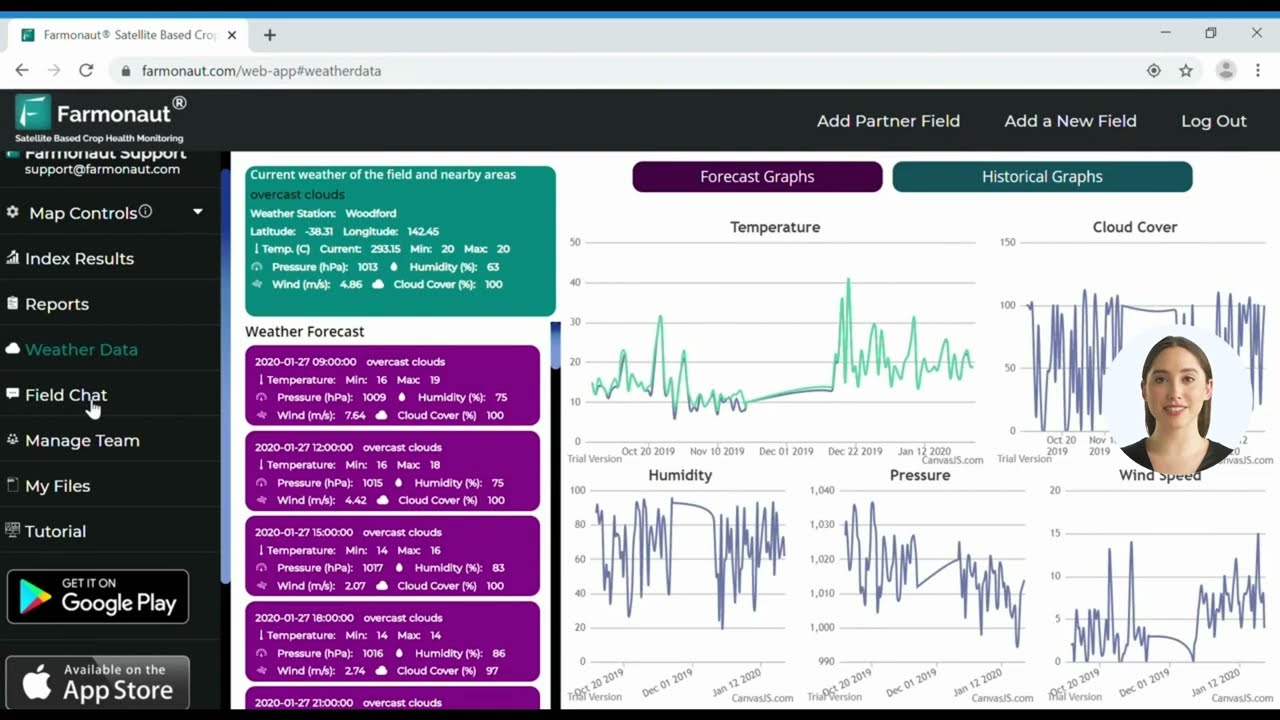
Farmonaut Subscription Plans for Precision Monitoring
Ready to track weed pressure and application results by satellite? Explore Farmonaut’s subscription options:
Frequently Asked Questions
Is “Par 111” a real, EPA-registered herbicide?
No product by that exact name appears in the EPA’s pesticide product label database, USDA NASS chemical-use records, or Canadian pesticide approvals as of this review. The verified product that these searches most closely match is Par III, a Canadian turf herbicide containing 2,4-D, dicamba, and MCPP-p. If you have a physical label reading “Par 111,” check its EPA registration number directly against the EPA label search — that number, not the printed brand name, is the authoritative identifier.
What’s in Par III herbicide?
Per FBN Canada’s product listing, Par III turf herbicide contains 2,4-D at 190 g/L, MCPP-p at 100 g/L, and dicamba at 18 g/L — a three-way broadleaf combination labeled for turf and non-crop use.
What is a “par 3 herbicide equivalent”?
There is no verified alternate product confirmed under this exact naming in the sources checked for this article. The reliable comparison method is by active ingredient: match products containing 2,4-D, dicamba, and MCPP-p at similar concentrations to Par III’s 190/18/100 g/L makeup, using the EPA or Health Canada PMRA label databases rather than brand-name searches.
How does Velpar (hexazinone) compare to Par III?
They are different chemistries for different jobs. Velpar’s active ingredient is hexazinone (25% in the liquid VELPAR L CU formulation), EPA-registered since 1975, used mainly for forestry site preparation and pre-plant corn/sugarcane at 2–6 quarts/acre. Par III is a 2,4-D/dicamba/MCPP-p turf product. They are not interchangeable, and neither is a direct substitute for the other.
How long does Velpar take to work?
USDA Forest Service research reports approximately 1 month for weed control effectiveness, but 3 to 10 months for control of woody plants and trees — the target most relevant to forestry site preparation. Judge efficacy on that timeline, not after a few weeks.
Where do I find current US corn and cotton acreage?
USDA NASS publishes updated acreage figures annually, typically in its June Acreage report (nass.usda.gov/Newsroom) and through the Quick Stats database (quickstats.nass.usda.gov), searchable by crop and year. The 91.5 million acres of corn and 11.7 million acres of cotton cited in this article are 2024 figures — check NASS directly for the current year’s numbers.
Conclusion
“Par 111” is very likely a misread or mistyped version of Par III, a turf herbicide with a specific, verifiable active-ingredient makeup — 2,4-D, dicamba, and MCPP-p — not a separate registered product. Velpar, built on hexazinone since its 1975 EPA registration, is a distinct chemistry used for forestry and pre-plant corn/sugarcane work, with a well-documented 3-to-10-month window before woody-plant control is fully visible. Neither name substitutes for reading the actual label in front of you.
- The EPA registration number on a label — not the brand name — is the authoritative identifier; look it up at the EPA Product Label System.
- Canadian products carry a PCP number instead, checked against Health Canada’s Pest Management Regulatory Agency database.
- USDA NASS Quick Stats and Statistics Canada Table 32-10-0015-01 are the update paths for acreage and crop-context figures cited here, both refreshed on regular public schedules.
- Satellite-based vegetation tracking gives you the before/after evidence a multi-month hexazinone control window actually requires to evaluate.
© Farmonaut | For more on par 111 herbicide, par iii herbicide, and velpar herbicide label verification and satellite-based application monitoring.

 Zerella Group
 Agroes
 Etech Consulting Madagascar
 Vestlandsforsking
 Agritein
 Delicio
 WB Dev
 Sama Premium
 Prochecker
 Tres Valles
 LACOS Geoinformation
 Magrifly
 LatConnect 60
 WebsEdge
 Blickwinkel
 Agricultural Credit Policy Council
 Marei Nursery
 eKGIS
eKGIS Mostas Tech
 Andex
Andex
