

Small farm equipment · Buyer guide
Best ATV Spreader for Manure: 5 Models Compared
For a few horses, compare the ABI 25, Conestoga CM-25 and Wallenstein MX25G. Then check loaded weight: a 25 cubic foot spreader full of wet manure can weigh over a ton, more than some ATVs may tow.
Key takeaways
- ABI lists 350 cc 4WD as the minimum ATV or UTV for its 25 cu ft spreader, and 550 cc in the table for its 50 cu ft model.
- Horse manure weighs about 62 to 63 lb per cubic foot without bedding (Rutgers, Penn State), so a heaped load of it can weigh more than twice as much as a 25 cu ft spreader.
- Dealer asks on 5 November 2026: US$4,680 for a Wallenstein MX25G and US$5,900 for a Conestoga CM-25; freight may be extra.
- Plan on 2 to 3 cu ft of stall waste per horse per day (Rutgers) when you choose a size.
- Calibrate with a tarp: pounds divided by square feet, times 21.8, gives tons per acre (Penn State Extension).
In this article
The best ATV spreader for manure is the lightest one that holds a full load for your stock. For a few horses, compare the ABI 25, the Conestoga CM-25 and the Wallenstein MX25G; these are small ground-driven machines that their makers or dealers say an ATV can pull. Check one thing before you buy: the loaded weight. A 25 cubic foot spreader full of wet manure can weigh more than a ton.
This guide compares five real models using published specifications and dated dealer prices. It also shows how much each could weigh when full, and gives you a calculator for load weight, tow margin and tons per acre. The numbers come from maker pages, dealer listings and university extension guides.
Best ATV spreader picks at a glance
All five machines below are ground driven, so the wheels power the apron and beaters and no power take-off is needed. Capacity means heaped capacity. Weights are as published, so compare them with care: the Conestoga figure is a shipping weight, and the others are unit weights.
| Model | Heaped capacity | Weight | Stated tow vehicle | Best for |
|---|---|---|---|---|
| ABI 25 | About 25 cu ft | 680 lb unit | ATV, UTV or golf car, 350 cc 4WD minimum; or 18 hp | Clear ATV minimum and a built-in shredder |
| Conestoga CM-25 | 26 cu ft | 565 lb shipping | ATV, UTV or compact tractor | 1 to 5 horses, per the dealer |
| Wallenstein MX25G | 31.25 cu ft | 510 lb total | ATV, UTV or lawn tractor; 12 to 25 hp range | High volume for the empty weight |
| Bush Hog MS250G | 31.25 cu ft | 510 lb total | 15 to 25 hp recommended | Buyers with a Bush Hog dealer nearby |
| ABI 50 | About 50 cu ft | 825 lb unit | ATV or UTV, 550 cc 4WD minimum; or 22 hp | Larger machines and fewer trips |
The five models in detail
1. ABI 25: best stated ATV match
Best for: owners who want a published minimum for their ATV. The ABI 25 specification table lists 350 cc 4WD as the minimum for an ATV or UTV, or 18 hp for a tractor. It has a Cor-Ten steel box, four flow speeds and 32 shredding blades. The unit weighs 680 lb, with a 45 lb empty tongue weight. ABI rates it for up to four horses.
Chart
Published empty weight of small ground-driven spreaders
Pounds, as published; the CM-25 figure is a shipping weight
Watch for: it is the heaviest of the small machines here, so it leaves less of your tow rating for manure. The struck capacity is 17.5 cu ft, a useful figure if you plan to load level with the box sides.
2. Conestoga CM-25: dealer-listed for 1 to 5 horses
Best for: small horse properties that want a fully welded box. The Brim Tractor listing for the CM-25 gives 26 cu ft heaped, a 12 gauge Cor-Ten box, a stainless apron chain, a four-speed ratchet drive and a 30 inch loading height. It lists the machine for ATV, UTV or compact tractor use.
Watch for: the 565 lb figure is a shipping weight, and the listing gives no minimum engine size. It showed a regular price of US$5,900 when checked on 5 November 2026, the highest of the two 25-size dealer prices we found.
3. Wallenstein MX25G: high volume for its weight
Best for: light loads such as bedding-heavy stall waste. The Beaver Valley Supply listing for the MX25G gives 31.25 cu ft heaped, a total weight of 510 lb (the listing header also shows 678 lb, which may be a shipping weight), a 34 lb tongue weight, three speed options and eight beater paddles. The floor is rust-resistant tongue-and-groove poly.
Watch for: more volume also means more load. Filled with dense, wet material, it can end up heavier than the ABI 25 despite its lighter frame. The dealer asked US$4,680 on 5 November 2026. A fines pan was a US$475 extra.
4. Bush Hog MS250G: same published size, different dealer network
Best for: buyers who already service other equipment through Bush Hog. The Bush Hog MS250G page lists 25 bushels heaped (31.25 cu ft), 510 lb with tires and a 34 lb tongue weight. It recommends 15 to 25 hp.
Watch for: that 15 hp floor is a tractor-style rating and does not map directly to ATV engine size. Ask the dealer about your exact ATV. Prices come through the dealer.
5. ABI 50: the step up for larger machines
Best for: a larger UTV or sub-compact tractor, and owners who spread less often. The ABI 50 specification table lists about 50 cu ft heaped, 32 cu ft struck, 825 lb and a 57 lb tongue weight. ABI rates it for up to eight horses in the table.
Watch for: the table says 550 cc 4WD, while the text on the same page says 570 cc. Plan on the higher number. Heaped, it can pass the example tow limit in the next section by a wide margin. A close alternative is the Wallenstein MX50G listing: 62.5 cu ft, 795 lb, 15 to 30 hp and US$7,410 on 5 November 2026.
How much does a loaded ATV manure spreader weigh?
Published capacity is volume, but your ATV pulls weight. Two extension figures set the range. Rutgers puts horse manure at about 62 lb per cubic foot without bedding. Penn State gives about 63 lb per cubic foot.
Stall waste with bedding is far lighter. Penn State reports 60 to 70 lb of total waste per stall each day, and Rutgers says manure plus bedding fills 2 to 3 cu ft a day. Dividing those ranges gives about 20 to 35 lb per cubic foot. That is our own estimate, so we use 30 lb as a working figure. Weigh a sample of yours if you can, because wet material and compost can be much heavier.
Now compare that with your machine. The Polaris owner’s manual page for the 2022 Sportsman XP 1000 S lists a maximum towed load of 1,750 lb on level ground and a vertical hitch weight of 175 lb, and tells riders to avoid towing on inclines. That is one 1000-series model only. Your limit is in your own manual, and a smaller ATV’s may be lower.
At 30 lb per cubic foot, the small models stay under that example limit. At 62 lb, every model in the chart passes it. So the safe answer for a small ATV is often to load less, not to buy bigger.
Chart
Estimated towed weight when heaped
Pounds: published weight plus heaped capacity at 30 and at 62 lb per cubic foot; our calculation
How to choose an ATV spreader size
- Find your tow limit. Read the towed-load, hitch-weight and slope limits in your ATV manual. Tongue weight also counts against rack capacity on the Polaris page cited above.
- Estimate your weekly volume. Using the Rutgers figure of 2 to 3 cu ft per horse per day, two horses make about 28 to 42 cu ft a week.
- Match how often you spread. A smaller machine works if you spread often. Penn State notes that weekly summer spreading disrupts fly breeding.
- Measure your gates and barn aisle. The ABI 25 is 49 inches wide and the ABI 50 is 56 inches. The CM-25 is 47 inches wide and 120 inches long.
- Check the loading height. Where published, heights among the five run from 29 inches on the MX25G to 34 inches on the ABI 50. A lower box helps if you fork by hand.
- Compare wear parts. Ask about the apron chain, floor, paddles and warranty. Materials differ between models.
Ask for a quote with freight, because these machines are heavy to ship. Millcreek, another maker in this class, says on its guide to its spreader range that its economy mini and compact models suit a few horses and occasional use, and it sells on request-for-price. Compare its current compact models against the same checklist.
ATV spreader prices we found
All prices below are dealer asks in US dollars, checked on 5 November 2026. They are not auction results, and freight and options may be extra. Beaver Valley says its Wallenstein prices exclude setup and shipping. ABI and Bush Hog did not show a cash price on the pages we read, so ask for a written quote.
| Model | Dealer ask | Price per heaped cu ft |
|---|---|---|
| Wallenstein MX25G | US$4,680 | About US$150 |
| Conestoga CM-25 | US$5,900 | About US$227 |
| Wallenstein MX50G | US$7,410 | About US$119 |
Older listings on the used market can cost less, and a restored antique spreader may suit a heritage farm or display. Before you tow an old machine with an ATV, check the same three things: its weight, its hitch and whether the apron and beater turn freely. Parts may be hard to find. For wider buying options, see our guide to manure spreaders for sale.
Calibrate your manure spreader with a tarp
A calibrated small spreader tells you what you are really applying. Penn State Extension says the tarp method suits solid manure best.
- Cut a tarp of known size and weigh it.
- Lay it flat in the path of the spreader. Drive directly over its center at your normal speed and setting, then make two more passes on either side at your normal overlap spacing.
- Weigh the tarp again and subtract the tarp weight.
- Divide the pounds of manure by the tarp area in square feet, then multiply by 21.8 to get tons per acre.
- Repeat once or twice and average the results.
The 21.8 comes from 43,560 square feet per acre divided by 2,000 lb per ton. Width matters too. The University of Georgia guide to spreader calibration lists finding the effective swath width as a main goal, because it sets how far apart your passes should be.
Try the numbers for your own farm below.
Calculator
Is this load within your tow limit, and what rate will it spread?
Enter your own spreader, ATV limit and spreading pass.
- Manure in the load: 600 lb
- Total towed weight: 1,280 lb
- Application rate: 3.6 tons/acre
- Total N applied: 22 lb/acre
- Loads per acre: 12.1 loads
Example values only, not a benchmark or a recommendation; replace every number with your own. The tow limit must come from your own ATV manual, and it may be lower on slopes. Tons per acre uses the 21.8 conversion from Penn State Extension (43,560 sq ft per acre divided by 2,000 lb per ton). Check your result with a tarp test, your manure test and local rules.
What manure gives your pasture
Nutrient values differ widely, so test before you set a rate. Rutgers says a ton of horse manure typically contains 11 lb of N, 2 lb of P and 8 lb of K, and that a 1,000 lb horse makes about 9.1 tons a year. Lab medians from Maine are lower for nitrogen. The University of Maine 2013 manure sample summary shows a median of 6.2 lb total N per ton for six solid horse samples.
Chart
Median total nitrogen by solid manure type
Pounds per ton as received, Maine samples, calendar year 2013
Spread in a thin layer. Penn State explains that a thin layer dries the manure, which discourages flies, and spreads the nutrients for better plant use. The same guide warns that in moist climates, thin layers on grazed pasture can raise horses’ exposure to parasites, so ask your vet or adviser before spreading where horses graze. It also says not to spread on frozen ground or near waterways. Stay off wet ground too: SARE’s chapter on compaction lists avoiding travel on wet soils among its main steps.
Local rules can set hard limits. In England’s nitrate vulnerable zones, GOV.UK guidance sets a limit of 170 kg of nitrogen per hectare from livestock manure as a holding average, and a separate 250 kg field limit for organic manure. Rules differ by state, province and country, so check with your local agency or an adviser before you spread near water.
After spreading, satellite maps can help you see how pasture growth differs across a paddock. They show vegetation change, not the cause. Farmonaut offers this kind of field monitoring for owners who want a season-long view.
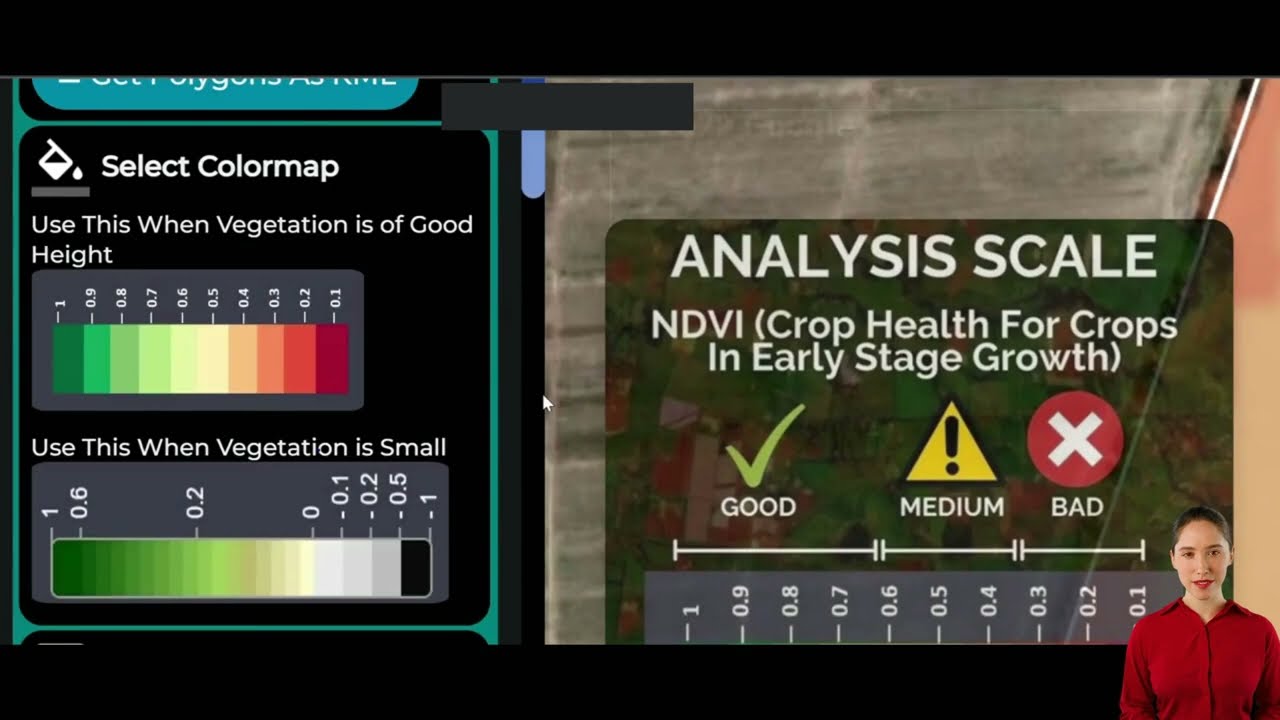
▶ A walkthrough of Farmonaut’s web app showing how to read satellite data for your fields. · 10:16
Who should skip an ATV spreader?
An ATV is a poor fit if your ground is steep, as the Polaris page advises avoiding inclines when towing. It may also be a poor fit if your ATV is under the minimum engine size, or your stock produces more than you can spread in light loads. In those cases, consider a UTV or sub-compact tractor, shared equipment, composting, or a hauling contract. Penn State lists contract hauling as one disposal option. Rutgers also warns that most horse owners lack the land to use all the manure they produce, so work out your acreage before buying any machine.
Safety: follow your ATV and spreader manuals. Disconnect the drive and stop moving before clearing a jam, and keep people and animals away from the beaters. These figures are planning guides, not engineering or legal advice.

▶ Ten small-scale farm business ideas, for readers planning what a small property can support. · 6:03
FAQ
Can a small ATV pull a manure spreader?
Yes, if the loaded weight stays within its manual’s limits. ABI lists 350 cc 4WD as the minimum for its 25 cu ft model. Load light on a small machine, and test on flat ground first.
What size ATV manure spreader do I need?
For stalled horses, plan on 2 to 3 cu ft per horse per day (Rutgers). Multiply by the days between spreading. A 25 cu ft machine holds roughly 10 days of waste from one horse, or about 2.5 days from four.
How do ABI spreaders compare with Millcreek?
ABI publishes a full table online, with weights and minimum vehicle sizes. Millcreek describes its range by farm size and sells through a price request. Ask each for current weight, tow requirements, warranty and delivered price, then compare them line by line.
Is a ground-driven or PTO spreader better for an ATV?
All five machines above are ground driven, which needs no power take-off. The wheels need grip to turn the drive, so traction tires matter. ABI lists traction tires and ratcheting hubs, and Wallenstein lists traction implement tires.
How much does a small manure spreader cost?
Dealer asks we found on 5 November 2026 ran from US$4,680 for a Wallenstein MX25G to US$5,900 for a Conestoga CM-25. Freight may be extra, so get a delivered quote.
Related pages on our site: types of farming; US farmland investment; farm fleet records; product traceability; carbon footprinting; farm admin tools; satellite and weather API docs.
Farmonaut crop monitoring
See how your pasture responds
Draw your fields once and Farmonaut shows satellite vegetation maps for them through the season, on web, Android or iOS.




Sources
- Penn State Extension, Manure Spreader Calibration: extension.psu.edu
- Penn State Extension, Horse Stable Manure Management: extension.psu.edu
- Rutgers NJAES, Fact Sheet FS036, horse manure quantity and composition: njaes.rutgers.edu
- Rutgers NJAES, Fact Sheet FS537, horse manure and bedding: njaes.rutgers.edu
- University of Georgia Extension, Circular 825, Calibration of Manure Spreaders: fieldreport.caes.uga.edu
- University of Maine Soil Testing Lab, Maine Manure Sample Summary, 2013 samples: umaine.edu
- GOV.UK, Using nitrogen fertilisers in nitrate vulnerable zones: gov.uk
- SARE, Building Soils for Better Crops, Ch 15 Addressing Compaction: sare.org
- ABI Attachments, 25 cu ft ground driven spreader specifications: abiattachments.com
- ABI Attachments, 50 cu ft ground driven spreader specifications: abiattachments.com
- Brim Tractor, Conestoga CM-25 listing, checked 5 November 2026: brimtractor.com
- Beaver Valley Supply, Wallenstein MX25G listing, checked 5 November 2026: beavervalleysupply.com
- Beaver Valley Supply, Wallenstein MX50G listing, checked 5 November 2026: beavervalleysupply.com
- Bush Hog, MS250G Ground Driven Manure Spreader: bushhog.com
- Polaris, owner’s manual page, Towing Loads: publications.polaris.com
- Millcreek Spreaders, Manure Spreaders For Any Occasion, Budget or Need: millcreekspreaders.com
Discussion
Questions, corrections or field experience? Share them below. First-time comments are reviewed before they appear, and your email is never published.
No comments yet. Be the first to add a question or your experience.

 MWS Research Centre
 FieldZero
 Indico Company
 Kubota
 FFBS
 Jontra
 Kalustyan
 Tucor
 Geno
 Hayleys Agriculture
 Linx Agritech
 Adinet
 Save Your Soils

 Licence holder · Niger · Gold
 Client · Tanzania · Gold










