

Pulse crops · Planting guide
Chickpea Planting Requirements: 8 Steps With Seed Rates
Chickpeas need a long, warm, dry season, light well-drained soil, tested seed, a chickpea-specific inoculant, soil of at least 45°F (desi) or 50°F (kabuli) at seeding depth, 3–4 plants per square foot at 1.5–2.5 inches deep, phosphorus by soil test and a four-year rotation.
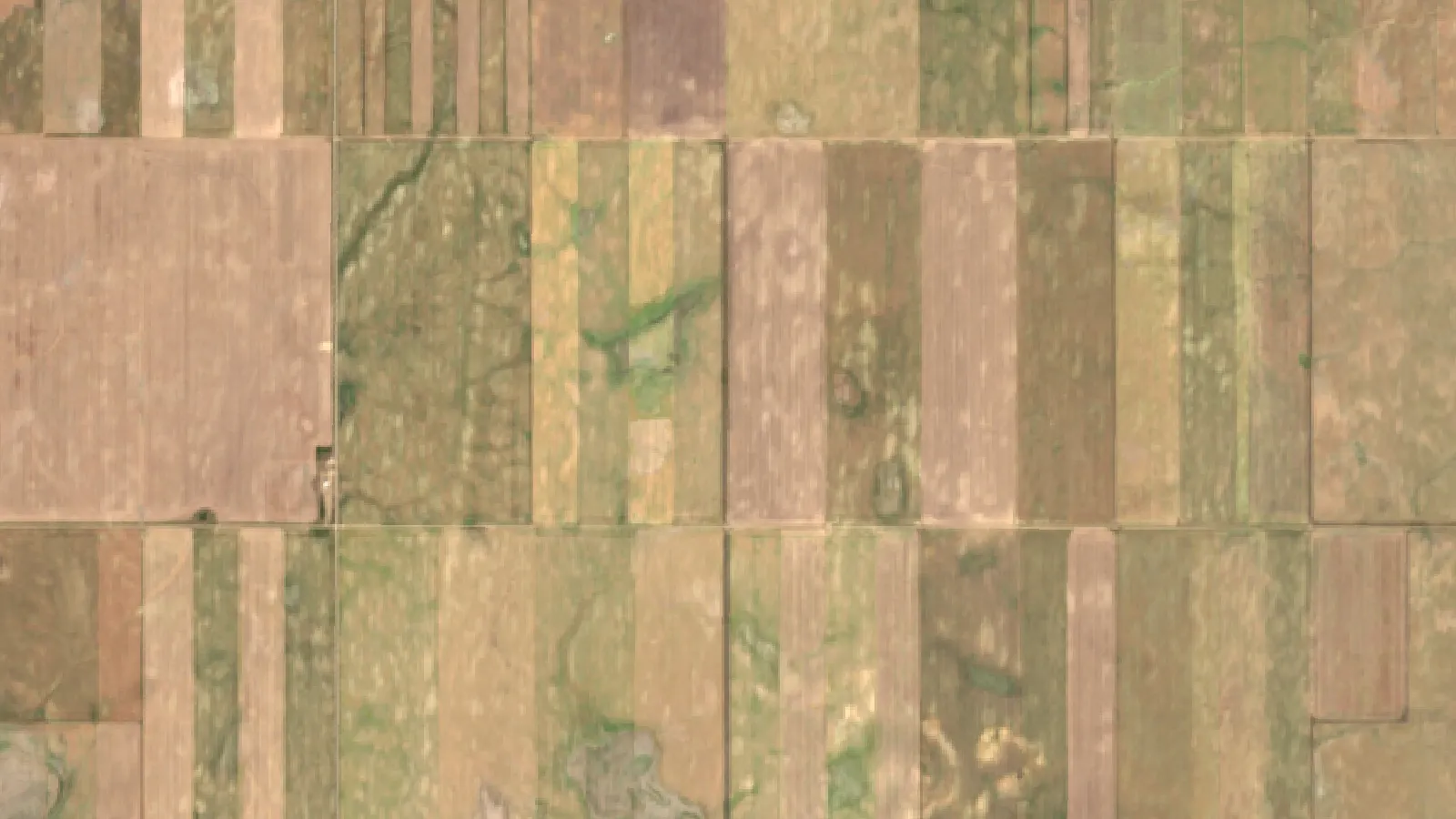
Key takeaways
- Saskatchewan guidance sets a minimum soil temperature at seeding depth of 7°C (45°F) for desi and 10°C (50°F) for kabuli chickpeas.
- Target 3–4 plants per square foot: about 80–95 lb/ac of desi seed or 120–190 lb/ac of kabuli seed, seeded 1.5–2.5 inches deep into moist soil.
- Inoculate every time with Mesorhizobium ciceri; well-nodulated chickpeas fix 50–80% of their nitrogen (Saskatchewan Pulse Growers).
- NDSU suggests 0–28 lb P2O5/ac at an 1,800 lb yield goal, depending on the soil test; grow chickpeas once in four years to limit Ascochyta blight.
- US growers planted 536,000 acres in 2025 and 430,000 in 2026; the all-chickpea price was US$20.20/cwt in August 2026 (USDA NASS).
In this article
- Chickpea planting requirements at a glance
- Where chickpeas are grown in North America
- 1. Climate requirements for chickpeas
- 2. Soil conditions for planting chickpeas
- 3. Seed selection and seed testing
- 4. Chickpea seed inoculation
- 5. When to plant chickpeas: soil temperature and timing
- 6. Seed rate, depth and row spacing
- 7. Fertilizer for chickpeas
- 8. Pests, diseases and rotation
- Harvest and storage of chickpeas
- Chickpea prices and the cost of seed
- Seeding rate and margin calculator
- How to watch a chickpea crop through the season
Chickpea planting requirements come down to eight things: a long, warm and fairly dry season, light well-drained soil near neutral pH, clean tested seed, the right chickpea inoculant, a soil warm enough at seeding depth, the right seed rate and depth, modest phosphorus, and a four-year break from other chickpea crops. The Saskatchewan Ministry of Agriculture seeding guide asks for soil of at least 7°C (45°F) at seeding depth for desi types and 10°C (50°F) for kabuli types, a seeding depth of 1.5 to 2.5 inches, and a stand of 3 to 4 plants per square foot.
This guide walks through each of the eight steps with numbers from North American extension services and pulse grower groups. It also shows where chickpeas are grown in the United States, what growers were paid in 2026, and gives a calculator that turns your seed weight and emergence into a seeding rate and a per-acre margin.
Chickpea planting requirements at a glance
The table lists the eight steps. Each one has its own section below with the source behind it.
| Step | What the crop needs | Number to aim for | Source |
|---|---|---|---|
| 1. Climate | Warm days, mild nights, a long season | Days 21–29°C (70–84°F); kabuli maturity 110–120 days | Saskatchewan Pulse Growers |
| 2. Soil | Light, well-drained, not saline | Neutral pH; avoid heavy clay and wet spots | Saskatchewan Pulse Growers |
| 3. Seed | Lab-tested, low disease | Seed-borne Ascochyta at or below 0.3% | Saskatchewan Ministry of Agriculture |
| 4. Inoculant | Chickpea-specific rhizobia every time | Mesorhizobium ciceri, not pea or lentil strains | Saskatchewan Pulse Growers |
| 5. Timing | Soil warm enough at seed depth | Desi 7°C (45°F), kabuli 10°C (50°F) | Saskatchewan Ministry of Agriculture |
| 6. Rate and depth | Even stand into moist soil | 3–4 plants/ft²; 1.5–2.5 in deep | Saskatchewan Ministry of Agriculture |
| 7. Fertilizer | Phosphorus by soil test, little nitrogen | 0–28 lb P2O5/ac at a 1,800 lb yield goal | NDSU Extension |
| 8. Rotation and harvest | Break for Ascochyta; harvest dry seed | Once in four years; harvest near 18% moisture | USA Dry Pea and Lentil Council |
Where chickpeas are grown in North America
Chickpeas, also called garbanzo beans, are a cool-season pulse grown on dryland farms of the northern Great Plains and the Pacific Northwest. In the United States, the four main states are Montana, Washington, Idaho and North Dakota. US growers planted 536,000 acres in 2025, up 6% on 2024, and harvested 6.84 million cwt at an average yield of 1,315 pounds per acre, according to the USDA NASS Crop Production 2025 Summary.
Chart
Chickpea area planted by US state
Thousand acres, 2025 crop, all chickpeas (the four states NASS reports)
Montana alone planted 260,000 acres in 2025, close to half of the US total. Washington and Idaho together planted another 239,000 acres. In Canada, Saskatchewan grows most of the crop, mainly in the Brown and Dark Brown soil zones in the south-west of the province.
The 2026 crop is smaller. The USDA NASS Crop Production report of October 2026 put the area planted at 430,000 acres and forecast production at 5.85 million cwt, with a yield of 1,403 pounds per acre. These are forecasts; the final 2026 figures come in the January 2027 annual summary.
There are two market classes. Kabuli types have large, round, cream seed and white flowers. Desi types have smaller, angular seed with a darker coat. USDA reports all chickpeas in two size classes: large chickpeas (above 20/64 inch, mainly kabuli) and small chickpeas (20/64 inch or smaller, which includes desi and small kabuli). Large kabuli made up about three-quarters of the US area in 2025. The class you grow changes the seed rate, the disease risk and the price.
Chart
US chickpea yield per acre
Pounds per harvested acre, all chickpeas, clean basis; 2026 is the October forecast
1. Climate requirements for chickpeas
Chickpeas like warm, dry summers. Saskatchewan Pulse Growers says the crop does best with daytime temperatures of 21 to 29°C (70 to 84°F) and nights of 18 to 21°C (64 to 70°F). Heat of 30°C (86°F) or more stresses the plant during early flowering and pod set.
The crop is drought tolerant because its taproot can grow more than a metre deep. The same guide suggests 15 to 25 cm (about 6 to 10 inches) of rain during the growing season. Wet, humid weather is the bigger risk, because it spreads Ascochyta blight and delays maturity.
Season length
Season length is the main limit in the north. Kabuli varieties are strongly indeterminate and usually mature in 110 to 120 days, and longer in a cool, wet year. Desi types mature earlier (about two weeks, per the USA Dry Pea and Lentil Council) and handle frost and insects better. A fall frost before maturity raises the share of green seed, which buyers discount.
Chickpeas germinate with the seed leaves below ground. If a late spring frost burns the top growth, the plant can regrow from buds below the soil. This is why early seeding into cool soil is possible, as long as the soil is warm enough at seeding depth (step 5).
Best for
- Kabuli: the warmest, driest areas with the longest season, such as the Brown soil zone in Saskatchewan or central Montana.
- Desi: slightly cooler or moister areas, or fields where an earlier harvest matters.
2. Soil conditions for planting chickpeas
Chickpeas grow best on well-drained, lighter-textured soils with a neutral pH. They are not well suited to saline soils, to soils with high clay content, or to low spots that stay wet in spring. Roots in waterlogged soil are prone to rot, and wet fields also slow maturity.
Test the soil before you plant. A soil test gives you pH, phosphorus, potassium and sulfur levels, and also the nitrate left from the last crop. You need those numbers for step 7. Pick a field with a low weed seed bank, since young chickpea plants compete poorly and few herbicides are labeled for the crop.
Tillage and stubble
Chickpeas fit well into minimum-till and no-till systems. Research at Swift Current, Saskatchewan, found that seeding into tall standing stubble (about 10 to 14 inches) raised chickpea yields by 9% compared with short stubble, and also lifted the height of the lowest pods. Higher pods make the crop easier to cut. Stubble also protects seedlings from wind and holds snow over winter.
On stubble, plants make less leaf growth and feel some moisture stress late in the season. That stress helps the crop mature on time, which is useful for kabuli types.

▶ Six plain steps to start precision farming, from soil and field maps to satellite monitoring. · 4:18
3. Seed selection and seed testing
Seed quality is one of the main chickpea planting requirements. The Saskatchewan Ministry of Agriculture advises testing seed at an accredited lab for germination, purity and disease. A 1,000-seed test gives a more accurate result for seed-borne disease than the standard 400-seed test.
Ascochyta blight spreads easily from seed to seedling. Growers should use seed with as close to zero seed-borne Ascochyta as possible. Saskatchewan Crop Insurance sets a maximum of 0.3% seed infection for an Ascochyta claim, and also expects a seed treatment. Kabuli seed has a thin seed coat and is prone to Pythium seed rot, so a seed treatment is recommended for kabuli types. Desi seed has a thicker coat and usually does not need one for Pythium.
Handle seed gently. Chickpea seed is large and uneven, and cracked seed rarely makes a plant. Do not use frozen seed, and avoid seed from fields sprayed with glyphosate before harvest, as it can lower germination and vigor.
How to choose a variety
- Market class first: decide between large kabuli, small kabuli and desi based on your buyer and your season length.
- Ascochyta resistance: most current varieties have better resistance than older ones, but none is immune.
- Days to maturity: in short-season areas, an earlier variety can matter more than a small yield gain.
- Local trial data: check your state or provincial variety trials, such as the Saskatchewan regional trials or university trials in Montana, Washington and North Dakota.
4. Chickpea seed inoculation
Chickpeas need their own rhizobia. Saskatchewan Pulse Growers says chickpeas require Mesorhizobium ciceri, which is different from the strain used for peas and lentils. Check the label: some products are labeled “garbanzo bean” and are suitable. Well-nodulated chickpeas can fix 50 to 80% of their own nitrogen.
Inoculate every time you grow chickpeas, even on land that grew them before. The risk of poor nodulation is too high to skip it, and the inoculant costs little compared with the benefit.
Rules for applying inoculant
- Store inoculant cool and dark, and use it before the expiry date. Heat, drying and direct sun kill the bacteria.
- If you use a fungicide seed treatment, let it dry before you apply inoculant, and check that the two products are compatible.
- Plant inoculated seed into moist soil as soon as possible.
- Never tank-mix inoculant with fertilizer. Band fertilizer to the side or below the seed.
- Granular inoculant is the best choice when conditions are poor, followed by peat and then liquid.
Checking nodules
Dig a few plants at early flowering, about the 8-node stage, and wash the roots in a bucket of water. Active nodules are pink or red inside. White, green or no nodules mean the inoculant failed. In that case the guide suggests a rescue top-dress of about 39 to 49 lb of nitrogen per acre as urea or liquid 28-0-0.
5. When to plant chickpeas: soil temperature and timing
Plant when the soil at seeding depth is warm enough, not by calendar date alone. The Saskatchewan guide sets a minimum average soil temperature at seeding depth of 7°C (45°F) for desi and 10°C (50°F) for kabuli chickpeas. Check the temperature at seeding depth, not at the surface, before you start.
Early seeding gives the crop the longest season. Saskatchewan Pulse Growers lists seeding into standing stubble before May 15 as one of the practices that helps the crop mature on time. In the northern US, chickpeas are seeded in spring at a similar time to peas and lentils. In the Pacific Northwest, the Washington State University study cited below was planted on May 15.
In Australia, chickpeas are a winter crop sown in autumn. The same soil rules apply: moist soil, the right depth, and a season planned so that flowering avoids the worst heat and frost.
6. Seed rate, depth and row spacing
The target stand is 3 to 4 plants per square foot (33 to 44 per square metre). The Saskatchewan Ministry of Agriculture says this density competes better with weeds, matures more evenly and yields more. As a guide, that means about 80 to 95 lb of seed per acre for desi types and 120 to 190 lb per acre for kabuli types.
Because kabuli seed size varies so much, work out the rate from your own seed. The provincial formula is: seeding rate (lb/ac) = target plants per ft² × 1,000-seed weight (g) × 10 ÷ expected field emergence (%). The calculator below uses this formula.
Seeding depth
The Saskatchewan guide gives a depth of 1.5 to 2.5 inches (3.5 to 6 cm), into moist soil. The USA Dry Pea and Lentil Council’s grower manual puts it as about 1 inch below moisture for desi and up to 2 inches below moisture for kabuli, and says kabuli can go as deep as 4 inches to reach moisture. Chickpea seed needs more water to germinate than many crops, so moisture matters more than the exact depth.
What trials show on seed rate
Trials show that more seed does not always pay. In a 2017 trial at Minot, run in a severe drought year, NDSU’s North Central Research Extension Center tested 130,000, 175,000 and 220,000 seeds per acre with two varieties. The 175,000 rate yielded 1,282 lb/ac against 978 lb/ac at 130,000, and 220,000 seeds gave no further gain (1,239 lb/ac). Rows 10 inches apart yielded more than 15-inch rows in that trial (1,310 vs 1,022 lb/ac).
A Washington State University chickpea seeding rate study near Pullman in 2018 found no significant yield difference between rates from 78 lb/ac upward, with the lowest rate giving 2,080 lb/ac. Saskatchewan plant population trials run by the grower group in 2024 and 2025 compared targets of 20, 49 and 78 plants per square metre (about 2, 4.5 and 7 per square foot) across several sites. The Minot and Pullman trials each cover one site and one year, so treat them as local results, not rules.
7. Fertilizer for chickpeas
A well-inoculated crop needs little or no nitrogen fertilizer. Phosphorus is the nutrient to watch. Saskatchewan Pulse Growers notes that chickpeas remove about 0.36 lb of P2O5 per bushel of seed, and that phosphorus helps root growth, nodules and an earlier, more even maturity.
The NDSU Extension soil fertility recommendations (SF-882) give rates for pea, lentil and chickpea based on soil test and yield goal. At a 1,800 lb/ac yield goal, NDSU suggests 28, 20, 12, 4 and 0 lb P2O5 per acre for very low to very high Olsen phosphorus, and 48, 35, 22, 9 and 0 lb K2O per acre for very low to very high potassium. The same table assumes 20 lb of soil plus fertilizer nitrogen per acre and says inoculation with the proper Rhizobium culture is necessary.
| Soil test level | P2O5 (lb/ac) | K2O (lb/ac) |
|---|---|---|
| Very low | 28 | 48 |
| Low | 20 | 35 |
| Medium | 12 | 22 |
| High | 4 | 9 |
| Very high | 0 | 0 |
Placement matters. In Saskatchewan Pulse Growers’ guidance, the maximum safe rate of seed-placed phosphate is 20 lb/ac, and potassium is usually not needed on chickpea soils. Sulfur can be side-banded or broadcast as ammonium sulfate if a soil test shows a deficiency.
Starter nitrogen and maturity
Some Saskatchewan work found that 25 to 50 lb N/ac of starter nitrogen, used instead of inoculant, made the crop mature about 13 days earlier in normal to cool, wet seasons. In dry years the difference was small. Too much nitrogen can also cause leafy growth and late maturity, so follow your local guide. For a wider view of the topic, see our page on nitrogen management.
Fertilizer rates depend on your soil test and region. Check the product label and local rules, and ask your agronomist or extension office for advice on your fields.
8. Pests, diseases and rotation
Ascochyta blight is the most serious chickpea disease in North America. It causes dark lesions on leaves, stems and pods and can destroy a crop in a wet season. It survives on infected seed and on old chickpea residue.
The USA Dry Pea and Lentil Council’s grower manual recommends growing chickpeas only once every four years, mainly because of Ascochyta. The four-year gap lets old residue break down. Clean seed, a seed treatment, resistant varieties and fungicide timing based on weather complete the plan.
Other diseases and insects
- Seed rots and seedling blights: Pythium, Rhizoctonia, Fusarium, Sclerotinia and Botrytis. Seed treatment protects young plants, especially kabuli.
- Wireworm, cutworm and pea leaf weevil: Saskatchewan Pulse Growers lists seed treatments with imidacloprid, thiamethoxam or chlorantraniliprole registered for these pests on chickpeas in Saskatchewan.
- Weeds: chickpeas form an open canopy, so an even stand at the target rate is your first weed control tool.
Only use products registered for chickpeas in your state or province. Always follow the product label and local rules, and get advice from a crop protection specialist before you spray.

▶ How satellite NDVI maps show crop stress across a large farm before it is easy to see from the ground. · 4:09
Harvest and storage of chickpeas
Harvest timing affects seed color, which sets the price. Buyers want light, cream-colored kabuli seed with an undamaged beak. Green, immature seed leads to downgrades, so growers often wait until most of the crop is mature and may harvest a field in stages.
The USA Dry Pea and Lentil Council manual says chickpeas can be harvested at about 18% seed moisture and stored at 14%. Seed harvested above that level needs drying before long-term storage. Set the combine gently to avoid cracking the large seed.
Keep clean seed for next year only if it tests low for Ascochyta. Otherwise buy certified seed.
Chickpea prices and the cost of seed
Prices matter when you set your seed rate. In the USDA NASS Agricultural Prices report of September 2026, the US average price received for all chickpeas was US$20.20 per cwt in August 2026, down from US$24.90 in August 2025. The marketing-year average for September 2025 to August 2026 was US$23.00 per cwt, against US$31.50 a year earlier. These are average prices farmers received, not dealer asks or contract offers.
Chart
Price received for all US chickpeas by month
US$ per cwt, selected months of the September 2025 to August 2026 marketing year
Large kabuli chickpeas earned more than small ones: a marketing-year average of US$25.60 per cwt in 2025, against US$16.40 for small chickpeas. Prices fell for both classes from 2024. With large kabuli seed rates of up to 190 lb/ac, seed is one of the biggest costs of the crop, which is why sizing the rate from your own seed weight pays.
Chart
Marketing-year average price by chickpea class
US$ per cwt, US average, marketing years beginning September 2024 and September 2025
Seeding rate and margin calculator
Enter your target stand, your seed’s 1,000-seed weight and expected emergence to get your seeding rate. Then add your own seed cost, expected yield, price and other costs to see a rough margin per acre. The default numbers are examples only, set near break-even.
Try the numbers for your own farm below.
Calculator
How much chickpea seed per acre, and does it pay?
Enter your own seed weight, emergence, prices and costs.
- Seeding rate: 185 lb/ac
- Seed cost per acre (US$): $111
- Gross income per acre (US$): $260
- Break-even yield: 1,281 lb/ac
Example values only, set near break-even; they are not benchmarks or forecasts. The seeding rate uses the Saskatchewan Ministry of Agriculture formula: plants per ft² × 1,000-seed weight (g) × 10 ÷ field emergence (%). The example price is close to the USDA NASS all-chickpea price of US$20.20/cwt for August 2026; use today’s price. Other costs are your own figure.
How to watch a chickpea crop through the season
Chickpea fields are large and the crop changes fast after flowering. Scout for Ascochyta after every rain and check nodules at early flowering. Satellite maps of plant vigor can help you see which parts of a field are behind or stressed, so you know where to walk first. Farmonaut shows these maps for fields you draw once, on web, Android or iOS. A map shows where plants differ; it does not tell you the cause, so always check the field.
For the full season, from field choice to marketing, see our guide to how to start chickpea farming. For a general view of crop growth stages, see the main crop farming stages.
Related pages on our site: farm technology trends, farm management systems, crop loan and insurance, product traceability, carbon footprinting, fleet management, weather data API docs, satellite data API and mobile app.

▶ A tutorial on drawing fields and reading satellite crop health maps in the Farmonaut web app. · 8:43
How we checked the numbers
We used seeding, fertility and harvest guidance from the Saskatchewan Ministry of Agriculture, Saskatchewan Pulse Growers, NDSU Extension, Washington State University and the USA Dry Pea and Lentil Council. Area, yield and price figures come from USDA NASS reports released between January and October 2026. Trial results are single-site, single-year studies and are labeled as such. Rates for your farm may differ; your local extension service has the final word.
FAQ
What soil temperature do chickpeas need to plant?
The Saskatchewan Ministry of Agriculture recommends an average soil temperature at seeding depth of at least 7°C (45°F) for desi chickpeas and 10°C (50°F) for kabuli chickpeas. Measure the temperature at seeding depth, not at the surface. The guide also says not to plant much later than May 24 in Saskatchewan, because of the long season the crop needs.
How many pounds of chickpea seed do I need per acre?
Saskatchewan guidance gives about 80 to 95 lb/ac for desi types and 120 to 190 lb/ac for kabuli types, for a stand of 3 to 4 plants per square foot. Work out your own rate from your seed’s 1,000-seed weight and expected emergence with the calculator above.
How deep should chickpeas be planted?
Plant 1.5 to 2.5 inches deep into moist soil, per the Saskatchewan guide. The USA Dry Pea and Lentil Council suggests about 1 inch below moisture for desi and up to 2 inches below moisture for kabuli, and up to 4 inches for kabuli when moisture is deep.
Do chickpeas need inoculant if the field grew them before?
Yes. Saskatchewan Pulse Growers advises inoculating every time with a chickpea-specific product (Mesorhizobium ciceri). Pea and lentil inoculants do not work on chickpeas.
How often can chickpeas be grown on the same field?
The USA Dry Pea and Lentil Council recommends once every four years, mainly to let residue carrying Ascochyta blight break down.
How long do chickpeas take to mature?
Kabuli varieties usually mature in 110 to 120 days on the Canadian prairies, and longer in a cool, wet year, according to Saskatchewan Pulse Growers. Desi types mature a little earlier.
Farmonaut crop monitoring
See your chickpea fields from space
Draw your fields once and Farmonaut shows satellite vegetation maps for them through the season, on web, Android or iOS.




Keep reading

Sources
- Saskatchewan Ministry of Agriculture, Chickpea: Seeding Considerations: saskatchewan.ca
- Saskatchewan Pulse Growers, Chickpeas: adaptation, seeding, inoculation and fertility: saskpulse.com
- Saskatchewan Pulse Growers, Chickpea Plant Population Trial, 2025 results: saskpulse.com
- USDA NASS, Crop Production 2025 Summary (January 2026): esmis.nal.usda.gov
- USDA NASS, Crop Production (9 October 2026): release.nass.usda.gov
- USDA NASS, Agricultural Prices (29 September 2026): release.nass.usda.gov
- USDA NASS, Acreage (June 2025): nass.usda.gov
- NDSU Extension, SF-882 Soil Fertility Recommendations for Field Crops in North Dakota: library.nd.gov
- NDSU North Central Research Extension Center, 2017 Chickpea Seed Singulation and Row Spacing Trial at Minot: ag.ndsu.edu
- Washington State University, Zuger and Burke, Chickpea and Lentil Seeding Rate Study (2018): wpcdn.web.wsu.edu
- USA Dry Pea and Lentil Council, Pulse manual, Chapter 3: Chickpeas: usapulses.org
Discussion
Questions, corrections or field experience? Share them below. First-time comments are reviewed before they appear, and your email is never published.
No comments yet. Be the first to add a question or your experience.

 Atur Kuliner
 GlobalQuant
 MDCV UK
 Zerella Group
 Etech Consulting Madagascar
 Vestlandsforsking
 Agritein
 Delicio
 WB Dev
 Sama Premium
 Prochecker
 Tres Valles
 LACOS Geoinformation
 Magrifly
 LatConnect 60
 Blickwinkel
 Agricultural Credit Policy Council
 Marei Nursery
 eKGIS
 Mostas Tech

 Exploration consultancy · South Africa · Gold
 Licence holder · Niger · Gold
 Licence holder · Nigeria · Gold + lithium










