

Crop disease · Field identification guide
Downy Mildew Symptoms: How to Spot It on 6 Crops
Angular yellow patches on top of the leaf and a fuzzy white, grey or purple growth underneath are the signs to look for. Here is how they differ on grapes, cucurbits, lettuce, spinach, basil and roses, and how to confirm them overnight.
Key takeaways
- Look under the leaf: downy mildew spores grow on the lower surface, right below yellow, often vein-bound spots (NC State Extension; AWRI).
- Grape downy mildew develops best at 68 to 77°F; infection can take under 90 minutes and spots appear about 4 days later (UC IPM).
- Australian growers flag grape primary infection risk with the 10:10:24 rule: 10 mm of rain and at least 10°C within 24 hours (Wine Australia).
- Cucurbit downy mildew spores can blow over 600 miles in 48 hours, and in most of the US both strains resist several older fungicide groups (Clemson).
- A damp bag left overnight can bring out fresh spores and confirm an active infection.
In this article
- What downy mildew is
- Downy mildew symptoms to check first
- Downy mildew symptoms by crop
- Downy mildew at a glance by crop
- Downy mildew vs powdery mildew and other lookalikes
- Weather that triggers downy mildew
- How to confirm downy mildew with a bag test
- How to scout a field
- Managing downy mildew once you find it
- Resistant varieties
- FAQ
The main downy mildew symptoms are pale green to yellow spots on the upper leaf surface, often angular because leaf veins hold them in, with a white, grey or purple fuzzy growth on the underside of the same spots. On grapes the first spots look like round, oily “oilspots”, and in warm, humid weather a few early spots can grow into a vineyard-wide outbreak (NC State Extension; Wine Australia).
This guide shows what the disease looks like on six common crops, how to tell it from powdery mildew and other lookalikes, the weather that triggers it, and a simple check you can run overnight. A calculator near the end helps you weigh the cost of a spray program against the crop value at risk.
What downy mildew is
Downy mildew is not a true fungus. It is caused by oomycetes, sometimes called water moulds, a group of fungus-like organisms. The UK’s Royal Horticultural Society notes that downy mildews are unrelated to powdery mildews, despite the similar name and some shared signs (RHS).
Each crop has its own pathogen. Grapes get Plasmopara viticola. Cucumbers, melons, squash and pumpkins get Pseudoperonospora cubensis. Lettuce gets Bremia lactucae, spinach gets Peronospora farinosa f. sp. spinaciae, and basil gets Peronospora belbahrii. Most of these species attack one crop or a close group of crops. A grape outbreak will not jump to your cucumbers, but the weather that drives one tends to favour the others too.
The pathogens need living plant tissue. They feed inside the leaf, then push spore-bearing stalks out through the leaf pores, which sit mostly on the lower surface. That is why the “down” shows on the underside, and why a quick look at the top of the canopy can miss an early outbreak.
Downy mildew symptoms to check first
Whatever the crop, the same pattern repeats. Use these five checks in order when you walk a field.
- Discoloured patches on the top of the leaf. Pale green, yellow, purple or brown, depending on the plant (RHS).
- Straight edges. On many crops the patches stop at the leaf veins, so they look angular or blocky rather than round.
- Growth underneath. Turn the leaf over. A matching patch of fine, fuzzy mould sits right below the yellow area. It may be white, grey or purple.
- Timing. The fuzz is easiest to see early in the morning after dew or rain, when moisture is high.
- Browning. As spots age they turn brown, dry and papery, and leaves can collapse.
If you see the yellow patch but no growth underneath, do not rule the disease out. Spores form only when the air has been humid for several hours. The overnight bag test below can bring them out.
Downy mildew symptoms by crop
The general pattern holds, but each crop has its own tells. The notes below come from university extension services and grape research bodies in the US and Australia.
Grapevines
The first sign on young leaves is a small, light yellow to green, oily-looking spot on the upper surface (Ohio State University). Wine Australia describes the classic oilspot as circular and yellow-green, with white downy growth below after warm, humid nights. Older leaves show angular, yellow-brown spots held in by the veins, sometimes called a mosaic pattern late in the season (AWRI symptoms guide).
The disease attacks all green parts of the vine. Infected shoot tips thicken and curl into a “shepherd’s crook” shape (UC IPM). Young berries turn brown, soften and fall off easily. In humid weather they can be covered in white spores. Ohio State notes that infected berries never ripen normally.
Primary infections are sparse. Wine Australia says they often produce one to three oilspots per 50 metres of canopy row. Each oilspot can release thousands of spores, so those few spots can seed a vineyard-wide outbreak.
Cucumbers, melons, squash and pumpkins
On cucumber and cantaloupe, leaf spots start pale green to yellow and angular, then turn brown. On squash and pumpkin they begin as small, bright yellow flecks that grow and brown. Watermelon symptoms vary more: some spots stay small and yellow, others look different (Clemson Land-Grant Press).
NC State describes the dark “down” on the underside as masses of spores. The University of Maryland adds that spots first appear on leaves at the centre of the plant, then spread between the small veins (UMD Extension). Badly hit leaves can die, cutting yield.
Lettuce
UC IPM describes light green to yellow angular spots on the upper surface, with white fluffy growth on the lower side. Older leaves are attacked first. The lesions later turn brown and dry. Damp, cool weather and wet leaves are needed for infection (UC IPM, lettuce). The pathogen exists as many races, and new ones keep appearing, which is why a lettuce variety that resisted it a few years ago may not today.
Spinach
The first signs are dull to bright yellow patches on the leaves, with grey to purple spore growth below (UC IPM, spinach). The spinach pathogen also forms distinct races and adapts to new varieties, so seed companies keep releasing cultivars bred against the latest races.
Basil
Cornell University calls downy mildew the most damaging disease of basil in the United States since it was first reported in south Florida in October 2007. The first sign is yellowing that can look like a nutrient shortage. Purplish grey spores then form on the lower surface only, right behind the yellow areas (Cornell Vegetables).
Roses and ornamentals
The RHS notes purple blotches on rose leaves. Spores on the underside of rose leaves are sparse and hard to see, which makes this one easy to confuse with other leaf spots. On brassicas the RHS describes whitish, fuzzy patches underneath with yellowing on top.
Downy mildew at a glance by crop
| Crop | Top of leaf | Underside | Other signs |
|---|---|---|---|
| Grape | Round, oily yellow-green spots; angular brown spots later | White, dense downy growth | Curled shoot tips; brown, soft berries that drop |
| Cucumber, melon | Pale green to yellow angular spots that brown | Grey to brownish-purple spores | Spots start mid-plant; leaves die quickly |
| Squash, pumpkin | Small bright yellow flecks that grow | Dark grey spores | Flecks enlarge and turn brown |
| Lettuce | Light green to yellow angular spots | White fluffy growth | Older leaves first |
| Spinach | Dull to bright yellow patches | Grey to purple growth | New races overcome old resistance |
| Basil | Yellowing that looks like a deficiency | Purplish grey spores | Fast spread in humid weather |
Sources: Ohio State University, Wine Australia, Clemson, NC State, UC IPM, Cornell, RHS.
Downy mildew vs powdery mildew and other lookalikes
Several problems look similar at first glance. The quickest way to sort them is to check which side of the leaf carries the growth, and whether the spots have straight edges.
| Problem | Where the growth is | Spot shape | Weather it likes |
|---|---|---|---|
| Downy mildew | Underside only, fuzzy | Angular, held by veins | Cool to mild and wet |
| Powdery mildew | Mostly top, dusty white | Round, spreading patches | Mild, shady; leaves need not be wet |
| Angular leaf spot | No fuzz; white ooze may dry on spots | Angular, can tear out | Warm and humid |
| Nutrient shortage | None | Even yellowing, no clear edge | Any |
| Sunburn | None | Not angular | Hot, bright days |
| Thrips damage | Dark specks, not fuzzy | Silvery scars | Warm, dry |
UC IPM’s powdery mildew guide says moderate temperatures of 60 to 80°F and shade favour powdery mildew, and that its spores are sensitive to heat above 90°F and direct sun (UC IPM Pest Note 7406). Downy mildew, by contrast, needs liquid water or near-saturated air on the leaf. Cornell shows that sunburn and thrips damage on basil lack the angular shape and the fuzzy spores of downy mildew. The AWRI guide adds that on grapevines, downy mildew spores are almost always confined to the lower leaf surface.
Angular leaf spot of cucumber is a bacterial disease that also makes vein-bound spots. NC State lists it as a common lookalike. It never forms the grey fuzz underneath. Our video below walks through angular leaf spot on cucurbits and berries.

▶ Angular leaf spot on cucurbits and berries, a bacterial disease often mistaken for downy mildew. · 16:00
Weather that triggers downy mildew
Downy mildew is a wet-weather disease. Each pathogen has its own range, but all need moisture on the leaf to infect.
Chart
Temperature ranges that favour mildew
°F, ranges given by UC IPM and Cornell
- Grapes: the best temperature for the disease is 68 to 77°F (20 to 25°C), with extremes from 50 to 86°F (10 to 29°C). Infection can take less than 90 minutes, and the time from infection to visible spots is about 4 days (UC IPM).
- Cucurbits: 6 to 12 hours of moisture is ideal, usually as dew, rain or overhead irrigation, with cool temperatures around 60°F (NC State). Once infected, plants keep getting worse even in dry weather if temperatures stay above 60°F (Clemson).
- Lettuce and spinach: damp, cool conditions with wet leaves (UC IPM).
- Basil: Cornell gives 80 to 88°F as the top temperature for infection, colonisation and spore production.
The 10:10:24 rule for grapes
Australian grape growers use a rule of thumb for primary infection: at least 10 mm of rain, at least 10°C, within a 24-hour period. When all three line up, Wine Australia says primary infection is likely. Secondary spread then needs existing oilspots, warm temperatures and very high humidity overnight. Waiting for symptoms can mean infection has already happened, so growers watch the weather as well as the leaves.
How fast it travels
Cucurbit downy mildew overwinters in southern Florida and Texas, where cucurbits keep growing through winter. In spring, wind carries spores north. Clemson says spores can be blown over 600 miles in 48 hours in cloudy, windy weather. The Cucurbit Downy Mildew Forecast map tracks confirmed reports through the season and predicts where weather will favour new outbreaks in the next 48 to 72 hours.
Records from New York show how much the arrival date varies. Cornell found that on Long Island, first occurrence since 2007 ranged from 1 day before to 49 days after the first New Jersey report, with an average of 32 days (Cornell Vegetables). A nearby report is a warning sign, not a date you can plan around.
Chart
Infection time, wetness hours and risk window
Hours, figures from three extension and industry sources
How to confirm downy mildew with a bag test
When you find yellow spots but no fuzz, try the bag test that Wine Australia describes for grapes. It works on most leafy crops.
- Pick a few leaves with fresh spots. Choose ones that look newly yellow, not dried and brown.
- Put them in a plastic bag with a little moisture, such as a damp paper towel.
- Seal the bag and leave it overnight somewhere dark and warm.
- Next morning, check the underside of the spots with a hand lens.
- Fresh white, grey or purple fuzz on the spots points to active downy mildew. No growth suggests old lesions or another cause.
If you still are not sure, send a sample to your state, provincial or regional plant diagnostic lab. A firm diagnosis matters, because the sprays for downy mildew differ from those for powdery mildew or bacterial spots.
How to scout a field
Early spots are easy to miss. A routine helps.
Chart
Cucurbit downy mildew: Long Island lag after New Jersey
Days from first New Jersey report to first Long Island occurrence, records since 2007
- Scout after wet spells. Walk the field two to four days after rain or long dew periods, since grape spots show about 4 days after infection.
- Look low and shaded. Check lower and inner leaves where moisture lingers. In cucurbits, look at leaves near the centre of the plant.
- Turn leaves over. Look at the underside of every suspect spot, ideally early in the morning.
- Cover the field. Primary grape infections can be as few as one to three spots per 50 metres of row, so walk set routes through the whole block.
- Check regional reports. For cucurbits and basil, US growers can follow reported outbreaks on the IPM forecast and alert sites that Clemson and Cornell point to.
- Record what you find. Note the date, location and crop stage so you can see where the disease starts each year.
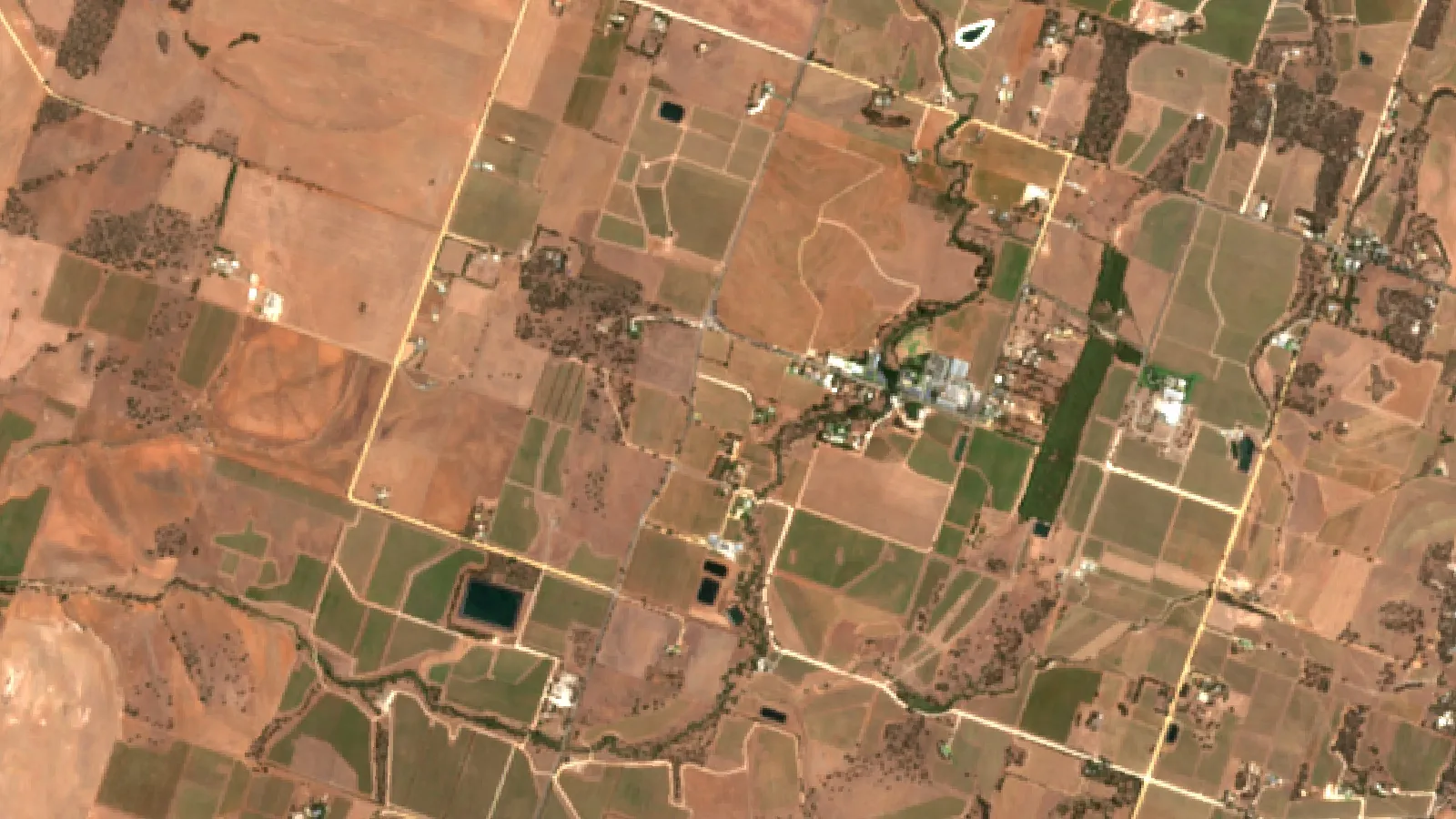
Satellite vegetation maps cannot see spores under a leaf. They can, however, show patches of a field where plant vigour drops between passes, which tells you where to walk first. Farmonaut maps crop vigour from satellite images through the season so scouts can target those zones.

▶ How to read satellite crop-health maps in the Farmonaut web app to find weak patches before scouting. · 8:43
Managing downy mildew once you find it
Our sister guides cover prevention and treatment options in detail. The points below are the ones that matter most right after diagnosis.
Cultural steps
- Cut leaf wetness. Use drip instead of overhead irrigation where you can. UC IPM notes that drip can reduce severity in lettuce, but will not stop an epidemic in conducive weather.
- Open the canopy. Ohio State recommends shoot positioning, leaf removal and weed control in vineyards to improve air flow.
- Space plants and orient rows to the prevailing wind. Cornell lists these for basil, along with full sun.
- Remove badly infected leaves or plants in small plantings, as the RHS suggests for gardens.
- Use clean seed and resistant varieties. Cornell names clean seed, a less susceptible variety and fungicides as the main basil tools. Clemson lists cucumber cultivars with partial resistance.
Fungicides and resistance
Fungicides work best as protectants, before or at the very start of infection. The University of Maryland notes that once symptoms show, it is often too late for a spray to save infected leaves, though it can protect new foliage.
Resistance is a real problem. Clemson reports that in most parts of the United States both strains of cucurbit downy mildew are resistant to Ridomil, Forum and FRAC Group 11 fungicides. It advises rotating modes of action and tank-mixing downy-specific products with a protectant. Product registrations differ by country and crop, so always check the label and your local rules, and get advice from your extension service or a licensed agronomist before you spray.
Is a spray program worth it?
A protectant program costs money every time you go over the field. Whether it pays depends on the crop value, how much yield you expect to lose without it, and how much the program cuts that loss. The calculator below lets you test your own numbers. The defaults are examples set close to break-even, not benchmarks.
Try the numbers for your own farm below.
Calculator
Does a protectant spray program pay on your field?
Enter your own area, crop value, expected loss and spray cost.
- Crop value lost with no program: 12,000 US$
- Loss the program prevents: 6,000 US$
- Total program cost: 6,000 US$
- Break-even loss with no program: 10.0 %
Example values only, set near break-even; they are not benchmarks or forecasts. Use your own crop value (example, use today’s price), your past loss records and your own spray costs. A positive result means the program’s expected saving exceeds its cost. Check the label and local rules before any spray, and get advice from your extension service or a licensed agronomist.
Resistant varieties
Breeding has given growers better options in several crops. Ohio State notes that North American grape species such as Vitis labrusca and V. rotundifolia resist downy mildew, and hybrids with V. vinifera have produced wine cultivars with more resistance. Clemson says downy mildew develops more slowly on partially resistant cucumbers than on susceptible ones, and names ‘Chaperone’ and ‘DMR-NY401’ as examples. Cornell lists resistant basil varieties and asks growers to report how they perform.
Resistance in lettuce and spinach is tied to races. Because UC IPM reports new races keep appearing, check with your seed supplier which races a variety resists before you buy.

▶ Organic fungicide options and treatment timing for mildew in cucurbit crops. · 24:10
FAQ
What does downy mildew look like?
Yellow, pale green or purple patches on top of the leaf, often with straight edges at the veins, and a fuzzy white, grey or purple growth directly underneath. On grapes the first spots are round and oily.
How do I tell downy mildew from powdery mildew?
Check the leaf underside. Downy mildew grows underneath in fuzzy patches below yellow spots. Powdery mildew forms a dusty white coat mostly on the upper surface and does not need wet leaves.
What weather causes downy mildew?
Wet leaves and mild temperatures. UC IPM gives 68 to 77°F as the best range for grape downy mildew. NC State says 6 to 12 hours of moisture around 60°F is ideal for the cucurbit pathogen.
Can plants recover from downy mildew?
Infected leaves do not recover; spots turn brown and die. New growth can be protected with good airflow, less leaf wetness and a labelled fungicide applied early.
How fast does downy mildew spread?
Fast. Grape infection can take under 90 minutes, with spots about 4 days later (UC IPM). Cucurbit spores can travel over 600 miles in 48 hours on the wind (Clemson).
Related pages on our site: powdery mildew control, AI crop monitoring, large-farm management dashboard, satellite and weather API docs, crop traceability, web and mobile app.
Farmonaut crop monitoring
See weak patches before you scout
Draw your fields once and Farmonaut shows satellite crop-vigour maps for them through the season, on web, Android or iOS, so you know where to walk first.




Sources
- NC State Extension, Cucurbit Downy Mildew (factsheet): content.ces.ncsu.edu
- Wine Australia, Downy mildew: pest and disease management (2026): wineaustralia.com
- Royal Horticultural Society, Downy mildews: symptoms, causes and control: rhs.org.uk
- Ohio State University, Buckeye Appellation, Downy Mildew of grapes: ohiograpeweb.cfaes.ohio-state.edu
- Australian Wine Research Institute, Downy mildew symptoms (field guide PDF): awri.com.au
- UC IPM, Grape: Downy Mildew (Pest Management Guidelines): ipm.ucanr.edu
- Clemson Land-Grant Press, Cucurbit Downy Mildew Management (2025): lgpress.clemson.edu
- University of Maryland Extension, Downy Mildew of Vegetables: extension.umd.edu
- UC IPM, Lettuce: Downy Mildew (Pest Management Guidelines): ipm.ucanr.edu
- UC IPM, Spinach: Downy Mildew (Pest Management Guidelines): ipm.ucanr.edu
- Cornell Vegetables, Basil Downy Mildew factsheet: vegetables.cornell.edu
- UC IPM, Pest Note 7406: Powdery Mildew on Fruits and Berries: ipm.ucanr.edu
- Cornell Vegetables, Cucurbit Downy Mildew factsheet and Long Island records: vegetables.cornell.edu
Discussion
Questions, corrections or field experience? Share them below. First-time comments are reviewed before they appear, and your email is never published.
No comments yet. Be the first to add a question or your experience.

 Kisanwala
 Agro La Gándara
 Global Agrifood
 HIPSAC
 ZOL Zimbabwe
 Juligerm
 AdBio
 MISE Maroc
 NWNS
 Red August Group
 Farm Inc
 WeMe Global
 Agrotoken
 Blue BearX
 Insignito
 Croptimum
 DnCubed
 Field Capacity
 Indosistim Teknologi

 Licence holder · Niger · Gold
 Licence holder · Nigeria · Gold + lithium
 Client · Somalia · Gold
 Client & affiliate partner · Ghana · Gold










