

Tax Farming: 7 Farmland Tax Benefits & Credits To Maximize Investments & Sustainability
“Over 60% of U.S. farmland qualifies for property tax reductions through agricultural use assessments, boosting investment returns.”



Introduction to Tax Farming & Farmland Tax Benefits
Tax farming, farmland tax, farming tax benefits, tax benefits of farming, and farming tax credits are more than just jargon—they represent critical levers in shaping agricultural, forestry, and mining investments globally. In an era where fiscal discipline must be harmonized with environmental stewardship and food security, thoughtfully designed tax regimes are the linchpin for sustainable progress in these primary industries. For farmers, foresters, and resource operators, understanding the spectrum of deductions, credits, and incentives is essential for maximizing returns and supporting responsible land management practices.
This article systematically surveys tax farming and the most impactful farmland tax benefits and credits. We delve into core principles, examine typical instruments and strategies, and highlight eligibility and compliance considerations. By exploring how these incentives operate within agriculture, forestry, and mining—and offering actionable takeaways—we aim to empower landowners, managers, and policy-makers to align investments with both economic and environmental sustainability.
Productive tax regimes are vital not only for lowering the cost of farming, forestry, and mining operations, but also for incentivizing innovation, supporting sustainability initiatives, and securing rural economies against market volatility.

Core Concepts and Framework of Tax Farming
Tax farming refers to the array of governmental incentives, deductions, and credits that reduce the tax burden associated with land-based activities. Recognizing the distinct economics and risk profiles of agriculture, forestry, and mining, many countries have crafted specific policy measures to encourage investments, sustain productivity, and enhance environmental management.
- ✔ Targeted Incentives: Support productive activity and mitigate cyclical risks (e.g., price swings, drought, or disease)
- 📊 Sector-Specific Deductions: Allow expenses on machinery, soil improvement, and sustainable practices to be written off or depreciated promptly
- ⚠ Risk Mitigation: Help landowners endure uneven market cycles by reducing the carrying cost of land
- 🛠 Regulatory Alignment: Tie farming tax benefits and credits to compliance with environmental and safety standards
- 🌱 Sustainability Focus: Foster soil health, habitat restoration, and climate action by rewarding sustainable management
The Heart of Farmland Tax Benefits
At their core, farming tax benefits aim to reduce the after-tax cost of producing food, fiber, and raw materials. This encourages ongoing investment in land, technology, and stewardship practices that sustain both livelihoods and landscapes for generations.

7 Major Farmland Tax Benefits & Credits Explained
“Forestry tax credits can reduce annual land management costs by up to 20%, encouraging sustainable practices and long-term profitability.”
1. Agricultural Use Assessments & Land Tax Relief
Agricultural land assessments are a foundation of farmland tax policy. By classifying land primarily used for agriculture and lowering its property tax value, governments provide direct relief that keeps productive farmland viable even during price cycles or drought. This reduces carrying costs and discourages speculative landholding, ensuring land stays in agricultural production.
- ✔ Protects working farms from development pressures
- 📊 In many regions, tax assessments can be 30-90% less for agricultural versus non-agricultural land
Be vigilant about your land use filings and periodic reporting with local tax authorities to maintain eligibility for favorable classification—and always avoid short-term non-farm uses which may jeopardize agricultural tax status.

2. Accelerated Depreciation for Farm Machinery & Equipment
Modern agriculture and mining rely heavily on expensive machinery and processing equipment. To incentivize capital investments, many tax regimes allow the accelerated write-off or bonus depreciation of these assets. Instead of spreading deductions over a decade, eligible machinery may be depreciated over shorter periods or sometimes fully expensed in the year of purchase.
- ✔ Increases ROI by lowering the after-tax cost of modernization
- 📊 Immediate tax relief drives timely upgrades improving efficiency and yield
Align your machinery upgrades with tax year planning—timing large purchases at year end can be an effective way to max out deductions under accelerated depreciation instruments.
3. Deductions for Soil, Irrigation, and Buffer Improvements
One hallmark of modern farming tax benefits is the recognition of land improvements as deductible expenditures. These include investments in irrigation infrastructure, soil health enhancements, drainage, fencing, and buffer zones for water quality or wildlife. Rather than capitalizing such costs indefinitely, farmers may deduct or partially expense them—bringing critical sustainability investments within financial reach.
- ✔ Lowers cost barrier for adopting sustainable and precision agriculture
- 📊 Deductions often range 10-30% of improvement cost annually

4. Expedited Write-Offs for Storage and Logistics Capex
With the rise of global value chains, storage and logistics infrastructure are essential—yet often represent capital-intensive outlays. Specific provisions in many farming tax credits schemes treat investments in silos, warehouses, temperature-controlled storage, or logistics upgrades as eligible for rapid depreciation or immediate deduction.
- ✔ Incentivizes supply chain resilience, reduces post-harvest losses
- 📊 Can recoup up to 70% of CapEx value within several years via tax relief
5. Forestry-Specific Incentives: Timber, Reforestation & Wildfire Mitigation
The unique economics of forestry demand special treatment within tax benefits of farming. Incentives typically target long-term capital gains on timberland, deferral of taxes on timber sales until harvest, reforestation credits, and deductions for wildfire risk mitigation or habitat restoration.
- ✔ Encourages sustainable forest management and ecosystem outcomes
- 📊 Estimated annual savings of 10%-20% on qualifying expenses

Missing required reporting on reforestation activities or failing to document qualifying wildfire mitigation measures can result in audits or denied credits—keep detailed records and consult tax professionals with forestry expertise.
6. Mining Sector Credits: Exploration, Environmental Compliance & Reclamation
In mining, tax farming strategies pair capital recovery incentives (via depreciation on exploration/capex) with robust deductions for environmental management, reclamation, and compliance-related expenditures. Many nations also deploy royalty regimes that balance state revenue collection and private investment—for instance, lowering royalty rates in marginal years or for environmentally certified projects.
- ✔ Enables lower-risk exploration and environmental stewardship
- 📊 Deductions may cover % of all compliance and post-closure restoration outlays

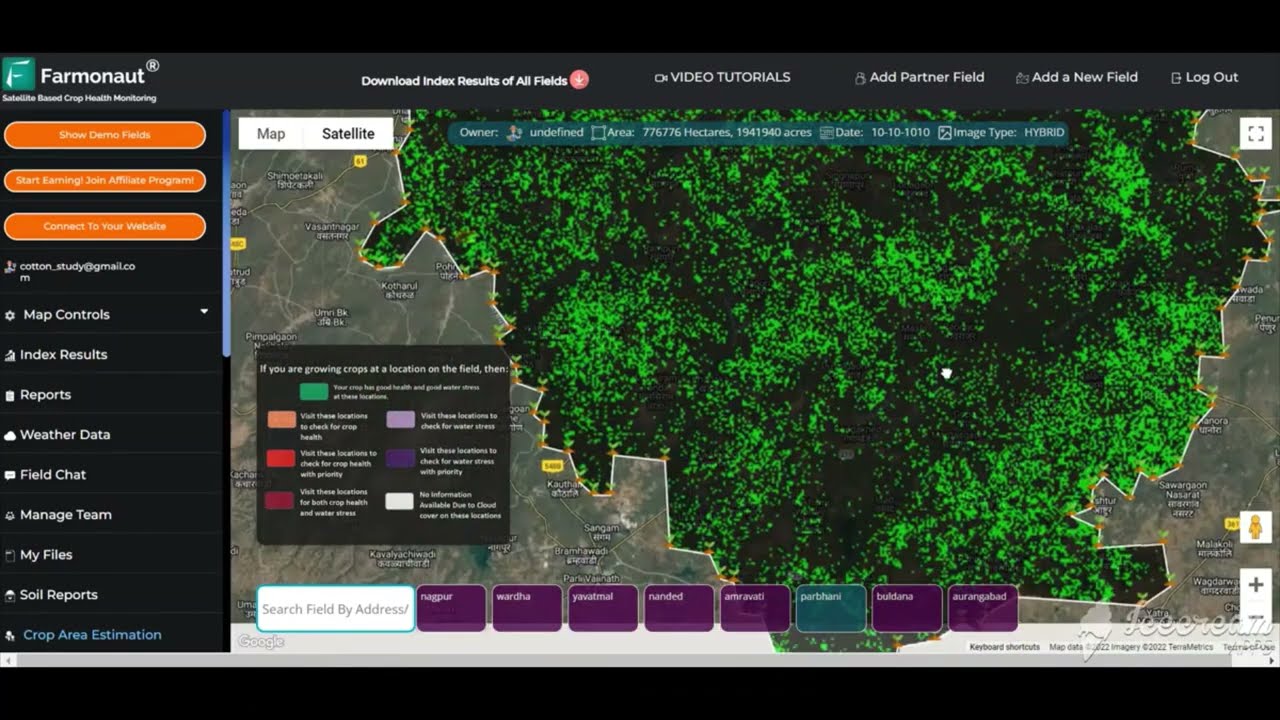
Mining operators can often boost their compliance and environmental performance—or demonstrate it to lenders and insurers—by using satellite-based monitoring tools like those from Farmonaut. This can support access to specific tax credits and lower regulatory risk. Learn about Farmonaut’s fleet management tools here.
7. Credits for Sustainable Practices & Precision Agriculture
Cutting-edge farming tax credits increasingly reward the adoption of precision ag technologies, green solutions, and sustainable practices—such as covered fertilizer efficiency, soil carbon sequestration, certified conservation programs, and greenhouse gas reductions.
- ✔ Lowers net cost of new sustainability investments
- 📊 Tax credits vary by jurisdiction, but can offset 5-15% (sometimes more) of certified improvement expenses
- 🌾 Precision irrigation upgrades
- 💧 Soil moisture monitoring equipment
- 🌱 Carbon footprint tracking tools
- 🌳 Reforestation and buffer planting
- ☀️ Renewable energy integration in farming operations
- 📱 AI-driven weather analytics platforms
- ⚡ Energy-efficient tractors & equipment
- 🛤️ Reduced-tillage systems adoption
- 🦋 Habitat restoration initiatives
- 🔐 Blockchain-based traceability for supply chain compliance
Utilizing digital tools for monitoring and verifying sustainable practices—which are essential to claim credits or deductions—enhances credibility and positions entities to capture new incentive opportunities. See Farmonaut’s Carbon Footprinting Solutions for actionable technology supporting these credits.
Comparative Benefits Summary Table: 7 Farmland Tax Benefits & Credits
| Tax Benefit/Credit | Eligible Sector (Agriculture/Forestry/Mining) |
Estimated Tax Savings (%) | Primary Requirement | Impact on Investment / Sustainability |
|---|---|---|---|---|
| Agricultural Use Assessments & Land Tax Relief | Agriculture | 30-90% | Land in primary agricultural use | Protects working land, reduces carrying costs, encourages continued investment |
| Accelerated Depreciation for Machinery/Equipment | Agriculture, Mining | 20-40% | Qualifying purchases; record-keeping | Encourages modernization and yield improvements |
| Deductions for Soil, Irrigation, Buffer Improvements | Agriculture | 10-30% | Eligible expenditures; environmental standards | Supports sustainable farming and water conservation |
| Expedited Write-Offs for Storage/Logistics CapEx | Agriculture, Mining | 15-70% | CapEx on eligible infrastructure | Enables supply chain resilience and loss reduction |
| Forestry Incentives: Timber, Reforestation, Mitigation | Forestry | 10-20% | Sustainable forestry or reforestation activity | Drives long-term forest management and habitat outcomes |
| Mining Credits: Exploration, Compliance, Reclamation | Mining | 5-30% | Eligible capital and environmental expenditures | Supports risk mitigation and rehabilitation |
| Credits for Sustainable Practices & Precision Ag | Agriculture, Forestry, Some Mining | 5-15% | Certified practices, documentation | Promotes innovation, compliance, and ESG leadership |
📈 How Farmland Tax Credits Boost Returns:
- ✔ Immediate deduction reduces taxable income the same year.
- 🛡 Risk protection through lower annual land costs.
- 🌱 Access to sustainable market incentives and certifications increases crop value.
- ⚙ Faster tech adoption leads to higher yields and operational resilience.
- 💸 Net cash flow improvement enables long-term investment planning.
Explore API integration like the Farmonaut API to automate documentation and monitoring for compliance—essential for maximizing tax benefits in large-scale farming, forestry, and mining operations. Read more in the Developer Docs.
Eligibility Criteria & Compliance Considerations in Tax Farming
- 📝 Land Use Definition: Land must be in primary agricultural, forestry, or mining use as per jurisdiction-specific criteria.
- 💸 Income Source: Evidence of revenue from qualified land activities—such as crop sales, timber harvest, or mineral extraction—may be required.
- 🛡 Environmental Compliance: Adherence to standards for soil, water, emission, and habitat management is mandatory for many credits and deductions.
- 🗂 Robust Record-Keeping: Maintain well-organized documentation on all expenditures, improvements, machine purchases, and certified sustainable practices.
- 🔎 Periodic Verification: Be ready for audit or third-party verification of activity, particularly if claiming reforestation, reclamation, or precision ag credits.
Smallholders and large operators often have separate reporting channels and benefit thresholds—be sure to check local guidelines, timing for applications, and allowable expenditure types. Staying aware of the deadline to protest property taxes in Texas and your regional requirements can also help preserve valuable agricultural tax relief opportunities.
Underestimating the importance of classification and documentation can result in lost eligibility for major tax relief. Whether it’s your agricultural zoning status or proof of reforestation, never take exceptions for granted—document every step!

How Tax Incentives Influence Land Management Decisions
Tax farming aligns both fiscal strategy and stewardship priorities. Well-crafted farmland tax policies help ensure land remains productive rather than slipped into non-use or speculative holding, particularly in areas facing urbanization or industrial pressure.
- ✔ Incentivizes productive land use → Farmers can weather low price years without surrendering land to non-farm interests
- ✔ Reduces after-tax carrying costs → Allows for long-term investment and stewardship planning
- ✔ Rewards sustainable and regenerative practices → Tax credits for reforestation, soil carbon, and biodiversity encourage enhanced management
- ✔ Drives precision investment in upgrades → Use of ag-tech tools or infrastructure is financially de-risked
Technologies like satellite-driven monitoring (as provided by Farmonaut) can ensure ongoing compliance and optimize land-use classification—helping to secure tax benefits and document sustainable practices more efficiently.
Leverage Technology to Maximize Tax Benefits & Credits
Embracing digital solutions is no longer optional for serious landowners and operators—technology is your partner in tax management as much as in yield and productivity. Whether verifying agricultural use, automating compliance tracking, or providing evidence for tax filings, smart tools unlock better access to credits and lower your risk.
- 🌍 GPS and remote sensing for real-time acreage and productivity verification
- 📱 Platform-based logging of purchase, improvement, and operational data
- 💡 Blockchain-powered traceability enables transparent compliance with policy design
- 🛰️ Satellite carbon footprint and soil health tracking (see Farmonaut’s Carbon Footprinting)
- 🔍 Auditable, API-driven records to interface with government agencies
Explore our detailed offerings on traceability and fleet management to learn how these digital solutions streamline access to tax incentives and support compliance at scale.
- 🌱 Satellite verification: Seamlessly proves land use for tax relief.
- 🌦️ AI-based advisories: Support yield and operational resilience, aligning with credit performance benchmarks.
- 🔗 Blockchain traceability: Streamlines compliance and secures credits for sustainable supply chains.
- 🚜 Fleet/resource management: Optimizes machinery usage for maximum deduction eligibility.
- 💼 API automation: Simplifies documentation required for audits and ongoing tax credit applications.
Technology not only cuts compliance costs but also opens doors to advanced credits (for precision agriculture, carbon sequestration, ESG reporting). Consider solutions like Farmonaut Agro Admin App for large-scale farm management and data-driven reporting.
How Farmonaut Empowers Tax-Efficient & Sustainable Land Management
At Farmonaut, our mission is to provide affordable, scalable technology that materially supports sustainable agriculture, forestry, and mining. Our suite of satellite-driven monitoring, AI advisories, blockchain traceability, and resource management tools are designed to reduce costs, maximize eligible deductions and credits, and ensure regulatory compliance.
With real-time data, customizable reporting, and seamless API integration, Farmonaut empowers farmers, foresters, and mining operators to make informed, tax-smart decisions that improve both the productivity and resilience of their land.
Get started with the Farmonaut App or our API suite for custom integration and monitoring.
Practical Takeaways & Strategic Planning Tips
- 🗺️ Map every expenditure, improvement, and technology purchase to eligible tax credits and deductions.
- ⏰ Time capital investments to maximize available accelerated depreciation or write-offs.
- 📝 Align your land use/ownership structure with the most favorable agricultural tax classification—avoid periods of inactivity or speculative holding.
- 🔒 Maintain impeccable records, including environmental certifications, for all tax-advantaged practices.
- 👨💼 Work with sector-specific advisors who understand unique compliance and reporting requirements.
Failing to update land-use filings after significant changes—like switching from cropping to forestry—can lead to years of missed credits or even claw-backs. Always inform tax authorities when operational uses or ownership structures change.
Frequently Asked Questions: Tax Farming & Farmland Tax Benefits
1. What is tax farming in modern economies?
Tax farming refers to policies or programs where governments offer special tax benefits, incentives, credits, or reduced rates to landowners, farmers, foresters, and mining operators. These are designed to support productive, sustainable land use and lower the cost of capital investment.
2. How do I qualify for farmland tax benefits and credits?
Typical criteria include demonstrating active agricultural, forestry, or mining use (not speculative or idle), following local land-use regulations, maintaining environmental compliance, and documenting all related expenditures. Jurisdictions may have specific acreage, revenue, or reporting requirements.
3. What records should I keep for tax farming compliance?
Keep detailed records of land use (maps, crop logs, harvests), receipts for machinery and technology purchases, contracts for improvements, environmental certifications, and third-party audit trails. Use digital solutions wherever possible for ease and security.
4. Can digital tools help maximize tax benefits?
Absolutely. Satellite data, blockchain traceability, and API-driven solutions (as provided by Farmonaut) make it easier to verify eligible land use, conduct compliance tracking, and claim credits efficiently and accurately.
5. Which sectors receive the largest tax incentives?
Agriculture often receives the widest range of benefits (property tax relief, deductions, credits for technology and sustainability), with forestry and mining sectors eligible for sector-specific capital, environmental, and management incentives—especially tied to reforestation, reclamation, and renewable practices.
Tax farming and farmland tax benefits drive more than compliance—they unlock capital, foster stewardship, and sustain profitable, resilient primary industries. Engage technology, document all activities, and seek advisory expertise to turn policy design into practical results.
Conclusion: Turn Tax Farming Policy Into Sustainable Profit
Tax farming and farmland tax benefits are not just fiscal instruments—they are cornerstones of sustainable, productive agricultural, forestry, and mining economies. Effective tax policy bridges the gap between economic goals and stewardship responsibilities by rewarding active, innovative, and responsible land management.
By understanding and leveraging tax benefits of farming—from property tax relief to credits for sustainable practices—landowners and operators can reduce cost, increase returns, and ensure long-term viability. Technology, digital traceability, and real-time monitoring (like that provided by Farmonaut) magnify these benefits, making compliance easier and more automated than ever.
The future of farming tax credits will be increasingly linked to measurable outcomes in yield, sustainability, and stewardship. As global pressure for food security, climate resilience, and transparency intensifies, those who integrate tax planning, technology, and sustainable management will be best positioned to thrive.
Start your journey today: explore Farmonaut’s suite of tools for smart, tax-efficient, and sustainable management of land resources—get the app, integrate the API, or discover carbon tracking—and let your investment in stewardship bring returns for decades to come.
Discussion
Questions, corrections or field experience? Share them below. First-time comments are reviewed before they appear, and your email is never published.
No comments yet. Be the first to add a question or your experience.

 AgriSavant
 Kubota
 FFBS
FFBS Jontra
 Kalustyan
 Tucor
Tucor Geno
Geno Hayleys Agriculture
 Linx Agritech
 Adinet
 Save Your Soils
 Grandstream Algérie
 XOS Realty
 Geospatial Lab Africa
 Licence holder · Niger · Gold










