

Three Sisters Agriculture & Farming: 7 Modern Tractor Methods



Introduction: Agriculture in 2026 and Beyond
As the global population steadily approaches 8 billion in 2025—and is expected to surpass that figure by 2026—farmers worldwide face a dual challenge: increasing productivity to meet food demand while adopting sustainable practices that protect environmental health.
Today’s agriculture sits at the intersection of tradition and innovation. Indigenous agricultural practices like the Three Sisters farming method—originating in North America—are seeing a technology-driven resurgence. On the other hand, modern mechanization via tractors, threshers, and agriculture harvesters is rapidly reshaping how we cultivate land, manage soil, and increase crop yields.
This comprehensive guide explores how three sisters agriculture combined with advanced tractor-based systems leads to a more resilient, efficient, and sustainable agricultural future. We’ll explain the core principles, technological advances, benefits, best practices, real sustainability data, and practical steps for integrating these methods and machines on your farm in 2025, 2026, and beyond.
Integrating modern tractor-based methods with Three Sisters agriculture can boost yield, reduce chemical input, and support ecosystem health, aligning perfectly with future global agroecological goals.
The Three Sisters Farming Method: Sustainable Roots in Modern Agriculture
Three Sisters agriculture is more than a traditional technique—it’s a time-tested system that demonstrates how indigenous knowledge remains relevant in the era of modern mechanization. Originating with North American peoples, this method involves interplanting three core crops:
- Corn – provides the sturdy stalk for beans to climb.
- Beans – fix atmospheric nitrogen, enriching the soil naturally.
- Squash – spreads across the ground, suppressing weeds and retaining moisture.
The synergy between these crops enhances soil fertility, reduces the need for synthetic fertilizers and herbicides, and optimizes land use—making it a prime example for sustainable, diversified, mixed farming in 2025-2026.
Intercropping with Three Sisters agriculture systems is even more effective when combined with GPS-equipped precision tractors and real-time soil monitoring. These tools help maintain ideal spacing, minimize soil disturbance, and support data-driven agroecological decisions.
Key Principles of the Three Sisters Farming Method
- 🌱 Ecological Balance: Mimics natural ecosystems through strategic companion planting.
- 🪴 Increased Fertility: Beans enrich soil with atmospheric nitrogen, reducing synthetic input need.
- 🌾 Weed Control & Moisture Retention: Squash leaves shade the soil, lowering weed competition and conserving water.
- 🌽 Maximizes Land Use: Corn, beans, and squash occupy different vertical zones, optimizing planting density.
- 🌎 Sustainability: Reduced fertilizer and pesticide use for a low environmental impact system.
Ignoring the specific spatial arrangement of the Three Sisters can compromise their mutual benefits. For best results, always follow recommended row patterns—even when using tractor-based equipment.
Comparing Traditional vs. Modern Mechanized Three Sisters Farming Methods
To truly understand the impact of modern mechanization on Three Sisters agriculture, it’s essential to compare it directly with age-old manual methods. Here’s a comparative table highlighting key farming steps, mechanization levels, estimated yield improvements, labor input, environmental footprint, and sustainability benefits for each phase in the Three Sisters system:
| Practice/Technique | Mechanization Level | Estimated Yield Improvement (%) | Labour Requirement (Hours per Acre) | Environmental Impact | Notable Sustainability Benefit |
|---|---|---|---|---|---|
| Planting | Manual (Traditional) | Baseline | 40–45 | Medium | Cultural knowledge, minimal emissions |
| Planting | Tractor-Based (Modern) | +25–30% | 8–10 | Low | Higher crop density, reduced compaction (with light equipment) |
| Weeding | Manual | Baseline | 25–30 | Medium | Selective weeding, low herbicide use |
| Weeding | Tractor-Based | +20% | 3–5 | Low | Precision weed control, lower fuel and input |
| Irrigation | Manual | Baseline | 20–22 | High | Local adaptation, sometimes excessive water use |
| Irrigation | Tractor-Based/Automated | +15% | 2–3 | Low | Efficient resource use, less runoff |
| Harvesting | Manual | Baseline | 35–40 | Medium | Careful selection, lower bruising |
| Harvesting | Harvester/Threshers | +30–35% | 4–6 | Low | Fast, efficient, lower post-harvest loss |
| Soil Management | Manual | Baseline | 25–30 | Medium | Hands-on erosion prevention |
| Soil Management | Tractor/Precision Equipment | +25–40% | 5–7 | Low | Optimized structure, reduced erosion & emissions |
The adoption of mechanized Three Sisters farming systems can improve efficiency and sustainability metrics, increasingly demanded by food processors, investors, and stakeholders committed to ESG goals.
Three Sisters Agriculture Systems: Principles and Modern Impact
The Three Sisters farming method showcases how indigenous wisdom aligns with twenty-first-century sustainable agriculture. It’s not just a “corn, beans, and squash” rotation for a three chicken farm or a larger multi-crop operation—it’s a paradigm shift:
- ✔ Agroecological Harmony: Fertility, pest suppression, and moisture retention occur naturally.
- 📊 Data Insight: Studies show three sisters agriculture reduces the need for synthetic fertilizers by up to 40%
- ⚠ Risk: Poorly managed mechanization can cause soil compaction—use lightweight, precision tractors where possible.
- ✔ Land Optimization: Multi-tiered crop arrangement maximizes sunlight and space usage.
- 📊 Yield: Tractor-based methods in Three Sisters systems can increase total output by 25–30% over manual cultivation.
How Does Mechanization Enhance Three Sisters Farming?
When agricultural tractors and harvesters are carefully adapted to the Three Sisters system, farmers gain several major advantages in 2025 and 2026:
- 🚜 Rapid, uniform planting: Precision tractors automate multi-crop row spacing, improving emergence and root competition.
- 🌱 Reduced Labor: Mechanized tools slash planting, weeding, and harvesting hours per acre by over 70%.
- 🌾 Sustainable Input Use: Modular implements minimize soil disturbance, preserve soil health, and allow targeted fertilizer delivery.
- ⚡ Eco-Friendly Power: Many machines now offer electric or hybrid powertrains to reduce carbon emissions—see Farmonaut’s Carbon Footprinting tools.
- 💡 Data-Driven Advisory: Satellite AI and environmental monitoring (as provided by solutions like Farmonaut) enable precision timings for planting, irrigation, and harvesting.
Satellite-monitored Three Sisters farms report a visible increase in soil organic matter and a drop in chemical residue, underpinning the approach’s value in sustainable food production.
7 Modern Tractor Methods in Three Sisters Agriculture (2025–2026)
By 2026, integrating tractors, harvesters, and supporting equipment with companion cropping will define the future of environmentally responsible agriculture. Here are seven advanced tractor-based methods revolutionizing Three Sisters farming today:
-
GPS-Guided Precision Planting
Modern agriculture tractors equipped with GPS and IoT facilitate exact seed placement for all three crops, maximizing sunlight, nutrient availability and spatial efficiency.
(Image for representation purposes only)
-
Intercrop-Adapted Tillage Equipment
Specialized tillers prepare staggered mounds suitable for the three crops, balancing soil health and minimal disturbance. These tools optimize aeration and water retention for intercropped rows. -
Multi-Crop Seeder Attachments
Seeder units calibrated for Three Sisters systems allow simultaneous or rapid sequential sowing of corn, beans, and squash—enhancing consistency. -
Targeted Fertilization and Spray Delivery
Variable-rate tractors, using AI data, apply nutrients and biocontrols only where needed—significantly reducing input and runoff, supporting sustainable goals. -
Modular, Lightweight Harvesters
Future-proof agriculture harvesters are designed for smaller field lanes, with adjustable headers for gentle collection across mixed crops, reducing waste and energy use. -
Tractor-Compatible Threshers
Threshers mechanize harvesting and threshing, handling mixed grains efficiently even from dense intercrop plots. -
Real-Time Field Monitoring Integration
IoT and satellite data (like those from Farmonaut) are now connected to tractor dashboards, empowering immediate adjustments in operations—such as pausing harvest during high disease risk.

Efficiency soars when tractor technology is paired with large-scale farm management platforms that visualize and analyze real-time field variability.
Top Benefits of Modern Mechanized Three Sisters Farming
- ☑ Lower Environmental Impact: Sustainable mechanization means reduced emissions and chemical runoff.
- ☑ Enhanced Soil Health: Precision tillage and organic cover (via squash) improve structure and biodiversity.
- ☑ Labor Efficiency: Tractor-based operations cut labor needs by up to 80%.
- ☑ Higher Yields: Multi-crop harvesters and threshers boost output by as much as 35%.
- ☑ Traceability: Integration with blockchain and satellite monitoring provides transparent supply chains. Explore Farmonaut’s blockchain traceability solution.

Agricultural Mechanization: Threshers, Harvesters, Tractors Explained
Modern mechanization is central to 2025’s environmentally balanced agricultural practices. Here’s how core equipment transforms the Three Sisters model and other sustainable systems:
1. Agricultural Tractors: The Backbone of Modern Farming
- 🔧 Versatility: Tractors serve as the main power source for ploughing, tilling, planting, fertilizing, and hauling tasks across various scales.
- 📡 Technological Advances: Modern units include GPS, IoT connectivity, and AI for ultra-precise row preparation and planting.
- 🔋 Sustainability Focus: Electric and low-emission models are increasingly common for reducing carbon impacts.
2. Thresher Agriculture: Revolutionizing Post-Harvest Productivity
- ⚙ Automated Threshing: Threshers automate grain separation from stalk/husk—this once labor-intensive step is now fast and energy-efficient.
- 🌱 Crop Diversity: Modern thresher agriculture machines can handle various mixed grains simultaneously, well-suited to three sisters agriculture plots.
3. Agricultural Harvesters: Precision and Quality in Every Pass
- 🌾 Multi-functionality: Modern agriculture harvesters combine reaping, threshing, and winnowing into a single, seamless operation.
- 🤖 Smart Tech: AI-equipped harvesters monitor maturity and weather to optimize timing and output quality.
- 🛠 Minimal Crop Disturbance: Precision settings reduce bruising and losses, critical in mixed/companion crop systems.
📜 Main Advantages of Mechanized Farming Equipment
- 🚜 Tractors: Enhance efficiency, power versatile applications, and reduce fuel use
- ⚙ Threshers: Accelerate post-harvest processing, adapt to diverse beans and grains
- 🌾 Harvesters: Integrate smart systems for better harvest quality and minimal waste
Underestimating field variability can cause mechanized tools to over- or under-work certain rows—use satellite-based field analysis before large-scale operations for best results.
Mechanization Meets Sustainability: Trends, Challenges, and the Future
While mechanization boosts productivity, its environmental impact must always be carefully managed. The 2026 outlook in Three Sisters agriculture and beyond spotlights several key trends:
- 🌍 Low-Impact Equipment: Lightweight, modular tractors and harvesters designed to reduce soil compaction and preserve microbiome diversity in agricultural soils.
- 💚 Renewable Energy Integration: Solar and electric-powered machines minimize emissions.
- 📈 AI & Data-Driven Management: Real-time feedback loops further optimize timing and resource input, minimizing environmental disturbance and food loss.
- 🌱 Biodiversity Conservation: Adapted equipment for agroforestry and mixed systems aligns with agroecological and local goals.
- ✍️ Regulatory Compliance: Tools that automatically record resource use and pollution support stricter 2025–2026 agricultural regulations.

Farmers and business owners increasingly rely on digital platforms like Farmonaut for cost-effective satellite monitoring and risk management. Satellite-driven crop loan and insurance products ensure financial security even as climate risks grow.
Looking to integrate real-time satellite data, weather, soil health monitoring, or traceability into your digital platform or farm management software? Check out the official Farmonaut API and Farmonaut API developer docs for seamless integration and unlimited scalability.
Satellite Technology, Digital Tools & Farmonaut for Modern Farms
The digital agriculture revolution is reshaping three sisters agriculture systems—and Farmonaut stands at the forefront thanks to robust satellite-based tools. Here’s how our solutions empower farmers in 2025 and beyond:
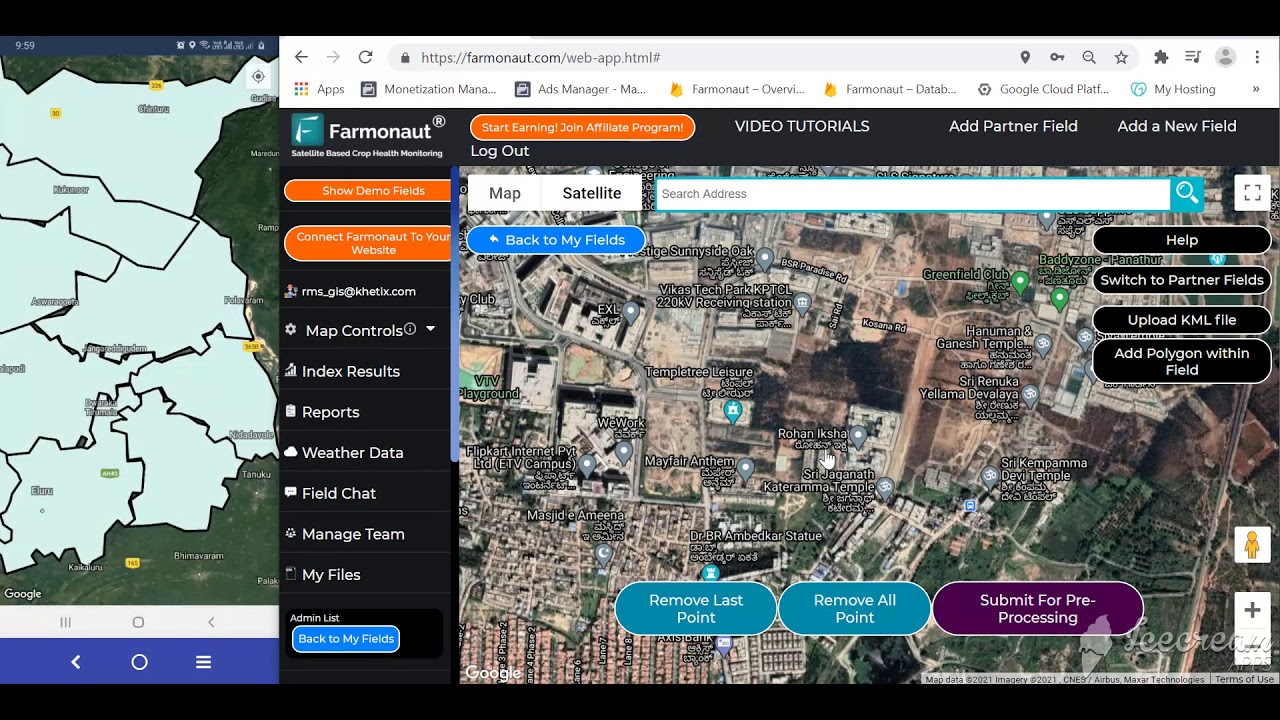
- 📡 Satellite Crop Health Monitoring: Real-time NDVI, soil moisture, and weather insights optimize planting, irrigation, and harvesting for mixed systems like Three Sisters farming.
- 🤖 AI-Based Advisory Systems: The Jeevn AI system analyzes satellite data to deliver actionable farm management strategies for increasing yield and sustaining soil health.
- 🔗 Blockchain Traceability: End-to-end transparency ensures food safety, fair trade, and market access—critical in diversified, sustainable agriculture.
- 🚚 Fleet & Resource Management: Manage tractor and harvester movement to maximize efficiency (see Farmonaut Fleet Management).
- 🌱 Environmental Impact Tracking: Ongoing carbon footprint monitoring supports climate-smart agriculture and compliance with evolving environmental policies.
Farmonaut’s subscription plans are accessible by farms, businesses, and governments globally—delivered via Android, iOS, web, or API. Learn more about field mapping, resource advisory, and crop & plantation forest advisory!
Real-time digital data is the connective tissue between tradition and innovation—allowing tractor operations, sustainability reporting, and resource management to work hand-in-hand in every Three Sisters agricultural system.

Agriculture technology markets, including mechanized Three Sisters systems and digital monitoring, are expected to fuel the next $2.3B market growth in sustainable agri-business by 2026.
Frequently Asked Questions (FAQ)
What is the Three Sisters farming method?
The Three Sisters farming method is an indigenous North American companion planting system involving corn, beans, and squash. This intercropping method naturally increases soil fertility, enhances yields, and reduces input needs for sustainable agriculture.
How does modern mechanization benefit Three Sisters agriculture?
Modern mechanization—especially with GPS-guided tractors, smart harvesters, and advanced threshers—boosts efficiency, yield, and eco-friendly practices. It allows for rapid planting, precise input use, better soil management, and real-time crop monitoring in 2025 and 2026.
Can sustainable mechanization reduce farming’s environmental impact?
Absolutely. With lightweight, electric or hybrid equipment, renewable energy integration, and data-driven field management, soil compaction, emissions, and runoff are minimized. These solutions are especially potent in systems like Three Sisters agriculture.
What is the role of satellite technology in modern agriculture?
Satellite technology provides real-time farm monitoring, AI-backed advisory, blockchain traceability, and precision analytics—enabling farmers to make informed decisions and maximize productivity in systems as complex as Three Sisters agriculture.
Is Farmonaut a farm input supplier or manufacturer of agricultural machinery?
No. Farmonaut is a satellite technology company—we deliver data-driven digital tools for agriculture, but are not a marketplace, machinery manufacturer, or equipment seller.
How can farmers get started with modern Three Sisters farming?
Begin by planning intercrop rows for corn, beans, and squash, then select tractor equipment and digital tools compatible with mixed systems. Use satellite platforms like Farmonaut for ongoing monitoring, traceability, and field management insights.
Adopt crop rotation and mixed farming with the Three Sisters method to build long-term soil health—then rely on digital apps for adaptive decision-making and performance benchmarks.
Conclusion: The Evolution and Importance of Mechanization in Modern Agriculture
In 2025 and beyond, the integration of the Three Sisters farming method with advanced mechanized solutions—tractors, threshers, harvesters, and satellite digital tools—marks a pivotal evolution in sustainable agriculture.
Mechanization is not just about boosting productivity and efficiency; it’s about preserving environmental health, ensuring food security, and honoring indigenous agricultural wisdom. Whether you’re managing a three chicken farm with mixed crops or operating on thousands of acres, the fusion of modern machines with sustainable systems safeguards both present and future generations.
With tools like Farmonaut’s satellite platform, precision tractors, and digital traceability now at hand, farmers globally are better equipped than ever to thrive in an ecosystem where sustainability, transparency, and productivity work hand in hand.
For up-to-date insights, strategy optimization, and real-time field intelligence, join the sustainable farming revolution—explore Farmonaut’s Web & Mobile Apps and discover how we can help optimize your Three Sisters agricultural journey.
Discussion
Questions, corrections or field experience? Share them below. First-time comments are reviewed before they appear, and your email is never published.
No comments yet. Be the first to add a question or your experience.

 Hayleys Agriculture
 Linx Agritech
 Adinet
 Save Your Soils
 YelloSkye
 GalaxEye Space
 Grandstream Algérie
 XOS Realty
 Geospatial Lab Africa
 Agro La Gándara
 HIPSAC
 ZOL Zimbabwe
 Juligerm
 AdBio
AdBio MISE Maroc
 NWNS
NWNS Red August Group
 Farm Inc
 WeMe Global
 Agrotoken
 Licence holder · Niger · Gold










