

Vegetables · Beginner season plan
Tomato Farming Tips for Beginners: 7 Steps With Costs
Grow two or three disease-resistant varieties, lime to pH 6.0 to 6.5, space plants about 24 inches apart, stake on planting day, water 1 to 2 inches a week by drip and scout weekly. Extension budgets put staked yields near 8 to 9 lb and costs near $3 to $3.60 per plant (2017 to 2021).
Key takeaways
- Clemson Extension puts first harvest at 52 to 90 days, depending on the cultivar, and recommends soil pH 6.0 to 6.5.
- Garden spacing is about 24 inches between plants (Clemson); field guides run 18 to 32 inches (UF/IFAS).
- Utah State advises 1 to 2 inches of water a week, applied deeply, ideally by drip; Utah State links uneven watering to blossom end rot, and the RHS to splitting too.
- NC State’s 2021 budget assumes 42,000 lb an acre at an average $0.46/lb across grades, with total costs of $15,563 an acre, or about $3.23 per plant.
- Kentucky estimated $1,820 in returns to land and management for 0.1 acre of heirlooms sold at $2/lb in the 2017-18 season.
In this article
- Tomato farming tips for beginners: the season plan at a glance
- Step 1: Choose varieties you can actually grow
- Step 2: Test the soil and set fertility
- Step 3: Plant at the right time and spacing
- Step 4: Stake, trellis or cage on planting day
- Step 5: Water evenly with drip and mulch
- Step 6: Scout for the main pests and diseases
- Step 7: Harvest, store and sell
- Tomato yields and costs per plant and per row
- Small-plot tomato yield and profit calculator
- Common beginner mistakes
- Paying for the first season
- Keep records and plan next season
- How we checked the numbers
The best tomato farming tips for beginners fit on one page: grow two or three disease-resistant varieties, test the soil and hold pH at 6.0 to 6.5, space plants about 24 inches apart, stake them on the day you plant, water evenly through drip and mulch, and scout every week. Clemson Extension’s tomato factsheet puts first harvest at 52 to 90 days, depending on the variety.
This guide turns that advice into a season plan for a small grower with a backyard plot, a market garden or a first tenth of an acre. It adds what most beginner guides leave out: yields and costs per plant and per row from university extension budgets, each with its year, a list of common mistakes, and a calculator that shows whether your own plot would cover its costs.
Tomato farming tips for beginners: the season plan at a glance
The table lists the seven steps in order. Each one has its own section below with the source behind it. Timings assume a spring crop in a temperate climate such as the US, Canada, the UK or southern Australia.
| Step | What to do | When | Common slip |
|---|---|---|---|
| 1. Varieties | Pick 2 or 3 types with resistance codes (V, F, N, TSWV) | Winter, before ordering seed | Planting only heirlooms with no resistance |
| 2. Soil test | Test, lime to pH 6.0 to 6.5, add compost | 3 months before planting | Fertilizing by guesswork |
| 3. Planting | Set stocky transplants 18 to 24 in apart into warm soil | After frost, soil above 60°F | Planting into cold soil |
| 4. Support | Stake, cage or weave; prune suckers weekly | Planting day, then weekly | Adding stakes after roots spread |
| 5. Water | Drip or soaker hose, 1 to 2 in a week, mulch | Whole season | Dry spells then heavy soaking |
| 6. Scouting | Check leaves, stems and fruit once a week | Whole season | Waiting until spots cover the plant |
| 7. Harvest | Pick at full colour, sort, keep out of the sun | From 52 to 90 days | Chilling fruit in the fridge |
Step 1: Choose varieties you can actually grow
Tomato plants come in two growth habits. Determinate plants grow to a set size, set most of their fruit over a short window, and then decline. Indeterminate plants keep growing and fruiting until frost, so they need tall supports and more pruning. Clemson notes that most early-ripening cultivars are determinate and most heirlooms are indeterminate.
For a first season, pick for resistance before flavour. The letters after a variety name tell you what it resists. F, FF or FFF mean Fusarium wilt races 1 to 3, V is Verticillium wilt, N is root-knot nematode, and TSWV is tomato spotted wilt virus. Clemson warns that most heirloom cultivars have little to no disease resistance, so treat Brandywine or Cherokee Purple as a treat, not the whole crop.
- Cherry and grape types ripen first and forgive mistakes. Best for: a first plot, containers, snacking sales.
- Slicers (beefsteak and globe) such as Celebrity, Big Beef or Better Boy carry several resistance codes. Best for: farm stands and a steady summer supply.
- Roma or plum types such as Roma or Plum Regal have meaty flesh and few seeds. Best for: sauce, canning and value-added products.
- Heirlooms fetch interest at markets but need more disease care. Best for: a few plants once you have one season behind you.
In the UK and Europe, the Royal Horticultural Society suggests looking for varieties with its Award of Garden Merit, which marks reliable cropping in British conditions. In Florida and other hot, humid areas, UF/IFAS lists commercial cultivars in its tomato production chapter with the resistance codes that matter in hot, wet seasons.
Chart
Days to first harvest, selected cultivars
Days to harvest, as listed for South Carolina gardens
Step 2: Test the soil and set fertility
Tomatoes grow on most moderately well-drained soils, but they do best in fertile loam with plenty of organic matter. Before you buy fertilizer or lime, send a soil sample to your local extension lab or a certified lab. Clemson Extension recommends soil sampling every year, using 8 to 10 small cores mixed into one sample from the top 6 inches.
- pH: aim for 6.0 to 6.5. Lime is best worked in at least 3 months before planting, so test in winter.
- Compost: Utah State suggests no more than 1 inch of compost per 100 square feet.
- Nitrogen: too much gives big leafy plants and late fruit. Utah State side-dresses each plant with half a tablespoon of 21-0-0 at 4 and 8 weeks after transplanting.
- Calcium: Clemson side-dresses 1 pound of calcium nitrate per 100 square feet (about 30 feet of row) 3 to 4 weeks after planting. Where pH is right but calcium is low, it suggests gypsum at 1 to 2 pounds per 100 square feet before planting.
At field scale, Penn State’s tomato production guide (last updated 2006) quotes Knott’s Handbook at 80 to 90 pounds of nitrogen, 100 pounds of phosphate and 100 to 200 pounds of potash per acre over the season. Your soil test may call for less. Fertilizer and lime rates depend on your soil, so follow the test report, the product label and local rules on nutrient use.
Step 3: Plant at the right time and spacing
Tomatoes are a warm-season crop. Penn State says not to transplant until the soil 3 inches down reaches 60°F, and the RHS waits until temperatures stay above 16°C (60°F) in a British early summer. Grow or buy transplants 6 to 8 weeks old. Clemson looks for stocky plants 6 to 10 inches tall, and Utah State removes any flowers or fruit before planting, since plants that already carry fruit establish slowly.
Plant deep. Tomatoes root along the buried stem, so Clemson sets transplants deep enough to leave only two or three sets of true leaves above ground. Leggy plants can be laid on their side in a trench. Water each plant in well.
Spacing advice differs by source and by scale. The chart shows the in-row range each source gives. Garden guides cluster around 24 inches, while commercial budgets pack plants closer and train them hard.
- Garden beds: Clemson spaces plants 24 inches apart in rows 3 feet apart.
- Containers: the RHS puts one plant in a 30 to 45 cm (12 to 18 in) pot, or two in a standard growing bag.
- Field rows: UF/IFAS gives 18 to 32 inches between plants and 48 to 72 inches between rows, or 3,630 to 4,356 plants per acre.
Growing under cover: greenhouse, polytunnel or high tunnel
In cool or short summers, such as much of the UK, Canada and the northern US, a greenhouse or tunnel gives an earlier and longer crop. The RHS says tomatoes grow particularly well under glass and usually crop earlier there. It suggests sowing from late February to mid-March for a greenhouse crop, but from late March to early April for plants going outside.
- Help pollination: open the vents so insects can reach the flowers, and tap or gently shake open flowers to move pollen.
- Train upward: tall cordon plants can climb strings tied to the roof and buried under the root ball.
- Rotate even indoors: the RHS advises against tomatoes in the same bed two years running; grow bags or ring culture are options in a fixed border.
In the US, the farmers.gov urban hub notes that NRCS offers technical and financial help with conservation practices that include high tunnels. Check what applies in your county before you buy a frame.
Chart
In-row spacing between tomato plants
Inches between plants in the row, by source (garden and commercial guides)
Step 4: Stake, trellis or cage on planting day
Support keeps fruit off the ground, makes picking and spraying easier, and improves airflow, which Clemson calls an important disease control. Put supports in at planting, before roots spread, so you do not spear them later.
- Single stakes: Clemson uses wooden stakes 6 feet tall and 1.5 to 2 inches wide, driven 1 foot into the soil 4 to 6 inches from the plant. Tie the stem every 10 inches of growth.
- Florida weave: drive a stake between every plant or every other plant, then run twine along both sides of the row, adding a new line about every 10 inches. The NC State and Arkansas budgets below both price stakes and string for this kind of system.
- Cages: they cost more at first but last many years. Use wire with gaps of at least 6 inches so your hand fits through.
Prune staked plants to one or two main stems and pinch out suckers weekly. Caged plants need less pruning; Clemson prunes them once, to three or four stems. A denser canopy shades fruit from sunscald but holds more humidity, so watch caged plants closely for leaf spots in wet weather.
Step 5: Water evenly with drip and mulch
Steady moisture matters more than volume. Utah State advises 1 to 2 inches of water per week, applied deeply and not too often, ideally through drip irrigation. Swinging between dry and wet soil causes cracked fruit and blossom end rot.
- Drip or soaker hose: keeps leaves dry, which slows leaf diseases. If you must water from above, do it early in the day.
- Plastic mulch: black plastic warms the soil, saves water and stops weeds. Penn State recommends raised beds with red or black plastic and drip for field crops.
- Organic mulch: straw or leaves work well, but Utah State waits until the soil reaches 75°F before laying them, because they keep the soil cool.
- Containers: pots and growing bags dry out fast. The RHS notes they may need water daily in hot weather.
A simple check: push a finger into the soil beside the drip line. If it is dry at 2 inches, water. Write down how long you run the drip each time, so you can repeat what worked.
Step 6: Scout for the main pests and diseases
Walk the rows once a week and turn leaves over. Problems are far easier to manage while they sit on a few lower leaves than once they reach the top of the plant. The UC IPM program keeps a tomato pest index with photos of each pest, which helps you name what you see before you act.
| Problem | What you see | First action |
|---|---|---|
| Early blight | Brown spots with rings like a target, on older leaves first | Remove low infected leaves, mulch, keep foliage dry |
| Septoria leaf spot | Many small round spots with dark edges and pale centres on lower leaves | Rotate 3 years, clear debris, no overhead water |
| Late blight | Dark, water-soaked patches with white mould at the edges in cool, wet weather | Pull and destroy plants, buy certified plants |
| Blossom end rot | Sunken dark spot on the base of the fruit | Even watering, lime and calcium from a soil test |
| Wilts (F, V) | Leaves wilt on one or more vines, plants may die | Grow resistant varieties next season |
| Hornworms | Bare stems and dark droppings on leaves | Pick off by hand; Bt for heavy numbers |
| Aphids | Curled leaves, sticky honeydew | Strong water spray or insecticidal soap |
| Flea beetles | Tiny holes in young leaves | Check seedlings often; Utah State treats at transplanting if pressure is high |
Clemson describes early blight as starting with small brown lesions on older foliage that grow into a bull’s-eye pattern. Septoria leaf spot starts on lower leaves after fruit set and does not infect the fruit. Late blight is a water mould that spreads fast in cool, wet weather. Penn State describes blossom end rot as a sunken spot ½ to 1 inch across on the blossom end, linked to low calcium or swings in soil moisture.
Rotation is the cheapest control. Clemson and Penn State both say not to grow tomato, potato, pepper or eggplant on the same ground more than once in 3 years. Corn and other grasses make good crops to grow before tomatoes. If you do need a fungicide or insecticide, check that it is registered for tomatoes where you farm, follow the product label exactly, and ask your local extension office if you are unsure.
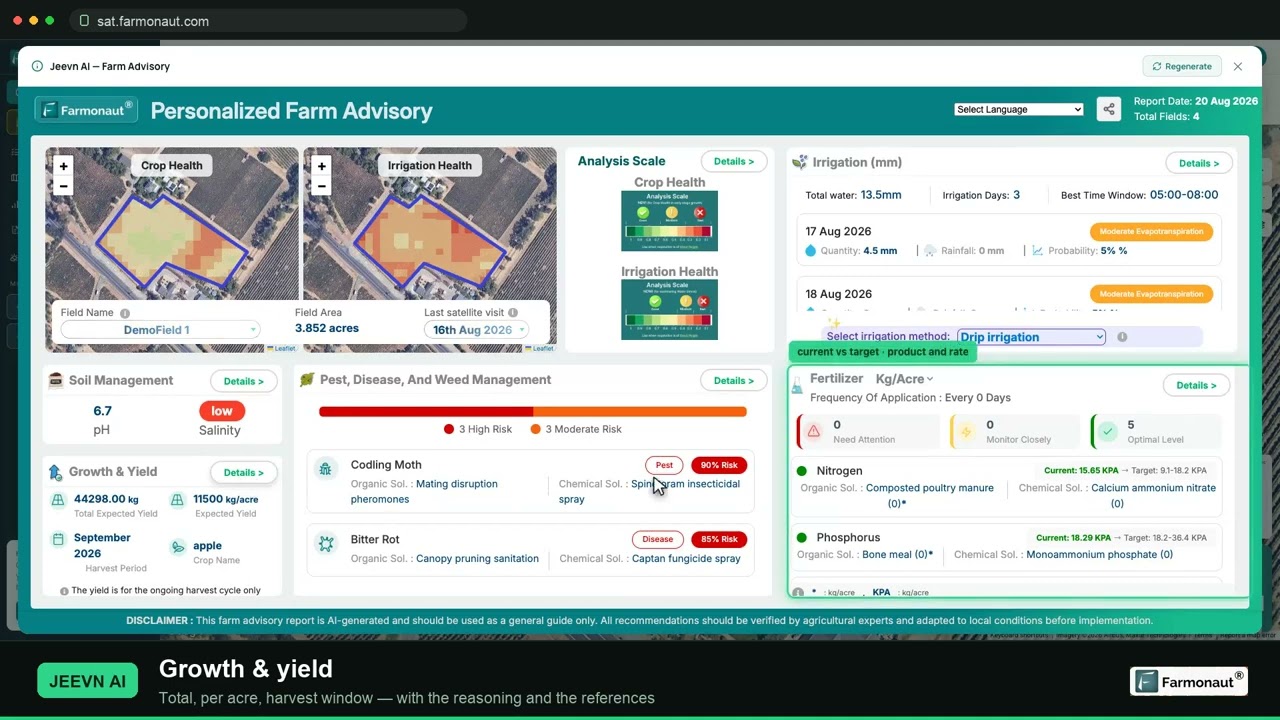
▶ A walkthrough of satellite crop monitoring: reading NDVI maps to spot crop stress early and running a farm advisory for your own field. · 19:36
Step 7: Harvest, store and sell
Depending on the cultivar, Clemson puts first harvest at 52 to 90 days. Flavour is best when fruit is fully coloured but still firm. Kentucky’s crop profile notes that vine-ripe tomatoes may need picking twice a week, while mature-green fruit for shipping is picked only three or four times a season.
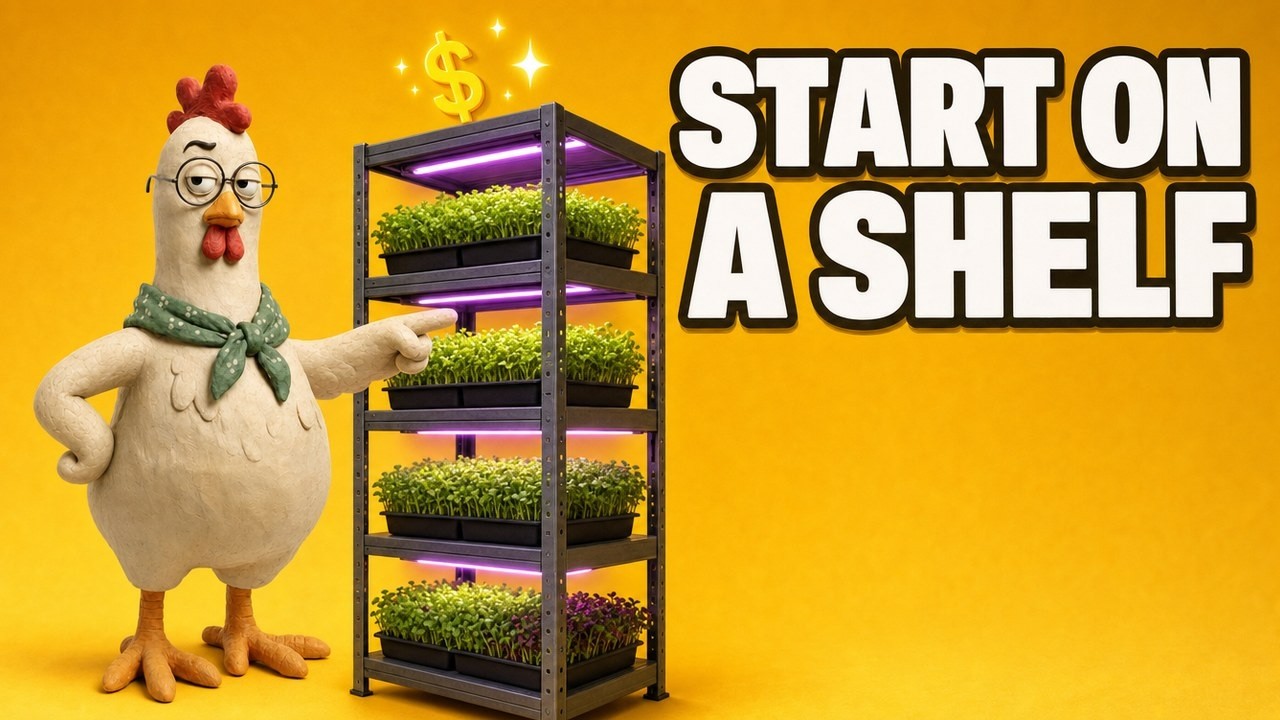
▶ Ten farm businesses you can start small, with what each needs to get going. · 6:03
- Handle gently: tomato fruit bruises easily. Pick into shallow containers and keep picked fruit in the shade.
- Do not refrigerate green fruit: Clemson ripens it at about 70°F. Green tomatoes keep 1 to 3 weeks at 50 to 70°F; ripe fruit keeps 4 to 7 days.
- Mature-green storage: Utah State stores mature-green fruit at 55°F.
- Sort before selling: split fruit into firsts and seconds. Seconds can go to sauce or salsa.
Where you sell sets your price. Penn State notes that roadside stands and pick-your-own can beat wholesale prices but bring extra costs and risks. Kentucky says growers with the earliest local tomatoes often get a premium. The chart shows the national average farm-gate price for fresh-market tomatoes, which is far below what a farmers’ market stall charges.
Chart
US fresh-market tomato price received by growers
Dollars per cwt (100 lb), season average, US field-grown (excludes greenhouse)
Tomato yields and costs per plant and per row
Extension budgets give the clearest picture of what a tomato crop yields and costs. They are written per acre for commercial growers, so the table also shows them per plant. The per-plant and per-row figures are our own division of each budget’s totals, not numbers the budgets print.
Chart
Largest costs in a staked tomato budget
Dollars per acre, eight largest lines, NC State 2021 budget (total costs $15,563)
| Budget | Yield | Total cost | Per plant | Notes |
|---|---|---|---|---|
| NC State, 2021 | 42,000 lb/acre | $15,563/acre | About 8.7 lb and $3.23 (4,824 plants) | Staked, 5 ft rows, 18 in apart; wholesale $0.46/lb; no land rent |
| Kentucky, 2018 | 1,600 boxes of 25 lb | $14,980/acre | About 8 to 9.5 lb and $3.00 to $3.57 | Staked, trickle irrigated, 4,200 to 5,000 plants/acre |
| Arkansas, 2017 | 1,600 boxes | $14,337/acre | About $3.26 (4,400 plants) | Drip, 6 ft rows; box weight not stated |
| Kentucky, 0.1 acre | 2,400 lb heirlooms | Not given as a total | About 5 to 5.7 lb at 4,200 to 5,000 plants/acre | Sold at $2/lb direct, 2017-18 season |
| Utah State, garden | 100 lb per 100 ft of row | Not given | Not given | Home garden planning figure |
The NC State 2021 tomato budget is the most detailed of these. It assumes 42,000 pounds per acre, which it calls 80% of base yield, sold at an average $0.46 a pound across grades. Total costs came to $15,562.88 an acre, leaving $3,925.12 for land, risk and management. Its break-even price on total costs is $0.37 a pound, and its break-even yield is about 33,500 pounds. With 5-foot rows, an acre holds about 8,700 feet of row, so the budget works out to roughly 480 pounds and $179 of cost for each 100 feet of row.
Look at where the money goes. In the NC State budget, picking ($4,200), boxes ($2,520) and packing labour ($2,154) together cost more than all growing inputs. Harvest and packing grow with yield, so a bigger crop also costs more to bring in.
The University of Kentucky’s field-grown tomato crop profile (August 2018) gives three outcomes for an acre of staked tomatoes after $1,500 of operator labour: $930 in a poor year, $5,125 in a conservative case and $6,560 in a good one. For a 0.1-acre heirloom plot, it estimated $1,820 in returns to land and management from 2,400 pounds sold at $2 a pound, after valuing 50 hours of the grower’s own time at $15 an hour (2017-18 Kentucky season). It also lists labour per acre of staked tomatoes: about 125 to 200 hours for planting and growing, 250 hours for harvest and 100 hours for grading and packing.
The University of Arkansas tomato budget (2017) shows the same pattern: $14,337 an acre in total, with 320 hours of grading and packing labour and $2,944 of boxes for 1,600 boxes. Wood stakes cost $660 an acre and plants $880.
The swing between good and bad years is large. The line chart uses NC State’s own sensitivity table to show income above variable costs per acre at three yields and five prices. At the lowest price and yield shown, the crop loses almost $2,000 an acre before fixed costs.
These budgets are dated and regional. Hired labour was $10.38 to $12.67 an hour in them (Kentucky valued the grower’s own time at $15), and NC State’s budget leaves out land rent. Use them to see the shape of costs, then put your own prices into the calculator below.
Chart
Income above variable costs at different prices
Dollars per acre, by price received ($/lb) and yield, NC State 2021 budget
Small-plot tomato yield and profit calculator
Enter your own rows, spacing, yield, price and costs. The calculator counts your plants, estimates sellable pounds and shows the price you need to cover your costs. Start with a low yield per plant: the budget figures above come from experienced growers with drip, plastic and trellis systems.
A sensible way to set cost per plant is to add up your cash spending for the season (plants, stakes, twine, drip tape, mulch, fertilizer, sprays, boxes and market fees) and divide by the number of plants. Put your own hours in separately, so you can see what your time earns.
Try the numbers for your own farm below.
Calculator
Will your tomato plot cover its costs?
Enter your own rows, spacing, yield, price, costs and hours.
- Plants: 400
- Sellable tomatoes: 2,400 lb
- Sales: $3,000
- Cash costs: $2,000
- Value of your time: $750
- Break-even price per lb: 1.15 $/lb
- Return per hour of your time: $20
Example values only, not a benchmark or a forecast: replace every number with your own. Defaults are set near break-even on purpose. For scale, NC State’s 2021 budget works out to about 8.7 lb and $3.23 of cost per plant on a commercial acre (our division of its totals), and Kentucky’s 0.1-acre heirloom example used $2/lb direct sales and 50 hours of grower time at $15/h (2017-18). Small plots often cost more per plant. Yield should be sellable pounds after culls.
Common beginner mistakes
- Planting too early. Cold soil stalls growth for weeks. Wait for soil above 60°F and nights past frost.
- Skipping the soil test. Guessing on lime and fertilizer can leave calcium short, and Clemson links blossom end rot to soil that was never tested or limed.
- Too much nitrogen. Utah State warns that over-fertilizing gives excess leaf growth and delays fruit set and maturity.
- Crowding plants. Leaves that touch stay wet longer, and early blight spreads plant to plant. Clemson advises spacing plants so they do not touch.
- Late staking. Stakes driven in after a month damage roots, and sprawling vines snap.
- Uneven watering. A dry week followed by a soaking cracks fruit and triggers blossom end rot.
- Overhead watering in the evening. Wet leaves overnight invite leaf spots and blight.
- Same bed every year. Soil-borne disease builds up. Rotate the tomato family on a 3-year cycle.
- Growing only heirlooms. One wet summer can wipe out plants that have no resistance.
- Planting more than you can pick and sell. Harvest and packing are the largest costs in every budget above. Start small and match plant numbers to your market.
Paying for the first season
A small plot can start with savings. A larger market garden may need stakes, drip, a cooler and a vehicle. In the US, the USDA Farm Service Agency offers microloans of up to $50,000 for operating costs, plus up to $50,000 for farm ownership, with a combined limit of $100,000 (FSA fact sheet, 2024). The FSA rate for operating microloans was 5.375% from 1 October 2026. Urban growers can also check the USDA urban agriculture hub for help with high tunnels, composting and irrigation.
Rates and rules change, and other countries have their own schemes. Check with the lender or agency, and get professional financial advice before you borrow.
Keep records and plan next season
Records turn one season into a better second one. For each bed, note the variety, planting date, spacing, fertilizer, watering times, first pest or disease sighting, first harvest date, pounds picked and price received. After one season you will know your own yield per plant, which is the number that matters most in the calculator.
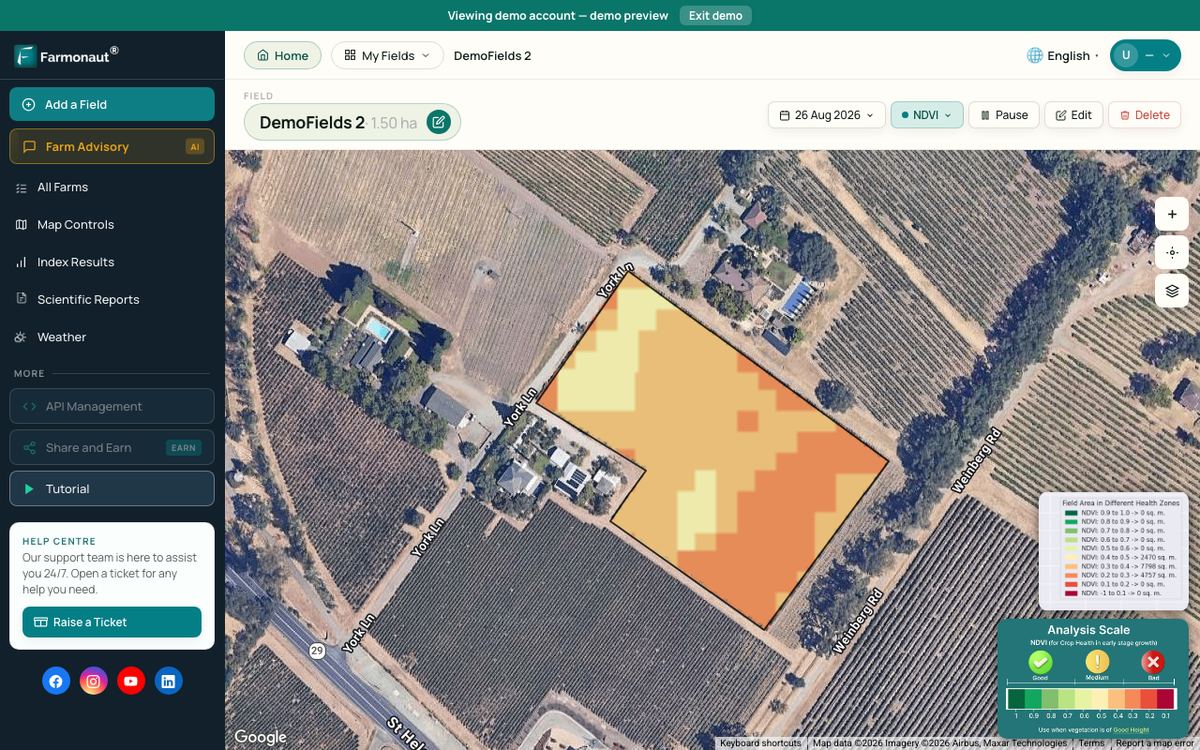
As a plot grows into several fields, satellite crop maps can help you see which areas fall behind. The Farmonaut Satellite + AI Farm Monitoring System shows vegetation maps for fields you draw, so you can walk to the weak patches first. It shows changes in plant growth, not the cause, so you still need to scout.
Related pages on our site: farming courses, large scale farm management, fleet management, supply chain transparency, carbon footprinting platform, crop loan and insurance services, weather API, satellite API, API docs and the Farmonaut app.

▶ Six plain steps to start precision farming on a small farm, beginning with good records. · 4:18
How we checked the numbers
Growing advice comes from extension services in South Carolina (Clemson), Utah (Utah State), Pennsylvania (Penn State), Florida (UF/IFAS) and California (UC IPM), and from the RHS for UK growers. Where sources differ, as on spacing, we give the range and say who recommends what. Yields and costs come from published budgets by NC State (2021), the University of Kentucky (2018 profile, 2017-18 season) and the University of Arkansas (2017). Prices come from the USDA NASS Vegetables 2025 Summary, published in February 2026. Per-plant and per-row numbers are our own division of the published totals. Budget figures are planning estimates, not forecasts, and are older than this page.
We cover a connected topic in Best Farming Tools for Beginners: Urban & Worm Guide.
FAQ
How many tomato plants should a beginner grow?
For home use, Utah State suggests 2 to 3 plants per person for fresh eating, plus 5 to 10 more for canning, juice or freezing. For a first market plot, start with as many as you can pick twice a week and sell. At Kentucky’s commercial density of 4,200 to 5,000 plants per acre, a 0.1-acre plot would hold about 420 to 500 plants.
How much does one tomato plant yield?
It depends on variety, season and care. In the NC State 2021 budget, 42,000 pounds from 4,824 transplants works out to about 8.7 pounds per plant in a staked commercial field. Utah State’s home garden figure of 100 pounds per 100 feet of row is a safer first-year guess.
What is the best soil pH for tomatoes?
Clemson Extension recommends pH 6.0 to 6.5. Test the soil first and apply lime at least 3 months before planting if the report calls for it.
How often should I water tomatoes?
Utah State advises 1 to 2 inches of water a week, applied deeply and not too often, ideally by drip. Plants in pots may need water every day in hot weather, says the RHS. Even moisture matters more than the exact amount.
Can a small tomato plot make a profit?
It can, but the margin is thin and depends on yield and price. Kentucky estimated $1,820 in returns to land and management for 0.1 acre of heirlooms sold at $2 a pound in 2017-18, after paying the grower $15 an hour. NC State’s sensitivity table shows losses at low prices and yields. Use the calculator with your own local prices.
Farmonaut crop monitoring
See your own fields from space
Draw your fields once and Farmonaut shows satellite vegetation maps for them through the season, on web, Android or iOS.



Keep reading


Sources
- Clemson Cooperative Extension HGIC, Tomato (HGIC 1323, revised March 2022): hgic.clemson.edu
- Clemson Cooperative Extension HGIC, Tomato Diseases and Disorders (HGIC 2217): hgic.clemson.edu
- Clemson Cooperative Extension HGIC, Soil Testing: hgic.clemson.edu
- UF/IFAS EDIS, HS739/CV137 Chapter 18. Tomato Production: edis.ifas.ufl.edu
- Penn State Extension, Tomato Production (Agricultural Alternatives, last updated 2006): extension.psu.edu
- Penn State Extension, Tomato Diseases and Disorders in the Home Garden (updated 23 September 2025): extension.psu.edu
- Utah State University Extension, How to Grow Tomatoes in Your Garden: extension.usu.edu
- Royal Horticultural Society, How to grow tomatoes: rhs.org.uk
- UC Statewide IPM Program, Tomato pests (home and landscape): ipm.ucanr.edu
- University of Kentucky Center for Crop Diversification, Field-grown Tomatoes crop profile CCD-CP-98 (August 2018): publications.ca.uky.edu
- NC State Extension, Tomato Budget 2021: estimated costs and returns per acre: vegetables.ces.ncsu.edu
- NC State Extension, Tomatoes: Economics/Crop Budgets (updated January 2026): vegetables.ces.ncsu.edu
- University of Arkansas System Division of Agriculture, Tomato Production Enterprise Budget (Arkansas 2017): uaex.uada.edu
- USDA NASS, Vegetables 2025 Summary (February 2026): esmis.nal.usda.gov
- USDA Farm Service Agency, Microloans fact sheet (2024): dts.fsa.usda.gov
- USDA Farm Service Agency, Current FSA Loan Interest Rates (effective 1 October 2026): fsa.usda.gov
- USDA farmers.gov, Urban Agriculture: farmers.gov
Discussion
Questions, corrections or field experience? Share them below. First-time comments are reviewed before they appear, and your email is never published.
No comments yet. Be the first to add a question or your experience.

 MISE Maroc
 Drift-Sense
 NWNS
NWNS Hydenmet
 Dirks Bros Farms
 Red August Group
 Farm Inc
 WeMe Global
 Agrotoken
 Blue BearX
 Insignito
 Croptimum
 DnCubed
 Field Capacity
 Indosistim Teknologi
 Liquify Digital
 CU Foods
 BeyondTech Global
 Licence holder · Niger · Gold
 Licence holder · Nigeria · Gold + lithium










