

Water Soluble Fertilizer: Boost Yield & Quality in 2026
Water Soluble Fertilizers: Enhancing Crop Nutrition for Sustainable Agriculture in 2025 & Beyond
“Water soluble fertilizers can increase crop yield by up to 30% compared to conventional fertilizers in 2025.”
Introduction: Why Water Soluble Fertilizers Lead Agricultural Innovation into 2026
In an era where sustainable agriculture, higher productivity, and environmental stewardship are crucial, the use of water soluble fertilizer continues to expand rapidly worldwide. As we approach 2026, the agricultural sector is experiencing a surge in demand for crop nutrient solutions that offer precision, efficiency, and adaptability—all hallmarks of water soluble fertilizers (WSFs). Innovative products such as 20-20-20 water soluble fertilizer, soluble potash, and tailored winter fertilizer blends have become central to optimizing fertilization and ensuring robust crop yield under diverse conditions and climate challenges.
With the integration of satellite technology and AI platforms—like those provided by Farmonaut—growers and agribusinesses can now elevate their management practices by precisely targeting nutrient applications and monitoring environmental outcomes in real time.
This comprehensive guide explores everything you need to know about water soluble fertilizer—from the core science and its role in modern farming to environmental impacts and future innovations poised to reshape agriculture into 2026 and beyond.
- ✔ Optimize crop yield with targeted nutrient delivery
- 📊 Enhance efficiency by minimizing waste and maximizing uptake
- ♻ Support sustainable agriculture practices
- 🌱 Accommodate diverse cropping systems and environmental conditions
- 🔑 Unlock the potential of precision farming

Understanding Water Soluble Fertilizer: What Makes WSFs So Effective?
Water soluble fertilizer—sometimes abbreviated as WSF—are crystalline or finely granulated products specifically designed to dissolve entirely in water. This fundamental characteristic sets them apart from conventional granular or slow-release fertilizers, whose nutrients are not immediately accessible to plants.
Key Attributes of Water Soluble Fertilizers
- ✔ Immediate nutrient availability after application
- 📈 Rapid plant uptake for critical growth stages
- 🌊 Compatible with fertigation and foliar spray systems
- 🔬 Customizable nutrient ratios for different crops and seasons
- ♻ Low residue and minimal environmental impact when properly managed
Why WSF’s Solubility is a Game Changer
The ability of WSFs to dissolve entirely in water enables their application through irrigation systems (fertigation) or by foliar spraying directly onto plant leaves. This immediate nutrient delivery is especially beneficial during critical growth and fruiting stages, ensuring crops receive exactly the nutrients required for optimal yield and quality.



Advantages of Water Soluble Fertilizer in Modern Crop Management
Leveraging the solubility characteristic of WSFs opens new frontiers in precision agriculture and resource stewardship. Here’s a closer look at why these innovative fertilizers have gained prominence and are rapidly replacing legacy products.
Top 5 Advantages
- Immediate Nutrition: Direct, rapid plant uptake with no lag between application and effectiveness.
- Enhanced Efficiency: Nutrient waste is minimized and uptake is maximized for higher yield.
- Precision Crop Management: Fertigation and foliar spray applications allow for customizable doses based on real-time crop requirements.
- Reduced Environmental Impact: Precise application minimizes runoff and reduces risks of soil imbalances or eutrophication in aquatic systems.
- Adaptability: Tailored to suit diverse cropping systems and local soil condition needs globally.

The Power of Balanced 20-20-20 Water Soluble Fertilizer Blends
One of the most universally recognized and commonly formulated products in the WSF category is the 20-20-20 water soluble fertilizer. But what does this blend contain, and why is it a go-to formula for boosting crop performance—especially in 2025 and beyond?
Inside the 20-20-20 Water Soluble Fertilizer
- ✔ Nitrogen (N) – 20%: Drives rapid plant growth, leaf development, and vital metabolic processes.
- ✔ Phosphorus (P) – 20%: Supports strong root development and efficient energy transfer.
- ✔ Potassium (K) – 20%: Regulates water balance, enhances disease resistance, and improves fruit quality.
With equal proportions of N, P, and K, the 20-20-20 blend provides a balanced nutrient supply ideal for a wide variety of crops. Its rapid solubility in water ensures nutrients are available exactly when and where plants need them most—whether it’s the vigorous vegetative phase, flowering, or fruiting.
“In 2026, 20-20-20 blends are projected to improve nutrient uptake efficiency by 28% in winter crops.”
20-20-20 water soluble fertilizer also offers flexibility for integrated nutrient management strategies, where micronutrients or secondary nutrients can be added for even greater effectiveness.
The Role of Soluble Potash: Potassium’s Critical Support for Crop Quality & Yield
Of all macronutrients required for robust plant development, potassium (K) is second only to nitrogen in importance. In the soluble fertilizer world, soluble potash (usually supplied as potassium nitrate or potassium sulfate) has become the preferred delivery form, owing to:
- ✔ Immediate solubility and uptake
- ✔ Essential for regulating water relations in plant tissues
- ✔ Strengthening disease resistance
- ✔ Enhancing fruit quality (size, taste, color, storability)
A soluble potash application is especially important for fruit crops like watermelon, tomatoes, and potatoes—where potassium is pivotal for filling fruit, preventing disorders, and improving marketability. The ease of use and rapid results make soluble potash the go-to for high-value crops that cannot wait for the slow release of traditional fertilizer.
- 🍉 Watermelon-specific soluble fertilizer: Ensures optimal sweetness and large, marketable fruits
- 🔬 Tailored potassium blends: Address critical growth windows for fruit set and filling
- 🏆 Reduces risk of hollow hearts and other potassium deficiency disorders
Winter Fertilizer Strategies: Supporting Crops Beyond the Growing Season
In many temperate and sub-temperate regions, a winter fertilizer regimen is essential to sustain soil fertility and prepare crops for early spring vigor. The use of water soluble fertilizer blends during dormant months provides these critical advantages:
- ✔ Maintains soil nutrient levels for perennials and overwintering crops
- ✔ Promotes root development and energy storage during dormancy
- ✔ Supports cover crops in fixing nutrients and preventing erosion
- ✔ Ensures quick nutrient uptake as soil temperatures rise in spring

Winter fertilizer packs often feature a balanced NPK ratio with added magnesium, calcium, or even micronutrients, helping ensure comprehensive root and structural health.
- 🌾 Wheat & barley: Respond well to winter-applied soluble fertilizer for robust spring tillering
- 🥬 Winter cabbage & leafy greens: Stay vibrant with timely soluble nutrient input
- 🌱 Cover crops: Use winter fertilizer to boost biomass and soil organic matter
Comparative Performance Table: Water Soluble Fertilizer vs. Traditional Granular & Winter Blends
*Estimated based on multi-year research and published data for 2025–2026.
Farmonaut: Transforming Precision Fertilization with Satellite & AI
Farmonaut’s satellite-driven platform empowers farmers, agronomists, and businesses to optimize water soluble fertilizer application by harnessing multispectral imagery and AI-based insights for resource management. Here’s how:
- 🌍 Real-time monitoring of nutrient status, crop health, and soil variability
- 🤖 Carbon Footprinting tools to track environmental impact of fertilization
- 🔗 Blockchain-based traceability for fertilizer and crop input tracking
- 📱 Data access through Android, iOS and Web Apps for mobile field operations
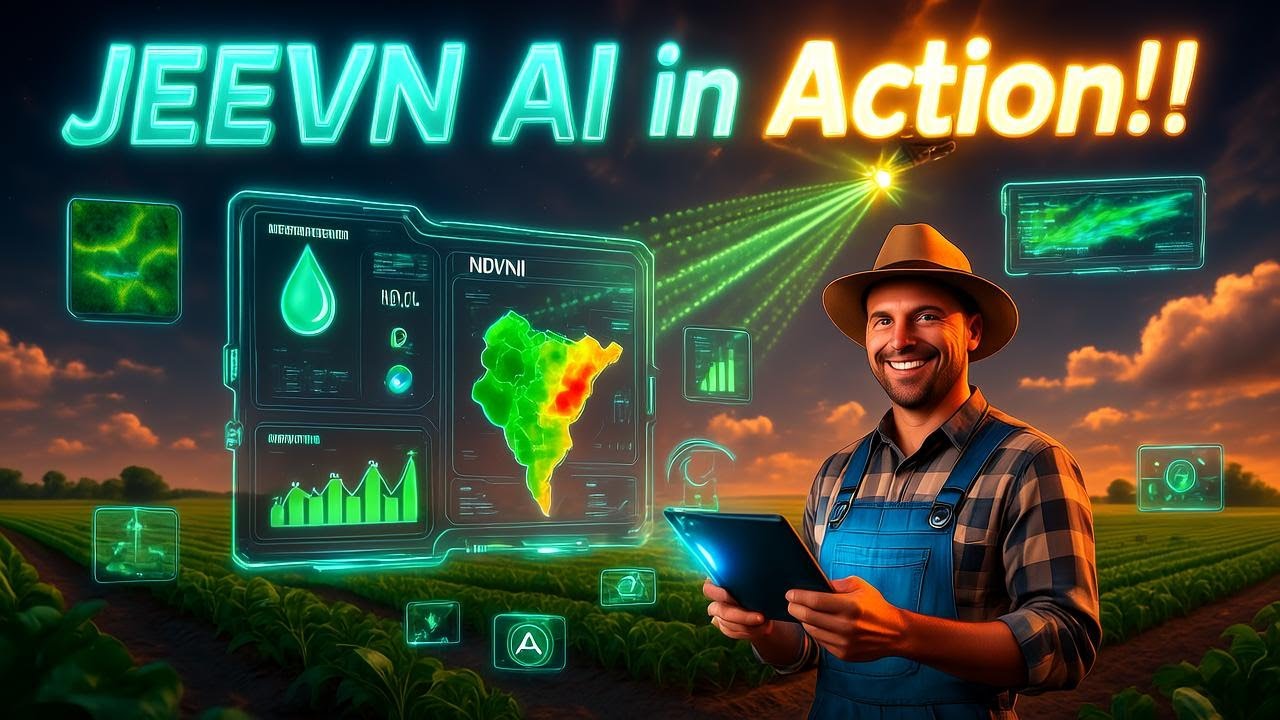
- 🌱 Jeevn AI for tailored, weather-responsive fertilizer advisory
- 💡 API integrations for agritech and large scale farm management
- 💳 Fertilizer verification for crop loan and insurance

Crop-Specific Nutrition: Watermelon Fertilizer & Custom Solutions
Not all crops have the same nutrient requirements. For example,watermelon fertilizer must be rich in soluble potash and nitrogen at precise ratios and growth stages to achieve:
- 🍉 Large, uniform fruit size and enhanced sweetness
- 🌿 Strong, disease-resistant vines
- ⏱ Shorter harvest cycles with consistent quality
Applying tailored soluble fertilizer blends ensures these requirements are met precisely, minimizing input waste and boosting profitability for commercial watermelon growers.
Implementing Water Soluble Fertilizer: Best Practices & Pro Tips
Successfully transitioning to water soluble fertilizer requires attention to precision, timing, and systematic monitoring—as improper management may reduce the benefits. Consider these steps:
- 🔬 Soil Testing & Analysis: Start every season with a comprehensive soil test to set baseline nutrient levels.
- 💧 Calibrate Fertigation Equipment: Check injectors and dosing systems regularly for accurate fertilizer delivery.
- 🕔 Time Applications to Crop Phenology: Schedule fertilization at critical periods (e.g., pre-bloom, fruit set, mid-growth).
- 📱 Leverage Remote Sensing: Use tools like Farmonaut for ongoing crop monitoring to refine and optimize application schedules.
- 📊 Record & Adjust: Keep detailed records to analyze yield responses and adapt future fertilizer strategies.
Environmental Impact & Sustainable Agriculture
Adopting water soluble fertilizers aligns perfectly with the global drive for sustainable agriculture. By minimizing runoff, reducing soil and water contamination, and optimizing resource use, WSFs support the environment as much as they do the grower’s bottom line.
- ♻ Lower nitrogen and phosphorus leaching into watersheds
- 🌱 Improved long-term soil health due to minimized salt buildup
- ✅ Contributes to meeting global sustainability goals for food security and climate-resilient farming
Monitoring environmental metrics and adjusting fertilizer plans is easy with platforms like Farmonaut. For advanced needs, explore our Carbon Footprinting solutions.

Innovation & The Future of Soluble Fertilizer in 2026
With continuous improvement in fertilizer formulations, delivery systems, and monitoring technologies, 2026 will mark a new era for precision and sustainable crop nutrition. Expect these changes:
- 🔬 Integration of biostimulants and micronutrients in soluble blends
- 💡 Data-driven, site-specific recommendations via remote sensing and AI
- 🕓 Controlled-release WSFs for longer nutrient availability without excess application
- 🌍 Expanded use in adaptation to climate change and drought scenarios
- 🌐 Seamless digital traceability and reporting for regulatory compliance
Frequently Asked Questions (FAQ): Water Soluble Fertilizer, Practices, and Technology
Yes, when applied correctly, water soluble fertilizer reduces nutrient runoff and leaching compared to granular alternatives, supporting sustainable agriculture goals and aligning with global environmental standards.
Q2: How does 20-20-20 water soluble fertilizer boost winter crop performance?
The equal balance of N-P-K ensures winter fertilizer blends provide comprehensive support for root, stem, and early vegetative growth, which is crucial for a strong spring start and improved resilience against winter stress.
Q3: Can Farmonaut help in optimizing fertilizer use for my specific farm?
Absolutely! We at Farmonaut offer AI-powered, satellite-driven crop insights that enable precision fertilization, reduce nutrient waste, and improve yield outcomes for diverse crops and field conditions.
Q4: Is water soluble fertilizer suitable for all types of irrigation systems?
Yes, most soluble fertilizers are compatible with drip, sprinkler, and pivot systems, enabling uniform nutrient application across small and large-scale farms.
Q5: What’s the best way to start using water soluble fertilizers in 2026?
Begin with a soil and crop health assessment, invest in reliable fertigation or foliar spray equipment, use satellite monitoring tools to plan and adjust your program, and start with a balanced blend like 20-20-20 for the broadest benefits.
Conclusion: The Future of Crop Nutrition – Water Soluble Fertilizer in Sustainable Agriculture
As we move deeper into the digital agriculture era, water soluble fertilizer stands out as a key innovation for 2026 and beyond. By enabling immediate nutrient availability, supporting crop-specific management, enhancing winter fertilization, and minimizing environmental impact, these modern soluble products are setting the standard for sustainable and productive farming across the globe.
Integrated with advanced, satellite-powered tools from Farmonaut, growers are empowered to maximize fertilizer efficiency, protect natural resources, and achieve consistent, high-quality yields—ensuring food security and environmental health for generations to come.
Ready to enhance your crop nutrition strategy for 2026? Harness the power of Farmonaut’s large scale farm management platform and get started today!
Summary: Water soluble fertilizer technologies are revolutionizing sustainable agriculture by greatly improving crop yield, nutrient efficiency, and precision fertilization. With balanced blends such as 20-20-20, innovative winter fertilizers, and supportive potassium products, growers in 2026 will leverage precision satellite tools to optimize environmental outcomes, boost profitability, and underpin food security in a changing world.
Discussion
Questions, corrections or field experience? Share them below. First-time comments are reviewed before they appear, and your email is never published.
No comments yet. Be the first to add a question or your experience.

 Field Capacity
 Abhishta Agri
 SP Farms
 Indosistim Teknologi
 Liquify Digital
 CU Foods
 BeyondTech Global
 Rouge VC
 AgroGreen Dynamics
 AgroRisk
 Oath Inc
 Reddane Farming
 Esri North East Africa
 Cresol
 MDCV UK
 Etech Consulting Madagascar
 Vestlandsforsking
 Exploration consultancy · South Africa · Gold
 Licence holder · Niger · Gold










