

Weather Impact on Agricultural Commodities: Data Drives Supply
“Up to 70% of crop yield variability is linked to weather fluctuations, highlighting the need for precise weather data in agriculture.”
Introduction: The Pivotal Role of Weather in Agriculture
The weather impact on agricultural commodities supply is arguably one of the most critical factors that shape global food systems, prices, and risk management frameworks. From the lush fields where grains and oilseeds are sown to the vast timber forests and strategic mineral sites, weather intricacies determine not just the raw material for tomorrow’s harvests but also the price signals that guide farm income and policy decisions. Across farming, forestry, and related sectors, the immediate impact of weather is felt in yield stability, crop quality, and even the viability of entire regions.
The interplay of temperature, precipitation patterns, and extreme events—like droughts, floods, and unseasonal frosts—exerts pressure on germination, pest and disease pressure, soil reserves, and supply. Recognizing these dynamics, advanced weather data and adaptive technologies are transforming how we predict, respond, and prosper amidst environmental volatility.
Weather Impact on Agricultural Commodities Supply Chains
The weather impact agricultural commodities supply mechanisms illustrate how vulnerable—and agile—modern food systems must be. Weather is not simply an environmental backdrop; it’s an active participant, influencing each segment of the commodities pipeline:
- ✔ Production & Yield: Sufficient rainfall and favorable temperature patterns typically improve yields and crop quality, easing supply constraints.
- ✔ Post-Harvest Handling: Heat stress or excess moisture can lower grain kernel weight or raise fungal risks during storage and processing.
- ✔ Livestock and Forestry: Drought reduces forage and alters livestock diets; in forestry, stressors like extended droughts or frost impact tree growth and timber quality.
- ✔ Logistics & Distribution: Flooded roads or remote sites become inaccessible, while heatwaves strain cold chains for perishable commodities.
- ✔ Input Markets: Weather influences mining site access, affecting production timelines and availability of mineral-based fertilizers.
These impacts reverberate across geographic regions, pushing prices higher when supply tightens, and dampening commodity price volatility through robust data-driven forecasting and adaptive management.
“Advanced weather stations can reduce commodity supply prediction errors by 30%, enabling smarter, data-driven farming decisions.”
Key Weather Dynamics Influencing Commodity Markets
The weather impact on agricultural commodities is rooted in various interconnected weather phenomena. From regular precipitation cycles to extreme events, these weather elements collectively alter the supply, demand, and market price structures for agricultural and forestry products.
1. Temperature and Its Role in Crop and Timber Yields
Temperature is a chief determinant of plant metabolism, influencing germination rates, growth stages, and pest/disease pressure. Consistent, moderate temperatures promote vigor and resilience, whereas heatwaves or sudden cold reduces yields or quality across crops like wheat, rice, and maize. For forestry, unseasonal temperature shifts can alter fiber density, lower wood quality, or trigger stress-induced pest proliferation.
2. Precipitation Patterns & Soil Moisture Reserves
Precipitation patterns dictate soil moisture reserves, essential for sustaining crops through their key developmental stages. Adequate rainfall during sowing and flowering typically ensures strong yields. Droughts deplete soil reserves, tightens supply, and can drastically reduce harvestable tonnage—especially in grains, oilseeds, and timber. Conversely, untimely rains disrupt harvesting windows, reducing quantity and affecting processing outputs.
3. Extreme Events: Droughts, Floods, Frosts
Extreme events like droughts, floods, and frosts can decimate entire regions. For example, droughts in wheat-producing belts of India or frost in soy-growing regions of South America trigger global market reactions. Such shocks reverberate via reduced availability, higher price, and disrupted logistics chains.
4. Weather-Induced Risk and Market Volatility
Each season carries potential for weather shocks that can alter production costs, encourage policy intervention, or increase market volatility—amplifying the need for precision risk monitoring.
Comparative Impact Table: Weather Events & Crop Commodities
| Weather Event | Commodity | Estimated Yield Change (%) | Estimated Price Change (%) | Recommended Data-Driven Strategy |
|---|---|---|---|---|
| Drought | Wheat | -30% to -50% | +20% to +40% | Satellite soil moisture monitoring, real-time irrigation scheduling, drought-resistant seed varieties |
| Excess Rainfall | Rice | -15% to -25% | +8% to +20% | Flood risk maps, drainage management, adaptive harvesting plans |
| Heatwave | Maize | -20% to -35% | +15% to +30% | Heat stress early alerting, resilient cultivar selection, micro-irrigation technologies |
| Frost | Soybeans | -10% to -18% | +5% to +12% | Forecast-driven planting windows, row cover systems, real-time frost alerts |
Actionable Insight: These estimates illustrate the importance of weather station in agriculture and advanced monitoring to minimize risk, ensure stability, and maximize supply across key commodities in both farming and forestry sectors.
How Are the Weather and Trade Talks Affecting Agricultural Commodities?
How are the weather and trade talks affecting agricultural commodities? The answer lies in the delicate interplay between environmental risk and policy-driven market movements. Here’s how:
- ⚡ Trade Negotiations: When adverse weather is forecasted in a crucial region, countries may pre-emptively alter export bans, tariff structures, or set new phytosanitary requirements. This changes the incentives for farmers and processors, potentially hedging against volatility and influencing demand across regions.
- 📈 Market Volatility: Supply shocks—such as a drought in North America or a typhoon in Southeast Asia—can push prices sharply upward, especially if trade policy restricts cross-border flows. Conversely, open trade channels distribute risk more broadly, easing local shortages.
- 📊 Weather-Informed Contracts: Markets increasingly rely on weather-indexed insurance and forward contracts to hedge risk, with processors and exporters using advanced forecasts to manage inventory and logistics.
- 🔄 Supply Chain Adaptation: Robust trade agreements and logistics networks can dampen price spikes from localized shocks, ensuring more stable supply for end-users—and better outcomes for both farmers and consumers.

Example: A persistent drought affecting phosphate mine access could raise input costs for global grain producers. With weather-indexed hedges and satellite policy signals, markets can anticipate shifts and respond proactively.
- 🌦️ Weather Data Integration: Connects farm-level soil, precipitation, and humidity data directly to commodity risk management tools.
- 🚚 Logistics Adaptation: Dynamic routing and remote site monitoring enhance supply chain resilience across extreme events.
- 📉 Volatility Reduction: Adaptive strategies lower the risk of sudden price shocks triggered by weather anomalies.
- 🌱 Crop Health Forecasting: Combines meteorological insights with vegetation indices for precise yield prediction.
- 🌍 Scalable Aggregation: Regional models aggregate data for macro-level commodity analysis and disaster planning.
Data-Driven Strategies for Supply, Pricing, and Risk Management
Robust data and networked weather stations have transformed how commodity markets guide planting, harvesting, input use, and trading. Below are actionable strategies leveraging advanced weather data:
- Precision Irrigation Scheduling: Deploying real-time satellite moisture maps helps optimize water use, particularly in drought-prone regions. This ensures maximum yield per drop and stabilizes input costs.
- Pest and Disease Pressure Forecasting: Weather-driven models predict outbreaks based on temperature, humidity, and rainfall patterns—enabling proactive crop protection.
- Forecast-Based Planting: Advanced weather analytics identify optimal sowing and harvesting windows, reducing exposure to extreme events.
- Inventory and Logistics Optimization: Integrate storage and transportation plans with real-time weather alerts to minimize post-harvest loss during floods, heatwaves, or prolonged rainfall.
- Insurance and Financial Instruments: Weather-indexed insurance and futures contracts offer risk protection tied directly to observed weather events.

Such approaches not only increase resilience in agricultural commodities outlook but also support sustainable practices and robust market pricing.

Building Resilience in Agricultural Commodities Outlook
The imperative for climate resilience is especially clear in the agricultural commodities outlook. Supply, pricing, and risk mitigation depend on how effectively farmers and supply chains adapt to the evolving climate landscape:
- 🌱 Climate-Smart Practices: Crop rotation, drought-resistant species, and innovative silviculture foster yield stability and lower volatility.
- 🚜 Technological Enhancements: Large-scale farm management platforms powered by satellites empower coordinated, region-wide decisions for input use and harvest timing.
- 📊 Water & Soil Monitoring: Sensors and remote carbon/footprint tracking ensure sustainable resource management and environmental compliance.
- 🛰️ Early Warning Systems: Crop & plantation forest advisory tools identify stress in near-real-time, allowing rapid intervention.
- 🔗 Traceability and Transparency: Blockchain-based traceability creates transparent, fraud-resistant supply chains, boosting market trust for agricultural and timber products.
Forward-looking regions with robust weather networks and satellite analytics platform enjoy more stable yields, input prices, and supply—strengthening the food system against future weather risks.

📋 Most Important Components of Weather-Driven Supply Resilience
- 📊 Granular Data: Station and satellite weather records per plot or forest block
- 🌦️ Forecast Precision: Location-specific risk modeling for rainfall, temperature, and extreme events
- 🧠 AI & Analytics: Automated alerts and scenario planning for yield, supply, and logistics
- 🔒 Blockchain Integration: Seamless tracking and transparency from field to commodity exchange
- ⚡ Actionable Decision Support: Farm-level intervention recommendations delivered directly to end-users
The Importance of Weather Station in Agriculture
The importance of weather station in agriculture cannot be overstated. Their role is foundational for enabling precision, efficiency, and adaptability all along the supply chain. Here’s why:
- 🚩 Near-Real-Time Data Feeds: Weather stations continuously capture precipitation, temperature, humidity, solar radiation, and wind, forming the basis for responsive farm management.
- 🛰️ Integration with Satellite Analytics: Combining station data with remote AI-powered imagery offers holistic insight into vegetation health, soil moisture, and microclimate impacts.
- 👨🌾 Pest/Disease Risk Forecasting: Reliable environmental data powers early warning systems, preventing outbreaks and minimizing chemical use.
- 💧 Efficient Irrigation: Soil moisture sensors guide when and how much to irrigate, saving water and ensuring consistent growth even through droughts.
- 📦 Harvest Planning: Aligning harvest windows with weather forecasts reduces post-harvest losses and improves storage outcomes.

The widespread deployment and integration of weather stations have reduced prediction errors by 30% for commodity supply forecasts, enabling more profitable and sustainable outcomes for all stakeholders.
📱 Ready to Transform Your Operation?



Farmonaut Apps and API: Our intuitive solutions deliver real-time weather, crop health, and supply chain insights straight to your device or business systems! Explore:
- 🌾 Crop Plantation & Forest Advisory – Personalized, AI-powered advisory for resilient harvests and plantation health across regions, integrating weather, soil, and satellite crop status.
- 🧑💻 Farmonaut API – Effortlessly add satellite weather monitoring, crop prediction, and farm resilience analytics to your system. See our developer docs for streamlined integration.
- 🚜 Fleet Management – Optimize agricultural and forestry machinery usage across remote and weather-exposed sites, improving resource management and reducing operational costs.
- 💼 Crop Loan & Insurance – Facilitate accurate, satellite-backed verification for financing and insurance, reducing fraud and streamlining access for farmers and agribusiness.

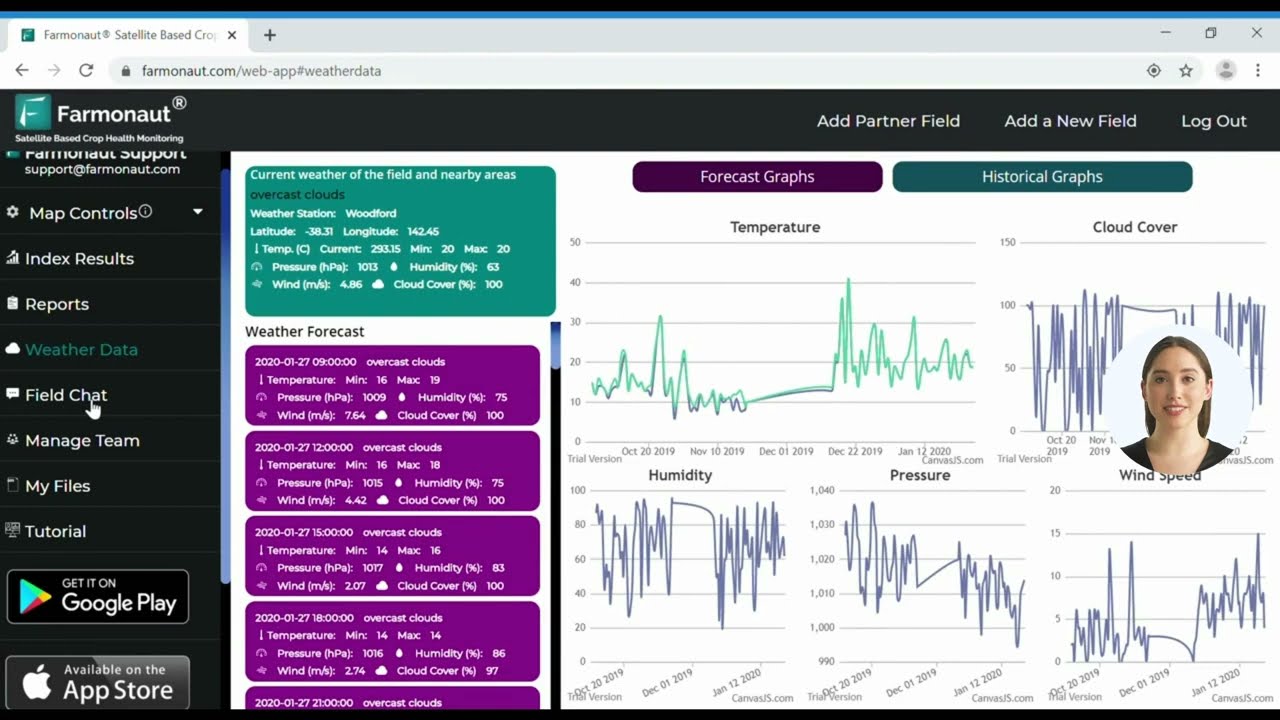
Empowering Data-Driven Agriculture with Farmonaut Technologies
As a satellite technology company, we at Farmonaut are dedicated to making advanced weather and satellite insights affordable and universally accessible. Our technologies complement the broader trend of integrating geospatial, meteorological, and AI-driven analysis for the entire supply chain—from individual farms to multinational agribusiness and government strategy:
- 🛰️ Satellite Monitoring: Multispectral analysis for crop health, soil conditions, and infrastructure efficacy
- 🤖 Jeevn AI Advisory: Real-time, location-aware weather forecasts and actionable farm/forestry management strategies
- 🔗 Blockchain Traceability: Transparent, tamper-resistant supply tracking across agriculture, forestry, and mining sectors
- 🌐 API Integration: Seamless business system connectivity for tailored analytics
- 📈 Environmental Monitoring: Live carbon footprint and resource use analytics

By leveraging the convergence of satellite imaging, weather stations, and AI, we enable precision agriculture and forestry, minimize operational risks, and provide actionable intelligence for robust decision-making—delivering value across the food, fiber, and fuel markets worldwide.
Frequently Asked Questions (FAQ)
1. How does weather impact agricultural commodities supply on a global scale?
Weather events like droughts, floods, and heatwaves directly affect crop yields, timber growth, and input supply, resulting in changes to the global availability of food, feed, and fiber. These fluctuations in supply often cause price instability in commodity markets and require proactive adjustments along the supply chain.
2. Why is near-real-time weather data essential for farmers and processors?
Real-time weather data enables precision farming and timely risk mitigation. It helps farmers plan planting, manage irrigation, protect against pest and disease outbreaks, and schedule efficient harvests—optimizing yield and reducing loss even when facing adverse weather.
3. What is the comparative role of satellite data versus local weather stations?
Local weather stations deliver granular meteorological readings, while satellite data provides spatial context and large-scale insights on soil health, vegetation vigor, and climate anomalies. Combining both produces a holistic, multi-scale framework for decision-making.
4. How do advanced analytics influence risk management for agribusiness?
Advanced analytics enable scenario planning and risk prediction based on weather trends and historical variability. Tools like AI-driven advisory and blockchain traceability support adaptive supply chain strategies, improve transparency, and reduce the impact of shocks.
5. How can financial institutions and insurers benefit from satellite-driven weather intelligence?
By leveraging satellite-based verification and AI-aided risk assessment, financial institutions can automate loan approvals, verify claims, and reduce fraud—streamlining financial access for farmers and agribusiness, while lowering institutional risk exposure.
Conclusion
The weather’s impact on agricultural commodities supply, pricing, and risk spans continents, sectors, and value chains. From the field edge to the commodity exchange, precision in weather data and innovative, data-driven strategies are no longer optional—they are fundamental for resilient, profitable, and sustainable agricultural markets.
By investing in advanced weather station networks, embracing satellite and AI-driven analytics, and building robust risk management frameworks, the industry can transform climate challenges into opportunities for growth and innovation. As environmental volatility becomes the rule rather than the exception, the future of farming, forestry, and input sectors depends on weather-proofing every stage of the supply chain with actionable intelligence and adaptive technology.
Farmonaut Subscriptions
Explore affordable, scalable, and industry-leading satellite-driven solutions for agriculture, forestry, and related sectors. Subscribe now and harness the power of real-time data for your operation:
🔑 Key Takeaways
- 🌦️ Weather impact on agricultural commodities shapes every step from farm to market.
- 🧠 Data-driven resilience reduces supply shocks and price volatility.
- 📲 Farmonaut’s satellite, AI, and blockchain technologies empower actionable, transparent, and sustainable management.
- 🛰️ Real-time integration with local and global networks delivers timely, location-aware insight.
- 🔗 Supply chain transparency and adaptive strategies are essential for tomorrow’s food and fiber security.

 Messina Beej
 Dirks Bros Farms
 Red August Group
 Farm Inc
 WeMe Global
 Agrotoken
 Blue BearX
 Insignito
 Croptimum
 DnCubed
 Field Capacity
 Indosistim Teknologi
 Liquify Digital
 CU Foods
 BeyondTech Global
 Rouge VC
 AgroGreen Dynamics
 AgroRisk
