

Weed Resistance: 5 Innovations Shaping Urban Agriculture
The world of agriculture is constantly evolving, especially as the need to manage resistant weed populations grows in intensity. A weed that exhibits resistance to an herbicide undermines traditional chemical control methods, affecting yields, farm economics, and the quality and affordability of agricultural produce flowing into our cities.
By 2026, agricultural innovations have not only reshaped weed control but supported the expansion of supply chains that created vibrant, growing urban markets for agricultural produce. A weed such as Palmer amaranth (Amaranthus palmeri), notorious for its herbicide resistance, exemplifies this global challenge, with “superweeds” threatening food security and profitability.
In this comprehensive guide, we dissect the origins of herbicide resistance, revealing how integrated strategies and new technologies are revolutionizing weed control—protecting crops, transforming farms, and ensuring urban markets receive fresh, affordable food. Our focus is on the five most significant innovations empowering this agricultural revolution for 2026 and beyond.
Herbicide Resistance in Weeds: The Growing Challenge
Herbicide resistance is an ongoing agronomic dilemma, rapidly evolving as a threat to sustainable agriculture. When a weed survives repeated applications of a single herbicide, its progeny inherit traits making entire populations resistant. This process is accelerated by exclusive reliance on chemical controls and poor integrated weed management (IWM) practices.
Palmer amaranth (Amaranthus palmeri)—a highly competitive weed—is a textbook example of this phenomenon. Found worldwide, this weed’s ability to survive applications of glyphosate and other herbicides has caused significant problems for farmers growing corn, soybean, and cotton. The result is reduced yields, undermined farm economics, and increased demand for novel solutions.
Why Does Resistance Develop?
- Repeated, exclusive use of one herbicide mode of action allows weeds with genetic mutations (resistant alleles) to propagate unchecked.
- Genetic variation within weed populations enables the rapid escalation, or proliferation, of superweeds.
- The pressure to maximize yields in urban-centric supply chains motivates continuous, intense weed control, inadvertently favoring resistance.
As the problem has escalated by 2026, the need to innovate rapidly has never been more compelling. The ability of a weed that exhibits resistance to an herbicide to survive and thrive directly undermines the effectiveness of conventional management methods.
Over-relying on a single herbicide not only allows resistant weeds to survive but can speed up the development of superweeds, forcing farm operations into a costly cycle of increased chemical use with diminishing returns.
Integrated Weed Management & Innovations in 2026
As urban markets hunger for fresh, affordable food, farmers are combating weed resistance with a strategic blend of science, technology, and experience. Instead of depending solely on chemicals, the trend is toward Integrated Weed Management (IWM): a multifaceted, systems-based approach that’s now the industry standard.
Modern IWM combines cultural, mechanical, biological, and precision chemical methods—all enabled by agricultural innovations that are rapidly scaling globally.
What Is Integrated Weed Management? (IWM)
- ✔ Diversified Crop Rotations: Breaks weed cycles by alternating crops with different life cycles and growth habits.
- ✔ Physical Weeding: Employing robotics or human labor for mechanical removal without chemicals.
- ✔ Precision Chemical Use: Applying targeted herbicides based on weed maps and real-time data.
- ✔ Biological Controls: Introducing natural weed predators, bioherbicides, or microbial solutions.
- ✔ Cover Crops & Mulching: Suppressing weed emergence and improving soil health.
Emerging Technologies for Urban Agriculture Weed Resistance
In shaping ever-more sophisticated urban agricultural supply chains, these are the advances propelling us forward:
- Autonomous Robotics & Mechanical Weeding: Automated systems now detect, classify, and mechanically remove weeds—even those resistant to multiple herbicide modes of action. This reduces chemical usage and supports sustainable practice.
- Satellite Imaging & AI Platforms: Satellite technologies like ours at Farmonaut help deliver real-time images and analytics, allowing farmers to detect resistant populations early, map weed distribution, and make data-driven interventions.
- Drones & Precision Sprayers: Low-altitude drones survey fields for weed hot spots, guiding variable-rate sprayers that target only affected areas, reducing herbicide volume and limiting resistance escape.
- Genetic & Biotechnological Approaches: Breeding herbicide-tolerant crops with improved traits, or using gene editing tools (like CRISPR), equips crops to withstand diversified herbicide schedules, limiting selection pressure on weeds.
- Digital Advisory & Blockchain Traceability: Digital platforms monitor weed emergence and recommend timely control strategies. Integrated blockchain traceability systems ensure that the quality and safety of agricultural produce moving through the urban supply chain are transparently documented.

Benefits of Innovations in Weed Resistance Management
- 📊 Data Insights: Early detection and mapping of resistant weeds for site-specific action.
- ✔ Reduced Chemical Dependency: Enabling mechanical, cultural, and biological control.
- 🌱 Boosted Sustainability: Less chemical runoff, improved soil health, and more robust crop rotations.
- 📦 Supply Chain Efficiency: Consistent, higher-quality yields streamline logistics and reduce food waste.
- 💡 Scalable Solutions: Flexible tech stacks suit smallholders and large commercial farms alike.

Comparative Table: Five Innovations Reshaping Urban Agriculture
The following comparative table presents the five leading agricultural innovations supporting urban supply chain development, combating herbicide resistance, and boosting crop yields. These quantified impacts ensure actionable, up-to-date analysis for agricultural professionals, researchers, and urban food system planners in 2026 and beyond.
| Innovation/Technology | How It Works | Estimated Reduction in Weed Resistance (%) | Estimated Yield Increase (%) | Urban Supply Chain Benefit |
|---|---|---|---|---|
| Drone-Based Weed Detection | Aerial drones identify resistant weed patches, guiding precision interventions and real-time monitoring. | 35–50% | 12–18% | Faster, more accurate field mapping; optimized logistics and equipment deployment; reduces costs and food loss. |
| Gene Editing (e.g., CRISPR) | Edits crop genetics for multi-herbicide tolerance or direct weed suppression traits. | 40–60% | 15–22% | Stable, high-yield outputs; strengthens supply reliability for growing cities. |
| Precision Herbicide Application | Uses AI, GPS, and sensors for spot spraying, lowering overall chemical use. | 30–45% | 10–16% | Improves product quality, reduces chemical residues, aligns with urban food safety regulations. |
| Automated Mechanical Weeding Robots | AI-driven robots physically remove or till weeds, especially herbicide-resistant ones, without chemicals. | 45–65% | 13–20% | Reduces labor costs, supplies cleaner produce, lowers resistance buildup. |
| Blockchain Traceability Platforms | Tracks every transaction and input, ensuring food safety and pesticide compliance in real-time. | 15–30% | 6–11% | Ensures trust, transparency, and traceability throughout the urban supply chain. |
- 🛰 Enhanced Detection: Satellite monitoring for resistance mapping and early intervention
- 🤖 Efficiency: Automation reduces labor and chemical input costs
- 🔗 Transparency: Blockchain provides verifiable quality and compliance for urban distributors
- 🌱 Sustainability: Lowered environmental impact and improved soil health
- 📈 Resilience: Stronger supply chains for fluctuating urban demand

- 🛰 Satellite Image Analysis: Identify and map weed pressure
- 🚜 Autonomous Robots: Mechanically remove resistant weeds
- 🧬 Gene-Edited Crops: Increase tolerance, diversify herbicide regimens
- 🌱 Cultural Methods: Cover crops and rotations disrupt weed life cycles
- 💻 Digital Traceability: Ensure compliance and food safety
- ⚠ Risk: Overuse of technology without proper stewardship may raise operational costs or increase tech dependence.
- ⚠ Limitation: Upfront investment in automated or gene-editing technologies can be high for smallholders.
- ⚠ Concern: Potential regulatory hurdles for gene-edited and biotech solutions in some regions.
- ⚠ Challenge: Ensuring data interoperability across digital advisory platforms for seamless farm-to-market linkages.
- ⚠ Complexity: Integrating multiple IWM strategies requires holistic management skills.

Expanding Supply Chains: Connecting Fields to Urban Markets
Agricultural innovations have supported the expanding chain that created urban markets for agricultural produce. These supply chains now rely on modern infrastructure, high-tech logistics, and transparent resource tracking, enabling urban populations to access stable, affordable, and safe food.
Modern Urban Agricultural Supply Chains
Supply chain efficiency is paramount as cities grow and demand for diverse crops rises. Success depends on integrating weed resistance management with:
- Cold Chain Logistics: Preservation of fresh quality from farm to city grocer, reducing food waste.
- Smart Warehousing: IoT-enabled, AI-managed storage for optimal inventory and order fulfillment.
- Blockchain Traceability: See our traceability solutions for urban food producers—ensuring authenticity and consumer confidence.
- Contract Farming & FPOs: Aggregated volumes and consistent standards help farmers meet urban retailer requirements efficiently.
- Post-Harvest & Quality Analytics: Early weed management means cleaner, more uniform produce, vital for urban consumers.

The synergy between innovative weed management and robust supply chains is clear: Control on-farm translates to urban-food security, reducing food loss, supporting sustainable practices, and ensuring consistent affordability for urban markets.
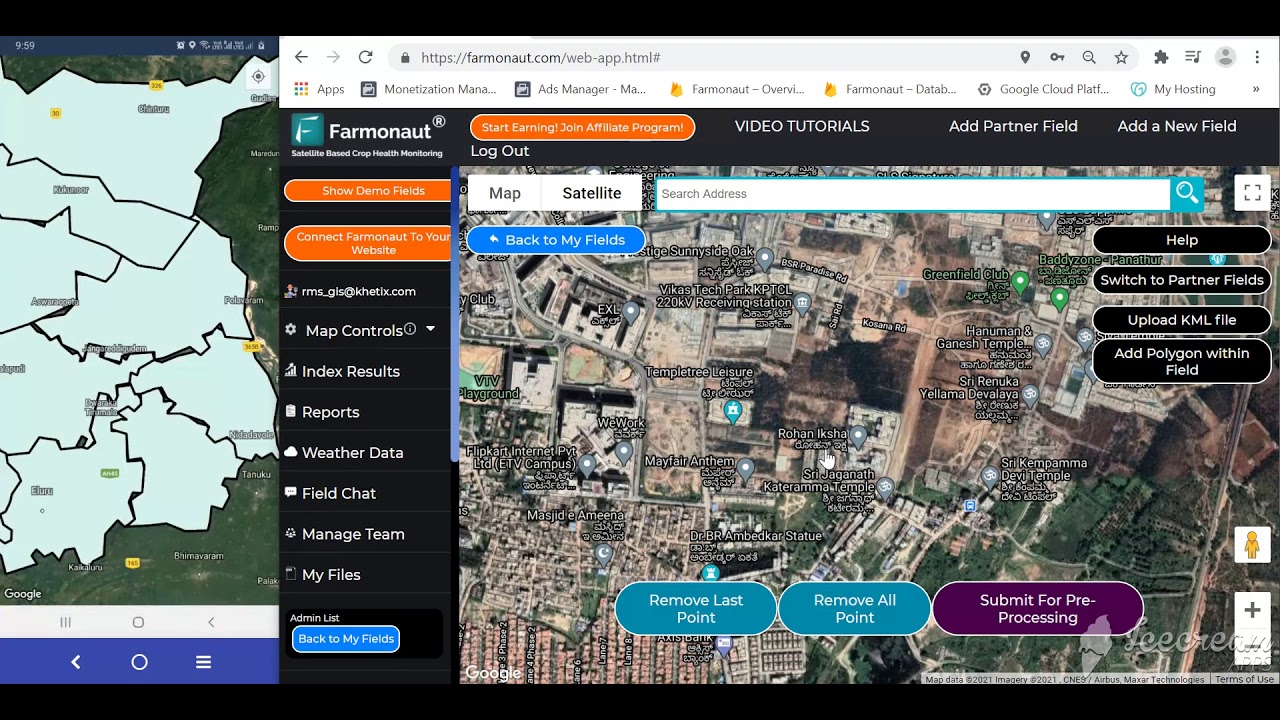
How Farmonaut Supports Sustainable Agriculture
At Farmonaut, we empower farmers, agribusinesses, infrastructure managers, and urban food system stakeholders worldwide by delivering advanced satellite-based, AI-enhanced solutions. Our mission is to democratize access to data-driven agricultural innovation, addressing challenges such as a weed that exhibits resistance to an herbicide, and enabling smarter integrated weed management at all scales.
Our technologies—spanning multispectral satellite crop health monitoring, AI-powered advisory systems, and blockchain-enabled product traceability—are accessible via 

 —enabling flexible, on-the-go, and large-scale farm monitoring for diverse users in 2026 and beyond.
- Jeevn AI Advisory: Analyze satellite data and provide tailored weed control, yield improvement, and weather insights to optimize urban and peri-urban farming.
- Blockchains for Traceability: Strengthen supply chain credibility by tracking produce and inputs from soil to city supermarket.
- Environmental Impact Tracking: Carbon footprint monitoring—see our carbon footprinting solutions—supports sustainability for agriculture, mining, and infrastructure.
- Fleet & Resource Management: Fleet management tools coordinate logistics, reduce costs, and keep supply flowing efficiently into urban centers.
- Large-Scale Farm Monitoring: Our large scale farm management platform helps governments and big producers oversee vast regions, fix bottlenecks, and enhance urban supply resilience.
These tools are available through API access (developer docs) and easy subscriptions:

Key Takeaways & Highlight Boxes
Frequently Asked Questions (FAQ): Weed Resistance & Innovation in Urban Agriculture
What is “a weed that exhibits resistance to an herbicide” and how does it occur?
It’s a weed population—such as Palmer amaranth—that survives repeated applications of an herbicide that previously worked well. Resistance develops due to genetic mutations that allow weeds to adapt, especially when a single herbicide mode of action is used exclusively.
Why are urban agricultural markets at higher risk from weed resistance?
Urban markets demand consistent, affordable, and safe produce. Resistance in weeds threatens yield reliability, increasing costs and potentially complicating supply chains that serve cities with high expectations for fresh food quality and traceability.
How do satellite and AI systems like Farmonaut’s help in weed resistance management?
Our tools deliver real-time, field-level crop and weed health data, allowing for early detection of resistant populations, optimized input use, and data for supply chain stakeholders to ensure compliance and streamline logistics.
Is mechanical weeding cost-effective for small farmers?
Automated mechanical weeding is getting more affordable and scalable, especially when integrated with digital farm management. Regional co-ops and shared service models—and affordable tools like drone weed mapping—help smallholders participate in the innovation wave.
What role does blockchain traceability play in urban food security?
Blockchain ensures that every batch of produce is tracked, verified, and compliant with safety standards. This protects consumers, strengthens chain-of-custody, and enables instant recalls or interventions if contamination is detected.
Conclusion: The Future of Urban Agriculture Is Innovatively Weed-Free
A weed that exhibits resistance to an herbicide—such as Palmer amaranth—poses real, ongoing risks to yield, economics, and urban food security. A mere decade ago, the conversation revolved around chemical control and crop rotation; now, innovation defines the battle.
By leveraging integrated weed management and embracing emerging technologies, farmers and urban supply chains are moving toward resilient, sustainable, and profitable agriculture. The quantified impact of these five key innovations—from drone surveillance to blockchain-enabled transparency—positions cities to meet the challenges of 2026 and beyond with confidence.
At Farmonaut, we believe in a data-driven agricultural future—where informed action, not inertia, delivers fresh, high-quality, and affordable produce to every growing city.
Empower your farm and your supply chain with evidence-based resistance management, robust traceability, and real-time insights. Join the innovation movement for a weed-resilient, urban-ready agricultural tomorrow!

✔ Recap: Five Innovations Shaping Urban Agriculture in 2026
- Drone & satellite weed detection
- Gene editing for crop tolerance
- Precision, AI-guided chemical applications
- Automated mechanical weeding
- Blockchain traceability platforms

 Godrej Agrovet
 Hayleys Agriculture
 Linx Agritech
 Adinet
 Save Your Soils
 GalaxEye Space
 Grandstream Algérie
 XOS Realty
 Geospatial Lab Africa
 Agro La Gándara
 HIPSAC
 ZOL Zimbabwe
 Juligerm
 AdBio
AdBio MISE Maroc
 NWNS
NWNS Red August Group
 Farm Inc
 WeMe Global
 Agrotoken
 Blue BearX
 Insignito
 DnCubed
 Indosistim Teknologi
 Liquify Digital
 CU Foods
 BeyondTech Global
 Rouge VC
 AgroRisk
 Oath Inc
 Esri North East Africa
 MDCV UK
 Etech Consulting Madagascar
 Vestlandsforsking
 WB Dev
 Sama Premium
 Tres Valles
 Blickwinkel
 Agricultural Credit Policy Council
 eKGIS
eKGIS Mostas Tech
 Andex
Andex Deluxe Conseil
 WICO
WICO Chimera Innovation
 SkyHarvest
 Teledarbas
 Exurbia Geospatial
 FieldZero
