

Quebec Farming: 7 Proven Quebec Agriculture Strategies
“Over 90% of Quebec’s agricultural land uses sustainable crop rotation to maintain soil health and boost climate resilience.”
Introduction: Quebec Farming at a Glance
Quebec farming stands as a shining example of how fertile landscapes, integrated approaches, and policy-driven innovation can create a thriving, sustainable agricultural sector. As a province characterized by an intricate mix of arable land and forested regions, Quebec’s farming and forestry enterprises have found unique ways to blend resilient crop production, advanced livestock management, and robust rural stewardship with modern processing and export strategies.
Modern farming Quebec is not just about maximizing yields—instead, it’s about balancing soil conservation, climate resilience, and rural prosperity while delivering high-quality products to both local and global markets. The Quebec agricultural sector has evolved with a focus on sustainability, diversification, and adaptability, supporting not only food security but biodiversity and economic vibrancy in regional communities.
In this comprehensive guide, we’ll uncover the 7 proven Quebec agriculture strategies that are shaping the province’s agricultural future. We’ll also illuminate how Farmonaut’s satellite-based innovations can support farmers and stakeholders across Quebec and beyond. Let’s dive into the heart of Quebec’s sustainable success!
The integration of farming, forestry, and innovative technologies has made Quebec farmland a leader in climate-adaptive, market-responsive models. This enhances the region’s economic resilience, food quality, and environmental sustainability.
“Quebec’s forestry sector manages 760,000 square kilometers, supporting both biodiversity and rural economies through sustainable practices.”
Comparative Table: 7 Quebec Agriculture Strategies
Comparing strategies side by side can help farmers and decision-makers prioritize actions that maximize both yield and climate resilience while minimizing environmental impacts.
1. Sustainable Crop Rotations & Soil Health
Sustainable crop rotations have become a defining feature of Quebec farmland, preserving soil health and boosting climate resilience across diverse regions. In Quebec, crop rotations often involve a balanced cycle of cereal crops, legumes, and forage species. This practice replenishes organic matter, interrupts pest and disease cycles, and maintains soil structure.
- ✔ Key Benefit: Reduces soil erosion and supports sustained fertility for robust food production.
- 📊 Data Insight: Up to 20% higher yields reported in farms practicing multi-year, adaptive crop rotations.
- ⚠ Risk or Limitation: Inadequate rotation planning may inadvertently favor certain pests or nutrient imbalances.
- ✔ Enhanced Resilience: Diversifies farm output, shielding farmers from market and weather shocks.
- ✔ Biodiversity: Crop variation supports beneficial insects, soil microbes, and wildlife corridors.
The widespread adoption of crop rotations in Quebec is underpinned by government programs and extension services, which provide technical support for crop planning, soil monitoring, and sustainability compliance. The fertile Lawrence lowlands and the Saguenay–Lac-Saint-Jean corridor are especially noted for effective rotations involving corn, soybeans, and forage mixes.
Neglecting to adapt rotations to evolving climate and market conditions can reduce long-term soil productivity and farm sustainability.

Visual List: Indicators of Healthy Crop Rotations
- 🌱 Vigorous plant growth across fields
- 🪱 Active earthworm and beneficial microbe populations in soil
- 🍃 Reduced weed and pest pressures
- 💧 Improved water infiltration and retention
- 🌾 Visible organic matter and diverse residue on soil surface
For those seeking advanced monitoring of soil health and crop vigor, Farmonaut’s Carbon Footprinting platform leverages satellite analytics to measure, track, and benchmark field-level carbon outcomes, helping farmers in Quebec proactively adapt to environmental and regulatory changes.

2. Robust Dairy Farming Under Supply Management
The dairy sector is arguably the cornerstone of Quebec farming. With a well-designed supply management framework, Quebec’s dairy industry achieves stable prices for producers and consumers alike, ensuring both profitability for farmers and affordable, high-quality milk and dairy products for urban and rural communities. Dairy farming Quebec supports local input use, minimal feed import dependence, and robust animal health standards.
- ✔ Cornerstone for rural employment: Dairy farming sustains thousands of jobs across Quebec’s countryside.
- ✔ Quality focus: Strict management and traceability ensure high-standard dairy products.
- 📊 Data Insight: Quebec produces nearly 50% of all dairy in Canada, reinforcing its market leadership.
- ✔ Sustainable manure recycling: Supports energy generation and organic nutrient cycles.
- ⚠ Risk or Limitation: Over-reliance on a single commodity makes supply management adaptation crucial for future resilience.

Dairy supply management in Quebec is not just economic. It underpins food sovereignty, rural population retention, and the financial stability of thousands of small and medium-sized farms—directly tying the sustainability of Quebec farming with societal well-being.
Modern Quebec dairy farms employ leading-edge monitoring and management technologies. For real-time advisory and compliance with supply-chain traceability requirements, Farmonaut’s blockchain-based traceability platform ensures transparency across the entire Quebec dairy lifecycle, promoting consumer trust and regulatory compliance.

3. Diversified Crop Mixes: Horticulture, Cereals, and Specialty Crops
Quebec’s diverse agricultural mix is its signature strength. The horticulture sector thrives in the microclimates of the Saint Lawrence Lowlands, where apples, berries, and numerous vegetables flourish under modern irrigation and soil management. Annual crops—corn, soybeans, and traditional potatoes—remain pillars of rural output, contributing both to feedstock, food security, and export-driven economies.
- 🍏 Specialty products like maple syrup, blueberries, and cider apples drive Quebec’s unique food identity and regional branding.
- 🍅 Greenhouse vegetables (tomatoes, lettuce, cucumbers) enable year-round production and stabilize prices.
- ✔ Biodiversity from crop diversity enhances pest resilience and ecosystem health.
- ⚠ Market volatility: Specialty crops require vigilant planning to avoid oversupply or sharp price drops.
- 📊 Data insight: Horticulture is one of Quebec’s fastest-growing agriculture sectors by revenue and area.
Quebec’s focus on value-added processing (e.g., berry wines, cideries, vegetable packaging) is driving up farm gate prices and creating rural employment and export opportunities. Investment in processing infrastructure is set to boost this advantage further.
Seasonal fruit and vegetable production is coordinated with regional farmers’ markets and CSA (community-supported agriculture) programs, emphasizing the traceability and high quality of Quebec-grown foods.
For modern farm operations balancing diverse crops and specialties, Farmonaut’s large-scale farm management suite helps monitor planting, address variability, and optimize harvest schedules across multiple plots—streamlining both risk management and resource allocation.

Visual List: Signature Quebec Farm Products
- 🍁 Maple Syrup (world-renowned)
- 🫐 Wild Blueberries (export favorite)
- 🍏 Cider Apples (artisanal and commercial)
- 🥔 Potatoes (deep-rooted tradition in Saguenay–Lac-Saint-Jean)
- 🌿 Organic Vegetables (urban markets)
4. Integrated Agroforestry & Managed Grazing
In Quebec, forestry and agriculture intersect through agroforestry practices that use forested lands for managed grazing, shelterbelts, and biodiversity corridors. These integrated approaches boost farm resilience, soil conservation, and ecosystem services—from pollinator habitat to protection from wind erosion and watershed maintenance.
- 🌲 Shelterbelts and windbreaks reduce crop damage and water evaporation.
- 🐄 Multi-story silvopastoral systems use trees for grazing livestock shade, improving animal welfare and soil cover.
- ✔ Buffer strips along rivers safeguard water quality and biodiversity.
- ⚠ Limitation: Initial establishment costs can be higher but pay off in long-term farm performance.
Integrated agriculture-forestry systems are increasingly supported by Quebec policy. These efforts reinforce the rural economy and maintain the province’s dual strength as a leader in both agriculture and forestry. The synergies of agroforestry enable producers to leverage both arable and forested land—maximizing productive potential while advancing stewardship goals.

Agroforestry is a model of resilient land stewardship. It links conservation, productivity, and rural culture—ensuring Quebec farmland can thrive under environmental, economic, and social pressures.
5. Advanced Precision Agriculture & Innovation
Quebec’s tradition of innovation is deeply rooted in its agricultural sector. Today, the rapidly growing adoption of precision agriculture—combining satellite monitoring, soil analysis, real-time AI advisory, and integrated pest management (IPM)—is transforming how Quebec’s farmers optimize inputs, reduce environmental impacts, and improve yields.
- ✔ Monitor crop health via multispectral satellite imaging
- 📊 Leverage AI to detect disease or nutrient stress before symptoms appear
- ✔ Apply fertilizers and water precisely where needed
- ⚠ Risk or Limitation: Upfront technology costs, but offset by increased yield and reduced waste over time.
- ✔ Automated data records for continuous improvement
Farmers across Quebec use data-driven platforms to monitor intricate details of crop growth—from NDVI (Normalized Difference Vegetation Index) readings to soil moisture status and yield mapping. For those looking to implement best-in-class technology, Farmonaut’s satellite solutions offer affordable, real-time analytics, directly accessible via web, Android, and iOS.

With precision agriculture, it’s possible to reduce synthetic input use by 10-30%—directly lowering operational costs and lessening agriculture’s environmental footprint, key themes in Quebec farming’s sustainability discourse.
Start with small-scale precision pilots, such as satellite-guided scouting or variable-rate seeding. Gradual tech integration ensures smooth adoption and rapid ROI for Quebec farms of any size.
6. Water, Nutrient & Energy Efficiency Practices
In the wake of climate variability, resource efficiency has risen to the forefront for Quebec farmers. Water management—including precision irrigation, conservation tillage, and cover cropping—helps maintain groundwater reserves and reduce erosion. Energy efficiency upgrades, such as the adoption of on-farm solar, wind, or biogas, cut both costs and greenhouse gas emissions.
- 💧 Modern irrigation and moisture monitoring ensure optimal water distribution.
- 🪫 Energy-efficient pumps, lighting, and machinery lower greenhouse gas output.
- 🌾 Manure and nutrient management programs reduce environmental runoff and optimize crop growth.
- ⚠ Potential Limitation: Some infrastructure retrofits may require significant initial investment, but grants and Quebec policy support are widely available.
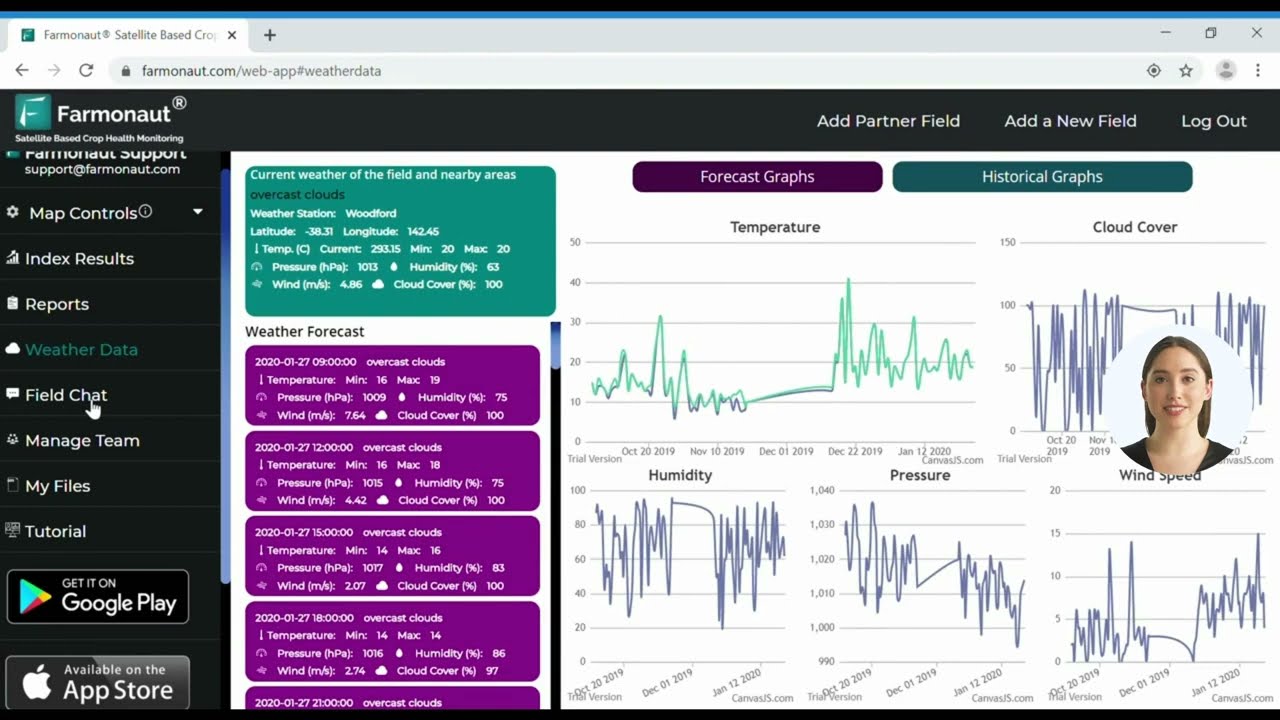
For those wanting a holistic resource optimization tool, Farmonaut’s Fleet Management platform optimizes logistics, monitors fuel use, and improves field operation efficiency—driving down cost and emissions for farms, processors, and transporters across the Quebec agriculture sector.
Linking energy and water management to digital farm records enables Quebec’s producers to meet regulatory requirements, access green investment incentives, and future-proof their business against resource volatility.
7. Strong Market Access & Policy Supports
No sustainable farming system thrives without robust, integrated market access, storage facilities, and policy support. In Quebec, a combination of regional infrastructure—such as cold storage units, transport networks, and processing plants—enables timely delivery of perishable foods and value-added goods to urban and export markets.
- 🚛 Efficient logistics minimize food loss between field and grocery shelf.
- 🏷️ Regional branding and farmers’ markets distinguish Quebec-grown quality products.
- 📦 On-farm and cooperative storage reduce price shocks and enable better bargaining power.
- ⚠ Common Mistake: Overlooking quality assurance or cold-chain needs can limit export opportunities and erode trust.
- 📊 Data insight: Quebec’s export framework supports dozens of certified food hubs and cooperatives.
Policy supports—ranging from investment programs and subsidies to farm modernization grants—continue to drive Quebec’s agricultural resilience, ensuring producers can adapt and invest as consumer and climate demands evolve.
For agricultural financing and weather-indexed insurance needs, Farmonaut’s crop loan & insurance satellite platform streamlines data collection and verification to speed up access to credit for farmers, while assuring banks and insurers of claims validity.
Quebec Agriculture: Infrastructure and Logistics
A resilient food system relies on more than just healthy fields and barns. Quebec’s excellence in agricultural infrastructure—from storage to transportation to state-of-the-art processing facilities—ensures regional produce can reach local and international markets at peak freshness and safety.
- ✔ Cold storage facilities reduce spoilage for dairy, berries, and perishables.
- ✔ Efficient transportation links connect rural communes with Montreal, Quebec City, and export terminals.
- ✔ Quality assurance programs and traceability platforms confirm food integrity from farm to fork.
- ✔ Modern processing hubs add value and create rural jobs, especially for specialty products.
Continuous investments, supported by public funds and cooperative models, keep Quebec’s agricultural infrastructure world-class and future-ready.
For Quebec producers looking to expand, aligning harvest, storage, and shipping logistics with market timing can maximize profitability and minimize losses—key for commodities and value-added goods alike.
Quebec Forestry & Land Stewardship Synergies
Quebec forestry is integral to the province’s sustainable agriculture future. With over 760,000 square kilometers of managed forested lands, Quebec’s approach to resource management links timber production with ecosystem service preservation and rural economic development.
- 🌲 Managed forests provide windbreaks, carbon sinks, and wildlife habitat
- ✔ Forestry-based rural economies generate employment and support farm communities
- ✔ Biodiversity corridors maintain pollinator and predator populations that benefit crops
- ✔ Watershed and riparian zone protection supports both agriculture and municipal water supplies
- ✔ Responsible mineral use and reclamation in adjacent regions maintain ecosystem health post-extraction
Integrated stewardship programs and the co-location of agriculture with forestry and even mining activities underscore Quebec’s unique approach to landscape resilience, productivity, and sustainability.
Farmonaut: Satellite Innovation for Quebec Farming
At Farmonaut, our mission is to make satellite-driven insights and AI-powered tools accessible and affordable for every stakeholder in Quebec farming—from individual producers to cooperatives, agri-entrepreneurs, and policy planners. Our platform brings together advanced satellite monitoring, blockchain-enabled traceability, fleet and resource management, and sustainability benchmarking to support better decisions and better business outcomes.
By leveraging the latest in AI advisories, remote sensing, and data integration, we help Quebec’s vibrant agricultural and forestry sectors:
- ✔ Monitor vegetation health (NDVI) and soil moisture remotely
- ✔ Detect pest stress, nutrient deficiencies, and yield potential
- ✔ Maintain reliable blockchain-based supply chain traceability
- ✔ Improve credit access and insurance verification via satellite proof
- ✔ Automate reports to enable sustainable, high-performance rural operations



For developers and businesses in Quebec seeking to integrate satellite, weather, and crop data directly into management systems, tools, or R&D initiatives, our Farmonaut API and corresponding API developer documentation are designed for seamless adoption—enabling innovation across the agro-food technology sector.
Digital agriculture and forestry analytics are among the fastest-growing segments in rural Quebec. Tools like Farmonaut’s platform offer scalable, low-barrier solutions that strengthen both farm and lending institution confidence—unlocking new growth and sustainability opportunities province-wide.
Powered-Up Resources & Key Links
- ✔ Farmonaut Satellite Platform: Access real-time crop monitoring for Quebec’s diverse landscapes
- ✔ API Integration: Plug in satellite and weather data to upgrade your Quebec ag solutions
- ✔ Android App & iOS App: Download Android | Download iOS
- ✔ Carbon Footprinting: Benchmark and optimize your carbon outcomes
- ✔ API Docs: Developer Documentation for advanced use cases
Missing out on the latest data-driven tools and digital traceability requirements can keep even the best-managed Quebec farms from reaching premium markets and ensuring full regulatory compliance.
FAQs: Quebec Farming & Sustainable Practices
- What are the top crops grown in Quebec farmland?
- Quebec’s leading crops include corn, soybeans, potatoes, apples, berries, maple products, and greenhouse vegetables. Crop diversity varies across microclimates but remains fundamental for climate resilience and food security.
- How does Quebec farming support climate resilience?
- Adoption of sustainable crop rotations, integrated agroforestry, soil conservation practices, and precision agriculture directly boosts resilience against droughts, floods, temperature shifts, and market volatility.
- What role does forestry play alongside agriculture in Quebec?
- Quebec forestry not only underpins rural economies but sustains high biodiversity, provides shelter and protection for croplands, and delivers ecosystem services vital to farming success (windbreaks, watershed support, habitat corridors).
- What technology solutions are available for Quebec producers?
- Producers in Quebec can access leading satellite-based monitoring, fleet management tools, AI-driven advisories, traceability solutions, and carbon benchmarking platforms via Farmonaut’s ecosystem—enhancing decision-making, sustainability, and profitability.
- How can Quebec farmers access Farmonaut’s services?
- Farmers and agribusinesses can use Farmonaut via web app, Android, iOS, or integrate through API. Solutions cover everything from small field monitoring to large-scale analytics, traceability, and compliance needs. Start here.
Conclusion: Quebec’s Resilient Agricultural Future
Quebec farming exemplifies the power of tradition blended with modern innovation, administrative foresight, and environmental stewardship. From its famously fertile landscapes and diverse crop rotations to cutting-edge precision agriculture and fully integrated forestry partnerships, Quebec leads North America in building a climate-resilient, market-responsive rural economy.
The seven strategies outlined here—each rooted in sustainability, science, and smart policy—provide a blueprint for producers, advisors, and agri-entrepreneurs across the province and beyond. As climate, economic, and consumer pressures evolve, Quebec’s example shows that integrated management, continuous learning, and responsible innovation are not options but necessities for the future of food and land stewardship.
With advanced tools (including Farmonaut’s satellite-powered platforms), all agricultural stakeholders in Quebec—no matter their scale or specialty—can meet rising expectations for productivity, transparency, and sustainability. As we continue supporting rural prosperity and environmental heritage, the Quebec model remains a guide for global agricultural transformation.
Quebec’s agricultural strength lies not only in its fertile fields or advanced processing but also in its commitment to sustainability, innovation, and rural community well-being. By learning from Quebec’s strategies—and embracing the latest in digital agriculture solutions—farmers everywhere can future-proof their operations for the decades ahead.

 AdBio
AdBio MISE Maroc
 Drift-Sense
 NWNS
NWNS Hydenmet
 Red August Group
 Farm Inc
 WeMe Global
 Agrotoken
 Blue BearX
 Insignito
 Croptimum
 DnCubed
 Field Capacity
 Indosistim Teknologi
 Liquify Digital
 CU Foods
 BeyondTech Global
