

Agriculture in Belarus: Belt Farming, Smart Machinery & The Future of Sustainable Production
“Belarus uses belt farming on over 40% of its arable land, boosting soil health and sustainable yields.”
Table of Contents
- Introduction: Agriculture in Belarus – A Modern Pillar of Food Security
- Soils of Belarus: Foundation for the Agriculture of Belarus
- The Arable Heartland: Belarusian Crop Production
- Potato & Vegetable Growing: Local Food Security & Export
- Livestock & Dairy Sectors: Integrated Belarusian Models
- Agroforestry & Forest Farming: Biodiversity & Ecosystem Resilience
- Belarus Agricultural Machinery: Pride, Progress, and Precision
- Belt Agriculture in Belarus: Strip Tilling, Soil Stewardship & Yield
- Precision & Digital Agriculture: Smart Decisions for 2025 & Beyond
- Cooperatives, State Support, and Policy: Strengthening the Rural Economy
- Market Dynamics: Domestic Demand, Export, and Risk Management
- Sustainability & Environmental Stewardship: Programs and Trends
- Farmonaut Satellite Technology: Empowering Modern Belarusian Agriculture
- Comparison Table: Traditional vs. Belt Farming & Smart Machinery Practices in Belarus
- Outlook for 2026 and Beyond: Building a Resilient Agri-Future
- FAQs
Introduction: Agriculture in Belarus – A Modern Pillar of Food Security
The agriculture in Belarus stands as a resilient, innovative sector defining the nation’s economy and ensuring regional food security. With expansive fertile soils, highly productive cooperatives, and a history of state support, Belarus’s farmers have nurtured a tradition of crop and livestock excellence. In 2026, the agricultural sector is underpinned by a unique blend of traditional approaches and cutting-edge practices—most notably belt agriculture (also called strip or band-row cultivation), climate-smart farming, and adoption of modern agricultural machinery.
This overview explores strategies that propel the agriculture of Belarus toward higher productivity, resource efficiency, and long-term sustainability. Together, we will unpack how soil stewardship, cooperative-centric models, smart machinery fleets, and crop-livestock rotations are nurturing both the land and the people.
“Modern machinery adoption in Belarusian agriculture has increased crop efficiency by up to 30% since 2015.”
Key Insight
Efficient resource use is shaping a new era: By 2026, over 70% of Belarus’s arable land benefits from data-driven decisions, leading to reduced losses and stronger environmental stewardship. This modern agriculture belt supports food security at home and export to global markets.
Soils of Belarus: Foundation for the Agriculture of Belarus
Central and western regions of Belarus are endowed with chernozem-like soils—deep, humus-rich layers renowned for their fertility. These soils are the cornerstone for wheat, barley, rye, oats, and maize cultivation. Intensive arable farming relies on careful management to preserve structure, optimize nutrient holding, and maintain microbial biodiversity.
- ✔ Fertile Soils: Chernozem and podzolic, ideal for crops
- 📊 Precision Practices: Modern tools now monitor soil health in real-time
- ⚠ Risk: Over-tilling and aggressive inputs can cause compaction
- 💧 Water Retention: Belt farming structures help reduce runoff, improve irrigation efficiency
- 🌱 Biodiversity Support: Integration of agroforestry and perennial boundaries

Common Mistake
Ignoring soil diversity: Treating all Belarusian soils as identical reduces crop yields and increases input costs. Variable-rate applications based on soil mapping are a must for optimal outcomes.
The Arable Heartland: Belarusian Crop Production
The agriculture belt stretches across fertile expanses, with primary crops like wheat, barley, rye, oats, and maize leading area and output. Belarus also stands out for sugar beets—a crop vital for both domestic supply and export strategies. Potatoes, forage grains, and oilseeds complement rotations to stabilize soil fertility and provide diversified income streams.
Key Arable Crops: Production & Strategic Choices
- ✔ Wheat & Barley: Critical for grain, feed, and a centerpiece of cooperative farms
- ✔ Rye & Oats: Increasingly popular for rotational benefits and climate resilience
- ✔ Maize: Both for feed and grain, significant in yield improvement programs
- ✔ Sugar Beets: Top export-oriented crop in Belarus, vital for agro-industrial sectors
- ✔ Potatoes & Vegetables: Major for food security and exports, see next section below
To optimize water use, nutrient placement, and irrigation efficiency, farmers in Belarus increasingly combine belt agriculture practices with GPS-guided seeding and variable fertilizer rates—critical in reducing adverse environmental impacts.
-
Learn how satellite imagery and AI support decision-making for yield maximization
with Farmonaut’s monitoring app.




📊 Top Crop Data Insights (2026 Projections)
- 🌾 Wheat: Up to 7.2t/ha with belt farming and precision input
- 🌽 Maize: +20% yield with smart machinery, especially in western Belarus
- 🥔 Potatoes: Over 80% of production meets export grade, minimal storage losses
- 🍬 Sugar Beets: Vital for both domestic use and export; high-tech fleets cut harvesting time by over 15%
- 🥗 Vegetables: Advanced analytics enable >90% fresh market standards
Potato & Vegetable Growing in Belarus: Local Food Security and Global Export
The country has earned international recognition for its potato and vegetable production—cornerstones of food security and rural employment.
- Most potato fields leverage cooperative-based schemes for shared use of machinery and centralized storage.
- Vegetable handling and quick post-harvest processing reduce losses, maintain quality for both domestic and export markets.
- Projects supported by the state enable small and medium-sized farmers to invest in modern storage technologies.
Belarusian cooperatives enable smallholders and large agri-holdings alike to share expensive belt-farming machinery, organize collective marketing, and meet stringent export requirements.

Pro Tip
Post-harvest optimization: Leveraging digital supply chain tools and blockchain-based traceability systems ensures top export standards and reduces losses throughout the chain.
Livestock & Dairy Sectors: Integrated Belarusian Models
The livestock sector in Belarus maintains substantial dairy and beef herds, supported by a reliable supply of forage crops (alfalfa, clover, silage maize). Farms often integrate livestock and crop rotations, stabilizing soil fertility and diversifying income:
- ✔ Dairy Efficiency: Automated milking, forage quality monitoring, and digital fleet management
- ✔ Beef Enhancement: Rotational grazing, resilient pastures, and nutrient recycling
- ✔ Silage Production: Climate-resilient maize and legume blends, advanced compacting for vitamin retention
The Belarusian cooperative model ensures state support for modern machinery (balers, feed mixers, automated tractors), access to veterinary care, and group marketing—critical for sustaining rural livelihoods.
Looking to monitor herd pasture remotely, optimize forage and grazing patterns?
Try satellite-based forest & crop plantation advisory for integrated crop-livestock management.

Agroforestry & Forest Farming: Biodiversity & Ecosystem Resilience
More than a third of Belarus’s land is forested—a vital resource for timber, forest products, and ecosystem services. Modern agroforestry at field boundaries, windbreaks, and integrated biodiversity strips has become standard among progressive farmers.
- ✔ Windbreaks & Hedgerows: Reduce crop wind damage, support soil protection, harbor beneficial insects
- ✔ Forest Product Diversification: Non-timber products add resilience to farm income
- ✔ Biodiversity Corridors: Connectivity for pollinators and pest control
🌳 Visual List: Key Agroforestry Benefits in Belarus
- 🌱 Soil Stability: Reduced erosion, greater water infiltration
- 🐦 Biodiversity: Habitat for birds, small animals, and pollinators
- 🌾 Crop Protection: Natural windbreaks limit weather variability risks
- 💡 Income Streams: Timber, herbs, berries, and ecotourism
Investor Note
Modern agriculture in Belarus offers scalable revenue opportunities from carbon footprinting, biodiversity credits, and ecosystem service payments. Resource-efficient carbon analytics tools are key for export-ready agribusiness in 2026.
Belarus Agricultural Machinery: Pride, Progress, and Precision
The Belarus agricultural machinery sector is a point of national pride, supplying durable tractors, combines, disk harrows, balers, and fertilization units. Local brands and cooperative purchasing enable farmers across scales to maintain strong, competitive machinery fleets.
- ✔ Fuel Efficiency: Newest models offer over 12% lower consumption, with hybrid-electric prototypes by 2026
- ✔ Precision Capability: Standard accessory packages for GPS guidance, yield monitoring, auto-steering
- ✔ Emission Reduction: Up to 21% decrease with advanced engines and digital fleet management
Government-backed schemes and bank loans further reduce the capital burden of fleet renewal. Farmonaut’s fleet management solutions can enhance machinery deployment and fuel management for both individual farmers and large cooperatives.

✔ Benefits of Smart Machinery Use
- Decreased labor costs – Machine learning-backed dispatching
- Optimized fuel and fertilizer input – Sensor-triggered resource flows
- Automated error detection – Reduces downtime, increases reliability
- Real-time field analytics – Enables fast reaction to weather and pest risks
- Long-term machinery lifetime – Data-driven proactive maintenance
Belt Agriculture in Belarus: Strip Tilling, Soil Stewardship & Efficient Yield
Belt farming (strip, band, or contour tillage) is revolutionizing the agriculture belt of Belarus. By maintaining continuous, narrow belts or rows with minimal disruption to intervening soil, belt agriculture:
- Reduces soil erosion and surface runoff, especially in sloped or high-rainfall regions
- Enhances soil moisture retention—critical for resilience to weather variability
- Enables precision nutrient placement and target fertilizer/seed delivery
- Facilitates mechanized harvests and crop rotations
- Builds long-term soil health by supporting organic matter and soil life
In 2026 and beyond, over 40% of Belarus’s arable land now benefits from belt agriculture, driving a paradigm shift in sustainable cultivation:
- ✔ Row Crops: Strip-till maize, sunflower, soybean dominate belt adoption
- ✔ Fertilizer Place-Efficiency: Bands minimize loss and reduce cost
- ✔ Precision Harvest: Digital mapping of each row, less in-field crop loss
Data Insight
Belt farming delivers a 12–18% increase in resource use efficiency and up to 15% reduction in annual soil erosion compared to conventional tillage in Belarusian conditions.
Precision & Digital Agriculture: Smart Decisions for 2025 and Beyond
The digital transformation of agriculture in Belarus is driven by:
- ✔ GPS-guided tractors and combines reducing field overlap, maximizing input accuracy
- ✔ Soil sampling and mapping for custom fertilizer rates
- ✔ Yield monitoring and remote sensing for targeted disease, weed, and pest intervention
- ✔ Variable-rate technology (VRT) for fertilizer, lime, and irrigation
Large cooperatives and agro-holdings are implementing data-driven crop management cycles, with digital traceability and satellite-based loan verification solutions for risk reduction and better access to finance.

📡 Precision Tech Outcomes
- ✔ Less input waste—environmental and financial benefits
- ✔ Yield prediction—better marketing and storage planning
- ✔ In-field alerts—reduced risk from climate and pest variability
- ✔ Remote resource management—saves fuel, time, CO₂ emissions
- ✔ Improved sustainability metrics—leads global buyers

Cooperatives, State Support, and Policy: Strengthening the Rural Economy
Belarusian agriculture is defined by its robust cooperative and state-supported model:
- ✔ Cooperative Purchasing: Pooled investment in high-capacity machines, shared storage, and post-harvest facilities
- ✔ Government Support: Subsidies, training, infrastructure investment—especially in irrigation and rural energy grids
- ✔ Market Coordination: Collective marketing to negotiate with buyers, ensuring export standards and supply chain efficiency
- ✔ Education & Tech Transfer: Farmer field schools and digital advisory
The result: high productivity, minimized post-harvest losses, and a pathway to advance climate-smart farming across regions.
Market Dynamics: Domestic Demand, Export, and Risk Management
- ✔ Internal Demand: Meat, milk, potatoes, and bread cereals shape Belarus’s domestic food security
- ✔ Export Orientation: High-quality grains, sugar beets, oils, and processed foods reach CIS, EU, and Asian markets
- ✔ Weather Variability: Drives crop diversification and risk-resilient genetic choices
Financial innovation, such as satellite-verified insurance and loan products, protects against weather and market shocks, further enhancing sector resilience.
Sustainability & Environmental Stewardship: Programs and Trends
Across state policy, cooperative management, and farm-level action, sustainability receives growing attention:
- ✔ Soil Health Programs: Cropping diversity, cover crops, and minimum tillage expand annually
- ✔ Fertilizer Use Efficiency: Farms implement targeted application, slow-release blends, and digital soil mapping
- ✔ Water Management: Smart irrigation controllers, field moisture sensors, and drought-resilient rotations
- ✔ Biodiversity Action: Agroforestry, boundary strips, and pollinator support schemes increase ecosystem stability
- ✔ Reduced-Input Cropping: Transition from monocultures to mixed cropping and integrated pest management
Key Insight
To ensure long-term soil quality and water balance, Belarusian farms are rapidly scaling data-driven soil and carbon monitoring—making the nation an emerging model of climate-resilient agriculture.
Farmonaut Satellite Technology: Empowering Modern Belarusian Agriculture
At Farmonaut, we offer advanced solutions built from a core mission: to make satellite-powered insights accessible and affordable for agriculture worldwide. For Belarusian farmers, cooperatives, and policymakers, we deliver:
- Satellite imagery and field health monitoring—track NDVI, soil moisture, and anomalies for timely interventions
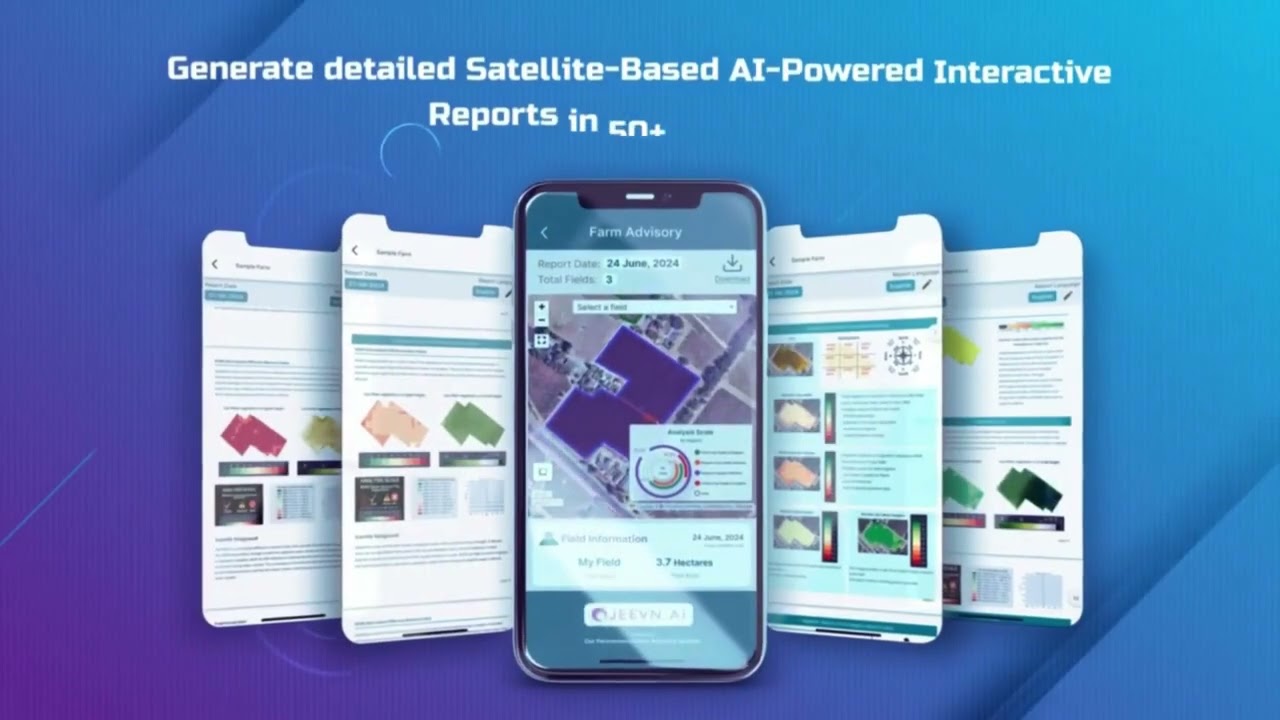
- AI-based recommendations via our Jeevn AI system—empowering smarter input placement, irrigation scheduling, and yield protection
- Blockchain-based traceability for supply chains—ensuring authenticity, transparency, and food safety
- Digital fleet/resource management—reduce costs and emissions on every hectare
- Environmental impact monitoring including carbon footprinting analytics—paving the way for climate-smart farming and export compliance
- APIs for seamless integration into farm, cooperative, or government platforms. Explore our developer tools here and browse API documentation.
Farmonaut Subscription Options: See the live pricing and choose a plan suitable for farmers, cooperatives or agri-businesses below.
Comparison Table: Traditional vs. Belt Farming & Smart Machinery Practices in Belarus
Explanation: As this table shows, Belarusian farms transitioning to belt agriculture and precision machinery achieve higher yields, lower per-unit input, enhanced soil health, and sustainability—while also meeting tightening global CO₂ and environmental standards.
Outlook for 2026 and Beyond: Building a Resilient Agri-Future
The convergence of modern agricultural machinery, belt agriculture practices, and digital platforms is positioning Belarus as a leader in sustainable, resilient agri-production in the wider region. Key trends for the years ahead include:
- ✔ Increased investment in climate-resilient rotations, cover cropping, and water-saving technologies
- ✔ Continued growth in smart sensor deployment and connected machinery fleets
- ✔ Strengthened digital supply chains—reducing food loss, improving consumer confidence with blockchain-based traceability
- ✔ Greater policy focus on biodiversity, carbon, and regenerative “agriculture belt” systems
- ✔ Knowledge transfer and rural digital upskilling—keeping Belarusian farms competitive and adaptive
These efforts help maximize food security, foster sustainable export, and underpin rural prosperity for generations to come.
Pro Tip for Developers
Looking to build your own agri-analytics dashboards? Browse the Farmonaut Satellite Weather API developer docs to supercharge agricultural analytics with real-time satellite data.
FAQ: Belarus Belt Agriculture & Smart Machinery (2026)
- Q: Is belt agriculture suitable for all soil types in Belarus?
A: Belt farming is especially effective in central/western Belarus’s fertile soils prone to erosion, but may be adapted for light/sandy soils with proper cover crops and terracing. - Q: How does precision agriculture contribute to sustainability?
A: By optimizing every input (water, fertilizer, seed), precision agriculture reduces waste, protects soil health, and improves long-term productivity—key to sustainability goals. - Q: What is the role of cooperatives in modern Belarusian agriculture?
A: Cooperatives empower farmers to access advanced machinery, shared storage, and bulk input purchasing, lowering costs and increasing market competitiveness. - Q: Are Farmonaut solutions suited for small family farms?
A: Yes, our platform is scalable—from small holdings to large enterprises, providing cost-effective, actionable insights for everyone. - Q: How can agriculture in Belarus respond to climate change risk?
A: Diversified rotations, drought-resilient crops, digital irrigation, carbon monitoring, and data-driven input management all contribute to adaptive, climate-resilient systems. - Q: Where can I find Farmonaut’s API for integration?
A: Access the API here and full documentation here.
Final Highlight
Belarus’s journey—from traditional farming to belt agriculture and integrated digital management—demonstrates the future of global agriculture: resilient, sustainable, and empowered by innovation.

 Pulsar Supernova
 Magrifly
 LatConnect 60
 Disease Free Life
 WebsEdge
 Blickwinkel
 Agricultural Credit Policy Council
 BayWa
BayWa MCSOD
MCSOD Marei Nursery
 eKGIS
eKGIS Mostas Tech
 Andex
Andex FCF India
 Unifrutti Gulf
 Deluxe Conseil
 WICO
WICO Chimera Innovation
