

France 2030 Agriculture: 7 Ways to Enhance Sustainability
Summary: France 2030 agriculture is shaping the future of farming by focusing on sustainability, environmental stewardship, precision technology, and climate resilience. This comprehensive guide explores how French agriculture is converging on innovative solutions to secure production, preserve rural livelihoods, and reduce environmental impact, supporting both European Union Farm to Fork objectives and climate commitments.
“By 2030, France aims to reduce agricultural pesticide use by 50% through precision and agroecological practices.”
“France’s 2030 strategy targets a 40% increase in farmland managed under sustainable, climate-resilient methods.”
Table of Contents
- Introduction: France 2030 Agriculture – A New Era
- 1. Sustainable Intensification through Precision Agriculture
- 2. Agroecology and Biodiversity: Ecosystem Services & Rural Resilience
- 3. Climate Adaptation and Resilience: Facing a Changing Climate
- 4. Soil Health and Nutrient Management
- 5. Territorial Branding and Premium Products
- 6. Rural Diversification and Value Chains
- 7. Mineral and Gemstone Sectors Intersecting Agriculture
- Comparative Table of France 2030 Sustainability Strategies
- FAQ: France 2030 Agriculture Sustainability
- Farmonaut Satellite Technology – Empowering Sustainable France Agriculture
- Conclusion: Shaping Resilient Agriculture for 2030 and Beyond
Introduction: France 2030 Agriculture – A New Era
In the heart of Europe, France has long been a representative producer of high-quality agricultural products. With a rich rural heritage, iconic products, and a status as a leading exporter, the nation now stands at a critical crossroads. Unpredictable climate patterns, resource constraints, and environmental regulations are converging, pushing us toward transformative agricultural innovation and robust sustainability.
The France 2030 agriculture strategy is at the intersection of policy, technology, and environmental stewardship. Our overarching goal: to secure production, maintain rural livelihoods, reduce environmental impact, and align with European Union Farm to Fork objectives while dynamically adapting to global change. This calls for a new trajectory centering on precision farming, agroecology, biodiversity restoration, supply chain modernization, and a strong commitment to soil health, water stewardship, and lowering carbon emissions.
🔎 Table At-a-Glance: 7 Ways to Enhance France 2030 Agriculture Sustainability
- 1. Sustainable Intensification: Precision agriculture, digital tools, satellite monitoring
- 2. Agroecology and Biodiversity: Diversified cropping, agroforestry, hedgerow restoration
- 3. Climate Adaptation and Resilience: Drought-tolerant crops, water governance, risk management
- 4. Soil Health and Nutrient Management: Organic matter restoration, reduced nitrogen input
- 5. Territorial Branding: Premium, regional product schemes, food traceability
- 6. Rural Diversification: Local processing, short supply chains, digital market integration
- 7. Mineral & Gemstone Sectors: Enabling infrastructure, supporting rural employment
The combination of precision agriculture and agroecological practices could lead to a 50% reduction in chemical pesticide use by 2030, supporting both crop productivity and ecological restoration in France.
1. Sustainable Intensification through Precision Agriculture
France 2030 agriculture is rapidly evolving through digitalization, with French farmers adopting advanced tools, data-driven platforms, sensors, drones, and robust AI-based decision support systems. The objective: to optimize inputs while maintaining or improving yields, thereby securing production and preserving environmental integrity.
Precision Technology and Its Role in French Agriculture
Traditional crop management is giving way to targeted, data-driven approaches:
- ✅ Variable-Rate Fertilization: Reduces input use by adjusting fertilizer doses to real-time soil needs.
- ✅ Targeted Irrigation: Water delivery is optimized with sensors, ensuring critical crops get precise amounts, thus reducing waste and protecting water quality.
- ✅ Remote Crop Monitoring: Satellite and drone imagery detect stress, diseases, and pests, enabling prompt intervention with minimal chemical application.
By deploying these technologies, France agriculture aims to achieve high yields with a smaller ecological footprint. This aligns with IA agriculture RSE France (Responsabilité Sociétale des Entreprises), ensuring environmental protection and social responsibility.

Leveraging AI advisory systems like Farmonaut’s Jeevn AI enables real-time decision-making for fertilization, irrigation, and crop protection. This approach not only saves resources but also ensures compliance with evolving French and European sustainability directives.
How Does Precision Technology Directly Support France’s 2030 Commitments?
- 📊 Reduce input costs by up to 20–30% while maintaining yields (source: INRAE)
- 📊 Lower GHG emissions linked to fertilizer and fuel use
- 📊 Protect regional water bodies from nitrate and pesticide runoff
- 📊 Enable compliance with EU Farm to Fork objectives
As a satellite technology company, we at Farmonaut offer geospatial monitoring, AI advisory, resource management tools, and blockchain traceability, all accessible via iOS, Android, and web apps, supporting the precision and sustainability aspirations of French farmers.



Developers: Integrate real-time monitoring and advisory with our Farmonaut Satellite API and explore technical documentation here.

2. Agroecology and Biodiversity: Ecosystem Services & Rural Resilience
France agriculture increasingly integrates agroecological practices to both enhance ecosystem services and build climate resilience for rural communities. Agroecology focuses on aligning agricultural production with natural processes, optimizing the benefits of living soils, rich biodiversity, and diversified farming systems.
- 🌱 Crop Diversification: Multiple crops in rotation break pest cycles, replenish soil nutrients, and spread economic risk.
- 🌱 Cover Crops & Reduced Tillage: Maintain soil health, carbon sequestration, structure, and water retention.
- 🌳 Agroforestry & Hedgerow Restoration: Trees and shrubs in fields enhance pollinator and wildlife habitats, act as windbreaks, and contribute to microclimate regulation.
Neglecting hedgerows or underestimating the value of biodiversity may increase vulnerability to pest outbreaks and lead to soil erosion—prioritize these as vital assets in every rural landscape.
Premium Ecosystem Outcomes of Agroecology
- 🌾 Enhanced soil health
- 🦋 Bolstered pollinator populations
- 💧 Improved water infiltration
- 💨 Reduced wind and water erosion
- 📈 Often higher profitability via diversified and premium markets

France’s premium agricultural products (PDO/PGI, terroirs) remain globally competitive. Agroecological branding can secure premium prices and additional revenue streams in organic and climate-neutral exports.
3. Climate Adaptation and Resilience: Facing a Changing Climate
The frequency of extreme weather events—droughts, floods, heatwaves—poses direct challenges to France agriculture. Climate adaptation programs prioritize resilient crops, improved water governance, and robust risk management systems to protect rural livelihoods and national food security.

Building Resilience with Innovation
- 💧 Efficient Irrigation: Drip and micro-spray systems that drastically reduce water use and maintain crop health in drought-prone areas
- 🌾 Drought-tolerant Varieties: Selecting seeds adapted to new precipitation and temperature patterns
- 🚜 Better Water Governance: Community-based reservoir management and rainwater harvesting
- 🌱 Soil Moisture Retention: Use of bio-based amendments and mulches to keep fields productive during dry spells
- 💼 Risk Management Tools: Diversified cropping systems and advanced insurance programs cushion revenue shocks

The France 2030 agriculture trajectory hinges on investment in efficient irrigation systems and carbon footprint monitoring to ensure agricultural sustainability in the face of a changing climate across diverse regions.
With increasing pressure from the European Union’s sustainability objectives and shifting growing zones due to climate change, these adaptation strategies are essential to maintaining a strong rural economy through 2026 and beyond.
4. Soil Health and Nutrient Management
Healthy soil is a cornerstone of France agriculture and a priority for France 2030 agriculture strategy. Productive, living soils minimize input needs, buffer drought, and ensure nutrient cycling critical for both organic and conventional systems.
Key Mechanisms for Building Soil Health
- 🌾 Organic Matter Enhancement: Compost, manure, cover crops increase carbon sequestration and soil organic content
- 🧪 Soil Testing: Routine analysis allows farmers to apply only what’s needed, reducing input costs and runoff risks
- 🌱 Legume Rotations: Field peas, clover, and other legumes naturally fix nitrogen, reducing reliance on synthetic fertilizers
- 🦠 Biological Soil Amendments: Use of mycorrhizae and microbial blends to unlock native soil fertility
- 🌿 Organic Farming: Gaining ground in response to consumer demand, government support, and premium pricing opportunities
- 🌱 Greater root mass and drought resilience
- 💧 Improved water infiltration and retention
- 🌬 Reduced wind and water erosion
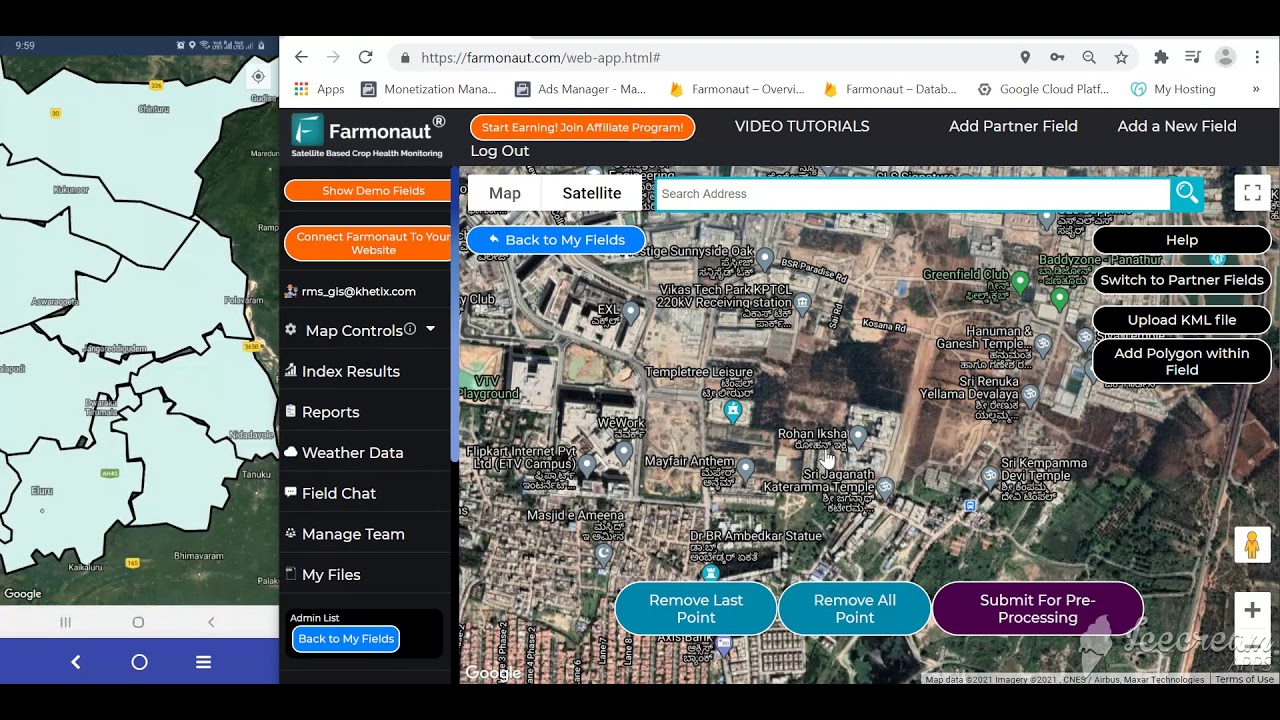
Explore large-scale farm management with satellite-based soil monitoring for continuous tracking of field health and yield optimization for your French farm.
“By 2030, France aims to reduce agricultural pesticide use by 50% through precision and agroecological practices.”
“France’s 2030 strategy targets a 40% increase in farmland managed under sustainable, climate-resilient methods.”
5. Territorial Branding and Premium Products
Premium France agricultural products—from Champagne and Bordeaux wines to Camembert cheese and regional fruits—are pillars of national identity and rural prosperity. Territorial branding schemes such as PDO (Protected Designation of Origin) and PGI (Protected Geographical Indication) connect food quality to place, rewarding farmers for preserving landscape and traditional practices.
- 📝 Traceability: Blockchain technology guarantees that every step of the food chain is secure and credible, a growing demand from both French and global buyers.
- 📈 Premium Pricing: Regional branding and environmental quality boost income for compliant producers.
- 👨🍳 Link to Downstream Sectors: Agriculture in France is linked to food processing, gastronomy, and tourism—a virtuous circle for rural economies.
- 🌍 International Reputation for Quality
- 🔗 Durable Farm-to-Fork Chains
- 💶 Access to Premium Markets
As part of our services at Farmonaut, we provide advanced product traceability solutions using blockchain to strengthen the authenticity and reputation of France agricultural products on international markets, while ensuring transparent supply chains.

6. Rural Diversification and Value Chains
Rural futures in France agriculture depend on moving beyond raw production. New value is captured by investing in local processing, short supply chains, digital marketplaces, and diversification of outputs.
- 🏭 Value-Added Processing: Facilities near farms cut transport costs, reduce spoilage, and enable creation of cheeses, juices, or specialty flours sold locally.
- 🛒 Digital Marketplaces: Bring farmers closer to consumers, improve traceability, and promote region-branded goods.
- 🌲 Forestry & Non-Timber Products: Diversifies income (e.g. mushrooms, specialty woods) while supporting climate-positive landscape management.
Cooperatives and digital solutions empower French farmers to capture greater margins and secure business viability. Utilizing fleet management and satellite-based logistics tools can further streamline rural supply chains and reduce operational complexity.
7. Mineral and Gemstone Sectors Intersecting Agriculture
France’s mineral sectors play an indirect, yet substantial, role in supporting agriculture. While France’s soils often provide unique terroirs for premium agricultural products, local mining and mineral industries underpin critical infrastructure and supply chains:
- 🛠 Inputs for Machinery and Irrigation Infrastructure: Minerals are utilized in the production of high-tech farming equipment, precision tools, and irrigation systems—boosting on-farm productivity and sustainability.
- 🌍 Soil Amendments: Gypsum, lime, and specific mineral blends improve soil health and address region-specific deficiencies in a sustainable way.
- 👷 Rural Employment: Mining activities help diversify rural economies, particularly in regions where farming alone does not guarantee livelihoods.
While not a dominant feature of France 2030 agricultural policy, cross-sector innovation—from satellite-driven mapping of mineral resources to technology transfer—amplifies the impact of sustainable farming strategies and regional development goals.
Comparative Table: France 2030 Sustainability Strategies
| Sustainability Practice | Key Features | Estimated Impact by 2030 | Relevance to France 2030 Goals |
|---|---|---|---|
| Precision Agriculture |
– Satellite & IoT monitoring – Variable-rate application – AI advising platforms |
– 20–30% reduced input use – Up to 40% lower GHG emissions (source: INRAE) – ~6 million hectares managed with precision tech |
Directly supports emission cuts, water protection, & yield maintenance via digital innovation. |
| Agroecology & Biodiversity |
– Crop rotations & cover crops – Agroforestry & hedgerow restoration – Ecosystem service enhancement |
– 10–20% increase in pollinators – 15% higher soil carbon – 5+ million ha under biodiversity plans |
Boosts farm resilience, supports premium branding, aligns with EU biodiversity & soil strategies. |
| Climate Adaptation & Resilience |
– Drought-tolerant crop varieties – Efficient irrigation & water governance – Insurance & risk management tools |
– 30% reduction in crop loss risk – 30% less water use – Nation-wide adaptation programs |
Ensures production stability & rural income, protects against climate volatility. |
| Soil Health & Nutrient Management |
– Reduced chemical fertilizer use – Organic matter restoration – Legume-based rotations |
– 25+% reduction in nitrogen fertilizer usage – 40% increase in farm resilience to drought – 3.5+ million ha improved |
Restores soil structure and function, meets EU nitrate & soil protection directives. |
| Territorial Branding & Premium Products |
– PDO/PGI & terroir certification – Blockchain traceability – Regional marketing strategies |
– 15–30% higher farm income in certified regions – 100% traceability for target products – Export reputation enhanced |
Drives rural prosperity, keeps France competitive as a premium agri-food exporter. |
| Rural Diversification & Value Chains |
– On-farm processing – Digital marketplace access – Forestry & non-timber expansion |
– 20% reduction in postharvest losses – Up to 10% more rural jobs – Increased resilience of rural economies |
Strengthens rural livelihoods, reduces waste, creates climate-positive value. |
| Mineral & Gemstone Sector Integration |
– Machinery & irrigation input – Soil amendments – Rural infrastructure & jobs |
– Improved efficiency in >1.5 million ha – 3–8% job growth in mining-linked regions |
Supports infrastructure, enhances soil health, and catalyzes cross-sector growth. |
- ✔ Focus on climate-resilient crops to safeguard food security in shifting weather conditions.
- 📊 Investment in precision technology optimizes resources and boosts both yields and environment outcomes.
- ⚠ Neglecting biodiversity undermines landscape resilience to pests and climate extremes.
- 🛡 Risk management programs cushion farm incomes, stabilizing rural economies.
- 🌍 French territorial branding ensures global competitiveness in sustainable food exports.
FAQ: France 2030 Agriculture Sustainability
What are the core aims of the France 2030 agriculture plan?
To maintain France’s leading producer status by securing production, preserving rural livelihoods, reducing environmental impact, and achieving compliance with EU “Farm to Fork” objectives. This includes cuts to chemical usage, expanded biodiversity, enhanced digital precision, and robust climate adaptation programs.
How does precision agriculture support French farming?
By enabling data-driven management—using satellites, drones, sensors, and AI—French farmers can use fewer inputs, protect soil and water health, increase yields, and reduce the carbon footprint of French agricultural products.
What role does digital and satellite technology play?
Satellite platforms (like those offered by us at Farmonaut) provide geospatial crop monitoring, real-time AI advisory, blockchain traceability, and resource management for diverse stakeholders. These technologies drive sustainability, efficiency, and transparency across France 2030 agriculture landscapes.
What is the importance of branding and traceability for French agriculture?
Territorial branding (PDO, PGI) and food traceability allow French producers to differentiate their premium products, command higher market prices, and secure consumer trust in both domestic and export markets.
How do minerals and mining contribute to agriculture?
They supply the building blocks for modern farm infrastructure, input manufacturing, soil amendments, and sustainable rural job creation—critical for regional growth and ecosystem restoration.
Farmonaut Satellite Technology – Empowering Sustainable France Agriculture
As global agriculture confronts the “2030” challenge, satellite-driven analytics and decision support are critical to scaling sustainability and resilience. At Farmonaut, our mission is to make satellite, AI, and blockchain insights accessible for every agricultural and natural resources stakeholder in France and beyond.
- Real-Time Crop and Soil Monitoring: Multispectral imagery and NDVI to assess field health, optimize fertilization/irrigation, and predict risk of stress or disease
- Jeevn AI Advisory System: Custom, data-driven strategies for yield, sustainability, and compliance at every farm scale
- Blockchain Product Traceability: Securely map the journey of French agricultural products from farm to supply chain
- Carbon and Environmental Impact Tools: Support climate-resilient planning and EU compliance
- Support for Large Farms and Smallholders: Modular, scalable large scale farm management and innovative financing solutions
Explore the full range of our carbon footprint monitoring, traceability, fleet management, and decision-support solutions to future-proof your operation for 2026 and beyond.
Conclusion: Shaping Resilient Agriculture for 2030 and Beyond
The France 2030 agriculture vision is clear: deliver sustainable intensification, climate adaptation, soil and water stewardship, and add value to regional products, all while maintaining economic viability and cultural heritage. By rapidly adopting precision farming, agroecological practices, digital and satellite support, robust supply chains, and premium branding, France is leading the way to a more resilient, productive, and environmentally responsible future.
Farmers, policy-makers, and the agri-food industry now stand at the forefront of this transformation, leveraging innovation to reduce inputs and emissions, preserve the French landscape and rural livelihoods, and support the high reputation of “agricultural products in France” worldwide. As we move toward 2026 and beyond, digital sustainability platforms, transparent supply chains, and regenerative techniques will remain the keystones of France’s climate-resilient ambition.
Together, we shape a resilient tomorrow for French agriculture, balancing productivity, sustainability, and rural heritage—delivering a stronger France for 2030 and generations to come.
Discussion
Questions, corrections or field experience? Share them below. First-time comments are reviewed before they appear, and your email is never published.
No comments yet. Be the first to add a question or your experience.

 Saraswati Agro
 Geno
Geno Hayleys Agriculture
 Linx Agritech
 Adinet
 Save Your Soils
 Grandstream Algérie
 XOS Realty
 Geospatial Lab Africa
 Agro La Gándara
 HIPSAC
 ZOL Zimbabwe
 Juligerm
 AdBio
AdBio MISE Maroc
 NWNS
NWNS
 Licence holder · Niger · Gold










