

Alberta gold permits · Buyer guide
Gold Claims for Sale in Alberta: Permit Rules and Costs
Alberta has no staked claims. The equivalent is a rock-hosted minerals permit: C$625 to apply, no annual rent, and a required C$7 per hectare of work in the first two years. Placer sluicing needs a C$50 licence.
Key takeaways
- Alberta’s equivalent of a mineral claim is a rock-hosted minerals permit: C$625 application fee, 16 to 9,216 hectares, indefinite term, no rent (Alberta Energy and Minerals, checked 5 November 2026).
- The real cost is the work: C$7 per hectare in years 1-2, C$13 in years 3-6 and C$20 per hectare in each later two-year period, reported every two years (Alberta.ca).
- Hand panning needs no licence; a sluice box needs a C$50, five-year placer minerals licence, and placer royalty is 5 percent of production (Alberta.ca, 5 November 2026).
- The Alberta Geological Survey found no world-class metallic deposit in the province; placer gold along the North Saskatchewan River is the most prospective source (AGS, 2011).
- Canada mined nearly 200 tonnes of gold in 2024, 68 percent of it in Ontario and Quebec; Alberta reported up to about 0.1 tonne a year in the seven years before 2010 (AGS, 2011).
In this article
- What gold claims for sale in Alberta really are
- What an Alberta permit costs to buy and hold
- Eight checks before you pay for an Alberta permit
- If you find gold: from permit to lease and royalties
- Where the gold in Alberta actually is
- How much gold Alberta has produced
- Can you pan or sluice for gold in Alberta
- Screening ground from space before you pay
- Frequently asked questions
Gold claims for sale in Alberta are not claims in the staking sense. The permit process the province describes has no ground-staking step: you pick land on the government’s map and apply online for a rock-hosted minerals permit, which costs C$625 to apply for and carries no annual rent (Alberta Energy and Minerals, checked 5 November 2026). A seller who lists an Alberta “claim” is therefore transferring a permit like that, and the price should reflect the data and work history behind it, because the same ground may be open to you for C$625.
This guide is written for permit holders, consultants and investors who are weighing a purchase. It covers what the paperwork grants, what a permit costs to hold (with a calculator), eight checks before you pay, what changes if you find gold, where Alberta’s gold really is and how much has been produced, the rules for panning and sluicing, and where satellite screening fits. For the general idea of a claim, see our guide to what a gold claim is.
What gold claims for sale in Alberta really are
Alberta’s Crown (the provincial government) owns about 81 percent of the province’s mineral rights, roughly 53.7 million hectares. The other 19 percent is freehold, owned by the federal government for First Nations and in national parks, and by individuals and companies (Alberta.ca, About tenure). The permits and leases below cover Crown minerals only. Freehold minerals are bought or leased from the owner, so check the land title first.
The department says a rock-hosted minerals permit is the agreement that other Canadian jurisdictions call a mineral claim. “Rock-hosted” means gold in solid rock, as opposed to loose river gravel. Gold in rivers and streams falls under a separate placer minerals licence. Four agreements matter to a gold buyer:
| Agreement | What it grants | Cost to get it | Term |
|---|---|---|---|
| Rock-hosted minerals permit | Exclusive right to explore for Crown rock-hosted metallic and industrial minerals in a set location | C$625 application fee, plus GST where it applies; no rent | Indefinite, while work reports are filed every two years |
| Rock-hosted minerals lease | Exclusive right to develop and mine in a set location | C$625, plus first-year rent of C$3.50 per hectare (C$50 minimum) | 15-year initial term |
| Placer minerals licence | Sluicing or mechanized placer mining in rivers and streams; no exclusive rights to a location | C$50, plus GST | 5 years |
| Secondary lease | Recovering Crown placer minerals at sand and gravel operations | C$625 | 5 years |
Fees and terms are from the department’s permits and leasing overview, checked 5 November 2026. Older guides describe a 14-year permit with work rates of C$5, C$10 and C$15 per hectare. The department’s current pages show an indefinite term and the higher rates below, after tenure changes took effect on 1 January 2023, so ignore the old figures.
Three ways to end up with a permit
- Apply directly. If the ground is unheld, you can apply through the department’s Electronic Transfer System (ETS) for a C$625 fee. A permit covers 16 to 9,216 hectares, and the land must be contiguous (Alberta.ca, exploration tool kit).
- Buy an existing permit. Ownership changes are filed through ETS. A price above the cost of applying only makes sense if the permit comes with useful data, a clean work record or land that is no longer open.
- Buy land with freehold minerals. This is a private deal, and the mineral title may be separate from the surface title.
A permit is not land. It gives a right to explore for minerals, not the right to cross someone’s property or disturb the ground. The placer licence form makes the same point in plain words: getting permission for surface access is the applicant’s responsibility.
What an Alberta permit costs to buy and hold
The cost that surprises buyers is not the C$625 fee. It is the exploration spending the rules require. A permit holder has to spend a set amount per hectare on assessment work in every two-year period and report it: C$7 per hectare in the first period, C$13 per hectare in the second and third, and C$20 per hectare in every later period (Alberta.ca, permits and leasing overview). That money is spent on the ground and on reports, not paid to the government as rent, but it is a real commitment.
Chart
Minimum work required on a permit, per hectare
Running total of required assessment spending, C$ per hectare, at the end of each two-year period
| Work period | Minimum spend per hectare | For 100 ha | For 1,000 ha | Running total per hectare |
|---|---|---|---|---|
| Years 1-2 | C$7 | C$700 | C$7,000 | C$7 |
| Years 3-4 | C$13 | C$1,300 | C$13,000 | C$20 |
| Years 5-6 | C$13 | C$1,300 | C$13,000 | C$33 |
| Years 7-8 | C$20 | C$2,000 | C$20,000 | C$53 |
| Each later two years | C$20 | C$2,000 | C$20,000 | adds C$20 |
The table is arithmetic on the department’s rates. Four rules shape how the spending works in practice:
- What counts. Prospecting, stripping and trenching, drilling, geological, geochemical and geophysical surveys, assay work, moving drill core to a core store and reclaiming disturbed ground all count.
- Reports. A report is due at the end of each two-year period, with an itemised statement of costs, and must be certified by a professional geologist, geophysicist or engineer, or verified and signed by the prospector. An intent to file, lodged in the last 30 days, buys up to 60 more days.
- Extra spend carries forward. Money spent above the minimum can be applied to a later period, and contiguous permits can be grouped into a block of up to 18,432 hectares for one report.
- If you fall short. The permit can be cancelled, the area reduced, or the holder can pay twice the missing amount. A payment in place of work cannot be used in the first period or in two consecutive periods.
Assessment reports become public one year after they are filed, which is useful for a buyer: the previous holder’s work is on file. The next section turns that into a checklist. Use the calculator to see what a permit of your chosen size commits you to before the first dollar of exploration.
Calculator
What work does an Alberta permit commit you to?
Enter your own permit size, how many two-year periods you will hold it and the asking price.
- Minimum work per hectare (C$): $33
- Asking price plus minimum work (C$): $18,200
- Same ground applied for directly: fee plus work (C$): $13,825
Example values only, not a benchmark. Rates from Alberta Energy and Minerals (checked 5 November 2026): C$7 per hectare in period 1, C$13 in periods 2 and 3, C$20 from period 4, and a C$625 application fee for a direct application. Asking price is an input. It leaves out GST, legal and transfer costs, reports, geology and surface approvals.
Eight checks before you pay for an Alberta permit
- Confirm who holds the rights. Use the department’s interactive minerals map and request an Alberta Mineral Information search for the area. The department’s tool kit lists this as the first step for checking rights and restrictions.
- Read the filed work. The assessment report search covers reports from 1949 to the present and can be filtered by commodity, so you can search for gold. Reports are confidential for one year, then posted.
- Ask for the dates. Get the current work period’s end date, the next report due date and any spending carried forward. A permit that is two weeks from a report deadline with no work done is a different purchase.
- Check size and shape. Compare the seller’s area with the map. Permits run from 16 to 9,216 hectares, and the land must be contiguous.
- Know what the permit does not cover. Metallic and industrial minerals exclude oil, gas, coal, oil sands, ammonite shell and surface materials such as sand and gravel. Other companies may hold those rights over the same ground.
- Check land status and consents. Limited prospecting is allowed where there is no significant disturbance, with consent from any surface or subsurface leaseholder or landowner. Using mechanized equipment or disturbing the surface needs approval from Alberta Environment and Protected Areas, and exploration approvals come from the Alberta Energy Regulator. Parks and protected areas have their own rules, so check before you plan work inside one.
- Price the obligations. Multiply the hectares by the remaining per-hectare rates, add your own geology and legal costs, and compare the total with starting from scratch.
- Test the seller’s story. Ask for raw assays, sample locations and maps, not summaries. A government review found that no world-class metallic deposit has been discovered in Alberta (Alberta Geological Survey, Open File Report 2011-01), so language about a “proven” gold property deserves evidence.
Infographic
Buying an existing Alberta permit in 5 steps
- 1Search the groundCheck the map and request a mineral information search for rights and restrictions.
- 2Read the filePull the assessment reports and work-period dates.
- 3Price the workAdd the remaining per-hectare spend to the asking price.
- 4File the transferLodge the ownership change through the department’s online system.
- 5Plan the first periodLine up consents, approvals and a geologist for the next report.
Once you agree a price, the transfer itself is filed online through ETS, and the department publishes training pages for it. A lawyer who knows Alberta mineral tenure should review the sale agreement. The rest of the work is practical, and the short sequence below covers it.
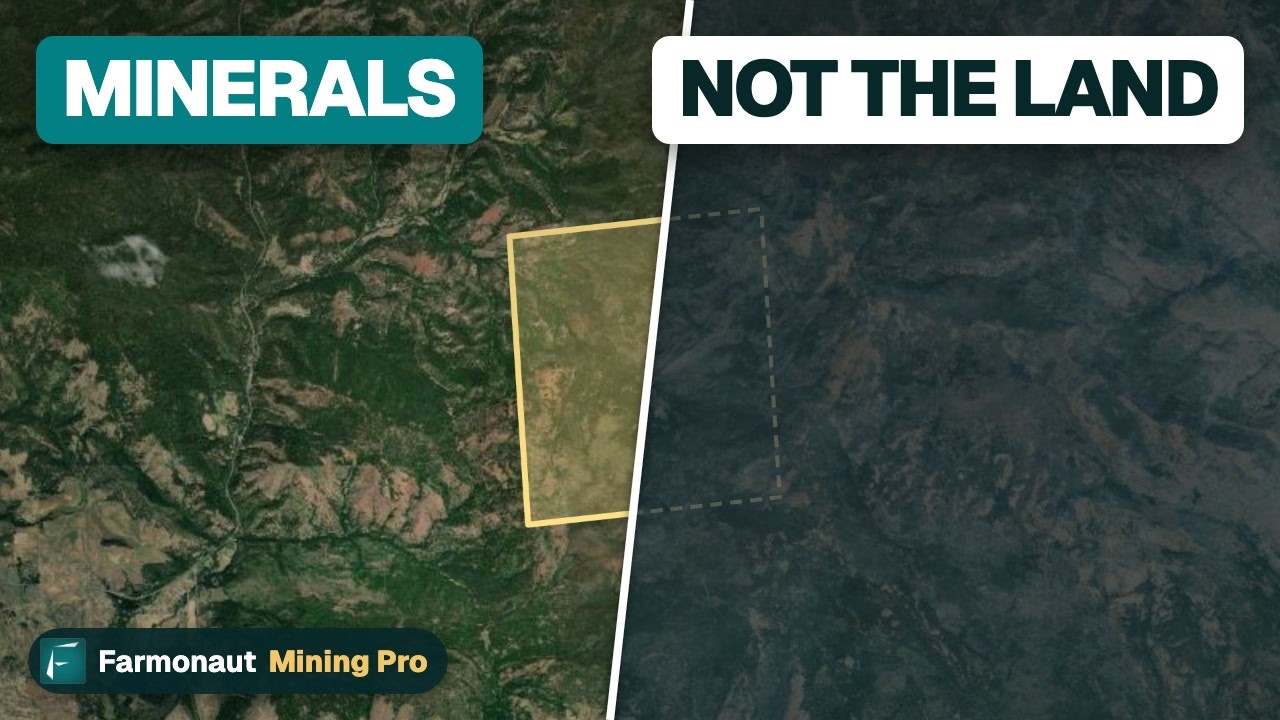
▶ A short explainer on why owning a claim is not the same as owning the land (the example is Washington State; Alberta permits work differently). · 3:19
If you find gold: from permit to lease and royalties
A permit only lets you explore. To mine rock-hosted gold you apply for a rock-hosted minerals lease and provide evidence of a deposit in the location you describe. The lease has a 15-year initial term and then a 15-year intermediate term with escalating rent, and it continues indefinitely if the mine is producing. Rent starts at C$3.50 per hectare (C$50 minimum). Developing a mine also needs approval from the Alberta Energy Regulator (Alberta.ca, mining tool kit).
Royalties differ by type of mineral. Alberta’s royalty schedule sets metallic minerals such as base metals, diamonds and uranium at 1 percent of gross mine-mouth revenue before payout. After payout, the rate is the greater of 1 percent of gross mine-mouth revenue and 12 percent of net revenue. Placer minerals pay 5 percent of production. A lease with no production only has to declare that fact each year.
These rules are for a buyer planning many years ahead. In practice almost every permit will spend its life in the exploration stage, so the assessment spending above matters more to the budget than any royalty.
Where the gold in Alberta actually is
The Alberta Geological Survey (AGS) reviewed the province’s gold potential and concluded that modern and preglacial placers, meaning gold in river gravel, are currently the most prospective sources. No world-class metallic deposit has been found in the province, and placer gold and platinum-group elements are the only metals produced as by-products of sand and gravel work (AGS, Open File Report 2011-01). Three settings stand out.
Chart
Gold grades in Alberta gravels against the placer cut-off
Parts per billion of gold (200 ppb = 0.2 g/t); the Villeneuve range is 0.22-0.575 g/t
Modern river gravel
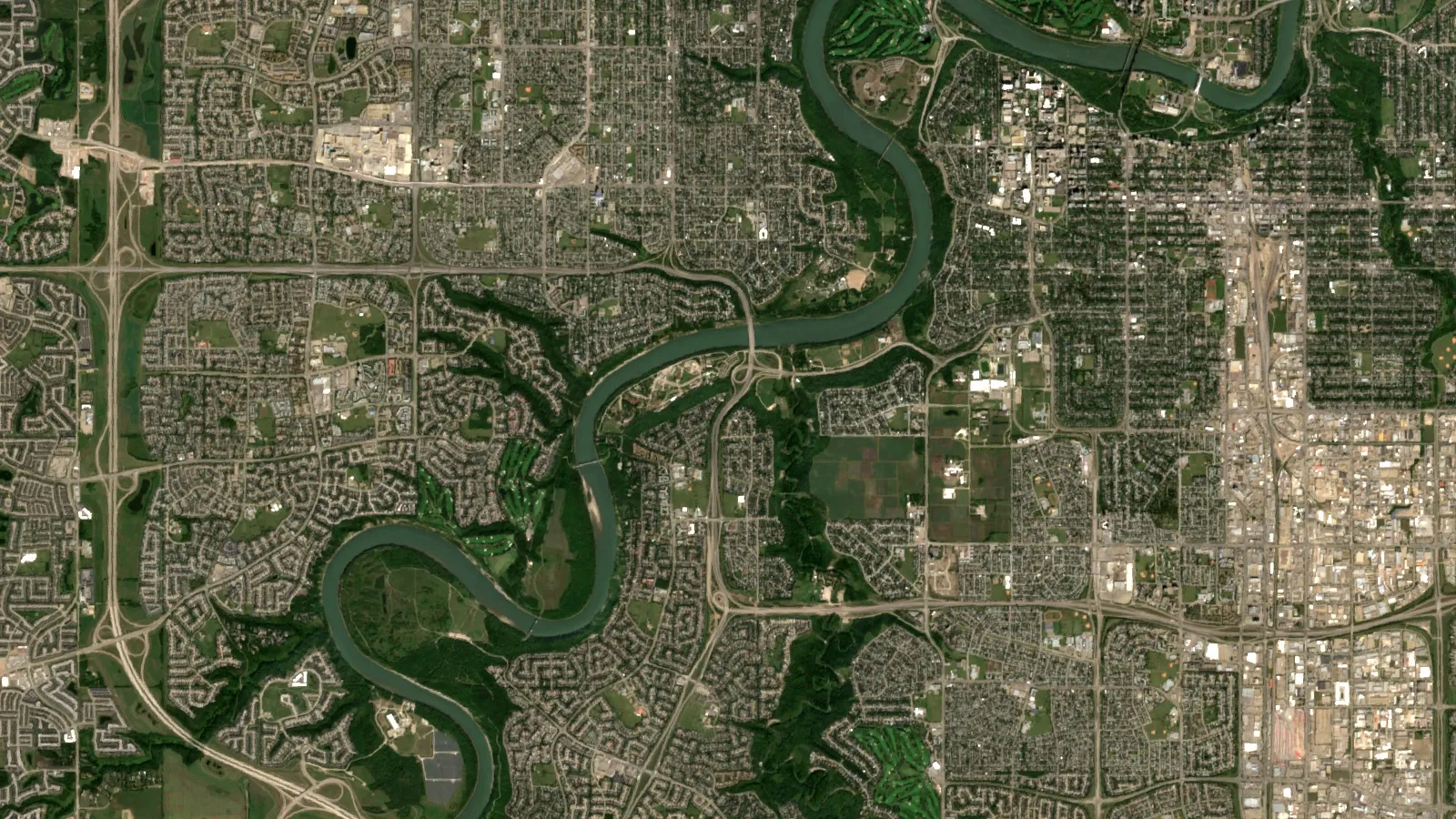
A placer forms when gold weathers out of its source rock and is carried and concentrated, mostly in stream gravels (USGS). Alberta river gold is usually “flour gold”: grains of 100 to 800 micrometres, most between 125 and 250 micrometres, finer than table salt. The richest modern placer ground, with more than 600 grains in a panned concentrate, runs along the North Saskatchewan River from Devon to north of Myrnam, around Edmonton. Gold above 10 parts per billion (ppb) has also been reported in the Peace, Athabasca, McLeod, Red Deer and Milk rivers. The University of Alberta notes that most Alberta gold is placer gold, and that its source is hard to pin down because the flakes have travelled far from the original rock (University of Alberta, Minerals of Alberta). The Royal Alberta Museum adds that gold found in 500-million-year-old bedrock in Jasper National Park in 1987 helps explain where some of the North Saskatchewan gold came from.
Buried placers in gravel pits
Near Villeneuve, northwest of Edmonton, gold in sand and gravel of the Empress Formation (a layer of glacial-age sediment) is recovered as a by-product of a gravel pit, at 0.22 to 0.575 grams of gold per tonne (g/t) according to a 1990 report summarised by the AGS (AGS, Atlas of the Western Canada Sedimentary Basin, Appendix 34.2). The 2011 review says anomalies in the Swan Hills area approach the minimum cut-off of 200 to 500 ppb needed for a stand-alone placer operation. A part per billion converts simply: 200 ppb is 0.2 g/t.
Hard rock in the northeast
The Precambrian Shield (very old crystalline bedrock) in the northeast corner of the province hosts about 200 known metallic mineral occurrences, including gold, uranium, base metals and rare-earth elements. The highest gold values come from shear-related sulphide (metal-sulphur mineral) and quartz-vein showings, such as the Northeast Waugh Lake showing, which returned up to 340 to 416 ppb gold in early sampling. These are exploration clues, not resources.
How much gold Alberta has produced
Alberta’s gold history is mostly a river story. Placer mining on the North Saskatchewan River near Edmonton began in 1860 with pans, then rockers and sluices, and dredges from 1894. Between 0.84 and 1.06 tonnes of gold came out over the 100 years since 1887. The peak was in 1898, when about 300 miners worked a 200 km stretch of river and up to 12 dredges were running; 233.28 kg were recovered between 1895 and 1897 (AGS, 2011). By 1907, only one of those dredges remained (Royal Alberta Museum).
Chart
Canada’s gold mine output by region, 2024
Tonnes of gold; Alberta is counted in ‘All others’
Today the gold comes mainly from gravel plants. Natural Resources Canada reported 55.4 to 100.9 kg of gold a year in Alberta in the seven years before 2010, worth C$0.959 to C$2.223 million a year (reported in the AGS review). A provincial history page puts the production peak at 133 kg in 1980, driven by gravel pits around Edmonton (Alberta Historic Places).
For scale, Canada’s gold mines produced nearly 200 tonnes in 2024, and Ontario and Quebec together made 68 percent of it (Natural Resources Canada, Gold facts). Alberta reported 55 to 101 kg (up to about 0.1 tonne) a year in the seven years before 2010, a tiny fraction of that, although the comparison spans different years. For other Canadian deposits, our Canada mineral deposits map shows where each metal is mined.
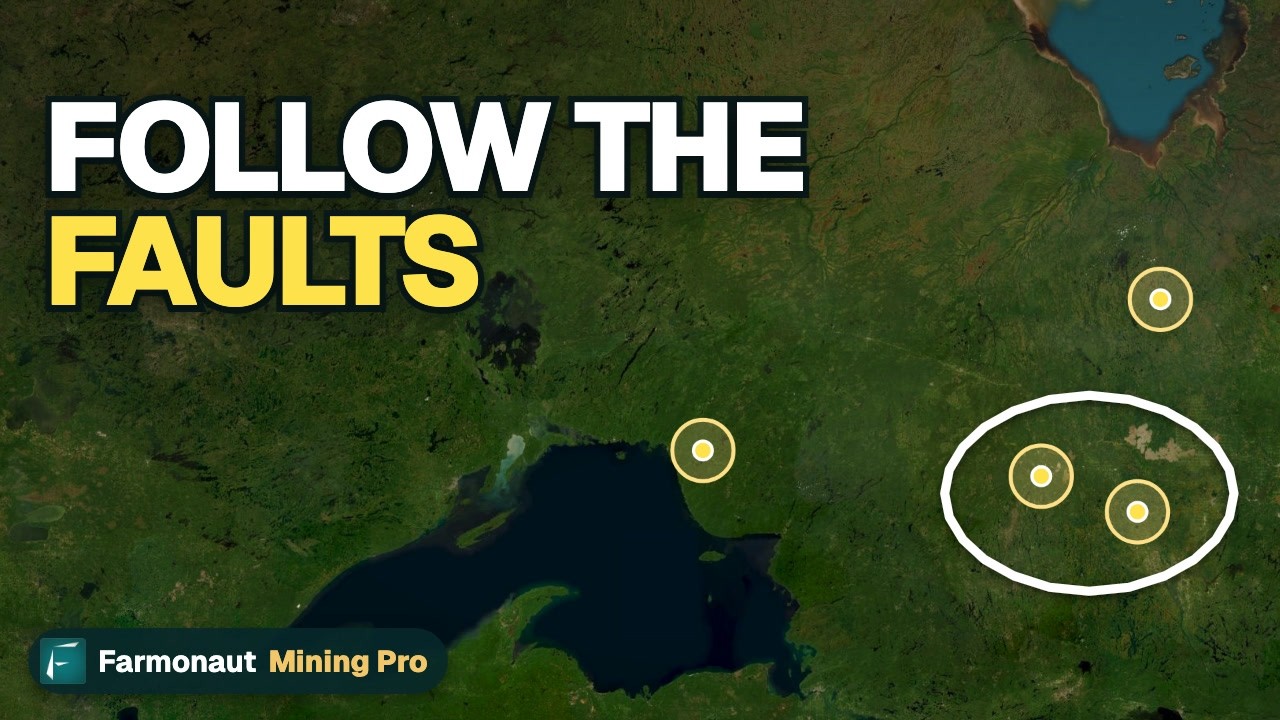
▶ Where Canada’s gold sits: Ontario makes about 40 percent of it, mostly in a few belts of very old rock. · 2:53
Can you pan or sluice for gold in Alberta
Yes, with limits. Recreational panning with hand-held, non-mechanized equipment in Alberta’s rivers and streams needs no mineral agreement or licence. A sluice box or other mechanized equipment needs a placer minerals licence, and dredging in rivers and streams is prohibited (Alberta.ca, placer mining tool kit).
- Licence. C$50 plus GST for five years. It does not give exclusive rights to any location, and you can stay a maximum of 14 days in one place. The form can be sent by email, mail or in person in Edmonton.
- Season. Placer operations are allowed year-round on Class C and D water bodies, and only from 15 May to 15 September on Class A and B water bodies. The province publishes water body maps, and some restrictions apply.
- Access. Get permission from the landowner or occupant to cross occupied land. Check water advisories, and check whether the stretch lies inside a park with its own rules.
- Royalty. Placer minerals pay 5 percent of production. The licence form says royalty is owed on gold and silver recovered above one troy ounce (31.1 grams) in a year, and the tool kit says royalty applies if more than one troy ounce is produced and sold. Contact the Coal and Mineral Development Unit about reporting.
Well-known North Saskatchewan spots include Terwillegar Park, Emily Murphy Park, Prospector’s Point in Devon and the mouth of Gold Bar Creek. Gold collects where water slows: river bends and widening banks. For comparison with British Columbia, see our guide to panning on Vancouver Island.
Spot gold was US$4,119.20 per troy ounce (Kitco, bid, 2:44 a.m. New York time on 5 November 2026). At that price one troy ounce is about US$132 per gram, but Alberta river gold is slow to collect, so treat panning as a hobby rather than an income. The second calculator shows the royalty on a few ounces. Take permission to enter, follow the stream rules and never use mercury.
Calculator
What royalty would a few ounces of placer gold owe?
Enter the ounces you recover in a year, a gold price and the licence term.
- Value of gold recovered (C$): $16,500
- Value after royalty (C$): $15,950
- Licence fee per year of term (C$): $10
Example values only, not a benchmark. Alberta.ca lists placer minerals at 5 percent of production, and the placer licence form applies royalty to gold and silver recovered above one troy ounce in a year; confirm the basis with the Coal and Mineral Development Unit. Licence fee: C$50 for five years, before GST. The gold price is an input: example, use today’s price in C$ per troy ounce.
Screening ground from space before you pay
Satellites do not see flour gold in a river gravel bar. They are useful for a different job: mapping the rock around possible hard-rock gold, such as iron-oxide staining, clay minerals and long straight fractures, so that fieldwork goes to the best ground first. The European Space Agency’s Sentinel-2 satellites image land at 10 m resolution in 13 spectral bands with a five-day revisit (ESA), which is enough to see alteration patterns over a permit-sized area where rock is exposed or thinly covered. It tells you little about buried or heavily covered ground.
For a buyer, the practical use is a cheap first look: screen the permit boundary, compare the pattern with what the seller’s reports describe, and decide where a geologist should walk. Farmonaut’s satellite-based mineral detection works from a KML or KMZ boundary and returns exploration targets, which sit ahead of any resource estimate and are not a clearance for land use. You can request a quote for a permit boundary.
Questions about a specific Alberta permit or boundary can go to us through the contact page.

▶ How satellites help find gold: they map the rock around it, not the gold itself. · 4:25
Frequently asked questions
Can you buy gold claims in Alberta?
You can buy a rock-hosted minerals permit, which is Alberta’s equivalent of a claim. You either apply to the government for unheld ground, with a C$625 application fee, or buy an existing permit from its holder with the transfer filed through ETS.
Can you stake a claim in Alberta?
The department’s process is an online application by land description, using the mineral activity maps to check what is available. It does not describe a ground-staking step.
How much does an Alberta gold claim cost?
Applying costs C$625 plus GST where it applies, with no annual rent. The larger cost is the required assessment work: C$7 per hectare in the first two years, C$13 in the next four, and C$20 per hectare in every later two-year period. A 100-hectare permit needs at least C$3,300 of work by the end of year six.
Do you need a licence to pan for gold in Alberta?
No. Hand panning with non-mechanized equipment needs no licence or mineral agreement. You still need permission to cross private or occupied land, and parks may have separate rules.
Do you need a licence for a sluice box?
Yes. Using a sluice box or other mechanized equipment requires a placer minerals licence, which costs C$50 plus GST for five years.
Is gold dredging allowed in Alberta?
Placer mining in rivers and streams using dredging techniques is prohibited in Alberta, according to the department’s placer mining tool kit.
How much royalty do you pay on gold you find?
Placer minerals pay 5 percent of production, and the licence form applies it to gold and silver above one troy ounce in a year. Rock-hosted metallic minerals under a lease pay 1 percent of gross mine-mouth revenue before payout, then the greater of 1 percent and 12 percent of net revenue.
Are there gold mines in Alberta?
The University of Alberta says gold is produced in the province as a by-product of sand and gravel processing and by people who pan along rivers. The Alberta Geological Survey found no world-class metallic deposit in the province, and placer gold and platinum-group elements are the only metals recovered as by-products of gravel operations.
Where can you find gold in Alberta?
The North Saskatchewan River around Edmonton has the highest reported concentrations of placer gold, from Devon to north of Myrnam. The Peace, Athabasca, McLeod, Red Deer and Milk rivers have also reported gold, and the gold is fine grained.
Who owns the minerals under private land in Alberta?
About 81 percent of Alberta’s mineral rights belong to the Crown. The rest are freehold, held by the federal government, individuals and companies, so a title search shows who owns a given mineral right. Our guide to mineral rights in Montana shows how a split between surface and mineral ownership works across the border.
How long does a permit last?
A rock-hosted minerals permit has an indefinite term. It stays valid as long as the holder meets the spending requirement and files accepted assessment reports every two years.
This page is for information only. It is not legal advice or investment advice. Confirm tenure rules, fees and approvals with Alberta Energy and Minerals and a lawyer before you buy. Get permission before you enter or sample any ground, follow the stream rules, and do not use mercury.
Farmonaut mining
Screen a permit boundary from space
Send a permit boundary and get a quote for satellite-based exploration targets, ahead of any sampling or resource estimate.

Mining Pro sample view, synthetic data
Keep reading
Sources
- Alberta.ca, Minerals permits and leasing overview: alberta.ca
- Alberta.ca, Minerals exploration tool kit: alberta.ca
- Alberta.ca, Minerals mining tool kit: alberta.ca
- Alberta.ca, Minerals placer mining tool kit: alberta.ca
- Alberta.ca, Minerals prospecting tool kit: alberta.ca
- Alberta.ca, Minerals royalty information: alberta.ca
- Alberta.ca, Metallic and industrial mineral assessment report searches: alberta.ca
- Alberta.ca, About tenure: alberta.ca
- Alberta Energy and Minerals, Application form: Placer Minerals Licence: alberta.ca
- Alberta Geological Survey, Open File Report 2011-01: Review of metallic mineralization in Alberta with emphasis on gold potential: static.ags.aer.ca
- Alberta Geological Survey, Atlas of the Western Canada Sedimentary Basin, Appendix 34.2: ags.aer.ca
- Natural Resources Canada, Gold facts: natural-resources.canada.ca
- University of Alberta, Minerals of Alberta: Gold: ualberta.ca
- Royal Alberta Museum, Buried Treasure: panning for gold in Edmonton’s river valley: royalalbertamuseum.ca
- Alberta Historic Places, The Lure of Gold in Alberta’s History: Part II: albertashistoricplaces.com
- ESA, Sentinel-2: esa.int
- Kitco, Gold price: kitco.com
- USGS, Gold in placer deposits: usgs.gov
Discussion
Questions, corrections or field experience? Share them below. First-time comments are reviewed before they appear, and your email is never published.
No comments yet. Be the first to add a question or your experience.

 GKY Mining
 Alkimy SARL
 Double A Trading
 GemSprout Metals Limited
 Qader Group
 Ileys General Trading
 SG Gold Mining LLC
 VRV Global Pte Ltd
 Omsri International FZE
 G.I.T.T.
 Jaunita Erss Ltd
 Almosi SARL
 SRK Consulting
 Berks Gold Limited
 Mwerezi Minerals Company Limited
 Mining SARL
 SenGold Invest SAS
 Sean Mining Limited
 NTS Group (Pty) Ltd

 Client · Oregon, USA · Gold










