

Asbestos Mine Russia 2025: Risks, Trends & Outlook
Table of Contents
- Introduction
- Trivia: Russia’s Global Asbestos Role
- Overview of Asbestos Mining in Russia
- Key Regions: Ural Mountains, Siberia, and the Town of Asbest
- Industry Trends and Demand: Asbestos Mine Russia 2025
- Health & Environmental Risks in Asbestos Mines
- Regulatory Environment: Stricter Standards and International Pressure
- Economic and Infrastructure Implications
- Key Trends and Risks in Russian Asbestos Mining: 2025 Outlook
- How Modern Technology Supports Safer Mining Operations
- Outlook & Future of Asbestos Mining in Russia
- Farmonaut Services for Mining, Infrastructure, and Sustainability
- Trivia: Shifting Exports to Asia
- Frequently Asked Questions (FAQ)
- Conclusion
- Farmonaut Subscription & API Access
Introduction
Asbestos mining in Russia continues to be at the crossroads of industrial legacy, economic development, public health risks, and mounting environmental concerns. In 2025, the asbestos mine Russia narrative is a vital point of discussion for industries and communities—particularly as the global use of asbestos faces increasing limitations due to well-recognized risks and calls for sustainable, safer practices.
This comprehensive analysis explores industry trends, current perspectives, ongoing challenges, and the projected outlook for asbestos mines in Russia in and beyond 2025. As asbestos miners, producers, regulators, and stakeholders grapple with pressing health and environmental implications, we unpack what lies ahead for chrysotile asbestos mines, affected communities, and the wider public sectors connected to this historically crucial industry.
Industry Trivia
Overview of Asbestos Mining in Russia
Asbestos mining has historically played a crucial role in Russia‘s industrial development and remains a prominent part of the country’s mining sector as of 2025. The largest asbestos mines in the world are predominantly located in the Ural Mountains and Siberia regions, with major mining companies operating extensive asbestos mines to meet persistent domestic and international demand for raw chrysotile asbestos—the most commonly used form internationally.

The town of Asbest in the Sverdlovsk region stands as a visible symbol of Russia’s asbestos mining legacy, hosting mining operations that have spanned more than a century. Here, both open-pit and underground mining techniques are employed to extract vast deposits of asbestos. While nations around the world commit to the decline of asbestos use due to identified health hazards, Russia remains active in the sector, supplying countries with less stringent asbestos regulations, particularly across regions in Asia.
- Significant reserves: Russia holds among the world’s largest chrysotile deposits.
- Major companies: Several Russian producers control operating mines and supply both raw materials for domestic industries and for export.
- Industrial uses: Asbestos finds its way into roofing, insulation, automotive brake linings, construction, and other applications.
- Global perspective: Despite international efforts to limit asbestos mining and use, asbestos mine Russia activity remains robust due to continued demand.
Key Regions: Ural Mountains, Siberia, and the Town of Asbest
The prevalence of asbestos mining in Russia is deeply tied to several predominantly located regions:
- Ural Mountains: Home to the famous Uralasbest mining complex, reportedly the largest asbestos mine on the planet.
- Sverdlovsk Region – Town of Asbest: This emblematic town is built around mining operations and has relied on asbestos mining for generations.
- Northern & Central Siberia: Hosts several asbestos mine sites, including underground and open-pit techniques to extract chrysotile from vast deposits.

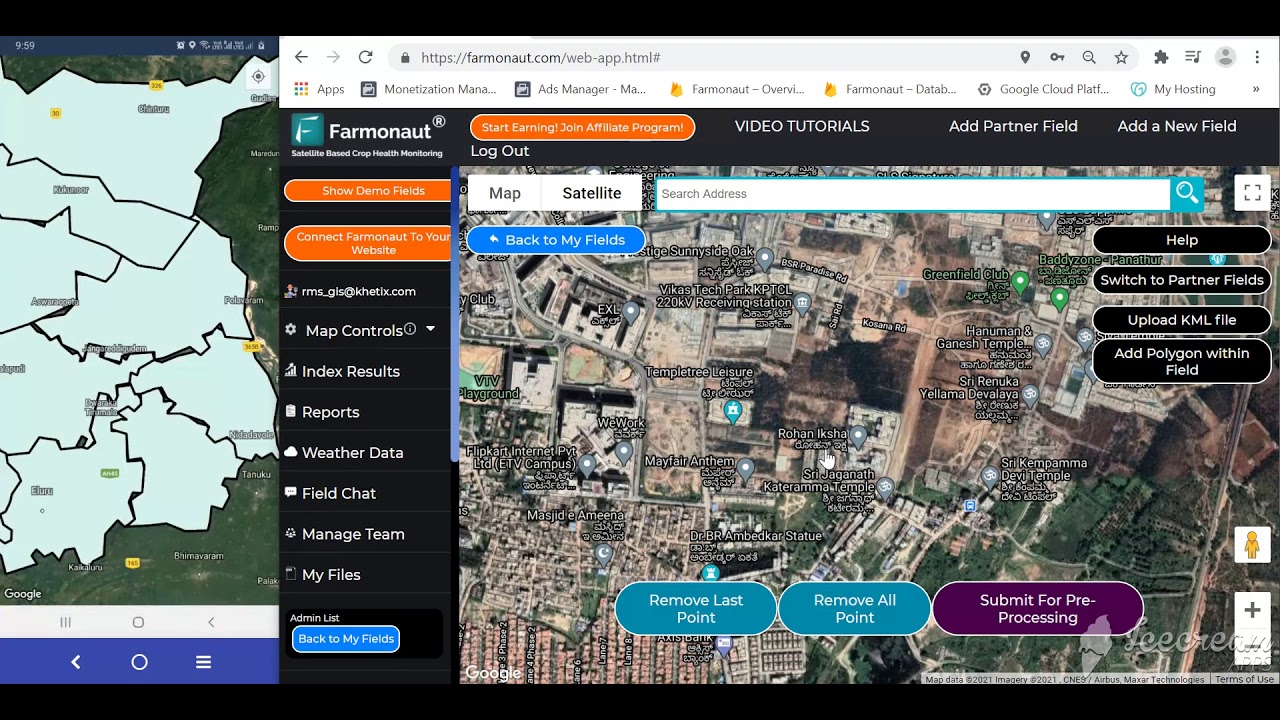
Monitor Mining Activities and Environmental Impacts with the Farmonaut Web & Mobile App
Farmonaut’s platform offers real-time satellite insights for mining, infrastructure, and environmental risk monitoring across Russia’s key asbestos mining regions. Our easy-to-use application ensures accurate, timely data for safer, more efficient mining operations, and resource management for local authorities, mining companies, and regulators.
Industry Trends and Demand: Asbestos Mine Russia 2025
As we enter 2025, the landscape of asbestos mining in Russia remains significant despite a persistent global decline in asbestos use. Several compelling factors drive this dynamic:
- Continued international demand: Nations with less stringent regulatory standards—chiefly in Asia—are primary importers. Over 60% of Russian asbestos exports were shipped to Asia in 2023.
- Domestic infrastructure reliance: Certain sectors in Russia and partner countries still rely on asbestos-containing materials for roofing, pipe insulation, and fire-resistant construction.
- Shifting global sentiment: Mounting public health concerns and improved regulations regarding worker safety and environmental practices are influencing the outlook for asbestos mines.
- Industry resilience: Despite calls for diversification, mining communities and regional economies remain heavily tied to asbestos mine operations.

To ensure sustainable development in the sector, Russian producers must address increasing health and environmental risks—a process already underway with incremental improvements, but further challenges persist.
Focus Keyword: Asbestos Mining Risks Russia 2025
- Workforce exposure and protective standards remain a primary issue, as asbestos miners continue to face lung disease risks and fiber inhalation hazards at mine sites.
- The need for effective monitoring and environmental management practices is pushing mining companies towards adopting AI and satellite-based technologies.
Major Companies & Production
- Uralasbest operates the world’s largest single asbestos mine (in the town of Asbest), consistently producing hundreds of thousands of tons annually.
- Smaller producers operate in Siberia and other regions, with varying production volumes.

Health & Environmental Risks in Asbestos Mines
The challenges confronting asbestos miners and local communities are perhaps most acute in the areas of occupational health and environmental contamination.
Health Risks: Lung Disease, Asbestosis, Cancer & Mesothelioma
- Prolonged exposure to airborne asbestos fibers is linked to increased risk of asbestosis, lung cancer, and mesothelioma.
- Mine workers and nearby communities may be directly at hazard, particularly if safety standards are not adequately enforced.
- Even with recent improvements in protective regulations and workforce monitoring practices, Russia remains under international scrutiny for the adequacy of occupational safety standards.
Environmental Concerns: Airborne Dust, Fiber Dispersion & Ecosystem Impact
- Asbestos mining operations generate significant dust and contaminated tailings, leading to possible fiber dispersion into air and water supplies, with risks extending beyond mining sites.
- Environmental remediation after mine closure is complex and costly. Without effective management, abandoned asbestos mines can become long-term sources of pollution.
- Local communities and ecosystems are at increased risk of contamination due to inadequate practices or insufficient regulatory enforcement.

Monitoring and Improvements: Moving Towards Safer Operations
- Some mining companies have invested in improved dust suppression and automation to reduce worker exposure.
- The need for comprehensive environmental monitoring has led to increased adoption of satellite-based monitoring and AI-powered systems for real-time detection of contamination and for early warning of emerging hazards.
Technological Solutions
With the Farmonaut Carbon Footprinting Tool, industrial stakeholders gain access to satellite-derived carbon emission data and environmental impact tracking, supporting efforts to minimize mining-related carbon footprints and adopt more sustainable practices. Real-time environmental monitoring is becoming a best practice across top asbestos mines.
Regulatory Environment: Stricter Standards and International Pressure
Russian asbestos mine operations are increasingly shaped by regulatory changes, both from within the country and from global public health authorities.
- National regulations for occupational health and workplace safety standards have been incrementally tightened throughout the last decade, but enforcement is still inconsistent in some mining regions.
- International advocacy from the World Health Organization (WHO) and International Labour Organization (ILO) continues to push for stricter restrictions—impacting how asbestos mine Russia aligns with global trends towards banning asbestos.
- Stakeholders must remain vigilant—regulatory environment is fluid, and producers may soon face more robust monitoring and reporting requirements.
Companies are responding by enhancing compliance transparency through solutions like the Farmonaut Traceability Platform—which leverages blockchain technology to enable secure, end-to-end tracking of asbestos materials and supply chain management.

Economic and Infrastructure Implications
Asbestos mining continues to have significant economic implications in Russia—particularly at the local and regional level.
- Mining operations are a primary source of employment in towns such as Asbest, supporting many auxiliary industries like transport, equipment manufacturing, and local businesses.
- Infrastructure development relies on asbestos-containing materials. Roofing, insulation, and construction sectors remain prominent users—even as alternative “safer” materials are considered.
- As countries and companies move towards asbestos-free alternatives, asbestos mining regions are likely to face complex economic transitions—highlighting the necessity for planned diversification strategies and resource management.
To support efficient, cost-effective resource management, mining operators can deploy Farmonaut Fleet Management Solutions. These tools enable real-time tracking of vehicles and equipment, reducing operational costs, improving safety compliance, and offering advanced insights on production logistics.
On the finance side, Farmonaut’s Satellite-based Verification for Loans & Insurance offers mining and infrastructure sectors an accurate, digital method for risk assessment and asset verification.
Key Trends and Risks in Russian Asbestos Mining: 2025 Outlook
| Trend/Risk | 2024 Status (Estimated) | 2025 Outlook (Estimated) | Potential Community Impact |
|---|---|---|---|
| Production Volume (Million Tons) | 0.79–0.81 | 0.78–0.80 (slight decline due to export pressure) | Stabilizes local employment; potential future job losses |
| Export Share (%) | 60% Asia; 10% Africa; 10% Americas; 20% Other | Increase in Asian exports, possible dip in others due to regulations | Shifts trade relationships; regional economic dependencies intensify |
| Workforce Exposure Levels | High (20–30% above EU averages) | Slight reduction with automated, safer mining practices | Reduced health risks if compliance improves; still above global safe levels |
| Health Incidence Rate (Per 100,000) | 75–80 (asbestosis, cancer, mesothelioma combined) | 70–75 (with monitoring upgrades) | Minor improvement; healthcare strain persists for affected regions |
| Environmental Incidents (Cases) | 10–12 annually (major contamination events) | 8–10 (enhanced dust/fiber controls introduced) | Fewer emergencies; better community health but legacy pollution remains |
| Regulatory Changes | Incremental tightening; patchy enforcement | Likely adoption of advanced tech & transparency tools | Improved confidence; workers’ rights and standards rise |
How Modern Technology Supports Safer Mining Operations
The outlook for asbestos mine Russia 2025 is increasingly linked to the adoption and integration of digital monitoring and AI advisory systems. Satellite-based monitoring platforms—such as those offered by Farmonaut’s Satellite Data & API—allow for:
- Comprehensive site-wide fiber dispersion tracking
- Real-time environmental impact analysis
- Operational oversight to flag dust emissions and correlate with worker exposure
- Automated alerts for asbestos mine safety violations and emerging environmental hazards
- Integration with blockchain traceability for secure, transparent reporting and regulatory audits
The application of such technology not only aids in compliance but also supports the broader movement toward sustainable mining practices, reducing hazards for miners and their communities.
For those seeking technical transparency and integration, see the detailed API Developer Documentation for streamlined real-time mining & infrastructure data access.
Outlook & Future of Asbestos Mining in Russia
In 2025 and beyond, the Russian asbestos mining industry stands at a pivotal crossroads:
- Growing regulatory scrutiny is pushing producers to upgrade occupational safety standards and adopt environmental best practices.
- Economic diversification for asbestos mining regions is a growing priority, with new industries and safer materials being explored.
- Technology-driven transformation—from automated mining equipment and AI-based advisory to satellite-based environmental monitoring—will define responsible, cost-effective operations.
- International pressure to reduce global asbestos use could accelerate the transition towards asbestos-free construction and industrial applications.
Challenges Ahead
Despite progress, significant challenges remain:
- Legacy contamination at older mines complicates rehabilitation efforts.
- Transitioning workforces: Many local communities depend on asbestos mining jobs, requiring retraining and job creation programs for a smoother economic shift.
- Health surveillance: Ongoing monitoring for late-developing lung diseases and environmental impact studies will be required well into the future.
Opportunities for Sustainable Development
- New traceability solutions (e.g., blockchain traceability tools from Farmonaut) enhance supply chain transparency.
- Satellite and AI-driven monitoring delivers actionable insights for compliance and proactive environmental stewardship.
- Large-scale Mine Management Platforms enable efficient resource allocation and sustainability reporting.
Farmonaut Services for Mining, Infrastructure, and Sustainability
At Farmonaut, our mission is to make advanced satellite technology accessible, affordable, and impactful across mining, infrastructure, and agriculture sectors in Russia and worldwide. Through our integrated platform:
- We offer real-time monitoring for environmental impact, fiber dispersion, and dust incidents using the latest satellite imagery and AI.
- Our carbon footprinting modules empower mining companies and regulators to track emissions, optimize sustainability results, and comply with evolving regulatory requirements.
- The Jeevn AI Advisory System delivers tailored insights, weather data, and operational strategies for safe and efficient mine site management.
- With fleet and resource management tools, mining companies reduce operational costs and improve equipment safety performance.
- Blockchain traceability ensures that every batch of asbestos or related material is securely and transparently tracked from mine to factory or export terminal.
- Mining investors and insurers benefit from satellite-verifiable asset and loan monitoring, improving lender confidence.
For government agencies, businesses, and mine managers, Farmonaut’s Mining and Infrastructure Advisory App brings practical, scalable solutions—helping drive the responsible, strategic evolution of Russian mining operations into 2025 and beyond.
Industry Trivia
Frequently Asked Questions (FAQ)
What is the current status of asbestos mining in Russia for 2025?
As of 2025, Russia’s asbestos mining industry remains active and among the world’s largest, predominantly supplying chrysotile asbestos from the Ural Mountains and Siberia. Despite increasing international restriction efforts and regulatory pressure, production persists mainly to serve domestic infrastructure needs and for export to regions with less stringent asbestos regulations.
What are the main health and environmental risks associated with Russian asbestos mines?
Risks include prolonged asbestos fiber inhalation leading to asbestosis, lung cancer, and mesothelioma. Dust formation and contaminated mining waste pose significant environmental hazards, impacting local water and air quality and potentially affecting communities beyond mining sites.
Are there any improvements in regulatory practices and occupational safety?
In recent years, Russia has implemented incremental improvements in occupational health and regulatory standards for asbestos mining. However, challenges remain in ensuring adequate enforcement, monitoring, and comprehensive coverage—especially in remote or economically dependent regions.
What is the economic significance of asbestos mining for Russian regions?
Asbestos mining remains a crucial economic driver for regions like the town of Asbest in Sverdlovsk. The industry provides employment, supports local infrastructure, and fosters auxiliary industries. As global demand shifts, economic diversification will be essential to maintain regional prosperity.
How does technology, such as Farmonaut’s services, support safer mining practices?
Satellite-based monitoring, AI-driven advisory platforms, carbon tracking, and blockchain-based traceability all enhance safety, regulatory compliance, and transparency. These technologies support early hazard detection, emission reductions, and data-driven management decisions in mining and infrastructure.
Conclusion
Asbestos mine Russia 2025 is an evolving narrative defined by legacy, economic impact, health risks, and the urgent need for sustainable transformation. With global pressures mounting and enforcement tightening, the Russian asbestos mining sector must—now more than ever—prioritize safer practices, technological innovation, and responsible stewardship for its workers and communities.
The industry’s ability to adapt, deploy advanced monitoring, and introduce diversification programs will be vital for economic resilience and public health protection. Mining stakeholders, public sector outlets, and local communities should prepare for a future where asbestos mining gradually gives way to safer materials and more sustainable economic models.
For effective management, transparency, and compliance in the modern mining landscape, leveraging cutting-edge platforms like Farmonaut’s Mining & Infrastructure App is essential. We are committed to enabling organizations and authorities to drive efficiency, sustainability, and responsible growth across the Russian mining sector in 2025 and beyond.
Farmonaut Subscription & API Access
Explore Farmonaut’s full suite of satellite monitoring, AI advisory, blockchain traceability, and resource management solutions for mining, infrastructure, agriculture, and more.


Access Farmonaut’s satellite data, resource tracking, and environmental monitoring via our public API:
https://sat.farmonaut.com/api | Developer Documentation

 Rains of Favour
 Tintina Mining Group
 Dalgety Minerals Pty Ltd
 Vortex Minerals Pty Ltd
 Faith At Work (Pty) Ltd
 Geotech Mining Solutions plc
 Vulcan International Limited
 Kidepo Associates
 GKY Mining
 Alkimy SARL
 Double A Trading
 GemSprout Metals Limited
 Qader Group
 Ileys General Trading
 SG Gold Mining LLC
 VRV Global Pte Ltd
 Omsri International FZE
 G.I.T.T.
 Jaunita Erss Ltd
 Almosi SARL
 SRK Consulting
 Berks Gold Limited
 Mwerezi Minerals Company Limited
