

Uranium royalties · Company comparison
Uranium Royalty Companies: Who Holds Uranium Royalties
By its own account, only one listed company, Uranium Royalty Corp. (Nasdaq: UROY), is built around uranium royalties. Yellow Cake plc and the Sprott Physical Uranium Trust hold physical uranium instead. Facts are from filings dated up to July 2026.
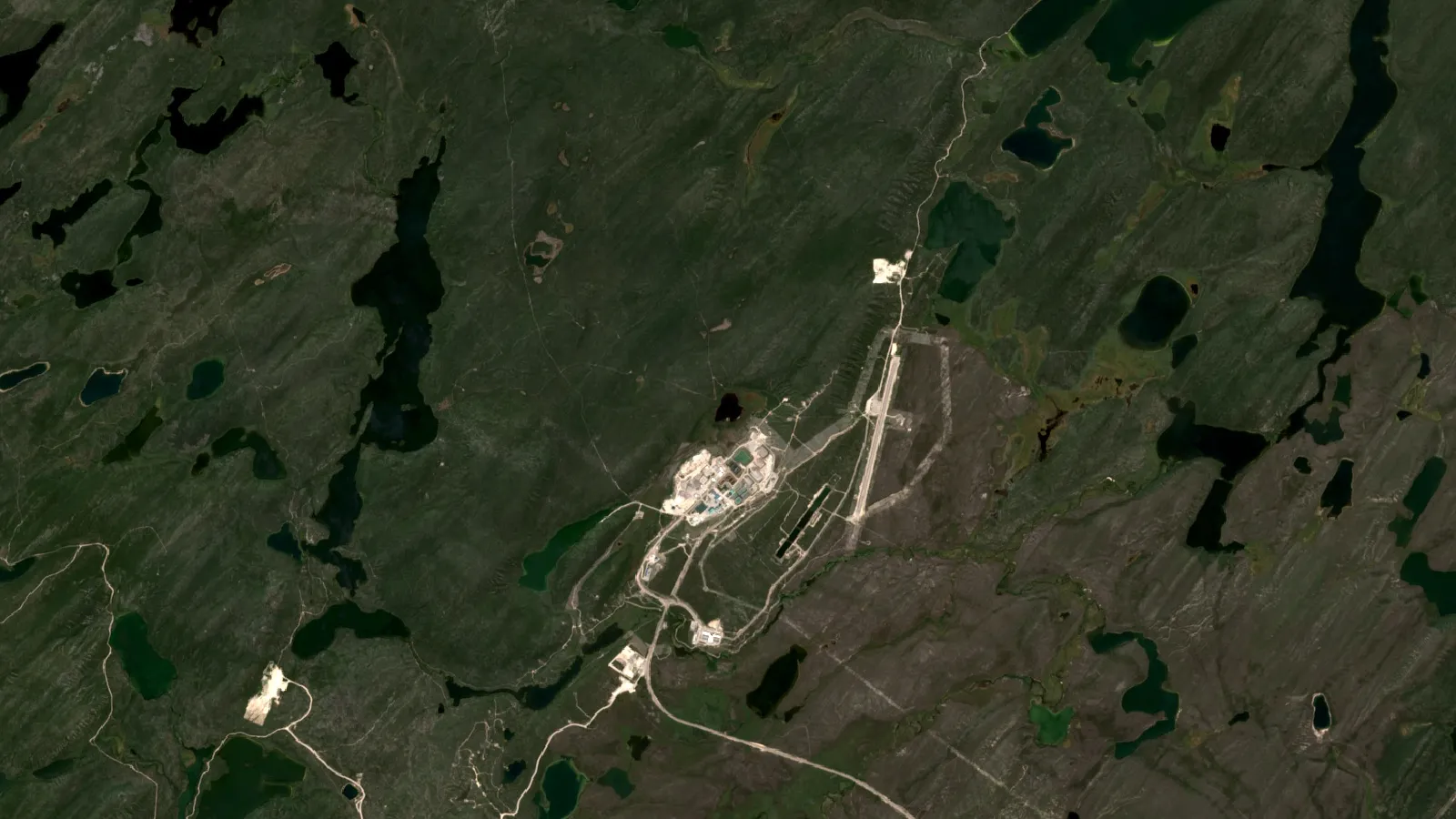
Key takeaways
- Uranium Royalty Corp. calls itself the first and only company focused solely on uranium royalties and streams (annual information form, 2025); its January 2026 report lists 24 principal projects.
- In the nine months to 31 January 2026 it booked C$128 thousand of royalty revenue against C$49,785 thousand from selling stored uranium (company interim report, March 2026).
- On 27 July 2026 it completed a deal that added soda-ash royalties and about 850,000 surface acres in the western US; the shares now trade on Nasdaq only, after the Toronto delisting on 28 July 2026.
- Yellow Cake plc held 23.11 million lb of U3O8 on 31 March 2026 (annual report, 2026) and earns no royalty income as its main business; the Sprott trust is also a physical-uranium fund.
- Cameco’s averaged uranium prices on 30 September 2026 were US$89.63 per lb spot and US$96.50 long-term (Cameco, UxC and TradeTech month-end data).
In this article
- Uranium royalty companies: the short answer
- How a uranium royalty works
- How we compared them
- Uranium Royalty Corp.: the one pure-play royalty company
- Yellow Cake plc: physical uranium, with a royalty option
- Sprott Physical Uranium Trust: a fund, not a royalty holder
- Uranium royalty companies compared side by side
- The two mines behind most of the headline royalties
- How much does a uranium royalty pay?
- Selling a royalty on your own project: terms seen in public deals
- Uranium prices and royalty income
- What to check before you rely on any of these names
- Gold royalty companies: a separate list
- Frequently asked questions
Uranium royalty companies: the short answer
By its own account, only one listed company is built around uranium royalties: Uranium Royalty Corp. (Nasdaq: UROY), which describes itself in its annual information form as the first and only company to focus solely on acquiring uranium royalties, streams and similar interests. The other names people compare it with, Yellow Cake plc and the Sprott Physical Uranium Trust, hold physical uranium and do not earn royalties as their main business.
That difference matters for anyone sizing up this niche, whether you own a uranium licence and wonder who buys royalties, or you follow the sector as an investor. A royalty holder is paid by mine operators. A physical holder owns pounds of U3O8 in a storage account. The two react to the uranium price in different ways, and they carry different risks.
This page sorts the three out, using company filings dated up to July 2026. It also covers a big change in July 2026, when the royalty company changed its home country and added a large land and soda-ash royalty business. Gold and silver royalty firms are a separate list, covered at the end.
How a uranium royalty works
A royalty is a right to a share of a mine’s output or income. The holder pays an upfront price, often to a junior company that needs cash, and then receives a payment each time the mine sells uranium. The holder does not run the mine and does not pay its costs. Uranium is sold as U3O8, a compound called yellowcake, and priced in US dollars per pound.
Infographic
How a royalty payment reaches the holder in 4 steps
- 1The mine sells uraniumThe operator sells U3O8, usually under long-term contracts.
- 2The base is worked outRevenue, net smelter value or profit, depending on the royalty type.
- 3The share is appliedThe royalty rate is applied to the covered share of production.
- 4Cash or pounds are paidPaid in cash, or in kind as stored uranium if the contract allows.
The main royalty types, as defined in the Uranium Royalty Corp. filing, are these:
- NSR (net smelter returns): a share of the value the operator receives for its production, after limited deductions.
- GRR, GVR or GORR (gross revenue, gross value or gross overriding royalty): a share of total sales revenue from a property, which may or may not allow deductions.
- NPI (net profit interest): a share of profit after production costs. It pays nothing until the mine has recovered certain costs.
- Production royalty: a fixed amount per unit of metal produced.
A stream is different. The buyer pays upfront and gets the right to buy part of future production at a set price. The same filing notes that some royalties can be taken as physical uranium instead of cash, “in kind”, with advance notice to the operator. The holder then keeps those pounds in a storage account, for example at Cameco’s Port Hope and Blind River facilities in Ontario.
The type of royalty decides when money arrives. A gross revenue royalty pays from the first pound sold. An NPI can wait years. Keep that in mind when you read the portfolio tables below.
How we compared them
We used only primary documents: SEC filings, the company’s own annual report, operator pages and the Cameco price table. No share prices are quoted, because they change by the minute. The yardsticks were:
- What you actually own: royalties, physical pounds, or shares in a fund.
- Where the income comes from: royalty payments, uranium sales, or only price change in the held pounds.
- Disclosure: is the portfolio listed project by project, with royalty terms?
- Key limits: what the filings themselves say can go wrong.
Each entry has a “best for” line, which describes the type of reader the structure suits. It is not a recommendation to buy or sell anything. Farmonaut sells satellite mapping to licence holders and has no stake in any company listed here.
Uranium Royalty Corp.: the one pure-play royalty company
Best for: readers who want to study how a portfolio of uranium royalties is built and reported.
Chart
Principal uranium projects by operator
Count of the 24 projects in the royalty list, grouped by project operator
Uranium Royalty Corp. (URC) is based in Vancouver. In its interim report to 31 January 2026, it lists 24 principal uranium projects in Canada, the United States, Namibia and Spain. The operators include Cameco, Uranium Energy Corp. (UEC), Energy Fuels, Skyharbour Resources, Peninsula Energy, Paladin Energy and enCore Energy. Royalty terms range from a 0.375% NSR on the Salamanca project in Spain to a 10% to 20% sliding NPI on Cigar Lake and Dawn Lake in Saskatchewan’s Athabasca Basin.
The chart below counts the principal projects by operator, from that table.
Facts from the filings:
- The two largest mines in its portfolio are Cigar Lake, held through a sliding-scale NPI on a 3.75% share of production, and McArthur River, held through a 1% gross overriding royalty on about 9% of production. Both are covered in their own section below.
- At 31 January 2026 it held 2,329,637 pounds of U3O8 at a weighted average cost of US$59.30 per pound. It had also agreed to sell 1.75 million pounds at an average of US$85.95 per pound, due to settle in the quarter to 30 April 2026.
- For the nine months to 31 January 2026, royalty revenue was C$128 thousand, against C$49,785 thousand from sales of uranium inventory. In other words, almost all revenue in that period came from selling stored uranium, not from royalties.
- It has an option, agreed in 2018, to buy physical uranium from Yellow Cake plc, up to US$21.25 million in total as at 31 January 2026.
The July 2026 change. On 27 July 2026, URC completed a plan of arrangement with entities of Orion Resource Partners and the Ontario Teachers’ Pension Plan. A new US-domiciled parent, also named Uranium Royalty Corp., now holds the old company and about 92% of the Sweetwater entities. Those entities own trona (soda ash) royalties and landholdings in Wyoming, Utah and Colorado, according to the company’s June 2026 release. The company says its land package covers about 850,000 acres of surface rights and 4.5 million acres of mineral rights, centred on Wyoming’s Green River Basin. The shares list on Nasdaq under UROY, and the old Toronto listing was set to end at the close of trading on 28 July 2026. The April 2026 announcement put the total payment to the sellers at roughly US$330 million in cash and US$813 million in shares. The company’s own portfolio page now lists soda-ash royalties next to the uranium ones.
Pros: the widest uranium royalty list of any listed company in this guide; no mine operating costs; full project-level disclosure; a link to physical uranium through the Yellow Cake option.
Cons: the royalty income reported in the January 2026 interim report is tiny next to its stored-uranium sales; the Cigar Lake NPI pays only after large cumulative costs are recovered, as the company itself notes; many of the 24 projects are still in exploration or development; and since July 2026 the group is no longer a uranium-only story, because soda ash and land now sit beside uranium. Check the first full report of the new group before relying on any older figure.
Yellow Cake plc: physical uranium, with a royalty option
Best for: readers who want to see how a company holds uranium itself, with no mine and no royalty paperwork.
Yellow Cake plc is quoted on the London AIM market (ticker YCA). In its 2026 annual report, it states that it held 23.11 million pounds of U3O8 on 31 March 2026, bought at an average cost of US$37.20 per pound, with a net asset value of US$2,109.6 million (GBP6.33 per share). It values the stock at the UxC spot price, which closed that day at US$83.95 per pound. The pounds sit in storage in Canada and France.
Its Framework Agreement with Kazatomprom, the world’s largest producer, gives it the right to buy up to US$100 million of U3O8 each year until 31 December 2027. The report lists streaming and royalties among the uranium deals it may pursue, but its results come from the change in value of the uranium it holds, not from a royalty line.
Pros: direct exposure to the uranium price; no mine operating risk; a stated policy of issuing shares only at or above net asset value.
Cons: it earns no mining income, so its value moves with the uranium price alone; it depends on a few commercial agreements; and, as with any listed vehicle, its share price can differ from its net asset value.
Sprott Physical Uranium Trust: a fund, not a royalty holder
Best for: readers who want a plain picture of how much physical uranium financial funds now hold.
The Sprott Physical Uranium Trust (SPUT) buys and stores physical U3O8. It owns no royalties. The Yellow Cake report says that Yellow Cake and SPUT together have bought about 85 million pounds of U3O8 since Yellow Cake listed in July 2018, and that SPUT raised US$200 million in a bought deal in June 2025 and issued a new US$2 billion prospectus in January 2026. That is why the fund keeps coming up in royalty comparisons: it competes with royalty companies for the same investor money, and with utilities for the same pounds.
The limits are the same as for Yellow Cake: a fund earns nothing from production, and a large purchase by a fund can itself move the spot price. Read the trust’s own report for current holdings; we did not use any holdings figure for it here.
Uranium royalty companies compared side by side
| Name | What you own | Income source | Best for | Main limit |
|---|---|---|---|---|
| Uranium Royalty Corp. (Nasdaq: UROY) | 24 principal uranium royalties and streams, stored uranium, soda-ash royalties and land since July 2026 | Royalties, plus sales of stored uranium | Studying a diversified royalty list | Royalty revenue small in the January 2026 report; group now mixed |
| Yellow Cake plc (AIM: YCA) | 23.11 million lb U3O8 on 31 March 2026 | Change in value of held uranium | Pure price exposure, no mine | No mining income |
| Sprott Physical Uranium Trust | Physical U3O8 held by a trust | Change in value of held uranium | Following fund demand for pounds | No production income; owns no royalties |
If your question is which companies hold uranium royalties as a side business, the filings we read did not turn up a second listed company with a disclosed uranium royalty book of any size. Treat any article that ranks “ten uranium royalty companies” with caution, since the filings support only one.
The two mines behind most of the headline royalties
Two Cameco-operated mines in the Athabasca Basin of northern Saskatchewan dominate the discussion of uranium royalties. URC’s filing gives their 2025 output on a 100% basis: Cigar Lake produced 19.1 million pounds of U3O8, above Cameco’s 18 million pound forecast, and McArthur River produced 15.1 million pounds, short of plan after delays in new mining zones and ground freezing. Cameco’s 2026 guidance is 17.5 to 18.0 million pounds for Cigar Lake and 14.0 to 16.5 million pounds for McArthur River and Key Lake, both on a 100% basis.
Chart
Uranium output in 2025
Million lb U3O8; world and Kazakhstan are totals, the two mines are 100% basis
The chart below sets those two mines against world and Kazakh output in 2025, using the Yellow Cake report’s figures. The bases differ: the world and Kazakhstan bars are national or company totals, the mine bars are single operations.
Output is only half the story. The Cigar Lake royalty is an NPI, so by the company’s own account it pays only after the large cumulative development costs are recovered. The McArthur River royalty is a gross overriding royalty on a small slice, about 9% of production linked to Orano’s roughly 30% stake, and so pays on revenue from the first pound. The next section turns that into a number.
For wider context on supply, the World Nuclear Association’s table shows 2024 mine production of 60,213 tonnes of uranium in total, with Kazakhstan at 23,270 tonnes (39% of the world) and Canada at 14,309 tonnes. Our guide to the largest uranium producers in the world covers the operators in more detail, and the explainer on extracting uranium and gold from ore describes how the U3O8 is made.
How much does a uranium royalty pay?
Royalty income is simple arithmetic: mine output, times the share of output the royalty covers, times the royalty rate, times the price. The calculator below uses the McArthur River terms from URC’s filing as its starting point: a 1% gross overriding royalty on about 9% of production. The output and price are round examples that you can replace.
With the default numbers, a 15 million pound mine covered at 9% and 1% gives 13,500 pounds a year, which is worth about US$1.2 million at US$90 per pound. That is gross, before any tax or the holder’s own costs. It also shows why a single royalty of this kind is small next to a company’s stored uranium: the stored pounds of URC alone were over 2 million at the end of January 2026.
Real contracts add wrinkles. Some cap the total payable: the filing notes that the Reno Creek royalty has a maximum of US$2.5 million, and that the payor can buy back the Roca Honda royalty for US$5 million before the first payment is due. Use the numbers in the contract, not the defaults.
Calculator
What would your uranium royalty pay per year?
Enter your own mine output, covered share, royalty rate and price.
- Pounds of U3O8 the royalty covers per year: 13,500 lb
- Mine revenue at your price (100% basis), US$: $1,350,000,000
Example values only, not a benchmark. Defaults echo the McArthur River terms in Uranium Royalty Corp.’s January 2026 report (1% gross overriding royalty on about 9% of output); output and price are round examples. Price is an input: example, use today’s price. Gross amount before tax and costs.
Selling a royalty on your own project: terms seen in public deals
If you hold a uranium licence or claims, the same filings show what a royalty sale can look like. Three examples from the URC interim report:
- Aberdeen (Nunavut): in June 2025, URC bought a 2.0% gross revenue royalty from Forum Energy Metals for C$1.0 million in cash. The owner kept a right to buy back part of it for C$1.0 million after a positive pre-feasibility study, exercisable for six months and expiring on 4 June 2032.
- Reno Creek (Wyoming): a 0.5% net profit interest with a cap of US$2.5 million on total payments.
- Roca Honda (New Mexico): a 4.0% gross revenue royalty on part of the project, which the payor may buy out for US$5 million before the first royalty payment.
Three lessons follow. Buy-back and cap terms can matter as much as the headline rate. A royalty on part of a project covers only the ground named in the deal. And the buyer will want clear title to the licence, so check that your licence and any claims are in good standing with the regulator before you talk to anyone. A satellite screen of your ground can help you document geology and targets for that conversation, but it does not replace a resource estimate. Our complete mineral exploration guide explains the stages.

▶ Uses Zimbabwe’s Kanyemba uranium deposit to show how a known deposit differs from a classified resource, which matters when pitching a project royalty. · 4:27
Uranium prices and royalty income
Royalty income follows the price at which the operator sells, and uranium is sold mostly under long-term contracts, with a smaller spot market. Cameco publishes monthly averages of the UxC and TradeTech prices. Its table shows a spot price of US$89.63 per pound and a long-term price of US$96.50 on 30 September 2026. At the end of 2022 the spot price was US$47.68.
Chart
Uranium price at year end
US$ per lb U3O8; 2026 point is 30 September
The US Energy Information Administration reports that US reactor owners bought 46.9 million pounds in 2025, about 93% of it from foreign producers, at a weighted-average price of US$58.46 per pound (EIA uranium marketing report). That average sits well under the spot and long-term prices above because it reflects contracts signed years earlier. A royalty tied to a contract price therefore tends to lag the headlines.
The line chart shows the year-end spot and long-term prices from 2018, plus the September 2026 values. Both prices are Cameco’s averages of month-end quotes.
What to check before you rely on any of these names
Use this list on any royalty holder, uranium or otherwise.
Chart
Where Uranium Royalty Corp. revenue came from
C$ thousand, nine months to 31 January
- Read the revenue split. The dumbbell chart shows URC’s nine-month figures. Ask how much income is royalty and how much is something else.
- Look at the royalty type. An NPI or a royalty on a project that is only being explored may pay nothing for years.
- Check the share covered. “1% on part of the project” is much smaller than “1% of the project”.
- Check the operator and its track record. McArthur River’s 2025 shortfall against plan shows how an operating problem reaches the royalty holder.
- Check the filing date. A portfolio list changes with each purchase. Use the latest filing on SEC EDGAR (and SEDAR+ for older Canadian filings) rather than a blog. The URC figures on this page are the latest we found, from the report to 31 January 2026; its fiscal year ended 30 April 2026.
- Check the country. Rules differ in Canada, the United States, Namibia and Spain, and royalty holders are exposed to changes in them.
This page is for information only. It is not investment advice, and none of the companies here is a recommendation.
Gold royalty companies: a separate list
Gold and silver royalty firms work on the same idea, but they are larger and more numerous. Franco-Nevada (NYSE: FNV) describes itself as a gold-focused royalty and streaming company, and Wheaton Precious Metals (NYSE: WPM) is a streaming company. Royal Gold also offers exposure to precious metals without owning mines. Their own sites are at Franco-Nevada, Wheaton and Royal Gold. We rank them in a separate guide to the top gold royalty companies, which compares them by revenue and assets. For a gold-mining name that comes up in stock searches, see the note on New Found Gold in Newfoundland. If you are weighing gold ground in the United States, our guide to gold deposits in the United States by state is the better start.
Frequently asked questions
What are uranium royalty companies?
They are companies that buy the right to a share of a uranium mine’s output or income and collect payments when the mine sells. Uranium Royalty Corp. is the only listed company we found whose filings describe that as its sole focus.
Which companies hold uranium royalties?
Uranium Royalty Corp. holds the largest disclosed list: 24 principal projects in its January 2026 interim report. Yellow Cake plc and the Sprott Physical Uranium Trust hold physical uranium instead.
Is Uranium Royalty Corp. still listed on the TSX?
No. After the arrangement closed on 27 July 2026, the old shares were set to be delisted from the Toronto Stock Exchange at the close of 28 July 2026, and the new parent’s shares trade on Nasdaq as UROY.
Is Yellow Cake a royalty company?
Not mainly. It holds physical U3O8 and says it may also pursue streaming and royalty deals. Its reported results come from the value of the uranium it holds.
What is the difference between a royalty and a stream?
A royalty pays a share of sales or profit. A stream gives the buyer the right to buy a share of future production at a set price, after paying upfront.
What do NSR, GRR and NPI mean?
NSR is a net smelter returns royalty, GRR a gross revenue royalty and NPI a net profit interest. A GRR pays from the first sale. An NPI pays only after certain costs are recovered.
Do uranium royalty companies own physical uranium?
Some do. Uranium Royalty Corp. held 2,329,637 pounds of U3O8 on 31 January 2026 and agreed to sell 1.75 million pounds in the following quarter.
Which mines pay the largest uranium royalties?
Cigar Lake and McArthur River are the biggest operations in the Uranium Royalty Corp. list. The Cigar Lake royalty is an NPI that, by the company’s account, pays only after large costs are recovered, while McArthur River carries a 1% gross overriding royalty on about 9% of output.
How do uranium prices affect royalty income?
Revenue-based royalties rise and fall with the price the operator receives. Because much uranium is sold under older long-term contracts, royalty income can lag the spot price. EIA data show US buyers paid a weighted-average US$58.46 per pound in 2025.
Where can I find a royalty holder’s full portfolio?
Read its annual report and interim reports on SEC EDGAR or SEDAR+, and its own portfolio page. Look for the date, the royalty type and the share of the project covered.
Can I sell a royalty on my uranium project?
Royalty buyers do purchase royalties from project owners, for example the C$1.0 million Aberdeen deal in 2025. Terms such as buy-backs and payment caps vary. Ask a mining lawyer to review any offer, and confirm your licence status with the regulator.
Are gold royalty companies the same?
The model is the same, but the companies, mines and price drivers are different. See the guide to gold royalty companies linked above.
This page is for information only. It is not investment advice, and no company named here is a recommendation. Royalty terms and company structures change, so check the latest filings. Confirm licence and royalty rules with the regulator and a mining lawyer.
Farmonaut mining
Map your own licence area from space
Own a uranium or other mineral licence? Send the boundary as KML, KMZ or a polygon and get ranked satellite exploration targets, usually in 5 to 20 business days.

Mining Pro sample view, synthetic data
Keep reading
Sources
- Uranium Royalty Corp., interim MD&A to 31 January 2026 (SEC, March 2026): sec.gov
- Uranium Royalty Corp., annual information form FY2025 (SEC, July 2025): sec.gov
- Uranium Royalty Corp., news release on completing the Sweetwater arrangement (27 July 2026): sec.gov
- Uranium Royalty Corp., news release announcing the Sweetwater combination (16 April 2026): sec.gov
- Uranium Royalty Corp., portfolio page: uraniumroyalty.com
- Yellow Cake plc, Annual Report 2026: yellowcakeplc.com
- Cameco, Cigar Lake operation page: cameco.com
- Cameco, McArthur River and Key Lake operation page: cameco.com
- Cameco, uranium spot and long-term price table: cameco.com
- World Nuclear Association, World uranium mining production: world-nuclear.org
- US Energy Information Administration, Uranium marketing annual report: eia.gov
- Franco-Nevada, company website: franco-nevada.com
- Wheaton Precious Metals, company website: wheatonpm.com
- Royal Gold, company website: royalgold.com
- Yellow Cake plc, company website: yellowcakeplc.com
- Uranium Royalty Corp., notice of special meeting and circular news release (26 June 2026): sec.gov
Discussion
Questions, corrections or field experience? Share them below. First-time comments are reviewed before they appear, and your email is never published.
No comments yet. Be the first to add a question or your experience.

 Imperial Impex FZE
 Congo Mining Solutions
 Mining SARL
 SenGold Invest SAS
 Sania Corporation
 Sean Mining Limited
 NTS Group (Pty) Ltd
 Mine4Africa
 Lithspo Minerals Limited
 Tintina Mining Group
 Dalgety Minerals Pty Ltd
 Vortex Minerals Pty Ltd
 Faith At Work (Pty) Ltd
 Geotech Mining Solutions plc
 Vulcan International Limited
 Kidepo Associates
 GKY Mining
 Alkimy SARL
 Double A Trading
 GemSprout Metals Limited
 Qader Group
 Ileys General Trading
 SG Gold Mining LLC











