

Uranium · Mine profile
Cameco McArthur River Mine: Output, Reserves, Status
McArthur River in Saskatchewan packaged 7,808 tonnes of uranium in 2024, about 13% of world supply (World Nuclear Association). See output by year, reserves, the 2026 plan and the Australian zinc mine with the same name.
Key takeaways
- The mine packaged 15.1 million lb U3O8 in 2025 (100% basis), down from 20.3 million lb in 2024 (Cameco, March 2026).
- Reserves are 241.9 million lb at 6.48% U3O8, Cameco share, with a mine life to 2044 (Cameco AIF, March 2026).
- Cameco plans 14.0 to 16.5 million lb in 2026; the first half gave 8.3 million lb (Cameco Q2 2026).
- It ranked first among uranium mines in 2024 with 7,808 tU, 13% of world supply (World Nuclear Association).
- The McArthur River in Australia is a Glencore zinc-lead mine, not a uranium mine (Glencore, 2025 report).
In this article
- McArthur River mine at a glance
- Output by year: what the mine has produced
- How big is McArthur River compared with other uranium mines
- Reserves, grade and mine life
- How the ore is mined and milled
- Outlook: Zone 1, Key Lake and the guidance range
- What it costs to run, and the uranium price
- Environment, licence and community
- Which McArthur River? The zinc mine in Australia
- Watching a remote mine from space
- Frequently asked questions
McArthur River mine at a glance
The McArthur River mine in northern Saskatchewan was the world’s largest-producing uranium mine in 2024: it packaged 7,808 tonnes of uranium that year, about 13% of world supply (World Nuclear Association, 2024 data). Cameco operates it with a 69.805% interest. Its reserves stood at 241.9 million pounds of U3O8 (our-share basis) at the end of 2025, and Cameco shows a mine life to 2044 (Cameco Annual Information Form, March 2026).
This page answers the questions investors and analysts ask most: how much the mine makes, how that compares with other mines, what is in the ground, what has gone wrong lately, and what the 2026 plan looks like. It also covers a second operation with almost the same name, the McArthur River zinc mine in Australia, because searches often mix the two.
| Item | Value | Source and date |
|---|---|---|
| Location | Near Toby Lake, about 620 km north of Saskatoon, inside the eastern Athabasca Basin | Cameco AIF, March 2026 |
| Owners | Cameco 69.805% (operator); Orano 30.195% | Cameco AIF; World Nuclear Association |
| Mine type | Underground, ground freezing, raisebore and blasthole stoping | Cameco AIF, March 2026 |
| Packaged output 2025 | 15.1 million lb U3O8 (100% basis); 10.5 million lb Cameco share | Cameco AIF, March 2026 |
| Output plan 2026 | 14.0 to 16.5 million lb (100% basis) | Cameco Q2 2026 report |
| Reserves | 241.9 million lb at 6.48% U3O8 (Cameco share) | Cameco AIF, March 2026 |
| Licensed capacity | 25 million lb a year; licence runs to October 2043 | Cameco AIF, March 2026 |
| First mining | December 1999; paused January 2018; restarted November 2022 | Cameco AIF; World Nuclear Association |
Two terms to know. U3O8 is the oxide form in which uranium is packaged and sold, usually quoted in pounds. “100% basis” means the whole operation, before the owners split it; “our share” means Cameco’s portion. Cameco reports both, and mixing them is the most common error in articles about this mine.
Output by year: what the mine has produced
The mine began mining in December 1999 and had packaged about 373.2 million pounds (100% basis) by the end of 2025 (Cameco Annual Information Form, March 2026). Cameco suspended production in January 2018 because of weak uranium prices, and returned to production in 2022: the first ore from the mine was milled and packaged at Key Lake in November 2022 (World Nuclear Association, Uranium in Canada).
Chart
Packaged production, McArthur River and Key Lake
Million lb U3O8, 100% basis; 2026 shows plan range and the licence limit
Since the restart, output has climbed and then slipped. Packaged production at McArthur River and the Key Lake mill was 1.1 million pounds in 2022, 13.5 million in 2023 and 20.3 million in 2024 (100% basis). In 2024 the mill ran above plan partly by processing broken ore stockpiled in 2023, not only ore mined that year (Cameco Annual Information Form, March 2025). That stockpile was used up, and 2025 came in at 15.1 million pounds, below the 18 million pounds planned at the start of the year.
Cameco’s explanation for 2025 is specific: new mining areas were delayed, ground freezing in them was late, equipment and some skilled workers were short, and the mill was shut for an unplanned six weeks in autumn 2025 because it did not have enough ore to run on.
How big is McArthur River compared with other uranium mines
By tonnes of uranium, it is first. The World Nuclear Association lists it ahead of Cigar Lake (6,501 tU), Husab in Namibia (4,437 tU) and the in situ leach operations of Kazakhstan. The ten largest mines together made 62% of world supply in 2024. World mine output that year was 60,213 tU, about 90% of reactor demand by the association’s measure (World Nuclear Association, World Uranium Mining Production, updated October 2026).
Chart
Largest uranium mines by output, 2024
Tonnes of uranium (tU) packaged or produced in 2024; eight of the ten largest mines
Canada produced 14,309 tU in 2024, 24% of the world total, so this one mine and Key Lake mill supplied more than half of the country’s output. Kazakhstan led all countries with 39%.
Size is not the same as grade. The reserve at McArthur River averages 6.48% U3O8, far above the grade of most mines, but Cigar Lake’s reserves average 16.33% (Cameco AIF, March 2026). A grade above 20% is not the mine average; individual high-grade pockets are richer than the mine average, which is why the mill blends rich slurry with low-grade rock to a nominal 5% feed.
Reserves, grade and mine life
Cameco reports 241.9 million pounds of proven and probable reserves at 6.48% U3O8 (its share), down from 251.0 million pounds at 6.55% a year earlier, because the mine produced ore during the year. It also reports 4.7 million pounds measured and indicated resources at 2.25% and 1.7 million pounds inferred at 2.81% (Cameco AIF, March 2026). Reserves are the part a company can show is economic; resources are not yet proven economic.
The reserves sit in seven zones: 1, 2, 3, 4, 4 South, A and B. Their status in the 2025 filing:
- Zone 2 has been mined since 1999 and is almost finished, with about 3.5 million pounds left behind a freeze wall.
- Zone 4 has been mined since 2010 and holds 73.0 million pounds behind freeze walls. It is the main source for the next several years.
- Zone 1 had its freeze wall completed in November 2025, securing 48.1 million pounds. Cameco expects production mining to start in 2026.
- Zone 4 South is in mid development; freeze wall work on its upper levels is due to finish in 2026.
At the 2026 plan of 10.0 to 11.5 million pounds (Cameco share), 241.9 million pounds would last roughly 21 to 24 years, which fits the 2044 mine life Cameco shows. The calculator below lets you test other output rates.
How the ore is mined and milled
The ore lies about 500 to 640 metres below the surface in water-bearing rock under high pressure, so the mine cannot simply dig. Before miners work an area, crews freeze the ground by pumping chilled brine through holes drilled around it, building a wall of frozen rock that holds back the water. The two methods now in use are raisebore mining, a non-entry method in which a machine bores upward through the ore from a lower level, and blasthole stope mining, which Cameco plans to be the main method for future production (Cameco AIF, March 2026).
High-grade ore is ground into a slurry underground and pumped up; low-grade rock is hoisted as dry material. Both go by truck on an 80-kilometre all-weather road to the Key Lake mill, which blends them to about 5% U3O8 and produces uranium ore concentrate, often called yellowcake. The mine has no tailings facility of its own; the mill disposes of tailings in the mined-out Deilmann pit at Key Lake.
Water has been the main hazard. Production stopped in April 2003 after a rock fall in a development area caused a major water inflow; mining resumed in July 2003 and the inflow was sealed a year later (Cameco AIF, March 2026). That event shaped the freeze-wall design used today.
Outlook: Zone 1, Key Lake and the guidance range
Cameco plans 14.0 to 16.5 million pounds from the operation in 2026 (100% basis), which is 10.0 to 11.5 million pounds for Cameco. It describes output as limited by ore feed, so the start of Zone 1 mining is the item to watch. In the first half of 2026 the operation packaged 8.3 million pounds (5.8 million Cameco share), against 7.3 million in the first half of 2025 (Cameco Q2 2026 MD&A).
Chart
Plan versus packaged output
Million lb U3O8, 100% basis
Three events matter for the rest of the year:
- Flooding in May. A bridge on the main supply road partly collapsed, and Key Lake halted production while the mine cut back for about two weeks (World Nuclear News). Cameco said on 27 May 2026 that both sites were back at full production and its plan was unchanged (Cameco news release, 27 May 2026).
- A longer Key Lake outage. Cameco’s Q2 report says the annual mill shutdown was expected to begin in the third quarter and to run longer than usual because of new equipment and repairs. Cameco flags restart delays as a risk to output.
- Labour deal. A new three-year agreement with United Steelworkers Local 8914 was reached in April 2026 and runs to December 2028.
This page uses results to the second quarter of 2026; the effect of the Key Lake outage will show in Cameco’s third-quarter report. The chart compares planned and actual output for 2024 and 2025.
What it costs to run, and the uranium price
Cameco’s filings give a life-of-mine average operating cost of C$21.72 per pound for McArthur River and Key Lake (Cameco reports in Canadian dollars); across Cameco’s uranium operations, the average cash cost of production in the first half of 2026 was 7% higher than a year earlier because of fixed costs on lower production and inflation (Cameco Q2 2026 MD&A).
Chart
Uranium spot and long-term price, month-end
US$ per pound U3O8, January 2025 to September 2026
Prices are quoted in US dollars per pound. Cameco publishes industry averages built from month-end UxC and TradeTech prices: the spot price was US$89.63 at the end of September 2026 and the long-term price US$96.50 (Cameco, Uranium Price page). Most uranium is sold under long-term contracts, so a producer’s realised price lags spot. For a view of how Cameco’s contracting works, see our note on Cameco news and the uranium price.
The calculator uses these examples: output, ownership share, a price you choose and the reserve figure. Enter today’s price and your own view of output.
Calculator
What is a share of the mine’s output worth?
Enter your own output, ownership share and price to see pounds, value and reserve life.
- Gross value of your share (US$ million): 942.3
- Gross value of the whole output (US$ million): 1,350.0
- Years of reserves at this rate: 23.1
Example values only, not a forecast. Ownership is Cameco’s 69.805% interest in the mine and reserves are 241.9 million lb, Cameco share (Cameco AIF, March 2026). Price is an input: example, use today’s price. Value is before costs, taxes and contract terms.
Environment, licence and community
The mine operates under a Canadian Nuclear Safety Commission licence, renewed after a June 2023 hearing, that runs to October 2043. It also needs a pollutant control approval from Saskatchewan (renewed to June 2028) and a water rights licence (Cameco AIF, March 2026). The mine’s surface waste rock is held on a small footprint, with low-grade rock stored on lined pads until trucked to Key Lake. No community lives next to the site: Wollaston Lake is about 120 km away by air, and workers fly in from northern Saskatchewan pickup points, with hiring preference given to residents of the north.
Cameco’s decommissioning estimate for the mine is C$51.4 million (100% basis), and C$276.7 million for Key Lake. Those are accounting estimates and are revised as plans change.
For wider context on the province, see our guides to uranium mining in Saskatchewan, gold deposits in Saskatchewan and mineral exploration spending in Canada.
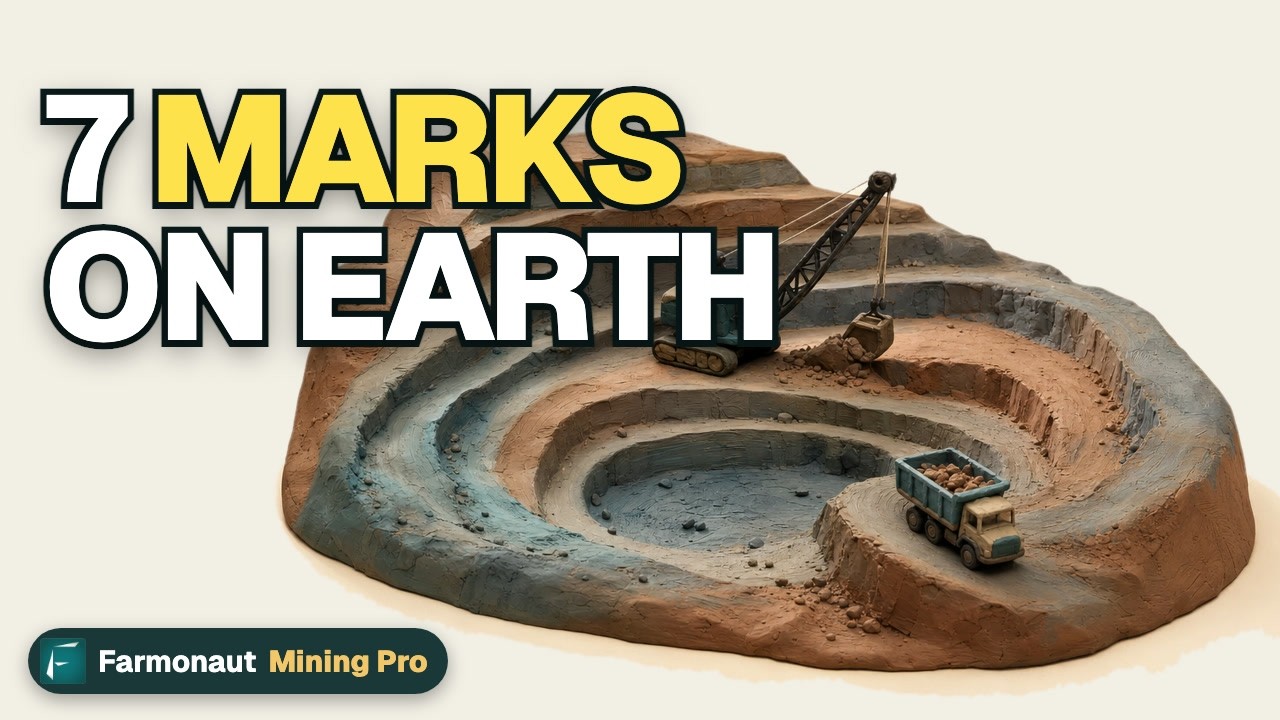
▶ The seven environmental impacts of mining, explained in clay. · 2:31
Which McArthur River? The zinc mine in Australia
A second operation has nearly the same name and is the reason many searches for “McArthur River mines” return mixed results. It is the McArthur River zinc-lead-silver mine in the Gulf region of the Northern Territory, owned by Glencore, about 970 km south-east of Darwin. It has operated since 1995 and is an open cut mine, not a uranium mine (Glencore Australia, 30 years of McArthur River Mine).
Glencore’s 2025 production report shows 274.6 thousand tonnes of zinc, 52.3 thousand tonnes of lead and 2.08 million ounces of silver in concentrates for the year, up from 259.7 thousand tonnes of zinc in 2024 (Glencore 2025 full-year production report). The mine employs more than 1,300 people, 24% of them Indigenous, according to Glencore.
The expansion often discussed online dates to November 2020, when the Northern Territory government approved a plan to roughly double the size of the mine and extend its productive life to 2048. The approval was contested: the Aboriginal Areas Protection Authority said it had not cleared the plan under the Territory’s sacred sites law (Mining.com, 19 November 2020). The Northern Territory mine produces zinc and lead, so uranium output figures do not apply to it. Readers looking at Australian projects can use our guide to Australian gold deposits by state.
Watching a remote mine from space
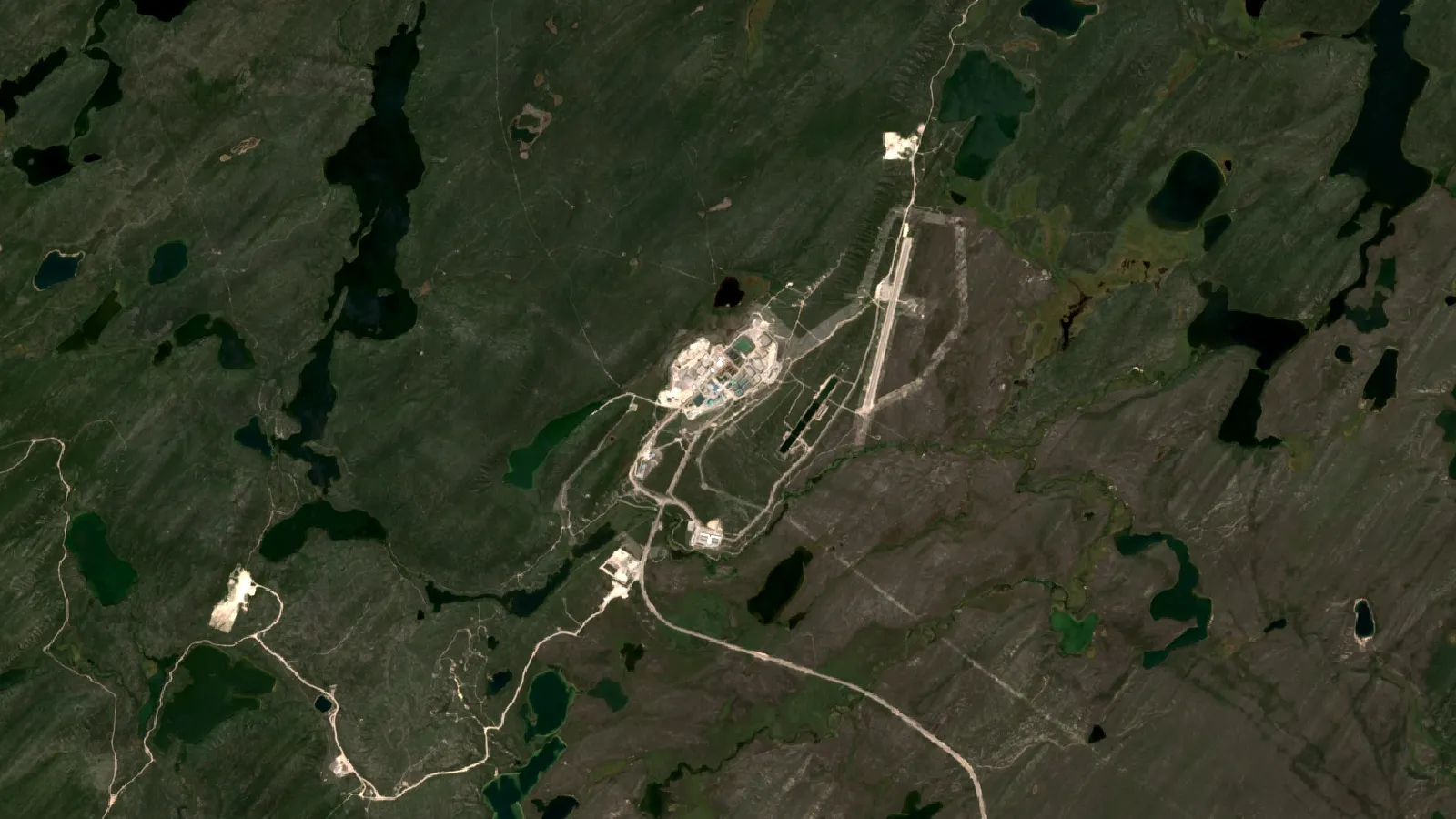
A site this far north is cloud-covered and snow-covered for much of the year, so open imagery such as Sentinel-2 is mostly useful in summer. Analysts use it to track surface footprint, stockpile and pad changes, and to compare what a company says with what the ground shows. Farmonaut works on the exploration side of the same problem: it maps alteration and structure inside a licence area to rank targets before drilling, and the Sentinel-2 view at the top of this page shows the mine area as an example of the imagery involved.
▶ Remote sensing for mining in three minutes: the instruments and why agreement between them matters. · 2:01
We cover a connected topic in Stibnite Gold Project Idaho: Permits, Reserves, Status.
For a closer look at a related question, see our guide: New Mexico Copper Mines: Chino, Tyrone, Copper King.
Frequently asked questions
Who owns the McArthur River uranium mine?
Cameco holds 69.805% and operates it. The other partner is Orano, with 30.195% (Cameco AIF, March 2026).
How much uranium does McArthur River produce?
It packaged 15.1 million pounds of U3O8 in 2025 on a 100% basis, 10.5 million of them Cameco’s share. In 2024 it was 20.3 million pounds. The 2026 plan is 14.0 to 16.5 million pounds.
Is McArthur River the largest uranium mine in the world?
By 2024 output it was the largest: 7,808 tU, about 13% of world supply, ahead of Cigar Lake at 6,501 tU (World Nuclear Association).
How much uranium is left at McArthur River?
Cameco reports 241.9 million pounds of proven and probable reserves at 6.48% U3O8, its share, plus smaller resources not yet counted as reserves.
How long will the mine last?
Cameco shows an estimated mine life to 2044 at the reserve level in its March 2026 filing. The licence runs to October 2043 and can be renewed.
Where is McArthur River and where is the ore processed?
The mine is near Toby Lake in northern Saskatchewan, about 620 km north of Saskatoon. Ore is trucked 80 km to the Key Lake mill, where it is milled into uranium concentrate.
What is the grade of the ore?
The reserve average is 6.48% U3O8. Mill feed is blended to about 5%. Cigar Lake is higher, at 16.33% in reserves.
Why was McArthur River shut for several years?
Cameco suspended production in 2018 because uranium prices were too weak to support it, then moved back toward production in 2022 as prices recovered. The first ore was milled again in November 2022.
Is there a McArthur River mine in Australia?
Yes, but it mines zinc, lead and silver, is owned by Glencore, and is in the Northern Territory. It is unrelated to Cameco’s uranium mine.
Which Cameco mines produce uranium?
McArthur River with the Key Lake mill, and Cigar Lake, both in Saskatchewan. Cameco also buys uranium from JV Inkai in Kazakhstan, which is planned at 10.4 million pounds (100% basis) in 2026 (Cameco Q2 2026 report). More background is on our Farmonaut home page.
This page is for information only. It is not investment advice. It names no security to buy or sell. Check company filings and speak to a licensed adviser.
Farmonaut mining
Screen exploration ground from space
Farmonaut maps alteration and structure inside a licence area to help rank exploration targets before drilling.

Mining Pro sample view, synthetic data
Keep reading
Sources
- Cameco, 2025 Annual Information Form (March 2026): cameco.com
- Cameco, 2024 Annual Information Form (March 2025): cameco.com
- Cameco, Q2 2026 MD&A: cameco.com
- Cameco, Second Quarter 2026 results: cameco.com
- Cameco, McArthur River/Key Lake resumes production (27 May 2026): cameco.com
- Cameco, Q4 2025 quarterly report: cameco.com
- Cameco, Uranium Price (industry averages): cameco.com
- World Nuclear Association, World Uranium Mining Production: world-nuclear.org
- World Nuclear Association, Uranium in Canada: world-nuclear.org
- World Nuclear News, Mid-year updates from major uranium producers: wnn.world-nuclear.org
- Glencore, 2025 full-year production report: glencore.com
- Glencore Australia, McArthur River Mine: glencore.com.au
- Glencore Australia, 30 years of McArthur River Mine: glencore.com.au
- Mining.com, Glencore to expand McArthur River (19 November 2020): mining.com
- Canadian Nuclear Safety Commission, McArthur River Operation: cnsc-ccsn.gc.ca
Discussion
Questions, corrections or field experience? Share them below. First-time comments are reviewed before they appear, and your email is never published.
No comments yet. Be the first to add a question or your experience.

 Alkimy SARL
 Double A Trading
 GemSprout Metals Limited
 Qader Group
 Ileys General Trading
 SG Gold Mining LLC
 VRV Global Pte Ltd
 Omsri International FZE
 G.I.T.T.
 Jaunita Erss Ltd
 Almosi SARL
 SRK Consulting
 Berks Gold Limited
 Mwerezi Minerals Company Limited
 Mining SARL
 SenGold Invest SAS
 Sean Mining Limited
 NTS Group (Pty) Ltd











