

African cobalt · Mine comparison
7 Cobalt Mines in Africa: Owners, Output and Status
The DRC mined an estimated 230,000 tonnes of cobalt in 2025, about 73% of the world total (USGS). Kisanfu is the largest single mine. This page compares seven African mines by owner, reported output and export-quota status.
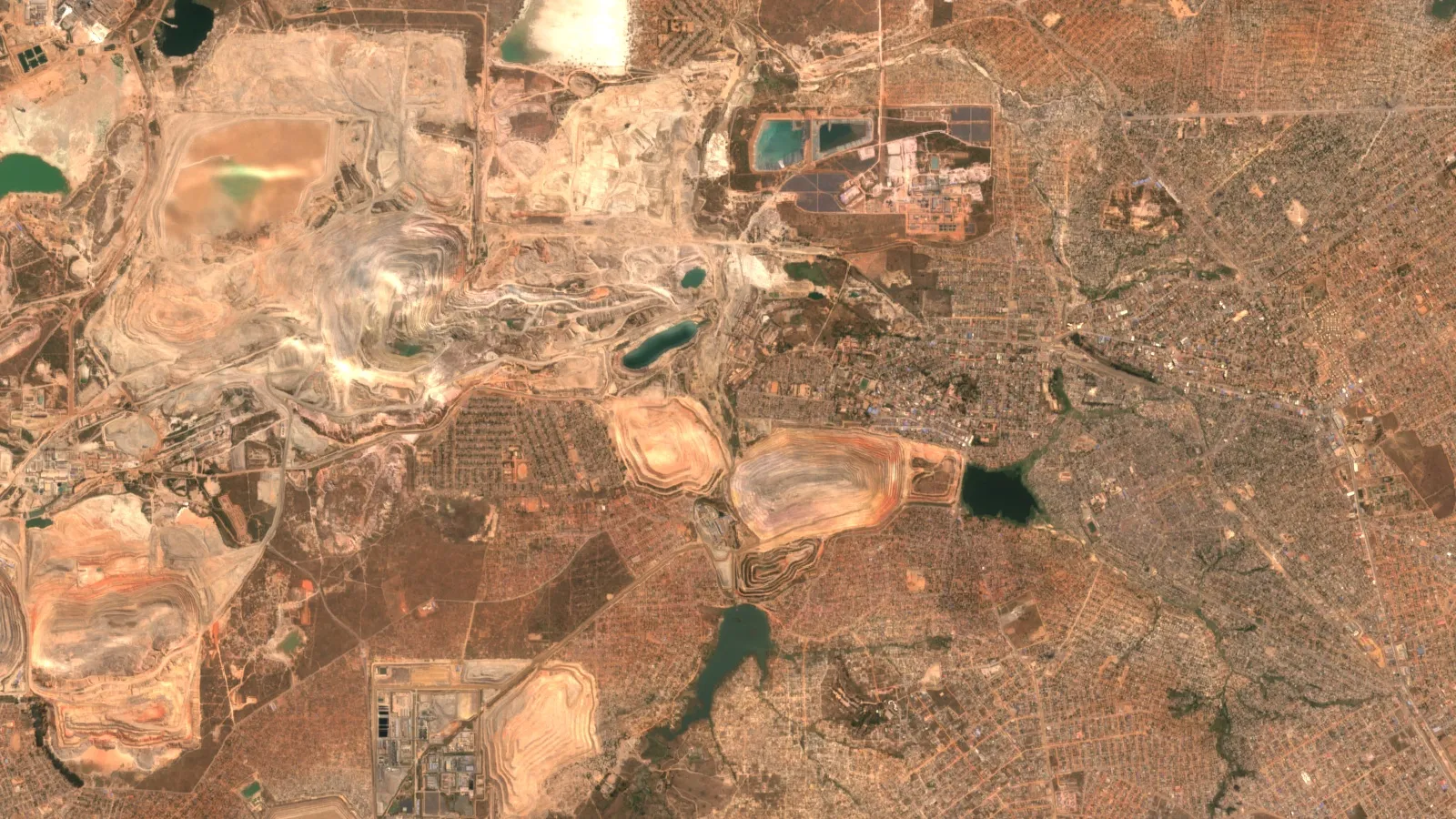
Key takeaways
- The DRC mined an estimated 230,000 tonnes of cobalt in 2025 and Madagascar 3,900 tonnes; world mine output was about 310,000 tonnes (USGS, 2026).
- CMOC’s Kisanfu mine is estimated at more than 80,000 tonnes of cobalt in hydroxide in 2025, about a quarter of world mined supply by the Cobalt Institute’s count (May 2026).
- DRC export quotas allow up to 96,600 tonnes of contained cobalt a year in 2026 and 2027, less than half of 2025 mine output (USGS, 2026).
- CMOC, Glencore and ERG produced over 78% of DRC cobalt in 2025 (Cobalt Institute, May 2026).
- Cobalt traded at US$39,345 per tonne on 14 October 2026, down 7.9% in a year (Trading Economics CFD).
In this article
- Which African countries mine cobalt
- How the mines were chosen and ordered
- The seven cobalt mines in Africa compared
- DRC cobalt export quotas: what each mine can ship
- Cobalt price and what a hydroxide shipment pays
- Seven challenges facing the sector and the responses
- Checks before advising on a cobalt mine or licence
- Frequently asked questions
Africa’s cobalt comes overwhelmingly from the Democratic Republic of the Congo (DRC), which mined an estimated 230,000 tonnes of cobalt in 2025, about 73% of the world total (USGS Mineral Commodity Summaries, 2026). The largest single operation is CMOC’s Kisanfu mine (KFM), which the Cobalt Institute estimates produced more than 80,000 tonnes of cobalt in hydroxide in 2025, about a quarter of world mined supply by the Cobalt Institute’s count. Outside the DRC, the main African sources are Ambatovy in Madagascar and Bou-Azzer in Morocco.
This page is written for mining consultants and analysts who need to know who operates each mine, how much it can legally ship and what to check before advising a client. Mine-by-mine tonnages are rarely published, so each figure below says who reported it and for which year. The mines are compared in a table, followed by export quotas, prices, a payable-value calculator, seven challenges with the responses to them, and a short due-diligence checklist.
Which African countries mine cobalt
Cobalt is mostly a by-product. USGS puts identified world land-based cobalt resources at about 25 million tonnes, and the vast majority sit in sediment-hosted stratiform copper deposits in the DRC and Zambia, with the rest in nickel laterites and nickel-copper sulfide deposits (USGS, 2026). A stratiform deposit is a metal-bearing layer that follows the bedding of the rock. That is why most African cobalt output rises and falls with copper mining in the Central African Copperbelt.
Chart
Mined cobalt by country
Thousand tonnes of contained cobalt, 2025 estimate, selected countries
USGS lists two African countries separately in its 2025 mine production table: the DRC at 230,000 tonnes and Madagascar at 3,900 tonnes. Morocco and Zambia are not itemised and fall inside the “other countries” line, so no African total beyond the DRC and Madagascar can be taken from that table.
▶ What mining does for an economy: exports, jobs, revenue and energy-transition minerals, a Farmonaut explainer. · 5:03
How the mines were chosen and ordered
We included African mines where the owner, a regulator or an industry body has published a cobalt figure we could open. Mines are ordered by their estimated 2025 cobalt output where a mine-level number exists. Positions 3 to 5 are a band, not a strict ranking, because Glencore reports its Congolese mines together and the sources give no tonnage that separates Kamoto, Metalkol and Mutanda with confidence.
Four terms are used throughout. By-product means cobalt is recovered alongside a main metal, here copper or nickel. Cobalt hydroxide is the intermediate product most DRC mines ship; the Cobalt Institute says it typically holds 20-40% cobalt. Contained cobalt is the cobalt metal inside a product. A tonne is a metric tonne (1,000 kg). Publishers also count differently: USGS reports an estimated 310,000 tonnes of world mine output for 2025, while the Cobalt Institute, using Benchmark data that include downstream yield losses, gives 270,000 tonnes. Compare figures only within one source.
The seven cobalt mines in Africa compared
| Mine | Country | Owner or operator | Best published cobalt figure | Status |
|---|---|---|---|---|
| 1. Kisanfu (KFM) | DRC | CMOC, 71.25% | Above 80,000 t cobalt in hydroxide, estimate for 2025 (Cobalt Institute) | Producing since 2023; phase II planned for 2027 |
| 2. Tenke Fungurume (TFM) | DRC | CMOC, 80% | About 14% of world mined cobalt (Cobalt Institute) | Producing, five lines |
| 3. Kamoto (KCC) | DRC | Glencore, majority | Output down 15.8% in 2025 (Cobalt Institute) | Producing, quota-limited |
| 4. Metalkol RTR | DRC | ERG 90%, DRC state 10% | 19,000 t in 2025 (Cobalt Institute) | Tailings reprocessing |
| 5. Mutanda | DRC | Glencore, majority | Output up 34.2% in 2025 (Cobalt Institute) | Producing, quota-limited |
| 6. Ambatovy | Madagascar | Sumitomo’s 54% stake sold to AMRI (an Essenwood and Zungu consortium); KOMIR holds the other 46% | About 250 t expected for June 2026 after restart (MiningFocus Africa) | Restarted after cyclone |
| 7. Bou-Azzer | Morocco | Managem (CTT division) | Cobalt metal capacity estimated at 2,400 t a year (Fastmarkets) | Primary cobalt mine; ore due to feed a sulfate line from Jan 2026 (Fastmarkets) |
Chart
Cobalt output of the main operators
Thousand tonnes of cobalt; company groups, not single mines
1. Kisanfu (KFM), DRC
Best for: analysts who want the largest single source of cobalt. KFM sits in Lualaba province and covers 33 square kilometres. CMOC reports a resource of 1.95 million tonnes of cobalt at 0.87% and 4.01 million tonnes of copper at 1.79% (CMOC, DRC operations page). The Cobalt Institute notes that KFM has a copper-to-cobalt ratio near 2.6 to 1, against about 10 to 1 at a typical DRC asset, so it yields far more cobalt per tonne of copper. Strengths: grade, scale, a phase II expansion expected in 2027. Limits: quotas are based on three-year average output, so a mine that began in 2023 received a smaller allocation than older mines, and KFM has only started the Copper Mark assessment (Cobalt Institute, May 2026).
2. Tenke Fungurume (TFM), DRC
Best for: a mature, certified operation. TFM covers 1,600 square kilometres, runs five production lines with copper capacity above 450,000 tonnes a year, and reports a resource of 3.29 million tonnes of cobalt at 0.25% (CMOC). CMOC says TFM was the first mine in Africa to receive the Copper Mark. The Cobalt Institute puts TFM at about 14% of world mined cobalt and notes it is in IRMA assessment. Strengths: scale and independent assurance. Limits: grade is lower than at KFM. CMOC’s two mines together produced 117,500 tonnes of cobalt in 2025, up 3%, a 39.5% share of world supply, but CMOC does not split that figure by mine.
3. Kamoto Copper Company (KCC), DRC
Best for: readers who need a Western-listed operator’s disclosure. Glencore reported own-sourced group cobalt output of 36,100 tonnes in 2025, 5% lower than in 2024, saying it put copper ahead of cobalt because of the DRC export restrictions (Glencore, full-year 2025 production report). That group figure includes cobalt from outside the DRC. The Cobalt Institute counts 33,500 tonnes from Glencore’s Congolese operations in 2025. KCC’s quota is the larger of Glencore’s two: 16,100 tonnes for 2026 (including the 2025 carry-over) and 13,300 tonnes for 2027. Limits: Glencore says it has no reliable 2026 cobalt guidance and that cobalt above quota is stored in the DRC. Ownership of KCC and Mutanda may also change: the Cobalt Institute reports a non-binding memorandum between an investor consortium led by Orion Critical Minerals and Glencore covering 40% of both.
4. Metalkol RTR, DRC
Best for: anyone assessing tailings reprocessing. Metalkol treats legacy tailings from the Kingamyambo Dam and the Musonoi Valley near Kolwezi. ERG lists 90% ERG and 10% DRC state ownership and a nameplate capacity of about 23,000 tonnes a year of cobalt in hydroxide plus about 100,000 tonnes of copper cathode (ERG Africa). The Cobalt Institute reports 19,000 tonnes in 2025, unchanged from 2024, and says Metalkol received Copper Mark recognition. Limits: a tailings project depends on the tonnage and metal content of material already on the ground, which a drilling programme, not a satellite, has to confirm.
5. Mutanda, DRC
Best for: checking how an older, high-grade feed behaves under quotas. The Cobalt Institute says Mutanda raised cobalt output by 34.2% in 2025 while KCC fell. Glencore’s quota for Mutanda is 6,700 tonnes for 2026 (including the 2025 carry-over) and 5,500 tonnes for 2027, so the mine can mine more cobalt than it may sell. Limits: Glencore says it may hold cobalt in solution, which means some output is not reported as production at all.
6. Ambatovy, Madagascar
Best for: exposure to nickel-cobalt laterite outside the Copperbelt. A cyclone damaged key processing plant in February 2026. One acid plant restarted on 23 May and the company expected about 2,500 tonnes of nickel and 250 tonnes of cobalt in June 2026 (MiningFocus Africa, 12 June 2026). Madagascar’s national mine output was 3,900 tonnes of cobalt in 2025 (USGS). Sumitomo announced in May 2026 that it would sell its 54% interest after investing about US$3 billion over two decades. Ambatovy’s own site now lists AMRI and KOMIR as its shareholders, but press reports differ on the closing date, so confirm the current owner before relying on this table (MiningFocus Africa, 9 June 2026).
7. Bou-Azzer, Morocco
Best for: one of the few mines in the world where cobalt is the main product, not a by-product. Managem’s CTT division refines the ore, and Fastmarkets estimates CTT’s metal capacity at 2,400 tonnes a year (Fastmarkets, 8 January 2026). Metal output ran at about 50% of nameplate in 2025, and from January 2026 all ore was due to feed a new cobalt sulfate line, with no metal cathode for at least the first half of the year. Limits: small tonnage next to the Congolese mines, but a rare source of cobalt outside DRC export rules.
DRC cobalt export quotas: what each mine can ship
The DRC banned cobalt exports on 22 February 2025 to lift prices, extended the ban in June, and replaced it in October with quotas run by the regulator ARECOMS (Cobalt Institute, 2026). The initial quota was 18,125 tonnes of contained cobalt for the fourth quarter of 2025. For 2026 and 2027 the limit is up to 96,600 tonnes a year, which includes 9,600 tonnes for national strategic reserves (USGS). Quotas are based on average output over the previous three years.
Chart
Export allowance against mine output
Thousand tonnes of contained cobalt
The rules add costs and delays. Exporters prepay a 10% mining royalty on their maximum quota at the market price, send control samples for testing, and can lose their quota for breaking the rules. In February 2026 ARECOMS briefly halted exports from Lualaba over assay discrepancies. On 29 June 2026 Bloomberg reported that ARECOMS ordered producers to forfeit export quota left unused from the first half of the year, which moves it to ARECOMS’s own strategic allowance (Miningmx, 30 June 2026). The artisanal buyer, Entreprise Générale du Cobalt, has a monthly quota of 470 tonnes. The 2026 limit is less than half of the 230,000 tonnes USGS estimates the DRC mined in 2025, which is why Glencore reports cobalt stored in the DRC and has shifted effort toward copper.
Cobalt price and what a hydroxide shipment pays
USGS reports an average LME cash price of US$15 per pound for 2025, against US$11.84 in 2024 and US$28.83 in 2022. On 14 October 2026 Trading Economics showed cobalt at US$39,345 per tonne (about US$17.85 per pound), down 7.9% on a year earlier (Trading Economics, 14 October 2026). That price tracks metal. A mine selling hydroxide is paid a share of it, called the payable percentage, which is negotiated in each offtake contract. The calculator below lets you test your own numbers, using example values only.
Chart
Annual average cobalt price
US$ per pound; 2025 is a USGS estimate
Low prices drove the export ban: by mid-February 2025 hydroxide delivered to China was as low as US$5.60 per pound, at or below cost (Cobalt Institute). Contained cobalt in a shipment is the hydroxide tonnage times its cobalt content, so a 1,000-tonne parcel at 30% cobalt holds 300 tonnes.
Calculator
What is a cobalt hydroxide parcel worth?
Enter your own parcel size, cobalt content, payable share and price.
- Payable cobalt (t): 210.0
- Value of payable cobalt (US$): $8,333,464
- Royalty at 10% of contained-cobalt value, illustrative (US$): $1,190,495
Example values only, not a benchmark or forecast: use today’s price and the payable share in your contract. Cobalt hydroxide typically holds 20-40% cobalt (Cobalt Institute, May 2026). The formula uses 2,204.62 lb per tonne. The royalty line is an illustration of the 10% prepayment the Cobalt Institute describes, applied to this parcel’s contained cobalt.
Seven challenges facing the sector and the responses
1. Export controls and price swings. Quotas cap what a mine can sell, and prices have moved from US$28.83 to US$11.84 per pound between 2022 and 2024 on the LME (USGS). Response: ARECOMS quotas and a strategic reserve established in April 2026 to balance the market, and a push to process more cobalt inside the DRC.
2. Artisanal mining and child labour. The US Department of Labor says child labour is often found in artisanal and small-scale cobalt mines, which it puts at 15-30% of local production, and that cobalt from different sources is mixed during refining (US Department of Labor, ILAB). Benchmark estimated artisanal output at 1.3% of DRC supply at the end of 2024, a price-driven low. Response: the state buyer Entreprise Générale du Cobalt holds exclusive purchasing rights for artisanal cobalt and manages sites directly.
3. Traceability. The Cobalt Institute reports that 57.6% of mined cobalt supply was engaged in or awarded the Copper Mark in 2025, up 25%, helped by Metalkol, Kamoto and Mutanda. Kisanfu is still in the process, and TFM is under IRMA assessment.
4. Pollution and water. Research partners at the Royal Museum for Central Africa describe intense metal pollution of soils in Lualaba as a threat to health and to the sustainability of extraction itself (GeoRes4Dev, Royal Museum for Central Africa). Response: independent certification, and reprocessing of old tailings, which ERG says contributes to environmental restoration.
5. Concentrated ownership. CMOC, Glencore and ERG together produced over 78% of DRC cobalt and over 57% of world mined cobalt in 2025 (Cobalt Institute). A single quota decision therefore moves the whole market.
6. Processing outside Africa. China produced 78.6% of refined cobalt in 2025 and Madagascar 1.9%. Response: Managem’s new sulfate line in Morocco; Fastmarkets estimated 2025 cobalt sulfate output outside China at 18,760 tonnes against 103,685 tonnes in China.
7. Ageing mines and shocks. GlobalData expects Kalongwe (2029), Deziwa (2030) and Etoile (2032) to close, after producing 20,430 tonnes together in 2025, while the Musonoi underground project, owned 75% by Jinchuan and 25% by Gécamines, began in September 2025 with capacity near 7,400 tonnes (Mining Technology, 2026). A cyclone halted Ambatovy for months in 2026.
▶ The seven environmental impacts of mining, explained in clay, a Farmonaut explainer. · 2:31
Checks before advising on a cobalt mine or licence
Start with the legal and physical facts, because cobalt is a by-product and the host copper or nickel deposit sets the economics. Our guides to mining cadastre portals by country and the Zambia mining cadastre explain how to search a title. For the copper side of the story see copper deposit types and top countries, and for ownership across the sector see the guide to biggest cobalt mining companies. Exploration methods for nickel-cobalt ground are covered in graphite, nickel and cobalt exploration targets.
Infographic
Five checks before advising on a cobalt mine
- 1Confirm title and ownerSearch the cadastre and company filings; ownership is changing at Ambatovy.
- 2Find the host metalCobalt follows copper or nickel, so test the host deposit first.
- 3Check the quotaAsk how much output can be exported under ARECOMS rules.
- 4Check assuranceLook for Copper Mark, IRMA or similar assessments.
- 5Map before fieldworkUse satellite and geology data to choose where to sample.
Farmonaut screens a licence area from satellite imagery to flag alteration, structure and host-rock patterns for field checks. Satellites cannot see cobalt itself, and the results are exploration targets, not a resource estimate. You can request a quote, read about satellite-based mineral detection or contact the team.
Foreign investors should also confirm who may hold a licence. Rules differ by country and some regimes reserve small-scale rights for nationals, so check the cadastre and take local legal advice before spending money.

▶ Can a foreigner get a small-scale mining licence in Africa? A Farmonaut explainer. · 5:16
We cover a connected topic in Gold Mines in Victoria, Australia: Owners and Output.
For a closer look at a related question, see our guide: Las Bambas Copper Mine: Output, Owners and Costs.
Frequently asked questions
Which is the largest cobalt mine in Africa?
Kisanfu (KFM) in the DRC, owned 71.25% by CMOC. The Cobalt Institute estimates it exceeded 80,000 tonnes of cobalt in hydroxide in 2025 and about a quarter of world mined output by its count.
How much cobalt does Africa produce?
USGS estimates the DRC mined 230,000 tonnes in 2025 and Madagascar 3,900 tonnes. Morocco and Zambia are not listed separately, so a full African total cannot be taken from that source.
Which African country has the most cobalt mines?
The DRC. Five of the seven mines on this page are Congolese, all in the copper belt around Kolwezi and Fungurume in Lualaba province.
Who owns the cobalt mines in the DRC?
CMOC owns TFM (80%) and KFM (71.25%). Glencore holds the majority of Kamoto and Mutanda, and ERG owns 90% of Metalkol with the state holding 10%. These three companies produced over 78% of DRC cobalt in 2025, per the Cobalt Institute.
Where is cobalt mined in Africa outside the DRC?
Madagascar (Ambatovy, alongside nickel) and Morocco (Bou-Azzer, a primary cobalt mine). USGS also notes that Zambia hosts a large share of the world’s copper-cobalt resources, though it does not list Zambian output separately.
Is cobalt a by-product of copper?
In the DRC, yes. USGS says most resources occur in sediment-hosted copper deposits. Cobalt at Bou-Azzer is the exception, as it is the main product there.
Why did the DRC ban cobalt exports?
To end an oversupply and low prices. The ban started on 22 February 2025 and was replaced by quotas in October 2025 (Cobalt Institute, USGS).
How much cobalt can the DRC export under the quota system?
Up to 96,600 tonnes of contained cobalt a year in 2026 and 2027, including 9,600 tonnes for strategic reserves (USGS). ARECOMS can adjust quotas.
How much of Congolese cobalt is artisanal?
The US Department of Labor gives 15-30% of local production. Benchmark estimated 1.3% of DRC supply at the end of 2024, when prices were at a low. The two figures differ by date and method.
What is the cobalt price?
Trading Economics showed US$39,345 per tonne on 14 October 2026. USGS gives a 2025 average LME cash price of US$15 per pound. Prices change daily and depend on the product, so check the basis.
Can satellites find cobalt?
Not directly. Satellite imagery maps rock alteration, structure and host geology that guide where to sample. A cobalt resource has to be confirmed by drilling and assay.
This page is for information only. It is not investment advice or legal advice. Confirm licence and export rules with the regulator. Do not enter a licence area or any mine site without the holder’s permission and a local safety briefing.
Farmonaut mining
Map your mining site from space
Farmonaut screens a licence area from satellite imagery to flag exploration targets for field checks; they are targets, not resource estimates.

Mining Pro sample view, synthetic data
Keep reading
Sources
- USGS, Mineral Commodity Summaries 2026: Cobalt: pubs.usgs.gov
- Cobalt Institute, Cobalt Market Report 2025 (May 2026): cobaltinstitute.org
- CMOC Group, The DRC: copper and cobalt (TFM and KFM): en.cmoc.com
- Glencore, Full Year 2025 Production Report: glencore.com
- ERG Africa, Metalkol overview: ergafrica.com
- Fastmarkets, Managem to switch to cobalt sulfate production (8 Jan 2026): fastmarkets.com
- MiningFocus Africa, Ambatovy resumes nickel production (12 Jun 2026): miningfocusafrica.com
- MiningFocus Africa, Sumitomo funds exit from Ambatovy (9 Jun 2026): miningfocusafrica.com
- US Department of Labor ILAB, Lithium-ion batteries (cobalt) supply chain: dol.gov
- GeoRes4Dev, Royal Museum for Central Africa: Haut-Katanga and Lualaba: geores4dev.africamuseum.be
- Mining Technology, Musonoi ramp-up and Mutanda feed to drive DRC cobalt output: mining-technology.com
- Trading Economics, Cobalt price (14 Oct 2026): tradingeconomics.com
- Bankable, CMOC nine-month cobalt output and quotas (29 Oct 2025): bankable.africa
- Miningmx, Congo to claw back unused cobalt quotas (30 Jun 2026): miningmx.com
Discussion
Questions, corrections or field experience? Share them below. First-time comments are reviewed before they appear, and your email is never published.
No comments yet. Be the first to add a question or your experience.

 Berks Gold Limited
 Mwerezi Minerals Company Limited
 Congo Mining Solutions
 Mining SARL
 SenGold Invest SAS
 Sania Corporation
 Sean Mining Limited
 NTS Group (Pty) Ltd
 Mine4Africa
 Lithspo Minerals Limited
 Tintina Mining Group
 Dalgety Minerals Pty Ltd
 Vortex Minerals Pty Ltd
 Faith At Work (Pty) Ltd
 Geotech Mining Solutions plc
 Vulcan International Limited
 Kidepo Associates

 Licence holder · Nigeria · Gold + lithium










