

Victoria, Australia · Gold mine guide
Gold Mines in Victoria, Australia: Owners and Output
Four large mines produce most of Victoria’s gold, about 650,000 ounces a year. This guide lists who owns them, what each has reported, and which project could become the next mine.
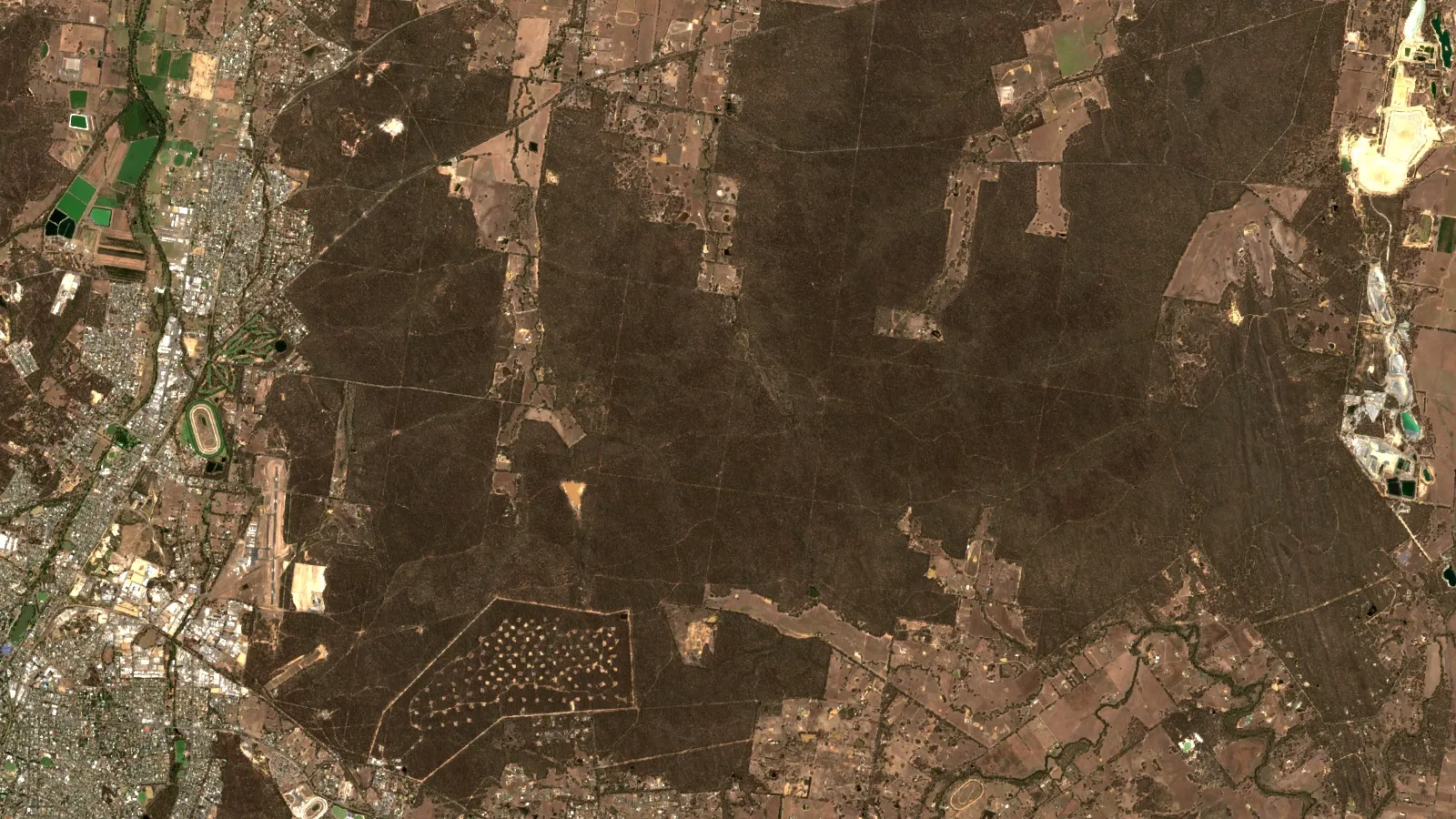
Key takeaways
- Victoria produces about 650,000 ounces of gold a year, mainly from Fosterville, Ballarat, Costerfield and Stawell (Resources Victoria, 2026).
- Fosterville (Agnico Eagle) produced 160,522 ounces in 2025, down from 277,694 in 2023, as grade fell from 13.61 to 7.20 g/t (Agnico Eagle, 2026).
- Costerfield produced 40,103 ounces of gold and 1,298 tonnes of antimony in the year to 30 June 2026 (Alkane Resources, 2026).
- Sunday Creek has an exploration target of 3.0 to 4.6 million ounces gold equivalent, which is not a resource, and mining is not permitted under its current licences (Southern Cross Gold, 2026; Resources Victoria, 2026).
- Prospecting in Victoria needs a miner’s right, A$29.40 for 10 years (Resources Victoria, 2026).
In this article
- Which gold mines are operating in Victoria?
- Victorian gold mines compared: owners, output and reserves
- How we chose and how to read the numbers
- Fosterville: Victoria's largest gold mine
- Why Fosterville's output and grade have fallen
- Costerfield: Victoria's gold and antimony mine
- Ballarat Gold Mine and the other Victorian producers
- Sunday Creek: the project that could become a mine
- Where Victoria's gold comes from: geology and history
- Gold output and value calculator for a Victorian mine
- What to check before you rely on a Victorian gold company's numbers
- How satellite data fits Victorian gold exploration
- Can you prospect for gold in Victoria?
- Frequently asked questions
Which gold mines are operating in Victoria?
Four large gold mines produce most of the state’s gold: Fosterville near Bendigo, Costerfield near Heathcote, the Ballarat Gold Mine at Mount Clear and Stawell. Resources Victoria, the state regulator, says Victorian output is about 650,000 ounces of gold a year, mainly from Fosterville, Ballarat, Costerfield and Stawell. A fifth mine, A1 at Gaffneys Creek, was placed on care and maintenance in 2025, so it is not producing.
This page is a guide to those mines: who owns them, what each has reported, how much gold is in the ground on paper, and which projects could become the next mine. It is written for investors and licence owners who want the facts in one place. For old goldfield maps and the history of each field, see our separate guide to the Victorian goldfields, their maps and history.
One warning on the name. “Victoria Gold” is also the name of a Canadian company that ran the Eagle mine in Yukon. That is a different place with a different story, and it is covered in our post on the Victoria Gold mine in Yukon. Everything below is about the Australian state of Victoria.
Victorian gold mines compared: owners, output and reserves
The table lists each mine with the latest figure its owner has reported. Periods differ, so read the “Period” column before comparing rows. An ounce here means a troy ounce, which is 31.1035 grams. Grade is the amount of gold in a tonne of rock, in grams per tonne (g/t).
| Mine | Where | Owner or operator | Latest reported gold output | Period |
|---|---|---|---|---|
| Fosterville | About 20 km north-east of Bendigo | Agnico Eagle (100%) | 160,522 oz | Calendar 2025 |
| Costerfield | About 10 km north-east of Heathcote | Alkane Resources | 40,103 oz gold and 1,298 t antimony | Year to 30 June 2026 |
| Ballarat Gold Mine | Mount Clear, Ballarat | Victory Minerals | No output figure published; company target of 30,000 to 40,000 oz a year | Stated May 2025 |
| Stawell | Stawell, western Victoria | Stawell Gold Mines Pty Ltd, a private company controlled by Arete Capital Partners | See our Stawell mine guide | – |
| A1 | Gaffneys Creek | Kaiser Reef (ASX: KAU) | On care and maintenance | Since 2025 |
The Minerals Council of Australia counted five operating gold and antimony mines in Victoria in February 2024 and put state gold production at 3.2 million ounces over the five years from 2018-19 to 2022-23. That is about 640,000 ounces a year, which matches the regulator’s 650,000-ounce figure.
How we chose and how to read the numbers
We listed mines that either produce gold now or stopped recently, and projects that have a published exploration target or resource. Each figure comes from the owner’s filing or the state regulator, with the period stated. We did not rank the mines, because their size, grade and by-products are too different for one score. Output is shown in ounces of gold; for Costerfield, antimony is shown as well because it is a second product.
Three terms matter when you read a company report:
- Ore reserve: the part of a deposit that a study shows can be mined at a profit with today’s costs and prices. It is the most reliable number.
- Mineral resource: gold that is in the ground with reasonable prospects of being mined. “Inferred” is the least certain class, based on widely spaced drilling.
- Exploration target: a conceptual range, not a resource. The company has not yet done enough drilling to call it one.
“Gold equivalent” (AuEq) means a second metal, here antimony, is converted into ounces of gold at a stated price ratio. It can make a project look larger than its gold alone, so check which one a headline uses.
Fosterville: Victoria’s largest gold mine
Fosterville is an underground mine owned 100% by Agnico Eagle, about 20 km north-east of Bendigo and 130 km north of Melbourne. Agnico’s annual report says commercial production began in April 2005 and that proven and probable reserves were about 1.7 million ounces at 31 December 2025, with the mine expected to run through 2037. The Minerals Council’s 2024 fact sheet says it was Australia’s third-biggest gold mine by ounces produced in 2021.
Chart
Fosterville gold production
Thousand ounces of gold; the last bar is six months only
Output has fallen for three years in a row. The mine poured 277,694 ounces in 2023, 225,203 in 2024 and 160,522 in 2025. In the first six months of 2026 it produced 83,455 ounces, down 10.4% on the same months of 2025.
Why Fosterville’s output and grade have fallen
The main cause is grade. Agnico attributes the fall to lower gold grades in line with the mine plan, with lower throughput in 2025 as a smaller factor. Ore milled was 650,666 tonnes in 2023, 809,475 in 2024 and 725,726 in 2025, so tonnes moved far less than grade, which fell from 13.61 g/t in 2023 to 8.96 g/t in 2024 and 7.20 g/t in 2025. In the first half of 2026 the grade was 6.49 g/t.
Chart
Fosterville milled gold grade
Grams of gold per tonne of ore milled
Costs moved the other way. Agnico reported production costs of US$1,165 per ounce in the first half of 2026 against US$763 a year earlier, reflecting lower grade and, in the second quarter, higher royalty, milling and mining costs. The company’s guidance for Fosterville is 140,000 to 160,000 ounces in each of 2026 and 2027, then 170,000 to 190,000 in 2028. It plans to lift milling at Fosterville to 3,300 tonnes a day over the next three years. For scale, the Kitco spot bid read US$4,153.90 an ounce on 15 October 2026 (Kitco page opened that day); the calculator below uses it only as an example price.
The processing path for this ore, from crushing to the gold bar, is the same in outline as at any underground gold mine; our guide to the gold production process walks through it. For a comparison with a large Western Australian operation, see our post on Gold Fields’ St Ives mine.
▶ Follows a gold nugget from rock to ring: drilling, crushing, dissolving, melting and refining. · 5:27
Costerfield: Victoria’s gold and antimony mine
Costerfield is an underground mine about 10 km north-east of Heathcote and 50 km east of Bendigo. Alkane Resources owns it after its merger with Mandalay Resources, which completed on 5 August 2025. Antimony is a metal used in flame retardants and batteries. The Minerals Council’s 2024 fact sheet calls Costerfield Australia’s only antimony mine and says it ranked in the top 10 gold mines in the world by grade in 2021.
Chart
Reserves and inferred resources at two mines
Thousand ounces of contained gold; Fosterville at 31 December 2025, Costerfield at 30 June 2026
In the year to 30 June 2026 Costerfield produced 40,103 ounces of gold and 1,298 tonnes of antimony, which Alkane states as 44,527 gold-equivalent ounces. At 30 June 2026 the mine’s mineral resources were 498,000 ounces of gold, and ore reserves were 960,000 tonnes at 5.5 g/t for 170,000 ounces. Reserves are small next to the resource, so the mine depends on drilling to replace what it mines each year.
Ballarat Gold Mine and the other Victorian producers
Ballarat was the richest goldfield in the world in 1852 and 1853, and the gold rush that built the town started there with a discovery in 1851. The modern mine at Mount Clear is underground. Australian Mining Review reported in May 2025 that Victory Minerals took control in December 2023, after the previous operator, Balmaine Gold, went into voluntary administration earlier that year. The company targets 30,000 to 40,000 ounces of gold a year and said it had spent about A$15 million on a new underground fleet and planned about A$30 million on a plant to raise recovery.
Stawell, in western Victoria, has produced gold since the 1850s and is covered in detail in our Stawell mine post. Kaiser Reef holds the A1 mine and the Maldon project. In its 17 August 2026 announcement Kaiser said it placed A1 on care and maintenance in 2025 and is reclaiming and processing stockpiles at Maldon. It estimated a historical A1 tailings stockpile at 77,000 tonnes at 1.25 g/t, about 3,100 ounces, which is a clean-up and feed item, not a new mine.
Sunday Creek: the project that could become a mine
Sunday Creek, about 60 km north of Melbourne, is the best-known gold and antimony project in Victoria that is not yet a mine. Southern Cross Gold (TSX: SXGC, ASX: SX2) owns it through a subsidiary. On 4 August 2026 the company published an updated exploration target of 10.4 to 11.9 million tonnes at 8.9 to 12.1 g/t gold equivalent, or 3.0 to 4.6 million ounces gold equivalent, over five prospects and 1,500 metres of strike. Gold alone is 2.5 to 3.9 million ounces of that range.
Chart
Sunday Creek exploration target range
Million ounces, lower case to upper case; not a mineral resource
This is not a resource. The company says there has been too little exploration to estimate one. The regulator also states that mining is not permitted under exploration or retention licences, so any mine would need a separate approval process with community consultation. Resources Victoria approved a work plan for an underground exploration tunnel, about 150 m deep and 600 m long, on 26 November 2025. In May 2026 it issued directions after sediment-laden water entered Sunday Creek; the direction restricting activities was lifted on 10 June 2026.
Other juniors hold large tenement packages in the same belt. Kalamazoo Resources (ASX: KZR), for example, holds projects covering 2,006 square kilometres across the Bendigo and Melbourne zones, according to Mining.com.au in September 2026.
Where Victoria’s gold comes from: geology and history
Resources Victoria says the central Victoria gold province has produced more than 2,500 tonnes, about 80 million ounces, and that the state has 13 goldfields that have each produced more than one million ounces. Bendigo, at 22 million ounces, is the largest, followed by Ballarat, Castlemaine, Stawell and Woods Point-Walhalla. A separate history page from the same agency gives a total of more than 2,400 tonnes, about one-third of all gold mined in Australia. The two pages use different counting scopes, so quote them as “about 2,400 to 2,500 tonnes”.
Most Victorian deposits are orogenic gold: veins that formed when rock was squeezed and heated during mountain building, in the Ordovician to Silurian and Devonian periods. They are often high-grade and narrow, which suits underground mining in clusters of small operations. Gold was first found at Clunes in 1850 and the Ballarat find in 1851 set off the rush; Geoscience Australia notes that Ballarat and Bendigo became major gold sites in the 1850s. The Geological Survey of Victoria estimates by simulation that up to 75 million ounces may still be undiscovered in the northern parts of the Stawell, Bendigo and Melbourne zones, including ground beneath shallow cover. That is a model result, not a resource.
▶ Explains what a satellite gold map shows and how to read it. · 4:18
Gold output and value calculator for a Victorian mine
The calculator below turns a mine’s milled tonnes, grade and recovery into ounces and gross value. The starting numbers are close to Fosterville’s 2025 figures. Change them to match any mine’s report.
Calculator
How much gold does a mine recover, and what is it worth?
Enter the ore milled, the grade, the recovery and a gold price.
- Gold in the ore before recovery (oz): 167,827
- Gross value of recovered gold (US$ million): $662
Example values only, not a benchmark. Tonnes and grade are close to Fosterville’s 2025 figures (725,726 t at 7.20 g/t, Agnico Eagle). Recovery is an input: the 95% default is an example, not a reported figure. The price is an example, use today’s price (Kitco spot bid was US$4,153.90 an ounce on 15 October 2026). One troy ounce is 31.1035 grams.
What to check before you rely on a Victorian gold company’s numbers
- The period. Alkane reports to 30 June, Agnico to 31 December. A “year” is not the same year.
- Gold or gold equivalent. Costerfield and Sunday Creek both quote AuEq, which includes antimony.
- Reserve, resource or target. Only reserves have a mining study behind them.
- Grade trend. Fosterville shows that ounces can fall while tonnes milled hold steady.
- Licence type. An exploration licence does not allow mining.
- Currency. Agnico reports in US dollars; Australian filings use A$.
How satellite data fits Victorian gold exploration
A satellite cannot see gold. It can map the rock and soil around a gold system: iron-oxide staining, clay and mica minerals from hot-water alteration, silica, and long fault lines. In Victoria that work is harder than in dry desert country, because forest, farmland and shallow sediment hide the bedrock, and the state’s own survey points to under-explored ground beneath shallow cover. Satellite maps are therefore a way to rank where to sample first, not proof of a deposit.
Farmonaut produces satellite-based screening reports for licence areas that mining consultants and investors use as an exploration target before drilling. See the satellite mineral detection page or send a project question through the mining query form. For ground-based methods, see our guide to finding gold deposits.
▶ Why no satellite sees gold itself, and what exploration teams map instead. · 2:00
Can you prospect for gold in Victoria?
Yes, with a permit. To prospect or fossick in Victoria you need a miner’s right, which costs A$29.40 and lasts 10 years. You must carry it. Children under 18 do not need one if they are with an adult who holds one.
- Allowed: hand tools such as picks, shovels, sieves, hammers and metal detectors. Machinery and explosives are not allowed.
- Where: most state forests, some areas of national, state and heritage parks, and private land with the landholder’s permission. Land covered by a mining, prospecting or retention licence also needs the licence holder’s consent.
- Not allowed: national parks unless a specific area is permitted, Aboriginal heritage areas, and some rivers and creeks on the banned-waterways list.
- Mercury may not be used or mined in Victoria.
If this topic matters to you, read Iron Ore Mines in Australia: Top Operators Ranked next.
Related reading on this site: 7 Cobalt Mines in Africa: Owners, Output and Status.
Frequently asked questions
How many gold mines are operating in Victoria?
Four large mines produce most of the state’s gold: Fosterville, Costerfield, the Ballarat Gold Mine and Stawell. The Minerals Council counted five operating gold and antimony mines in February 2024; the fifth, A1, has since been placed on care and maintenance.
What is the biggest gold mine in Victoria?
Fosterville, owned by Agnico Eagle, is the largest by output. It produced 160,522 ounces in 2025, against 40,103 ounces at Costerfield in the year to 30 June 2026.
How much gold does Victoria produce each year?
Resources Victoria puts it at about 650,000 ounces a year. The Minerals Council’s figure of 3.2 million ounces over five years to 2022-23 gives about 640,000 ounces a year.
How much gold has Victoria produced in total?
Resources Victoria gives more than 2,400 tonnes on its history page and more than 2,500 tonnes (about 80 million ounces) for the central Victoria province on its gold page. Both are official, with different scopes.
Who owns the Fosterville gold mine?
Agnico Eagle owns 100% of Fosterville, according to its 2025 annual report. It is not owned by a Victorian company.
Is the Ballarat gold mine still operating?
As of the May 2025 Australian Mining Review article, Victory Minerals operated the underground mine at Mount Clear with a target of 30,000 to 40,000 ounces a year.
Is Victoria Gold the same as the gold mines in Victoria, Australia?
No. Victoria Gold Corp. is a Canadian company whose Eagle mine is in Yukon. Our separate post covers it. The mines on this page are in the Australian state of Victoria.
Is Sunday Creek a mine yet?
No. It is an exploration project with an exploration target, not a resource or reserve. Mining is not permitted under its current licences, and any mine would need a separate approval.
Do you need a licence to look for gold in Victoria?
Yes. Prospecting and fossicking need a miner’s right, which costs A$29.40 for 10 years, plus permission on private land or where another licence covers the ground.
Is there still undiscovered gold in Victoria?
The Geological Survey of Victoria’s simulations suggest up to 75 million ounces may remain in the northern parts of the Stawell, Bendigo and Melbourne zones. This is a model estimate and has not been drilled out.
Can satellites find gold in Victoria?
Not directly. Satellites map alteration minerals and structures that point to where gold systems may be, but cover such as soil, forest and sediment limits what they can see. They help rank targets for sampling and drilling.
Which Victorian gold companies are listed?
Agnico Eagle (Fosterville), Alkane Resources (ASX: ALK, TSX: ALK), Kaiser Reef (ASX: KAU) and Southern Cross Gold (TSX: SXGC, ASX: SX2) are listed. This is a list of facts, not a recommendation.
This page is for information only. It is not investment advice and gives no share prices or targets. Production, ownership and licence status change. Prospect only with a miner’s right and the landholder’s permission.
Farmonaut mining
Screen a Victorian licence area from space
Investors and consultants can have a licence area screened from satellite imagery as an exploration target, ahead of any drilling.

Mining Pro sample view, synthetic data
Keep reading
Sources
- Resources Victoria, Gold (2026): resources.vic.gov.au
- Resources Victoria, History of gold mining in Victoria (2026): resources.vic.gov.au
- Resources Victoria, Gold mines (2021): resources.vic.gov.au
- Resources Victoria, Recreational prospecting (2026): resources.vic.gov.au
- Resources Victoria, Sunday Creek Project key site update (June 2026): resources.vic.gov.au
- Agnico Eagle Mines, 2025 Annual Report: s205.q4cdn.com
- Agnico Eagle Mines, Second Quarter 2026 report: s205.q4cdn.com
- Agnico Eagle Mines, Fourth Quarter and Full Year 2025 results and guidance: s205.q4cdn.com
- Alkane Resources, June 2026 quarterly report (ASX, 8 July 2026): announcements.asx.com.au
- Alkane Resources, Costerfield project page (2026): alkane.com.au
- Southern Cross Gold, Sunday Creek exploration target (4 August 2026): newsfilecorp.com
- Australian Mining Review, Golden Victory (May 2025): australianminingreview.com.au
- Kaiser Reef, A1 stockpile estimate announcement (17 August 2026): investorpa.com
- Minerals Council of Australia, Victorian mining fact sheet (February 2024): minerals.org.au
- Mining.com.au, More gold to give: Victoria’s golden story (26 September 2026): mining.com.au
- Kitco, Gold price (15 October 2026): kitco.com
- Geoscience Australia, Gold: ga.gov.au
Discussion
Questions, corrections or field experience? Share them below. First-time comments are reviewed before they appear, and your email is never published.
No comments yet. Be the first to add a question or your experience.

 Sean Mining Limited
 NTS Group (Pty) Ltd
 Mine4Africa
 Lithspo Minerals Limited
 Tintina Mining Group
 Dalgety Minerals Pty Ltd
 Vortex Minerals Pty Ltd
 Faith At Work (Pty) Ltd
 Geotech Mining Solutions plc
 Vulcan International Limited
 Kidepo Associates
 GKY Mining
 Alkimy SARL
 Double A Trading
 GemSprout Metals Limited
 Qader Group
 Ileys General Trading
 SG Gold Mining LLC
 VRV Global Pte Ltd
 Omsri International FZE
 G.I.T.T.
 Jaunita Erss Ltd
 Almosi SARL
 SRK Consulting
 Berks Gold Limited











