

Mine training · Buyer guide
Mining Animation: 6 Types, Uses, Costs and How to Brief
Mining animations are mostly bought for safety training, permitting and stakeholder briefings. US rules require at least 40 hours of training for new underground miners (30 CFR Part 48), and animated scenes can help fill those hours with hazards that are unsafe to show for real.
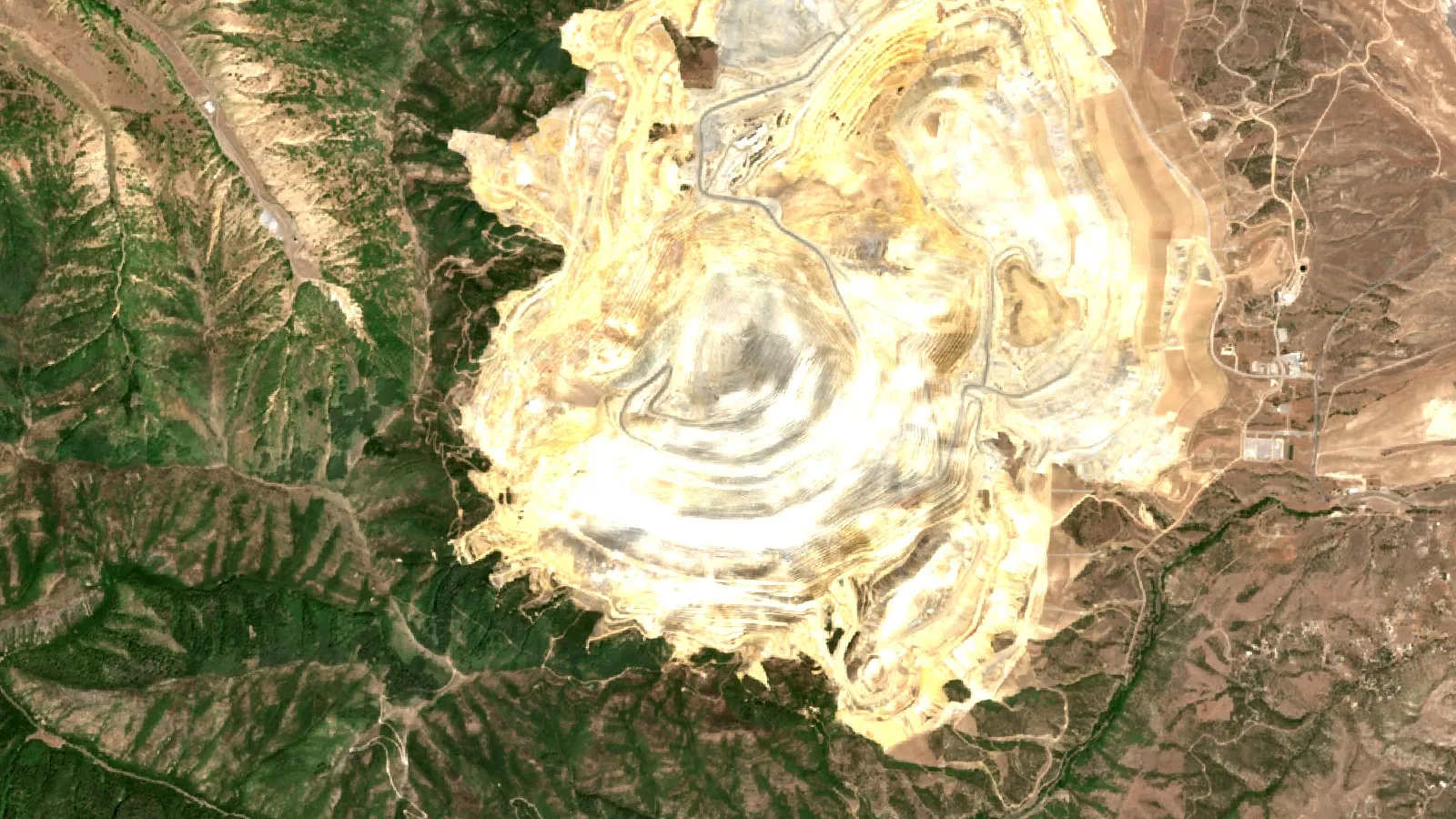
Key takeaways
- Six main types: process explainers, mine site development 3D, hazard training, interactive VR, digital twin visuals and community animations.
- MSHA recorded 28 US mining fatalities in fiscal 2025 across 12,568 mines (MSHA At a Glance, 2025).
- Powered haulage caused 13 of 33 US mining deaths in calendar 2025 (39%) but only 9% of nonfatal injuries (MSHA).
- New underground miners need at least 40 hours of training and surface miners 24, plus 8 hours of annual refresher (30 CFR Parts 46 and 48).
- VR training evidence is promising but mixed: one study of 75 quarry workers found no significant difference from in-person training (cited in PMC, 2025).
In this article
- What a mining animation is, and what it is not
- Six types of mining animation and when to use each
- Why safety training drives most mining animation work
- What US mine training rules require
- What the research says about VR and animated mine training
- How to brief a 3D mining animation in 7 steps
- What a mining animation costs: the main drivers
- Data that makes a mining animation accurate
- How to check a mining animation studio before you sign
- Frequently asked questions
A mining animation is a computer-made video or interactive 3D scene that shows how a mine, a machine or a process works: the pit opening up, ore moving from blast to mill, or a haul truck reversing into a blind spot. Most of this work is commissioned for safety training, permitting and investor or community briefings. In the United States, every new underground miner must get at least 40 hours of training before starting work, under 30 CFR Part 48, and a clear animated sequence is one way to fill those hours with something people remember.
This guide is written for mining consultants and site teams who are thinking about commissioning animated content. It compares six types, shows the safety data that drives most demand, sets out what the research on virtual reality (VR) training does and does not prove, and gives a seven-step brief plus a budget calculator. Costs vary too much between studios for any single price to be honest, so the calculator lets you test your own quotes.
What a mining animation is, and what it is not
The term covers three quite different products. A linear animation is a rendered video: the viewer watches, and the camera path is fixed. An interactive 3D scene lets the viewer turn the model, click on equipment or step through a procedure, usually in a game engine. A VR simulation puts the trainee inside the scene with a headset and records what they do.
None of these is an engineering model. A 3D animation of a pit shell or a decline is a picture of a design that a mine planner made in other software. It can be accurate to the survey, or it can be a stylised sketch, and the viewer cannot tell which by looking. That is the first thing a consultant should settle with a studio: which parts are drawn from real survey and design data, and which are artistic fill.
A short glossary helps with studio quotes. A pit shell is the outline of an open pit at a given stage. A decline is a sloping tunnel that trucks drive down to reach underground ore. Powered haulage is the regulator’s term for mobile equipment that moves people or material: haul trucks, loaders, shuttle cars, conveyors and locomotives. A digital elevation model (DEM) is a grid of ground heights used to build the terrain.
Six types of mining animation and when to use each
The list below is ordered from the simplest to build to the most complex. Each item gives the use it suits best and the honest trade-offs.
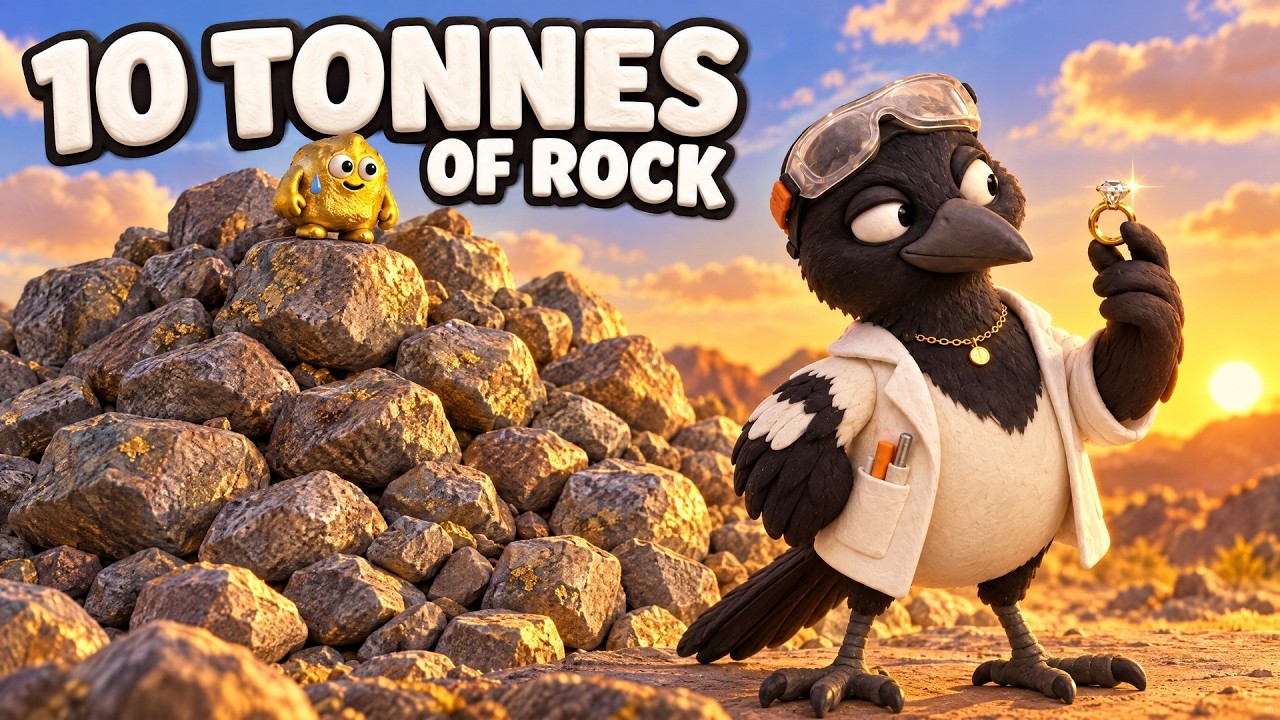
▶ An example of a process explainer: how gold is mined and refined, shown as a clay animation · 5:27
1. Process explainer animations
These show how a mineral moves through the value chain: drilling, blasting, loading, hauling, crushing, grinding, flotation or leaching, and refining. They suit induction courses, school and community visits, and investor decks.
Best for: explaining a flowsheet to people who will never see the plant. Pros: reusable for years, easy to translate and voice over. Cons: generic by design, so they rarely meet site-specific training needs on their own.
2. Mine site development 3D animations
These step through a project over time: clearing, pre-strip, pit stages or underground development, waste dumps, tailings storage and closure. A good one is built on the real topography and the planner’s stage designs.
Best for: permitting hearings, board approvals and showing a community what the land will look like in year 5, year 15 and after closure. Pros: turns plan drawings into something non-engineers understand. Cons: dated as soon as the mine plan changes; needs a clear note on what is design and what is illustration.
3. Safety and hazard training animations
Short scenes that recreate a hazard: a blind spot around a haul truck, a fall of ground, a conveyor guard left open, or an escape route in smoke. Many reconstruct the sequence in a regulator’s fatality report.
Best for: new miner, new task and annual refresher sessions. Pros: shows the moment of failure without putting anyone at risk. Cons: watching is not doing; it supports, and does not replace, supervised practice at the site.
4. Interactive and VR simulations
The trainee walks the scene, picks protective equipment, isolates a machine or follows an escapeway, and the software scores the attempt. The VR Mine Rescue Training platform built by NIOSH with MSHA lets rescue team members work through emergency scenarios together on headsets, with every action recorded for the debrief (SME, 2023).
Best for: rare, high-consequence tasks such as mine rescue and emergency escape. Pros: repeatable practice and measurable results. Cons: highest build cost, headset hardware, and some users report discomfort.
5. Digital twin visuals
A digital twin is a live model of equipment or a whole operation fed by sensor and production data. The animation layer is the 3D view on top of it. An ABI Research overview describes Anglo American using digital twins for equipment, electrical systems, tailings and water control.
Best for: control rooms and operations reviews at large mines. Pros: the picture updates with the data. Cons: it is mainly a data and systems project; the visuals are the smaller part of the cost.
6. Stakeholder and community animations
These explain water management, dust control, traffic, blasting schedules or closure plans to neighbours and regulators. Tone and accuracy matter more than polish.
Best for: public consultations and annual community meetings. Pros: one clear sequence can answer questions that a 300-page plan does not. Cons: any visual that later proves too optimistic damages trust, so keep every claim traceable to the plan.
Why safety training drives most mining animation work
US mines are far safer than a generation ago, but deaths have not stopped. The MSHA At a Glance tables record 28 fatalities in fiscal year 2025 across 12,568 mines and about 327,000 miners, after 41 in fiscal 2023 and 31 in fiscal 2024. The longer NIOSH series shows 131 occupational mining deaths in 1983, which puts the recent figures in context.
Chart
Powered haulage share of 2025 US mining accidents
Percent of all fatalities and of all nonfatal injuries, calendar 2025
Chart
US mining fatalities by fiscal year
All US mines, fiscal years 2019 to 2025
Moving equipment is the most common cause. MSHA’s powered haulage safety page states that in calendar 2025 powered haulage accidents caused 13 of the 33 mining fatalities (39%) but only 426 of the 4,792 nonfatal injuries (9%). In other words, haulage accidents are less frequent than slips or lifting injuries, but far more likely to kill.
That pattern suits animation well. Blind spots, stopping distances and the path of a reversing truck are hard to explain in words and dangerous to demonstrate for real. MSHA’s own 2025 fatalities safety alert listed powered haulage as the most common class in the first ten deaths of the year, followed by machinery and falls of face, rib, side or highwall. Those three classes are where most hazard animations start. For a wider look at site safety systems, see our guide to mine safety solutions, and for fleet tracking tools, our fleet management page.
What US mine training rules require
US training law sets minimum hours, not methods, so animations can sit inside an approved plan as long as the course content and hours are met. The main rules are these:
Chart
Minimum US mine training hours
Hours required by federal rule, by training type
- Underground new miners: at least 40 hours before work duties, given in conditions that match underground conditions as closely as practicable, with about 8 hours at the mine site (30 CFR 48.5).
- Surface new miners: at least 24 hours; at least 8 must come before work starts, and the rest within 60 days if the district manager allows (30 CFR 48.25).
- Sand, gravel, surface stone and similar mines: at least 24 hours of new miner training under 30 CFR Part 46, with at least 4 hours before work starts that cover site-specific hazards.
- Annual refresher: at least 8 hours for every miner each year, in sessions of no less than 30 minutes (30 CFR 48.8).
- Experienced miners returning after five years or more: at least 8 hours (30 CFR 48.6).
Two practical points follow. First, the underground rule asks for realistic conditions and time at the site, so an animation helps the classroom part but cannot be the whole course. Second, MSHA district managers may evaluate the effectiveness of approved training, so keep records of what each animated module teaches and which course subject it covers. MSHA’s Part 48 reference guide is a useful map of the required subjects.
What the research says about VR and animated mine training
The evidence is encouraging but thinner than vendor brochures suggest. A review by Tichon and Burgess-Limerick (2011) argued that VR lets trainees build perceptual, motor and decision skills under stress without exposure to real risk, and examined the evidence for its use in mining safety training.
A 2025 study in an Italian marble quarry tested the first of four planned VR safety courses with 40 volunteers, covering primary cutting at the quarry face (PMC, 2025). The same paper cites an earlier study of 75 quarry workers that found no significant difference in protective equipment use between VR and in-person training. The authors also note that most comparisons measure what people remember after only 2 to 3 weeks, so long-term retention is still an open question.
The fair summary for a buyer: animated and VR training has matched in-person training in the few direct comparisons, such as protective equipment use, and is safer for rehearsing rare emergencies, but it has not been shown to replace hands-on training. Build it into a blended course and measure results on your own site.
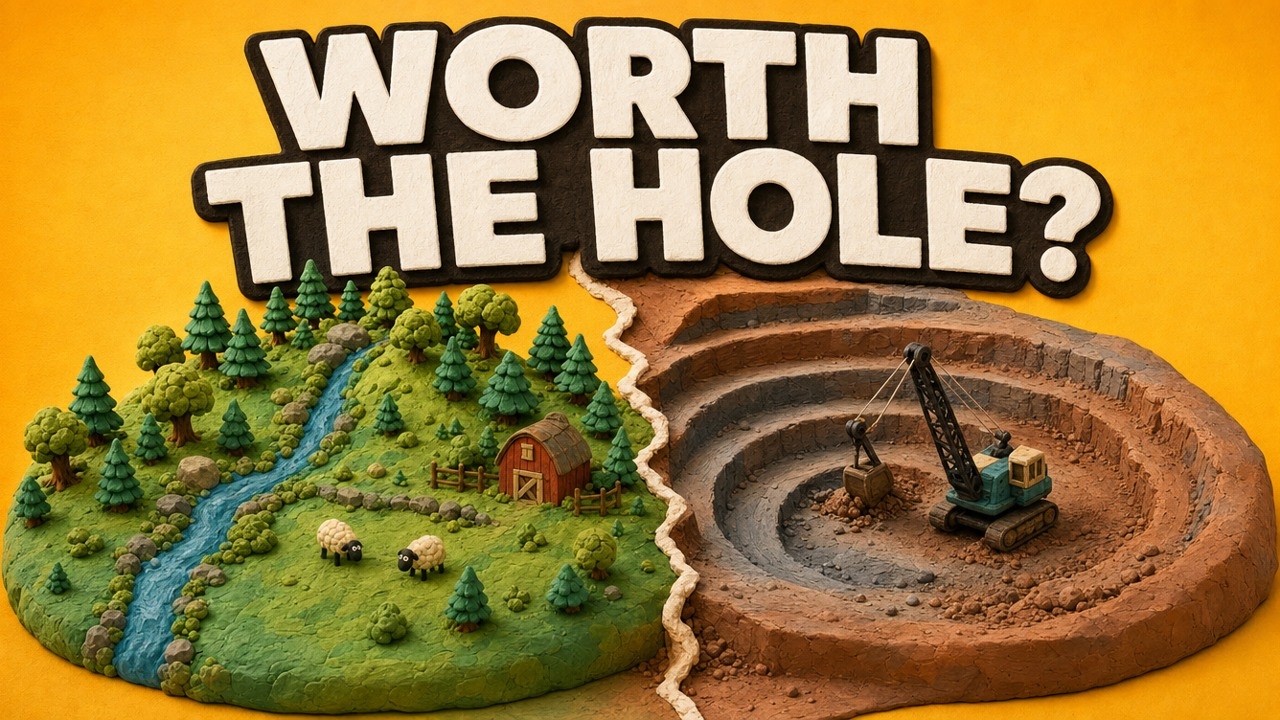
▶ Strip mining pros, cons and land restoration, explained as an animation · 4:37
How to brief a 3D mining animation in 7 steps
- Name the audience and the decision. New hires, a permitting board, a community meeting or investors each need a different length, tone and level of detail.
- Write the learning or message goal in one sentence. For example: “Operators can point out the four blind spots of our 100-tonne truck.”
- Collect the source data. Survey pick-ups, a DEM, mine plan stages, equipment drawings, photos and the relevant procedures or fatality reports.
- Agree what must be accurate. Mark which items are drawn to survey or design (pit walls, haul road widths, berm heights) and which are illustrative.
- Approve a storyboard and a voice script before modelling. Changes are cheap on paper and expensive after rendering.
- Fix the revision rounds and delivery formats in the contract. Include languages, captions, screen sizes, headset builds and who owns the 3D source files.
- Test with real users. Run a pilot session, note questions, and correct the content before it enters the approved training plan.
Infographic
Brief a mining animation in 5 stages
- 1AudienceName who watches and what they must decide or do.
- 2DataCollect survey, DEM, plan stages and procedures.
- 3AccuracyMark what is drawn to design and what is illustration.
- 4StoryboardApprove script and frames before 3D work.
- 5PilotTest with real users and fix before rollout.
What a mining animation costs: the main drivers
There is no public price index for mining animation, and studio rates differ by country, style and scope. What moves the price is predictable, so compare quotes on these points rather than on a headline number:
- Length: finished minutes of linear video, or the number of interactive scenes.
- Accuracy: building from survey and design data costs more than a stylised scene, but it is the version that holds up at a hearing.
- Equipment models: each custom machine adds modelling time; library models are cheaper but may not match your fleet.
- Interactivity: scoring, branching and headset builds add software development on top of the art.
- Revisions and languages: every extra round, voice track or caption set adds cost.
- Reuse: a module used in every refresher for five years costs far less per trainee than a one-off launch video.
Use the calculator below with the figures from your own quotes. It turns a build price into a cost per trainee and per training hour, which is the fairer way to compare a cheap one-off video with a costlier interactive module.
Calculator
What does your animation cost per trainee?
Enter the figures from your own studio quotes.
- Cost per trainee (US$): $40
- Cost per training hour (US$): $40
- Total trainees over its life: 300
Example values only, not a benchmark or market rate. All prices are inputs: use the figures in your own quotes (example, use today’s price). Training hours per trainee are your course design.
Data that makes a mining animation accurate
An animation is only as good as the ground it sits on. For terrain, studios usually start from a site survey or a public DEM, then drape aerial or satellite imagery over it. Recent satellite images also show what is really on the ground today: roads, dumps, ponds, vegetation and neighbouring land use. That matters for community and closure animations, where a stale base map undermines the message.
For exploration-stage projects, the same imagery can show where alteration and structure suggest targets before any drilling, which helps a team decide which part of a licence is worth showing at all. Farmonaut’s satellite mineral screening, for example, maps exploration targets from a KML, KMZ or polygon boundary; those targets come before sampling and drilling and are not a resource estimate. Background reading: types of ore deposits, drilling rigs used in exploration, and drill and blast monitoring software.
Operational animations and digital twins add live data on top: equipment positions, weather and emissions. Farmonaut also covers related data topics on its main site at farmonaut.com, including a satellite weather API, carbon footprinting and product traceability.
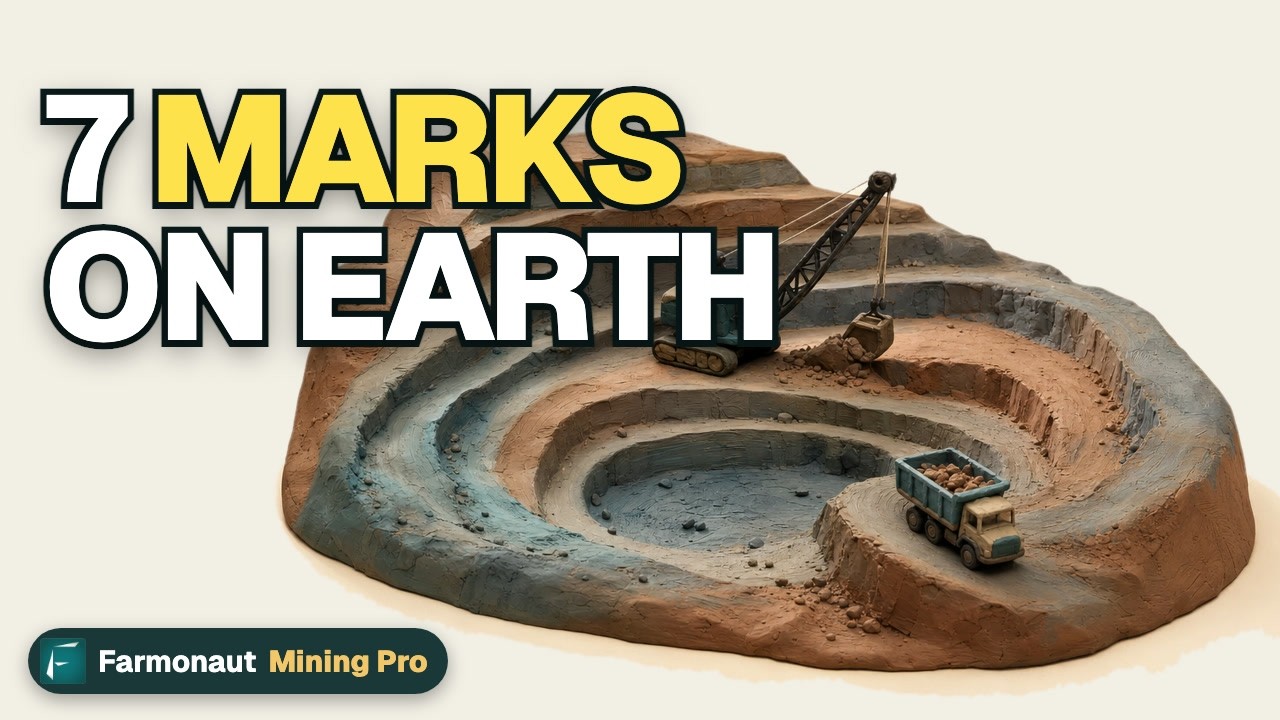
▶ The seven environmental impacts of mining, explained in clay with satellite maps · 2:31
How to check a mining animation studio before you sign
- Ask for mining work, not general industrial work. Look for correct bench geometry, berms, haul road widths and ground support in their samples.
- Ask who checks the technical content. A studio that works with a mining engineer or trainer catches errors that an artist will not.
- Ask how they handle your data. Survey files, mine plans and incident reports are confidential; agree storage, access and deletion in writing.
- Ask for the source files. Owning the 3D models lets you update the animation when the mine plan changes instead of paying for a rebuild.
- For VR, ask about comfort and hardware. Find out how long sessions last, how discomfort is handled and what headsets the build supports.
- Check it fits your training plan. Map each module to the required course subjects and hours before you pay for it.
Frequently asked questions
What is animated mining content used for?
Mostly for safety training, permitting and community meetings, investor presentations and explaining a processing flowsheet. Training is the largest use because hazards such as haulage blind spots are hard to show safely in real life.
What is the difference between a mining animation and a mine planning model?
A mine planning model is engineering software output used to design pits, stopes and schedules. An animation is a visual made from that design, or from illustration. It explains a plan; it does not create or check one.
Can an animation count toward MSHA training hours?
US rules set minimum hours and required subjects in an approved training plan rather than banning any teaching method. Animated material can form part of the course, but underground new miner training must take place in conditions as close as practicable to the real mine, with about 8 hours at the site. Confirm the details with your MSHA district office.
Does VR training work better than classroom training for miners?
The published evidence is mixed. One study of 75 quarry workers found no significant difference in protective equipment use between VR and in-person training, and most studies measure memory over only 2 to 3 weeks. VR is strongest for rehearsing rare emergencies such as mine rescue.
How long should a mining safety animation be?
Short modules of a few minutes on one hazard are easier to fit into a session and update later. Annual refresher sessions under 30 CFR 48.8 must each be at least 30 minutes, so several short modules plus discussion can fill one session.
What data does a studio need for a mine site development 3D animation?
Ground heights (a survey or DEM), the stage designs for pits, dumps and infrastructure, equipment details, recent aerial or satellite images, and the closure plan if the animation shows the end state.
How much does a mining animation cost?
It depends on length, accuracy, custom equipment models, interactivity, revisions and languages. Ask each studio to price these items separately, and compare the cost per trainee over the years you will use the module.
Which hazards are most worth animating first?
Start with your own incident history. In US data, powered haulage caused 39% of mining fatalities in 2025, and machinery and falls of ground were also among the leading classes early that year, so many sites start there.
Can coal mining design animations show underground ventilation?
Yes. Ventilation is a common subject for underground coal and metal mines, and the NIOSH and MSHA VR Mine Rescue Training platform includes dynamic ventilation in its scenarios. The airflow shown should come from the mine’s ventilation plan, not from a guess.
Who should own the files after the project?
Ideally the mine. Owning the 3D models and project files means you can update the animation when the plan, fleet or procedures change.
More from Farmonaut: crop loan and insurance.
This page is for information only. It is not legal advice. Confirm training plan requirements with MSHA or your national mine regulator.
Farmonaut mining
Map your mining site from space
Consultants can send a project boundary as KML, KMZ or a polygon for a satellite mineral screen that shows exploration targets ahead of field sampling.
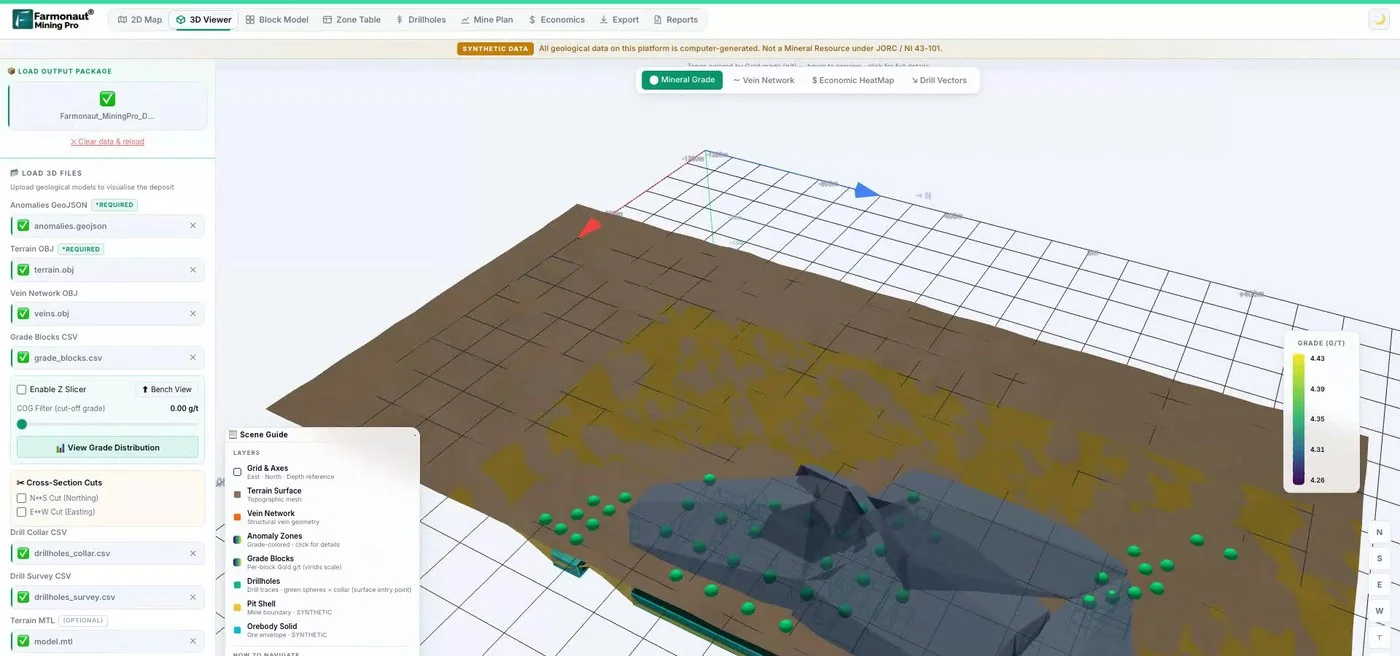
Mining Pro sample view, synthetic data
Keep reading
Sources
- eCFR, 30 CFR Part 48: Training and Retraining of Miners: ecfr.gov
- eCFR, 30 CFR Part 46: Training and Retraining of Miners (sand, gravel, surface stone): ecfr.gov
- MSHA, At a Glance FY1978-2025: msha.gov
- MSHA, Powered Haulage Safety: msha.gov
- MSHA, 2025 Fatalities Focus safety alert: msha.gov
- MSHA, Part 48 Reference Guide (OT 55): msha.gov
- NIOSH, Number and rate of occupational mining fatalities by year, 1983-2024: wwwn.cdc.gov
- Bellanca et al., Usability of Collaborative VR Mine Rescue Training Platform, SME (2023): onemine.org
- Tichon and Burgess-Limerick, Review of virtual reality as a medium for safety related training in mining (2011): eprints.qut.edu.au
- The Impact and Effectiveness of Virtual Reality Applied to the Safety Training of Workers in Open-Cast Mining, IJERPH (2025): ncbi.nlm.nih.gov
- ABI Research, Digital Transformation in Mining: abiresearch.com
Discussion
Questions, corrections or field experience? Share them below. First-time comments are reviewed before they appear, and your email is never published.
No comments yet. Be the first to add a question or your experience.

 NTS Group (Pty) Ltd
 Mine4Africa
 Lithspo Minerals Limited
 Tintina Mining Group
 Dalgety Minerals Pty Ltd
 Vortex Minerals Pty Ltd
 Faith At Work (Pty) Ltd
 Geotech Mining Solutions plc
 Vulcan International Limited
 Kidepo Associates
 GKY Mining
 Alkimy SARL
 Double A Trading
 GemSprout Metals Limited
 Qader Group
 Ileys General Trading
 SG Gold Mining LLC
 VRV Global Pte Ltd
 Omsri International FZE
 G.I.T.T.
 Jaunita Erss Ltd
 Almosi SARL
 SRK Consulting
 Berks Gold Limited
 Mwerezi Minerals Company Limited











