

Ghana · Gold guide
Ghana Gold Deposits: Belts, Mines and Galamsey
Ghana’s gold sits in Birimian belts and Tarkwa conglomerates. See the belts, the main mines and their 2025 output, the 5.94 million ounce national total and how galamsey is policed.
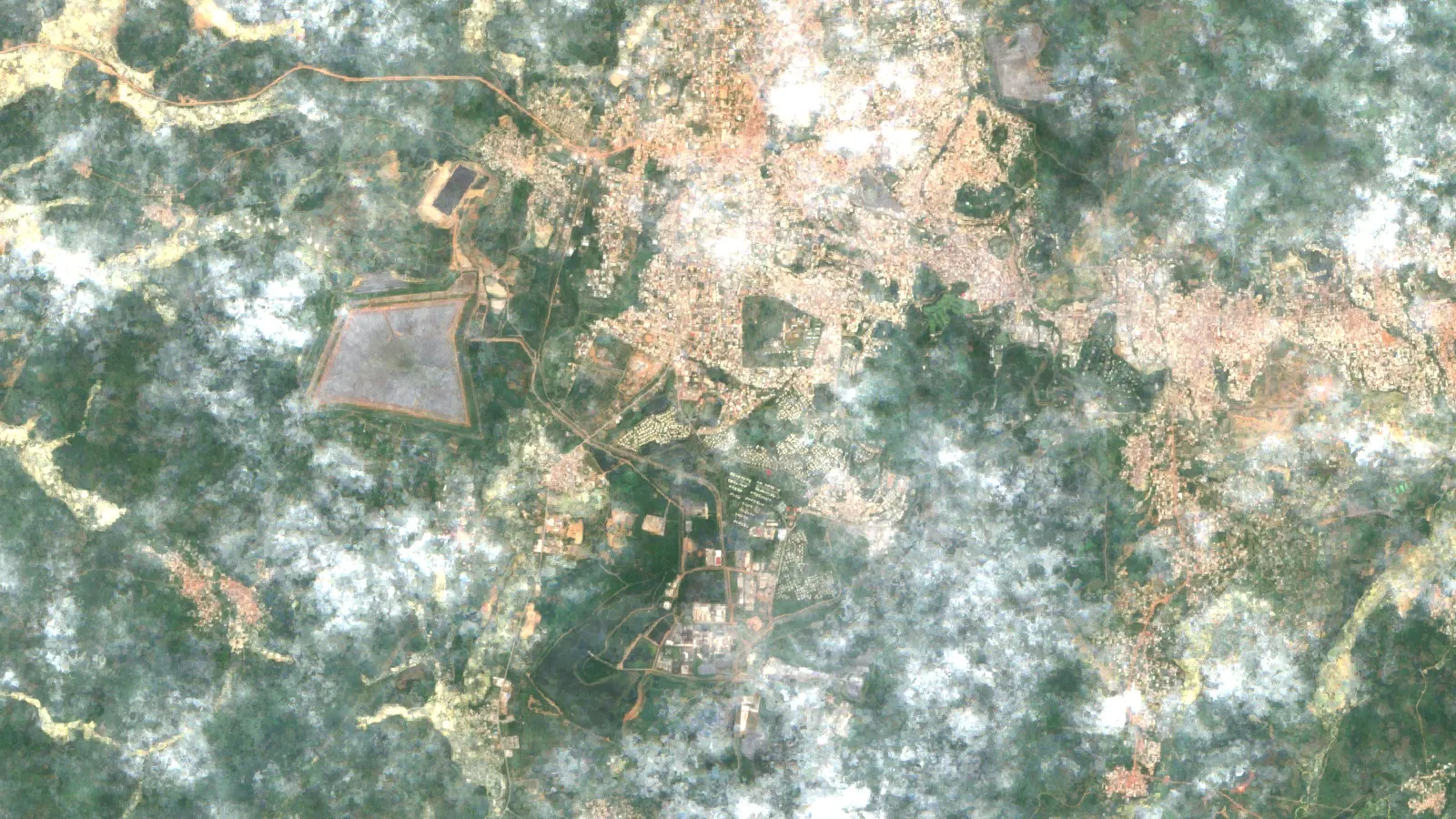
Key takeaways
- Ghana mined a record 5.94 million ounces in 2025, with small-scale output at 3.11 million ounces and large-scale at 2.83 million (Ghana Chamber of Mines, June 2026).
- Most gold is in 2.15 to 2.06 billion year old Birimian vein deposits and Tarkwaian palaeoplacers; the major deposits lie at belt margins (Smith et al., Episodes, 2016).
- Newmont’s Ahafo South made 664,000 oz in 2025, Tarkwa 427,000 oz attributable to Gold Fields and Obuasi 266,000 oz (company reports, 2026).
- Galamsey is mining without a licence; Act 703 reserved small-scale licences for Ghanaian citizens, and MyJoyOnline reported NAIMOS figures of 237 arrests by March 2026.
- Leases are no longer renewed automatically: Damang went to Engineers & Planners in April 2026 and Tarkwa’s lease runs to April 2027 (Reuters; Gold Fields).
In this article
- Where Ghana's gold comes from: the Birimian belts
- How big are Ghana's gold deposits
- Ghana's biggest gold mines and who runs them
- Ghana gold production: how much is mined
- Galamsey: what it is, the law and the damage
- How to identify gold exploration targets in Ghana
- How to assess the mineral potential of your concession in Ghana
- Gold mining in Ghana: exploration challenges and opportunities
- Frequently asked questions
Ghana’s gold deposits sit in a set of 2.1-billion-year-old volcanic belts in the south and north-west of the country, and they feed a mining sector that produced a record 5.94 million ounces in 2025, according to the Ghana Chamber of Mines (Ghana Business News, June 2026). Two kinds of gold matter: quartz-vein gold along shear zones, as at Obuasi, and gold in ancient river conglomerates, as at Tarkwa. Both are covered below (for the wider continent see Africa gold deposits), along with the mines, the production numbers and galamsey, the unlicensed small-scale mining that now shapes how the sector is policed.
This page is written for licence and concession holders, consultants and investors who need facts they can check. Every production figure carries a source and a date, and each company statement comes from a filing or release. For the companies themselves see our list of gold mining companies in Ghana; for licence steps see the Minerals Commission licence guide.
Where Ghana’s gold comes from: the Birimian belts
Most of Ghana’s gold is hosted by the Birimian Supergroup and the younger Tarkwaian Group. Both are Palaeoproterozoic, meaning roughly 2.2 to 2.1 billion years old. They form south-west to north-east trending belts, often called greenstone belts: strips of altered volcanic and sedimentary rock between granites. A review in the journal Episodes lists the belts from south-east to north-west as Kibi-Winneba, Ashanti, Manso Nkwanta/Asankrangwa, Sefwi, Bui, Bole-Navrongo, Wa-Lawra and Julie (Smith, Henry and Frost-Killian, Episodes, 2016).
The same review says most of the gold formed between about 2.15 and 2.06 billion years ago, during the Eburnean mountain-building event. It describes two main styles of mineralisation. In the first, gold sits in quartz veins and in sulphide minerals next to the veins, inside shear zones: narrow bands where the rock was sheared and fractured, giving hot fluids a path. In the second, gold sits in conglomerate, a rock made of rounded pebbles, which formed as river gravel and was later buried and altered. Geologists call it a palaeoplacer, which means an ancient placer deposit.
| Belt | Named gold deposits in the review | Style | Operations named in company reports |
|---|---|---|---|
| Kibi-Winneba | Atewa Range; Winneba-Mumford area | Vein; palaeoplacer | None named in the sources reviewed |
| Ashanti | Obuasi, Prestea, Bogosu, Damang, Wassa, Tarkwa, Iduapriem, Konongo | Vein; palaeoplacer | AngloGold Ashanti (Obuasi, Iduapriem), Gold Fields (Tarkwa), Engineers & Planners (Damang) |
| Asankrangwa | Abore North, Mpeasem | Vein; granite-hosted | Perseus Mining (Edikan) |
| Sefwi | Bibiani, Chirano, Ntotoroso, Yamfo-Kenyase | Vein; granite-hosted | Asante Gold (Bibiani, Chirano) |
| Bui | Brohani | Palaeoplacer | Mainly exploration |
| Bole-Navrongo, Wa-Lawra, Julie | Dokrupe, Bepkong, Julie | Vein; granite-hosted | Mainly exploration; Namdini lies further east in the Upper East Region |
The Ashanti Belt and Obuasi
The Ashanti Belt holds the best-known mines. Large-scale mining at Obuasi began in 1895, and the same review calls Obuasi the largest gold mine in the region and the type locality for Ashanti-style vein gold. It gives the deposit a total resource of more than 60 million ounces, a figure that combines recent and past estimates and is not a current reserve. Gold at Obuasi sits in quartz veins in graphitic shear zones and, in more than half of the ore reserve (per the review), as fine gold locked inside sulphide minerals such as arsenopyrite. That is why Obuasi is a deep underground mine today.
AngloGold Ashanti reported 266,000 ounces from Obuasi in 2025, up 20% on 2024, and 199,000 ounces from Iduapriem, down 16% (AngloGold Ashanti, Q4 and full-year 2025 results, 20 February 2026). Searches for Ashanti gold in Ghana are usually about this belt: the Ashanti region around Kumasi and Obuasi, and the old Ashanti Goldfields company that mined it.
The Tarkwa palaeoplacer
Tarkwa is the type locality for palaeoplacer gold. The gold sits in the Banket Series, a conglomerate in the Tarkwaian Group. The review puts the total gold inventory of this deposit type in Ghana at about 550 tonnes, roughly 16 million ounces, and lists more than 40 million ounces of total resource estimates for the Tarkwa district alone, again past and recent figures combined. Grades are lower than in the veins, about 1.2 to 2.4 g/t at Tarkwa, but the conglomerate is continuous, so open pits can be large and steady. The Tarkwaian sedimentary rocks reach about 2,500 m thick in the Ashanti Belt and about 9,000 m in the Bui Belt (Smith et al., 2016).
Grade is the amount of gold per tonne of rock. One gram per tonne (g/t) is one part per million. Open-pit gold mines worldwide often run at 1 to 2 g/t; underground vein mines run higher.
The Sefwi Belt and the north
The Sefwi Belt carries Bibiani, Chirano, Ntotoroso and the Yamfo-Kenyase district, which the review lists at about 6.2 million ounces of historical resource. A 3D model of the Sefwi Group built from 21 known gold occurrences found that 85% of them lay within 1,500 m of the contact with one basalt horizon, a clear pattern for targeting (Smith et al., 2016, citing Perrouty and colleagues). In the north, the Bole-Navrongo, Wa-Lawra and Julie belts have fewer mines. Newer large-scale work has started there: the Namdini mine in the Talensi District of the Upper East Region was commissioned in November 2024 by Cardinal Namdini Gold Limited, a subsidiary of Shandong Gold, and was described at its opening as a greenfield open-pit mine, the first in Ghana since Akyem in 2013 (Ghana Business News, November 2024).
How big are Ghana’s gold deposits
The review’s Table 1 lists the main known deposits with their average grade and a total resource figure, mixing recent and past estimates. These are historical endowment figures for the deposit as a whole, including gold already mined in some cases. They are not reserves, and they should not be added up or compared with a company’s current reserve statement.
Chart
Historical gold endowment of selected deposits
Million ounces, total resource estimates (recent and past combined), minimum values stated
A few current numbers sit beside them. Gold Fields declared 7.4 million ounces of managed Mineral Reserves at Tarkwa in November 2025, up from 4.3 million ounces in 2024, driven by a higher reserve gold price and the removal of key operational constraints, including a smaller stand-off distance for the Akontansi pit (Gold Fields, FY 2025 results, 19 February 2026). Perseus reported 998,000 ounces of reserves at Edikan at an average 0.94 g/t on 30 June 2026 (Perseus Mining, Edikan page). Both show that reserves move with the price and the mine plan, while the geology stays the same.
Ghana’s biggest gold mines and who runs them
Ghana’s mines are run by a mix of global majors, mid-tier producers, Chinese-owned operators and, since April 2026, a Ghanaian-owned operator at Damang. The table uses each company’s own report for 2025 unless a different period is shown. Gold Fields reports its attributable share; the others are as reported.
Chart
Gold output at selected mines
Thousand ounces, 2025 (Edikan: year to June 2026; Gold Fields mines attributable)
| Mine | Operator | Output | Note |
|---|---|---|---|
| Ahafo South | Newmont | 664,000 oz in 2025 (798,000 oz in 2024) | Subika open pit finished in 2025; 2026 guidance 440,000 oz |
| Ahafo North | Newmont | 70,000 oz in 2025 | Commercial production declared 24 October 2025; 2026 guidance 315,000 oz |
| Tarkwa | Gold Fields (90%) | 427,000 oz attributable | Lease due to expire April 2027; renewal sought November 2025 |
| Obuasi | AngloGold Ashanti | 266,000 oz | Underground; up 20% on 2024 |
| Iduapriem | AngloGold Ashanti | 199,000 oz | Down 16% on 2024 |
| Edikan | Perseus Mining (90%) | 158,270 oz in the year to June 2026 | Asankrangwa Gold Belt; reserves 998,000 oz |
| Damang | Gold Fields to April 2026 (12-month lease extension), then Engineers & Planners | 88,000 oz attributable in 2025 | Lease not renewed for Gold Fields |
| Akyem | Zijin Mining (from April 2025) | 40.6 t in total, 2021 to 2024 | Bought from Newmont |
| Namdini | Cardinal Namdini (Shandong Gold) | Ramping up from late 2024 | Upper East Region; open pit |
| Bibiani, Chirano | Asante Gold | Guided 125,000 to 130,000 oz each for the year to January 2026 | Sefwi Belt |
Sources: Newmont Q4 2025 release; Gold Fields FY 2025 presentation; AngloGold Ashanti release above; Perseus page above; Citi Newsroom on Akyem, April 2025; Asante Gold, September 2025. Output is in troy ounces (oz); one troy ounce is 31.1035 grams.
Ahafo South was Africa’s second-largest gold mine in 2025, behind Kibali in the DR Congo, according to an Ecofin Agency ranking compiled from company data (Ecofin Agency). Its output is falling as the Subika open pit closes, while Ahafo North is replacing part of it.
What changed at Damang, Tarkwa and Akyem
Ghana has moved away from automatic lease extensions. Reuters reported in April 2026 that the government rejected Gold Fields’ bid to renew the Damang lease and picked a local company, Engineers & Planners, after a tender in which bidders had to show access to at least US$500 million in funding (Reuters via Kitco, 7 April 2026). Gold Fields says the Tarkwa lease runs to April 2027 and that it applied for renewal in November 2025, while Ghana proposes policy changes to raise local participation and state revenue. Newmont’s ten-year stability agreement for Ahafo expired on 31 December 2025, so a Growth and Sustainability Levy on gross revenue and a higher income tax rate began to apply to Ahafo; Newmont’s February 2026 release gave the levy as 3%, and Parliament then passed an amendment cutting it for gold miners to 1% in March 2026 (Newmont release above; MyJoyOnline, 13 March 2026). Check the current rate with the Ghana Revenue Authority. Anyone valuing a Ghanaian asset should read the fiscal terms as closely as the geology.
Ghana gold production: how much is mined
Ghana mined a record 5.94 million ounces in 2025, up 23.4% from 4.82 million ounces in 2024. Small-scale and artisanal output rose from 1.90 to 3.11 million ounces, while large-scale mines fell 3% from 2.92 to 2.83 million ounces (Ghana Chamber of Mines, as reported in June 2026). Small-scale mining therefore made up 52.4% of national output in 2025, against 39% in 2024 (Ecofin Agency, 2025).
Chart
Ghana gold output by sector
Million ounces, 2024 against 2025
The Chamber’s president told its annual meeting that 2026 large-scale output is projected at 3.2 to 3.4 million ounces, and small-scale output at 2.9 to 3.5 million ounces. Industry bodies warned in February 2026, before the new royalty rules took effect, that a move to a sliding-scale royalty could delay new projects (Reuters via Kitco, 12 February 2026).
The US Geological Survey gives a lower figure: an estimated 150 tonnes in 2025 and 149 tonnes in 2024, with reserves of 1,000 tonnes, which puts Ghana sixth among the countries it lists individually (USGS Mineral Commodity Summaries 2026, gold). The Chamber’s 5.94 million ounces is about 185 tonnes. The two are compiled by different bodies at different dates, so use the Chamber for the national picture and USGS for cross-country comparison. Gold sold by small-scale miners now passes through the Ghana Gold Board (GoldBod), which became the sole buyer, seller, assayer and exporter of gold from the licensed small-scale sector under Act 1140 of 2025 (Graphic Online, April 2025). The Chamber links the rise in recorded small-scale output to higher prices and to that buying programme drawing gold into formal channels.
For scale, Kitco quoted gold at US$4,098 per troy ounce on 5 November 2026 (Kitco gold chart). Gold dominates Ghana’s mining sector; the country also produces manganese, bauxite and diamonds.
Galamsey: what it is, the law and the damage
What galamsey means
Galamsey comes from the Ghanaian words for “gather” and “sell” and refers to unregulated artisanal gold mining (NASA Earth Observatory). It is not the same as licensed small-scale mining. Under the Minerals and Mining Act, 2006 (Act 703), nobody may carry out small-scale mining without a licence from the Minister for Mines, and such a licence goes only to a Ghanaian citizen aged at least eighteen who is registered by the Minerals Commission in a designated area (Act 703, sections 82 and 83). Mining without that licence, or on land outside a designated area, is what Ghanaians call galamsey.
Chart
Where the vegetation went
Share of 160,000 ha lost in south-western Ghana, 2005 to 2019
How big is the footprint
Researchers from NASA and Ghanaian agencies used Landsat satellite images to measure vegetation loss in south-western Ghana from 2005 to 2019. They found more than 160,000 hectares lost, with about 28% going to gold mining and 29% to urban growth. Of the mining area, 85.7% was artisanal and 14.3% industrial, and at least 700 hectares of loss was in protected zones. Artisanal mining also moves fast: it caused seven times more deforestation than industrial mining between 2007 and 2017 (NASA Earth Observatory, 2021).
Water, farmland and health
CSIR-Water Research Institute scientists reported in August 2026 that about 60% of Ghana’s water bodies are polluted, with illegal mining a major contributor. A visual analysis of agency data records turbidity, a measure of suspended mud, of up to 64,000 NTU on the Birim and 32,000 NTU on the Pra, and notes that COCOBOD found illegal mining affecting 81% of assessed cocoa farmland in the Eastern Region (MyJoyOnline, 2026). Mercury, used to collect fine gold, is a health risk in rivers and fish. Our short explainer on the wider topic is below.
Enforcement and the clean-up drive
Ghana revoked L.I. 2462, the 2022 rule that allowed mining in forest reserves under conditions, in 2025 (MyJoyOnline above). MyJoyOnline reported NAIMOS figures for March 2026 of 237 arrests, 94 excavators seized and nearly 3,000 illegal sites destroyed. In February 2026 the finance minister said the armed forces would lead a waterbody clean-up (Citi Newsroom, February 2026). NAIMOS then launched Operation WATER SHIELD, aimed at the Birim, Ankobra, Tano, Bia, Pra and Offin rivers, and at financiers and equipment suppliers as well as miners (Citi Newsroom, September 2026).
For licence holders, the practical points are plain. Galamsey pits often sit inside legal concessions, so boundaries, access and community relations need regular checking. Existing pits also show where gold reaches the surface, which is useful geology but also means the ground may already be disturbed.
▶ The seven environmental impacts of mining, explained in clay with satellite maps. · 2:31
How to identify gold exploration targets in Ghana
Gold exploration in Ghana is a screening job: narrow a large area to a few places worth soil sampling and then drilling. The geology above gives a working order.
- Start at the belt margins. The Episodes review says the major deposits lie at or near the margins of the belts, in tectonic corridors more than 50 km long and several kilometres wide, trending north-north-east to north-east.
- Map shear zones and splays. Ashanti-style gold follows shear zones and fault systems. Steeply dipping quartz veins and graphitic or carbonaceous shears are the best-known hosts; see our note on shear zone gold.
- Check the host rocks. Metasediments near graphitic, siliceous or manganese-rich chemical sediments, mafic volcanic rocks and belt granitoids all host gold in the review.
- Look for Tarkwaian basins. Banket-type conglomerate crops out along strips such as one 140 km long and 0.8 km wide in west-central Ghana. Gold follows the reefs, so strike length matters.
- Use known controls. In the Sefwi Group, 85% of 21 modelled gold occurrences lay within 1,500 m of one basalt contact. A mineral prospectivity study in the south-western Ashanti Belt predicted 37 to 40 undiscovered lode deposits; this is a model result, not a drilling result.
- Plan for weathering. Deep tropical weathering leaves very little fresh rock exposed in the forest or savannah, so soil geochemistry and geophysics carry more weight than outcrop maps.
- Add remote sensing early. The review notes that satellite data have played a growing role in regional exploration. Satellites map the rock around gold, such as iron stains, clay minerals and fault lines, not gold itself.
Satellites map surface and near-surface signatures; sampling and drilling confirm. For how this works in practice, see our guide to how satellite mineral exploration works and our page on gold exploration in Ghana, licences and satellite targets.

▶ How satellites help find gold: they map rust stains, clay minerals and faults around gold, not the gold itself. · 4:25
How to assess the mineral potential of your concession in Ghana
A concession is only as good as the evidence on it. Before spending on drilling, build a short evidence file in this order.
| Step | Question to answer | What to collect |
|---|---|---|
| 1. Legal | Is the licence valid and the area correct? | Licence document, block map, current licence status with the Minerals Commission |
| 2. Geology | Which belt, rock unit and structures are on the ground? | Geological map, structural lines, host-rock units |
| 3. Known gold | Where is gold already known or mined? | Old pits, artisanal workings, past soil and stream data |
| 4. Surface signature | Do alteration and structures line up? | Satellite alteration maps, lineaments, drainage |
| 5. Ground checks | Do soils and rock samples agree? | Soil lines, rock chips, geophysics where available |
| 6. Constraints | What limits access or work? | Forest reserves, rivers, communities, existing small-scale licences |
A licence is measured in blocks, and the Act defines one block as 21 hectares. A reconnaissance licence is granted for an initial period of up to twelve months over up to 5,000 contiguous blocks, a prospecting licence for up to three years over up to 750 blocks, and a mining lease for an initial term of up to thirty years over one to 300 blocks (Act 703, sections 31, 34 and 41 as first published; the Act has since been amended and is under review, so check the current text with the Minerals Commission before you apply).
Two Farmonaut client pages cover Ghanaian projects. One ranked four Ghanaian licences of very different sizes, about 141 km² in total, from space before any drilling (gold concession screening in Ghana). Another describes a Ghanaian client and affiliate partner that commissioned its own satellite report, plans to drill and has introduced the technology to Ghanaian institutions (Yahudym Mining’s story). Both pages give the clients’ own estimates, not verified outcomes. A Farmonaut satellite mineral report outlines exploration targets; it is not a JORC, NI 43-101 or SAMREC resource, and the resource and reserve figures on this page are third-party estimates quoted with their sources. If you want a quote for your own licence, use the mining query form. Budget planning is covered in our small-licence exploration budget guide, and boundary checks in how to check your licence area.

▶ Whether a foreigner can get a small-scale mining licence in Africa, and the routes that are open. · 5:16
Gold mining in Ghana: exploration challenges and opportunities
Challenges
- Cover and weathering. Deep weathering hides rock, so early targets rely on indirect evidence.
- Disturbed ground. Galamsey pits and dredging can sit inside a licence, and the 2026 enforcement drive is aimed at them, so site security and community talks come first.
- Licence rules are changing. The Damang tender and Tarkwa renewal show that leases are no longer extended automatically, and the Chamber says higher royalties may delay new projects.
- Royalty and tax. Ghana’s gold royalty is now on a sliding scale linked to the gold price, replacing a flat rate. Check the current schedule with the Minerals Commission before modelling.
- Small-scale is Ghanaians only. The 2006 text of Act 703 reserved small-scale licences for citizens; confirm the current rule with the Minerals Commission.
Opportunities
- Greenfield ground in the north. Namdini showed that large-scale gold exists outside the southern belts.
- Brownfield depth and strike. Gold Fields lifted Tarkwa managed reserves from 4.3 to 7.4 million ounces in its November 2025 declaration, helped by a higher reserve gold price. Old belts are still growing.
- Local-owned operators. Ghana is giving leases to Ghanaian companies, as at Damang, so licence holders with data have a stronger case when they bring in partners.
- A clear gold-selling route. GoldBod gives licensed small-scale miners a legal buyer.
The calculator below turns a few mine numbers into ounces and royalty. Enter your own tonnes, grade, recovery, price and royalty rate; the values shown, including the royalty rate, are examples only.
Calculator
How many ounces and how much royalty from your mine?
Enter your own tonnes, grade, recovery, price and royalty rate.
- Gold sold, US$ per year: $173,613,902
- Royalty, US$ per year: $13,889,112
- Revenue after royalty, US$ per year: $159,724,790
Example values only, not a forecast. The gold price and the royalty rate are examples: use today’s price and the current royalty schedule from the Minerals Commission. One troy ounce is 31.1035 g. Costs, tax and levies are not included.
Frequently asked questions
Where is gold found in Ghana?
Mostly in the Birimian greenstone belts of the south and north-west, and in Tarkwaian conglomerates. The Ashanti, Sefwi and Asankrangwa belts hold most of the producing mines, and the north is newer.
Which is the biggest gold mine in Ghana?
By 2025 output, Newmont’s Ahafo South at 664,000 ounces, which Ecofin Agency ranks second in Africa. By historical gold endowment, Obuasi leads at more than 60 million ounces in the Episodes review.
How much gold does Ghana produce?
The Chamber of Mines reports 5.94 million ounces for 2025. USGS estimates 150 tonnes for the same year; the two measure it differently.
What is galamsey?
It is unregulated artisanal gold mining, from Ghanaian words meaning to gather and sell. It is separate from licensed small-scale mining.
Is galamsey legal?
No. Act 703 requires a licence for any small-scale mining, and the licence goes only to registered Ghanaian citizens in designated areas.
Who can hold a small-scale gold licence in Ghana?
Only Ghanaian citizens aged 18 or more who are registered by the Minerals Commission. Other licences are granted by the Minister on the Commission’s recommendation. Foreign companies run most of the large mines; our short video on foreign access to small-scale licences in Africa is above.
What is the Tarkwa palaeoplacer?
An ancient river gravel, now conglomerate, in the Banket Series. It is a continuous, lower-grade gold deposit mined in large open pits at Tarkwa and Iduapriem.
Who owns Obuasi?
AngloGold Ashanti operates Obuasi and reported 266,000 ounces for 2025.
How much does a gold mining licence cost in Ghana?
Fees and rents are set by regulation and change, so confirm them with the Minerals Commission before you apply. Our licence guide covers the steps.
Can satellites find gold in Ghana?
They cannot see gold, but they map alteration, rock types and faults that point to where gold systems sit. Drilling confirms.
Why did Ghana not renew the Damang lease?
Reuters reported that the government declined Gold Fields’ renewal bid and ran a tender for local firms, with Engineers & Planners chosen in April 2026.
This page is for information only. It gives no price targets and no investment advice.
This page is for information only. It is not investment or legal advice. Mining law, leases and royalties change; check with the Minerals Commission or the ministry before you apply. Do not use mercury, and get permission before entering any ground.
Farmonaut mining
Screen your Ghana licence from space
Licence holders and consultants can request a quote for a satellite mineral report that outlines exploration targets on their ground.

Mining Pro sample view, synthetic data
Sources
- Smith, Henry and Frost-Killian, A review of the Birimian and Tarkwaian gold deposits of Ghana, Episodes (2016): episodes.org
- USGS, Mineral Commodity Summaries 2026: Gold: pubs.usgs.gov
- Ghana Business News, Ghana gold output surges 23% in 2025 (June 2026): ghanabusinessnews.com
- Ecofin Agency, Ghana’s small-scale gold output rises 70% in 2024: ecofinagency.com
- Reuters via Kitco, Ghana’s gold output hits record 6 million oz (Feb 2026): kitco.com
- Gold Fields, FY 2025 results statement: goldfields.com
- Gold Fields, FY 2025 results presentation: goldfields.com
- AngloGold Ashanti, Q4 and full-year 2025 results: thevault.exchange
- Newmont, Q4 and full-year 2025 results: announcements.asx.com.au
- Perseus Mining, Edikan mine: perseusmining.com
- Reuters via Kitco, Ghana awards Damang lease (April 2026): kitco.com
- Citi Newsroom, Zijin completes Akyem acquisition (April 2025): citinewsroom.com
- Ghana Business News, Cardinal Namdini commissioned (Nov 2024): ghanabusinessnews.com
- Asante Gold, results and outlook (Sept 2025): asantegold.com
- Ecofin Agency, Africa’s top gold mines 2025: ecofinagency.com
- Minerals and Mining Act, 2006 (Act 703): brr.gov.gh
- Graphic Online, GoldBod sole buyer under Act 1140 (April 2025): graphic.com.gh
- NASA Earth Observatory, The large footprint of small-scale mining in Ghana: science.nasa.gov
- MyJoyOnline, Wealth over water (2026): myjoyonline.com
- Citi Newsroom, NAIMOS Operation WATER SHIELD (Sept 2026): citinewsroom.com
- Citi Newsroom, armed forces waterbody clean-up (Feb 2026): citinewsroom.com
- Kitco, gold price chart (5 November 2026): kitco.com
Discussion
Questions, corrections or field experience? Share them below. First-time comments are reviewed before they appear, and your email is never published.
No comments yet. Be the first to add a question or your experience.

 Geotech Mining Solutions plc
 Vulcan International Limited
 Kidepo Associates
 GKY Mining
 Alkimy SARL
 Double A Trading
 GemSprout Metals Limited
 Qader Group
 Ileys General Trading
 SG Gold Mining LLC
 VRV Global Pte Ltd
 Omsri International FZE
 G.I.T.T.
 Jaunita Erss Ltd
 Almosi SARL
 SRK Consulting
 Berks Gold Limited
 Mwerezi Minerals Company Limited
 Mining SARL
 SenGold Invest SAS

 Exploration consultancy · South Africa · Gold
 Client · Oregon, USA · Gold










