

Gold · Africa · Exploration guide
Africa Gold Deposits: Belts, Countries and How to Explore
Africa gold deposits cluster in four main rock provinces. South Africa and Ghana led 2022 output at about 88 tonnes each (USGS). We rank the countries, map the belts and show how to explore a remote licence.
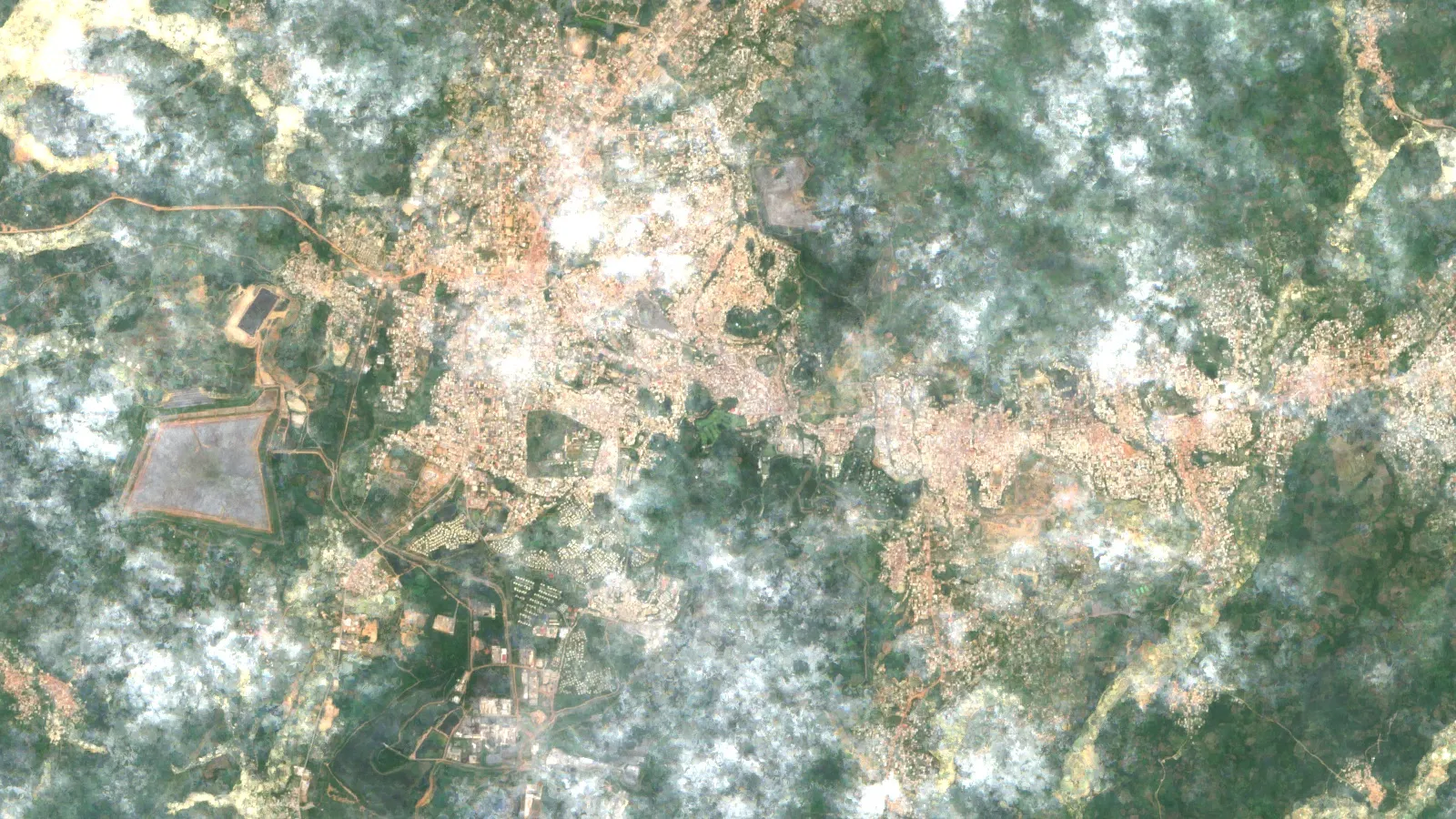
Key takeaways
- South Africa (88.9 t) and Ghana (88 t, estimate) led African gold mine output in 2022, followed by Mali, Burkina Faso and Tanzania (USGS, 2022 Minerals Yearbook).
- Gold follows old rock provinces: the Birimian belts of West Africa, the Tanzania Craton, the Witwatersrand basin and the Nubian Shield.
- The largest African mines in 2025 were Kibali (673,000 oz), Ahafo (664,000 oz) and Fekola (531,000 oz) (MINING.COM ranking).
- In lateritic ground, soil sampling works where soil is shallower than about 2 m; thicker cover calls for termite-mound sampling (Poulin and Gleeson, 1996).
- Screen the whole licence with satellite data first, then sample, trench and drill; satellite zones are exploration targets, not a resource.
In this article
- Which African countries produce the most gold
- How African gold output has changed since 2018
- Gold belts and cratons: where to look in Africa
- Largest gold mines in Africa
- How to find gold in Africa: a step-by-step plan for a concession owner
- Budget a first soil-sampling grid
- Can a foreigner get a small-scale mining licence in Africa
- Mineral exploration challenges in remote mining regions of Africa
- Where satellite data fits in remote exploration
- Frequently asked questions
Africa gold deposits sit in a handful of very old rock provinces: the Birimian belts of West Africa, the Archaean greenstone belts around Lake Victoria, the Witwatersrand basin in South Africa, and the Neoproterozoic Nubian Shield along the Red Sea. The U.S. Geological Survey (USGS) names Ghana and South Africa as the African countries with their own line in its 2026 world table, at an estimated 150 and 90 tonnes in 2025, out of about 3,300 tonnes worldwide (USGS, Mineral Commodity Summaries 2026). This guide ranks the producing countries, maps the belts, names the biggest mines and then explains how a concession owner finds gold in Africa step by step, including what goes wrong in remote ground.
It is written for licence holders, consultants and investors. A tonne of gold is about 32,150 troy ounces, and gold grade is quoted in grams per tonne (g/t) of rock. Every figure below carries its source and year.
Which African countries produce the most gold
The most complete country table that is public comes from the USGS Minerals Yearbook. For 2022 it lists South Africa and Ghana at almost the same level, followed by Mali, Burkina Faso, Tanzania, Côte d’Ivoire, the Democratic Republic of Congo (DRC) and Sudan (USGS, 2022 Minerals Yearbook, gold). Read the table with three cautions. The DRC and Ghana values are USGS estimates. The Burkina Faso value leaves out artisanal and by-product gold. The Sudan value is reported exports, so it does not capture gold that leaves the country unrecorded.
Chart
Top African gold producers, 2022
Tonnes of gold; eight leading countries, all others below 40 t. DRC and Ghana are USGS estimates, Burkina Faso excludes artisanal, Sudan is reported exports
Newer data show the order has moved. The World Gold Council reports that Ghana’s output rose 24% year on year in the fourth quarter of 2025, helped by Newmont’s Ahafo North project, higher production at AngloGold Ashanti’s Obuasi mine and more small-scale output, while Mali’s fell 17% mainly because the Loulo-Gounkoto operation was suspended (World Gold Council, Gold Demand Trends full year 2025, supply). Mali gold is therefore a story of one country with several large mines, where a single licence dispute moves the national number.
Africa gold deposits by country in one table
| Country | 2022 mine output (USGS) | Main gold setting |
|---|---|---|
| South Africa | 88.9 t | Witwatersrand basin on the Kaapvaal Craton, plus greenstone belts |
| Ghana | 88 t (estimate) | Birimian belts: Ashanti, Sefwi and others |
| Mali | 64 t (estimate) | Birimian rocks of the West African Craton |
| Burkina Faso | 58.1 t (excludes artisanal) | Birimian greenstone belts |
| Tanzania | 56.9 t | Nyanzian greenstone belts south of Lake Victoria |
| Côte d’Ivoire | 48 t | Birimian belts |
| DRC | 43 t (estimate) | Kibali mine and other DRC goldfields |
| Sudan | 41.8 t (exports) | Nubian Shield |
Zimbabwe (37.4 tonnes in 2022), Guinea (21.2), Mauritania (19.3), Senegal (15.8) and Egypt (13.7) also appear in the same table. Togo is listed at 20 tonnes, but that is reported exports, mostly artisanal gold passing through from neighbouring countries. Zimbabwe’s gold alone made up 25% of its export value in 2019 (USGS, 2019 Minerals Yearbook, Zimbabwe).
How African gold output has changed since 2018
The trend matters more than any single year. In the USGS series Ghana fell from 148 tonnes in 2018 to 88 tonnes in 2022, while Tanzania rose from 39 to 57 tonnes and Mali from 55 to 64. South Africa has drifted down for decades; USGS notes that the long-term decline in its mined gold continued in 2022, which it ties to very deep mines (down to 4 km) with high haulage and cooling costs (USGS, 2022 Minerals Yearbook, South Africa). USGS gives 88.9 tonnes in its Gold chapter and 92.6 tonnes in its South Africa chapter for 2022; the charts use the Gold chapter. The Gold chapter adds that a strike at Sibanye-Stillwater’s gold operations cut that year’s output (USGS, 2022 Minerals Yearbook, Gold).
Chart
Four African producers, 2018 to 2022
Gold mine production, tonnes
For reserves the picture is different. USGS (Mineral Commodity Summaries 2026) puts South Africa’s gold reserves at 5,000 tonnes and Ghana’s at 1,000 tonnes in 2026, against 13,000 for Australia and 12,000 for Russia, out of 66,000 tonnes worldwide. Reserves are gold that is economic to mine with known deposits, so they say little about ground nobody has explored.
Gold belts and cratons: where to look in Africa
Gold follows old crust. A craton is a stable block of very old rock; greenstone belts are strips of ancient volcanic and sedimentary rock squeezed between granites; most of Africa’s orogenic gold sits along shear zones inside those belts. Orogenic gold means gold deposited by hot fluids moving along faults during mountain building. The table below compares the five main provinces, then each is explained.
| Province | Countries | Deposit style | What to expect on the ground |
|---|---|---|---|
| West African Craton (Birimian) | Ghana, Mali, Burkina Faso, Côte d’Ivoire, Guinea, Niger | Orogenic gold along shear zones | Thick lateritic cover, rainy seasons, many artisanal diggers |
| Tanzania Craton | Tanzania | Shear-hosted lodes in greenstone belts | Granite-greenstone terrain, large licence blocks, active small-scale mining |
| Kaapvaal Craton | South Africa | Paleoplacer conglomerates, plus greenstone lodes | Deep underground mines, mature data, tailings re-treatment |
| Zimbabwe | Zimbabwe | Lode gold and artisanal workings | Many small claims; check the current royalty schedule |
| Nubian Shield | Egypt, Sudan, Eritrea, Ethiopia | Orogenic gold and volcanogenic massive sulphide gold | Desert exposure, ideal for satellite mapping, security limits access |
West African Craton: the Birimian belts of Ghana, Mali and Burkina Faso
The West African Craton hosts numerous gold deposits, and the southwestern Baoulé-Mossi domain is where the study below worked. A Re-Os dating study of five deposits (Nassara and Kiaka in Burkina Faso; Wassa, Damang and Obuasi in Ghana) describes a craton that hosts numerous gold deposits tied to the Eburnean orogeny, 2250 to 1980 million years ago, and says most of them sit along shear zones (Le Mignot and others, Economic Geology, 2017). For a licence holder the lesson is practical: map the shear zones first, because the gold follows the structures.
Ghana has led African output; USGS called it Africa’s leading producer in 2019, with artisanal and small-scale mining estimated at 35% of gold that year (USGS, 2019 Minerals Yearbook, Ghana). Our Ghana pages cover the licence side in more detail: gold exploration in Ghana, and the deposit-by-deposit guide at Ghana gold deposits. A field-validation case study from the region is at Satellite Gold Exploration West Africa: 68-Point Proof, and a satellite-screening case study at Rapid Satellite Gold Exploration in West Africa.
Tanzania Craton and the Lake Victoria goldfields
The Geological Survey of Tanzania says the majority of the country’s gold deposits are in greenstone belts of the Neoarchaean Nyanzian Supergroup in the north of the craton, south of Lake Victoria, with shear-zone gold also found in Paleoproterozoic rocks elsewhere (Geological Survey of Tanzania, geology and mineral potential summary). Geita, which produced 492,000 ounces in 2025, is among the best known mines there. For licence tiers and area limits see gold exploration in Tanzania; Kenya has its own page at gold exploration in Kenya.
Witwatersrand and the Kaapvaal Craton, South Africa
The gold deposits in South Africa are unlike the rest of the continent. Gold was found in 1886 on the Witwatersrand ridge near Johannesburg, in pebble-rich conglomerate layers known as banket that were laid down on the Kaapvaal Craton roughly 3 billion years ago; about 53,000 tonnes have been mined from them since 1886 (Iaccheri, University of the Witwatersrand, School of Geosciences). Mines there now run very deep, and several operators also re-treat old tailings. USGS names Harmony Gold as the leading South African gold producer in 2022, with 41,228 kg. A basin-and-belt walk-through is at gold mining areas in South Africa.
Zimbabwe and southern Africa
Zimbabwe’s gold comes from lode mines and from artisanal miners, whom USGS estimated at about 3,000 kg of gold in 2019. Government royalty on gold from large-scale miners was 5% in the USGS description of the 2019 regime, with 1% for small-scale gold miners, so check the current schedule before you model a project. See gold exploration in Zimbabwe and gold exploration in Zambia for claim and licence steps.
Nubian Shield: Egypt, Sudan, Eritrea and Ethiopia
A South African Journal of Geology review of the Nubian Shield says it holds hundreds of gold occurrences and evidence of a 5,500-year mining history, that the main deposit types are orogenic gold and gold in volcanogenic massive sulphide (VMS) deposits, and that with the Arabian Shield it forms the Earth’s largest Neoproterozoic gold resource (Johnson and others, South African Journal of Geology). The review notes that younger strata and flood basalt hide large areas of basement, but where desert basement is exposed it suits remote sensing. Check access and security before you plan any field work.
Congo and central Africa
Kibali, owned 45% by AngloGold Ashanti, 45% by Barrick and 10% by Société Minière de Kilo-Moto, is the DRC’s largest gold mine and produced 673,000 ounces in 2025 (MINING.COM ranking of the largest gold mines). Our DRC minerals map shows where each mineral sits by belt.
Largest gold mines in Africa
Ranking by output shows which mines produce the most gold today. In the MINING.COM 2025 table of mines by output, Kibali in the DRC (673,000 oz), Ahafo in Ghana (664,000 oz), Fekola in Mali (531,000 oz) and Sukari in Egypt (20th place) are the African entries in the world top 20, while Tasiast in Mauritania (500,000 oz), Geita in Tanzania (492,000 oz) and Tarkwa in Ghana (488,000 oz) fall just below it. B2Gold’s Fekola, which started open-pit production in 2017 and added underground mining in 2025, is a good example of how a single Birimian deposit can reach half a million ounces a year.
Chart
Six large African gold mines, 2025 output
Thousand troy ounces mined in 2025
Production per mine is not a resource figure. The ounces above were mined in one year. They do not tell you how much remains, and nobody can read the size of your licence from them.
How to find gold in Africa: a step-by-step plan for a concession owner
Finding gold in Africa follows the same order wherever you work: confirm the ground, read the geology, screen it with satellite data, sample in the field, then drill. Doing the cheap steps first keeps the cost of dry holes down. The steps below are for people who hold or are about to apply for a licence; for how our own method works, see how satellite mineral exploration works, and for the whole programme the complete exploration guide.
Step 1: Check who holds the ground
Before any fieldwork, confirm the licence status on the national mining cadastre (the public register of licences). Our mining cadastre portals by country page lists where to look, and check your licence area covers what to verify on your own boundary. Mining laws differ widely between African countries. The African Mining Legislation Atlas hosts national mining acts in one place, for example the Tanzania Mining Act 2019 (African Mining Legislation Atlas, Tanzania Mining Act). Check with the ministry before you apply or commit money.
Step 2: Read the regional geology
Find the nearest geological map, shear zones, granite contacts and known mines. Gold deposits cluster along the same structures. Ask what rock the licence sits on: greenstone belt, sedimentary basin or granite.
Step 3: Screen the whole licence from space
Satellites do not see gold. They map the alteration that hot fluids leave behind: iron oxides, clays and silica, plus faults and lineaments. Sentinel-2 and Landsat data cover the whole licence at once and cost little compared with fieldwork. A report built from this data turns a large boundary into a short list of ground-check areas. This is where Farmonaut works: a satellite mineral report for a licence or concession, delivered in 5 to 20 business days. The reference for what a finished product contains is the mineral exploration report sample, and the ranking logic is in exploration targeting.
Satellites map surface and near-surface signatures; sampling and drilling confirm. Treat every satellite zone as an exploration target and not a resource under JORC, NI 43-101 or SAMREC.
Step 4: Soil, stream and termite-mound sampling
Take samples on a grid over the satellite targets. In lateritic West Africa this has a nuance: a study in Niger’s Liptako region found lateritic terrain is not an unfavourable environment for exploration geochemistry, that soil works well where it is shallower than about 2 m, and that termite-mound sampling works better where thicker transported soil covers the bedrock (Poulin and Gleeson, Institute of Materials, Minerals and Mining, 1996). In the Sefwi belt of southwestern Ghana, a regolith study at the Tetteh prospect used 197 sampling locations and found that arsenic had the highest loading with gold, while aluminium, silver, manganese, copper and iron could serve as better pathfinders in that area (Nude and others, University of Ghana). Pathfinders are elements that travel with gold and are easier to detect.
Step 5: Trenching, mapping and then drilling
Only after soil anomalies line up with satellite zones and structure should you trench and drill. A short drill programme on a ranked target is cheaper than a wide pattern on unranked ground. For a cost view on a small licence read exploration budget for a small licence.

▶ Explains why satellites cannot see gold but can map the rusty stains, clay minerals and faults that sit around it. · 4:25
Budget a first soil-sampling grid
The calculator below turns a licence area and your own grid spacing into a sample count, a field cost and a number of field days. Enter the line spacing between sample lines, the spacing of samples along each line, and the all-in cost your laboratory and crew quote. The defaults are round example numbers, not benchmarks.
Calculator
How many soil samples and what field cost for my licence?
Enter your own licence area, grid spacing and the cost your lab and crew quote.
- Line kilometres to walk: 250
- Field and lab cost: $150,000
- Crew days: 62.5
Example values only, not a benchmark. Prices are inputs: example, use today’s quote. Samples = area x 1,000,000 / (line spacing x sample spacing); it ignores QA samples, access days and re-sampling.
Can a foreigner get a small-scale mining licence in Africa
The rules differ by country, and some countries reserve small-scale licences for their own citizens. In Tanzania, for example, the Mining Act 2019 grants a Primary Mining Licence only to Tanzanian citizens or to groups made up only of citizens (see the African Mining Legislation Atlas link above). Exploration and large-scale licences are handled separately. Read the national mining act, and confirm with the ministry before you pay any fee or sign with a local partner. The short video below walks through the options.

▶ Looks at whether a foreigner can get a small-scale mining licence in Africa and the three routes that are open. · 5:16
Mineral exploration challenges in remote mining regions of Africa
Remote ground in Africa is hard for ordinary reasons, not because the geology is odd. These are the six issues that cost most teams time and money.
- Access in the wet season. Roads wash out and sampling stops. Plan field campaigns for the dry months and use satellite screening in the wet ones.
- Cover over the bedrock. Laterite, transported soil and thick regolith hide gold. As the Niger and Ghana studies above show, the sample medium has to match the cover.
- Artisanal miners on your ground. In Ghana, small-scale mining was estimated at 35% of gold production in 2019 (USGS). Meet the community before you start, and never allow mercury at your camp.
- Thin public data. Many belts have old maps and few modern surveys, which is the strongest argument for starting with satellite data.
- Political and operating risk. The Loulo-Gounkoto suspension in Mali shows that licence disputes can stop a large mine; Barrick announced a resolution of its disputes with Mali on 24 November 2025 and restart was expected in 2026 (World Gold Council).
- Logistics. Fuel, power and trained crews are costly far from towns. A shorter, better-ranked programme spends less of all three.
Where satellite data fits in remote exploration
Remote exploration means screening the ground before sending people to it. For a concession in the DRC, Mali or Tanzania, that can save a first field season on areas that show no alteration or structure. It does not replace sampling. It tells you where to sample first, and our West Africa case studies linked above show satellite screening of a greenstone licence, one of them walked on foot at 68 localities. Terms like “remote sensing mineral exploration” are covered in depth at remote sensing and mineral exploration, and the overview of satellite methods is on our satellite mineral detection page. Farmonaut Mining screens licences for gold and many other minerals; the quote form is the way to start.
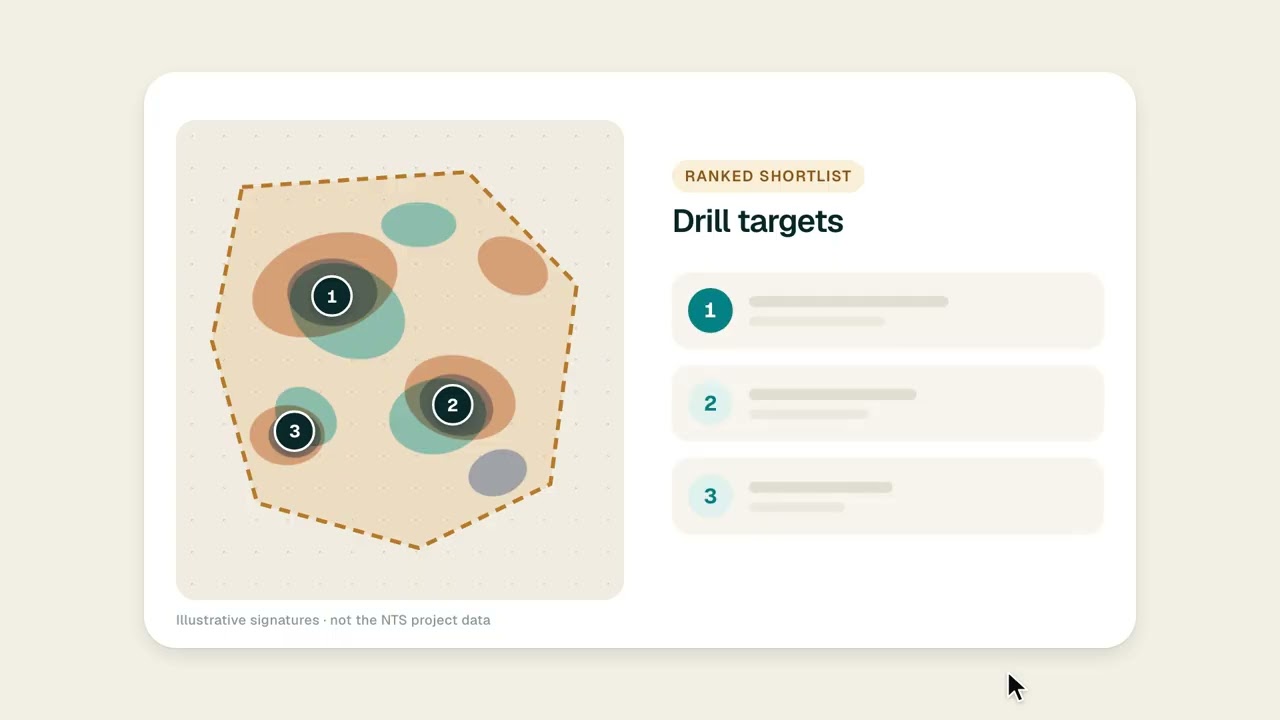
▶ A South African case study: ranking drill targets on a 53.2-hectare gold prospect from satellite data. · 1:13
Frequently asked questions
Where is most gold found in Africa?
Most of it is in four old rock provinces: the Birimian belts of West Africa, the Lake Victoria greenstone belts, the Witwatersrand basin and the Nubian Shield. By 2022 output, South Africa, Ghana, Mali, Burkina Faso and Tanzania led (USGS, 2022 Minerals Yearbook).
Which African country has the most gold?
By mine production, Ghana and South Africa were close in 2022 at about 88 to 89 tonnes each, and USGS estimates 150 and 90 tonnes for 2025. By reserves, USGS lists South Africa at 5,000 tonnes against Ghana’s 1,000 tonnes.
Does Mali have a lot of gold?
Yes. Mali produced an estimated 64 tonnes in 2022 (USGS). Its output depends on a few large mines, so the Loulo-Gounkoto suspension cut the country’s fourth-quarter 2025 output by 17% (World Gold Council).
What are the main gold deposits in South Africa?
The Witwatersrand basin, where gold sits in conglomerate layers, supplies most. The country also has greenstone-belt lode targets. USGS lists Harmony Gold as the leading producer in 2022, with 41,228 kg.
How do I find gold in Africa on a concession?
Confirm the licence, read the regional geology, screen the whole area with satellite data for alteration and structure, then sample the best zones on a grid, trench and finally drill. The steps are laid out above.
What is the best way to explore remote gold concessions in Africa?
Start with desk and satellite work, because it costs the least and works in the wet season. Then plan field sampling for the dry months and add community contact before the crew arrives.
Can satellites find gold in Africa?
No satellite sees gold itself. Satellites map iron oxides, clays, silica and faults that often go with gold systems. Sampling and drilling confirm any result.
What does remote exploration mean?
It means using satellite, aerial and desk data to narrow a large area before field crews go in. It reduces field cost and time on ground that shows no sign of a mineral system.
How big can a gold mine in Africa be?
The largest African mines produced about 490,000 to 673,000 ounces in 2025: Kibali in the DRC was the highest at 673,000 (MINING.COM ranking). Most licences will never reach that size, and an exploration target is not a resource.
Is gold in Africa found in rivers or in rock?
Both. Alluvial gold in streams is mined by artisanal miners across the continent, while the large mines work hard rock: Witwatersrand conglomerate and shear-zone lodes in greenstone and Birimian belts.
Do I need a licence to prospect for gold in Africa?
In most countries you need a licence or permit, and you always need the landholder’s permission. Confirm the rules with the national ministry before any field work.
This page is for information only. It is not investment advice or legal advice. Confirm licence rules, fees and royalties with the national ministry before you apply. Satellite results are exploration targets, not a JORC, NI 43-101 or SAMREC resource. Get permission from the landholder before any field work, and never use mercury.
Farmonaut Mining
Screen your African licence from space
Send your licence boundary for a satellite mineral report that ranks ground-check areas for gold before the field crew goes in.

Mining Pro sample view, synthetic data
Sources
- African Mining Legislation Atlas, Tanzania Mining Act 2019: a-mla.org
- Iaccheri, Witwatersrand gold: where it originated, University of the Witwatersrand School of Geosciences (presentation): wits.ac.za
- Le Mignot and others, Re-Os evidence for multiple Paleoproterozoic gold events, Economic Geology (2017): espace.inrs.ca
- USGS, 2022 Minerals Yearbook, Gold (table 8, world mine production): pubs.usgs.gov
- USGS, 2019 Minerals Yearbook, Ghana: pubs.usgs.gov
- USGS, 2019 Minerals Yearbook, Zimbabwe: pubs.usgs.gov
- USGS, 2022 Minerals Yearbook, South Africa: pubs.usgs.gov
- USGS, Mineral Commodity Summaries 2026, Gold (February 2026): pubs.usgs.gov
- Johnson and others, Gold-bearing VMS and orogenic-gold deposits in the Nubian Shield, South African Journal of Geology: pure.kfupm.edu.sa
- Nude and others, Regolith geochemistry at the Tetteh prospect, Sefwi belt, Ghana (University of Ghana): ugspace.ug.edu.gh
- World Gold Council, Gold Demand Trends full year 2025, Supply: gold.org
- Geological Survey of Tanzania, Geology and mineral potential summary: gst.go.tz
- MINING.COM, World’s top 20 largest gold mines (2026 update): mining.com
- Poulin and Gleeson, Gold exploration in the Liptako region of Niger (1996): onemine.org
- World Gold Council, Global mine production by country (Metals Focus data): gold.org
Discussion
Questions, corrections or field experience? Share them below. First-time comments are reviewed before they appear, and your email is never published.
No comments yet. Be the first to add a question or your experience.

 Geoticgy
 GemSprout Metals Limited
 Qader Group
 Ileys General Trading
 SG Gold Mining LLC
 VRV Global Pte Ltd
 Omsri International FZE
 G.I.T.T.
 Jaunita Erss Ltd
 Almosi SARL
 SRK Consulting
 Berks Gold Limited
 Mwerezi Minerals Company Limited
 Mining SARL
 SenGold Invest SAS
 Sean Mining Limited
 NTS Group (Pty) Ltd
 Mine4Africa
 Lithspo Minerals Limited

 Client · Oregon, USA · Gold










