

Global Manganese & Rare Earth Production Trends 2026: Driving Agriculture, Infrastructure & Defence Innovation
“Global manganese production is projected to reach 22 million metric tons in 2026, fueling advancements in steel and battery technologies.”
Introduction
Global manganese production and global rare earth production continue to be fundamental drivers of economic, technological, and sustainable development worldwide. As we approach 2026, manganese and rare earth elements (REEs) are positioned at the heart of innovation, not only in agriculture for optimized crop yield and soil health but also across infrastructure modernization and defence advancements. These minerals are the bedrock of millions of jobs, advanced manufacturing projects, state-of-the-art defence systems, and the green energy revolution.
Understanding the trends, dynamics, and technological advancements in global manganese production and rare earth mining sheds light on the opportunities and risks countries must address to secure economic growth and strategic autonomy in 2026 and beyond.
Understanding the Importance of Manganese & Rare Earth Elements
Manganese and rare earth elements are serving as more than just industrial materials. Their unique properties make them indispensable for agricultural, industrial, and defence applications. Manganese plays a vital role as a micronutrient in plants, promoting photosynthesis and disease resistance, and as a component in steel and battery technologies critical for infrastructure and vehicles.
Rare earth elements—a group of 17 metallic elements—include neodymium, praseodymium, lanthanum, and more. Their magnetic, luminescent, and electrochemical properties are crucial for producing permanent magnets, radar systems, precision-guided weapons, renewable energy technologies, and high-efficiency lighting.
The strategic importance of these elements for a nation’s defence and its ability to fuel a sustainable, modern economy cannot be understated.
Global Manganese Production Trends 2025–2026
The Role of Manganese in Plant Growth & Agriculture
Manganese acts as a micronutrient in agriculture, playing a critical role in plant nutrition, photosynthesis, and crop yield optimization. It is especially important for soils in parts of Africa, South America, and Asia where manganese deficiencies can result in poor crop performance and vulnerability to disease.
- Supports enzyme functions and energy transfer in plants
- Improves resistance to disease and environmental stress
- Boosts yield optimization, especially in manganese-deficient soils
Did you know? Manganese-rich fertilizers are now being introduced in large-scale commercial agriculture across Africa and Asia to counteract soil deficiencies and improve food security.



Global Manganese Production Centers: Regions and Trends
Global manganese production in 2025–2026 is heavily concentrated in a handful of countries with rich mineral deposits. South Africa leads the world, accounting for approximately 40% of global output. Other major producers include Australia, China, Gabon, and Brazil. This distribution signals geographic advantages but also exposes the supply chain to potential disruptions.
- South Africa: Dominates global manganese production, thanks to vast reserves in Northern Cape and Kalahari regions. Innovations in automated mining and sustainable processing are being emphasized.
- Australia: Rapidly expanding investments in manganese mining in Western Australia’s Pilbara region, focusing on cleaner extraction and digitalized supply chains.
- China: Integrates new technologies in processing and upcycles industrial waste for supplementary supply.
- Gabon & Brazil: Strengthening their position in the manganese market by streamlining logistics, compliance, and sustainability protocols.

Growing demand from steel manufacturing, fertilizer production, and new battery technologies like lithium-manganese-oxide (LMO) batteries is propelling expansion and investment in both existing and new mining projects.
In 2026, global manganese production is projected to surpass 22 million metric tons, with a large share supporting battery technology for electric vehicles and grid storage—a key driver for decarbonization and infrastructure modernization.
Rare Earth Mining and Global Demand
“In 2025, rare earth mining innovations may boost extraction efficiency by up to 30%, impacting global defence and agriculture sectors.”
Key Drivers of Rare Earth Production
Global rare earth production is foundational to a spectrum of technologies—from advanced weapons systems and radar to high-efficiency motors in electric vehicles, wind turbines, and rapidly evolving AI-powered electronics.
- Neodymium and Praseodymium: Used in manufacturing powerful permanent magnets essential for motors and turbines.
- Lanthanum: Enhances rechargeable batteries and camera lenses.
- Yttrium, Terbium, Europium: Crucial in high-performance lighting and screen displays.
The modernization of infrastructure and the push toward renewable energy in 2025–2026 are increasing global demand for rare earths exponentially. As reliance on electric vehicles and wind turbines accelerates, the supply chain faces both opportunity and strain.

Dominance, Concentration, and Geopolitical Vulnerabilities
China historically controls over 60% of the global rare earth supply. This concentration reveals strategic vulnerabilities for other countries with high-tech industries and growing defence priorities.
- United States & Australia: Responding with aggressive investments in new mining projects and processing facilities.
- Africa: Emerging as a new source for rare earth extraction, particularly in nations such as Burundi and South Africa.
- India and Brazil: Diversifying supply and ramping up domestic investments in rare earth mining and processing innovations.
Global rare earth production is expected to surpass 350,000 tons in 2026, with innovations such as AI-powered geometallurgy, satellite-based exploration, and digital twin modeling enhancing efficiency.

Country-wise Production and Application Trends
| Country/Region | Estimated Manganese Production (2025) (‘000 metric tons) |
Estimated Rare Earth Production (2025) (‘000 metric tons) |
Major Mining Innovations Adopted (2025) | Primary Impact Sectors (Agriculture/Infrastructure/Defence) |
|---|---|---|---|---|
| South Africa | 8,700 | 2 | Automation, sustainable processing, real-time satellite monitoring | Agriculture, Infrastructure, Defence |
| Australia | 3,200 | 22 | Remote sensing, AI-driven exploration, ESG reporting, water recycling | Infrastructure, Defence, Agriculture |
| China | 2,600 | 210 | AI in mineral processing, supply chain digital twins, waste upcycling | Infrastructure, Defence |
| Gabon | 2,300 | 1 | Sustainable logistics, smart mining, environmental monitoring | Agriculture, Infrastructure |
| Brazil | 1,900 | 6 | Bioleaching, renewable energy in extraction, drone surveys | Agriculture, Defence |
| United States | 600 | 42 | Digital twin modeling, AI-guided exploration, ethical sourcing | Defence, Infrastructure |
| India | 650 | 5 | Water conservation tech, localized processing, traceability systems | Agriculture, Infrastructure |

Impact of Global Mining on Agriculture: The Manganese Connection
One of the most visible influences of global manganese production in 2025–2026 is on the agriculture sector. As a micronutrient essential for plant growth and photosynthesis, increased and sustainable manganese production supports better crop yields, resistance to disease, and enhances food security in regions such as:
- Africa: Southern and West Africa use manganese-rich fertilizers to combat carbon-deficient soils.
- South America: Brazil is investing in manganese supplementation for soybean and maize, two global staple crops.
- Asia: India and China are implementing traceability and precision fertilization to improve agricultural outputs.
However, mining impacts can also create environmental challenges—soil contamination, water pollution, and deforestation—requiring ethical extraction methods and robust community engagement for sustainability.
- Innovations in soil monitoring and digital field mapping (like Farmonaut’s solutions) allow real-time tracking of farm health, enabling timely fertilizer applications and minimizing input wastage.
- Blockchain-based traceability is increasingly leveraged to verify ethical sourcing of fertilizer inputs and their safe use in agriculture. See more on Farmonaut’s traceability solution.

Mining, Infrastructure, and Defence Development: Strategic Materials
The Critical Role of Manganese and REEs in Infrastructure
Both manganese and rare earth elements are at the core of modern infrastructure and technological development. Besides steel (where manganese acts as a strengthening component), new applications include:
- Batteries for grid storage and e-mobility (LMO, NMC chemistries)
- Rebar and high-strength steel alloys for earthquake-resistant buildings and bridges
- High-performance motors in electric vehicles, wind turbines, and maglev rail using rare earth magnets
- LED lighting and medical imaging devices

Defence Systems: Maintaining a Technological Edge
Rare earth elements are indispensable for defence:
- Permanent magnets in radar, electronic warfare, and missile guidance systems
- Night vision goggles and precision weapons
- Satellite communication hardware and strategic electronic components
Supply chain resilience in these critical materials is a national security priority in 2025 and beyond, especially as global conflicts and geopolitical tensions can disrupt concentrated supply chains.
For advanced tracking and supply chain transparency in mining and defence, check out Farmonaut’s Fleet Management Solution—enhancing operational efficiency and logistics in mining infrastructure projects.
Innovations in Mining Technologies: 2025 and Beyond
Sustainable Extraction & Processing
To address environmental and economic challenges, countries are investing heavily in innovations that reduce material waste and carbon footprint:
-
Bioleaching:
- Eco-friendly technique using naturally occurring bacteria to extract metals from ores.
- Increasing recovery rates and reducing chemical usage.
-
Solvent Extraction & AI-driven Refining:
- AI algorithms optimize processing parameters for higher efficiency.
- Novel solvents reduce toxicity and environmental impact.
-
Circular Economy Solutions:
- Efforts to recycle manganese and rare earth materials from end-of-life products such as batteries, electronics, and wind turbines.
- Reduces dependence on virgin mineral extraction and minimizes waste.
-
Digitalization & Automation:
- IoT devices, autonomous vehicles, and real-time monitoring increase safety and resource optimization.
-
Satellite-based Exploration & Monitoring:
- Satellites enable large-scale resource mapping, compliance checks, and environmental monitoring, supporting responsible mining practices.
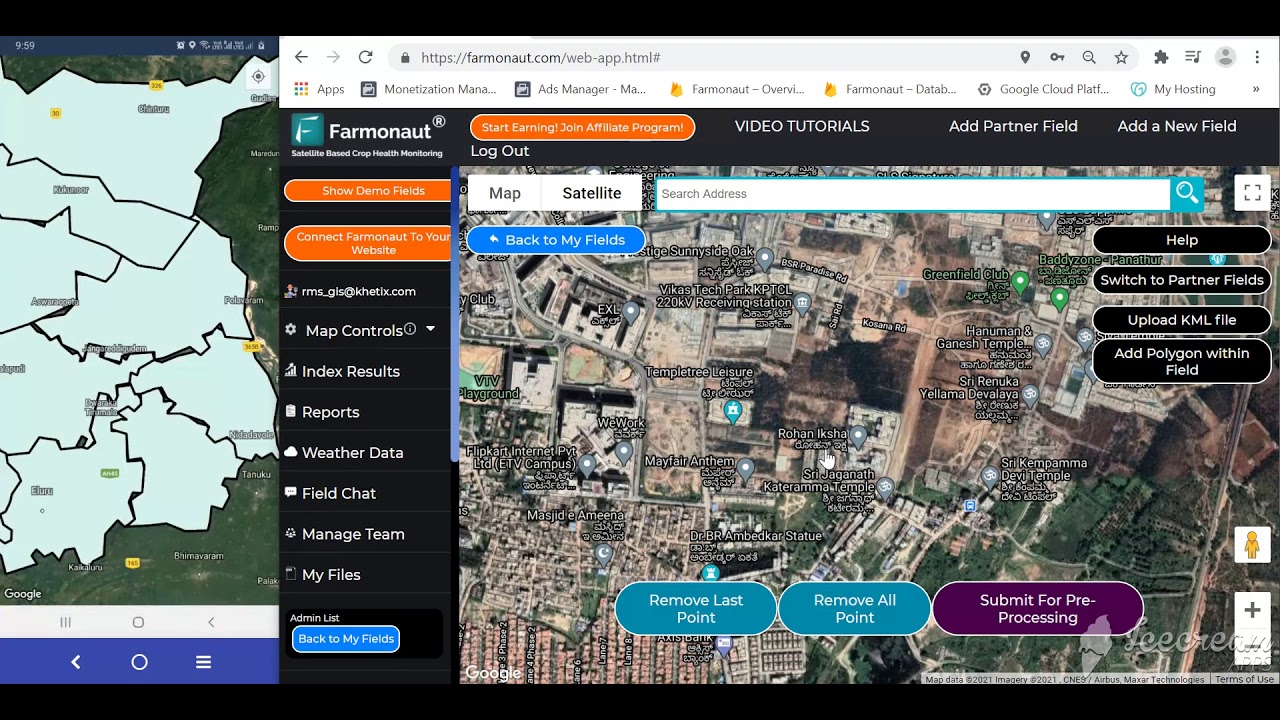
- Farmonaut’s satellite-based monitoring tracks carbon footprint and land-use change over time.
Sustainable Mining and Responsible Global Supply Chains
Supply chain resilience and ethical sourcing are at the core of modern mining in 2025–2026. The need for a sustainable and transparent chain spans from the mine to the manufacturer to the product end-user, especially for Agriculture, Infrastructure, and Defence.
- Blockchain-powered traceability (see Farmonaut Traceability) enables verification from ore extraction to final use. This fosters consumer and stakeholder trust and reduces the risks of “conflict minerals.”
- Compliance with Environmental Regulations requires real-time environmental monitoring. Farmonaut’s Carbon Footprint Monitoring gives businesses actionable data to lower emissions.
- Community Engagement and Social License: Involving local populations ensures equitable benefits and reduces social risks, which are particularly important in regions like Southern Africa and Western Australia.
- Remote Sensing and Automation reduce operational costs and improve compliance, helping mining companies meet global ESG (Environmental, Social & Governance) goals.

The Role of Intelligent Monitoring Systems in Mining and Resource Management
Modern mining and resource management rely increasingly on intelligent monitoring systems:
- Satellite Data: Enables real-time insight on operational conditions (crop, ore, water, emissions) globally.
- AI Advisory Systems: Analyze patterns and issue timely recommendations—Farmonaut’s Jeevn AI for digital advisory in agriculture and mining is a breakthrough.
- APIs for Integration: Businesses, governments, and financial institutions embed analytics into existing decision-support systems via Farmonaut API (see developer docs here).
Future Outlook: Global Trends, Opportunities, and Challenges
What Lies Ahead: 2026 and Beyond
Global manganese production and global rare earth production will remain central to the world economy and strategic ambitions in 2026. While technological innovations (bioleaching, autonomous operations, AI-powered advisory) reduce carbon intensity and operational risks, challenges persist—ranging from environmental impacts to social acceptance and strategic vulnerabilities.
Key drivers like the electrification of transport, renewable energy deployment, and digitalization of industries will continue to spur demand for critical minerals. Countries with diversified and responsible supply chains will enjoy greater economic resilience and technological primacy.
- Africa, Australia, and South America are positioned to gain from new investments, provided they ensure sustainability and community benefit.
- China will continue to leverage its processing capacity but faces international efforts to mitigate supply chain concentration.
- Developed nations are investing in recycling, re-processing “mine tailings,” and promoting circular economy models to secure supply and meet environmental goals.
Discover scalable digital field management —track, analyze, and improve yield performance with precision geospatial tools, perfect for multination farm operators, agri-businesses, and government users.
Farmonaut: Satellite Technology Empowering the Mining Revolution
As global demand for manganese and rare earth elements rises, Farmonaut is committed to delivering advanced, affordable, and sustainable technology that addresses the critical needs of agriculture, mining, infrastructure, and defence sectors worldwide.
- Satellite-Based Monitoring: Our platform brings real-time, multi-spectral insights for resource-rich regions and farm landscapes, supporting informed decisions in mining operations, crop health management, and infrastructure tracking.
- AI Advisory Systems: With Jeevn AI, users gain predictive analytics for optimizing harvest yields, mineral extraction, and operational efficiency.
- Environmental Impact and Traceability: Our environmental modules track carbon emissions in mineral and agricultural projects. Farms and mines benefit from blockchain-based traceability.
- Fleet & Resource Management: Miners and agribusinesses use our Fleet Management suite to monitor assets, vehicles, and supply logistics.
- Subscription-Based, Scalable Solutions: Farmonaut makes satellite monitoring, AI, and blockchain systems accessible for operations of any scale. Flexible APIs further enhance integration.
FAQ – Global Manganese & Rare Earth Production 2026
Q1: What is the expected output for global manganese production in 2026?
Global manganese production is projected to reach around 22 million metric tons in 2026, with South Africa accounting for about 40% of world output.
Q2: Why are rare earth elements so critical for defence and high-tech industries?
Rare earth elements (REEs) are indispensable for making permanent magnets, radar, guidance systems, electric motors, and efficient lighting—integral to defence and advanced infrastructure.
Q3: Which countries dominate global rare earth production?
China remains the dominant producer, controlling approximately 60% of the global supply. Australia and the United States are investing in new mining and processing projects for supply diversification.
Q4: How are environmental and ethical challenges being addressed in mining?
Through AI-driven processing, blockchain traceability for ethical sourcing, and satellite-based environmental monitoring (Carbon Footprinting), the industry is moving toward more sustainable practices.
Q5: How does Farmonaut support global mining and agricultural resilience?
We provide real-time satellite monitoring, AI advisory tools, blockchain traceability, and fleet/resource management—informing decisions for sustainable operations, compliance, and yield/resource optimization.
- Large Scale Farm Management —Monitor, assign, and analyze fields remotely.
- Crop Plantation & Forest Advisory —AI-driven, satellite-based sustainable planning and management.
Meta Description: Global manganese production and rare earth mining trends in 2026—Discover technological advancements, supply chain resilience, and their impact on agriculture, infrastructure, and defence worldwide.
URL Suggestion: /global-manganese-rare-earth-production-2026-trends
For developers: Explore our API and integration options at Farmonaut API. Full documentation is here.

 Berks Gold Limited
 Mwerezi Minerals Company Limited
 Congo Mining Solutions
 Mining SARL
 SenGold Invest SAS
 Sania Corporation
 Sean Mining Limited
 NTS Group (Pty) Ltd
 Mine4Africa
 Lithspo Minerals Limited
 Tintina Mining Group
 Dalgety Minerals Pty Ltd
 Vortex Minerals Pty Ltd
 Faith At Work (Pty) Ltd
 Geotech Mining Solutions plc
 Vulcan International Limited
 Kidepo Associates
 GKY Mining
 Alkimy SARL
 Double A Trading
 GemSprout Metals Limited
 Qader Group
 Ileys General Trading
 SG Gold Mining LLC
 VRV Global Pte Ltd
 Omsri International FZE
 G.I.T.T.
 Jaunita Erss Ltd
