

Table of Contents
- Introduction
- Understanding the Need for Gold Mining Training Programs
- Key Components of Training Programs
- Leveraging Technology in Gold Mining Training
- Designing Effective Gold Mining Training Programs in 2025
- Gold Mining Training Program Comparison Table
- How Farmonaut Powers Smarter Mining Training
- Implementing & Assessing Training Program Success
- Supporting Continuous Learning and Development
- Frequently Asked Questions (FAQ)
- Conclusion
Gold Mining Training Programs: How-To Tutorial 2025 – Discovering the Best Strategies for Workforce Excellence
As the gold mining industry continues to evolve in 2025, effective training programs for gold mining professionals are more crucial than ever. Digital advancements, stricter environmental regulations, and a growing emphasis on safety demand a new approach to skills development to ensure operational excellence, compliance, and sustainability.
This comprehensive guide explores how to design, implement, and assess impactful Training Programs for Gold Mining Professionals: How-To Tutorial to transform your workforce, reduce risk, and embrace the latest technology. Whether you’re a mining executive, training manager, or site supervisor, this article provides actionable strategies and expert insight for mastering the demands of modern gold mining.



Why Training Programs for Gold Mining Professionals Are Vital in 2025
The modern gold mining sector faces unique challenges—from complex extraction techniques to rigorous environmental standards and evolving digital technologies. As mining operations grow more hazardous and technically advanced, the need for systematic training is greater than ever.
- Addressing complexity and hazards: Mining integrates geological exploration, heavy machinery operation, and stringent safety management to ensure proper operation and worker safety.
- Navigating regulations: Mining regulations continue to tighten globally, requiring ongoing compliance and up-to-date knowledge.
- Sustainability: Modern gold mining must balance productivity with environmental sustainability and social responsibility.
- Adaption to technology: Digital tools, AI, and autonomous systems are revolutionizing gold mining—requiring new skills and learning modules.
Training programs are no longer optional—they are a vital investment to equipping professionals with the technical, regulatory, safety, and environmental skills required to ensure both operational success and long-term industry viability.

Key Components of the Training Programs for Gold Mining Professionals: How-To Tutorial
A truly comprehensive training program for gold mining in 2025 must cover five critical pillars to ensure excellence and compliance:
-
1. Technical Skill Development
- Core mining techniques: Modules on ore extraction, mineral processing, equipment handling, and maintenance.
- Modern technology integration: Including the use of autonomous vehicles, drones for site inspection, smart sensors, and AI-driven tools for exploration and data analysis.
- Software and simulation: Simulated mine planning and digital twinning to hone operator expertise risk-free.
-
2. Safety and Risk Management
- Hazard identification and response: Recognizing site-specific dangers, using checklists, and developing rapid emergency response protocols.
- Simulation and VR: Leverage virtual reality (VR) for immersive simulation of emergencies and risky scenarios, enabling workers to build confidence in a safe environment.
- Personal protective equipment (PPE): Training on use, maintenance, and protocols for PPE as per Occupational Safety and Health Administration (OSHA) standards.
-
3. Environmental Stewardship
- Minimizing environmental impact: Sustainable practices for waste management, water conservation, and tailings disposal.
- Legal compliance: Understanding environmental impact assessments and managing within governmental frameworks.
- Restoration protocols: Soil reclamation, native vegetation re-establishment, and contamination prevention.
Quick resource: Explore Farmonaut’s carbon footprinting tools—empowering industries to monitor and reduce environmental impact with satellite-driven data for regulation compliance and sustainability reporting.
-
4. Regulatory Compliance and Reporting
- Staying current with laws: Ongoing training modules on mining permits, land rights, labor, and environmental regulations.
- Documentation and audit readiness: Best practices for accurate reporting, data collection, and regulatory communication.
- Simplified traceability: Use of secure digital systems—see Farmonaut’s blockchain-based traceability solutions—to ensure compliance, transparency, and responsible sourcing across complex mining supply chains.
-
5. Soft Skills and Leadership Development
- Workforce collaboration: Training in communication, conflict resolution, and teamwork for operational cohesion—especially vital in remote and multicultural environments.
- Leadership: Programs empower supervisors and team leads with decision-making, motivation, and ethical management skills.





Leveraging Technology in Mining Training: The Future is Now
By 2025, the gold mining training landscape is defined by digital advancements. Programs are powered by VR simulations, mobile apps, AI-driven analysis, and interactive learning platforms—delivering safer, smarter, and more accessible experiences.
- Virtual Reality (VR) and Simulation: Immersive learning for hazardous procedures, equipment handling, and emergency response—reducing real-world accidents by letting professionals practice complex operations in a safe virtual space.
- Augmented Reality (AR) tools: Real-time overlays for on-site tasks, enhancing accuracy and troubleshooting on live mining equipment.
- Data-driven tracking: Advanced platforms monitor progress, highlight skill gaps, and personalize content for every learner.
- E-learning modules: Blended training combines self-paced online classes with scheduled workshops for knowledge retention and practical exposure.
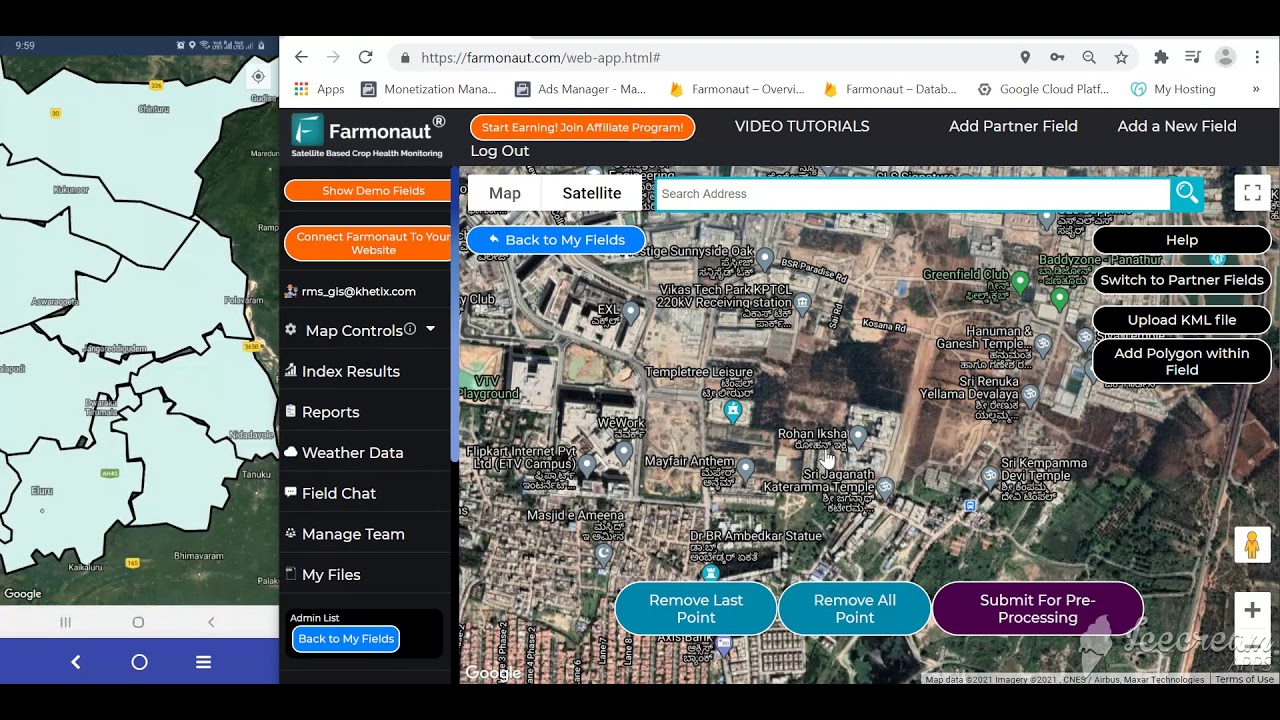
Discover how digital solutions like Farmonaut’s fleet management tools can streamline logistics, monitor heavy machinery, and promote safety compliance—all remotely via a user-friendly app.
Designing Effective Gold Mining Training Programs for 2025
What makes a mining training program effective, adaptable, and impactful? Our step-by-step guide breaks down best practices to build workforce excellence.
-
1. Conducting a Needs Assessment
Identify job-specific requirements using surveys, site visits, and performance data analysis. Pinpoint skill gaps among workers—from technical knowledge to leadership and compliance needs.
- Customize for each miner’s role and experience.
- Use workforce surveys and historical incident data to highlight areas needing urgent improvement.
-
2. Curriculum Development: Blending Theory & Practice
Develop a robust curriculum combining core theory (via digital or classroom-based modules) and hands-on training (on-site, in-lab, or simulation sessions). Incorporate both subject-matter expertise and the latest technologies.
- Online learning modules: For regulations, geology, safety standards, equipment operation fundamentals.
- Practical workshops: For field equipment handling, first aid, and emergency drill simulations.
- VR/AR simulations: Enables trainees to “experience” dangerous scenarios and equipment malfunctions in a risk-free environment.
-
3. Recruiting Expert Trainers
Engage professional trainers with mining-industry backgrounds and up-to-date regulatory/technical knowledge. Subject Matter Experts (SMEs) add real-world insights for contemporary mining challenges.
-
4. Systematic Assessment and Certification
Structure regular assessments (quizzes, practical skill checks, project work) to measure knowledge retention and operational excellence. For each module, grant certifications recognised by credible industry bodies—improving both professional credibility and organizational standards.
-
5. Enabling Continuous Learning
Offer ongoing opportunities through refresher courses, workshops, webinars, and e-learning content so staff remain up to date on new tools, regulations, and industry advancements.

Gold Mining Training Program Comparison Table
| Program Name | Focus Area | Duration | Delivery Method | Estimated Cost (USD) | Certifications Awarded |
|---|---|---|---|---|---|
| GoldSafe Essentials | Safety, OSHA Standards | 18 hours / 3 days | Hybrid (Online + On-site) | $650 | GoldSafe Safety Professional |
| TechMine Pro | Technical Skills, Automation, Equipment Handling | 32 hours / 5 days | On-site + VR/Simulations | $1200 | Technical Mining Operator |
| EnviroMine Sustainability | Environmental Management, Compliance | 14 hours / 2 days | Online | $400 | Environmental Stewardship in Mining |
| ComplianceNow | Regulatory Compliance & Reporting | 12 hours / 2 days | Online / On-site | $350 | Regulatory Compliance Associate |
| LeadershipX Gold | Soft Skills, Leadership, Teamwork | 16 hours / 2 days | Online / On-site | $500 | Certified Team Lead (Mining) |
| All-in-One Gold Pro | All Core Areas (Safety, Tech, Compliance, Sustainability, Leadership) | 60 hours / 10 days | Hybrid | $1850 | Certified Gold Mining Professional |
How Farmonaut Powers Smarter Mining Training
As a global leader in satellite insights, we at Farmonaut provide a vital digital backbone for the mining training programs of tomorrow. Our technology ecosystem enriches programs with actionable data and tools for workforce and resource management.
- Satellite-based site monitoring: We deliver real-time mapping and risk assessment data for ore extraction sites, supporting effective emergency drills, skills audits, and environmental compliance training.
- AI-driven advisory: Our API and Jeevn AI system integrate satellite analytics into gold mine operation management, offering personalized recommendations for equipment usage, site safety, and compliance requirements.
- Resource and fleet management: Benefit from innovative fleet monitoring and equipment tracking to optimize machinery allocation, reduce downtime, and ensure safety for all personnel.
- Environmental sustainability: Our carbon footprinting and traceability products make monitoring, reporting, and compliance with governmental regulations easier and more transparent.
- Large-scale project management: The Farmonaut Admin App provides real-time oversight for large mining projects, supporting operational efficiency, training validation, and quality control from anywhere in the world.
For developers and integrators building digital mining training tools, our API documentation is available for robust, scalable integration of satellite-driven insights.
Implementing & Assessing Training Program Success
Deploying an effective training program requires clear goals, ongoing assessment, and continuous improvement.
- Set measurable objectives: Track worker progress against compliance, technical proficiency, and safety standards.
- Conduct practical assessments: Use realistic simulations, equipment operation reviews, and formal tests at regular intervals (post-module, quarterly, annually).
- Leverage feedback: Ongoing input from trainees and trainers spotlights emerging risks or skill gaps.
- Data-driven improvement: Use analytics from digital training solutions to adapt content, boost learning outcomes, and forecast future training needs.
Sustaining Excellence: Continuous Learning and Workforce Development
- Stay updated: Gold mining technology and practices continue to change. Mandatory refresher courses, webinars, and workshops ensure currency with industry standards.
- Leadership pipeline: Invest in ongoing leadership and soft skill modules to nurture the next generation of mining supervisors and managers.
- Mobile learning: Use mobile and web-based platforms for on-the-job learning and instant micro-training, making continuous education seamless and convenient.
- Remote access: Modern apps and APIs allow training program participation and monitoring from anywhere, critical for remote or geographically dispersed mining teams.
Transform your ongoing workforce development with Farmonaut’s scalable modules—from safety to sustainability, our digital tools ensure your team never stops growing.
Frequently Asked Questions (FAQ) – Gold Mining Training Programs: How-To Tutorial 2025
-
What are the most critical training modules for gold mining professionals in 2025?
The most vital modules are safety and risk management, technical skill development (including digital and automation technologies), environmental stewardship, regulatory compliance, and soft skills/leadership. All five are essential to comprehensive training programs.
-
How have training programs changed in recent years?
Programs have become more immersive and data-driven, using digital tools, VR simulations, and AI-powered analytics. Emphasis has shifted to sustainable practices, continuous learning, and remote access.
-
Why is technology integration so important in mining training?
Technology enables safer, more effective learning experiences. It helps personalize training, support compliance tracking, and offers risk-free simulations for hazardous procedures—improving long-term outcomes for workers and companies.
-
How can satellite data improve gold mining training?
Satellite data provides real-time monitoring of mining sites, environmental impact, and equipment usage. Platforms like Farmonaut offer actionable insights for environmental compliance, emergency response planning, and resource management—empowering more accurate and data-driven training content.
-
What types of certifications are valued by the gold mining industry?
Certifications in safety (e.g., OSHA-related), technical equipment operation, environmental management, and regulatory compliance are highly valued. Leadership and teamwork certifications are increasingly recognized.
-
How often should gold mining professionals participate in training?
Comprehensive training should be an ongoing process—formal programs annually, with refresher modules at least every six months, and continuous access to self-paced or mobile micro-learning.
-
How can Farmonaut help scale large training and operational needs?
We at Farmonaut provide scalable, subscription-based solutions for site monitoring, environmental compliance, fleet/resource management, and more—all accessible via our web and mobile platforms. This enables site managers and training coordinators to deploy, track, and optimize workforce training at scale.
Conclusion: Building a High-Performing, Sustainable Gold Mining Workforce through Training
The mining industry of 2025 is defined by rapid technological shifts, intensifying environmental scrutiny, and the non-negotiable priority of worker safety. Training Programs for Gold Mining Professionals: How-To Tutorial empower organizations and professionals to operate efficiently, safely, and sustainably by keeping pace with these demands.
Following the how-to strategies outlined in this guide, mining leaders can design, implement, and assess training programs that improve skills, reduce incidents, and ensure compliance. Digital innovation—from satellite-based monitoring to VR training—offers a new era of accessible, effective workforce development.
By investing in continuous learning, incorporating technology, and leveraging tools like Farmonaut for resource optimization and regulatory management, gold mining operations can thrive in an era marked by complexity and opportunity. The future of mining excellence hinges on a commitment to training—and the willingness to evolve with it.

 Qader Group
 Ileys General Trading
 SG Gold Mining LLC
 VRV Global Pte Ltd
 Omsri International FZE
 G.I.T.T.
 Jaunita Erss Ltd
 Almosi SARL
 SRK Consulting
 Berks Gold Limited
 Mwerezi Minerals Company Limited
 Mining SARL
 SenGold Invest SAS
 Sean Mining Limited
 NTS Group (Pty) Ltd
 Mine4Africa
 Lithspo Minerals Limited
 Tintina Mining Group
