

Gold Rush 2025-2026: 10 Key Facts You Must Know
Meta Description: Gold Rush 2025-2026 reshapes mining with sustainable practices, technology innovations, and strategic impacts. Discover 10 essential facts defining this new era.
“By 2026, AI-driven mining tech is projected to boost gold extraction efficiency by up to 30%.”
Gold Rush 2025-2026: The Defining Phenomenon of Mining’s Modern Era
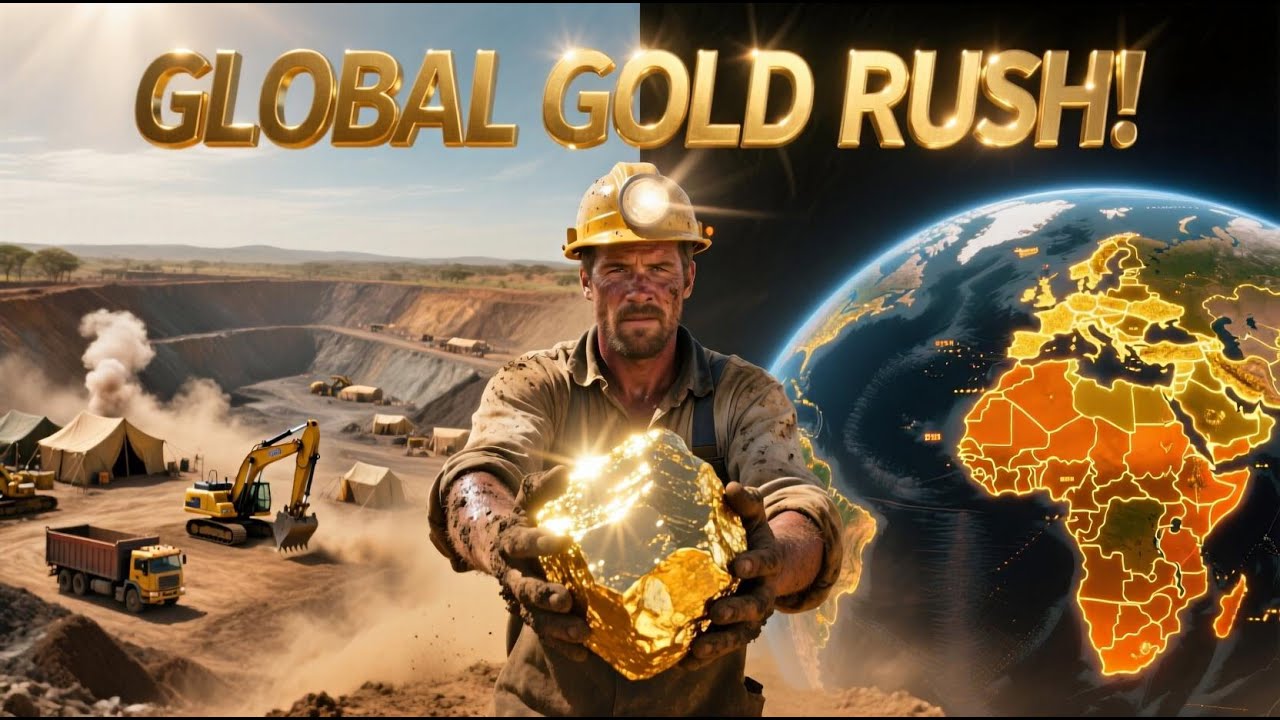
The gold rush 2025-2026 has become a defining phenomenon that is reshaping the mining industry, impacting agricultural areas, modern infrastructure, defense, and strategic resource supply chains worldwide. Unlike historical gold rushes rooted in wild prospecting and manual panning, today’s surge is driven by technological innovation, sustainability practices, and global geopolitical factors.
With demand for gold, precious metals, and critical minerals intensifying—driven by the electronics boom, defense requirements, and urban development—the world is witnessing a wave of new gold exploration, discovery, and extraction in regions previously considered unviable, including Africa, South America, and Central Asia.
As the nature of modern gold rushes evolves, industry professionals, governments, environmentalists, and local communities must understand the ground realities, opportunities, and risks. This comprehensive guide delivers 10 essential facts about the gold rush 2025-2026—focusing on technology, sustainable practices, economic development, and the strategic implications for the future of mining.
Comparative Fact Table: 10 Key Facts about the Gold Rush 2025-2026
| Fact Number/Title | Description | Estimated Quantitative Data | Primary Impact Area |
|---|---|---|---|
| 1. Renewed Global Search for Reserves | Satellite-aided and AI-driven geological surveys accelerate gold discoveries in Africa, South America, and Central Asia. | Over 300+ new deposits identified (2024–2026); projected 12% increase in global proven reserves. | Technology, Resource Demand |
| 2. Integration of Sustainable Mining Practices | Mining companies adopt eco-friendly extraction, emissions reductions, and water conservation. | 70% of new projects require green tech; 40% projected reduction in water/soil pollution by 2026. | Sustainability, Environment |
| 3. Impact on Agricultural Communities | Mining and agriculture increasingly overlap; both opportunity (employment) and risks (soil fertility). | 25% of new gold regions border active cropland; 10-25% local employment increase. | Agriculture, Community, Environment |
| 4. Strategic Importance in Infrastructure Development | Gold critical for electronics, smart city projects, defense, and infrastructural wiring/connectors. | Projected 18% rise in industrial gold consumption by 2026. | Infrastructure, Technology |
| 5. Rising Investment in Mining Technologies | AI, robotics, and automation drive safer, deeper, and more profitable gold extraction. | 30% boost in extraction efficiency; $20B+ investment (2024–2026). | Technology, Efficiency |
| 6. Geopolitical Tensions & Resource Nationalism | Countries leverage gold reserves for bargaining, trade, and strategic security. | Over 50% of global reserves now under stricter national control. | Geopolitics, Security |
| 7. Economic Catalyst for Developing Economies | Mining revenue fuels public investments but challenges remain in fair wealth distribution. | $150B+ cumulative gold mining value added in developing economies (2025–2026). | Economics, Infrastructure |
| 8. Enhanced Focus on Artisanal and Small-Scale Mining (ASM) | ASM remains vital, especially in Africa and South America; formalization efforts grow. | 20–25% of global gold supply tied to ASM; 15% increase in sector formalization by 2026. | Society, Sustainability, Regulation |
| 9. Gold’s Role in Defense and Security | Gold is crucial for defense tech: precision optics, satellite systems, and secure communications. | 12% increase in defense-grade gold consumption projected. | Defense, Technology |
| 10. Environmental Regulation and Compliance Challenges | Laws are tightening eco-impacts, especially regarding emissions, tailings, and biodiversity. | 60% uptick in new regulations globally (2024–2026). | Compliance, Sustainability |
1. Renewed Global Search for Gold Reserves: Advancements in Discovery
The gold rush 2025-2026 stands apart from all historical rushes due to rapid advancements in geological surveying and satellite imaging. Artificial intelligence combined with satellite technology (API-enabled monitoring) has accelerated the discovery of new gold deposits worldwide.
- Regions previously considered unviable now yield significant reserves—notably in Africa (like Tanzania and Mauritania), South America, Central Asia, and even remote parts of Canada and the US.
- Satellite-based prospecting and multispectral imaging reveal geological structures invisible to the naked eye, streamlining exploration efforts.
- Emerging AI applications interpret vast datasets, identifying new extraction hotspots and reducing both time and cost per discovery.

With the global demand for gold and critical minerals intensifying, these innovations are projected to increase global proven gold reserves by at least 12% by 2026. This technological leap empowers both major and emerging gold-producing countries to rapidly ramp up mineral exploration and extraction.
If you’re a government, enterprise, or researcher looking to harness the power of satellite-aided geological monitoring and AI, explore the Farmonaut API for seamless integration into your mineral surveillance and resource management workflows.
2. Integration of Sustainable Mining Practices: Pioneering Modern Mining
The rush for gold now coincides with an unprecedented environmental awareness—sustainability is no longer optional.
Modern gold mining companies are increasingly adopting sustainable practices (integration of eco-friendly extraction techniques, emissions monitoring, and carbon footprint reduction) to minimize deforestation, water pollution, and soil degradation. This shift is especially vital in regions where mining borders agricultural zones, as contaminated soil and water can devastate rural communities and their food security.
Notably, *over 70% of new gold projects in 2025 will require advanced emissions-reducing technologies.* These may include:
- Closed-loop water recycling and treatment systems
- Precision chemical dosing to reduce tailings toxicity
- Alternative, low-impact leaching agents instead of cyanide
- Bioremediation and on-site reforestation to revive degraded land post-extraction
For mining operators seeking to track and reduce their environmental footprint with real-time satellite data, Farmonaut’s Carbon Footprinting Solution provides actionable insights for compliance, sustainable practices, and reporting.
3. Impact on Agricultural Communities: Navigating Coexistence & Conflict
Another defining aspect of the gold rush 2025-2026 is its profound impact on agricultural communities, especially in developing countries. The proximity of new gold mining zones to productive croplands, forests, and rural settlements results in a complex web of opportunities and concerns:
- Positive Effects: Infrastructure development (roads, hospitals, schools), improved access to utilities, and diversified employment opportunities boost local economies.
- Negative Effects: Land disputes, displacement of small farmers, degraded soil fertility from contamination (mercury, arsenic, acid drainage), and long-term food insecurity.
Smart resource management systems and blockchain traceability platforms—like those powered by Farmonaut’s Traceability platform—enable stakeholders to monitor land use, resolve disputes transparently, and ensure equitable resource allocation for communities bordering mining zones.
Importantly, many developing countries (notably in South America, Central Africa, and Asia) face the dual challenge of advancing resource extraction while maintaining vital agricultural production. Careful planning, transparent policies, and technological solutions can help to balance socioeconomic benefits with environmental stewardship.



4. Strategic Importance in Infrastructure Development: Gold’s New Value
The modern gold rush has outgrown its image as a mere precious metal. Gold has become crucial for advanced electronics, infrastructural development, and national defense systems. As international ambitions to construct smart cities and digital infrastructures increase, so does the demand for:
- High-conductivity wiring and connectors (used in telecom, aerospace, and high-end computing hardware)
- Advanced sensors and control systems (for defense and security networks)
- Precision medical devices, renewable energy systems, and urban infrastructure components
By 2026, experts project an 18% surge in industrial gold consumption. Countries in Africa, Central Asia, and South America now see gold not only as a financial asset but as a strategic enabler of national infrastructure resiliency.

5. Rising Investment in Mining Technologies: Automation and Mining 4.0
For the first time in mining history, AI, robotics, and autonomous vehicles are deployed at scale—redefining both exploration and extraction. Artificial intelligence enhances mineral sample analysis, identifies high-yield zones, and supports real-time environmental monitoring.
- Autonomous trucks and drilling machines operate 24/7, sharply reducing labor costs and safety risks.
- Remote-controlled and self-healing systems access previously inaccessible deposits with superior precision.
- Big data and predictive analytics support resource optimization, environmental impact reduction, and compliance management.
*Forecasts estimate a 30% increase in extraction efficiency and over $20 billion invested in mining tech between 2024 and 2026.* For industry professionals, integrating smart fleet and asset management tools is becoming non-negotiable. Farmonaut Fleet & Resource Management helps optimize logistics, improve vehicle use, and cut operational costs in rapidly expanding gold regions.

“Over 70% of new gold projects in 2025 will require advanced emissions-reducing technologies.”
6. Geopolitical Tensions & Resource Nationalism: Gold’s Role in Global Strategy
As gold regains its strategic significance in the race for resource security, geopolitical tensions and resource nationalism are reshaping international relations. Countries with large gold reserves—including South Africa, Russia, Kazakhstan, Peru, and Ghana—have begun to:
- Tighten regulations or restrict foreign access to their mineral resources
- Leverage gold reserves as economic bargaining chips in bilateral and multilateral negotiations
- Boost gold holdings in central banks, strengthening currency resilience and trade leverage
As of 2026, over 50% of global gold reserves are under stricter national regulation, with implications for global supply chains, trade stability, and even defense manufacturing. Understanding the new landscape is vital for supply chain managers, defense strategists, and policy-makers.

7. Economic Catalyst for Developing Economies: From Resource to Revenue
For many developing countries, the gold rush is a critical economic stimulus. Mining revenues fund public sector investments, including infrastructure, education, healthcare, and rural development. The “multiplier effect” is especially pronounced in countries along the gold belts of Africa, South America, and Central Asia.
- Direct benefits: Increased GDP, higher government tax revenue, upgrading of critical infrastructure
- Spillover impacts: Improved trade balances, boosted local entrepreneurship and employment
- Challenges: Ensuring fair and transparent distribution of mining wealth, preventing corruption, reducing externalities for indigenous and rural populations
Between 2025 and 2026, the cumulative gold mining value added in developing economies is expected to exceed $150 billion. For governments and financial institutions looking for credibility in crop loan and insurance decisions in mining-heavy areas, Farmonaut’s Satellite-Based Verification offers risk mitigation, fraud reduction, and faster processing.

8. Enhanced Focus on Artisanal and Small-Scale Mining (ASM): Formalizing a Vital Sector
Despite the dominance of large-scale, technologically advanced mining operations, artisanal and small-scale mining (ASM) remains critical in the gold supply chain—especially across Africa, South America, and developing Asia. ASM accounts for 20–25% of global gold supply, provides millions of livelihoods, and sustains local economies.
The rush to formalize this sector is accelerating:
- Governments introduce incentives for ASM registration and compliance
- International buyers and refiners demand ethical sourcing, transparency, and traceability
- Digital tools (including blockchain) streamline approval, reporting, and community engagement processes
Currently, 15% more ASM operators are expected to formalize practices by 2026, with significant progress in reducing illegal mining and improving worker safety.
ASM operators and regulators can harness mobile-based large scale farm & resource management apps to monitor environmental impact, crop health, and resource sustainability directly from the field.

9. Gold’s Role in Defense and Security: A Critical Mineral
The unique physical and chemical properties of gold make it indispensable for modern defense systems, aerospace, and intelligence applications:
- Highly reliable conductive elements in military electronics, satellites, and secure communications
- Precision optics in targeting, navigation, and guidance systems
- Critical in radiation shielding and specialized alloys for defense-grade applications
By 2026, global defense-grade gold consumption is expected to rise by 12%, as geopolitical factors and national security priorities drive demand. The supply chain resilience and traceability of gold now directly affect national defense strategies—including in the US, Russia, China, and India.

10. Environmental Regulation and Compliance: The Rising Bar for Industry Leaders
With global pressure mounting to balance extraction and ecological preservation, stricter environmental regulations are today’s reality for mining companies. Governments, certification agencies, and international collaboration have resulted in:
- Tailings management: Mandated safe disposal and treatment of waste material
- Emission controls: Advanced CO2 monitoring and reduction metrics
- Biodiversity offsets: Restoration and protection of habitats affected by gold mining projects
Between 2024 and 2026, a 60% increase in new environmental regulations is projected worldwide. Compliance demands the adoption of advanced monitoring systems, transparent reporting, and rapid incident response—all of which are enabled by satellite-based, real-time monitoring platforms.
Industry professionals seeking a complete, regulatory-compliant environmental impact monitoring solution will find Farmonaut’s Carbon Footprinting tools invaluable.
Farmonaut – Empowering Modern Mining, Agriculture & More
As a pioneering satellite technology company, Farmonaut offers a suite of affordable satellite-driven insights for mining, agriculture, infrastructure projects, defense strategies, and intelligence. Our platform combines AI analytics, blockchain traceability, and environmental impact tracking to support businesses, governments, and users worldwide.
- Real-time monitoring: Multispectral satellite data on crops, mines, and infrastructure
- AI-based advisory: Jeevn AI delivers actionable insights for resource optimization
- Blockchain traceability: Transparent, fraud-resistant supply chain management
- Fleet & resource management: Tools for optimizing logistics & machinery deployment
- Environmental compliance: Carbon footprinting and emissions reporting
- API & app integrations: Extendable solutions for developers and enterprises (see API documentation)
Ready to transform your mining, agriculture, or infrastructure operation?
Frequently Asked Questions about the Gold Rush 2025-2026
The gold rush 2025-2026 is defined by technological innovation, sustainable practices, and geopolitical strategy, not by wild prospecting. It leverages satellite imaging, AI, and environmentally responsible methods—making it radically different from historical, manual panning and prospecting.
Q2. Why have previously unviable regions become gold mining hotspots?
Thanks to advanced geological surveying, AI, and satellite imaging, unexplored or inaccessible regions in Africa, South America, and Central Asia are now hotspots for gold exploration and extraction. Satellite-driven insights identify deep or obscured reserves with unprecedented accuracy.
Q3. What impact does modern gold mining have on agriculture?
Mining can generate economic growth and infrastructure development but may also threaten soil fertility, water quality, and community livelihoods if not properly managed. Blockchain traceability and real-time satellite monitoring help ensure a balance between mining and agricultural sustainability.
Q4. How do new ESG regulations shape future mining operations?
Environmental, Social, and Governance (ESG) regulations are setting higher standards for emissions control, tailings management, and biodiversity protection. Adhering to these evolving frameworks is critical for legal operation, investment, and reputational risk management.
Q5. What digital or satellite technologies are essential for gold mining in 2026?
Satellite-based monitoring, AI-driven advisory tools, blockchain traceability, and smart fleet/resource management systems are all essential parts of the modern gold mine’s tech stack. These technologies improve exploration, optimize extraction, reduce environmental impact, and enhance safety.
Q6. How is the gold rush influencing national security and defense?
Gold is a critical mineral for defense systems and secure communications. Ensuring resilient, transparent, and ethical supply chains for gold has become a top priority for national security strategies, particularly in the face of geopolitical competition and resource nationalism.
Q7. How does Farmonaut support the gold mining sector?
We at Farmonaut provide real-time, satellite-based monitoring and AI-driven advisory solutions for mining, agriculture, infrastructure, and defense. Our product suite includes actionable environmental impact tracking, supply chain traceability, fleet and resource management, and compliance tools accessible via web, mobile app, and API.
Conclusion: 10 Essential Facts Shaping the Future of Gold Mining & Minerals
The gold rush 2025-2026 is far more than a fleeting phenomenon; it marks a transformative era where technology, sustainability, strategic imperatives, and global resource demand intersect. Driven by AI, satellite technology, responsible practices, and geopolitical factors, this surge is reshaping agricultural communities, fueling infrastructure innovation, emboldening defense systems, and redefining sectoral regulations worldwide.
Unlike historical gold rushes rooted in wild prospecting, today’s rush is driven by technological innovation, with companies, countries, and local communities navigating a new landscape—rich in opportunity, risk, and the urgent need for environmental responsibility.
As resource demands grow and the global economy pivots toward sustainability, professionals who align strategy with the 10 essential facts shaping the future of mining—from renewed reserves and smart extraction to transparent supply chains and strict compliance—will lead the way.
For those looking to be at the forefront of the gold rush 2025-2026, leveraging the latest in satellite-driven insights, AI advisory, and blockchain traceability will be crucial in maximizing value, minimizing risk, and sustaining the planet.
Embark on your gold mining future with intelligence and integrity—harness the power of data, technology, and sustainability with Farmonaut.

 CIMISCO SARL
 Mining SARL
 SenGold Invest SAS
 Sania Corporation
 Sean Mining Limited
 NTS Group (Pty) Ltd
 Mine4Africa
 Lithspo Minerals Limited
 Tintina Mining Group
 Dalgety Minerals Pty Ltd
 Vortex Minerals Pty Ltd
 Faith At Work (Pty) Ltd
 Geotech Mining Solutions plc
 Vulcan International Limited
 Kidepo Associates
 GKY Mining
 Alkimy SARL
 Double A Trading
 GemSprout Metals Limited
 Qader Group
 Ileys General Trading
 SG Gold Mining LLC
 VRV Global Pte Ltd
 Omsri International FZE
