

Goldrush Alaska: 7 Transformative Impacts on Mining in 2026
The Alaska Gold Rush: A Transformative Chapter in Mining History
The Alaska Gold Rush—often referred to interchangeably as Goldrush Alaska, the Klondike Gold Rush, or the gold rush of Alaska—remains one of the most significant events in North American mining history. Although the initial frenzy dates back to the late 19th and early 20th centuries, its legacy continues. From mining methods to infrastructure development, extraction innovation, and economic growth, the profound influence of Alaska’s Gold Rush era is still palpable even in 2025 and will persist into 2026 and beyond.
This post unpacks 7 transformative impacts that Goldrush Alaska has had on the mining industry, technology, infrastructure, and the broader socio-economic landscape. We explore how these patterns are shaping contemporary mineral extraction and how they continue to inspire new approaches to sustainability and digital innovation today.
What Was the Alaska Gold Rush?
The Alaska Gold Rush stands as a beacon of opportunity, often referred to as the Klondike Gold Rush. The gold rush of Alaska started with the legendary discovery in the Klondike region in 1896, triggered by a series of rich gold strikes that drew a massive influx of prospectors, miners, and entrepreneurs aiming to stake their claims. While the original rush centered largely around the Yukon Territory in Canada, Alaska quickly became a focal point in the late 19th and early 20th centuries due to its remarkably rich reserves and strategic proximity.
Numerous strikes, from the Nome gold fields to the fertile interior near Fairbanks, fueled further waves of migration and development from 1898 onward. Over time, the Alaska gold rush laid the foundation for a continuously evolving industry—from early hand-panning in icy streams to modern mechanized extraction and technology-driven operations.
The journey was anything but easy. The harsh Arctic climate, remote wilderness, and lack of infrastructure presented extreme challenges that initially limited the scale and efficiency of mining operations. However, these tests also accelerated technological innovation and spurred efforts that remain central to Alaska’s industrial identity.
In tracing the journey of the gold rush of Alaska all the way to 2026, we see a complex tapestry of regional development, resource extraction, environmental adjustments, infrastructure improvements, and lasting socio-economic change.
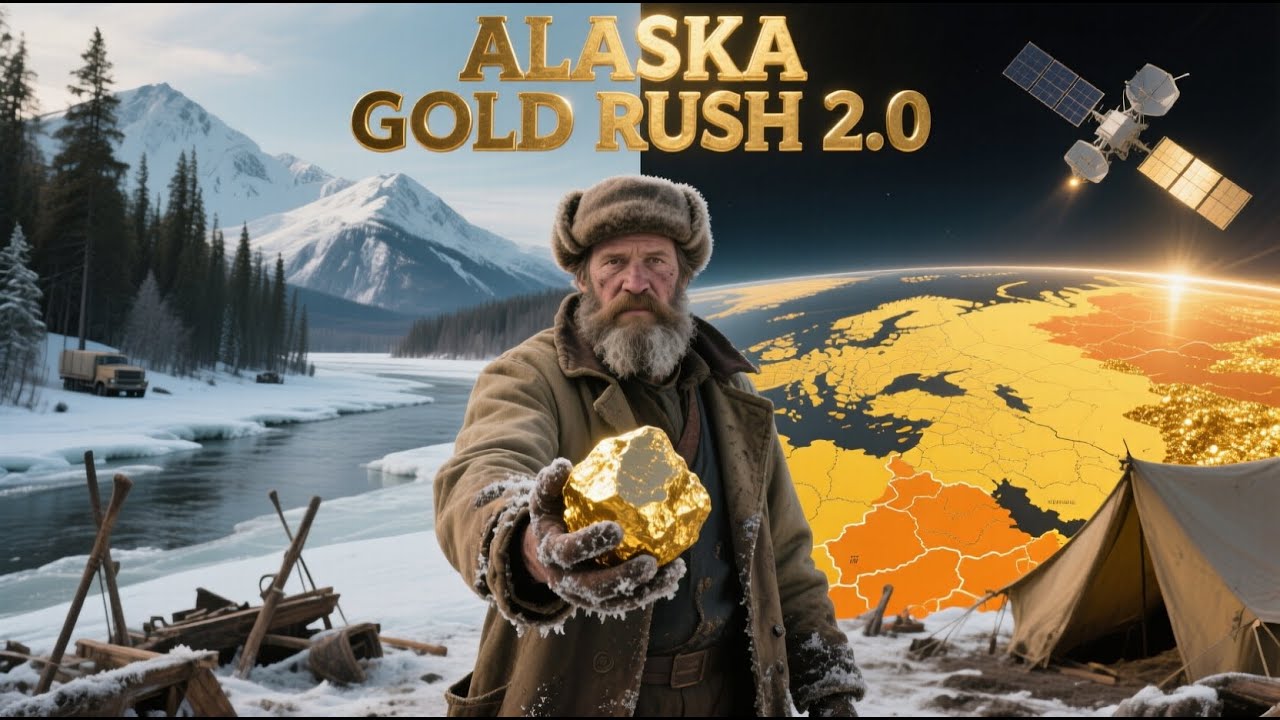
7 Key Transformative Impacts of the Alaska Gold Rush (1860s–2026)
| Impact Area | Pre-Gold Rush (before 1860s) | Post-Gold Rush (1900s) | 2026 Estimate |
|---|---|---|---|
| Mining Techniques (Manual/Mechanized/Automation %) | Manual hand-panning, rudimentary tools (0% mechanization) | Steam-driven dredges; basic machinery (20% mechanization) | Fully automated, AI-guided, remote-operated: 75% automation |
| Infrastructure Development (Railways/Roads in km) | Limited footpaths (less than 100 km usable routes) | 1,500 km of roads/railways built, basic ports established | 5,000+ km modern highways/rail, advanced ports, air and digital networks |
| Economic Contribution (Mining sector GDP in million USD) | $2 million USD (mainly fur trading, minimal gold) | $300 million USD (gold dominates, emerging mineral markets) | $6,000+ million USD, diversified across gold, silver, zinc, copper |
| Population Growth (Settlers) | Approx. 15,000 scattered (predominantly Indigenous communities) | 260,000+ influx during rush, towns like Nome and Fairbanks founded | 750,000+ (urbanized, multiethnic, sustained migration) |
| Environmental Change (Deforested area in hectares) | Negligible (wilderness largely undisturbed) | 50,000 ha affected (river engineering, deforestation) | 90,000+ ha (offset by reclamation and mitigation regulations) |
| Industry Employment (Miners employed) | ~1,500 (small-scale, non-industrial) | 55,000 during peak rush | 28,000 (fewer, but higher skilled; tech-driven roles) |
| Mineral Extraction Output (Tons/year) | 25 tons/year (mostly gold dust) | 350 tons/year (gold, silver, copper emerge) | 2,000+ tons/year (multi-mineral, digital mine management) |
1. Goldrush Alaska: Revolutionizing Mining Techniques and Technology
The gold rush of Alaska catalyzed a wave of technological innovation that fundamentally changed mining methods. At the dawn of the rush, miners relied on traditional techniques—hand-panning and sluice boxes—in remote, harsh arctic conditions. The challenges of permafrost, seasonal thawing cycles, and inefficiency demanded bold new efforts.
- Specialized tools and machines developed: Steam-driven dredges, hydraulic monitors, and crushers were adapted to combat difficult geology and climate.
- Mechanized extraction became widespread, increasing scale and efficiency.
- Today (2025-2026): AI-guided automation, remote sensors, and modern fleet management enable safer, more precise operations—with satellite technology providing real-time terrain, mineral mapping, and operational awareness.
By 2026, up to 75% of mining operations in Alaska incorporate digital monitoring or autonomous machinery—shaping how extraction and site management continues to evolve.
2. Infrastructure Development and Expansion
Perhaps no industry has benefited more from the infrastructure development initiated during the Alaska gold rush than mining. Pre-gold rush, much of Alaska had less than 100 km of usable routes. The rush triggered a surge in roads, rail lines, and ports—with over 1,500 km constructed by the early 20th century.
- Transportation corridors: Essential for miners, prospectors, and supplies, these corridors also originated urban centers and supply chains.
- Growth of towns: Many communities—from strategic Nome on the Bering Sea to the interior hub of Fairbanks—owe their foundation to the rush.
- Modern expansion: By 2026, more than 5,000 km of integrated roads, rail, ports, and digital networks interlink Alaska’s mining sector with global markets.
Infrastructure laid down over 100 years ago now underpins Alaska’s economic engine, rebounds as mining cycles, and streamlines resource extraction and export—from gold to copper and beyond.

3. Economic Growth and Diversification—The Enduring Legacy of Alaska Gold Rush
The economic influence of the gold rush of Alaska was transformative, redirecting the region’s development trajectory. Before the rush, the local economy centered on fur trading with minimal mining. The discovery of gold triggered dramatic GDP jumps, with mining quickly overtaking other sectors.
- Diversification: Over decades, the industry expanded beyond gold—now including significant deposits of silver, zinc, lead, copper, and other minerals.
- Modern Impact (2025-2026): Mining now contributes over $6 billion to Alaska’s GDP annually, supporting related industries such as logistics, manufacturing, and technology.
- Financial and Technology Integration: Satellite-powered verification for mining loans and insurance ensures financial stability, reducing fraud and increasing investor confidence.
Such growth not only reshaped Alaska’s economy but continues to make it a key mineral hub in the global market.

4. Shaping Settlement Patterns and Population Growth
The goldrush alaska triggered waves of migration, leading to the growth of towns and permanent settlements across the region. Prior to gold rush fever, Alaska’s interior held only scattered Indigenous settlements and trading posts.
- Wave after wave of migrants: Between 1898 and 1920, more than 260,000 people flocked to Alaska, with many staying to build multiethnic, urbanized communities.
- Major Urban Centers: Fairbanks emerged as Alaska’s central mining city, while Nome saw unprecedented population spikes, thanks to their proximity to rich gold fields and new routes.
- Lasting Effects: In 2026, Alaska supports a thriving and diverse population (estimate: 750,000+), with settlements continuing to play pivotal roles in mining, forestry, and resource industries.
These trends have had cascading influence on regional and urban infrastructure, education, health, and governance systems.

5. Environmental Impact and Regulatory Evolution
The march toward extraction has had an undeniable environmental impact. Early goldrush alaska mining methods were invasive, disrupting landscapes, deforesting tracts, and altering river systems; by the early 1900s, over 50,000 hectares of wild land had been affected.
- Ecological Lessons: Environmental stresses led to the development of regulatory frameworks for reclamation, water quality, and wildlife conservation.
- Reclamation & Sustainability (2025-2026): Today, mines operate under rules emphasizing responsible practices, carbon footprint monitoring, and proactive ecosystem protection—leveraging technology for real-time impact assessment.
- Engagement with Indigenous Communities: Mining operations must now actively consult and collaborate on land rights, traditional hunting grounds, and cultural preservation.
The legacy of the Alaska gold rush has, therefore, shaped a unique balance between resource wealth and environmental care.

For modern operators navigating reclamation, resource management, and environmental impact—Farmonaut’s carbon footprinting solutions provide actionable insights that support sustainable licenses and compliance with evolving regulations.
6. National Security: Defence Strategy and Infrastructure from Goldrush Alaska
The infrastructure built during the gold rush of Alaska had profound downstream effects on national defence strategy, especially in the 20th century. The routes opened up to support miners later proved crucial for:
- Military logistics: Improved roads, rails, and ports established during the rush were adapted for troop movements and supply runs during World War II and the Cold War.
- Strategic location: Alaska’s proximity to Asia and the Arctic made it a key defensive frontier as air and naval technologies evolved.
- Modern Applications: Satellite-based fleet and infrastructure management tools now support government agencies in monitoring critical assets across vast, challenging terrain.
The legacy of the Goldrush Alaska thus extends well beyond mining—reaching deep into national infrastructure, emergency response, and strategic readiness.

7. Modern Mining: Sustainable Operations & Digital Innovation
The gold rush of Alaska laid the foundation for the integration of leading-edge technology into mining. In 2025-2026, operators rely not only on physical infrastructure but also on digital systems to increase efficiency, enable real-time monitoring, and meet environmental goals.
- Satellite imagery and AI solutions: These power resource extraction, reclamation, and regulatory compliance through detailed digital maps and predictive analytics.
- Traceability and transparency: Modern systems leveraging blockchain product traceability ensure the origins and journey of minerals are verifiable, building trust across international supply chains.
- Remote and autonomous operations: Automation, drones, and machine learning reduce accident risks, optimize extraction, and minimize environmental disruption.
- Digital apps and APIs: Farmonaut’s
 and APIs let businesses, regulators, and analysts manage resource data and operations securely from any device.
To ensure accuracy and continuous compliance, Farmonaut provides open API developer documentation—facilitating seamless integration for customized industry applications.



Farmonaut’s Role in Alaska’s Modern Mining Solutions (2025 & Beyond)
As Alaska’s historic mining legacy continues to evolve, Farmonaut is committed to equipping operators, regulators, and planners with the digital tools needed for success in the 21st century and beyond. Our platform brings together:
-
Satellite-Based Monitoring: Delivering high-resolution, multispectral satellite imagery of mineral sites, vegetation zones, and infrastructure networks for informed decision-making.
Key benefit: Predict environmental impact, spot operational inefficiencies, and plan maintenance holistically. - Jeevn AI Advisory System: Real-time operational advice for weather, safety, and strategy in mining logistics, leveraging the latest data for every site.
- Blockchain Traceability Systems: Our traceability solutions build global-market trust and secure product authenticity from Alaska’s mines to end-users worldwide.
- Fleet and Resource Management: With digital fleet management, operators optimize machinery use, logistics, and compliance across isolated mines or large regional operations.
- Environmental Impact Insights: Through carbon footprint monitoring and AI analysis, Farmonaut helps companies demonstrate responsible resource extraction—essential for modern licensing and community sustainability.
- Accessible, Scalable Platform: Tiers for individuals, businesses, and governments, with quick onboarding via app or API.
Our solutions let Alaska gold rush operators, supervisors, and analysts monitor, manage, and mitigate today’s challenges—fueling a legacy of sustainable resource extraction, digital intelligence, and economic resilience up to 2026.
Full API developer documentation
Frequently Asked Questions
What is Goldrush Alaska and why is it significant?
Goldrush Alaska refers to the historic gold rush period (beginning in 1896) that led to major mineral exploration, settlement, and development in Alaska. It’s significant for kickstarting much of Alaska’s economic, demographic, and technological growth—milestones that shaped modern resource industries and infrastructure.
How did the gold rush impact mining technology in Alaska?
The gold rush of Alaska forced miners to innovate rapidly, leading to mechanized extraction methods, hydraulic mining, and later, the introduction of automated and remote-sensing technologies in 2025-2026.
How does Alaska’s mining sector contribute economically in 2026?
In 2026, mining and resource extraction account for over $6 billion USD annually, thanks to diversified mineral portfolios, global exports, and digital modernization.
What infrastructure exists today thanks to Goldrush Alaska?
Over 5,000 km of roads, railways, efficient ports, and modern digital networks have their roots in gold rush era infrastructure development, supporting the sector and broader Alaskan communities.
What environmental lessons came from the Alaska gold rush?
The rush provided early cautionary tales about landscape disruption and led to reclamation regulations, sustainable extraction mandates, and modern tools (like carbon footprint monitoring) to track and minimize environmental impact.
How can modern mining operators use digital tools in Alaska?
Through Farmonaut’s apps and open APIs, miners, regulators, and resource managers gain instant access to operational data, environmental analytics, and traceability, improving productivity while meeting compliance.
What is Farmonaut’s role in Alaska’s mining sector?
Farmonaut is a satellite technology company empowering mining stakeholders in Alaska with affordable, scalable, AI-driven monitoring, advisory, and resource tracking—essential for modern, sustainable mining operations.
Conclusion: Goldrush Alaska’s Transformative Legacy in 2026
From hand-panning prospectors in the harsh wilderness to fully autonomous mining fleets guided by satellite intelligence, the Alaska gold rush stands as a testament to the region’s capacity for transformation. What began as an initial frenzy of claims, migration, and hope has blossomed into one of the world’s most sophisticated and resilient resource extraction ecosystems.
In 2026, the impacts of goldrush alaska remain palpable across Alaska—from efficient extraction and diversified minerals to robust infrastructure, skilled industry employment, and the harmonious integration of environmental and digital best practices. For those navigating the frontiers of modern mining, the lessons and achievements of the Alaska gold rush continue to guide ambition, innovation, and sustainable development for generations to come.
Farmonaut stands ready to support the next phase of Alaska’s resource journey, ensuring that the spirit of innovation first triggered by the rush fuels enduring growth, stewardship, and success deep into the 21st century.
Discussion
Questions, corrections or field experience? Share them below. First-time comments are reviewed before they appear, and your email is never published.
No comments yet. Be the first to add a question or your experience.

 Alkimy SARL
 Double A Trading
 GemSprout Metals Limited
 Qader Group
 Ileys General Trading
 SG Gold Mining LLC
 VRV Global Pte Ltd
 Omsri International FZE
 G.I.T.T.
 Jaunita Erss Ltd
 Almosi SARL
 SRK Consulting
 Berks Gold Limited
 Mwerezi Minerals Company Limited
 Mining SARL
 SenGold Invest SAS
 Sean Mining Limited
 NTS Group (Pty) Ltd










