

Smart Farm IoT & Smart Agri: 7 Game-Changing Trends for 2026
“By 2026, over 80% of new tractors are expected to feature advanced IoT connectivity and sensor integration.”
Table of Contents
- Introduction: The Smart Farming Revolution in 2026
- What is Smart Farm IoT? Key Concepts for 2026
- 7 Game-Changing Smart Farm IoT & Smart Agri Trends for 2026
- 1. IoT Sensors & Real-Time Data Collection
- 2. Autonomous Equipment & Robotics
- 3. AI & Advanced Analytics for Precision Agriculture
- 4. Drones in Smart Farming: From Monitoring to Action
- 5. Automated Irrigation & Water Management
- 6. Blockchain-backed Traceability & Transparent Supply Chains
- 7. Satellite Technology Integration & Environmental Monitoring
- Feature Comparison Table: 7 Key Trends Side-by-Side
- Farmonaut: Satellite-Driven Innovation in Smart Farming
- Overcoming Barriers to Smart Farm Adoption
- Key Benefits, Insights, and Expert Tips
- FAQ: Smart Farm IoT & Smart Agri Technologies
- Conclusion: Smart Farms for a Resilient Tomorrow
Introduction: The Smart Farming Revolution in 2026
As global population continues to rise and climate change intensifies, the agricultural sector faces unprecedented challenges: from ensuring food security and boosting productivity to reducing environmental impact and fostering sustainability. In response, smart farm IoT and smart agri solutions have emerged as transformative forces, revolutionizing traditional farming practices with the integration of advanced technologies such as sensors, automated equipment, AI-driven analytics, and satellite systems.
By leveraging the internet of things (IoT) and data-centric approaches, smart farming empowers farmers to make precise, impactful decisions, increasing yields, reducing wastage, and supporting sustainable practices that are vital for a resilient agri-food system in 2026 and beyond. In this comprehensive guide, we dive deep into the Seven Game-Changing Trends shaping the near future of smart farming iot and smart agriculture, with real-world technologies and solutions that are setting new standards in the sector.
Smart Farming: Revolutionizing Agriculture with IoT and Advanced Technologies in 2025
At the heart of this revolution lies an interconnected ecosystem of diverse devices: from soil moisture sensors and AI-powered drones to autonomous tractors and blockchain-enabled platforms. These advancements enable:
- 🌐 Real-time resource monitoring (soil, water, weather, crop health)
- 🤖 Automation of labor-intensive farm operations
- 📈 Actionable analytics that optimize yields and boost sustainability
- 🌱 Traceability for consumers, distributors, and financial institutions
- 📉 Reduced environmental footprint and improved operational efficiency

What is Smart Farm IoT? Key Concepts for 2026
Smart farm IoT refers to the suite of advanced sensors, automated equipment, data analytics, and cloud-connected devices that collectively create a digital nervous system across the farm landscape. By connecting everything from crop monitoring sensors and weather stations to autonomous tractors and Dji smart farm drones, these systems enable real-time data collection, monitoring, and actionable decision-making.

Why Is Smart Farming So Crucial Now?
- ✔ Global demand for food, fiber, and fuel is increasing due to population growth.
- ✔ Water scarcity and climate change require smarter use of farm resources.
- ✔ Precision agriculture helps to reduce chemical/fertilizer overuse, improving soil health.
- ✔ Digital connectivity and automation lower labor costs and address workforce shortages.
- ✔ Traceability and blockchain ensure food safety, increase consumer trust, and open new export markets.
Key Insight:
By 2025–2026, smart farm IoT adoption is not just a “nice to have”—it is becoming essential for farms, agribusinesses, and supply chains to stay competitive, climate-resilient, and sustainable.
“Automated irrigation systems using smart sensors can reduce agricultural water use by up to 30% by 2025.”

7 Game-Changing Smart Farm IoT & Smart Agri Trends for 2026
2026 marks a defining moment for farming, as the smartest farms integrate digital technology, sensors, analytics, and automation at every step. Here are the top 7 trends—with clear, real-world impact—that every farmer, agri-business, and investor needs to know.
1. IoT Sensors & Real-Time Data Collection
The heart of smart farming lies in an ecosystem of interconnected sensors—measuring everything from soil moisture and nutrient levels to weather patterns and crop health. These smart devices collect and transmit data in real-time to cloud-based platforms, where it can be analyzed for actionable insights.
- 🌡️ Soil health monitors determine when and exactly how much to irrigate or fertilize
- 🌀 Weather stations on the farm predict rainfall, frost, and wind for better event planning
- 📶 Remote crop sensors detect disease outbreaks or pest stress early, enabling targeted interventions
For instance, integrating a field’s soil moisture sensors with automated irrigation systems allows “just-right” watering, reducing water wastage and saving resources. These solutions are critical for areas facing water scarcity, making precision agriculture both sustainable and cost-effective.

Common Mistake:
Relying on a single type of sensor or isolated data points reduces accuracy. The best results come from integrating multiple sensors—soil, weather, and crop imagery—to build a complete picture for each farm.
2. Autonomous Equipment & Robotics
- Self-driving tractors and harvesters equipped with GPS, lidar, and AI navigate complex fields, optimizing seeding, fertilizing, and harvesting with limitless precision and minimal human intervention.
- Combined with fleet management software, farms can remotely monitor and control entire fleets—maximizing uptime and reducing operational costs.
- 🚜 Precision planting and variable-rate applications on a plant-by-plant basis
- 🤖 Weeding robots and targeted sprayers reduce chemical use and environmental impact
- ⚙️ Integration of robotics in feeding systems for livestock automates ration delivery, improving consistency and animal health

Pro Tip:
When rolling out autonomous equipment, ensure robust data connectivity and regular software updates; downtime due to lost signal or outdated AI models costs more than manual labor.
3. AI & Advanced Analytics for Precision Agriculture
- AI-powered analytics systems leverage data from IoT sensors, drones, and satellite imagery to predict crop diseases, model yields, and prescribe precision interventions.
- Using machine learning, these technologies continually improve, offering more accurate advice each season—especially valuable for large-scale farm management.
- 📈 Yield estimation before harvest for improved market planning & supply chain management
- 👨🌾 Personalized decision support for each field based on current and historical data
- 💡 AI forecast models for disease outbreak risks, irrigation scheduling, and fertilization timing
With AI-based platforms, each farm can achieve optimal inputs and maximize profitability—while minimizing waste and environmental impact.

4. Drones in Smart Farming: From Monitoring to Action
Drones, especially those designed for agriculture like DJI smart farm drones, have become a staple for modern smart farm equipment. These agile machines:
- 📡 Scan large acreages quickly, providing high-resolution imagery
- 🔬 Employ multispectral sensors to monitor crop health and spot pests, disease, or nutrient issues early
- 🚁 Can perform targeted spraying, minimizing chemical overuse and reducing environmental impact
- ⚡ Enable faster, safer, and more effective interventions without heavy equipment
From monitoring field boundaries with geofencing, to spraying pesticides or even seeding cover crops, drones are now critical for both data collection and direct action.

Investor Note:
The agricultural drone market, led by smart farm equipment and drone specialists like DJI, is projected to surpass $10 billion globally by 2026, driven by surging demand for advanced multispectral and AI-powered drones.
5. Automated Irrigation & Water Management
With freshwater scarcity now a leading global concern, smart, automated irrigation systems harnessing IoT sensors and cloud control are rewriting the playbook for sustainable crop production.
- 💧 Smart irrigation controllers use sensor and weather data to activate only when needed, avoiding overwatering
- 🌾 Drip and micro-spray systems deliver water precisely to plant roots, boosting efficiency
- 📱 Remote management lets farmers optimize water use from anywhere via mobile or web apps
These tools are not just about saving money—they enable compliance with evolving environmental water policies and help ensure agricultural resilience in drought-prone regions.

Data Insight:
Farms using sensor-controlled drip irrigation are reducing water use by 25-35% compared to conventional systems, while also increasing crop yields by up to 20%.
6. Blockchain-backed Traceability & Transparent Supply Chains
Consumers, regulators, and international markets are demanding transparent, traceable supply chains. Smart farms are integrating blockchain-powered platforms to provide digital records of every step in an agricultural product’s journey.
- Immutable data entries—documenting seed sourcing, fertilizer applications, harvest timing, transport, and storage conditions—ensure full product authenticity and safety.
- Blockchain enables traceability for everything from coffee to cotton, supporting sustainable certifications and higher value in export markets.
- Financiers and insurers can verify farm production data remotely—reducing fraud and supporting better access to crop loans and insurance products.
Blockchain’s use in farm-to-table records and input traceability is reshaping trust in global agriculture.
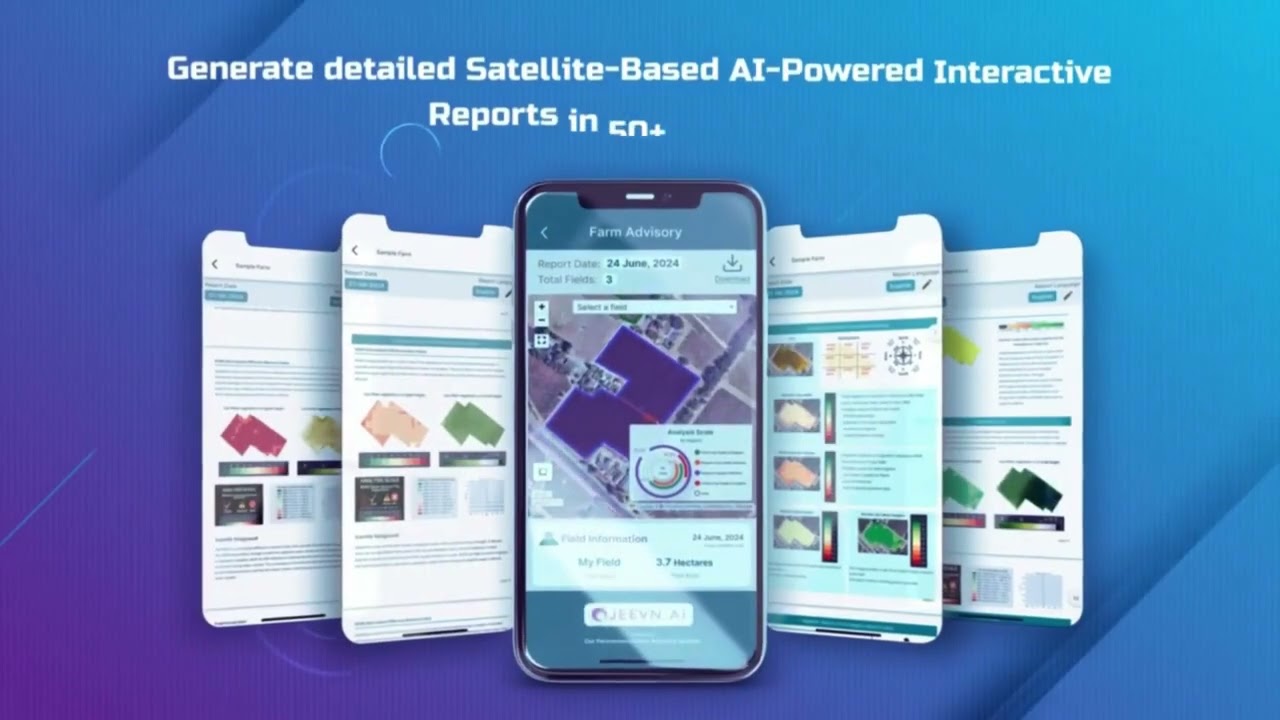
7. Satellite Technology Integration & Environmental Monitoring
Satellites now orbit above and continuously scan global agricultural landscapes, capturing multispectral images that reveal crop health, soil conditions, and even carbon sequestration rates.
- 🌍 Real-time monitoring across vast regions—from plot to continental scale
- 🔥 Early detection of droughts, heatwaves, or invasive pests with AI-driven analysis
- 🌲 Environmental impact measurement—such as carbon footprint reporting for sustainability (see Farmonaut’s carbon footprinting platform)
By integrating satellite insights with ground sensor data, farmers and agribusinesses gain the most complete, actionable intelligence for long-term productivity and regulatory compliance.
Feature Comparison Table: 2026’s 7 Top Smart Agri Trends
| Trend/Technology | Key Features | Estimated Adoption Rate (2026, %) | Projected Yield Increase (%) | Sustainability Impact | Example Applications |
|---|---|---|---|---|---|
| IoT Sensors & Real-Time Data | Soil, moisture, weather, and crop sensors; cloud data integration | 82% | 15–30% | Water use ↓ 25–30%; Input waste ↓ | Optimized irrigation/fertilizer, disease prediction |
| Autonomous Equipment & Robotics | Self-driving tractors, AI-guided harvesters, fleet control | 67% | 12–22% | Fuel use ↓ 20%; Chemical use ↓ | Autonomous planting, variable-rate spraying |
| AI & Predictive Analytics | Machine learning, yield forecasting, prescription mapping | 74% | 17–25% | Nutrient use ↓, emission tracking | AI-powered crop advisories, disease alerts |
| Drones (e.g., DJI, Farm Drones) | Aerial surveillance, multispectral, direct intervention | 70% | 10–20% | Pesticide use ↓ 20–40% | Crop scouting, precision spraying |
| Automated Irrigation & Water Management | Sensor control, weather integration, remote ops | 77% | 11–18% | Water use ↓ 30% | Smart drip, climate-resilient farming |
| Blockchain Traceability | Immutable records, supply chain transparency | 58% | Varies | Food safety ↑, fraud ↓ | Crop-to-table audits, insurance checks |
| Satellite Imagery & Environmental Monitoring | Multispectral, NDVI, carbon footprinting | 65% | 12–20% | Emissions tracking, soil health ↑ | Wide-area farm monitoring, compliance |
Investor Note:
Strong growth is projected in every category, with satellite, IoT, and robotics poised to dominate investments through 2026.


Farmonaut: Satellite-Driven Innovation in Smart Farming
As the smart agriculture ecosystem expands, Farmonaut is leading the charge by making satellite, AI, and blockchain technologies accessible and cost-effective for everyone—from smallholders to global agri-businesses.
What sets Farmonaut apart?
- 🛰️ Satellite-Based Monitoring: Using multispectral satellite imagery, Farmonaut enables real-time crop health tracking (including NDVI), soil condition analysis, and operational monitoring for agriculture and beyond.
- 🤖 AI-Powered Jeevn Advisory System: Real-time, data-driven insights and weather forecasts help improve field decisions for agriculture and mining.
- 🔗 Blockchain-enabled Traceability: Ensuring transparency and authenticity, from farm to consumer, across agricultural and related products.
- 🚛 Fleet & Resource Management: Optimize logistics for machinery, reducing operational costs, and maximizing land/equipment use. Explore Farmonaut’s fleet management tools.
- 🌎 Environmental Monitoring: Track real-time environmental impact, such as carbon footprinting in agriculture for compliance and sustainability reporting.
Farmonaut’s solutions are accessible via Android, iOS, web app, and robust API integrations:
- 📱 Android & iOS Apps: For direct farmer or manager use, anytime, anywhere
- 💻 Web/Browser Version: Full-featured remote monitoring and analytics
- 🧩 API Integration: For developers or enterprise clients—see API details here and Developer Documentation
Key Insight:
By combining satellite, ground-based sensor, and historical farm data, precision management platforms like Farmonaut generate the most comprehensive actionable intelligence for modern agriculture.
Overcoming Barriers to Smart Farm Adoption
Despite the clear benefits, transitioning to fully smart/agri IoT systems brings some challenges:
- 💸 High Initial Investment: Equipment and software can be expensive upfront, but ongoing operational savings and increased yields provide substantial ROI.
- 🔒 Data Privacy: As smart farms generate sensitive data, robust data protection and access controls are essential.
- 👩💻 Skills Gap: A trained, tech-savvy workforce is needed to set up, maintain, and interpret results from complex systems.
Technological innovation and support from governments and private stakeholders are gradually reducing these barriers. Crucially, cloud-based and scalable solutions—such as those offered by Farmonaut—make advanced technologies accessible even to small and medium-sized farmers worldwide.
Visual List: Why Adopt Smart Farm IoT in 2026?
- ✔ Boost Yields: Optimize every input for improved productivity
- 📊 Cut Costs: Reduce resource wastage & operational overhead
- 🌾 Enhance Sustainability: Shrink water, fertilizer, and emission footprints
- ⚡ Increase Resilience: Beat climate variability and resource scarcity
- 🔗 Strengthen Traceability: Build trust for premium export, food safety, and loans
Pro Tip: Begin smart farm upgrades with scalable modules (e.g., start with a satellite subscription, then expand to on-field sensors or drones as your ROI grows).
Visual List: ⚠️ Risks or Limitations to Watch in 2026
- ⚠ Undertrained Staff: May fail to fully leverage smart system insights
- ⚠ Poor Internet Connectivity: Delays data-driven decisions
- ⚠ One-size-fits-all Tech: May not suit specific local or crop conditions
- ⚠ Ignoring Data Security: Opens risk to cyber threats or privacy issues
- ⚠ Upfront Costs: Without a clear ROI plan, adoption can strain finances
Key Benefits, Insights, and Expert Tips (2026-forward)
- ✔ Smart farm IoT solutions can increase field yields by up to 30% and cut water use by as much as 35%.
- ✔ Automated equipment allows for operational efficiencies, reducing labor demand and cost per acre.
- ✔ Advanced analytics and AI, as integrated by platforms like Farmonaut, enable personalized, plot-level recommendations—not just general advisories.
- ✔ Blockchain and traceability technologies open new markets by guaranteeing product provenance and safety.
- ✔ Satellite solutions scale from smallholders to entire regions, democratizing cutting-edge tools and supporting food resilience worldwide.
Key Insight:
The most future-proof smart farm systems are modular and interoperable, allowing seamless upgrades and integration as your needs evolve or as new technologies emerge.
Experience Smart Farming with Farmonaut
Get real-time crop monitoring, AI advisories, blockchain traceability, and more, right from your device. Explore the full Farmonaut platform today via web, Android, or iOS:
Investor Note:
Companies offering scalable, API-ready geospatial and mining solutions are positioned for surging demand as smart farming and resource management gain regulatory and financial backing.
FAQ: Smart Farm IoT & Smart Agri Technologies in 2026
- What is smart farm IoT and why is it important?
Smart farm IoT refers to the integration of advanced sensors, connected devices, and cloud-based analytics across a farm to enable real-time data-driven decisions. This approach maximizes productivity, resource efficiency, and sustainability. - How does satellite imagery benefit smart agri operations?
Satellites provide regional-to-farm-level crop health, soil, and environmental data, enabling better management of irrigation, fertilizer, and disaster risk while scaling easily across large or remote areas. Explore Farmonaut’s satellite-based carbon footprinting solutions. - Are smart farm technologies suitable for small farms?
Yes! Modular, subscription-based platforms such as Farmonaut’s app and API reduce entry costs while providing key features for farms of any scale. - How do I ensure my farm’s data privacy?
Choose reputable platforms with robust encryption, customizable data controls, and clear privacy policies. Blockchain solutions further secure traceability and transaction records. - Can these technologies support livestock management?
Absolutely. IoT-enabled wearables and automated feeding/health monitors help optimize animal welfare, productivity, and traceability.
Common Mistake:
Overlooking small tech upgrades—such as integrating API data feeds or starting with environmental monitoring—means missing quick wins on yield and efficiency, especially for operations with diverse crops or livestock.
Conclusion: Smart Farms for a Resilient Tomorrow
The future of agriculture is bright, data-driven, and sustainable. By 2026 and beyond, embracing smart farm IoT, AI analytics, automation, and satellite-powered systems isn’t just an option—it’s a must for resilient, high-yield, and safe agri-food systems. As digital infrastructure and affordable platforms like Farmonaut reduce entry barriers, farms of every size and geography can now join the revolution.
- 🌱 Smart farm IoT empowers farmers with precise, actionable data and automation
- 🌏 Satellite and blockchain technologies build trust, offer transparency, and support regulatory compliance worldwide
- 🤝 Modular, scalable solutions ensure that no operation is left behind—no matter the size, crop, or local challenge
Want to see what tomorrow’s smart agriculture looks like? Start exploring Farmonaut today, and experience the intelligence, efficiency, and sustainability of the next-gen smart farm.

 Godrej Agrovet
 Hayleys Agriculture
 Linx Agritech
 Adinet
 Save Your Soils
 GalaxEye Space
 Grandstream Algérie
 XOS Realty
 Geospatial Lab Africa
 Agro La Gándara
 HIPSAC
 ZOL Zimbabwe
 Juligerm
 AdBio
AdBio MISE Maroc
 NWNS
NWNS Red August Group
 Farm Inc
 WeMe Global
 Agrotoken
 Blue BearX
 Insignito
 DnCubed
 Indosistim Teknologi
 Liquify Digital
 CU Foods
 BeyondTech Global
 Rouge VC
 AgroRisk
 Oath Inc
 Esri North East Africa
 MDCV UK
 Etech Consulting Madagascar
 Vestlandsforsking
 WB Dev
 Sama Premium
 Tres Valles
 Blickwinkel
 Agricultural Credit Policy Council
 eKGIS
eKGIS Mostas Tech
 Andex
Andex Deluxe Conseil
 WICO
WICO Chimera Innovation
 SkyHarvest
 Teledarbas
 Exurbia Geospatial
 FieldZero
