

Northern Cape diamonds · Mine status guide
Diamond Mines in the Northern Cape: Kareevlei, Finsch
Kareevlei was suspended in January 2023 and was still in business rescue at its last company update. This guide gives dated status for Kareevlei, Finsch, Ekapa and Alexkor, with grade, price and output charts and a break-even calculator.
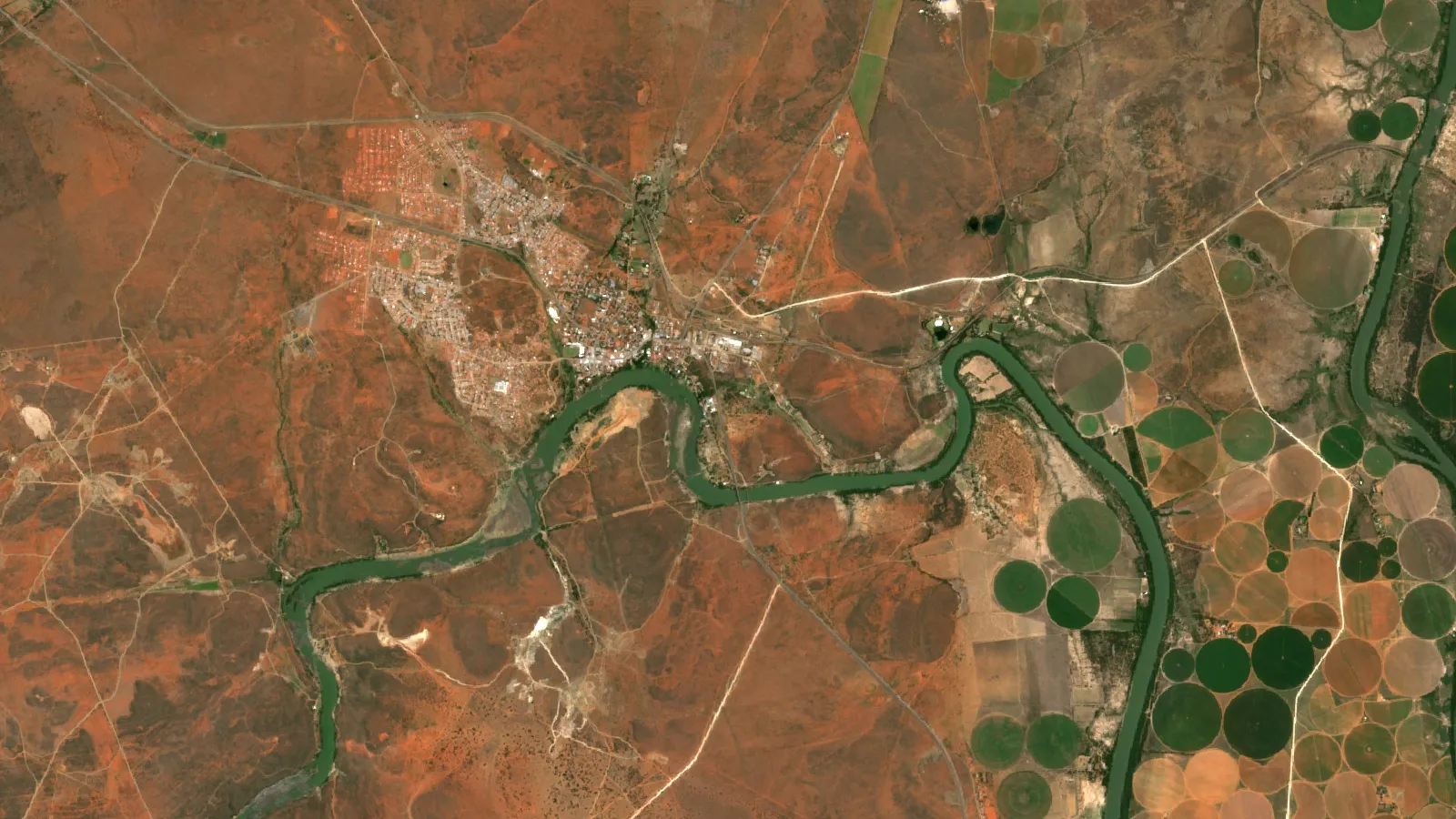
Key takeaways
- Kareevlei: operations suspended in January 2023; the business rescue practitioners confirmed a renewed mining licence on 6 June 2023, the latest company statement in the sources (BlueRock).
- Finsch entered business rescue on 29 May 2026; creditors approved an asset-sale plan on 7 August 2026 because no restart was viable; Park Village Auctions is selling the assets in phases (Petra Diamonds, Mining Technology).
- Ekapa’s Kimberley mines were placed in provisional liquidation in March 2026 after five miners died in a mud rush; a court set the liquidation aside and ordered business rescue on 27 July 2026 (GroundUp).
- Alexkor recovered 7,730 carats in 2024/25, down from 23,000 the year before and a 150,000-carat plan (Alexkor annual report).
- Kareevlei KV2 recovered about 2.7 carats per 100 tonnes by 2018 against a 4.5 estimate; Finsch ran at 44.5 in the year to June 2025.
In this article
- Diamond mines in the Northern Cape: status of each
- How we chose what to include
- Where is Kareevlei and what is the deposit?
- Kareevlei timeline: from first production to business rescue
- Prices: what Kareevlei, Finsch and Cullinan sold for
- Finsch: business rescue and an asset sale
- Ekapa and the Kimberley mines: from the Big Hole district to business rescue
- Alexkor and the Orange River coast
- Why small-stone prices hit these mines
- How to check a South African diamond mine before you rely on it
- Jobs and local economy
- Break-even grade: a calculator for diamond ore
- Environment and land after mining
- What satellites can and cannot show at a diamond mine
The Kareevlei diamond mine in the Northern Cape was suspended in January 2023, and the latest company statement, from June 2023, says it was still suspended. The other Northern Cape diamond mines in the public record face their own trouble: Finsch is being sold off after business rescue, with Park Village Auctions named as the disposal agent in September 2026, the Ekapa operation at Kimberley was taken out of liquidation by a court in July 2026 and is in business rescue, and the state-owned Alexkor mine at Alexander Bay produced under 8,000 carats in 2024/25. This guide gives the status of each, with dates and filings, then shows what Kareevlei’s ore looked like on paper and how to check any South African mine before you rely on it.
The page is written for consultants, licence holders and investors who need a clear status, not a sales story. A carat is 0.2 grams. Grade is quoted in carats per hundred tonnes (cpht), so 5 cpht means 5 carats from every 100 tonnes of ore. Every figure carries its source and date.
Diamond mines in the Northern Cape: status of each
The table lists the four Northern Cape diamond operations that have company filings or dated news reports. Dates are the dates of the documents, not of this page. Small private alluvial diggings along the Vaal and Orange rivers are not listed because no mine-level data is published for them.
| Mine | Operator | Status | Latest production or resource figure |
|---|---|---|---|
| Kareevlei (Kimberley region) | Kareevlei Mining, a subsidiary of BlueRock Diamonds | Suspended January 2023; business rescue from February 2023; licence renewal confirmed on 6 June 2023, operations still suspended | 359,000 carats inferred resource in 7.984 million tonnes (BlueRock, 2018) |
| Finsch (near Lime Acres) | Petra Diamonds | Business rescue from 29 May 2026; creditors approved an asset-sale plan on 7 August 2026; no restart planned; assets sold in phases by Park Village Auctions | 975,828 carats produced in the year to June 2025 |
| Ekapa, Kimberley (Du Toitspan, Bultfontein, Wesselton) | Ekapa Minerals and Ekapa Resources | Provisional liquidation in March 2026; liquidation set aside and business rescue ordered on 27 July 2026; care and maintenance | About 140 million tonnes of tailings resource |
| Alexkor (Alexander Bay) | State-owned Alexkor with the Richtersveld Mining Company | Producing at low volume in 2024/25; Auditor-General issued a disclaimer opinion | 7,730 carats in 2024/25 |
Sources: BlueRock update, 6 June 2023; Petra Diamonds, 7 August 2026; Diamond Fields Advertiser, 14 May 2026; Alexkor annual report 2024/25.
How we chose what to include
We kept a mine only if we could open a company filing, a regulator or auditor document, or a dated news report that names its owner and current state. We did not rank the mines, because their size, rock type and ownership are too different for one metric to be fair. Where a figure comes from a company, the text says so. Claims in older articles about Kareevlei that we could not find in any filing or report, such as water-recycling percentages, drone and AI exploration programmes or a mine life to 2035, are not repeated here.
Where is Kareevlei and what is the deposit?
Kareevlei sits in the Kimberley region of the Northern Cape. BlueRock Diamonds, then an AIM-quoted company, reported five known kimberlite pipes in the project area (Mining Technology, 2018). A pipe is a near-vertical, carrot-shaped body of volcanic rock that carried diamonds up from the mantle. Kareevlei’s rock is classed as a lamproite, a close relative of kimberlite: a 2024 paper in the journal Lithos titles it the diamondiferous Kareevlei Kaapvaal lamproite, and a related conference abstract labels it a Group II kimberlite.
Chart
Diamond ore grade: Kareevlei pipes against Finsch
Carats per 100 tonnes (cpht); resource estimates are inferred, Finsch is run-of-mine
BlueRock mined by open pit. It began processing at the KV2 pipe in 2014 and moved to KV1 in 2018. KV1 lies about 40 metres from KV2, so the company planned to mine both in one pit to cut the waste rock it had to strip (Mining Technology, 2018). The same report gave a crushing circuit target of 80 tonnes an hour and noted that heavy rain from January to April disrupted production.
Resource and grade, in plain numbers
A competent person’s report quoted by BlueRock put the inferred mineral resource of KV1, KV2 and KV3 at 359,000 carats in 7,984,000 tonnes of ore. An inferred resource is the lowest-confidence class: the grade and tonnes are estimates from limited sampling. Dividing carats by tonnes gives an average of about 4.5 cpht. KV1 was estimated at 6.3 cpht and KV2 at 4.5 cpht. By the 2018 report, 10,010 carats had been recovered from 370,233 tonnes of KV2 ore. That is about 2.7 cpht (our calculation), well under the 4.5 cpht estimate for that pipe.
The chart compares those numbers with Finsch, where Petra reported a run-of-mine grade of 44.5 cpht in the year to June 2025. The two mines are not alike: Finsch mines a much larger pipe underground, and its diamonds are mostly small. Grade alone does not decide a mine; the price per carat and the cost per tonne decide it, and the calculator below uses all three.
Kareevlei timeline: from first production to business rescue
- 2014: processing starts at the KV2 pipe (Mining Technology, 2018).
- 2018: KV1 comes into production; the crushing circuit reaches its 80 tonnes an hour target.
- First quarter of 2021: BlueRock reports 3,507 carats produced, up 40% on the year before, and 4,004 carats sold at an average of US$446 a carat. It also sold four large stones above US$50,000 each for US$381,000 in total (Proactive Investors, 20 April 2021).
- August 2021: a 58.6-carat D-colour stone, the largest found at Kareevlei to that date, is announced after a 21.6-carat stone a week earlier. The company said its run-of-mine parcels in 2021 had secured more than US$400 a carat (MINING.COM, 16 August 2021).
- April and May 2022: unusually heavy rain cuts processing by more than a third (IDEX Online, 2 March 2023).
- January 2023: IDEX Online reported that work was halted over safety breaches; by the 6 June 2023 statement operations were suspended.
- February 2023: the Kareevlei board resolves to enter voluntary business rescue. The mine owed Teichmann South Africa, the mining services group that hired equipment and contract-mined the pits, about US$4.1 million (IDEX Online, 2 March 2023; Teichmann).
- 6 June 2023: the business rescue practitioners confirm that the mining licence has been renewed, subject to conditions. Operations remain suspended and talks on restructuring continue. BlueRock decides to enter administration and says a final payment to it from Kareevlei is unlikely (BlueRock, 6 June 2023).
Infographic
From pipe to sale in 5 steps
- 1StripOverburden is removed; KV1 and KV2 lie about 40 m apart, so one pit cuts stripping.
- 2MineOre is dug from the open pit.
- 3CrushThe crushing circuit targeted 80 tonnes an hour.
- 4RecoverDiamonds are separated from the crushed ore and counted in carats.
- 5SellParcels go to tender; stones above US$50,000 were announced to the market.
The 6 June 2023 statement is the latest company announcement in the public sources. It names no buyer and no restart date. Anyone who needs the present position should check the business rescue record and the mining right, as the checking section below explains.
Prices: what Kareevlei, Finsch and Cullinan sold for
Price per carat depends on the mix of sizes, colours and qualities, so these numbers are not like-for-like. They still show the gap between a mine that sold a few large gem stones and a mine that sold mostly small goods. Kareevlei averaged US$415 a carat in 2019 and US$446 in the first quarter of 2021 (Proactive Investors, 2021). Petra’s Finsch averaged US$98 a carat in the year to June 2024 and US$74 in the year to June 2025 (Petra Diamonds, Finsch). At Petra’s Cullinan mine, the average rose from US$96 to US$106 a carat in the year to June 2026 (Petra Diamonds, Q4 and FY 2026 update), which Petra credits to its product mix.
Chart
Average price per carat, two periods per mine
US$ per carat; Kareevlei 2019 to Q1 2021, Finsch FY24 to FY25, Cullinan FY25 to FY26 (years to June)
Finsch: business rescue and an asset sale
Petra describes Finsch as South Africa’s second-largest diamond operation by production, an underground sub-level cave mine near Lime Acres. In the year to June 2025 it produced 975,828 carats from 2.2 million tonnes treated and sold 943,554 carats for US$70 million, down from US$120 million a year earlier (Petra Diamonds, Finsch page). Its revenue has fallen from US$165.7 million in the year to June 2022.
Chart
Finsch revenue by financial year
US$ million, years ending June
Petra announced on 29 May 2026 that Finsch had entered business rescue and suspended operations on 10 June 2026. Its explanation was that the mine’s large share of smaller goods, combined with a strong rand, made it untenable in the market (Petra Diamonds, Q4 and FY 2026 update). On 7 August 2026 creditors adopted the practitioners’ plan: no viable way to restart was found, so the assets will be sold to recover value for creditors, with a skeleton workforce kept on to reclaim them (Petra Diamonds, 7 August 2026).
Ekapa and the Kimberley mines: from the Big Hole district to business rescue
Diamonds were first found around what became Kimberley in 1869, in yellow ground and then blue ground, and the rock was later named kimberlite (Minerals Council South Africa). The old workings are covered in our post on the Big Hole and kimberlite mining. De Beers Consolidated Mines sold Kimberley Mines to Ekapa Mining and Petra Diamonds in 2015 for R102 million (Diamond Fields Advertiser, 14 May 2026).
In 2026 the operation failed. Ekapa Minerals and Ekapa Resources were placed under provisional liquidation in March after a mud rush at the Du Toitspan mine in which five miners died. The companies said they could not continue because debts exceeded R110 million and salaries were unpaid. The Department of Mineral Resources and Energy is investigating the accident. In May the liquidators offered the mine as a going concern with no minimum price. The package then covered about 140 million tonnes of tailings, a plant rated at 9.6 million tonnes a year and the Du Toitspan, Bultfontein and Wesselton pipes (OFM, 16 May 2026).
The mine is in care and maintenance with about 115 staff, mostly on security and pumping to keep the shafts from flooding, which costs about R10 million a month with no revenue (Innovation Village). On 27 July 2026 the Northern Cape High Court in Kimberley set aside the liquidation of Ekapa Minerals and placed it in business rescue, after a challenge by the union NUMSA. A business rescue practitioner, Marius van Tonder, is to study whether the mine can run again and prepare a plan. The liquidators say the ruling leaves the mine’s assets and the environment at risk and that an appeal would take too long (GroundUp, 7 August 2026). No sale of the mine has been reported.
Alexkor and the Orange River coast
Alexkor is a state-owned company that mines alluvial and marine diamonds near Alexander Bay, partly through a joint venture with the Richtersveld Mining Company. Its 2024/25 annual report gives carat output of 7,729.92, down from 23,000 in 2023/24 and 35,000 in 2022/23, against a plan of 150,000 carats a year. Revenue fell from R564 million to R132 million and the loss was R69.5 million. The report blames a barren Witvoorkop deposit, marine work halted by winter seas, and falling prices: by October 2024 it lists the price of a one-carat stone as 48% below December 2021. The Auditor-General issued a disclaimer opinion, meaning it could not obtain enough evidence to audit the statements (Alexkor annual report 2024/25).
Chart
Alexkor diamond output by financial year
Carats recovered, year ending March; planned output was 150,000 carats
Why small-stone prices hit these mines
The sharpest price falls in the sources are for small stones. Petra blamed Finsch’s size mix for its closure. The liquidators of Ekapa pointed to synthetic diamonds and the cost of restoring the mine; a report on the sale says prices for smaller stones have fallen by as much as 70% since 2020 (Innovation Village). Alexkor’s own price table shows falls of 41% to 48% for stones of one carat and smaller between December 2021 and October 2024.
South Africa is still a mid-sized producer. The US Geological Survey estimates South African gem-quality diamond output at 2.14 million carats in 2024 against a world total of 68.6 million (USGS, Mineral Commodity Summaries 2026), about 3% of the world’s carats. In 2022, according to the Minerals Council, the country’s diamond mines employed 14,577 people and sales were R27.7 billion.
How to check a South African diamond mine before you rely on it
- Find the mining right. The Department of Mineral and Petroleum Resources runs SAMRAD for prospecting and mining right applications, and a newer Mining Licensing System with a map viewer (DMPR online systems). Search for the holder and the dates. Our guide to mining licences in South Africa explains the right types.
- Check the company’s financial state. Business rescue under Chapter 6 of the Companies Act can be started by the board or by a court application, and a rescue practitioner then takes control of the company (CIPC, business rescue). A mine in rescue may hold a valid right but cannot be assumed to be producing.
- Read the latest filing, not the old headline. For Kareevlei the latest company statement is from June 2023; for Finsch it is the 7 August 2026 notice.
- Separate resource from production. Inferred resources are estimates; recovered grade can fall far below them, as KV2 did (about 2.7 against 4.5 cpht).
- Look at the site. Imagery shows whether pits are being worked, whether tailings are growing and whether water is being pumped.

▶ Explains who can hold a small-scale mining licence in Africa and the routes open to foreigners. · 5:16
Jobs and local economy
When a mine stops, the jobs go first. Ekapa’s liquidation put roughly 1,000 jobs at risk, and about 115 people were on site in May (Innovation Village). At Kareevlei, a contractor, Teichmann South Africa, supplied the mining fleet and was contracted to mine several of the pits. The video below explains in plain terms what mining adds to an economy through exports, jobs and public revenue.
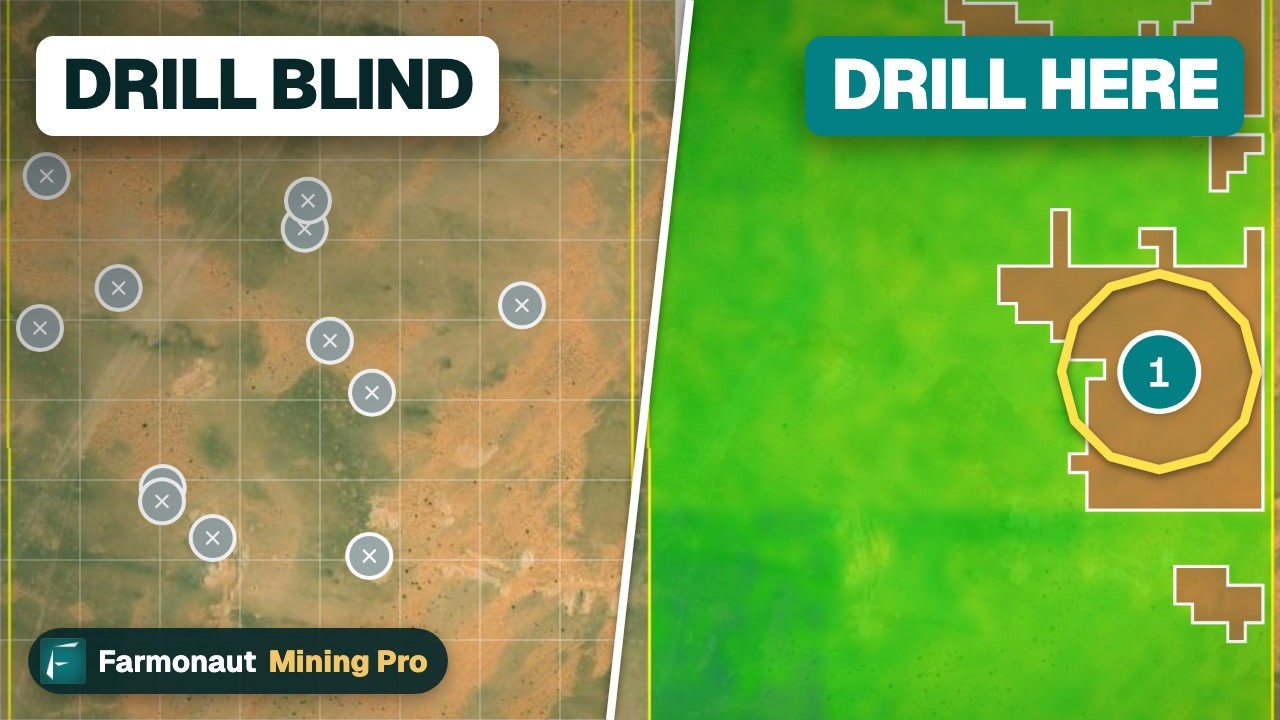
▶ Explains what mining adds to an economy through exports, jobs and revenue. · 5:03
Break-even grade: a calculator for diamond ore
A diamond mine breaks even when carats per tonne times price per carat covers the cost per tonne. Enter your own tonnes, grade, price, exchange rate and cost per tonne. The defaults are round examples, not Kareevlei figures. Use today’s price for your stone mix and a current exchange rate.
Calculator
What grade does my diamond ore need to break even?
Enter your own tonnes, grade, price, exchange rate and cost per tonne.
- Revenue (US$ per year): $30,000,000
- Operating cost (US$ per year): $29,411,765
- Margin before royalties and tax (US$ per year): $588,235
- Break-even grade (carats per 100 tonnes): 29.41
Example values only (US$100 a carat and 30 carats per 100 tonnes are Finsch-range illustrations), not Kareevlei or any company’s figures. Price is an input: example, use today’s price in US$ per carat for your own stone mix. The exchange rate is an input (Petra Diamonds averaged ZAR16.68 per US$ in the quarter to June 2026). Royalties, tax and capital costs are left out, so this is a gross operating check, not a valuation.
Environment and land after mining
Open pits, waste dumps and tailings are the main land effects of diamond mining, and they stay visible long after production stops. At Ekapa, care and maintenance means pumping water and guarding a 47 km perimeter. Our post on diamond mining and the environment covers the main controls, and the video explains the seven impacts of mining in plain language.
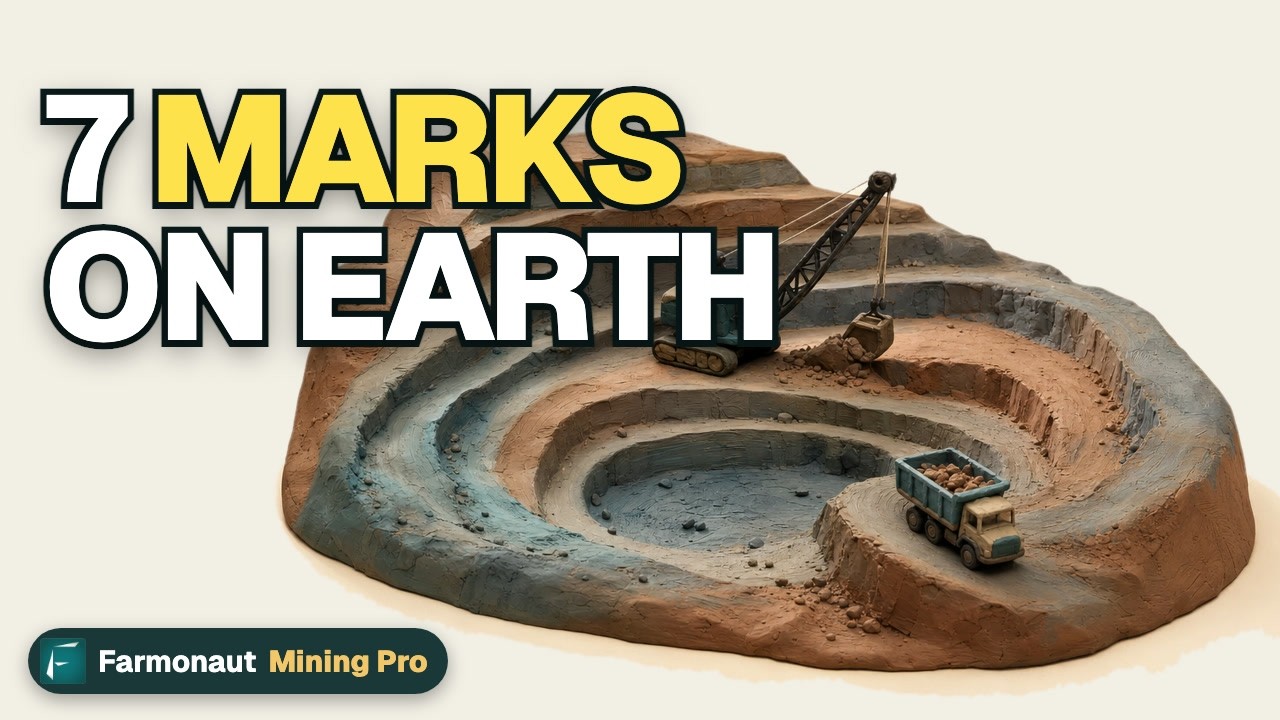
▶ A plain-language claymation on the seven environmental impacts of mining. · 2:31
What satellites can and cannot show at a diamond mine
Satellite images show pit outlines, dump and tailings footprints, water and vegetation recovery. They cannot show diamonds or grade. Farmonaut Mining Pro screens a licence area from space and produces exploration targets ahead of any resource estimate, which suits early-stage consultants checking ground before a field programme. Related guide: diamond exploration from indicator grains to kimberlite pipes.
For a closer look at a related question, see our guide: Paracatu Minas Gerais: Gold Mine Output and Facts.
Frequently asked questions
Is the Kareevlei diamond mine still operating?
The latest company announcement in the public sources, dated 6 June 2023, says operations remain suspended while the mine is in business rescue. It reports a renewed mining licence subject to conditions and names no restart date or buyer.
Who owns the Kareevlei diamond mine?
Kareevlei Mining (Pty) Ltd was a subsidiary of BlueRock Diamonds PLC. The subsidiary entered business rescue in February 2023, and BlueRock itself moved to administration in June 2023. Its main named creditor was Teichmann South Africa, which was owed about US$4.1 million in early 2023.
Where is the Kareevlei diamond mine?
In the Kimberley region of South Africa’s Northern Cape province, according to a 2018 Mining Technology report on BlueRock.
What kind of deposit is Kareevlei?
A group of pipes of lamproite, a rock closely related to kimberlite, mined by open pit. BlueRock reported five known pipes.
How many carats did Kareevlei produce?
BlueRock reported 3,507 carats in the first quarter of 2021 and 10,010 carats from KV2 from 2014 to the 2018 report. BlueRock has not published a full-year production table for later years.
Which diamond mines are in the Northern Cape?
The ones with company filings or dated reports are Kareevlei, Finsch, the Ekapa mines at Kimberley and Alexkor at Alexander Bay. Their status in October 2026 is in the table above.
What happened to the Finsch diamond mine?
Petra Diamonds put Finsch into business rescue on 29 May 2026. Creditors approved a plan on 7 August 2026 to sell the assets because no viable restart was found.
Is the Ekapa mine in Kimberley still open?
No. It is in care and maintenance. It was placed in provisional liquidation in March 2026 and offered for sale in May, but on 27 July 2026 the High Court set the liquidation aside and ordered business rescue. A practitioner is now deciding whether it can restart.
What does carats per hundred tonnes mean?
It is the grade of diamond ore: carats recovered per 100 tonnes processed. Finsch’s run-of-mine grade was 44.5 cpht in the year to June 2025, while Kareevlei’s pipes were estimated at 4.5 to 6.3 cpht.
How can I check who holds a mining right in South Africa?
Use the Department of Mineral and Petroleum Resources online systems, SAMRAD and the Mining Licensing System, then confirm the company’s standing with the Companies and Intellectual Property Commission.
Why have small diamond prices fallen?
Alexkor’s report shows one-carat prices 48% below December 2021 by October 2024, and Ekapa’s liquidators cite synthetic diamonds. Petra links Finsch’s closure to its share of smaller goods and a strong rand.
This page is for information only. It is not investment advice and gives no share prices or targets. It is not legal advice either: confirm mining rights and company status with the regulator and the companies’ own filings.
Farmonaut mining
Map your mining site from space
Consultants can screen a licence area with satellite data to produce exploration targets ahead of a resource estimate.

Mining Pro sample view, synthetic data
Keep reading
Sources
- Petra Diamonds, Finsch operations and five-year data: petradiamonds.com
- Petra Diamonds, Update on Finsch Business Rescue Process (7 August 2026): investegate.co.uk
- Petra Diamonds, Q4 and FY 2026 Operating and Business Update: investegate.co.uk
- Mining Technology, BlueRock begins kimberlite processing from KV1 pipe (2018): mining-technology.com
- Proactive Investors, BlueRock reports higher production, grades and prices (20 April 2021): proactiveinvestors.com
- MINING.COM, BlueRock shares jump on biggest diamond found at Kareevlei (16 August 2021): mining.com
- IDEX Online, Kareevlei Mining in Business Rescue (2 March 2023): idexonline.com
- BlueRock Diamonds, Update on Kareevlei Diamond Mine (6 June 2023, via MarketScreener): marketscreener.com
- Teichmann Group, Kareevlei Mine project page: teichmanngrp.com
- Diamond Fields Advertiser, Ekapa Diamond Mine placed on market (14 May 2026): dfa.co.za
- OFM, Ekapa Diamond Mine placed under a 90-day auction process (16 May 2026): ofm.co.za
- Innovation Village, Sale process begins for the Ekapa Diamond Mine: innovation-village.com
- Alexkor SOC Ltd, Integrated Annual Report 2024/25: static.pmg.org.za
- Minerals Council South Africa, Diamond Mining: mineralscouncil.org.za
- USGS, Mineral Commodity Summaries 2026: Gemstones: pubs.usgs.gov
- DMPR, Online Systems (SAMRAD and Mining Licensing System): dmpr.gov.za
- CIPC, Business rescue: cipc.co.za
- Lithos (2024), Petrogenesis of the diamondiferous Kareevlei Kaapvaal lamproite: doi.org
- International Kimberlite Conference abstract (2024), Kareevlei Kaapvaal lamproite: ikcabstracts.com
- GroundUp, NUMSA wins bid to block liquidation of diamond mine (7 August 2026): groundup.news
Discussion
Questions, corrections or field experience? Share them below. First-time comments are reviewed before they appear, and your email is never published.
No comments yet. Be the first to add a question or your experience.

 Ramani Investments Ltd
 Congo Mining Solutions
 Mining SARL
 SenGold Invest SAS
 Sania Corporation
 Sean Mining Limited
 NTS Group (Pty) Ltd
 Mine4Africa
 Lithspo Minerals Limited
 Tintina Mining Group
 Dalgety Minerals Pty Ltd
 Vortex Minerals Pty Ltd
 Faith At Work (Pty) Ltd
 Geotech Mining Solutions plc
 Vulcan International Limited
 Kidepo Associates
 GKY Mining
 Alkimy SARL
 Double A Trading
 GemSprout Metals Limited











