

Agricultural Irrigation Equipment: 7 Advances for 2026
Summary: Agricultural Irrigation in 2025: Innovations and Impact on Sustainable Farming
“By 2026, advanced irrigation systems can reduce farm water usage by up to 35% compared to traditional methods.”
The Importance of Agricultural Irrigation in 2025–2026
Agricultural irrigation remains the cornerstone of food security and sustainability worldwide as we progress into 2025 and prepare for 2026. With climate change intensifying, and water scarcity becoming an ever-more critical challenge, advanced agriculture and irrigation systems are pivotal for optimizing water use, increasing crop yields, and promoting environmental stewardship.
- Supports growth in arid and semi-arid regions where natural rainfall is insufficient
- Enhances food security by stabilizing production and enabling farmers to cultivate a wider variety of crops year-round
- Reduces the risks associated with unpredictable weather patterns, especially in regions vulnerable to climate change
- Improves soil health, minimizes runoff and deep percolation, and reduces wastage
However, while agricultural irrigation is essential, its traditional methods often result in significant water losses through evaporation, surface runoff, and inefficiency. As a result, modern, sustainable equipment and smart technologies are increasingly center stage in global farming development.
Why Smart and Sustainable Irrigation Matters in 2026
Smart agricultural irrigation equipment now incorporates automation, sensors, and real-time data for more targeted water delivery. These advances are optimizing yields, reducing costs, and supporting environmental stewardship—all crucial as demands for food production rise worldwide.
7 Advances in Agricultural Irrigation Equipment: 2026 Preview
Below, we delve into the seven most significant advances in agricultural irrigation equipment projected for 2026. Each technology reflects modern sustainable practices, integrates smart systems, and aims to enhance efficiency and yields while reducing the negative impact on water resources and soil health.
-
Smart Drip Irrigation Systems with IoT Sensors
Merges automated drip lines with soil moisture sensors, real-time weather data, and IoT controllers for ultra-precise water management.
-
Advanced Solar-Powered Pumps
Harness solar energy for efficient, remote, and off-grid irrigation—reducing dependence on fossil fuels and operational costs.
-
AI-Driven Irrigation Scheduling Platforms
Leverage machine learning on farm data, crop type, and weather forecasts to optimize irrigation schedules and ensure optimal resource allocation.
-
Automated Center Pivot & Linear Move Irrigation
Integrates GPS, sensors, and AI-based controls for precise delivery on large fields—minimizing water loss and ensuring even coverage.
-
Variable Rate Irrigation (VRI) Systems
Adjusts water application rates across different field zones based on soil and crop variability, boosting both conservation and yield.
-
Satellite-Based Monitoring & Remote Management
Utilizes remote satellite imagery, AI analytics, and apps like Farmonaut for large-scale, data-driven oversight of crop and soil conditions.
-
Water Recycling and Closed-Loop Systems
Recirculates drainage, run-off, or locally sourced water, filtering and reallocating it for irrigation—dramatically improving water efficiency.
“In 2025, sustainable irrigation equipment is projected to boost crop yields by nearly 20% in water-scarce regions.”
Comparative Features & Impact Table: 7 Advanced Agricultural Irrigation Equipment Innovations for 2026
| Equipment Name | Description | Estimated Water Savings (%) | Estimated Yield Improvement (%) | Energy Efficiency Rating | Sustainability Impact | Smart Tech Integration Level |
| IoT Smart Drip Irrigation | Automated drip lines & soil sensors managed via cloud platforms. | 30–40% | 15–25% | ★★★★★ | Minimizes runoff, boosts soil health, reduces fertilizer leaching | High |
| Advanced Solar-Powered Pumps | Solar energy-driven pumps for off-grid precision irrigation. | 20–35% | 10–16% | ★★★★★ | No fossil fuels; accessibility for smallholders, lower costs | Medium |
| AI-Driven Scheduling Platforms | Machine learning-based irrigation calendars tailored to farm-specific data. | 25–38% | 13–18% | ★★★★ | Reduces over-irrigation, helps conserve water & nutrients | High |
| Automated Center Pivot & Linear Move Systems | Large-scale systems with GPS and remote adjustment for uniform coverage. | 22–30% | 12–20% | ★★★★ | Less labor, enhanced field coverage, optimizes use of water resources | Medium |
| Variable Rate Irrigation (VRI) | Water usage varies by soil & plant requirements in-field with sensor support. | 28–39% | 15–22% | ★★★ | Precision application reduces chemical usage, improves yields | High |
| Satellite-Based Monitoring & Remote Management | Satellite imagery and apps for large-scale, data-driven irrigation control. | 20–36% | 14–21% | ★★★ | Detects stress & leaks early, supports climate-resilient farming | High |
| Water Recycling & Closed-Loop Systems | Recapture, filter, and reuse water in a controlled environment. | 35–50% | 8–15% | ★★★★★ | Major water conservation, reduces pollution/groundwater drawdown | Medium |

Sustainable Irrigation: Practices for 2026 & Beyond
As global agriculture and irrigation needs intensify, aligning techniques with sustainability unlocks both efficiency and resilience for all communities.
Deficit Irrigation & Precision Water Use
- Supplies less than total crop water demand during select growth phases, optimizing water use without sacrificing yields.
- Paired with soil moisture sensors and remote sensing data for accuracy.
Agroforestry and Conservation Agriculture Integration
- Combination of trees, cover crops, and mulching: minimizes evapotranspiration, improves soil structure, and conserves water.
- Enables healthy plant growth year to year, reducing erosion and runoff.
Closed-Loop Water Recycling & Conservation
- On-farm water recycling, such as capture of drainage and runoff, supports circular water economy.
- Key for urbanizing and water-scarce regions.
Reduced Chemical Use Through Precise Irrigation
- Smart irrigation systems help reduce fertilizer and pesticide use by delivering exact water where needed.
- Supports soil health and prevents downstream pollution.
Empowering Smallholder Farmers with Accessible Technology
- Affordable drip kits, solar-powered micro-pumps, and mobile irrigation apps are empowering smallholder farmers from Malawi to India, increasing productivity, sustainability, and profitability.
- Farmonaut services, for instance, can be accessed by smallholders worldwide through web, Android, or iOS, providing field-specific advice and affordable, data-driven decision making.
The Role of Farmonaut Satellite Technology in Modern Irrigation
As we look towards 2026, satellite-driven agricultural irrigation equipment is reshaping global agriculture by enabling remote monitoring, precision farming, and sustainability on an unprecedented scale. Farmonaut stands at the forefront of this revolution, making high-quality, actionable data accessible for farmers, businesses, and governments worldwide.
Key Technologies and Benefits of Farmonaut for Irrigation Management
-
Satellite-Based Monitoring: Multispectral data allows farmers to detect vegetation health (NDVI), soil moisture trends, and identify early signs of water stress. This informs when and where to irrigate for optimal crop yields.
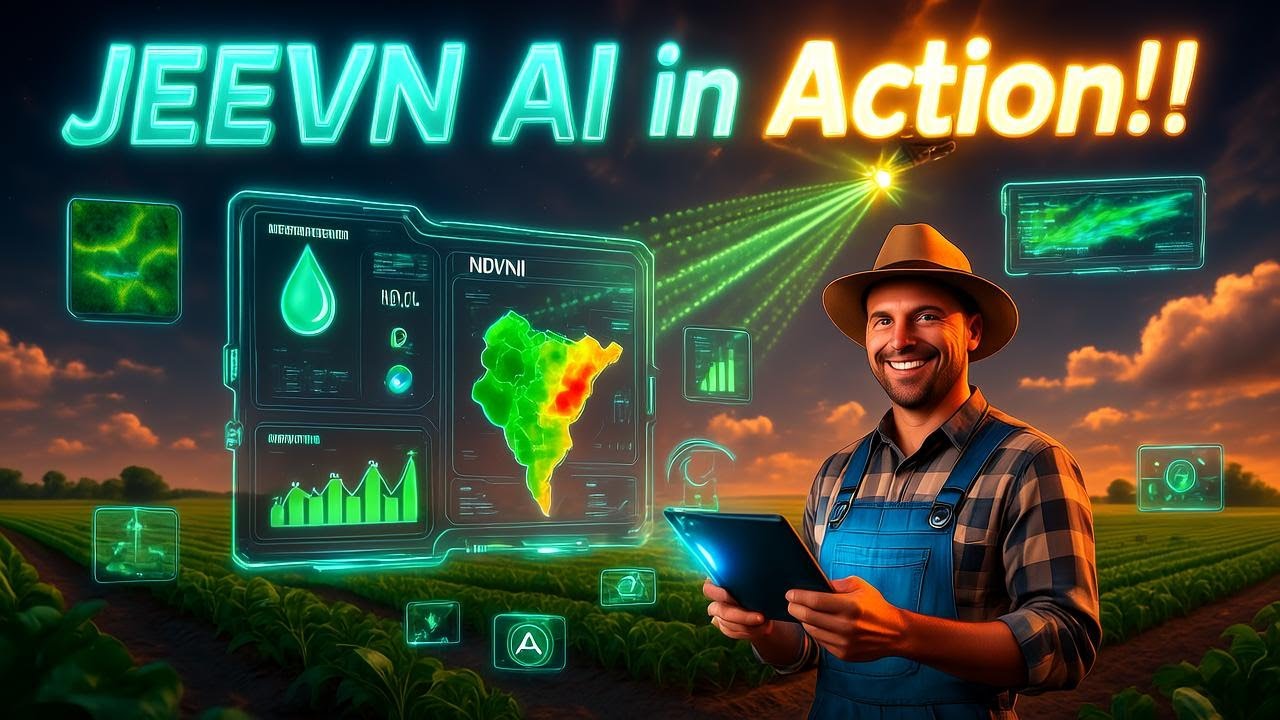
See how Farmonaut enables this in action: - Jeevn AI Advisory: Farmonaut’s proprietary AI delivers custom recommendations by analyzing satellite images, weather, and growth patterns. It helps automate irrigation schedules based on real-time field conditions.
- Remote Resource Management: Mobile and web apps allow users to remotely monitor and manage fields, customize irrigation based on water availability, and receive weather forecasts to reduce water waste.
- API Access for Developers: Farmonaut provides robust APIs for integrating satellite-based weather and field data into custom farm management platforms or developer applications.





- For large-scale and commercial farm operations: Farmonaut offers large-scale farm management capabilities—empowering agri-businesses with aggregated crop health, water use, and remote logistics analysis.
- For carbon sustainability and compliance: Assess your farm’s environmental footprint and track carbon footprint using satellite insights for sustainable irrigation and farming practices
- For crop loans and insurance: Satellite field monitoring boosts transparency and supports financial access with satellite-based insurance and verification
- For end-to-end traceability and transparency: Blockchain-powered traceability systems help confirm the source and sustainability of agricultural products

Get started with satellite-based irrigation management today:
Challenges, Adoption, and The Future of Agricultural Irrigation
Key Barriers to Adoption
- Initial investment costs: Advanced agricultural irrigation equipment requires upfront capital; subsidies and financing are needed for broad adoption.
- Technical skills gap: Effective operation of IoT, AI, or satellite-based systems can challenge small or aging farming communities.
- Infrastructure and connectivity: Remote areas may still lack reliable power or internet—solar and mobile-first solutions are critical for bridging this gap.
Ensuring Equitable Access
- Smallholder and marginalized farmers need affordable, accessible technologies, mobile apps, and open data for inclusive agriculture and irrigation.
- Local user support, training, and language adaptation can accelerate adoption and optimize impact.
Water Governance & Policy
- Efficient water governance and clear allocation among agricultural, urban, and industrial users are essential to prevent over-extraction and conflict—especially as climate change drives resource scarcity.
The Road Ahead: Digital Transformation, AI, and Beyond
- The convergence of big data analytics, machine learning, and satellite remote sensing will further refine irrigation management—moving from static to fully autonomous, adaptive systems that optimize water use in real time.
- As web, app, and automated platforms mature, connected irrigation networks will enable field-to-farm-to-region optimization with predictive insights.
- Sustainable agriculture and irrigation equipment will remain the driving force behind stable food systems and environmental stewardship worldwide.
Frequently Asked Questions
Q1: What is agricultural irrigation equipment and why is it essential in 2026?
A: Agricultural irrigation equipment refers to the tools, systems, and devices used to supply water to crops beyond natural rainfall. As climate change and water scarcity increase, advanced equipment—such as smart drip systems, solar pumps, and IoT controllers—are essential to optimize water use, improve yields, and conserve resources.
Q2: How do smart irrigation systems enhance efficiency over traditional methods?
A: Smart irrigation equipment uses sensors, AI, and real-time data to deliver water precisely when and where it’s needed, reducing wastage from evaporation, runoff, and overwatering, while improving crop growth and farm productivity.
Q3: What role does Farmonaut play in agriculture and irrigation?
A: Farmonaut provides satellite-based monitoring solutions, AI-driven advisory, traceability, and remote resource management tools for agriculture. Our platform enables conditions monitoring, field-specific advice, and transparent decision-making for efficient irrigation and sustainable farming practices—accessible from web, Android, or iOS app.
Q4: Are these advanced irrigation systems suitable for smallholder farmers?
A: Yes. With increased affordability, mobile integration, and local-language support, even smallholders in remote regions can adopt solar pumps, smart drip kits, and mobile apps for significant water savings and yield improvements.
Q5: Can modern agricultural irrigation equipment help with compliance and sustainability?
A: Absolutely. By reducing water, fertilizer, and pesticide use, today’s equipment supports sustainable soil and environmental management. Satellite and blockchain-based systems ensure transparency and support for compliance with evolving global food and sustainability standards.
Conclusion: Paving the Way for Resilient Farming
By 2026, agricultural irrigation equipment will continue to evolve as a high-tech, sustainable foundation supporting farming worldwide. Modern advances—spanning smart sensors, AI-driven scheduling, solar-powered pumps, satellite monitoring, and closed-loop systems—are not just revolutionizing efficiency and yields, but are crucial in protecting our natural water resources and soil health.
The urgent challenges of climate change and global food security demand innovation, smart management, and inclusive access. As technologies become more accessible and affordable, especially for smallholder communities, the future of agriculture and irrigation is one where productivity, sustainability, and environmental stewardship are mutually reinforcing.
With advanced agricultural irrigation equipment—guided by real-time data and satellite-driven insights—farmers, businesses, and policy-makers worldwide are empowered to optimize yields, cut costs, and safeguard the planet’s most precious resources.
Explore more or get started with the latest in satellite-based agricultural solutions—transform your irrigation efficiency and environmental sustainability!
Discussion
Questions, corrections or field experience? Share them below. First-time comments are reviewed before they appear, and your email is never published.
No comments yet. Be the first to add a question or your experience.

 Mobitech Wireless
 FCF India
 Unifrutti Gulf
 Deluxe Conseil
 TVS Electronics
 BW Pipelines
 WICO
WICO Gen Chayat
 Chimera Innovation
 SkyHarvest
 Polaris Digitech
 Teledarbas
 Wild Oak Farm
 SFX
SFX Doodlakine
 Exurbia Geospatial
 Licence holder · Niger · Gold










