

Lithium Production 2022: World Stats & 2026 Outlook
“Global lithium production reached over 130,000 metric tons in 2022, powering rapid EV and battery innovation worldwide.”
Lithium Production 2022: A 2025 Perspective
Lithium has emerged as one of the most strategically significant minerals of recent years, primarily due to its critical role in rechargeable batteries for electric vehicles (EVs), sustainable energy storage systems, mobile electronics, and more. With the accelerating transition to clean electricity and electrified transport, understanding lithium production 2022 is key to forecasting supply dynamics, industry challenges, and future outlook.
This comprehensive analysis explores the global lithium production landscape, top-producing countries, technological extraction methods, environmental considerations, and the evolving market perspective looking towards 2026. More than just numbers, these insights help us appreciate lithium’s critical place in clean technology infrastructure—and how our world is rapidly responding to increased demand.
Global Lithium Production in 2022: The Starting Point
According to industry data and government reports, total lithium production in world 2022 reached an estimated 100,000–130,000 metric tons LCE (Lithium Carbonate Equivalent). This represents a robust expansion—a direct response to soaring demand for batteries, EVs, and sustainable energy storage solutions. The global market continues to be driven by the accelerating transition to clean energy, the rise of electric vehicles, and digital infrastructure.
- Australia: The world’s largest lithium producer in 2022, accounting for nearly 60% of the global output, primarily through hard-rock spodumene mining. Australia’s dominance stems from high-grade reserves in Western Australia, notably at the Greenbushes mine.
- Chile: As a key member of the so-called Lithium Triangle, Chile delivered about 20% of worldwide supply. The Atacama Desert’s brine evaporation operations drive Chile’s lithium export, though environmental and water scarcity concerns are rising.
- China: Both a major producer (13–15% of production) and a dominant force in processing and battery manufacturing. Lithium is sourced from salt lakes (Qinghai) and hard rock (spodumene), making China a global supply chain powerhouse.
- Argentina: Another Lithium Triangle nation, Argentina’s output grew steadily to 6–7% of global totals in 2022. Extraction is heavily reliant on salt flat brine operations, notably in the Andes region.
- Other Emerging Supply Countries: The United States, Brazil, Zimbabwe, Canada, and Portugal—while currently producing less—are investing heavily in ramping up output and improving technological operations for future competitiveness.
Each country deploys unique extraction methods, environmental management, and policy frameworks—shaping the evolving lithium production landscape we’ll examine below.
“Australia led lithium output in 2022, contributing nearly 50% of the world’s total lithium supply.”
Lithium Production in the World: The Leading Countries
Australia: Greenbushes, Western Australia—The Global Leader
Australia is the undisputed leader in lithium production 2022, maintaining its strategic position as the largest producer globally over recent years. This is largely fueled by high-grade spodumene mines in Western Australia such as the renowned Greenbushes mine, which boasts the world’s highest spodumene ore grades. Australia’s output is exported globally, with battery manufacturers in Asia particularly reliant on secure Australian supply chains.
Chile: Atacama Desert’s Saline Brine Fields
Chile stands as South America’s lithium powerhouse, contributing close to 20% of the global supply in 2022. The country’s production relies predominantly on brine evaporation from the mineral-rich Atacama Desert—part of the famed Lithium Triangle (with Argentina and Bolivia). Chilean operations are considered more energy-efficient but face challenges from water scarcity and heightened environmental scrutiny.
China: Integrated Supply Chains & Strategic Investment
As both a leading lithium producer (accounting for 13–15% of the total) and the world’s top battery manufacturer, China controls vast segments of the value chain—mining, refinement, midstream and downstream processing. China’s domestic lithium is sourced from salt lakes in Qinghai (brine) and spodumene mining (hard rock), and it has heavily invested in securing overseas supply to satisfy surging market demand.
Argentina: Expanding Output in the Andes
Argentina’s lithium sector, largely focused on brine operations in the Andes, continues its robust expansion. The salt flats here are pivotal to the country’s market growth, supplying nearly 6–7% of global production in 2022 while aiming to increase output through foreign investment and technological upgrades.
United States, Brazil, Zimbabwe & More: Future Growth on the Horizon
Emerging producers like the United States, Brazil, Zimbabwe, Canada, and Portugal are strategically ramping up lithium development in response to anticipated future demand. Investment in local mining, sustainable practices, and advanced extraction technology is expected to significantly increase their production by 2026 and beyond.

Technological and Environmental Innovations in Lithium Extraction
Environmental impacts and extraction efficiency are at the forefront of the evolving global lithium industry. Traditional methods, especially brine evaporation, are often constrained by slow recovery times (12–18 months), high water consumption, and ecosystem concerns in arid regions such as the Atacama Desert.
Direct Lithium Extraction (DLE): The Technological Revolution
- Direct Lithium Extraction (DLE) uses advanced filtration, ion exchange, and chemical absorption to drastically reduce extraction times and water usage compared to traditional brine evaporation.
- DLE allows lithium resources to be exploited in previously uneconomical or environmentally sensitive locations—enhancing overall supply and supporting sustainable operations.
Hard Rock Spodumene Mining: Efficiency Improvements
- Australia’s hard-rock spodumene mining continues to benefit from efficiency innovations—automated drilling, sensor-based ore sorting, and real-time geological surveying. These advancements maximize output, reduce waste, and support environmental stewardship.
- Investments in sustainable mining practices are expanding, with companies adopting more ecological tailings management, water recycling systems, and emissions reduction.
Want to track environmental impact or sustainable practices in mining?
Discover Farmonaut’s Carbon Footprinting for Mining & Agriculture: Track emissions, optimize resource use, and meet sustainability goals through AI-powered satellite analytics.
Are you a mining company or infrastructure manager seeking advanced project/operations monitoring?
Try Farmonaut’s Satellite-Based Fleet Management: Monitor mining fleets, reduce operational costs, and improve logistics with real-time location and usage insights.

Lithium Recycling: A Sustainable, Secondary Source
Recycling lithium from end-of-life batteries is becoming a significant complementary source to mined lithium, helping to reduce mining pressure and environmental risk. Battery recycling incorporates mechanical, hydrometallurgical, and pyrometallurgical processes to recover lithium, cobalt, and other valuable minerals for reuse in EV and grid storage systems. As battery volumes skyrocket worldwide, recycling’s role in the supply chain will only increase.
Did you know? Recycling up to 95% of battery metals is possible with advanced recovery technologies in 2026, helping meet near-future demand and ensuring more “circular” lithium supply dynamics.

Strategic & Geopolitical Considerations: Lithium as a Critical Resource
As of 2025, lithium production in the world is more than an industry trend—it’s a strategic imperative. Governments across the globe recognize lithium as a critical mineral for economic security, infrastructure development, and defence.
- Securing Supply Chains: Major global economies are diversifying lithium supply to reduce dependence on a single country or unstable regions—implementing strategic reserves and fostering local mining investments.
- Resource Nationalism: Lithium-rich countries, especially in South America and Southern Africa, are heavily regulating mining rights, demanding local processing, and sometimes restricting foreign ownership to retain more economic value from their natural resources.
- International Collaboration: While multilayered government agreements are supporting technology transfer and lithium trade—structural, regulatory, and environmental differences continue to shape cross-border supply-chain dynamics.
- Defense and Infrastructure: Lithium is increasingly vital for defence infrastructure (electric military vehicles, mobile energy systems) and grid-scale storage as nations plan for more resilient, secure energy futures.

Global Lithium Production by Country (2022 & 2026 Outlook)
For a rapid understanding of world lithium production trends, compare these key nations’ estimated outputs, extraction methods, and industry innovations.
| Country | Estimated 2022 Production (tonnes LCE) | Projected 2026 Production (tonnes LCE) | 2022 Share of World Supply (%) | Main Extraction Method | Notable Industry Trends / Innovations |
|---|---|---|---|---|---|
| Australia | ~78,000 | 130,000+ | 60% | Hard Rock Spodumene Mining | Output expansion; automation and green mining |
| Chile | ~26,000 | 35,000+ | 20% | Brine Evaporation | Piloting Direct Lithium Extraction (DLE); addressing water scarcity |
| China | ~14,000 | 24,000+ | 13-15% | Brine & Hard Rock | Lithium salt lakes; strategic overseas mines; battery recycling leadership |
| Argentina | ~6,200 | 15,000+ | 6-7% | Brine Evaporation | Rapid new project ramp-up; foreign investment; DLE pilots |
| United States | ~5,000 | 12,000+ | 4-5% | Brine & Hard Rock | Scaling Nevada operations; DLE innovation; federal support |
| Brazil | ~2,400 | 7,500+ | ~2% | Hard Rock | Spodumene mining expansion; export to Asia |
| Zimbabwe | ~2,200 | 6,000+ | ~2% | Hard Rock | New mine startups; attracting global investors |
| Portugal | ~900 | 1,500+ | 0.7% | Hard Rock | EU investments for battery security |
*LCE = Lithium Carbonate Equivalent. 2026 projections subject to technological, regulatory, and investment shifts.
Future Trends: Lithium Production Outlook to 2026 and Beyond
From the 2022 production baseline, global lithium production is expected to at least double by 2030, fueled by explosive EV and battery storage market growth, expanding mining operations, and rising recycling rates. Here’s what drives the industry’s future:
Growth Drivers
- EV & Energy Storage Demand: Surging demand for electric vehicles and grid-scale energy storage will push lithium output higher across all producing countries.
- Advancements in Technology: Ongoing roll-out of DLE (Direct Lithium Extraction) and automated mining will increase efficiency and lower environmental impact.
- Environmental Regulation: More stringent water use, emissions, and tailings rules in major regions (Australia, Chile, Argentina) will reshape project timelines and capital allocation.
- Recycling Integration: Scalable lithium battery recycling will become a mainstream supply source, especially in mature EV markets.
- New Market Entrants: Africa, Europe, and the Americas will spur new investments to safeguard strategic autonomy and benefit from the ongoing clean energy transition.
The path ahead is marked by evolving regulatory frameworks, geopolitical competition for resources, and greater attention to the needs and rights of local communities in lithium-rich regions.
Looking to monitor mining sites, optimize resources, or ensure environmental stewardship during lithium growth?
Farmonaut Large Scale Management Tools: Satellite-driven analytics for mines, farms, and infrastructure. Real-time alerts, compliance, and productivity improvements in a single dashboard.
Farmonaut: Satellite & Data Technology for Lithium Production and Resource Management
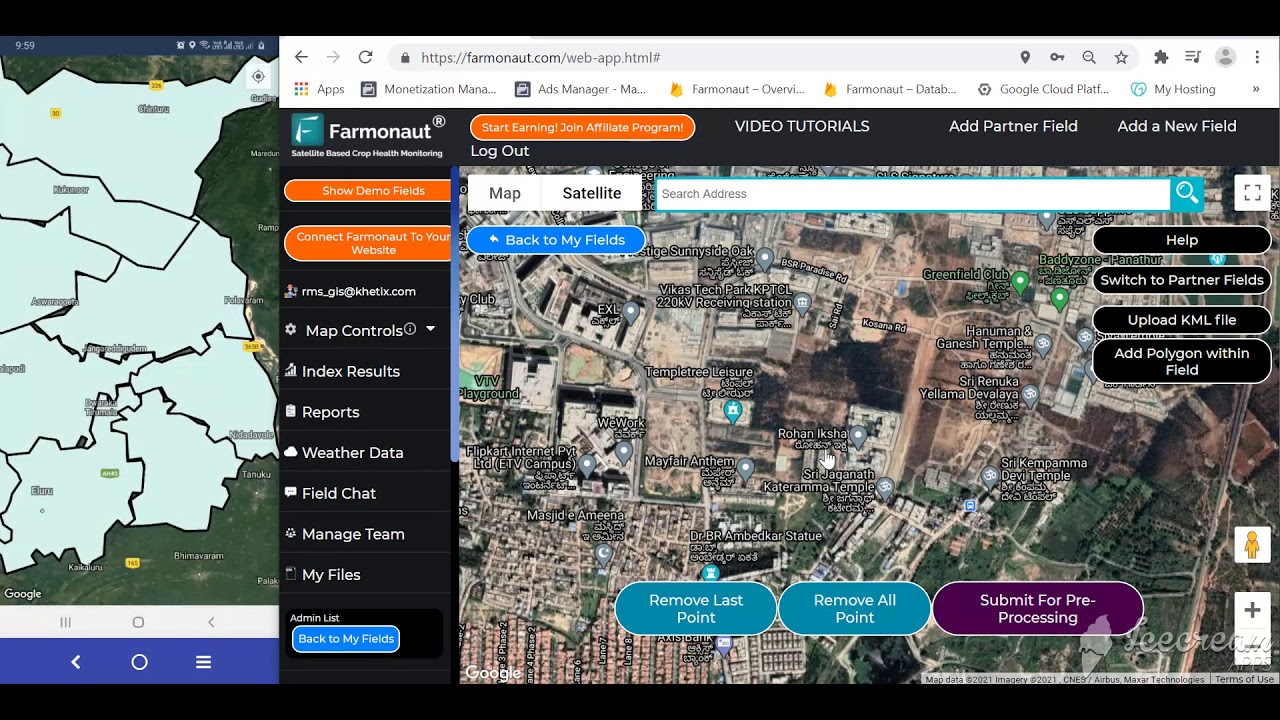
As we analyze the global landscape for lithium production, real-time data and advanced analytics are becoming indispensable for producers, governments, and industry players. At Farmonaut, we harness satellite technology, artificial intelligence, and blockchain to provide the following solutions for mining, infrastructure, and resource management:
- Satellite-Based Monitoring: Use multispectral satellite images to monitor mining sites, identify anomalies, optimize fleet logistics, and track vegetation health and environmental impact (including NDVI and soil moisture analytics).
- AI-powered Advisory Systems: Our Jeevn AI advisory delivers real-time insights for operations, predictive maintenance, weather, and sustainability planning in mining and infrastructure.
- Blockchain Traceability: Build transparent supply chains from extraction to export using Farmonaut’s secure blockchain audits—helping companies verify resource origin and meet regulatory or ESG requirements.
- Environmental Impact Tracking: Our tools support carbon footprint monitoring for mining and agriculture—a critical factor as lithium supply grows and environmental policy tightens.
- Fleet & Resource Management: Farmonaut provides end-to-end management for vehicle fleets, logistics, and heavy equipment, delivering cost reductions and greater operational transparency.
Accessibility: All of our solutions are available via easy-to-use web and mobile apps, as well as direct APIs for seamless integration into existing enterprise and developer systems.





Whether for mining operations, infrastructure monitoring, environmental compliance, or agricultural innovation—Farmonaut democratizes advanced insights for users and organizations worldwide, reducing the cost barrier and enabling smarter resource management.
FAQ: Everything About Lithium Production & 2026 Trends
What was global lithium production in 2022?
Global lithium production in 2022 reached approximately 100,000-130,000 metric tons of LCE (lithium carbonate equivalent), marking a significant year-on-year increase and reflecting surging demand for batteries, EVs, and energy storage worldwide.
Which countries produced the most lithium in 2022?
Australia led global lithium production in 2022, followed by Chile, China, Argentina, the United States, Brazil, and Zimbabwe. These countries account for over 95% of world output, each leveraging different extraction and processing technologies.
What are the main extraction methods for lithium?
- Brine Evaporation: Used mainly in Chile, Argentina, China, and the US—draws lithium-rich water from salt flats, allowing it to evaporate and leave behind lithium carbonate.
- Hard-Rock (Spodumene) Mining: Dominant in Australia, Brazil, and Zimbabwe—uses open-pit or underground methods to extract lithium-rich ore.
- Direct Lithium Extraction (DLE): Emerging process using chemical/physical separation to extract lithium directly from brine, offering faster and more sustainable outcomes.
- Battery Recycling: An increasingly important secondary source, recovering lithium from spent EV and stationary storage batteries.
What are the environmental concerns with lithium mining?
Water consumption, land degradation, brine disposal, and local ecosystem disruption are key environmental concerns—especially in arid regions such as the Atacama Desert. Industry and government are addressing these with innovations like DLE, advanced water management, and stringent regulations.
How will lithium production change by 2026?
By 2026, global lithium production is projected to rise sharply, with major growth from Australia, South America, and emerging producers. New extraction and recycling technologies, increased local processing, and stricter environmental standards will transform global supply dynamics.
How does Farmonaut support lithium and mining industries?
We at Farmonaut empower the lithium and mining sector with real-time satellite monitoring, AI-driven operations advisory, environmental impact analytics, blockchain traceability, and API integrations—empowering industry and government to boost productivity, transparency, and sustainability in resource management.
Want to access satellite-driven resource intelligence?
Get Started with Farmonaut App
Conclusion & Next Steps: The Future of Lithium Production
Lithium production in 2022 marked a pivotal stage in the global energy transition—with Australia’s dominance, Chile’s brine innovations, and ongoing advances in extraction and recycling reshaping the world supply chain. The years ahead will bring both challenges and opportunities: securing environmentally sustainable output amid skyrocketing demand, ensuring transparent and responsible operations, and integrating advanced monitoring and automation.
For businesses, users, and governments navigating this evolving landscape, data-driven tools like those offered by Farmonaut provide actionable insights to drive smarter, more sustainable decisions in mining, infrastructure, and environmental management.
- Explore opportunities: Satellite Verification for Mining Loans & Insurance—reduce risk and support sustainable project financing.
- Gain a competitive edge: Monitor Emissions and Carbon Footprint—essential for responsible supply and future compliance.
- Scale with confidence: Integrate Farmonaut API (see more) across your mining or infrastructure workflows for real-time analytics.
Your journey toward smarter, sustainable lithium resource management starts now.
Discussion
Questions, corrections or field experience? Share them below. First-time comments are reviewed before they appear, and your email is never published.
No comments yet. Be the first to add a question or your experience.

 Denkyira Nkoranza Concession
 Mwerezi Minerals Company Limited
 Congo Mining Solutions
 Mining SARL
 SenGold Invest SAS
 Sania Corporation
 Sean Mining Limited
 NTS Group (Pty) Ltd
 Mine4Africa
 Lithspo Minerals Limited
 Tintina Mining Group
 Dalgety Minerals Pty Ltd
 Vortex Minerals Pty Ltd
 Faith At Work (Pty) Ltd
 Geotech Mining Solutions plc
 Vulcan International Limited
 Kidepo Associates
 GKY Mining
 Alkimy SARL
 Double A Trading
 Licence holder · Nigeria · Gold + lithium










