

“By 2025, lithium extraction from alternative sources could reduce traditional mining-related emissions by up to 70%.”
Lithium Without Mining, Nuclear Power Without Uranium: The Future of Sustainable Resource Utilization in 2025
Lithium without mining and nuclear energy without uranium are more than headline concepts—they are real, rapidly developing technologies at the heart of sustainable modernization. As we move through 2025 and beyond, the global push for energy sustainability escalates, driven by the urgent need to address environmental degradation and geopolitical tensions linked to resource extraction.
These new approaches not only promise to minimize the critical footprint of traditional methods in mining and power generation, but also fundamentally reshape agriculture, forestry, infrastructure, and defence sectors. This article explores the emerging approaches that aim to produce lithium without mining and provide nuclear power without uranium, offering new pathways to a cleaner, more resilient future.
Lithium Without Mining: Revolutionizing Sustainable Energy & Agriculture
Lithium is now the cornerstone of modern energy storage, powering everything from electric vehicles and mobile devices to batteries that enable renewable integration in large-scale power grids. Yet, the traditional methods of extracting lithium from hard rock (spodumene) or salt flats (brine deposits) significantly impact land use, water consumption, and fragile ecosystems.
As our reliance on lithium grows, so do the challenges of sourcing it sustainably. In 2025 and looking ahead, a suite of innovative technologies are redefining what’s possible—delivering lithium without mining in the conventional sense.
Why Move Beyond Traditional Lithium Mining?
- Degradation & Environmental Impact: Open-pit mining and brine evaporation drastically disturb land, pollute soil, and require vast water consumption.
- Resource Wars & Geopolitics: Over 80% of the world’s lithium comes from just three regions—Chile, Australia, and Argentina—creating instability, bottlenecks, and regional tension.
- Unsustainable for Agriculture & Forestry: Lithium brine extraction can impact precious aquifers used for agriculture and rural water supply in arid regions.
The DLE Revolution: Direct Lithium Extraction Technology
One leading approach in 2025 is Direct Lithium Extraction (DLE) from geothermal brines and oilfield wastewaters. DLE employs membrane filtration, ion-exchange resins, and selective absorbents that selectively retrieve lithium from complex water sources—without the land and ecosystem destruction tied to mining pits or brine ponds.
- Minimal Land Disturbance: DLE taps into existing industrial parameters and fluid streams, rather than expanding landscape-altering mining.
- Low Water Consumption: Unlike brine evaporation, DLE can reuse and recycle water, keeping it available for agriculture and rural communities.
- Clean Energy Synergy: When deployed with geothermal sites, DLE can draw on renewable heat and power for operations.
How Does DLE Work?
- Saline or geothermal fluids are brought to the surface (often as a by-product of energy production).
- Advanced membrane filtration or ion exchange systems extract lithium, targeting ions while leaving behind unwanted minerals or contaminants.
- The processed water is often returned to reservoirs, reducing waste.
This integrated process not only drastically reduces environmental footprint but leverages existing infrastructure and wastewaters. It is especially relevant for:
- Agricultural Regions Adjacent to Geothermal Sites: Rural and farming communities near saline aquifers can benefit from dual use—obtaining both heat and lithium from the same operation.
- Oilfield Operations: Spent wastewaters from oil extraction can become a new resource stream for lithium, boosting sustainability.
- Municipalities: Urban resilience strategies can incorporate lithium without mining into smart grid storage, supporting broader electrification efforts.
Recycling & Recovery: Circular Alternatives for Lithium Supply
As batteries age out from electric vehicles and large devices, new alternatives are emerging to extract lithium through recycling and recovery. Advanced hydrometallurgical and pyrometallurgical processes enable lithium to be recovered from spent batteries with increasingly high efficiency, helping close the loop and reduce raw resource demand.
- Reduces Geopolitical Risks: Less reliance on traditional mining hotspots.
- Reduces Waste: Battery recycling minimizes toxic landfill and returns critical materials to the supply chain.
- Scaling With Demand: By 2026, the volume of retired EV batteries and storage units will skyrocket, making recycling essential for sustainable supply.

Farmonaut’s platform offers satellite-based monitoring to track the environmental impact of lithium projects, maximizing sustainability and decision-making across agriculture and mining.
For organizations interested in environmental compliance or reducing their carbon footprint, explore our Carbon Footprint Monitoring solution. This tool leverages satellite data to measure and reduce emissions, supporting sustainable development goals.
Lithium Without Mining: Transformative Applications in Agriculture & Rural Infrastructure
The benefits of lithium without mining extend beyond just decreased environmental impact—DLE and recycling enable localized, resilient supply of lithium for:
- Grid-Scale Batteries: Powering decentralized solar, wind, and microgrid projects for off-grid or rural communities.
- Precision Agriculture & Electrification: Smooth, reliable power for precision irrigation, fertilizer application, and fleet management.
- Income Diversification: Agricultural regions supplying brine or geothermal fluids can earn new revenue from lithium recovery.
- Disaster Resilience: Reliable lithium-based storage aids recovery and continuity in climate events.

Farmonaut’s real-time crop monitoring and AI advisory solutions are unlocking smarter, more productive agriculture for farmers globally, by integrating precision ag technologies with energy solutions backed by lithium-based storage and sustainability insights.
Download the Farmonaut app:



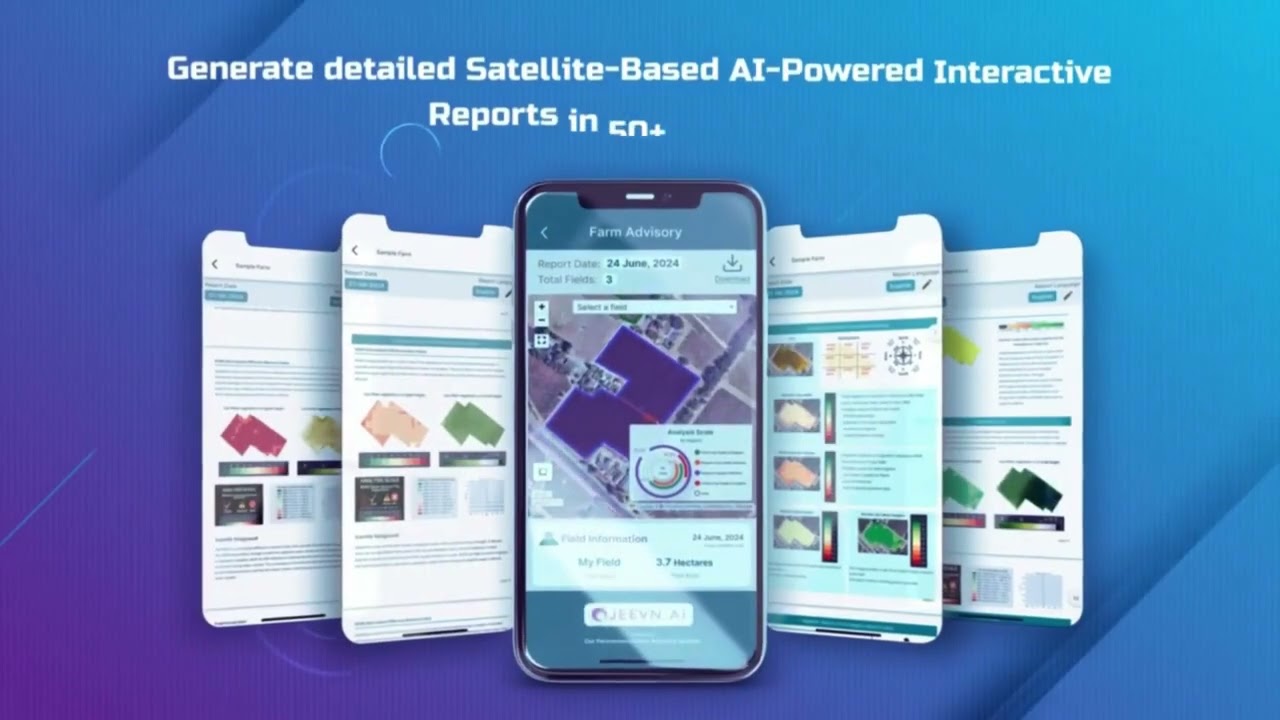
To further support electrification and smart agriculture, explore Farmonaut’s Large Scale Farm Management tools—harnessing real-time data, blockchain traceability, and fleet optimization for future-ready agricultural infrastructure.
Comparative Innovations Table: Traditional vs. 2025 Technologies
To better understand the profound differences and advantages of emerging technologies such as lithium without mining and nuclear power without uranium, compare the following key metrics:
| Technology Type | Resource Used | Estimated Environmental Impact (2025) | Estimated Cost per Unit (2025) | Scalability | Key Benefits |
|---|---|---|---|---|---|
| Traditional Lithium Mining | Spodumene ore, Brine deposits | High land & water use, significant ecosystem degradation | $6,000–$8,000 per ton* | Limited by resource location, environmental restrictions | Proven, established supply chain |
| Lithium Without Mining (DLE & Recycling) | Geothermal brines, oilfield wastewaters, end-of-life batteries | Low land use, minimal water waste, up to 70% emission reduction | $3,500–$5,000 per ton* | High; can operate at new sites globally, circular economy helps scale | Reduces environmental footprint, enables local/regional supply, supports rural infrastructure |
| Uranium-Based Nuclear | Uranium | Radioactive waste, nuclear accident risk, contaminated water | $45–$60 per MWh* | Bottlenecked by fuel supply, regulatory approval, environmental concerns | Stable baseload power, mature technology |
| Nuclear Power Without Uranium (Thorium/Fusion) | Thorium, fusion fuels (Deuterium, Tritium) | Minimal long-lived waste, much lower accident risk | $20–$40 per MWh* (projected, variable by project) | Very high for thorium; potentially unlimited for fusion | Abundant fuel, enhanced safety, resilience, low waste, reduced geopolitical risk |
*Estimated average, actual costs vary by project scale and location
“Innovative nuclear tech is projected to cut uranium demand by 40% in next-generation power plants by 2025.”
Nuclear Power Without Uranium: The Thorium and Fusion Leap
Nuclear energy without uranium is not just a speculative vision—it’s quickly becoming a central pillar in next-generation sustainable energy solutions. Uranium-based reactors have fueled much of the world’s clean electricity, but mining uranium raises environmental, health, and geopolitical risks—especially with growing demand for non-carbon baseload power.
New alternatives like thorium reactors and nuclear fusion aim to change that game.
The Case for Moving Away from Uranium: Environmental and Political Drivers
- High volumes of radioactive waste and exceptionally long half-lives for spent nuclear fuel
- Contamination risks to water sources and surrounding land, which are critical for agriculture and rural communities
- Political instability, regional monopolies, and supply chain disruptions
Thorium-Based Nuclear Reactors: Abundant, Safer, and Sustainable
In 2025 and beyond, thorium power stands out among nuclear energy without uranium options. Thorium is three to four times more abundant than uranium and can be used in molten salt reactors (MSRs)—technology that is:
- Inherently safer than uranium reactors—meltdown risks are minimized
- Produces less and less-dangerous radioactive waste
- Can be scaled regionally wherever thorium is available
- Suited for diverse infrastructure—powering defence, industrial, and urban energy supply reliably
Nuclear Fusion: The Promise of Limitless Clean Power
While commercial fusion reactors are still in development, the 2025 landscape shows rapid advances in high-temperature plasma containment and superconducting magnets. Nuclear fusion—combining light atomic nuclei—could enable virtually unlimited, consistent, and clean energy with:
- No long-lived radioactive waste
- Fuel sources (deuterium, tritium) widely available (can be extracted from water)
- Massive potential scalability, especially for infrastructure and defence
- Elimination of risks tied to uranium mining and waste chains
Emerging solutions for nuclear power without uranium will dramatically bolster energy independence for countries, large-scale projects, and critical sectors—all while directly supporting sustainable development and environmental stewardship mandates.
Nuclear Energy Without Uranium: Critical Infrastructure and Resilience
- Infrastructure: Thorium/fusion power plants can better serve urban centers, manufacturing, data processing, and transport electrification with reduced environmental liabilities.
- Defence & National Security: Secure energy for military and intelligence operations, removing reliance on fragile uranium supply chains.
- Enabling Electrification: Consistent power supply is vital for transitioning sectors such as transportation, mining, and industrial agriculture to all-electric or hybrid models.
- Forestry & Land Management: Resilient, low-waste energy makes climate mitigation and land recovery strategies more feasible.
Advanced energy storage solutions powered by lithium without mining, and nuclear grids enabled by thorium/fusion, are creating an interconnected, sustainable energy landscape for 2026 and beyond.
For those in agriculture, mining, or infrastructure, our Fleet Management solutions use satellite data to optimize vehicle and machinery use—cutting operational costs and improving sustainability with AI-powered insights on usage patterns.
How Farmonaut Empowers Sustainable Resource Utilization
We at Farmonaut are committed to making satellite-driven insights affordable and accessible for agriculture, mining, infrastructure, and defence industries worldwide. Our real-time monitoring and AI-advisory systems help users adopt sustainable technologies for resource management—including solutions to monitor the shift toward lithium without mining and nuclear power without uranium.
- Satellite-Based Monitoring: Assess environmental impact and sustainability of energy projects in agriculture and industrial zones, including NDVI, crop health, and land use.
- AI-Driven Advisory with Jeevn: Combine weather, soil, and crop data to recommend efficient strategies for electrification, crop placement, and logistics.
- Blockchain Traceability: Product traceability for agricultural and mining supply chains—enhancing transparency and verifying sustainable sourcing.
- Resource Optimization: Use large-scale farm management and real-time fleet management to improve energy and material flows, fostering operational excellence.
- Financial & Insurance Access: Provide satellite data for crop loan & insurance services—facilitating responsible growth while meeting sustainability requirements.
Farmonaut’s open API enables integration:
Farmonaut Satellite Intelligence API – Seamlessly tap into satellite-powered data for custom applications.
Read developer docs: API Developer Docs.
For supply chain leaders needing product verification, Farmonaut’s blockchain-based traceability ensures authenticity and compliance in lithium production, mining, and agricultural supply streams.
2025 and Beyond: Implications for Sustainable Development
Together, lithium without mining and nuclear power without uranium unlock a new era of energy resilience and resource sustainability, crucial for infrastructure, defence, forestry, and agriculture. Here’s why:
- Critical Sectors Gain Resilience: Secure, sustainable sources of lithium and nuclear fuels fortify supply chains and shield regions from vulnerability to geopolitical strife.
- Agriculture, Forestry, and Land Use: Access to clean power and non-disruptive resource extraction minimizes land degradation, promoting food and timber security.
- Reduced Water & Land Strain: Innovative extraction methods safeguard water access for rural communities and farming.
- Defence & National Security: Decentralized energy sources enable secure operations and infrastructure, reinforcing sovereignty and adaptability.
- Infrastructure Decarbonization: The shift supports net-zero targets, helping cities, states, and businesses cut carbon and comply with emerging regulations.
- Localized Economic Development: Communities and industries can diversify income streams and invest in sustainable growth.
Whether you are a farm manager, mining operator, city planner, or policy-maker, the leap to environmentally friendly resource strategies is tangible—and actionable—with the right tools and insights.
Explore Farmonaut’s Smart Crop Plantation & Forest Advisory for optimized, sustainable land use and electrification projects, powered by satellite and AI technology.
FAQ: Lithium Without Mining, Nuclear Energy Without Uranium & Sustainability
-
Q: What is direct lithium extraction (DLE) and how is it different from traditional lithium mining?
A: DLE uses advanced chemistry and separation technology to extract lithium from brines, geothermal fluids, or oilfield wastewaters without major land disturbance. It’s cleaner, uses less water, and drastically lowers emissions compared to mining spodumene ore or evaporating brine ponds. -
Q: Are lithium supplies from DLE and recycling enough to meet growing 2025 demands?
A: DLE and battery recycling are scaling rapidly—these technologies are projected to provide a steadily increasing share of global lithium, especially in regions with geothermal or oil resources and high EV/battery recycling rates. -
Q: What are the main environmental risks of uranium-based nuclear power?
A: Uranium mining and fuel use create radioactive waste (with half-lives of thousands of years), risk water contamination, and can lead to catastrophic reactor accidents if safety fails. -
Q: Why is thorium considered safer for nuclear power?
A: Thorium-fueled reactors (e.g., molten salt reactors) cannot “melt down” in the same way as uranium ones. Their waste decays far faster, and thorium is more abundant—reducing the risk of geopolitical supply disruptions. -
Q: Will fusion truly become commercially viable in 2025–2030?
A: The path is accelerating: Mega-projects worldwide are showing progress towards “net energy gain” and scalable reactor models, though large-scale rollout will likely stretch into the 2030s. Pilot projects attached to grids are starting to demonstrate the practical potential of fusion. -
Q: How does Farmonaut help with the shift to lithium without mining and nuclear power without uranium?
A: We deliver satellite-based insights, resource monitoring, AI-driven advisory, and supply chain traceability, helping users across sectors ensure their operations are both productive and sustainable during this technology transition. -
Q: How can I integrate Farmonaut intelligence into my custom farm, mining, or energy management systems?
A: Our API offers secure satellite data feeds, and developer documentation is available at API Developer Docs.
Conclusion: Embracing the Future of Critical Materials
2025 marks a pivotal turn in how humanity utilizes critical materials for our energy, agriculture, infrastructure, and defence sectors.
Lithium without mining and nuclear energy without uranium are far more than technological trends—they form the backbone of sustainable development in an era of climate urgency and resource wars. From direct extraction of lithium in geothermal and wastewater settings, to the widespread promise of thorium reactors and imminent fusion, the days of high-risk, high-impact mining are numbered.
Through satellite-powered insights, real-time data, and intelligent advisory, Farmonaut empowers businesses and communities to make informed, responsible decisions—maximizing resilience, sustainability, and productivity across the world.
By adopting these environmentally friendly alternatives, leaders and organizations can secure the future of resource utilization—protecting land, water, and communities, while rising to the challenges of energy transition and modernization.
The revolution is already underway—are you ready to join?

 Huckleberry Garnet LLC
 Dalgety Minerals Pty Ltd
 Vortex Minerals Pty Ltd
 Faith At Work (Pty) Ltd
 Geotech Mining Solutions plc
 Vulcan International Limited
 Kidepo Associates
 GKY Mining
 Alkimy SARL
 Double A Trading
 GemSprout Metals Limited
 Qader Group
 Ileys General Trading
 SG Gold Mining LLC
 VRV Global Pte Ltd
 Omsri International FZE
 G.I.T.T.
 Jaunita Erss Ltd
 Almosi SARL
 SRK Consulting
 Berks Gold Limited
 Mwerezi Minerals Company Limited
