

Major Copper, Gold & Top Palladium Producers 2026: Mining Trends Shaping Agriculture, Defense, and Industry
“Chile is projected to contribute over 28% of global copper production in 2026, sustaining its lead in the industry.”



Introduction: The Landscape of Major Copper, Gold & Top Palladium Producers – 2025 Toward 2026
The global economy in 2025 and beyond is increasingly powered by essential raw materials — specifically copper, gold, and palladium. These three metals are the backbone of industry, infrastructure, agriculture, and defense sectors, driving the world’s transformation towards greener energy, technological sophistication, and resilient economic growth.
Major copper producers, gold producers, and top palladium producers not only contribute significant volumes to the supply chain, but their strategic influence also extends to regional economics, global production, defense strategy, and technological advancement. Their leadership underpins the manufacturing of everything from electrical wiring in renewable infrastructure to precision farming equipment, smart electronics, catalytic converters in vehicles, and even the circuitry in military and medical devices.
In this comprehensive analysis, we examine the upcoming trends and leading producers in copper, gold, and palladium for 2026 — and their pivotal role in shaping mining, agriculture, and defense trends worldwide.
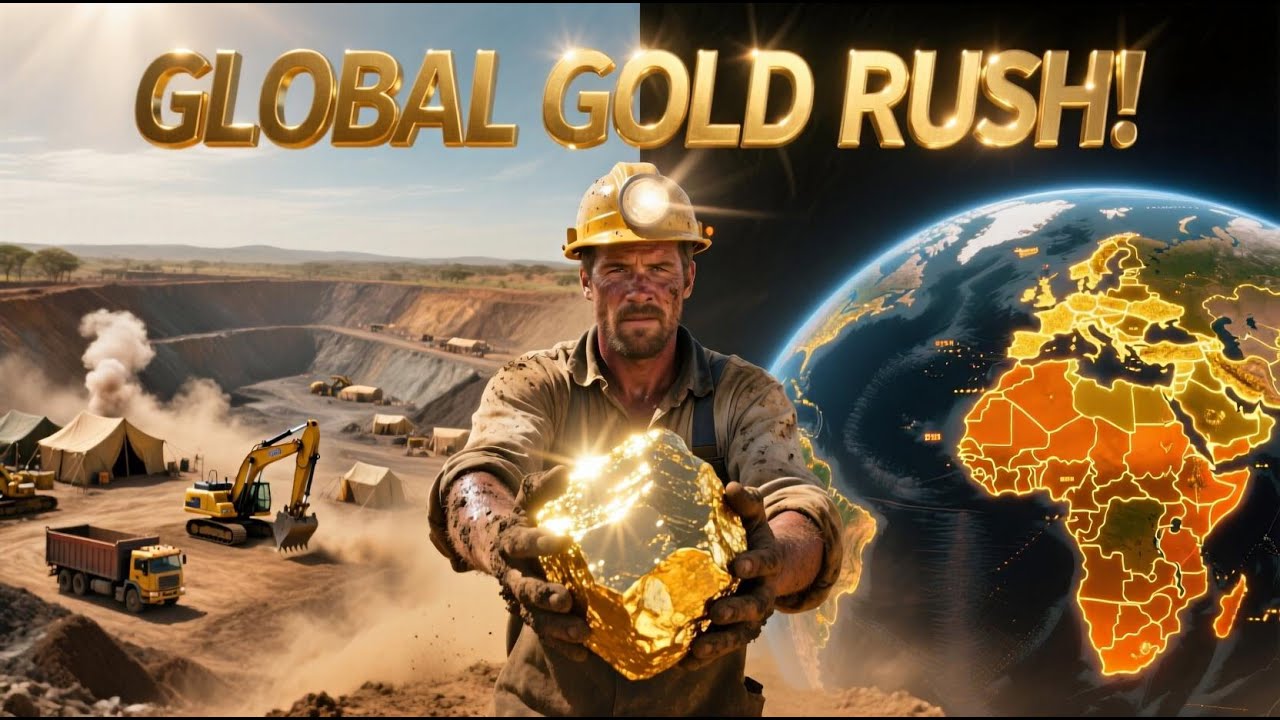
Copper Production & Strategic Importance for 2026
Why Copper Remains One of The World’s Most Vital Industrial Metals
Copper continues its status as one of the world’s most vital industrial metals due to its exceptional electrical conductivity, thermal properties, and corrosion resistance. These characteristics are essential for the functioning of electric vehicles (EVs), renewable energy installations (like wind turbines and solar arrays), modern agriculture equipment, and industrial electronics.
As demand surges worldwide — propelled by the growth of renewable energy, the electrification of transport, and smart farming technologies — the pressure on global copper producers is greater than ever.
Leading Major Copper Producers in 2025–2026: Nations Shaping the Global Supply
By 2026, the major copper producers remain largely concentrated in Latin America and Asia, where geology, established mines, and expansive infrastructure converge:
- Chile: The undisputed champion of copper production, Chile will contribute an estimated over 28% of global copper supply, with titans like Escondida and Chuquicamata mines supplying a substantial proportion of output.
- Peru: As the second-largest global producer, Peru is expanding production through modern projects like Quellaveco.
- China: While China is primarily an importer, its domestic production continues to increase to meet massive industrial and technological demand.
Other significant contributors include the United States, Congo (DRC), and Australia, but none match the market share or capacity of the leaders above.

Copper’s Expanding Role: Infrastructure, Energy and Smart Agriculture
Copper’s applications extends beyond conventional wiring and piping:
- Infrastructure: The backbone for urban development, transportation networks, and electric grids.
- Renewable Energy: The shift to renewable sources propels copper demand in wind, solar, and >grid modernization projects.
- Automotive & EVs: Electric vehicles require 2–3 times more copper than traditional vehicles for their wiring, batteries, and motors.
- Agriculture: Smart agricultural machinery, irrigation systems, and sensor-based farm equipment rely heavily on copper for efficient, reliable electrical conductivity.
Moreover, copper-based fungicides and pesticides are crucial in sustainable farming practices, helping manage crop diseases effectively without the heavy reliance on synthetic chemicals. Countries rich in copper resources not only bolster their national economies but support innovations in agricultural productivity, rural development, and food security.

Copper Market Trends: Supply Chain Headwinds, Sustainability Drivers
The copper market landscape in 2026 faces both opportunities and challenges:
- Supply chain bottlenecks and shifting geopolitics make the location of major copper producers increasingly strategic.
- Circular economy initiatives — like increased copper recycling — supplement raw mining as demand continues to outpace new discoveries.
- Emerging economies in Asia and Africa are entering the global copper supply chain, but Latin America remains dominant due to its exceptional reserves.
- The push for sustainable mining practices — backed by satellite monitoring, AI, and fleet management tools — is further influencing the strategies of leading producers.

Gold Producers in 2025: Economic Stability and Technological Utility
Beyond Wealth — Gold’s Expanding Economic and Industrial Role
Gold is traditionally a symbol of wealth and security, but its industrial and technological roles are rapidly expanding. Its unique corrosion resistance and exceptional conductivity make it indispensable in modern electronics, medical sensors, and automated precision agriculture equipment.
- Economic stability: Countries with significant gold production reinforce their financial reserves — supporting currencies and backing state-level investments.
- Technological advancement: Gold’s critical properties are foundational to microelectronic components, smart sensors, and even new-generation farming AI tools.
- Medical & Defense: Gold’s biocompatibility is vital for high-precision medical devices and secure circuitry used in military technology.

Top Gold Producers: China, Australia, Russia Lead in 2025–2026
2025’s leading gold producers wield not only influence in commodity markets but foster local economic development, financial stability, and technological innovation:
- China: Remains the world’s largest gold producer with expansive reserves and state-led investments in mining infrastructure.
- Australia: Holds second place due to its stable mining regulations and resource-rich regions, with investments in sustainable and efficient mining processes.
- Russia: Continues to drive substantial output, reinforcing both its domestic economy and strategic geopolitical standing.
Other significant contributors: United States, Canada, and South Africa.

Gold Mining: Driving Rural Development, Responsible Practices, and Technology
The role of gold mining extends beyond financial stability — driving infrastructure development, providing employment, and injecting capital into rural and agricultural communities. Social responsibility initiatives are now integral, ensuring sustainable land use and fostering coexistence between modern mining and traditional farming.
Technological breakthroughs — including AI-based satellite monitoring, blockchain traceability, and responsible resource management, as championed by innovative platforms — are transforming extraction processes for environmental and operational efficiency.
“By 2026, Russia and South Africa are expected to account for more than 70% of global palladium supply.”
Top Palladium Producers & Their Role in Global Industry and Defense
What Makes Palladium a Critical Metal in 2026?
Palladium, a leading platinum-group metal, is pivotal to modern industrial and defense innovation. Its properties make it essential for:
- Catalytic converters: Central to emissions reduction in automotive vehicles (civilian and defense without distinction).
- Advanced electronics & sensors: Used in high-end communication devices, military infrastructure, and cutting-edge industrial automation.
- Hydrogen fuel cell technologies: Crucial for greener vehicles and the evolving landscape of defense mobility.

Major Palladium Producers: Russia & South Africa Dominate the Scene
Russia and South Africa continue to dominate the global palladium supply through:
- Russia: Home to the Norilsk Nickel complex—the world’s largest palladium producer—providing about 40% of the global supply for 2026.
- South Africa: Extracts palladium primarily from the Bushveld Complex, consolidating Africa’s influence in global platinum-group metals.
These two countries together account for over 70% of the global palladium market, setting the pace for strategic supply, pricing, and downstream technological capabilities.
- Major players like Anglo American Platinum and Impala Platinum in South Africa also contribute significantly.
Palladium’s Expanding Applications in Industry and Defense
As emission regulations tighten globally, demand for catalytic converters (containing palladium) in cars, trucks, and defense vehicles will rise, especially in emerging economies. Innovations in hydrogen fuel cells and the push for cleaner, more efficient military and industrial vehicles underpin growing demand.
- Electronics & sensors: Palladium’s use in sensor technology enhances precision farming, environmental monitoring, and secure communications in defense and infrastructure.
- Medical & industrial: Used extensively in medical devices requiring precise conductivity and reliable corrosion resistance.
Comparative Producers’ Summary Table: Major Copper Producers, Gold Producers, Top Palladium Producers (2026)
| Metal | Producer (Country/Company) | Est. Annual Production (2026) | Global Market Share (%) | Est. Revenue ($ Billion) | Primary Applications | Region/Continent |
|---|---|---|---|---|---|---|
| Copper | Chile (Escondida, Chuquicamata) | 5,900,000 tons | ~28% | 58 | Infrastructure, EVs, Agriculture | South America |
| Copper | Peru (Quellaveco, Cerro Verde) | 2,400,000 tons | ~11% | 24 | EVs, Industrial Wiring | South America |
| Copper | China (Jiangxi Copper Company) | 1,700,000 tons | ~8% | 17 | Electronics, Machinery | Asia |
| Gold | China (Shandong Gold, Zijin Mining) | 430 tons (~13.8 mil. ounces) | ~10% | 25 | Technology, Financial Security, Electronics | Asia |
| Gold | Australia (Newcrest, Evolution Mining) | 320 tons (~10.3 mil. ounces) | ~7% | 18 | Medical, Sensors, Electronics | Oceania |
| Gold | Russia (Polyus, Polymetal) | 300 tons (~9.6 mil. ounces) | ~6% | 15 | Defense Electronics, Financing | Europe/Asia |
| Palladium | Russia (Norilsk Nickel) | 95 tons (~3 million ounces) | ~40% | 11 | Catalytic Converters, Defense, Electronics | Europe/Asia |
| Palladium | South Africa (Anglo American Platinum, Implats) | 55 tons (~1.8 million ounces) | ~32% | 6 | Emissions Control, Industrial Sensors | Africa |
| Palladium | Canada (Vale, NAP) | 20 tons (~640,000 ounces) | ~8% | 2 | Automotive, Electronics | North America |
Note: Production, percentage, and revenue are rounded estimates for 2026 and may vary due to geopolitical, regulatory, and market developments.
Satellite, AI, and Modern Technology Trends in Mining & Agriculture
The world’s major copper producers, gold producers, and top palladium producers are increasingly turning to satellite technologies, artificial intelligence (AI), and blockchain to improve production efficiency, resource management, traceability, and sustainability.
- Remote Sensing & Satellite Monitoring: Enables monitoring health of vegetation, mining sites, tailings dams, and infrastructure projects in real time — helping companies and governments make informed decisions, reduce risks, and stay compliant.
- AI-powered Analytics: Used to analyze big data from mines, forecast output, predict maintenance, and optimize logistics and extraction in fast-changing markets.
- Blockchain-Based Traceability: Ensures product authenticity and combats resource fraud, particularly critical for high-value metals like gold and palladium.
These technologies are transforming how major metal producers manage production, meet global standards, and minimize environmental impact.
Farmonaut’s API and fleet management empower mining and industrial operators to remotely monitor equipment, optimize resource use, and proactively address environmental concerns across global sites. Developers can learn more and integrate by visiting the Farmonaut API portal or exploring our API developer documentation.
Farmonaut: Empowering Mining, Agriculture, and Industrial Decision-Making with Satellite Technology
As we analyze the landscape of major copper producers, gold producers, and top palladium producers in 2026, it’s clear that data-driven insights and satellite intelligence are now central to resource management, production optimization, and sustainability. That’s where Farmonaut — a global leader in satellite technology and AI analytics — brings unique value.
- Satellite-Based Monitoring: Multispectral and advanced sensors provide real-time monitoring of mining, agricultural, and infrastructure assets for better operational outcomes.
- AI-Driven Advisory: Our Jeevn AI platform delivers real-time insights and tailored recommendations for mining site management, agricultural productivity, and defense planning.
- Blockchain-Integrated Traceability: Assures transparency and supply chain authenticity for metals production and agricultural outputs.
- Resource & Fleet Management: Enables producers to track fleets, optimize machinery use, and reduce operational costs.
- Environmental Impact Tracking: Farmonaut’s carbon foot-printing tools help mining and agricultural businesses monitor and reduce their carbon emissions.
Accessible via robust web and mobile apps and easily scalable from small operators to large government institutions, Farmonaut empowers users to thrive in a data-driven world.
Explore our large-scale farm management platform for optimized, satellite-based decision-making and sustainability.
Farmonaut’s solutions also enable verified crop loans and mining insurance via satellite-based verification, helping financial institutions and resource managers reduce risk and streamline operations.
Get started with Farmonaut’s affordable subscriptions today for unparalleled insights into mining, agriculture, and infrastructure worldwide.
FAQ: Major Copper Producers, Gold Producers, Top Palladium Producers and 2026 Mining Trends
What countries dominate global copper production in 2026?
Chile is expected to contribute over 28% of global copper production, sustaining its leadership. Peru and China follow as leading producers, influencing both market stability and technology-driven supply chains.
How does gold production influence economic stability?
Gold acts as a financial hedge for economic stability, while its technological role — in sensors, microelectronics, and medical devices — is fast-growing. China, Australia, and Russia are projected to maintain top output globally.
Why is palladium strategically valuable?
Palladium is crucial for automotive catalytic converters (emissions control), fuel cells, defense technologies, and advanced electronics. Russia and South Africa together are expected to produce more than 70% of global palladium by 2026.
How are satellite and AI technologies changing mining and agriculture?
Satellite, AI, and blockchain platforms are enhancing resource monitoring, traceability, environmental compliance, and operational efficiency for mining and agricultural producers. Farmonaut’s API and carbon footprinting lead the way in sustainability and transparency.
Where can I learn more about farm management, insurance, and traceability solutions for producers?
To discover more about satellite-driven crop loan & insurance solutions, visit this page. For advanced traceability tools for products and resources, explore Farmonaut’s traceability offering.
Conclusion: The Future for Major Copper Producers, Gold Producers & Top Palladium Producers
In 2026 and beyond, major copper producers, gold producers, and top palladium producers will remain at the heart of economic transformation, sustainable development, and technology innovation. Copper will be indispensable for electrification, sustainable agriculture, and resilient infrastructure. Gold will simultaneously secure economies and propel breakthroughs in medical and electronic technologies. Palladium will ensure cleaner transportation, advanced defense, and precision industrial solutions.
As supply chains become more complex and interdependent, mining regions in Chile, Peru, China, Russia, South Africa, and Australia will play a critical role—both supplying the global economy and influencing strategic policy across sectors like agriculture, defense, infrastructure, and technology.
The integration of satellite monitoring, AI, and blockchain—as seen with providers like Farmonaut—promises transparency, efficiency, and a more sustainable future for global metal production.
The next decade belongs to those who can not only extract, but monitor, manage, and innovate with their resources responsibly.

 Berks Gold Limited
 Mwerezi Minerals Company Limited
 Congo Mining Solutions
 Mining SARL
 SenGold Invest SAS
 Sania Corporation
 Sean Mining Limited
 NTS Group (Pty) Ltd
 Mine4Africa
 Lithspo Minerals Limited
 Tintina Mining Group
 Dalgety Minerals Pty Ltd
 Vortex Minerals Pty Ltd
 Faith At Work (Pty) Ltd
 Geotech Mining Solutions plc
 Vulcan International Limited
 Kidepo Associates
 GKY Mining
 Alkimy SARL
 Double A Trading
 GemSprout Metals Limited
 Qader Group
 Ileys General Trading
 SG Gold Mining LLC
 VRV Global Pte Ltd
 Omsri International FZE
 G.I.T.T.
 Jaunita Erss Ltd
